


While Chinese authorities impose strict restrictions on independent access to Xinjiang, or what is historically known as East Turkestan, Beijing is trying to present a markedly different image of the region through cultural events and international exhibitions. "Xinjiang Week," organised by China as part of Expo 2025 Osaka in Japan, stands out as an example of using culture and the arts to present an official narrative about the region.
Journalist Nithin Coca, in an article published on the mekongreview website, notes that Xinjiang is closed to independent media and civil society organisations, and that visits permitted by the Chinese authorities to journalists are subject to state supervision. According to what he relayed from fellow journalists, a visitor on such official tours will find a recurring presence of Uyghur dancers, in an attempt to show that life in the region is proceeding normally.
The paradox, according to the writer, is that this display, designed to prove "normalcy," may raise more questions than it dispels.
Xinjiang on the Expo Osaka Stage
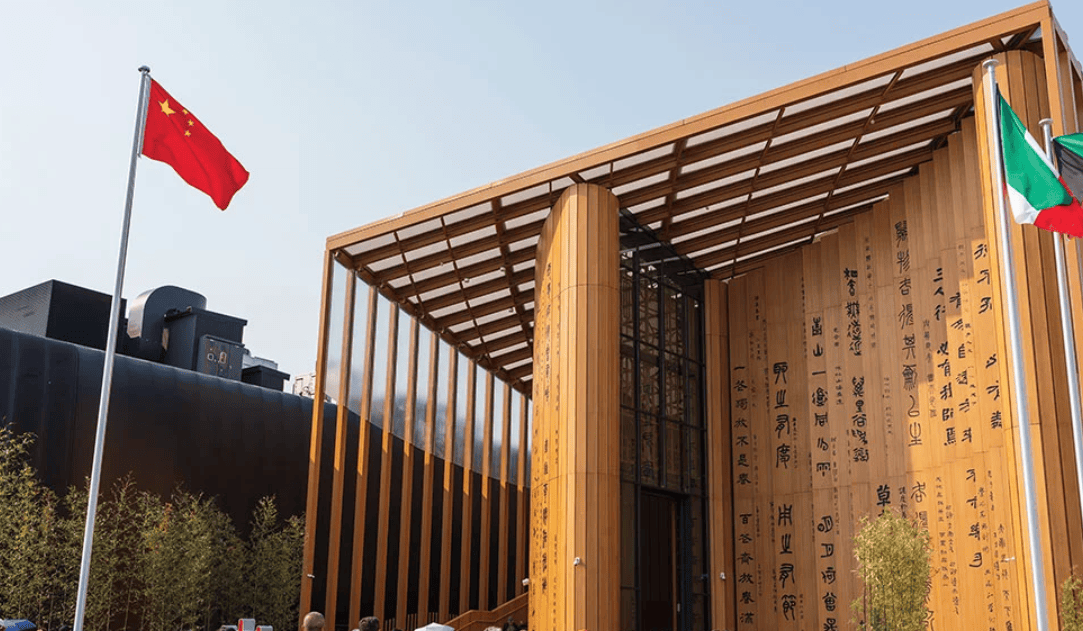
Last summer, China brought part of its narrative about Xinjiang to Japan through "Xinjiang Week," held in the Chinese Pavilion at the World Expo in Osaka as one of the weeks devoted to themes of Chinese regions and provinces.
The writer had attended an earlier event at the Chinese Pavilion and had his name included on the list of journalists invited to "Xinjiang Week," finding himself, by his own account, the only non-Chinese journalist present at the event.
Before attending, he received details about the programme, which did not only feature technology and companies from Xinjiang, but also included an exhibition of arts and handicrafts and dance performances from the region, presenting dance as one of the cultural expressions for which the region's people are known.
Culture Confronting Human Rights Questions
The significance of the event lies in presenting Xinjiang not as a area tied to political and human rights controversy, but as a space for culture, arts, technology and development.
This image aligns with the official Chinese narrative, which seeks to focus on cultural diversity, daily life and economic development, in contrast to international criticism concerning the conditions of the Uyghurs and other Muslims in the region.
However, the absence of independent media and civil society organisations from the region, according to the writer, makes it difficult for journalists and researchers to independently verify the image presented by the Chinese authorities.
Here, external events such as "Xinjiang Week" become an important means for Beijing to reach an international audience through a carefully selected narrative, in which it can determine the topics it wishes to highlight, from culture and the arts to technology and investment.
One Journalist Outside the Official Narrative
The writer presents his experience at the event as a model of this closed environment. By his account, he was the only journalist from outside China among those present, which made his participation different from the collective media visits organised by the authorities.
He also brought with him a Chinese American student who worked with him, believing that knowledge of the Chinese language might help them both understand the details of the event better. He says this proved necessary indeed, after it became clear that a number of staff at the pavilion did not speak English or Japanese.
These small details reveal an important aspect of the nature of international events hosted by official institutions: the event appears open to the public and the press, but the ability to ask questions and access information may remain limited due to language, the organisation of the event, and the authority supervising it.
Why Is Dance So Prominent?
The issue is not the dance itself or the presentation of Uyghur culture, as the arts are a familiar part of any cultural exhibition. Rather, the problem lies in the context in which this culture is displayed.
When the region is the subject of wide international criticism regarding human rights, presenting images of joy, dance and normal life becomes part of a broader attempt to reshape the external impression of it.
Thus culture is transformed from an expression of a community with its own history and identity into an element of a political narrative aimed at reassuring the external audience that everything is normal.
The paradox the writer raises is that repeating this image may produce the opposite result: the excessive display of celebratory life, amid the difficulty of independent access to Xinjiang, may prompt the journalist to wonder about what does not appear before the cameras.
Between the Displayed Image and the Unseen Reality
The experience of "Xinjiang Week" reveals one of the most important instruments of soft power in the modern era: the use of culture to present a political narrative without directly entering political debates.
Instead of speaking of arrests, restrictions or human rights accusations, the platform can be headed by traditional costumes, handicrafts, dance and technology and companies.
Yet the cultural image, however genuine in some respects, does not on its own answer questions concerning human rights, freedoms and independent access to information.
Hence, dealing with such events requires a degree of discernment: a cultural display should not be taken as sufficient evidence of the nature of political and human rights life in Xinjiang.
The real test of any narrative about a controversial region is the ability of independent journalists and researchers to access it, verify information, speak freely with residents, and compare the official narrative with multiple testimonies and sources.
Xinjiang: Beyond the Folk Dance
The images of Uyghur dancers may paint a picture of stability and security, and the crafts and arts on display may be an authentic part of the region's culture, but a beautiful image alone is not enough to write a complete story.
When a region closed to independent media is presented on an open international platform, the question becomes not only: what does China want us to see? but also: what can we not see?
Herein lies the significance of the journalist's experience at "Xinjiang Week": it reminds us that international exhibitions are not merely arenas for culture and trade, but can also become platforms where states compete to shape the image the world is meant to see of them.


