


Photos are from Jahongir, a restaurant specialising in Uyghur cuisine.
What Is Uyghur Cuisine?
Uyghur cuisine (pronounced Weegur) is difficult to define precisely, as it draws its flavours from the cuisines of Central Asia, East Asia and the Middle East. A typical Uyghur menu may include steamed dumplings, savoury pastries, garlic rice, naan, lamb skewers, hand-pulled noodles, fried lamb, and chicken cooked with potatoes.
It can be said that this cuisine is the origin of fusion cuisine, which took shape over centuries.
To understand this cuisine, it helps to know its people.
The Uyghurs are a predominantly Sunni Muslim group from the Xinjiang Uyghur Autonomous Region in northwest China, historically known as "East Turkestan," and have communities across Central Asia.
East Turkestan borders eight countries, including Russia, Pakistan and Afghanistan, and was a major station on the ancient Silk Road. This history explains the great diversity of spices and cooking methods used in Uyghur cuisine.
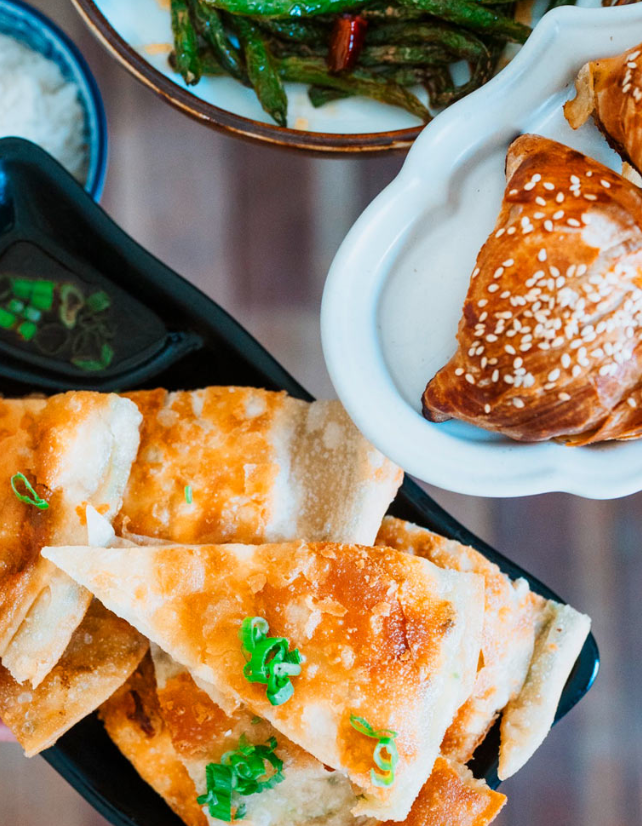
Eskalon pastries
Chef Subat Delurat says: "The food has bold, aromatic and complex flavours." He and his wife, Nadia Barhat, opened Jahongir restaurant in Cambridge, Massachusetts, in 2024 (they opened their first branch in Providence, Rhode Island, in 2017).
No dish is more important in Uyghur cuisine and culture than polo, a dish of seasoned rice, meat and carrots slowly cooked in oil. Many Central Asian countries have their own version of it: Uzbeks call it plov, and Afghans call it "palaw," but in Uyghur culture it is a staple and a festive dish, often served at weddings and gatherings.
Another essential dish, and a favourite at Jahongir, is lamb kebab. Uyghurs usually season the meat with cumin and pepper; at Jahongir, the lamb is seasoned, then hand-chopped and grilled on skewers.
The Jahongir menu has no more than 15 dishes. Barhat says: "No two dishes are alike; each dish has its own distinct flavour." Barhat works at the front of house and is often asked to explain the food to customers. She says the menu is rich in meats, with beef, chicken and lamb as staples, while seafood is rare.
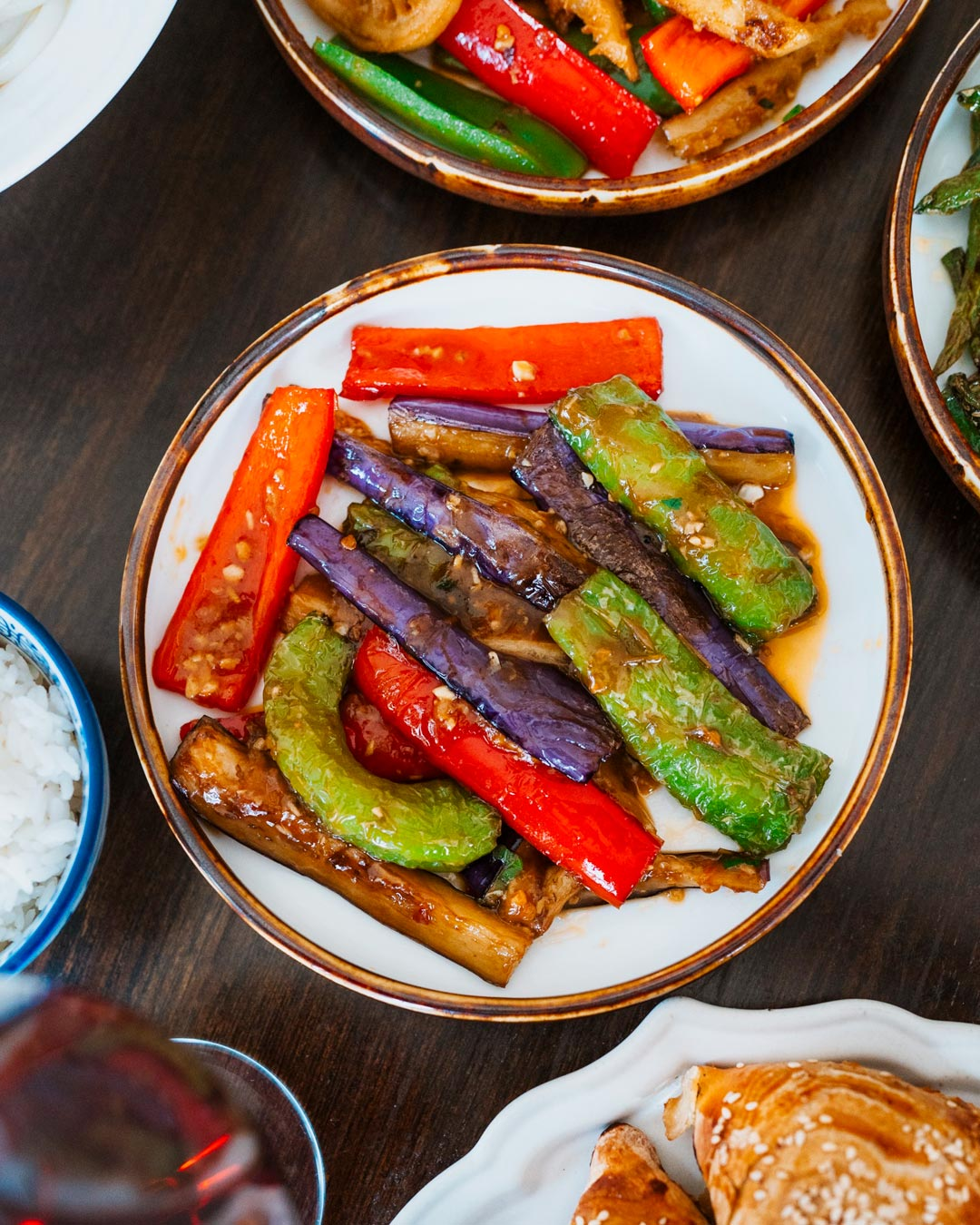
The "Spicy Tiger" is a signature dish of Japanese eggplant fried in a wok, soft on the inside and crispy on the outside, tossed with peppers, onions and a hot, flavourful garlic sauce.
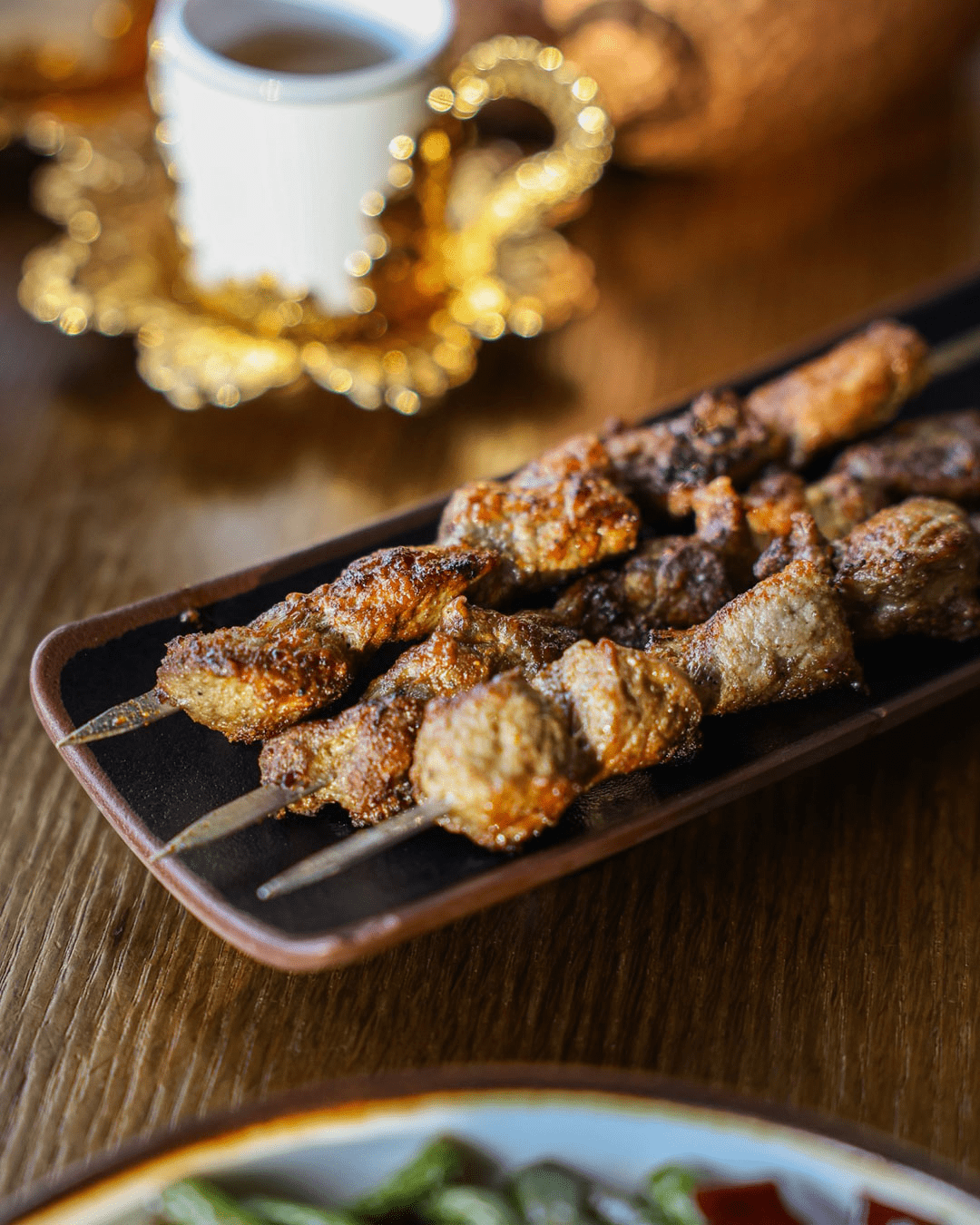
Lamb kebab seasoned and flavoured until tender and delicious.
نودلز أويغور محضرة يدويًا وفن اللغمان
Noodles are an essential element; every morning, a team comes to the restaurant to prepare fresh batches. Among the signature dishes are Jahongir hand-pulled noodles, which Delurat's father created in 2012 at his restaurant of the same name in Urumqi, China.
Delurat says: "He believed that all fried noodle dishes lacked flavour. People do not use perennial garlic with fried noodles, but he felt they were missing it. So he added perennial garlic to the noodles, and everything changed."
The Jahongir noodle dish consists of thick, chewy noodles fried in a wok with seasoned beef, onions, perennial garlic, and a pungent hot pepper sauce containing Sichuan peppercorns.
Lagman noodles are thinner, but very popular in the region and beyond. The dish combines seasoned beef, onions, garlic, perennial garlic, coriander, spices, hot pepper, soy sauce and hand-pulled noodles.
Barhat says: "Lagman is a dish you must order when visiting Uyghur restaurants." Delurat adds: "As for my parents, wherever they are going or however far they travel, they say: 'It is enough for me to have one plate of lagman noodles.'" "Preparing this dish takes time, if it is done well." "You have to develop the flavour in three stages, step by step."
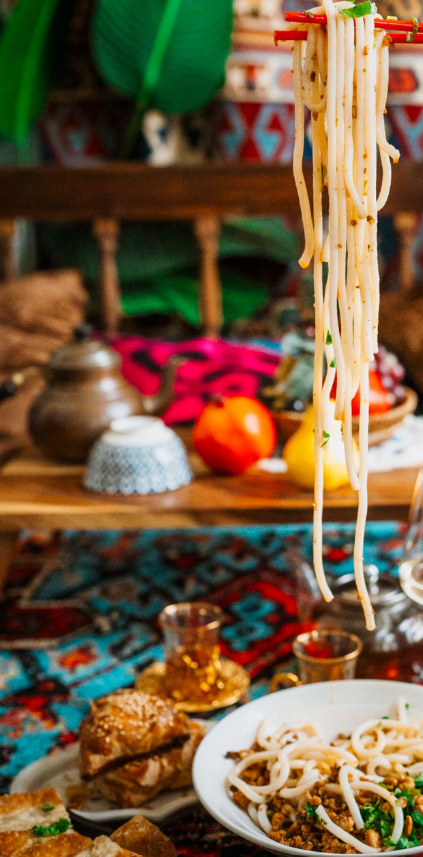
Mifen is a dish of fried rice noodles with minced chicken, herbs and crispy soybeans.
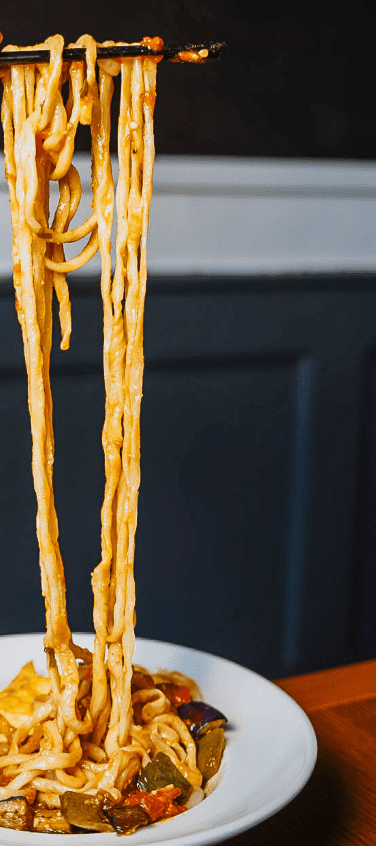
Lagman noodles are a food that makes you feel comforted and warm.
ما وراء النودلز
Comforting Uyghur dishes, Yangyi chilli flavours, and the sophisticated cuisine of Xinjiang
But it is not only about noodles. At Jahongir, bone-in chicken stew is a comforting, warming dish, flavoured with Yangyi chilli, a sun-dried hot pepper imported from the region of the same name in northeast China, which is an essential ingredient in this dish.
"This is the only region where the hot pepper used in this chicken stew is grown. Nowhere else in the world." Delurat says: "It is not spicy, but it adds a distinctive flavour and brings the dish together." Delurat updates the menu periodically, adding dishes from his childhood as well as new recipes popular in Xinjiang.
He says: "I travelled to Xinjiang province last February, and came back with three new dishes I grew up with. I was not able to prepare them here [before returning to Xinjiang] because there was so much I had to learn."
He adds: "Every time I visit Xinjiang, I come back with new ideas: foods that are trending now, or dishes that have become common. It is a continuous journey of learning and discovery." This applies even to a cuisine with a heritage going back centuries.
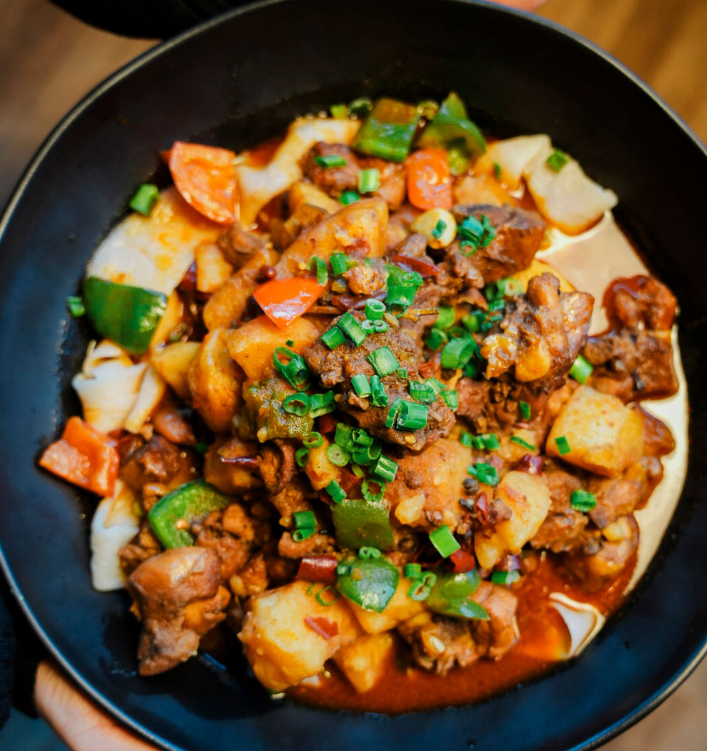
Bone-in chicken stew with Yangyi chilli
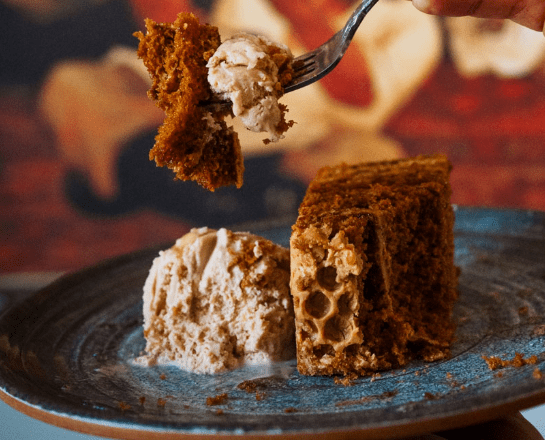
Honey cake with coffee ice cream is a delicious finale
Source: guide.michelin. Adapted


