

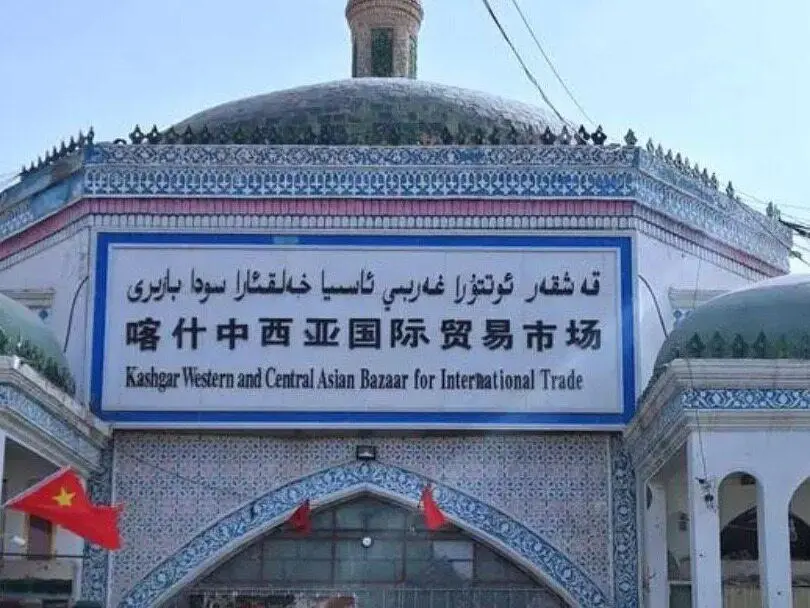
An investigation published by the platform Közet, which specialises in Uyghur affairs, on Wednesday 25 November 2026 revealed substantial changes to the legislation governing language use in East Turkestan. The changes would end legal equality between the Uyghur and Chinese languages in government business, and cancel a number of guarantees that ensured the use of minority languages in official institutions and public services.
These changes come under a regulation adopted by the Standing Committee of the People's Congress of the Xinjiang Uyghur Autonomous Region on 23 September 2026. Its text was published in the official newspaper Xinjiang Daily on 6 October, and it is due to take effect on 1 January 2027.
Cancellation of legal guarantees in place for decades
The obligation for government institutions to use both Uyghur and Chinese dates back to 1956, a few months after the autonomous region was established, when the regulations governing its institutions required the use of both languages in carrying out their official duties.
In 2015, Article 8 of the regional regulation established equal legal validity between local languages and the state language in the performance of official duties.
The new amendments, however, cancelled this guarantee. Article 12 makes standard Chinese the official working language of state bodies, while the use of local languages has become linked to what the nature of government business requires.
The use of the Uyghur language in official institutions thus shifts from a legal obligation to an option left to the discretion of government bodies according to work requirements.
Education, public services and signage
The amendments are not limited to the language of government work; they extend to wide areas of daily life. A comparison of the previous and new legal texts reveals the following changes:
- Government business: Chinese is adopted as the primary language of official work.
- Education (Article 13): Chinese is adopted as the basis for teaching, with its instruction promoted from the pre-school stage onward.
- Signage (Articles 16 and 20): The mandatory use of local languages on a number of signs is abolished, and Chinese is placed first when two languages are used.
- Public services: Previous guarantees relating to providing services in a language the citizen understands, or providing interpretation for them, are deleted.
- Translation (Article 24): Translation work is subjected to specific political directions, and the use of Chinese terminology is governed by the conditions set out in the regulation.
Provisions that obliged some local administrations to provide at least one interpreter in areas where national minorities are concentrated have also been cancelled, as have the specific financial penalties imposed for violating some language-use rules.
Declining presence of Uyghur in public space
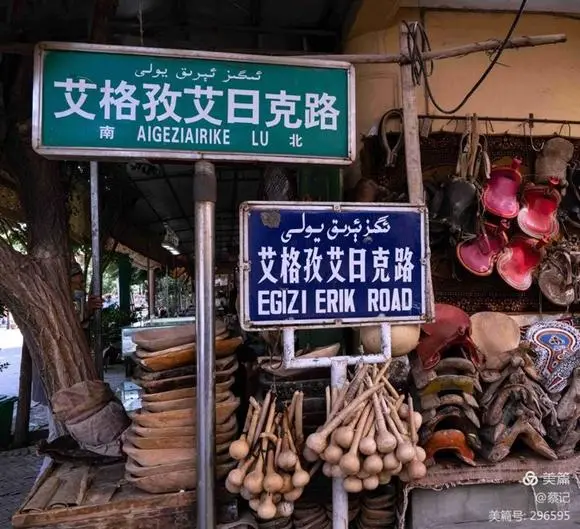
The investigation found that the shift in language policy preceded the adoption of the new amendments. In June 2025, the regional government issued a directive requiring Chinese to be presented on bilingual signs.
The directive came to light through an official response from a local government to a complaint lodged by a resident of Maralbeshi County, under the jurisdiction of Kashgar Prefecture.
The investigation also observed a change in the order of the two languages on signs used during meetings of the regional People's Congress: Chinese moved to the top of the signs in 2026, after Uyghur had held that position in the two previous years.
Közet said it had not received a reply from the relevant government bodies to its written enquiries about these changes.
Between autonomy and the reduction of linguistic rights
The amendments come while Chinese constitutional texts continue to recognise the right of the various nationalities to use and develop their languages, along with national legal provisions relating to the use of local languages in autonomous areas.
The new regional regulation, in its third article, calls for respecting the use and learning of minority languages, while Chinese authorities maintain that promoting standard Chinese serves communication, education, development and national unity.
However, the removal of previous institutional obligations raises concerns about the extent to which these rights can actually be exercised, particularly when dealing with government departments, educational institutions and public service facilities.
In a report published on 6 November of this year, the Uyghur Rights Monitor described the amendments as a dangerous legal shift in policies toward the Uyghur language.
Language and cultural identity of Uyghur Muslims
The Uyghur language, which in its contemporary form is written with letters derived from the Arabic alphabet, is one of the most important components of the cultural and historical identity of Uyghur Muslims, and a means of transmitting their religious, literary and social heritage across generations.
The danger lies not in learning or mastering Chinese, but in the erosion of guarantees that allow Uyghurs to use their mother tongue in their homeland and institutions, and in the narrowing of its circulation among new generations that may follow.
When the language's presence declines in school, administration, public services and signage, the spaces that allow its continued use in daily life gradually shrink, and families bear growing burdens in preserving it and passing it on to their children.
Although the new legislation does not stipulate a comprehensive ban on the Uyghur language, the cancellation of guarantees for its institutional use, alongside the strengthening of Chinese's position in education and administration, represents a significant development in the file of Uyghur linguistic and cultural rights, and calls for monitoring how this legislation is implemented and its repercussions after it takes effect early next year.


