

The forces also confiscated Starlink satellite internet devices and mobile phones, in an attempt to isolate the detainees from the outside world.
On 26 October, the Rapid Support Forces announced their full control over the city of El Fasher, after fierce battles they waged against the Sudanese Armed Forces and their allied movements, which lasted for more than a year.
Shortly after seizing the historic capital of the Darfur region, the forces faced accusations of committing widespread violations affecting thousands of civilians, including killing, looting, detention and forced displacement. These crimes met with broad rejection and condemnation locally, regionally and internationally.
Three survivors who managed to flee and reach the city of Tawila, located about 56 kilometres south-west of El Fasher, told Sudan Tribune that "the Rapid Support Forces are holding more than fifty thousand people inside the city of El Fasher and preventing them from leaving it."
One survivor stated that in recent days the Rapid Support Forces carried out extensive raids in the city's neighbourhoods, particularly the Darja Oula neighbourhood, which had been the last refuge housing thousands of civilians.
Witnesses said the forces confiscated dozens of Starlink devices along with mobile phones, and forced detainees, especially young men, to record video clips and voice messages sent via their members' phones to their families, demanding they pay financial ransoms in exchange for their release, ranging between five million and one hundred million Sudanese pounds.
The statement noted that these forces had flagrantly violated human values and international and religious norms that prohibit mutilating bodies and require respect for the dead's right to a dignified burial.
It added that the crimes witnessed in the city of El Fasher "went beyond the limits of a humanitarian catastrophe and reached the level of systematic genocide targeting life and human dignity."
The network warned of the danger of the international community's continued silence, describing it as "the shameful silence that amounts to complicity."
It called for immediate action by the international community and for an independent international investigation into the violations committed in El Fasher, affirming that burning bodies or burying them in mass graves will not conceal the traces of the crime or exempt its perpetrators from legal accountability.
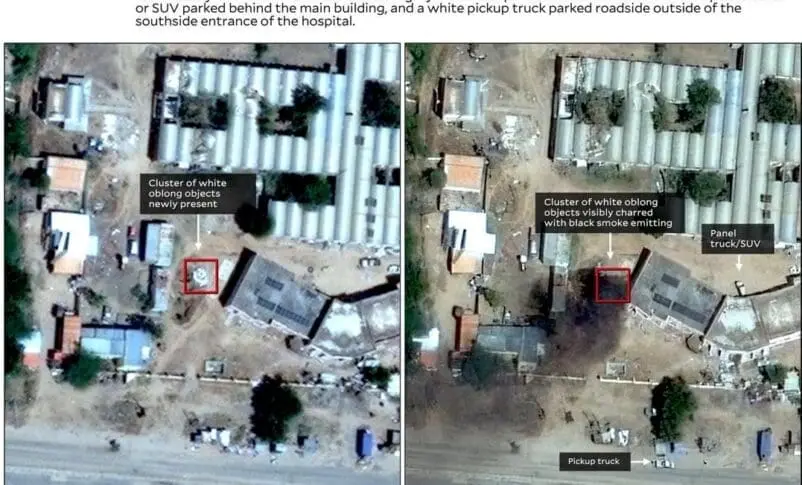
Satellite images published by the laboratory showed "charred objects" and "columns of black smoke" at no fewer than two sites, including the Saudi Hospital, which witnessed a mass massacre. Experts indicated that these scenes are consistent with the burning of bodies, a practice that contradicts Islamic burial rites.
Sudan Tribune.


