

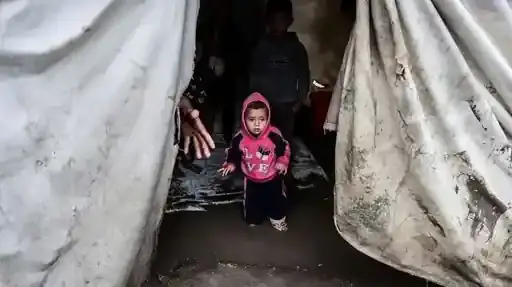
As winter approaches, displaced and poor millions do not occupy themselves with thoughts of the beauty of the rain or the chill of the air; instead, far harsher calculations begin: Where will heating fuel come from? How can a family shelter itself from the rain? Will the tent withstand the winds? And where will the money for food and medicine come from if work stops?
In displacement camps, among the rubble of destroyed homes, and in poor neighbourhoods lacking even the most basic means of protection, winter is not merely a season of the year; it can become a daily struggle to preserve life.
As winter 2026–2027 approaches, these fears are renewed across wide areas of the Islamic world, particularly among the displaced in Palestine, Syria and Afghanistan, where the harshness of the weather intertwines with poverty, loss of shelter and a shortage of basic services.
Although extreme heat waves also pose a threat to life, winter adds special burdens to the suffering of destitute families. It is not enough for a person to find a roof over their head; they need shelter that protects them from rain and wind, clothing that retains body heat, safe means of heating, and food and medicine that they may be unable to provide.
So why does winter, in the lives of millions of displaced and poor people, become a harsh test of the capacity to survive?
First: When warmth becomes a need the poor cannot afford
A popular saying goes: "Summer shelters the poor man," indicating that a poor person can endure some conditions of heat with limited means, whereas winter's cold imposes additional needs that cannot be dispensed with.
Although this saying is not a general basis for comparing the dangers of the two seasons, it expresses an aspect of the suffering of families who enter winter without sufficient income or adequate means of heating.
Cold cannot be confronted with blankets alone; a family needs winter clothing, shoes that protect children from getting wet, fuel for heating, and shelter that prevents the leakage of air and water.
When it cannot provide these, painful trade-offs begin: Does it buy bread or fuel? Does it pay for medicine or for a blanket for a child shivering from the cold?
The Office of the United Nations High Commissioner for Refugees warned in a winter appeal issued on 30 October 2026 that at least nine million people need additional assistance to face the winter in Syria, Lebanon, Afghanistan and Ukraine, amid funding shortfalls and rising energy and food prices.
The agency explained that affected families face shortages of fuel, clothing and blankets, in addition to living in temporary shelters unsuited to the cold.
Here, the harshness of winter goes beyond falling temperatures; the real tragedy is that warmth itself becomes a need the poor cannot afford.
Second: The tent that shelters the family may be unable to protect it
Not every shelter is suitable for life in winter.
A cloth tent or plastic sheeting may provide a limited amount of shade or privacy, but they do not guarantee protection from heavy rain, wind and cold.
When water seeps inside, the family loses not only the dryness of its floor; mattresses, blankets and clothing may be damaged, and the few possessions it managed to keep after displacement become unable to perform their function.
The Gaza Strip offers a painful example of this suffering.
On 9 November 2026, the United Nations Children's Fund (UNICEF) announced that heavy rains had damaged the lives of more than 106,000 people and caused the destruction or damage of tents, health facilities and essential property.
The organisation explained that some 950,000 displaced people live in areas exposed to flooding, including 400,000 in highly dangerous sites.
It also reported that three children aged between four and eight, along with their mother, were killed after sand dunes collapsed onto their tent in Deir al-Balah in the centre of the Strip following heavy rainfall.
According to the organisation, around 1.7 million displaced people in Gaza still live in tents, temporary dwellings or damaged buildings, exposed to the dangers of flooding, cold and collapse.
The problem is not confined to Gaza; in Syria and Afghanistan, displaced and returning families suffer from the absence of suitable housing and a lack of heating and insulation.
In Sudan, the refugee agency and the International Organization for Migration warned on 6 November 2026 that around 15.4 million people need urgent assistance related to shelter and essential household items, while the resources available to humanitarian organisations allow them to target only about a tenth of those in need.
Climatic conditions and rainy seasons vary between these countries, but the common denominator is the fragility of shelter, which turns any severe weather fluctuation into an additional danger for families.
A home is not merely walls and a roof; it is the first barrier between a person and the dangers of nature, and when it is lost, the person becomes more exposed to every storm and cold wave.
Third: Cold may deprive the poor of their livelihood
The cost of winter is not limited to what a family needs in fuel, clothing and blankets; it may extend to the family's very source of income.
Many poor families depend on irregular daily work, such as construction, agriculture, street selling, and jobs that require travel and staying in open places.
In some areas, heavy rains, storms and snow disrupt this work or reduce its hours, while cold waves can make travel and reaching markets and workplaces more difficult.
When work stops, the income on which the family relied to buy its daily needs stops with it.
What is harsher still is that its needs do not decline when its income stops; they may rise as a result of the costs of heating, clothing, treatment and repairing the shelter.
Thus two crises converge on the family at the same time: a rise in what it must spend, and a fall in what it can earn.
As a result, it may be forced to borrow, reduce meals, postpone treatment, or go without basic needs in order to afford what protects its children from the cold.
This does not mean that daily work stops in winter in all countries; the matter varies according to climate and the nature of the work. But families that have no savings or stable source of income are more affected by any sudden interruption of livelihood.
Fourth: Cold and disease, when physical fragility becomes a threat to life
Health risks multiply when cold combines with malnutrition, dampness, overcrowding and the absence of medical care.
Infants, the elderly and the sick are more vulnerable to losing body heat, and prolonged exposure to severe cold can lead to a dangerous drop in body temperature, a condition that calls for urgent medical intervention.
Overcrowding, poor ventilation and inadequate shelter also increase the risk of the spread of respiratory infections, while mixing of rainwater with sewage may contaminate water sources and spread waterborne diseases.
These cases become more dangerous when sufficient medicines are unavailable, medical centres are distant, or access to them is impeded by floods and cut-off roads.
In Gaza, UNICEF reported that at least 11 children died from hypothermia during the winter of 2025–2026, warning that such deaths could recur as the shortage of suitable shelter continues.
The organisation also launched an appeal for $97.5 million to support its winter response in Gaza, to help protect children and families from the dangers of cold, flooding and diseases linked to deteriorating living conditions.
The problem is not that winter brings diseases unknown in summer; intense heat in turn may cause dehydration, heatstroke and deadly health complications.
But the real danger lies in bodies worn down by hunger, displacement and illness being exposed to harsh climatic conditions without the protection or care they need.
Fifth: Not a weather crisis alone, but a crisis of poverty, displacement and absent protection
Rain may fall on two cities: the residents of one greet winter inside warm homes, while those of the other spend the night trying to stop water from flooding their tents.
Temperatures may drop by the same degree on two families: one can switch on the heater and buy clothing and blankets, while the other is forced to choose between fuel and food.
Here it becomes clear that the weather alone does not explain the scale of the tragedy.
Poverty is what deprives a person of the means of protection, displacement is what strips them of a stable shelter, and wars are what destroy the services and infrastructure they need to survive.
For this reason, humanitarian responses that begin only after a storm has struck or disease has spread are not enough; protecting families requires early preparedness, including the provision of safe housing, the repair of damaged tents and buildings, securing clothing, blankets and safe heating, improving drainage and water networks, and ensuring access to aid and health services.
Likewise, emergency winter assistance, important as it is, cannot be a permanent substitute for safe housing, job opportunities and basic services.
Winter is not a foregone tragedy, but leaving people unprotected makes it one
With every winter, the same scenes recur in many displacement areas: tents flooding, children shivering, fathers searching for fuel they cannot afford, and families trying to salvage what remains of their blankets and food.
Yet what must not be overlooked is that much of this suffering is preventable and can be mitigated.
Protecting families from the cold, and securing shelter, food and medicine, are not secondary needs that can be postponed until the storms subside; they are essential requirements of life.
And because winter arrives on time, communities, governments and humanitarian organisations are able to prevent it from turning into a catastrophe that consumes what remains of the security of the displaced and the poor.
Between a tent in Gaza, a damaged home in Syria, a family returning to Afghanistan, and displaced people seeking shelter in Sudan, the need remains one: a safe place where a person can sleep without fearing for their children's lives on every cold night.
Winter should not be a test of a person's right to life, nor should access to warmth become a privilege held only by those who can afford it.
O God, ease the harshness of winter upon Your oppressed servants, have mercy on the displaced and the poor, shelter those who have lost their homes, feed their hungry, keep their children warm, and grant them relief from every hardship and an opening from every distress.


