

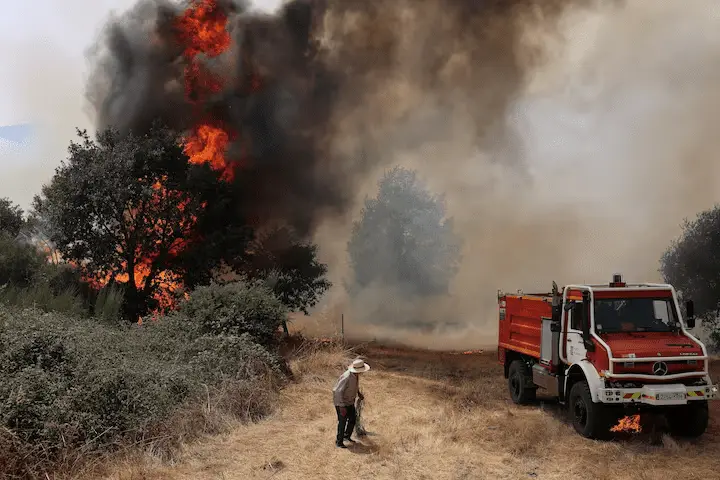
Wildfires fuel air pollution, according to the World Meteorological Organization
Climate change has likely contributed to the intensifying frequency of forest fires, leaving prominent marks on the rise in air pollution over the past year, according to a report issued by the World Meteorological Organization on Friday.
The World Health Organization noted that ambient air pollution causes 4.5 million premature deaths annually. The WMO's report for 1445 AH (2024 CE) pointed to serious pollution hotspots in areas swept by intense fires, such as the Amazon basin, Canada, Siberia and Central Africa.
As global warming, caused mostly by emissions from fossil fuels and the changes in weather patterns it has produced, worsens, forest fires have become more common and widespread around the world, adding more particulate matter to the air, alongside emissions from burning coal, oil, gas and wood, as well as transport and agricultural activities.
The World Meteorological Organization said in a statement: "Forest fires are a major source of fine particulate pollution, and this problem is expected to worsen as climate warming continues, posing growing risks to infrastructure, ecosystems and human health."
Although the WMO report covers 1445 AH (2024 CE), the organization also noted that the record fires that swept southern Europe this year contributed to pollution across the continent.
Nevertheless, positive indicators emerged, as fine particulate pollution declined in eastern China thanks to efforts to reduce it.
Reuters.


