

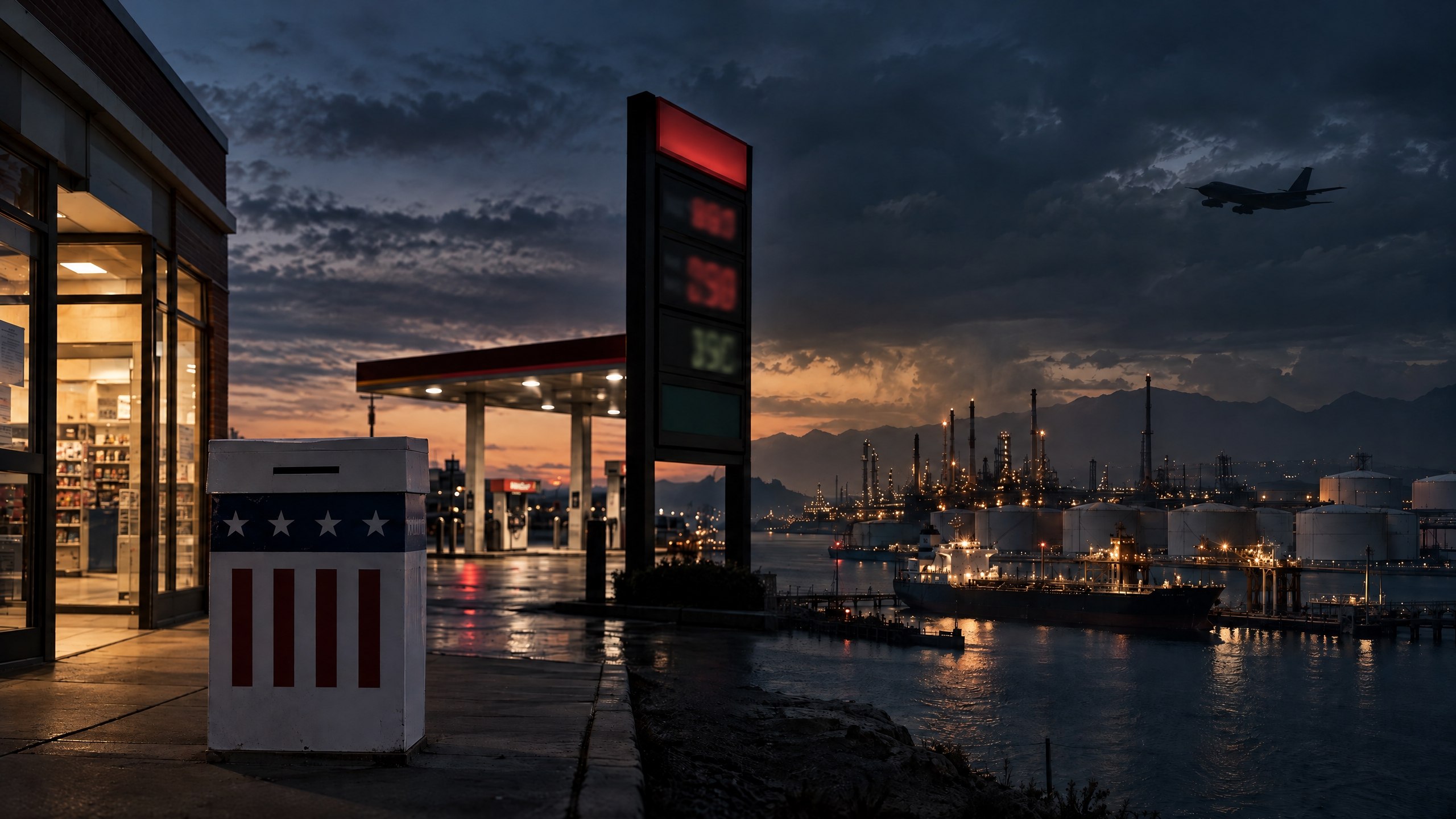
Donald Trump's announcement that he would postpone any new large-scale attacks on Iran until after the midterm elections was not merely a decision about military timing. It came amid mounting economic and electoral pressures, with rising fuel prices, a decline in the strategic oil reserve and depleted American weapons stocks. Yet the results of the 3 November 2026 elections revealed that delaying escalation was not enough to shield Republicans from the political fallout of the war.
On 8 October, Trump announced that the United States would not launch strikes on Iran before the midterm elections scheduled for 3 November, affirming in a post on his platform "Truth Social" that talks with Tehran were continuing and that Washington remained committed to preventing it from acquiring a nuclear weapon.
The announcement came after reports of American military preparations to resume large-scale operations against Iran, amid concern within the administration that a new round of war could push up oil and gasoline prices, doubling the pressure on the Republican Party ahead of the elections.
While Trump presented his decision within the context of ongoing negotiations, subsequent developments showed that economic and electoral calculations were an essential part of the picture, particularly with the continuing oil-related repercussions of the war that began on 28 February 2026.
Gasoline prices become an electoral burden
Fuel prices are among the economic indicators with the greatest impact on the daily lives of American families, as increases are directly reflected in the costs of transport, heating and the delivery of goods and services.
In a report published by the website "Oil Price" on 30 October, gasoline prices in the United States rose by 34.2% compared with the previous year, while home heating oil prices jumped by 74.2%, alongside a rise in overall inflation to around 3.7%.
These figures reflect the scale of the pressures facing voters before they went to the polls, particularly as disruption in energy markets continued as a result of the war and the American-Iranian confrontation in the Strait of Hormuz.
Research examining the relationship between gasoline prices and the popularity of American presidents indicates that a ten-cent rise in the price of a gallon has historically been associated with a decline of about 0.6 percentage points in presidential approval, although the strength of this relationship varies with economic and political conditions.
In September, Trump acknowledged that oil prices, which had risen because of the war on Iran, might not fall before the midterm elections, predicting that they would decline after the vote.
Accordingly, any new military confrontation before the elections carried an additional risk: it could push oil prices higher at a time when Republicans were seeking to convince voters of their ability to address the high cost of living.
The April experience: when the strikes stopped but the oil crisis did not end
The administration's concerns about the war's repercussions for energy markets were not hypothetical. The earlier confrontation revealed that halting military operations does not necessarily mean the end of the economic disruption they cause.
Following the announcement of a ceasefire on 8 April, oil prices fell temporarily, before rising again as the closure of the Strait of Hormuz to a large share of maritime traffic continued, along with the continuing American naval blockade of Iranian oil exports.
On 30 April, Brent crude briefly exceeded $126 a barrel, amid reports that Washington was studying new military options and ongoing concerns about global energy supplies.
That experience showed that the impact of war on oil markets is linked not only to the duration of bombing but also to how long maritime routes and oil infrastructure remain disrupted, and to the ability of the warring parties to restore stability in the region.
A military operation may end within days, while the movement of tankers and supply chains may need weeks or months to return to normal.
This equation made the idea of a "short and intense" military campaign against Iran economically risky, even if Washington succeeded in achieving its military objectives within a limited period.
The American oil reserve at low levels
These calculations become more sensitive given the decline in the American strategic petroleum reserve, which represents one of the most important tools available to the government for dealing with supply disruptions and rising prices.
According to data from the US Department of Energy, the reserve stood at around 282.2 million barrels on 16 October 2026, compared with a licensed storage capacity of 714 million barrels, meaning that the stock was below 40% of its total capacity.
In March, Trump had announced a programme to draw down up to 172 million barrels from the reserve, as part of a coordinated move with the International Energy Agency to release 400 million barrels onto global markets, aimed at containing the price increases caused by the war.
The programme relied on an oil-exchange mechanism, which allows companies to borrow quantities from the reserve and return them later with additional volumes.
Reuters reported that the terms of some exchanges included the return of additional quantities ranging between 18% and 22%, while the Department of Energy later announced higher premiums in some transactions.
However, these arrangements do not remove the time and technical constraints on using the reserve, as pumping and transporting oil to the markets requires an operational period, and refilling the stock depends on supply and delivery schedules.
Department of Energy data show that the maximum nominal drawdown capacity is about 4.4 million barrels per day, and that oil could need about 13 days from the presidential decision to reach American markets.
This means that the reserve, despite its importance, cannot necessarily prevent an immediate jump in oil prices if Gulf supplies are subjected to a sudden and widespread disruption.
Threats to Gulf facilities and the Strait of Hormuz
The economic risks of any new campaign are not limited to the volume of Iranian oil that might stop reaching the markets.
Kharg Island, which hosts major facilities for exporting Iranian oil, represents a highly sensitive target; targeting its installations could disrupt a large part of Tehran's exports, depending on the extent of the damage and the ability of the facilities to resume operation.
On the other hand, the possibility of an Iranian response raises concerns that attacks could extend to oil installations, ports and refineries in Gulf states, as well as endanger oil tankers and commercial vessels.
These concerns are heightened by Iran's continued possession of significant missile capabilities despite the earlier American and Israeli strikes.
In May 2026, the "New York Times" reported, citing American intelligence assessments, that Iran still retained about 70% of its pre-war missile stockpile and a similar proportion of mobile launch platforms, with restored operational access to most of its missile sites near the Strait of Hormuz.
Although these estimates date from May and do not establish the size of Iran's remaining capabilities in November, they indicate that the earlier attacks did not end Tehran's ability to threaten American interests and navigation in the region.
The Strait of Hormuz is one of the world's most important maritime energy routes; before the war, around 20% of global oil supplies passed through it, meaning that any prolonged disruption there would have effects extending beyond the parties directly involved in the confrontation.
Hence, a limited strike could turn into an extended economic crisis if Iran responded by targeting energy facilities or disrupting shipping.
Depleted munitions add a military burden
Alongside the calculations concerning oil and elections, Washington faces another challenge relating to replenishing weapons stocks used during the war.
Estimates from the Center for Strategic and International Studies in Washington pointed to the consumption of about 65% of the pre-war estimated stock of "Patriot" interceptor missiles, a reduction of about 38% in the stock of "THAAD" missiles, as well as the use of large numbers of long-range "Tomahawk" missiles.
Military estimates indicate that replacing some of these munitions may take years, owing to limited production rates and the complexity of supply chains.
At the same time, any new military campaign requires sufficient stockpiles to protect American forces, bases and allied states against possible Iranian retaliatory missile attacks.
Accordingly, the cost of resuming the war is not limited to the expense of the air strikes themselves, but also includes the consumption of interceptor missiles and precision munitions, and the effect of this on the readiness of American forces for other possible confrontations.
The elections reveal the political cost of the war
Despite Trump's announcement that resumption of large-scale attacks would be postponed until after the elections, the war and its economic repercussions remained strongly present in American election campaigns.
Democrats focused on rising living costs and fuel prices, linking these burdens to the economic and military policies of Trump's administration, while Republicans defended the war as necessary to confront the Iranian threat.
After the results of the 3 November elections, which saw wide losses for Republicans, Trump acknowledged in remarks to the "Wall Street Journal" that the war on Iran was one of the factors that contributed to those losses.
However, he defended his decision to wage the war, asserting that he feels no regret over the step he took, despite its repercussions for his popularity.
This acknowledgement marks an important development in reading the calculations that preceded the elections: it shows that the attempt to avoid a new military escalation before the vote was not sufficient to keep the consequences of the existing war out of the electoral picture.
The problem facing the administration was not only linked to the possibility of a new round of fighting, but to the continuing effects of the earlier war on energy prices and the American economy.
Have the constraints on the military decision ended after the elections?
With the end of the midterm elections, one of the time-related factors that had influenced the timing of a possible escalation has disappeared, but this does not mean that Washington has taken a decision to resume the war.
On 28 October, the "Wall Street Journal" revealed that the United States had informed several Gulf states of preparations for a possible short and intense military campaign against Iran after the elections, aimed at weakening its capabilities and pressing it to return to negotiations.
However, these leaks were not an official announcement of the launch of a military operation, and Trump indicated in subsequent remarks that diplomatic efforts were continuing, without confirming a decision to carry out large-scale attacks.
Nevertheless, the end of the elections does not remove the economic and military constraints themselves: the risks of rising oil prices, disruption of navigation in Hormuz, depletion of munitions and the widening of the confrontation to Gulf states will remain present in the calculations of any new decision.
Thus, postponing escalation until after the elections was not sufficient to insulate American domestic politics from the repercussions of the war. Republicans bore part of its electoral cost despite avoiding a large-scale attack before the vote, while the economic and military risks that had prompted caution remained in place after it.
Between the desire to exert further military pressure on Iran and the fear of igniting a new crisis in energy markets, Trump's administration faces a complex equation: Washington may be able to determine when a military strike begins, but it cannot guarantee when its consequences will end.


