


For years, images of a green document bearing the name "Passport to Paradise" have circulated on news websites and social media pages. They were often presented as one of the peculiarities of the Islamic State group, "ISIS", which allegedly distributed them to its fighters to convince them that dying in battle would guarantee them entry to Paradise.
Yet a return to the archive of the Syrian war reveals a fundamental problem with this account.
Similar photos and documents appeared in Syria years before the reports that attributed the "Paradise Passport" to the Islamic State, and were documented in areas where forces of the Syrian regime, Iranian fighters and militias loyal to it were present.
Indeed, one of the earliest known recordings circulating of the document dates to April 2013, when Syrian opposition fighters in Raqqa displayed a passport they said they had found with an Iranian fighter serving in militias loyal to the former Syrian regime of Bashar al-Assad.
Raqqa 2013, before the accusations against ISIS
On 8 April 2013, a video emerged from Raqqa in which a leader of the Ahrar al-Sham movement displayed a green document inscribed "Passport to Paradise". He said opposition fighters had found it after capturing members of regime-loyal forces, and that the copy he displayed had been in the possession of an Iranian fighter. Arab media outlets reported the story at the time.
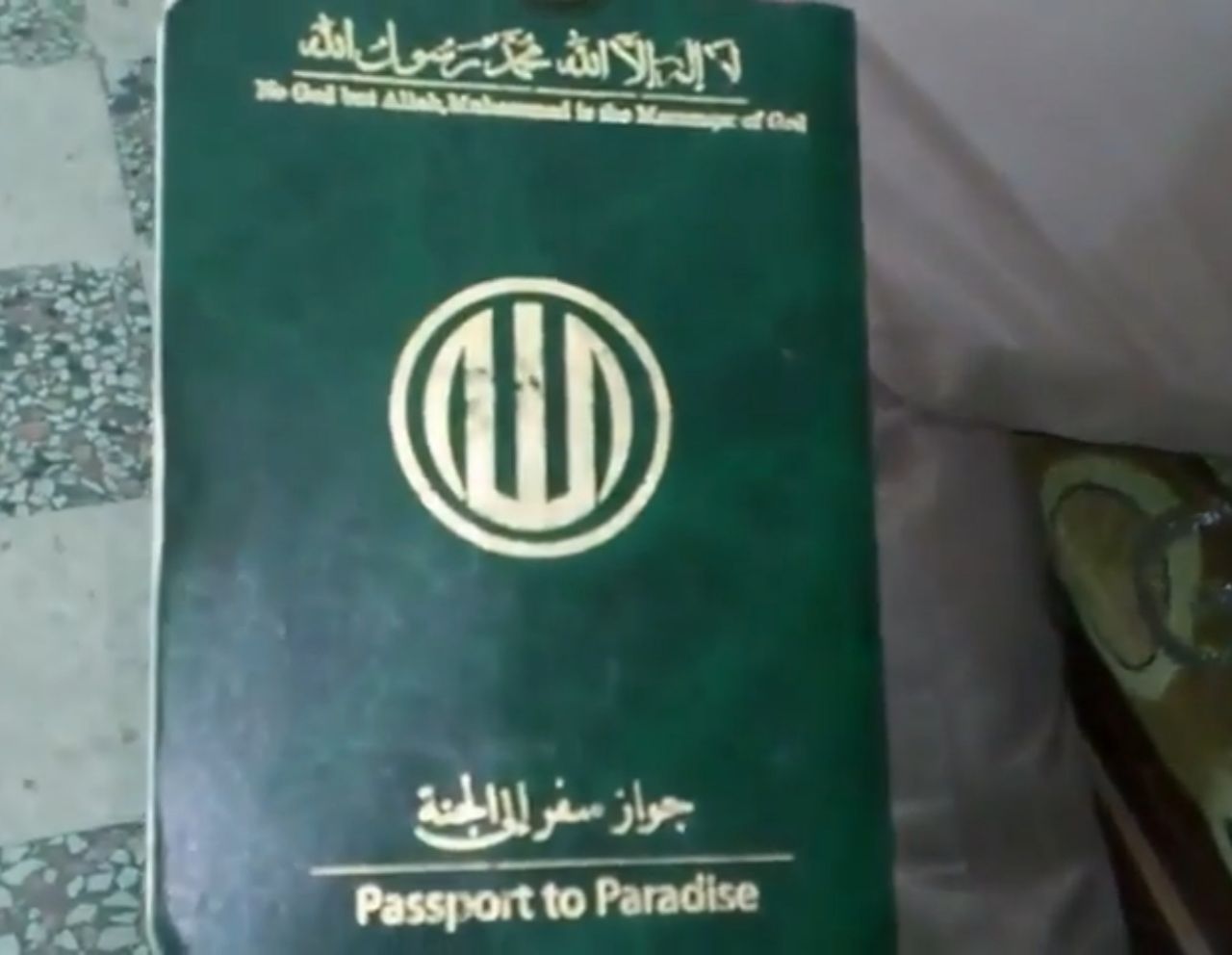
This date is extremely important. In spring 2013, the Islamic State had not declared the "caliphate" and had not taken control of Raqqa in the manner later known. Studies that later reviewed the "Paradise Passport" story indicated that the document had indeed appeared in Raqqa in 2013, before the group seized the city, and that opposition fighters at the time attributed it to Iranian fighters and regime loyalists.
Therefore, simply stating that the Islamic State invented this document does not align with the available chronology and reveals an aspect of media manipulation of events.
The document reappears in Daraa
The story did not disappear after Raqqa. In April 2015, the newspaper Enab Baladi reported the discovery of documents bearing the same name, "Passport to Paradise", after opposition factions took control of the town of Kafr Shams in the countryside of Daraa.
The newspaper said the images broadcast by activists showed the documents in the possession of fighters belonging to Assad's forces and foreign militias supporting them, and that they were similar to those that had appeared in Raqqa two years earlier.
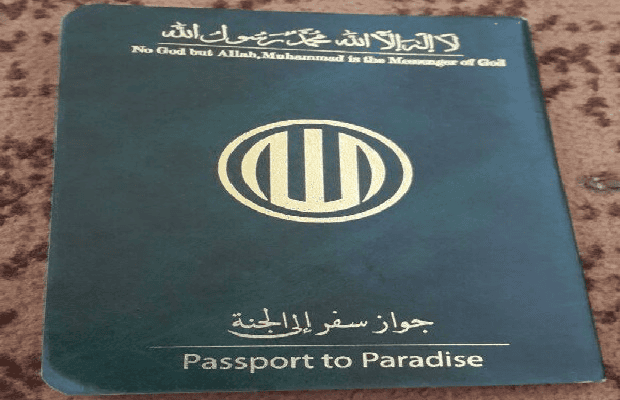
This time too, the context was entirely different from the narrative that would later spread about the Islamic State.
In local reports, the document was linked to fighters loyal to Assad, including Shiite and foreign fighters.
And what about Iran?
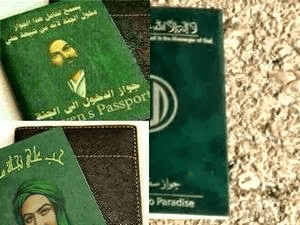
Since the first documents appeared, Syrian fighters and media outlets said they were made in Iran and were an extension of morale-mobilisation methods used during the Iran–Iraq War of the 1980s.
Some reports linked them to what has historically been known about the distribution of "keys to Paradise" to some Iranian fighters, and said the "Paradise Passports" were another version of the same idea. Arab and European reports since 2013 have attributed the document to Iran, saying it was used to motivate Iranian and Shiite fighters in Syria.
How it later became "the ISIS passport"
In the following years, especially with the war against the Islamic State in Raqqa, images of "Passports to Paradise" reappeared in international media, but this time they were presented as documents used by the Islamic State to motivate its fighters to carry out martyrdom operations.
In 2017, media outlets reported the discovery of green booklets in Raqqa following the advance of the Syrian Democratic Forces, describing them as "Passports to Paradise" belonging to the Islamic State.
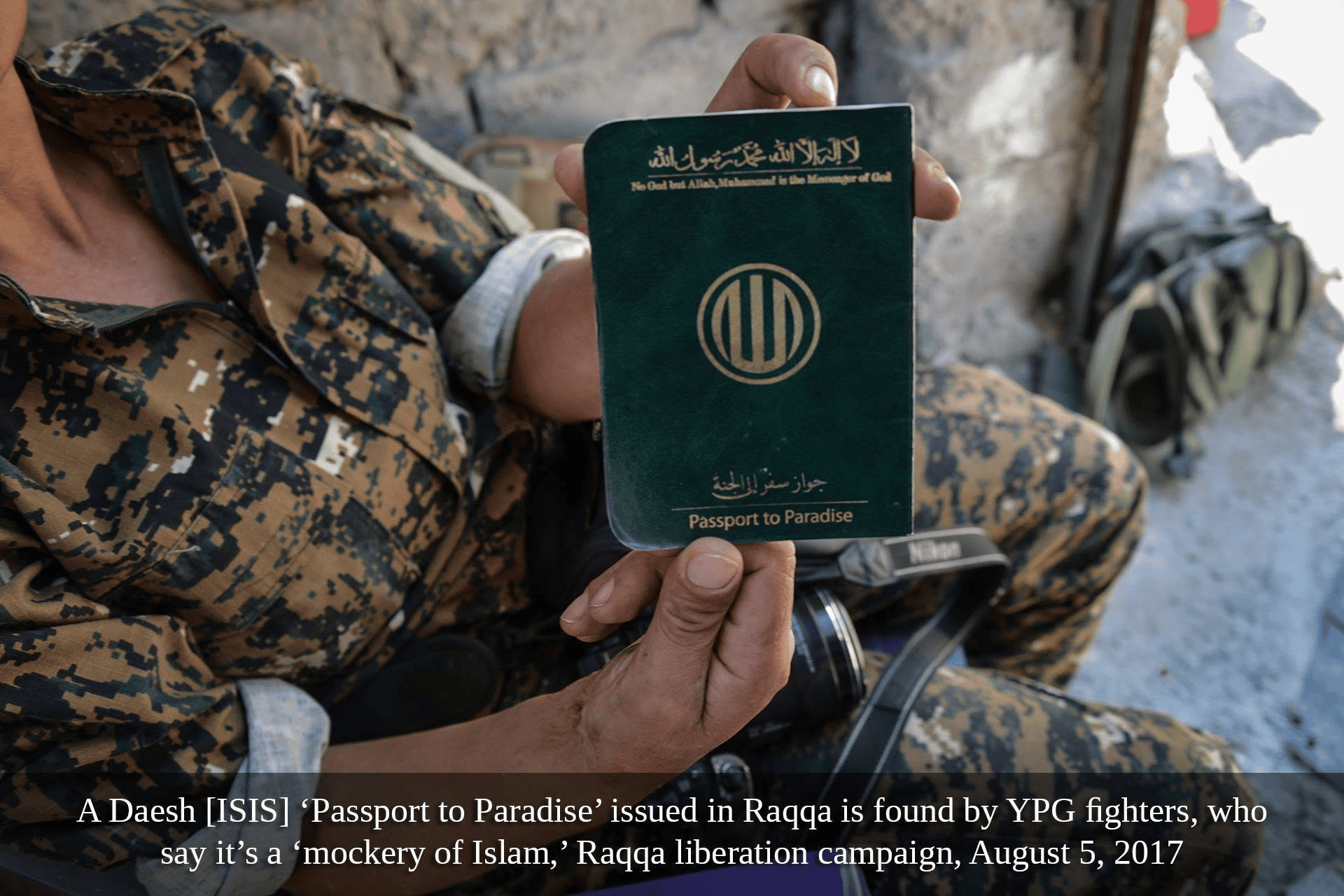
The problem is that some of these reports did not examine the document's earlier history.
An academic study addressed the matter explicitly, noting that attributing the "Paradise Passport" to the Islamic State alone is unreliable, because the document itself was seen in Raqqa in 2013, before the group took control of it, when opposition fighters said they had found it with fighters loyal to the regime and Iran.
This establishes something important: the appearance of the "Passport to Paradise" in Syria predates its media attribution to the Islamic State.
Another mix-up: the "official ISIS passport"
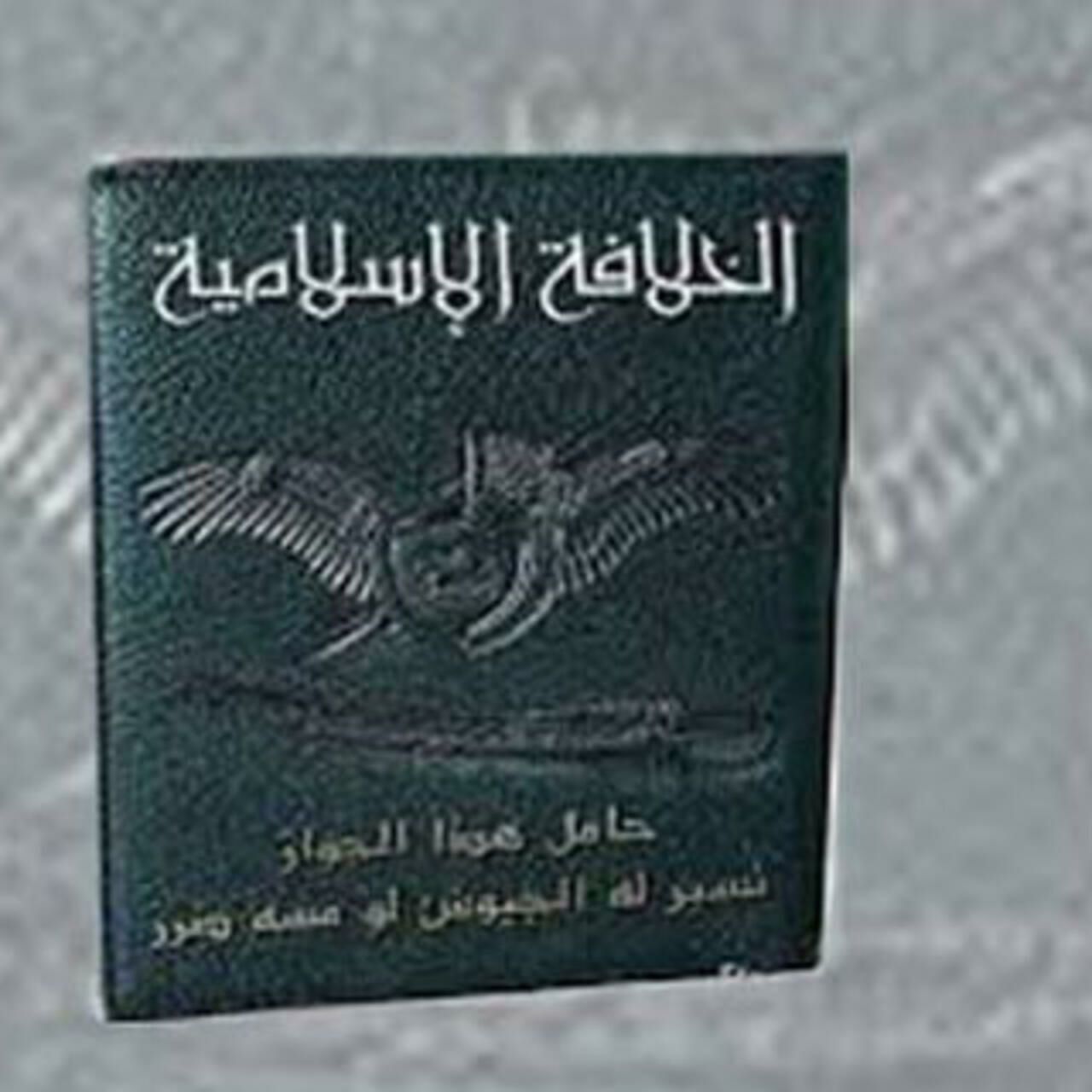
The media confusion was compounded because the "Paradise Passport" story became mixed with a different story entirely: images of what was said to be an "official passport of the caliphate state" issued by the Islamic State after it declared the "caliphate" in 2014.
Images then circulated of a black passport bearing the group's flag and English phrases, and Arab and international media reported the news as though it were an official issue.
However, researchers studying Islamic State media later concluded that these images were most likely fake and not officially issued by the group. Among the indicators: the strange English wording "Islamic State of Al Khilafah", the use of design and materials inconsistent with official documents, and the fact that some images appeared before the "caliphate" was even declared.
This shows how several different stories accumulated under a single heading during the Syrian war: an alleged "official ISIS passport", a symbolic "Passport to Paradise", and genuine or propaganda documents found with various parties.
The media then recycled the images without returning to their original dates.
So do we know "who first issued it"?
If the question is: which first documented party was associated with a "Passport to Paradise" document in the Syrian war?
All the sources lead back to Raqqa in April 2013, where opposition fighters said they had found it with an Iranian fighter and members of forces loyal to the regime of Bashar al-Assad.
Later, similar documents appeared with forces and militias loyal to the former regime in Daraa in 2015.
Iran appears to be the party most consistently linked to this form of passport in the modern period, and this is consistent with the narrative of the Twelver Shiite doctrine.
It is also certain that attributing the document to the Islamic State as its own invention is chronologically untenable, because copies were circulating before the period in which the group became associated with Raqqa.
The war of images is as important as the war of guns
The story of the "Passport to Paradise" is a small example of a larger problem that accompanied the Syrian war: an image may be genuine, but the caption attached to it may be wrong. A document may indeed exist, yet be transferred years later to a different context, with its origin forgotten.
In a conflict in which states, security services, militias, armed groups and thousands of media accounts took part, establishing who took the photograph, when, and where it first appeared becomes part of understanding the event itself.
Therefore, the question in the case of the "Passport to Paradise" is not only: does the document exist?
It is also: when did it first appear, and with whom? And who later attributed it to their adversary?
The archive gives a more complicated answer than the common narrative. The document did not begin its story with the Islamic State as is claimed. It appeared in the Syrian war earlier, linked in the earliest available recordings to militias loyal to Assad's regime and to Iran, and it later passed through the cycle of propaganda and media warfare to become, in many reports, an "ISIS passport to Paradise", a fabricated accusation promoted by the media without credibility.
The question that remains is: how many fabricated accusations have been attached to jihadist and Islamist groups in general in conflicts across the Islamic world, and how much has the media used false narratives to serve the agendas of its masters?
This calls for scrutiny and research, so that the truth may be conveyed as it is, not as interests and enmities dictate without credibility.


