

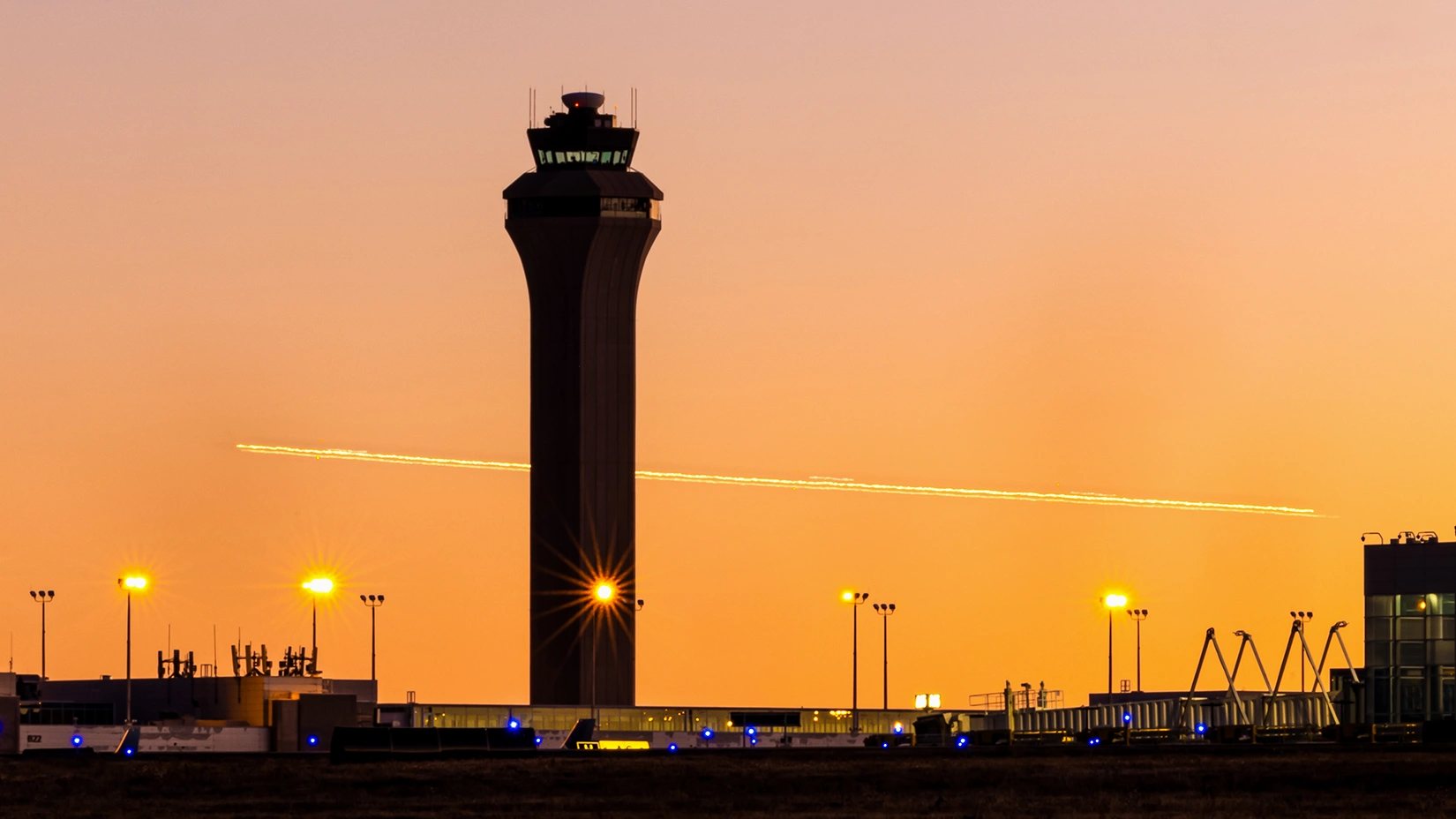
When departures stopped across the United States on Friday, 13 November 2026, the scene was paradoxical: a country that allocates hundreds of billions of dollars to defence and wars was facing a failure in air traffic control communications sufficient to paralyse aircraft departures at its airports. The crisis was not merely a temporary halt to flights; it was a painful test of the age of its infrastructure and the ability of its institutions to modernise it.
The US Federal Aviation Administration issued a nationwide ground stop after control centres experienced disruptions in radar and communications data. Aircraft already in the air were able to continue their flights and land under the supervision of controllers. The order was lifted after about five hours, but thousands of flights continued to be delayed and cancelled.
Yet the incident raised a question larger than when flights would resume: why was a core system of the American economy exposed to this kind of interruption?
The cause of the disruption: what we know so far
US Transportation Secretary Sean Duffy said that transformers and routers in the ageing communications network had come under data pressure, causing unstable radar information and problems in communication with controllers.
Officials said the connection of new technologies to legacy systems may have contributed to the problem, but the precise technical cause remained under investigation as of 14 November, and authorities did not present evidence of a cyberattack.
According to the US Department of Transportation statement, the ground stop was a precautionary measure linked to aviation safety, and did not mean that all aircraft in the air had lost contact.
Infrastructure that aged before it failed
This crisis did not come out of nowhere. In its reports, the US Government Accountability Office warned about the ageing of air traffic control systems and the slowness of their modernisation.
An assessment covering 138 systems concluded that 51 systems were unsustainable according to the agency's criteria, while 54 other systems were at risk of becoming unsustainable. In other words, 105 systems, representing more than three-quarters of the systems assessed, were experiencing actual or potential problems.
Among these systems, 58 have a highly critical operational impact on the safety and efficiency of air traffic. Some of the equipment in use dates back more than sixty years, while other systems face shortages of spare parts and the technical expertise needed to maintain them.
In a more recent report published in September 2026, the agency warned that the modernisation project lacks an integrated estimate of its lifetime cost and a single master schedule linking its phases, which could lead to delays and budget overruns.
This is not the problem of a device that suddenly broke down, but a management crisis whose warnings had continued for years.
Tens of billions to address a defect known for years
In July 2025, Congress approved $12.5 billion for air traffic control modernisation. However, before the November incident, the US administration had requested an additional $30.1 billion for developing airports and surveillance networks, including nearly ten billion for some upgrades to surveillance systems.
After the incident, Duffy raised his demand to $50 billion, affirming that partial patching was no longer sufficient.
These figures reveal the scale of accumulated needs, but they also raise a question about why the modernisation of these systems was delayed despite funding already being approved, and about the quality of planning and oversight of contracts and modernisation projects.
Why were flights resumed gradually?
The gradual return of air traffic was not due to starting with smaller aircraft and then larger ones, as some commentary suggested. Rather, Duffy explained that priority would be given to flights carrying larger numbers of passengers, after reviewing air traffic control capacity and the availability of aircraft and crews.
This phasing is understandable from the standpoint of safety and operations, because a nationwide halt in departures disrupts aircraft positioning, crew schedules and airport gates.
But the safety of the decision to halt and the gradual return does not relieve officials of a deeper accountability: why did the infrastructure deteriorate to the point that movement had to be stopped across the country?
Military spending versus domestic needs
The paradox becomes clearer when the cost of modernising air traffic control is placed alongside other figures in the US budget.
Congress authorised approximately $839.2 billion for specified Department of Defense activities in fiscal year 2026, according to the Congressional Research Service.
Washington also continues to allocate large military aid to Israel, at a time when human rights criticism is growing over the use of American weapons in military operations that have killed large numbers of Palestinian civilians, including children, in the Gaza Strip.
This comparison does not mean that funds allocated to defence or to Israel were directly withdrawn from the aviation budget, nor that foreign spending technically caused the communications outage; this is a relationship the evidence has not established.
But governments are held accountable for their priorities as they are for the results of their decisions. It is legitimate for American citizens to ask how resources are allocated, and why essential services remain vulnerable to failure while vast sums are set aside for military programmes and foreign policy.
At the same time, the problem of air traffic control cannot be reduced to lack of funding alone; oversight reports have identified problems in planning, management and procurement, which increased allocations do not automatically resolve.
The question is not when the planes returned, but why they stopped
Flights have resumed, and airlines will work to clear the effects of the delays, but the defect that was exposed goes beyond the hours of the halt.
A state capable of developing highly complex combat aircraft does not thereby guarantee a modern civilian communications system, and immense military capacity does not replace administrative reform, oversight and efficiency in managing public services.
If the crisis has proven anything, it is that the strength of a state is not measured only by the weapons it possesses, but by its ability to protect the daily services on which people's lives and economies depend.
After years of official warnings, the most pressing question becomes: who bears responsibility for leaving these vital systems exposed to obsolescence, and when will modernisation allocations and political promises turn into a network that can be relied upon?


