

What You Need to Know About the US Strikes on Iran
The United States and Israel launched a major attack on Iran on Saturday, which President Trump described as an opportunity to change the regime in Tehran.
The attack came after weeks of repeated threats from Trump that the United States would strike Iran unless its leadership agreed to its demands, particularly regarding Tehran's nuclear program. On Thursday, American and Iranian officials held a final round of talks mediated by the United States, which ended without any progress.
On Saturday, Trump announced the start of "large-scale combat operations" in Iran. The Department of Defense named the strikes "Operation Epic Fury."
Here is what you need to know:
Why did the United States and Israel attack Iran?
What are the objectives? How did Iran respond? Why did the United States and Israel attack Iran?
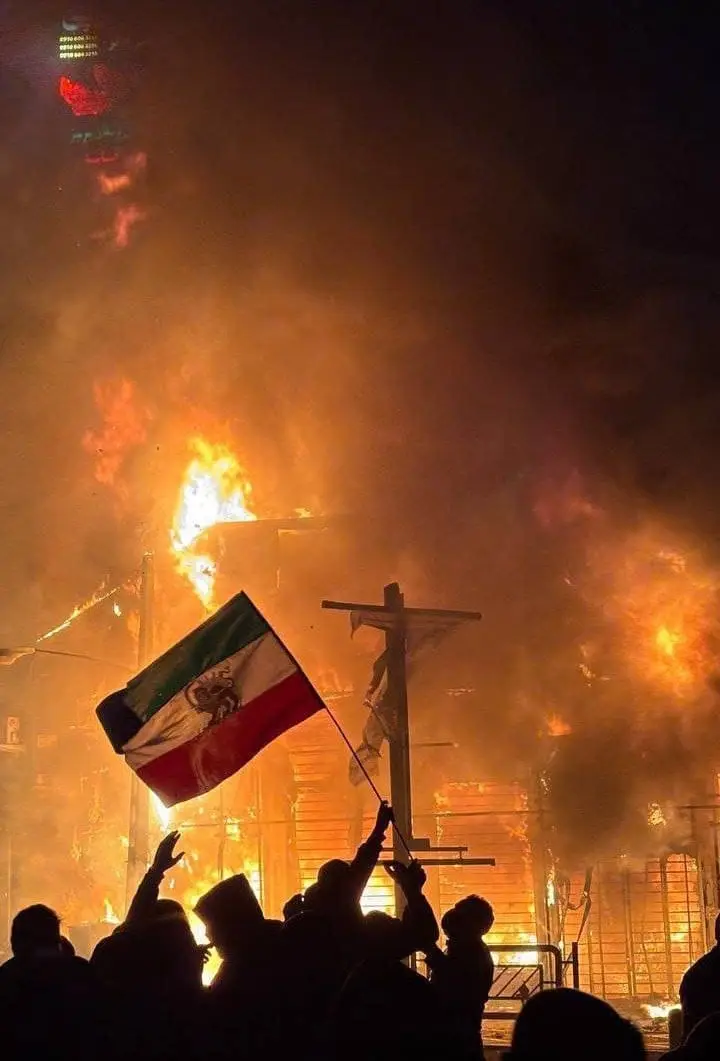
The most recent tensions between the United States and Iran began in January, when Trump pledged to intervene to help protesters after the Iranian government used force to suppress popular demonstrations.
In a recorded statement announcing the attack on Saturday, Trump urged Iranians to "take over your government" once the military operation is over.
He said: "This may be your only chance for generations to come. For many years, you have asked America for help, but you never received it. No president has been willing to do what I am prepared to do tonight. Now you have a president who gives you what you want. Let us see how you respond."
For Israeli Prime Minister Benjamin Netanyahu, joining the strike on Iran is part of a long-term goal of changing the regime in a country he has long portrayed as an existential threat to Israel, the Middle East and the world.
In a televised statement, Netanyahu said the joint American-Israeli attack could "create the conditions for the brave Iranian people to take their destiny into their own hands."
What are the objectives?
The attacks began on the first day of the week in Iran, with reports of explosions in several cities, including Qom, Kermanshah, Isfahan and Karaj, according to the semi-official Iranian news agency Fars. In Tehran, where the Supreme Leader Ayatollah Ali Khamenei resides, images showed thick smoke rising into the sky. Videos verified by The New York Times showed airstrikes on an area in Tehran that houses the presidential palace and the Supreme National Security Council, as well as other important government buildings. Another video showed an airstrike near the Ministry of Intelligence.
One of the main objectives of the first wave of joint strikes was to target as many leaders as possible, according to three Israeli security officials familiar with the operations. The Israeli military also announced that its air force carried out a broad wave of strikes on several military targets in western Iran.
Officials from both countries said they expect the attack to continue for several days.
How did Iran respond?
The Islamic Revolutionary Guard Corps announced in a statement on the Telegram app that Iran had launched a barrage of missiles and drones at Israel.
Missile attacks also targeted US military bases in the region, including Al Udeid Air Base in Qatar, Ali Al Salem Air Base in Kuwait, Al Dhafra Air Base in the United Arab Emirates, and the headquarters of the US Fifth Fleet in Bahrain, according to Fars.
The Qatari Ministry of Defense announced that it had "successfully intercepted a number of attacks" targeting its territory. This attack recalled another that took place last June, when Iran fired more than twelve missiles at a US military base near the Qatari capital, Doha, in response to a US attack on its nuclear facilities.
The Gulf states host a number of US bases and embassies, and experts have warned that Iran would target them with retaliatory strikes. In preparation, the US military has reinforced its forces in the region, in what Trump described as a "armada."
New York Times.


