


Nearly nine years after fleeing violence in Myanmar, more than one million Rohingya refugees still live in the crowded camps of Cox's Bazar in Bangladesh. They have survived persecution, but safety has become for them less a destination than a daily effort.
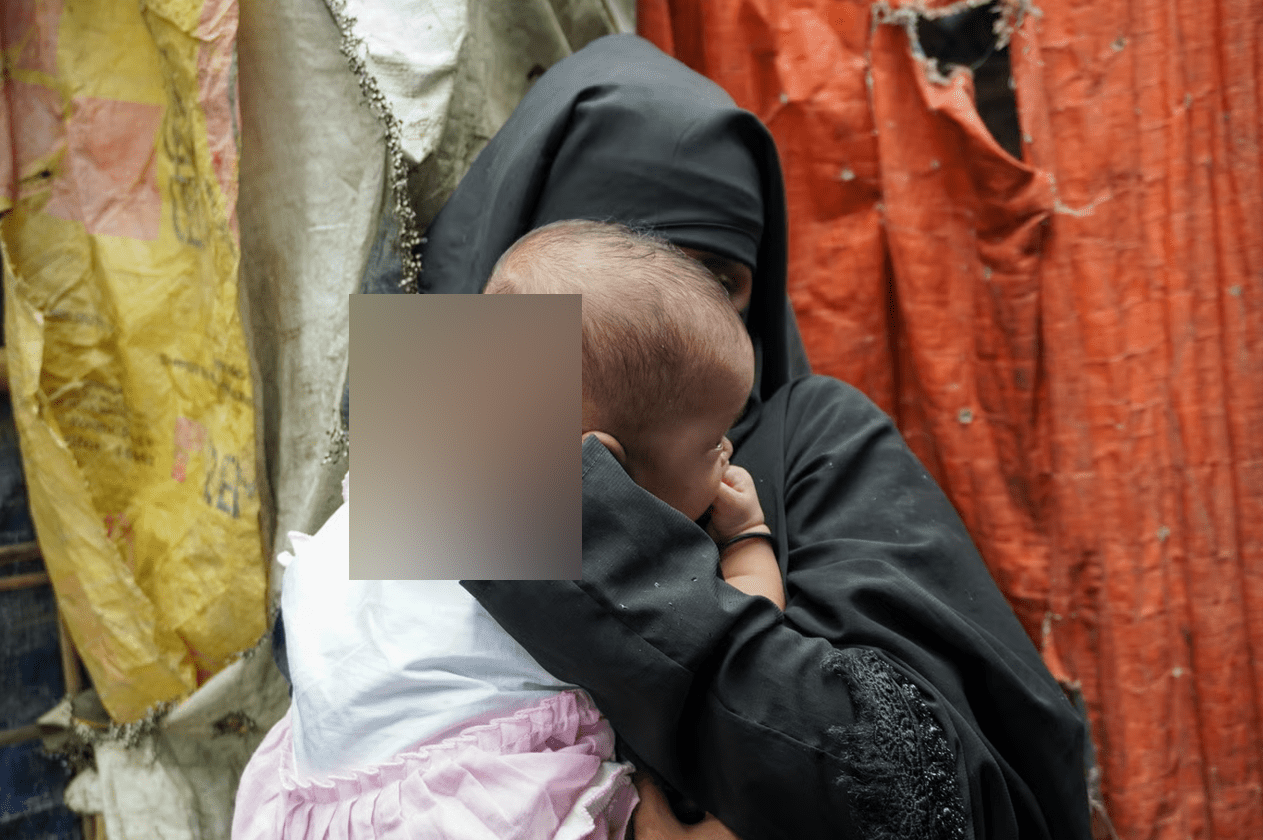
In displacement, protection means more than simply staying physically safe. It also means having legal identity, being able to access the services they depend on, keeping shelter, and living in a community where their rights are respected.
Safety means being recognised
Yasmin was seven days old when she became, in the eyes of the system, almost invisible.
Her story was hard even before it began. Her father died in Myanmar. Her mother, pregnant and displaced, crossed into Bangladesh seeking safety, and died seven days after giving birth. She was left a newborn with no parents and nothing to prove her existence.
Without documents, the newborn faced an uncertain future. But help was within reach. Her aunt, Mimi Jan, 24, took her in and turned to the legal aid office of the Norwegian Refugee Council for support.
Aid and rights teams worked to add Yasmin to her aunt's family relationship document. In this way, they helped her obtain a birth certificate, the first official record of her life.
Thanks to these documents, Yasmin can access services inside the camp, and she will be able to obtain a smart card when she turns twelve. The smart card is the only identity document available to Rohingya refugees in Bangladesh.
Mimi Jan says: "We were very worried about what would happen to her. She had already lost her parents. All we wanted was for her to be safe and cared for. Now I feel hopeful that she will get the support she needs to grow up."
Yasmin now lives with her aunt Mimi Jan and her husband, Mohammad Amin, in the Rohingya refugee camp in Cox's Bazar.
Safety means access to essential services
In the camp, a lost piece of paper can mean a lost meal.
Shafi Al-Qadir learned this in Rajab 1447 AH / January 2026, when a massive fire broke out in Camp 16 in Cox's Bazar, destroying hundreds of shelters within minutes. He had been living there with his wife and two sons since 1438 AH / 2017.
The flames consumed their home and nearly everything in it, including the family's residence document and the smart cards the family used to obtain food, cooking gas and other essentials.
He says: "After the fire, we had nothing left. I kept thinking, how will I feed my children? Without our documents, I cannot afford anything here."
In the aftermath of the disaster, the Norwegian Refugee Council set up a mobile help desk in the affected area and worked with site management and registration teams to replace the documents families had lost. For Shafi, recovering the cards was a great relief.
He says: "When we received our cards, we felt as if we could finally breathe. Without the Norwegian Refugee Council's help, it would have taken us months."
Safety means a safe home
Minara's family of five, one member of whom has special needs, had been living a stable life until they received an eviction notice threatening to remove them from their shelter.
She says: "When the notice reached me, I could not sleep. I kept imagining where my children would go."
After finding no other shelter, she turned to the National Rehabilitation Centre. The legal aid team sat down with the landowner and negotiated more time for the family to explore their options.
Then, after the necessary assessments were carried out, they reached a safe and affordable agreement.
Minara says: "Now we have a safe place to live. I feel much more at ease." For her, safe housing means more than shelter. It means stability, a tenure she can rely on, and dignity in her daily life.
Safety means a peaceful community
For six years, Abdul Hakim, 69, and his wife grew vegetables on a small plot of land next to their shelter. They have no children and no close relatives nearby; the garden was their source of livelihood and of life itself. Then a neighbour fenced it off and claimed ownership as his own.
Abdul Hakim felt he had no way to object, so he turned to the Norwegian Refugee Council. Dialogue took place, attended by representatives of the local community. They discussed the matter, and the neighbour agreed to remove the fence, without the situation escalating.
Abdul Hakim says: "This garden provides us with food and gives us a reason to get up every day. I am grateful the matter was settled through dialogue, and that we can continue to live here in peace."
Safety means enjoying rights
Nur Kolima works as a paid volunteer in the camp, and the monthly incentive she receives is her family's only income. When she lost her smart card, she could not collect it.
She says: "When the money finally arrived, I felt relieved and respected. It gave me confidence that our rights are still protected, even in the hardest circumstances."
Safety means rights, dignity and hope
These families' circumstances differ, but they share one thing: everyone wants to feel protected and treated with humane dignity.
Safety is not merely survival. It is the dignity, rights and hope that every displaced person deserves. The journey towards safety will not be complete until every refugee has these rights.
Translated from an article published by the Norwegian Refugee Council, with adaptation.


