

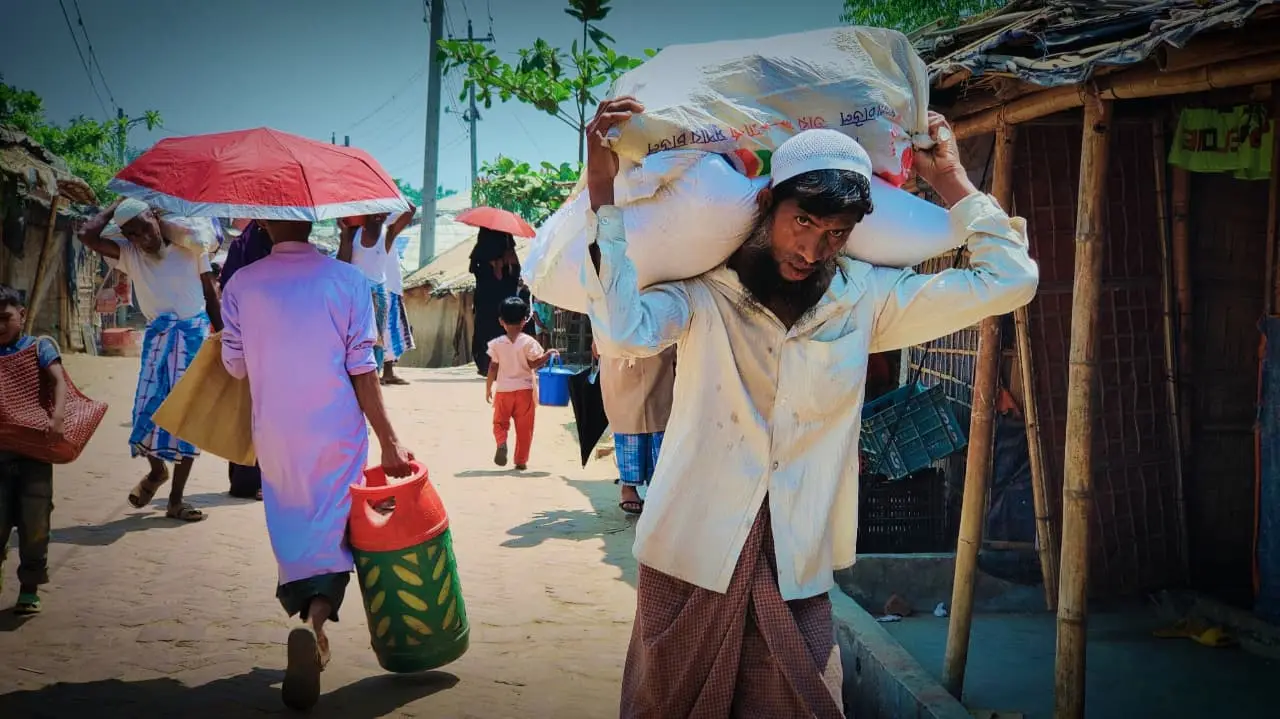
The World Food Programme (WFP) plans to modify the mechanism of food assistance provided to Rohingya refugees starting April 2026.
WFP will continue to provide monthly general food assistance to Rohingya refugees residing in the camps of Cox's Bazar and Bhashan Char. However, starting from Shawwal 1447 AH (1 April 2026 CE), there will be changes to the amount of assistance received by households, within a revised system based on the level of food insecurity of each household.
Under this new approach, not all households will receive the same level of support; rather, assistance will be adjusted according to the degree of food insecurity experienced by each household.
Food security refers to the availability of enough safe and nutritious food daily to ensure a healthy life for a person. Although all Rohingya refugees remain in a precarious situation, some households face greater hardship than others. Households with a large number of children, elderly persons, persons with disabilities, or those lacking sources of income may find it more difficult to meet their daily food needs.
WFP reported that, under the revised system, households classified as suffering more acutely from food insecurity will receive higher levels of assistance, while households assessed as relatively better off will receive less support, with assistance continuing to be provided to all.
The change aims to ensure that all households are able to meet the minimum of their food needs. Although the amounts of assistance will vary, the goal is for all families to reach a similar level of food security.
In protracted humanitarian crises, such as the Rohingya crisis, WFP applies this approach known as vulnerability-level targeting, in order to prioritise the households most at risk and to prevent further deterioration of food security across the camps.
Rohingya Khabar website.


