


The United Nations World Food Programme (WFP) confirmed that food and nutrition conditions in the Gaza Strip have improved relatively in recent months thanks to increased flows of humanitarian aid, but warned that this improvement remains fragile amid continued restrictions on the entry of supplies and the sector's reliance on the Kerem Shalom crossing as the main channel for aid.
The programme explained that the ceasefire agreement concluded in October 2025 contributed to an increase in the volume of aid, with food parcels reaching around 1.5 million people during May, while some 700,000 people received cash assistance, and 60% of children under five benefited from nutrition programmes, which had a positive effect on food security indicators and children's health.
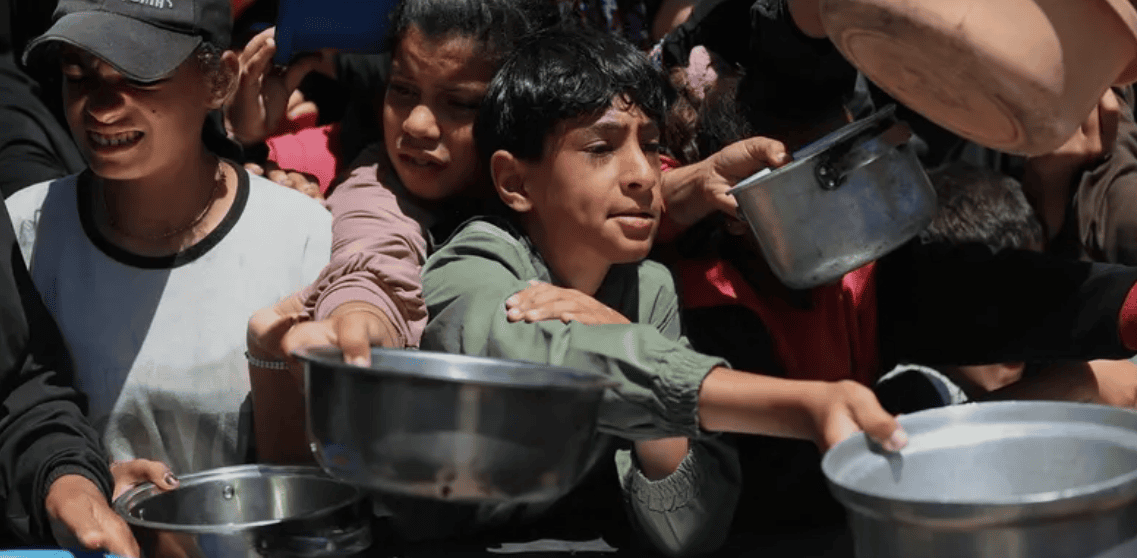
Nevertheless, the programme stressed that the continued closure of most crossings limits the flow of essential materials, calling for more crossings to be opened and for the entry of fuel, medical equipment and agricultural inputs to ensure the sustainability of the improvement.
The report pointed to preliminary indications that part of agricultural production could be restored if farmers are able to access farmland and are provided with the agricultural supplies, energy needed for irrigation, and veterinary support, noting that livestock numbers in areas that received support rose by around 33%.
However, the programme said the extensive destruction that struck the agricultural sector during the war remains a major obstacle, as more than 70% of agricultural land has become inaccessible, while the proportion of land currently usable does not exceed 3%.
Reconstruction requires more than $71 billion
In a related development, a joint report prepared by Oxfam, the Palestinian Economic Policy Research Institute (MAS) and the Palestinian Trade Center (PalTrade), based on a joint assessment by the United Nations, the European Union and the World Bank, found that reconstruction of the Gaza Strip will require $71.4 billion over the next ten years, a figure exceeding seven times the cost of all reconstruction operations that followed Israeli wars on Gaza since 2008.
The report estimated that the sector has sustained $57.9 billion in damages and economic losses, while the first phase of reconstruction requires around $26.3 billion during the first 18 months to restore essential services, infrastructure and revive the economy.
Extensive damage to infrastructure
The report documented the extent of destruction caused by the war, noting:
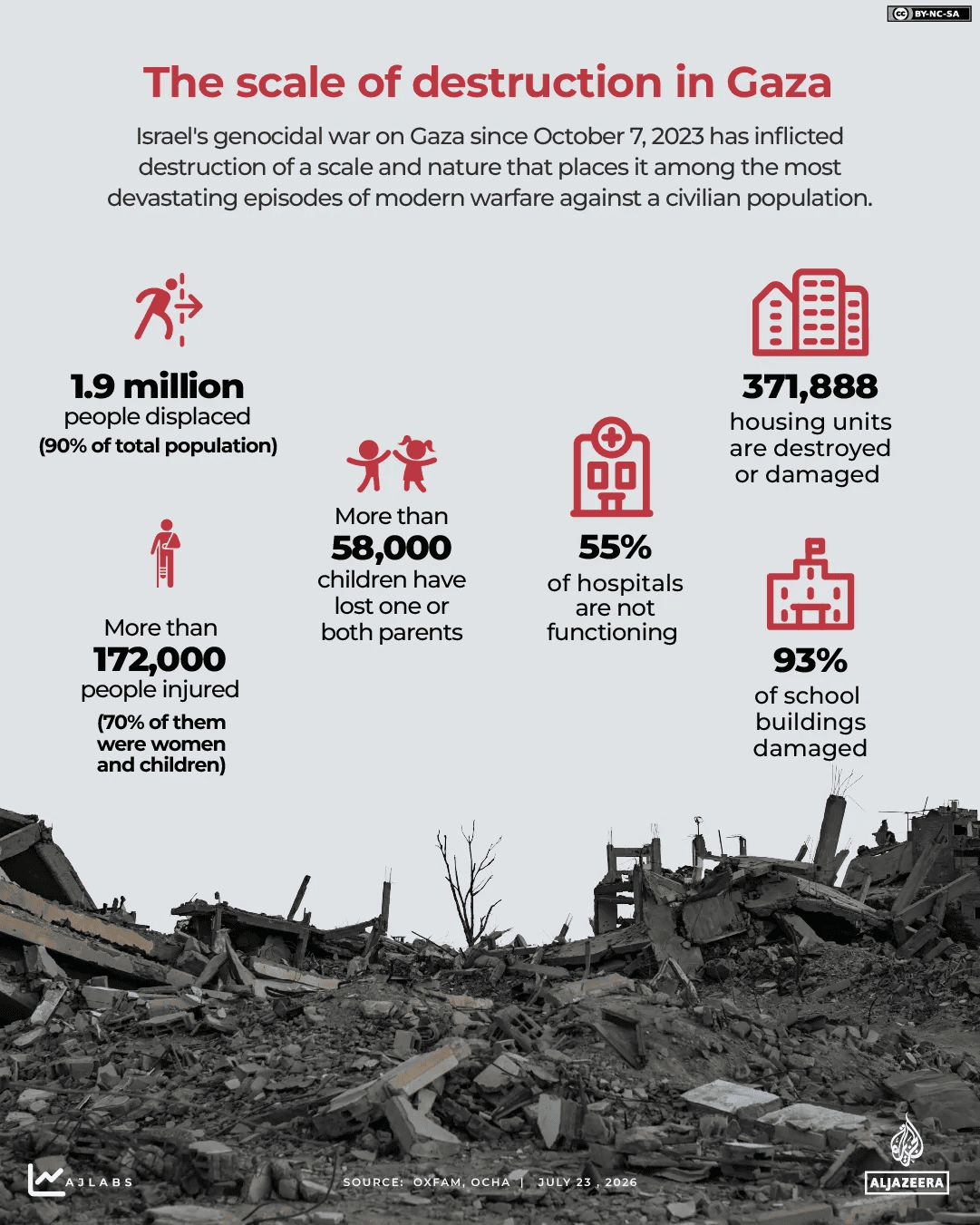
The destruction or damage of 371,888 housing units.
The presence of around 66 million tonnes of rubble, whose mass equals about 11 of the Giza pyramids.
Damage to or destruction of 93% of school buildings.
55% of hospitals taken out of service.
More than 50,000 people in need of long-term rehabilitation.
More than 58,000 children who have lost one or both parents.
83% of persons with disabilities forced to abandon their assistive devices during displacement.
The report also indicated that rubble removal will be among the greatest challenges, not only because of its volume but because it contains unexploded ordnance and hazardous materials, in addition to the belief that between 8,000 and 11,000 people remain buried under the rubble, making removal operations complex and lengthy.
A reconstruction plan led by Palestinians
The report proposes a five-year roadmap beginning with urgent relief, rubble removal and the restoration of essential services, followed by repair of housing and infrastructure, then rebuilding of institutions and public facilities, and ultimately long-term economic development.
The report's authors affirmed that the success of reconstruction requires that Palestinians be at the forefront of the planning and implementation process, with the participation of the United Nations, the European Union, Arab states and international institutions, warning that any plans imposed from outside will not achieve sustainable reconstruction or meet the needs of the population.


