

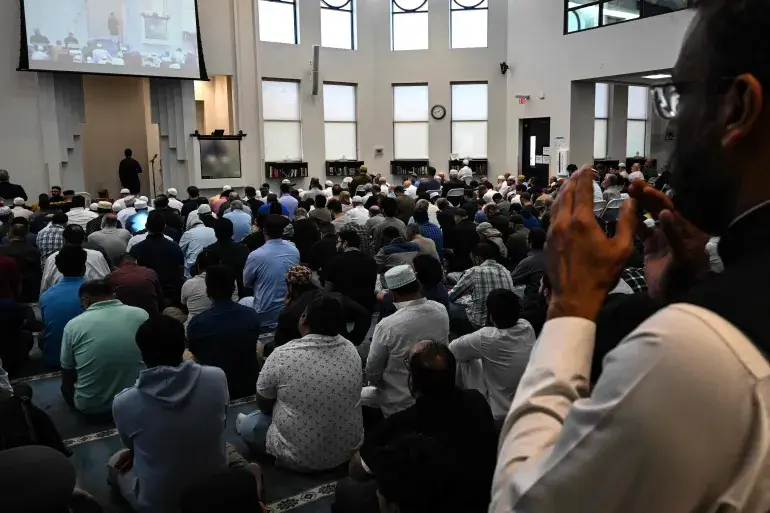
Concerns are growing over rising hostility toward Muslims in a number of Western countries, with a series of assaults, harassment and hate crimes documented over recent weeks targeting Muslims, mosques and Islamic institutions.
In the latest monitoring published by the organisation Documenting Oppression Against Muslims (DOAM), some 30 incidents were documented in the United States, Britain, Canada, Ireland, Italy and Belgium over roughly ten weeks since the end of May 2026. They included assaults, harassment and hate incidents targeting Muslims, and a large number of the targets were Muslim women.
The significance of these events lies not only in their number but also in the nature of some of them. Incidents occurred in public places, and a number of the assaults were filmed and the footage posted online, which widens the impact of each incident from the direct victim to the wider Muslim community.
United States: Attacks Going Beyond Rhetoric to Violence
In the United States, a court case in recent days has reflected the seriousness of targeting Muslims on the basis of religion.
A federal grand jury in Utah charged a man accused of stabbing a Muslim man at a shopping centre in West Valley City on 13 July with a hate crime.
According to the prosecutors, the accused asked employees at the centre about their religion before targeting the victim after the victim identified himself as Muslim. The man sustained injuries that required several surgeries, according to what Reuters reported based on court documents and US authorities.
The case is significant because the prosecution does not treat it as a random assault, but as a crime in which the suspect is accused of targeting the victim because of his religion.
From the Street to the Political Arena
The concerns are not limited to physical attacks.
In the United States, the rise of Muslim politicians to more prominent positions has coincided with a growing anti-Muslim political discourse in some circles.
The Associated Press noted that the candidacy of Abdul El-Sayed for the US Senate in Michigan, as the first Muslim to win the Democratic Party's nomination for a Senate seat in the state, coincided with political attacks and rhetoric portraying Muslims and some Muslim officials as a security or political threat.
In some areas, the debate extended to mosque construction projects, with tense public meetings opposing mosque projects in American cities, including accusations that Islam itself is linked to violence or poses a political threat.
Human rights organisations and Muslim leaders warn that turning Islam and Muslims into an electoral or security issue can contribute to an environment more accepting of discrimination and hostility.
Europe: Attacks Take No Single Form
In Europe too, the phenomenon does not appear confined to one country or one pattern.
The latest monitoring covered Britain, Italy, Belgium and Ireland alongside other countries, with incidents ranging from direct assaults and harassment to threats and attacks on Islamic institutions.
In Britain, members of an extremist far-right group broke into an Islamic Sharia council and a halal meat slaughterhouse in east London and filmed the staff and the premises, raising fresh concerns about the growing targeting of institutions linked to Muslim life.
Germany: Lower Figures Do Not Mean the Problem Has Ended
In Germany, recently released government data recorded 231 anti-Muslim crimes in the first half of 2026.
Although the figure is much lower than in previous periods, the data reveal that the problem persists: about 84%, or 194 cases, were attributed to right-wing motives, while the other cases included incitement to hatred, threats, assaults, property damage and crimes committed online.
German authorities recorded 11 violent crimes, 9 cases of coercion or threats and 3 cases of property damage, while 33 of the recorded cases took place online.
Police identified 127 suspects, with no arrests recorded according to the published data, and it was stressed that the figures remain provisional and subject to review.
The importance of not reading the drop in figures in isolation from their context is evident here: a statistical decline does not necessarily mean the phenomenon has disappeared, especially as some assaults and harassment may never reach the police at all.
Muslim Women in the Line of Fire
One of the most notable aspects of the latest monitoring is that Muslim women were repeatedly among those targeted.
This carries a particular dimension, because a woman wearing the hijab may be more visibly identifiable as Muslim in public places, making her religious identity apparent to others.
According to the monitoring compiled by DOAM, Muslim women appeared repeatedly among the victims of the documented incidents over the past ten weeks.
When Hatred Becomes Online Content
Another dimension of the phenomenon lies in filming some attacks and posting them online.
This creates an additional cycle of harm: an assault in reality, then its reproduction digitally before a wider audience.
At the same time, digital platforms can serve as a means of documenting abuses and exposing them to public opinion, which makes them a double-edged tool in dealing with hate crimes.
Why Are the Concerns Growing?
The phenomenon of Islamophobia cannot be reduced to a single cause.
It is shaped by intertwined political and social factors, including the rise of far-right movements, disputes over immigration, international tensions, political polarisation, and the spread of stereotypes and misleading information about Muslims.
Yet linking Muslims in general to the acts of individuals or groups classified as terrorist remains one of the most dangerous manifestations of this discourse, because it turns religion and identity into grounds for suspicion or hostility toward people who have no connection to those acts.
Between Freedom of Expression and Protecting Minorities
Western societies face a difficult test in dealing with anti-Muslim discourse.
While freedom of expression is a fundamental right, physical assault, threats, incitement to hatred and discrimination are not merely political opinions.
Hence the importance of protecting mosques and religious institutions, holding perpetrators of hate crimes accountable, and confronting discourse that reduces Muslims to a single bloc or portrays their presence in society as a threat.
A Phenomenon That Requires Monitoring, Not Minimising
The recent events show that the problem cannot be reduced to an isolated incident.
While some countries have seen a decline in recorded crimes, assaults, harassment and political and social targeting of Muslims continue in other countries.
In the United States, hate crimes intersect with a rising anti-Muslim political discourse, while in Europe various forms of assault and discrimination appear.
The most important message from these developments is that protecting Muslims from hatred is not a matter for Muslims alone; it is a test of the ability of societies that celebrate democracy to protect religious pluralism and to reject turning difference in religion or origin into a justification for violence or exclusion.
As monitoring organisations continue to document cases, the question remains: will Western governments treat these events as scattered incidents, or will they address them as a social and political phenomenon deserving deeper action? Or is what is happening part of their hostile policies toward Islam?
Figures may rise or fall from one year to the next, but the real danger begins when assaulting a Muslim, targeting a mosque, or harassing a woman wearing the hijab becomes routine in public life.


