


This week's most significant events in the Muslim world are summarised below, covering the period from Friday, 16 Jumada al-Awwal, to Friday, 23 Jumada al-Awwal 1447 AH.
Palestine
Gaza Strip
The occupation has not stopped, to this day, blowing up buildings in the Gaza Strip with explosives.
Palestinian Maysa Jaber, as we understand it, al-Attar was killed today by occupation army fire in the al-Attatra area in northern Gaza Strip.
The moment the occupation blew up a number of residential buildings, east of the al-Tuffah neighbourhood, east of Gaza City.
The suffering of Gaza's residents with the onset of winter
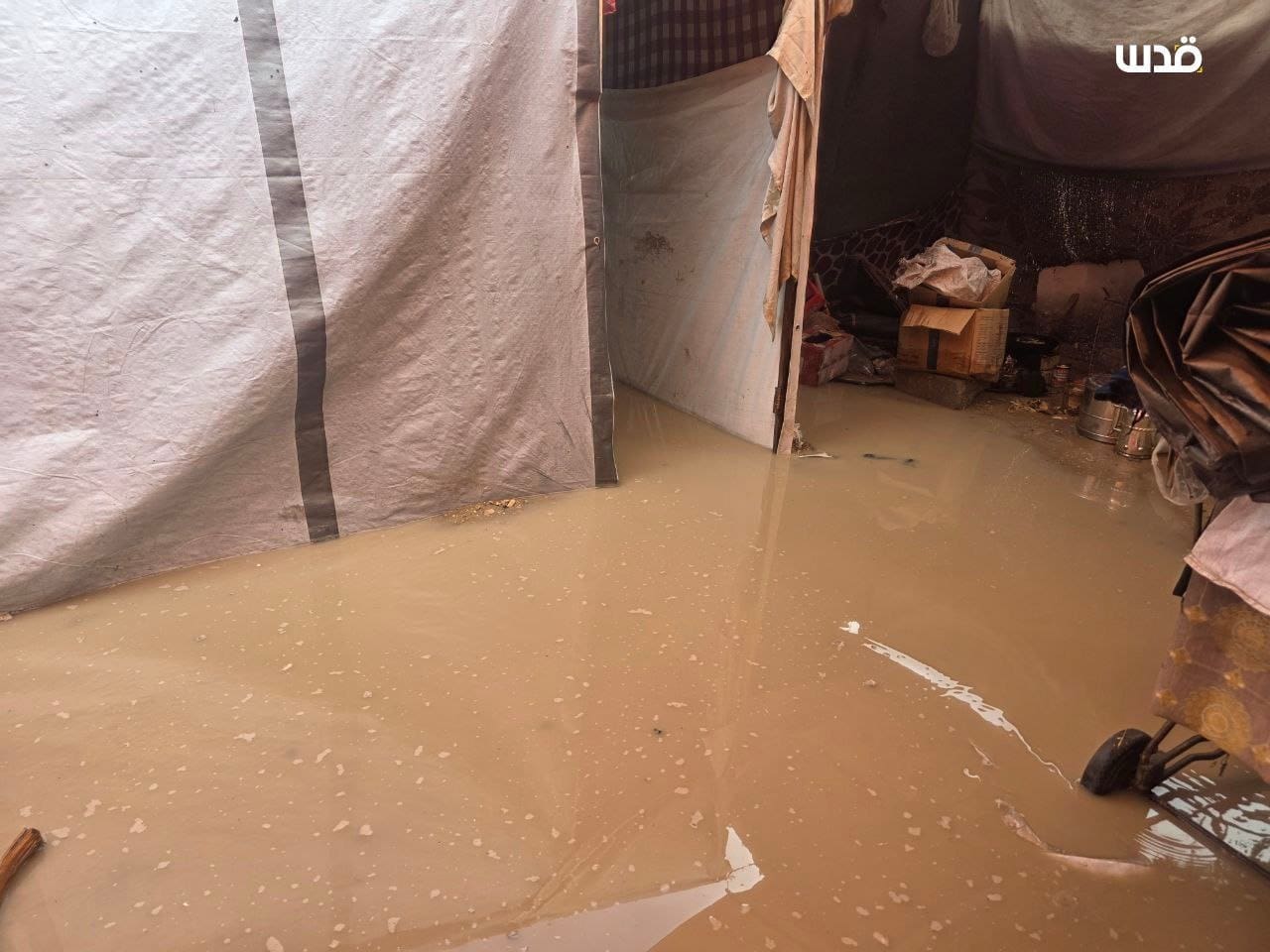
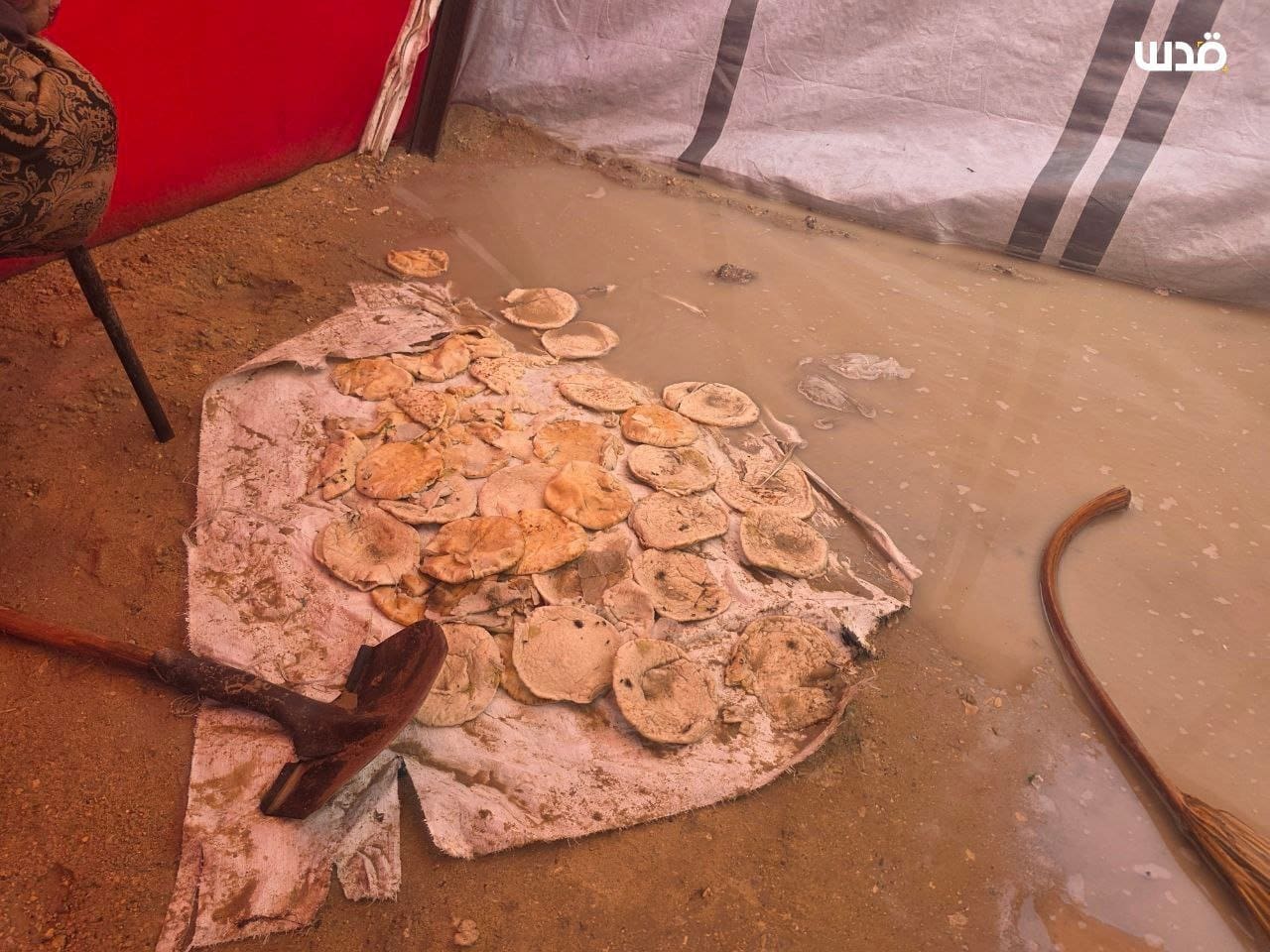
Mahmoud Basal, spokesman for the Civil Defence in the Gaza Strip, confirmed that a number of shelter centres were flooded due to the air depression that struck the area in its early hours, resulting in significant damage to tents, which were severely affected by water flowing into them.
In statements to the press, today, Friday, Basal explained that thousands of tents were damaged, while clothing and blankets were soaked by water entering them, noting that local authorities have no alternatives to provide shelter for citizens who are suffering extremely harsh conditions as a result of the ongoing war in Gaza for two years.
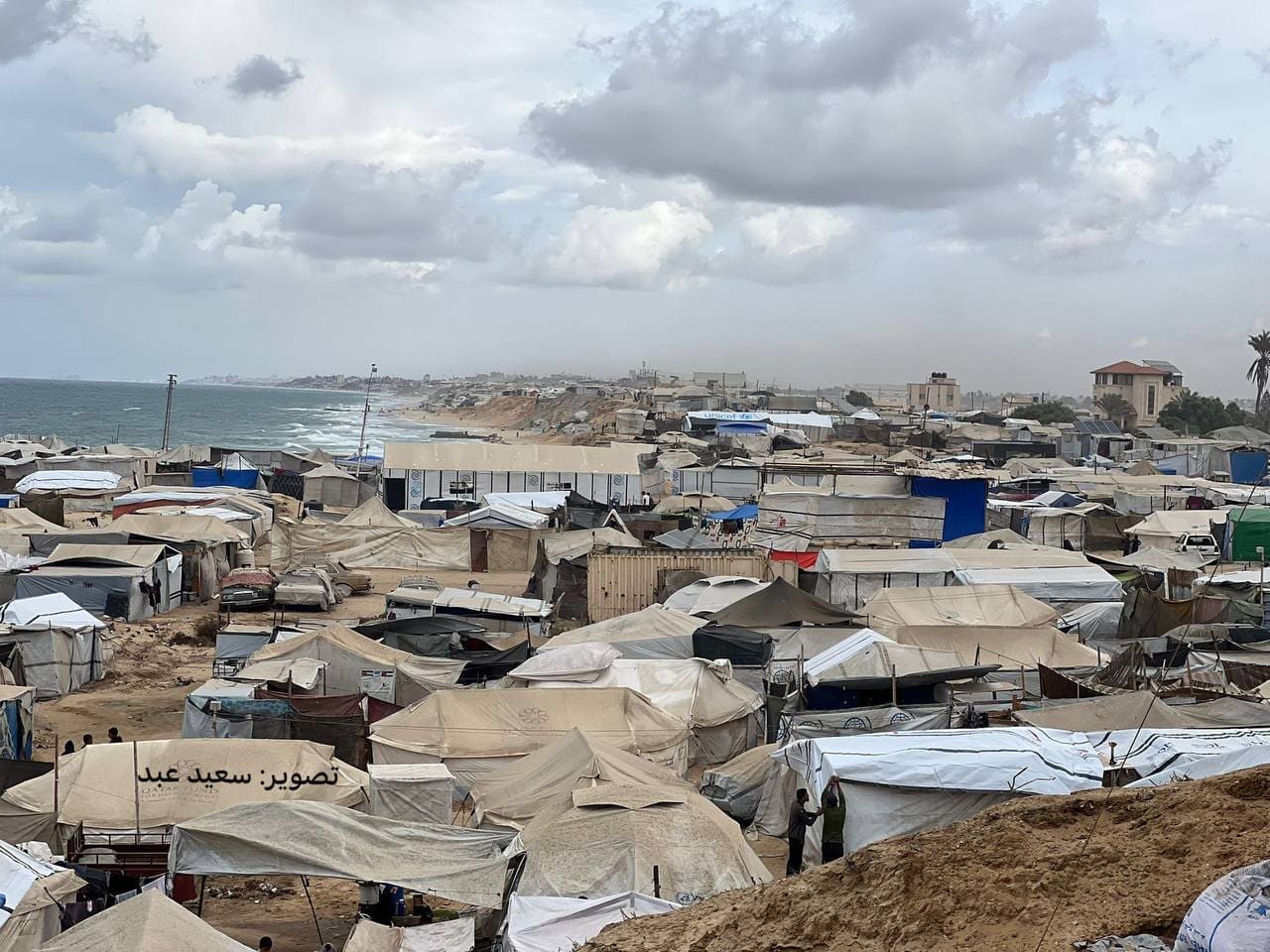
As rainfall and further air depressions continue in winter, Basal warned that dilapidated houses in Gaza may collapse due to torrents or water entering them, given the damage inflicted on infrastructure by the ongoing war.
The Government Media Office in Gaza also said: With the strong arrival of winter, the suffering and tragedy of nearly one and a half million people in the Gaza Strip are worsening. After the ceasefire agreement, the situation remained unchanged and suffering continued amid the occupation's disavowal of its obligations to allow in aid, food, medicine, reconstruction supplies and shelter materials such as tents and caravans.
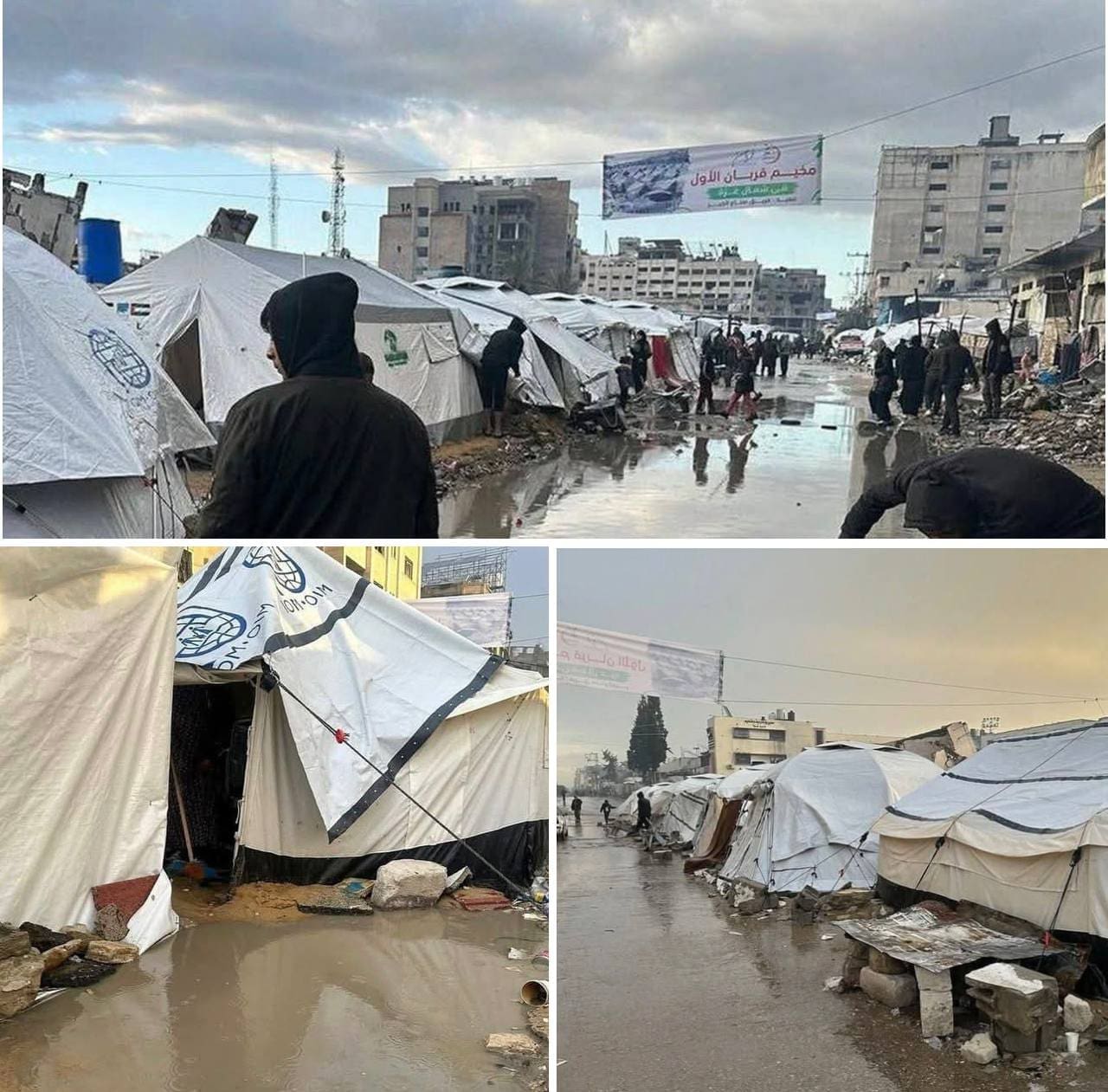
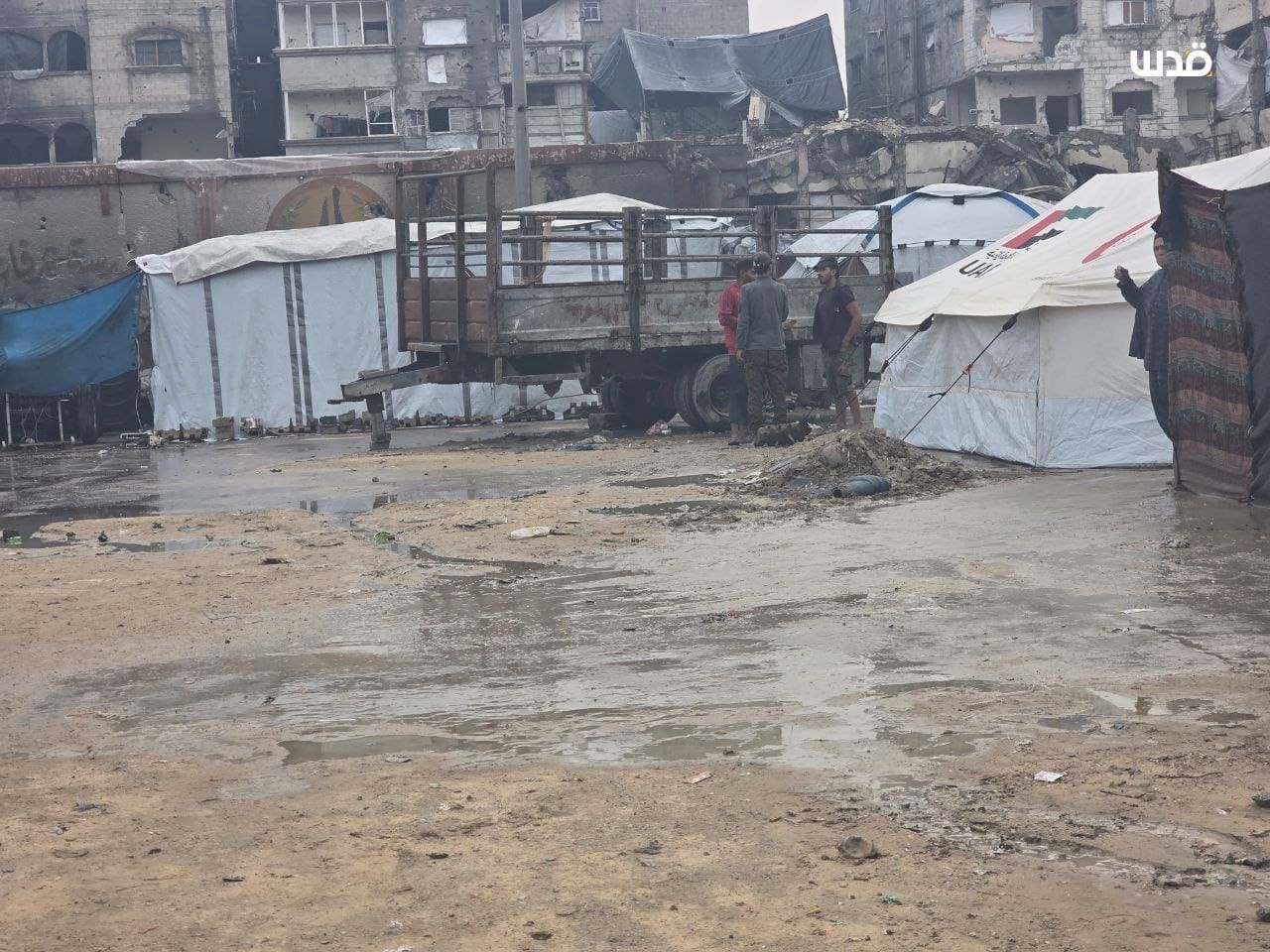
Winter rains strike the tents of displaced people above the rubble of their homes in Gaza… thousands of families face the cold without shelter.
Displaced people's tents flooded with rainwater in Gaza City.
Two young men struggle to open a channel to drain rainwater around displaced people's tents in Gaza, in an attempt to protect them from the danger of drowning.
Director of the Gaza Network of Civil Organisations added: The rains have compounded the humanitarian crisis, and we warn of the risks of sewage water mixing with waste... Dilapidated tents cannot withstand the cold; meanwhile the occupation continues to prevent the entry of building materials, and we call for pressure to allow aid in.
After two years of genocide… Khan Younis almost paralysed and 900,000 displaced people face the danger of drowning
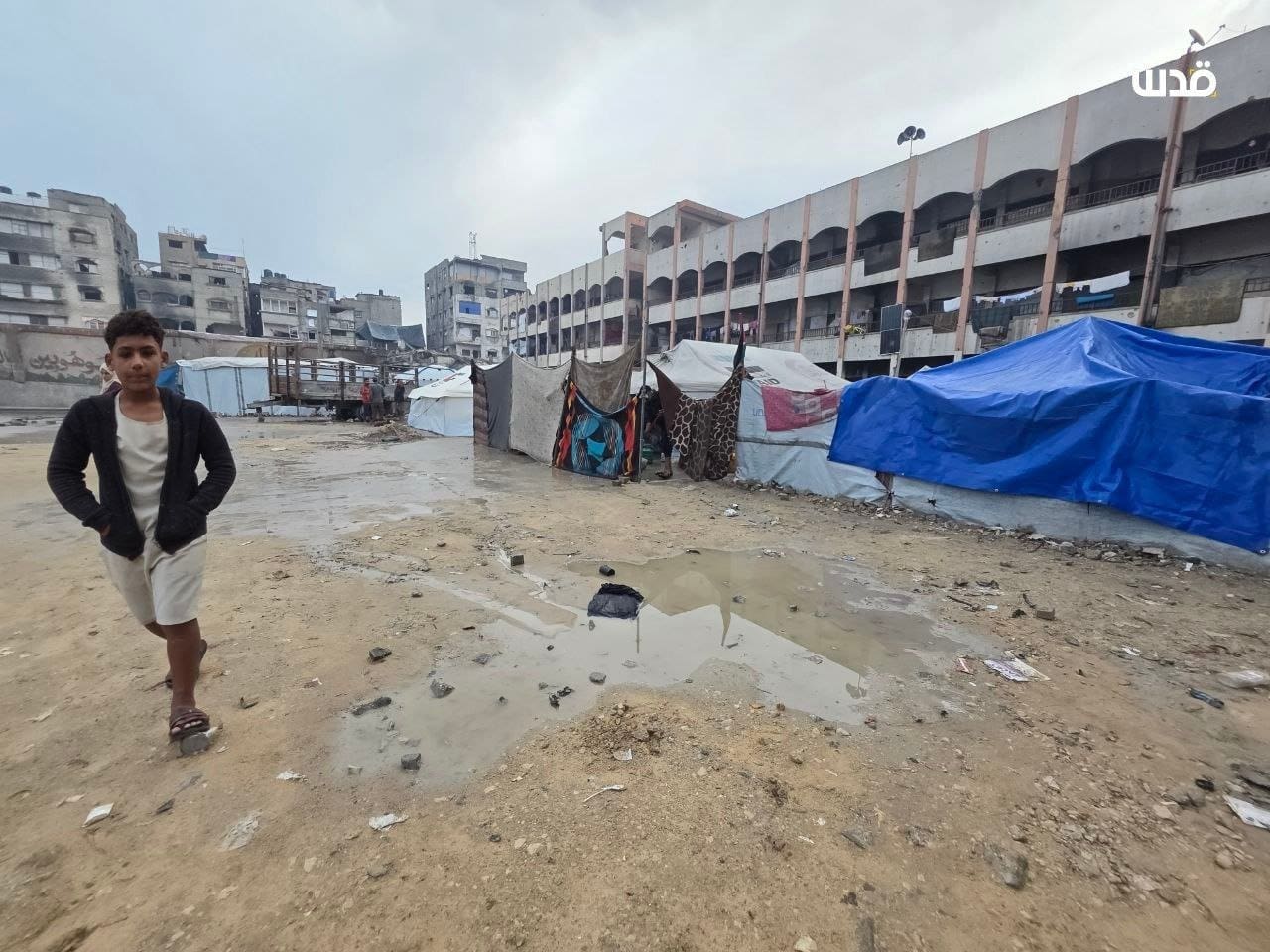
The spokesman for the Khan Younis Municipality, Saed Lulan, warned of an imminent humanitarian catastrophe as a dangerous air depression approaches, threatening 900,000 displaced people living in dilapidated tents on the seashore and in low-lying areas.
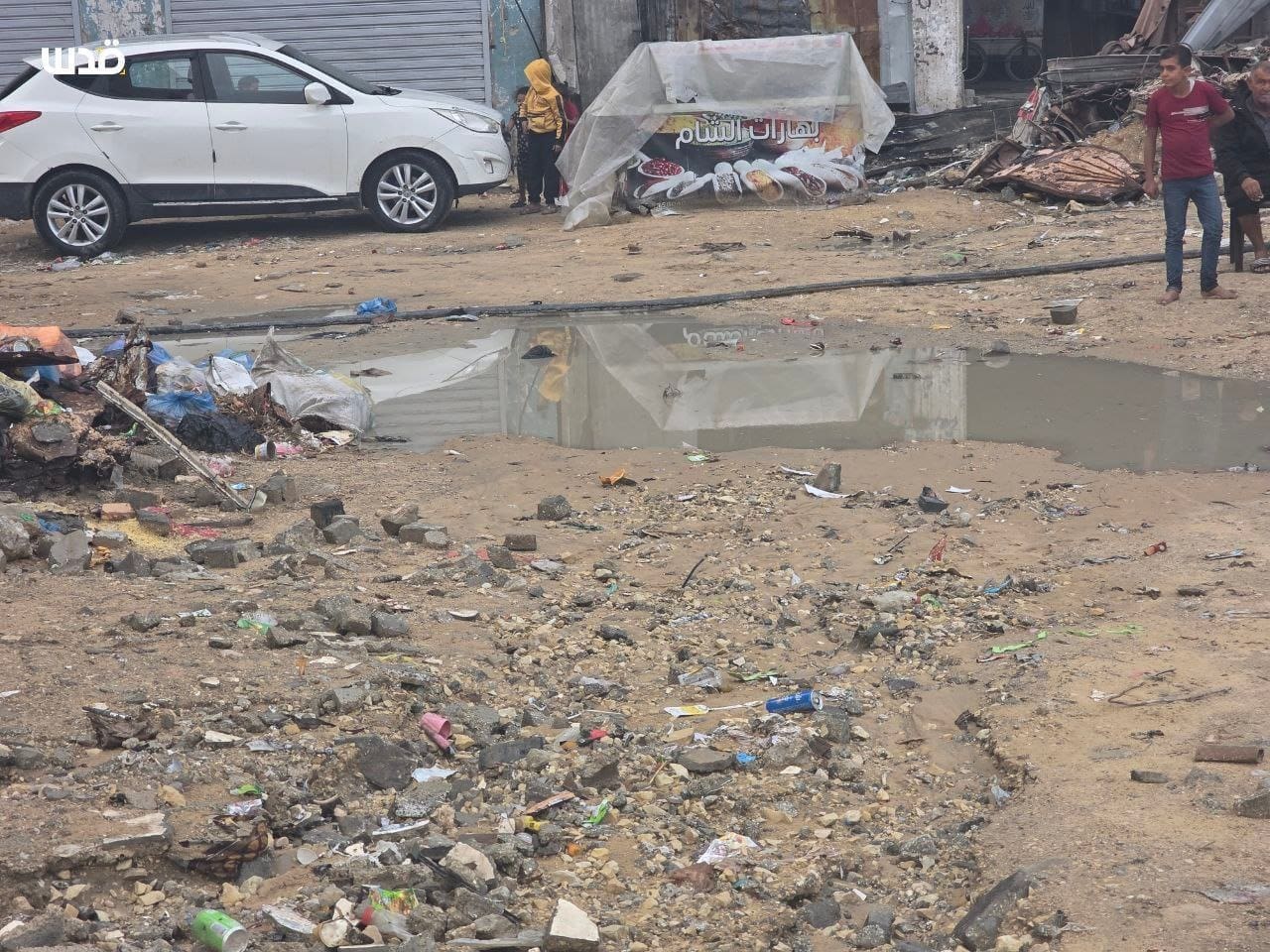
He explained that Khan Younis has become almost paralysed after the occupation destroyed around 210,000 metres of roads and 300,000 metres of water networks, in addition to the extensive destruction of sewage stations and lines, which are now threatened with complete shutdown, portending a major overflow of sewage and the flooding of entire neighbourhoods.
He also pointed out that the municipality is powerless to deal with approximately 15 million tonnes of rubble left by occupation airstrikes, making rescue and emergency efforts nearly impossible. He affirmed that the city is facing an unprecedented tragic situation, and that the continued deterioration of infrastructure together with difficult weather conditions endangers the lives of hundreds of thousands.
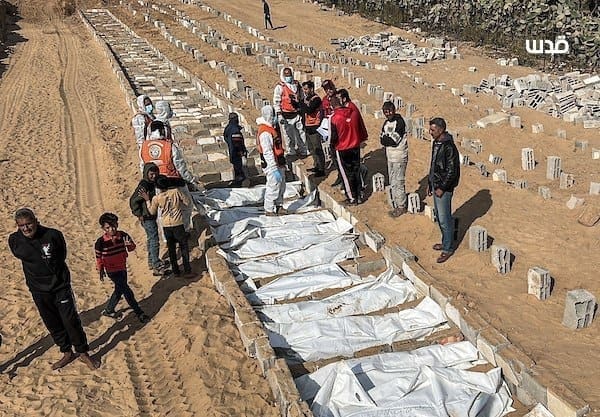
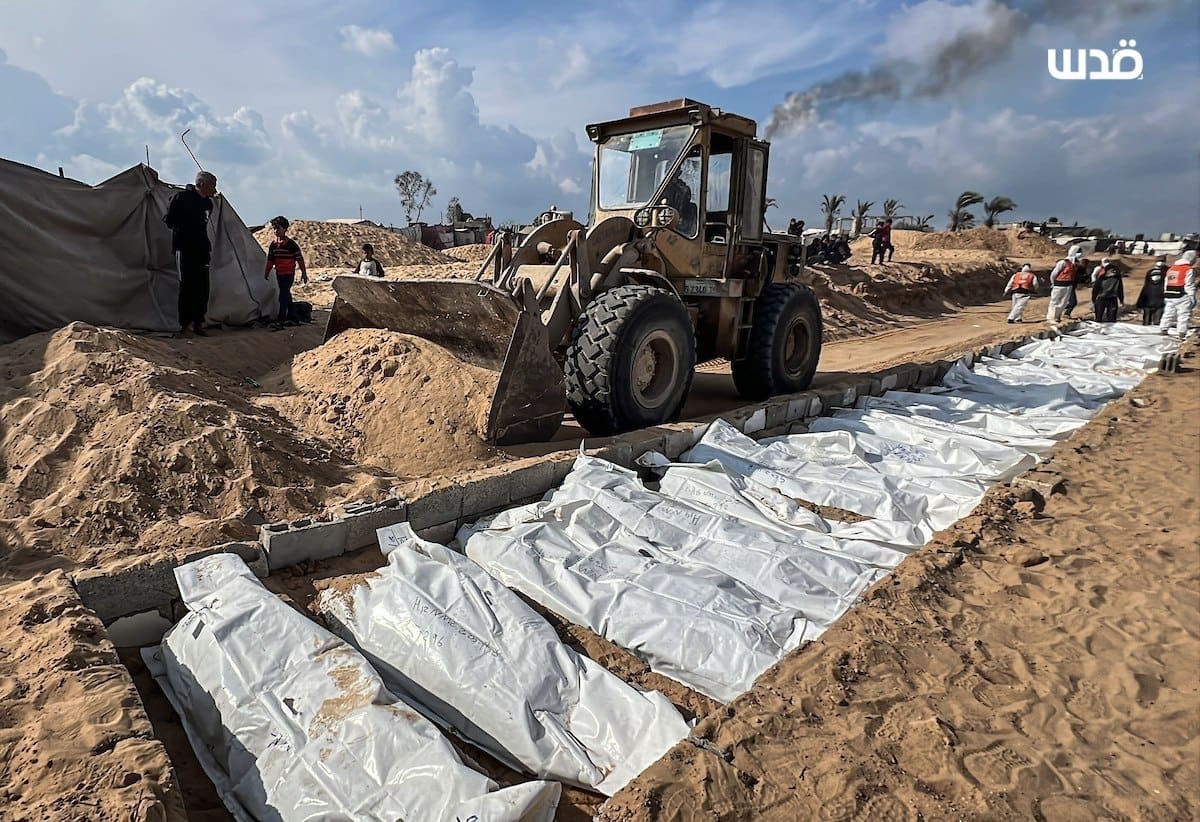
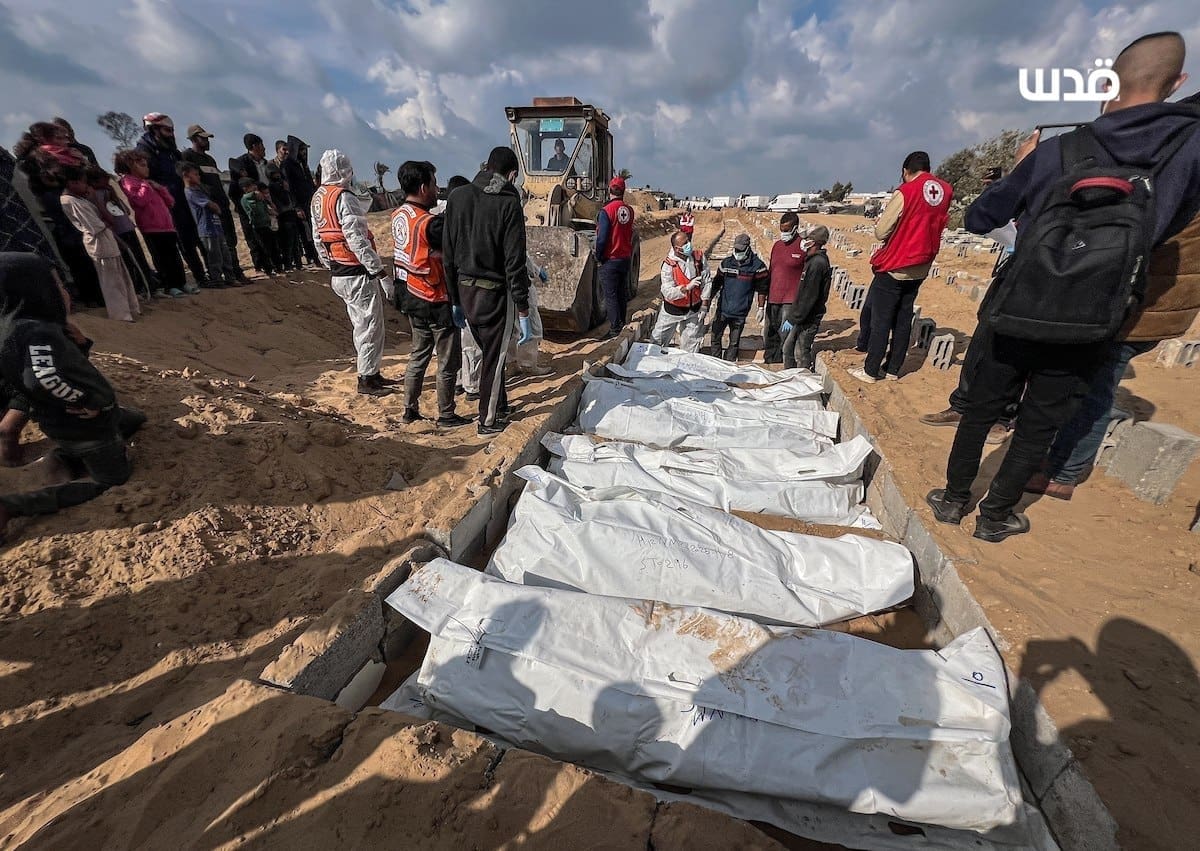
The remains of a number of those we understand to be martyrs were buried in Deir al-Balah in central Gaza Strip, after being handed over as part of the exchange deal.
The Director General of the Ministry of Health in Gaza said:
- We received more than 300 bodies, and we were shocked by what the occupation did to them, including burning after summary execution and killing at close range.
- We are facing compound crimes that include the theft of organs from the bodies of martyrs and their gnawing by trained dogs.
- Through autopsies of some martyrs' bodies, we found systematic theft of organs by skilled surgeons, with kidneys and liver removed and corneas extracted.
A leading source in the Izz al-Din al-Qassam Brigades told Al Jazeera: Six martyrs were recovered from the site where the body of the Israeli officer "Hadar Goldin" was recovered in Rafah.
The Izz al-Din al-Qassam Brigades said: The occupation bears full responsibility for the clashes with our fighters in Rafah, who are defending themselves within an area under its control. Let the enemy know that the lexicon of the Qassam Brigades contains no principle of surrender or handing oneself over to the enemy.
We place the mediators before their responsibilities, and they must find a solution to ensure the continuation of the ceasefire and prevent the enemy from using flimsy pretexts to breach it and exploit that to target innocents and civilians in Gaza. The recovery of bodies during the past phase took place under complex and extremely difficult conditions, and despite that we abided by what was required of us under the agreement. We affirm that recovering the remaining bodies requires additional technical teams and equipment.
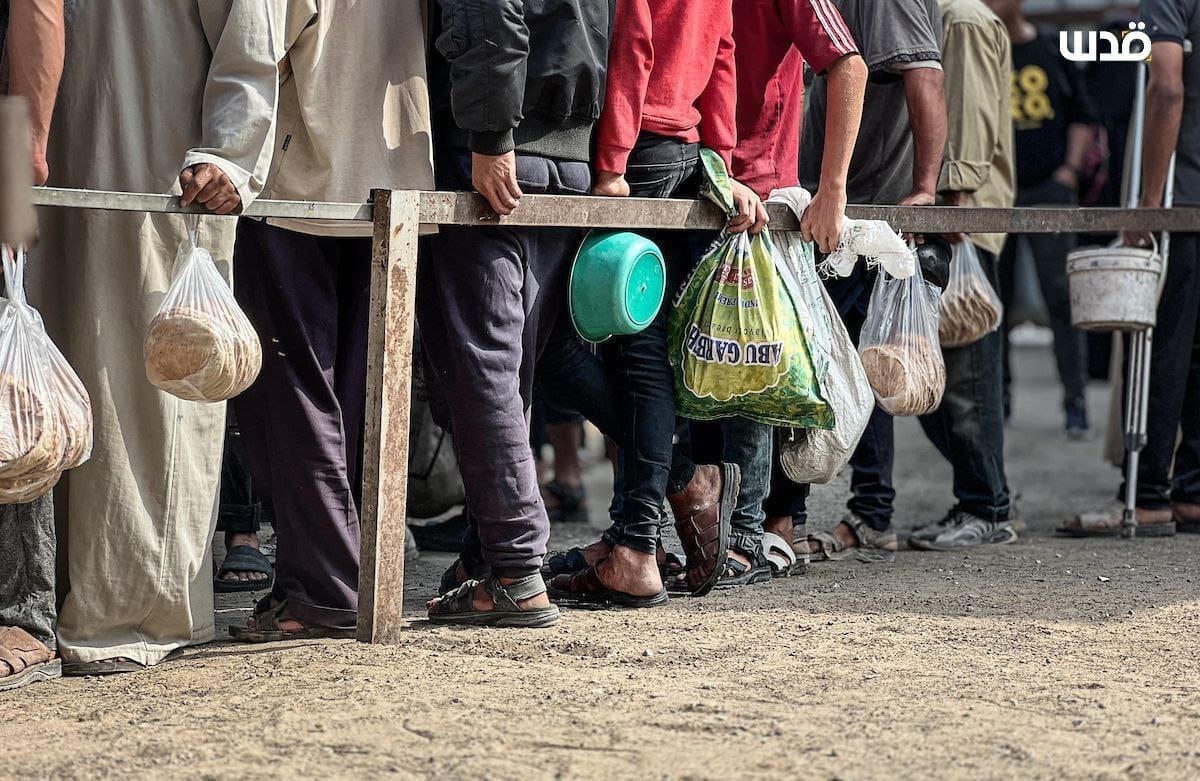
With the occupation continuing to close crossings and prevent the entry of aid, famine continues...
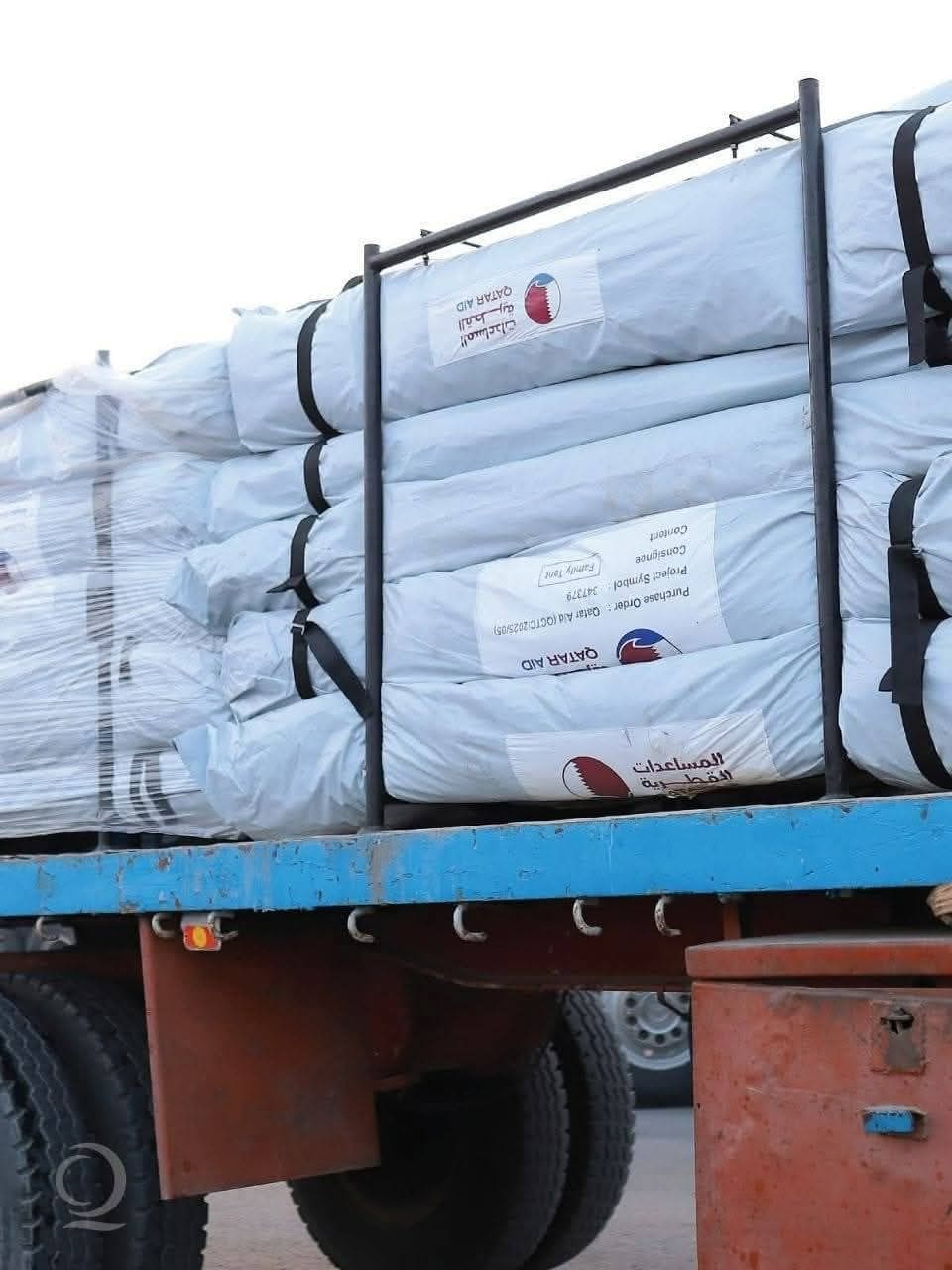
A new batch of Qatari aid arrived via the Rafah crossing, including emergency shelter tents and essential humanitarian supplies to ease the suffering of affected families in the Gaza Strip as winter and cold weather set in. Journalist Yahya Bashir stated that the tents and tarpaulins entering are not sufficient for the Strip's needs, given the entity's obstinacy in allowing in the required quantities.
The World Health Organization said it had transferred around 4,000 patients via Rafah for treatment in Egypt and abroad, while 16,500 patients remain awaiting treatment.
The Ministry of Health in Gaza published:
- 6,000 amputation cases in Gaza, in need of urgent rehabilitation programmes.
- 25% of amputation cases are children.
- 12.7% of cases are women.
- Shortages of medical capabilities and assistive devices increase the suffering of wounded amputees.
West Bank and Jerusalem
Recent data also revealed that Israeli occupation forces have put forward plans to build thousands of new settlement units in the occupied West Bank. According to the data, the occupation forces have proposed plans to build more than 26,000 new settlement units in the West Bank, spanning an area of more than 30,000 dunams of Palestinian land.
Statistics show that the most targeted areas lie around East Jerusalem, where the settlements of "Ma'ale Adumim" and "Giv'at Ze'ev" are witnessing dense expansion as part of the occupation's attempts to tighten the settlement ring around the city and isolate it from its Palestinian surroundings.
The Muqtada Centre also announced: 22 resistance operations in the West Bank in the past 24 hours, ranging from detonating explosive devices and throwing Molotov cocktails, to damage to settlers' vehicles, direct clashes with occupation forces, and popular demonstrations.
The occupation did not stop during this week its repeated incursions into a number of cities and villages of the West Bank.
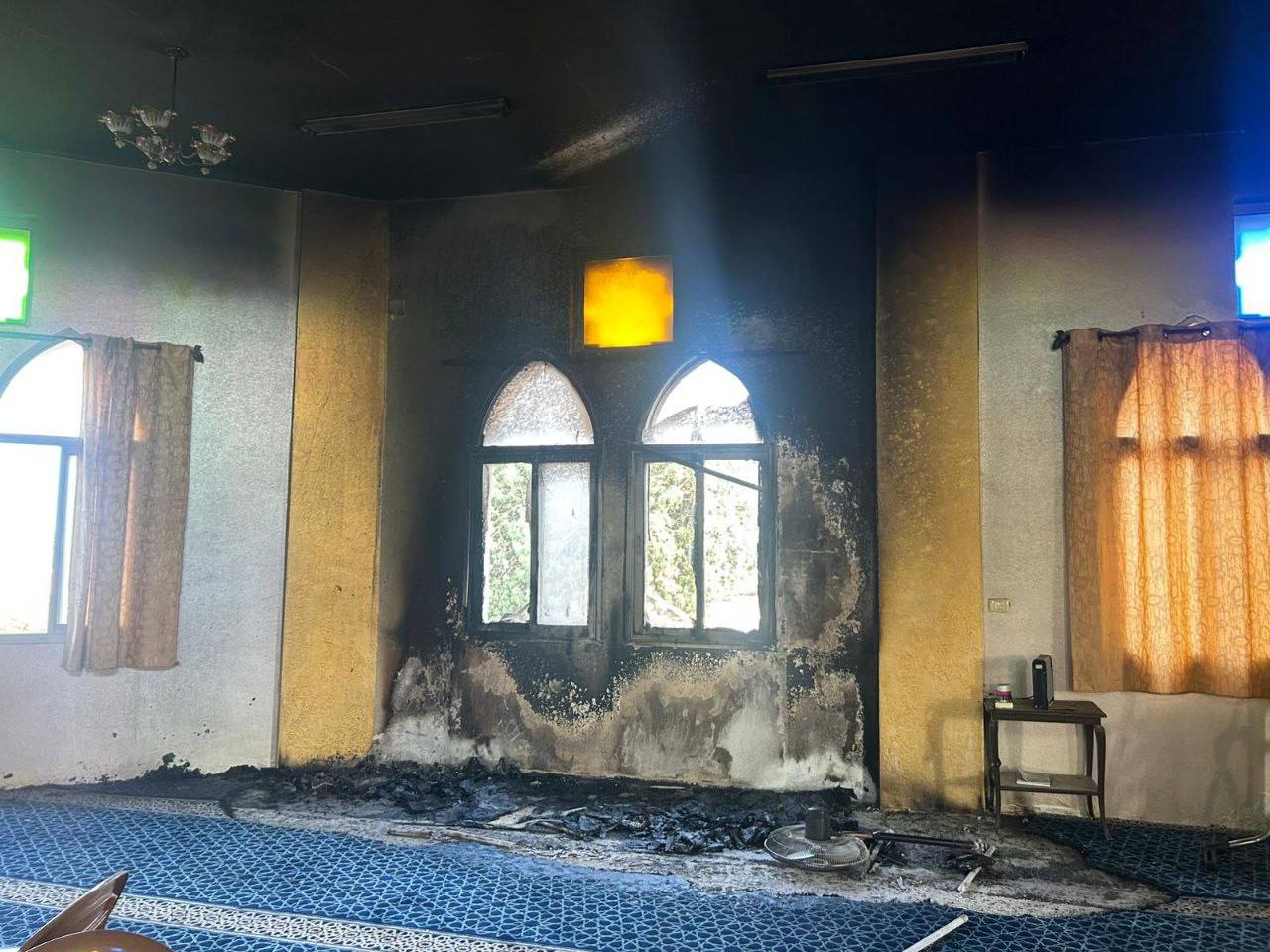
Settlers of the village of Rabba in Jenin attack the homes of the village's residents near the settlement, set them on fire, displace the inhabitants, and assault and vandalise their property, under protection from the occupation army for the settlers.
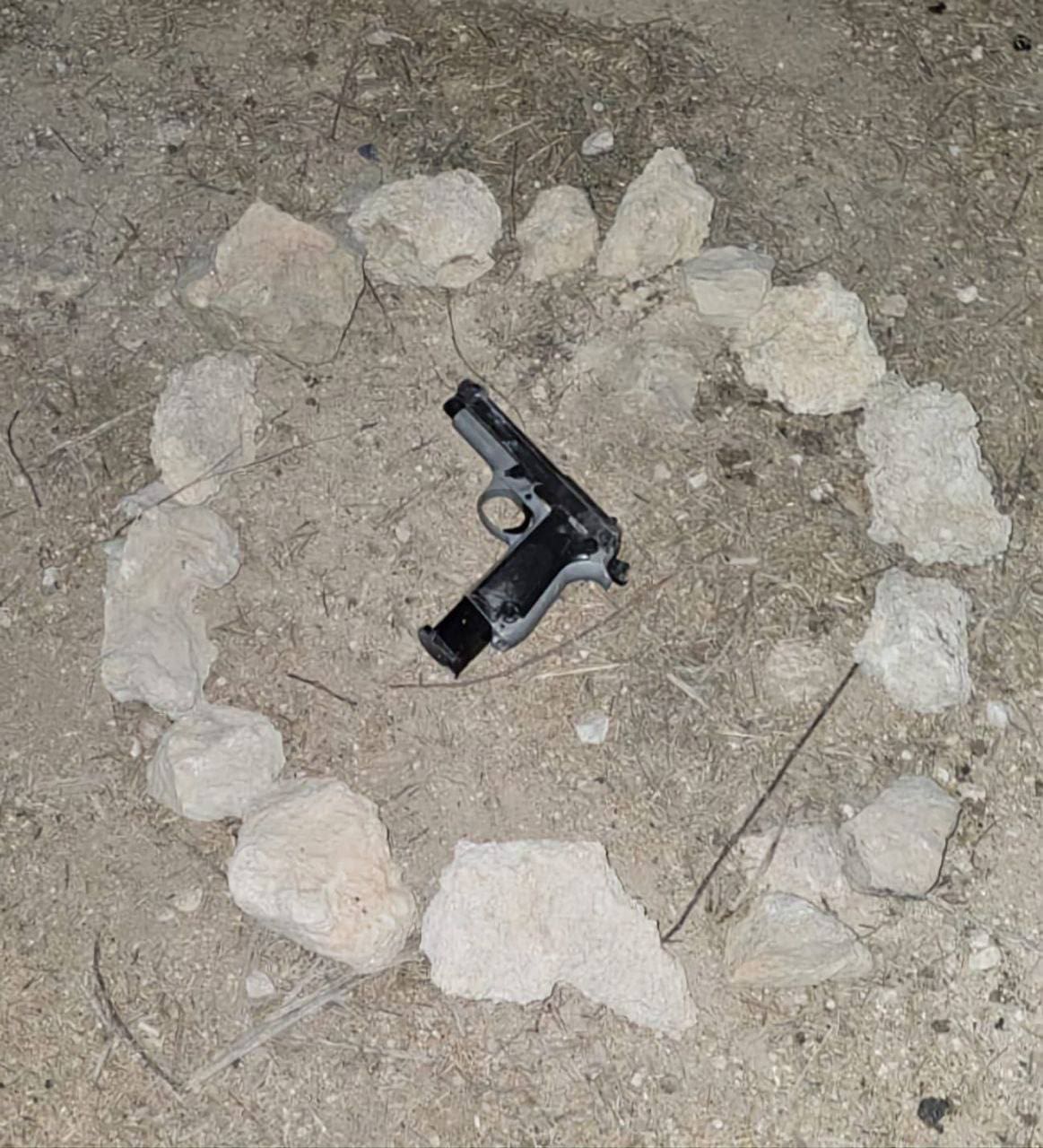
An operation in southern Hebron, the occupation reveals its details:
A resistance fighter arrived on foot, not by vehicle, and headed towards occupation soldiers at the outskirts of Khirbet Qalqas. After approaching the soldiers, the fighter drew a pistol and fired at the soldiers. An armed clash and exchange of fire broke out at the scene, ending with the young resistance fighter being wounded and arrested.
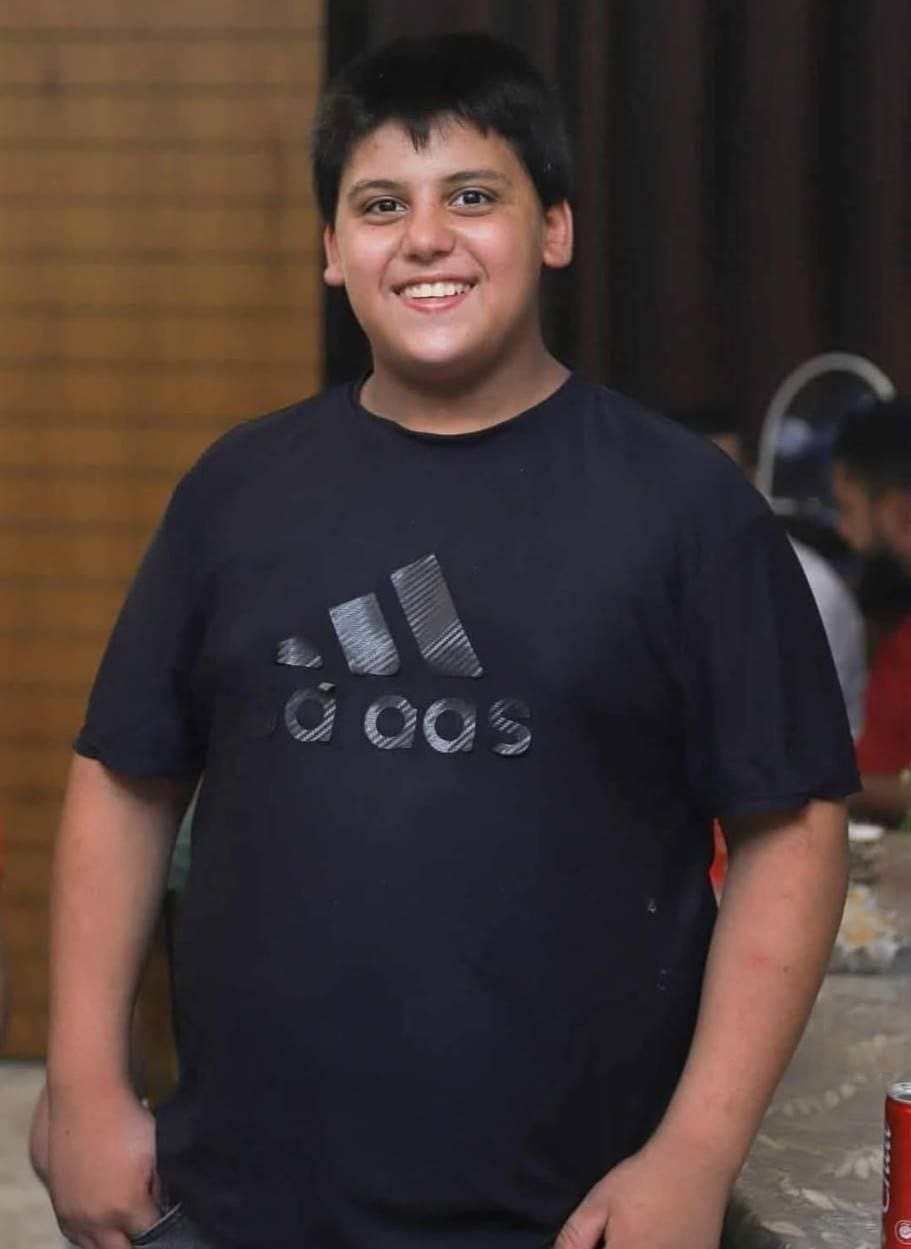
The child Aysam Mu'alla from the town of Beita south of Nablus in the northern West Bank was killed, having inhaled tear gas about two weeks earlier, following occupation forces' repression of olive pickers on Jabal Qama' in the town.
The Israeli newspaper Haaretz published: A marked rise in Jewish terrorist attacks carried out by settlers against Palestinians in the West Bank during 2025, with the escalation in Jewish terrorism linked to the political and religious cover the settlers receive, which gives them an almost permanent sense of impunity.
The olive harvest season, extending from September to November, is among the periods in which attacks escalate most. Local and international organisations have documented assaults on farmers while working in the fields, including an incident in which a Palestinian woman (55 years old) was severely beaten by armed settlers near the village of Turmus Ayya north of Ramallah while attempting to gather olives.
In other villages such as al-Mughayyir, Qaryut and Burqa, cars were set on fire, and groups of settlers broke into homes and opened fire at residents, resulting in the killing of a Palestinian and injuries to dozens with varying severity.
The Jerusalem Governorate announced: Settlers smash graves in the Bab al-Rahma cemetery adjoining the al-Aqsa Mosque.
The Supreme Islamic Council in Palestine called for urgent action to protect the Bab al-Rahma cemetery adjoining al-Aqsa Mosque on its western side, after the settlers' assault and desecration of graves on [day not specified], and affirmed that the cemetery is purely Islamic and contains the graves of the Companions and the Successors, and that what is taking place is an attempt to erase Arab and Islamic landmarks and turn it into a "Torah garden."
Prisoners File
The Prisoners' Affairs Authority: Harsh conditions are endured by some 100 to 120 prisoners held by the occupation in the "Jalameh" camp within "Ofer" prison.
The Prisoners' Media Office published on Monday: Israeli occupation forces, in the early hours of Monday 10 November 2025, launched a wide campaign of arrests across the governorates of the occupied West Bank, affecting a number of citizens, including two children and a university student, while occupation forces continued search and vandalism operations in a number of homes, set up military checkpoints and closed main roads.
Testimony of a Palestinian woman from Gaza, formerly detained, documented by the Palestinian Centre for Human Rights (PCHR):
Ms N.A., a 42-year-old Palestinian woman and mother, was arrested while passing through an Israeli checkpoint in northern Gaza in November 2024. In her testimony to PCHR staff, N.A. described multiple forms of torture and sexual violence, including being raped four times by Israeli soldiers, repeated verbal abuse and gross insults, being stripped of her clothing and photographed naked, electric shocks, and beatings across her body. She told the Centre's lawyer the following:
"At dawn I heard the soldiers shouting, saying that the dawn prayer was forbidden, and I think it was the fourth day after my arrest from Gaza. The soldiers took me to a place I do not know because my eyes were blindfolded, and they ordered me to take off my clothes, and I was raped. I started screaming, and they rained blows on my back and head while I was blindfolded... I kept screaming and receiving blows, and I could hear the sound of a camera — I think they were filming me."
The Palestinian Prisoners' Centre documented the testimony of released detainee Khaled Barakat, who survived detention in "Sde Teiman" detention facility:
▫️I spent 130 days in detention blindfolded and handcuffed and shackled at the hands and feet, and police dogs attacked us daily.
▫️The soldiers broke my ribs and the ribs of a number of prisoners due to the severity of the torture, and until the moment of my release I was not presented to any doctor, and the pain and aches continue as a result of their improper healing.
▫️One of the hardest things we faced was the use of toilets once a day at best, and we relieved ourselves while handcuffed and shackled.
▫️We were held in iron cages, each cage holding 130 detainees, who were monitored every minute, and any suspicion of any spontaneous movement led to beatings and unceasing insults.
▫️I was transferred to more than one detention facility, and in Ofer prison I was subjected to torture and beatings for consecutive days, where we were ordered to come out one after another for severe beating with sticks and sharp tools.
▫️One of the prisoners beaten with us was diabetic, and after his foot became infected for days, worms began to come out of it; they then took him to hospital and he returned to us days later with a foot amputated.
▫️Dogs attacked us before entering the prison, and during transfer we were subjected to electric shocks, and inside the bus the soldiers beat us all the way with iron handles.
▫️The prison administration withdrew the mattresses we slept on during the winter season, and we had no winter clothing, and most prisoners were infected with scabies.
▫️Surveillance cameras were everywhere, and we relieved ourselves via a bucket which was refused to be emptied until its contents were brought into the prisoners' rooms.
▫️The Red Cross did not visit us throughout the period of detention, and we were threatened with death after release, and the soldiers told us several times that they had bombed our homes and killed our families.
Syria
Syria formally joined the international coalition against the Islamic State group.
The US envoy for Syria announced: Syria is officially the 90th partner in the international coalition to defeat the Islamic State group and the global war against terrorism.
The envoy Barrack said: Damascus will now assist us effectively in confronting and dismantling the remnants of ISIS, the Iranian Revolutionary Guard, Hamas and Hezbollah.
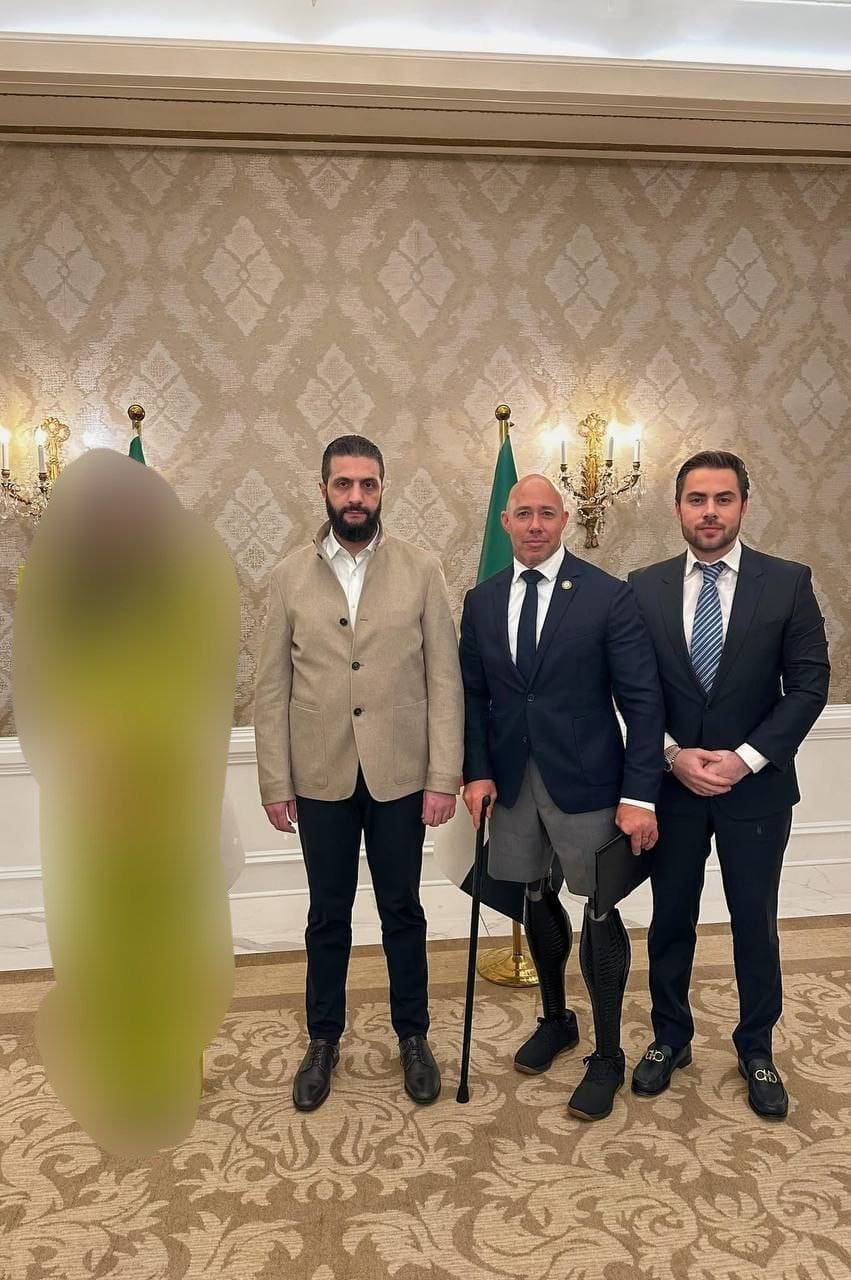
Ahmed al-Sharaa met Representative Brian Mast, chairman of the House Foreign Affairs Committee, who constitutes an obstacle to repealing the Caesar Act and wants repeal to be conditional.
It is noted that Mast served in the US Army and lost both legs in Afghanistan in 2010, then travelled in 2015 to work as a volunteer within the Israeli army with an organisation called Sar-El.
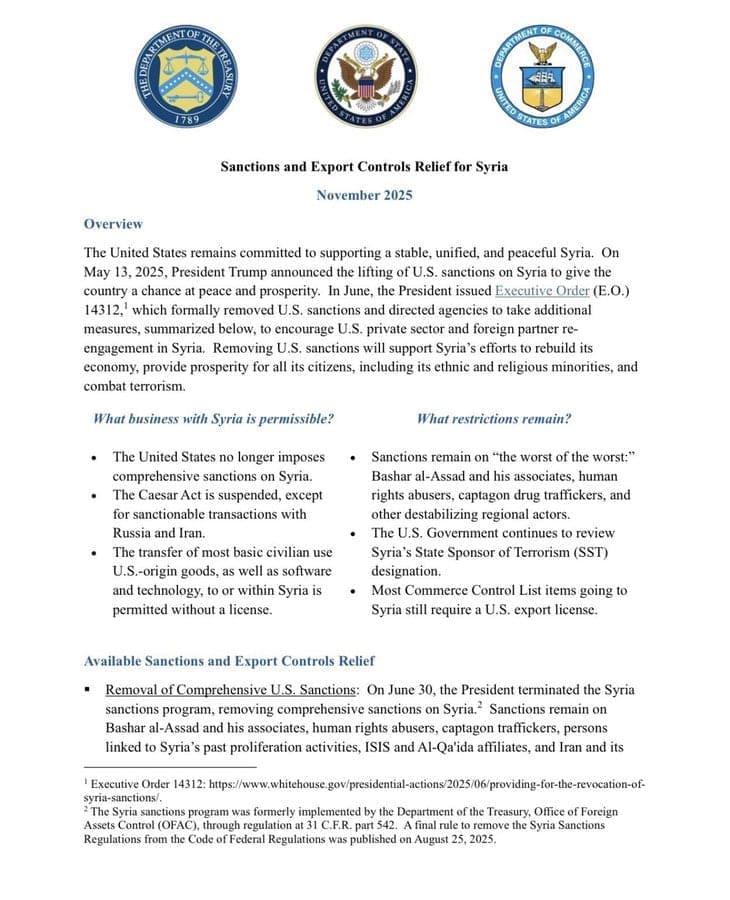
The US Department of the Treasury published:
- The United States no longer imposes comprehensive sanctions on Syria.
- Most US commodities with civilian use, as well as software and technology, may be exported to Syria without the need for a licence.
- The Caesar Act has been suspended, except for transactions subject to sanctions involving Russia and Iran.
- US commodities with civilian use, communications equipment and some civil aviation equipment no longer require an export licence to Syria.
- Approval of export licences to Syria has been facilitated in the following fields:
- Communications infrastructure
- Sanitation
- Power generation
- Civil aviation
- Other civilian services that support peace and prosperity in Syria.
It said: President Trump is fulfilling his promise to give Syria "an opportunity for greatness" and to allow it to rebuild and prosper through lifting US sanctions. America has adopted new policies and regulatory positions to encourage American companies and banks, the international community, the Syrian people and regional partners to contribute to Syria's stability,
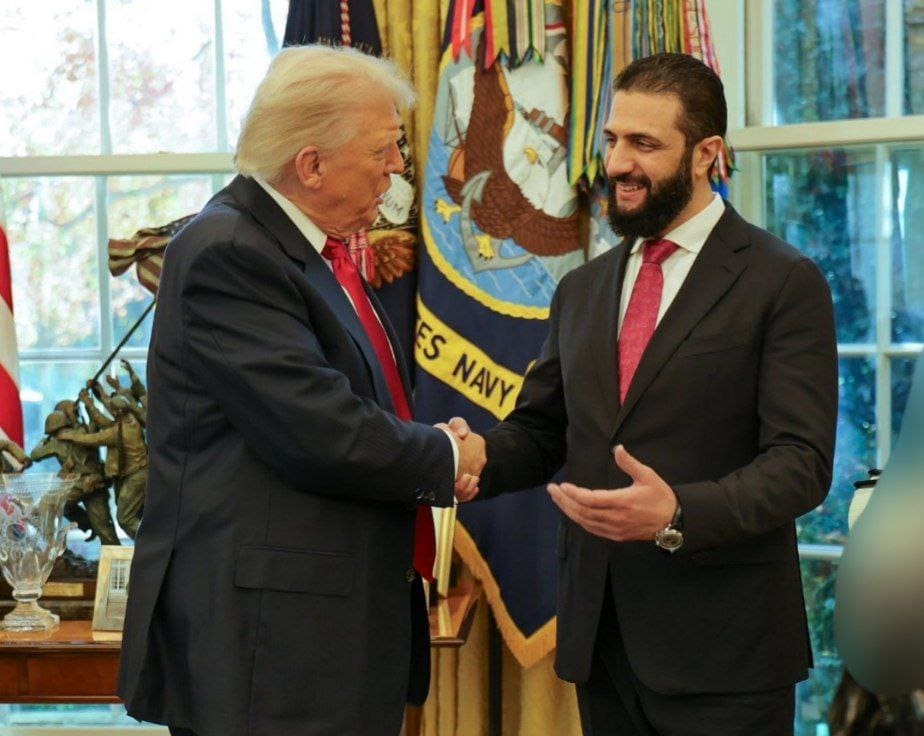
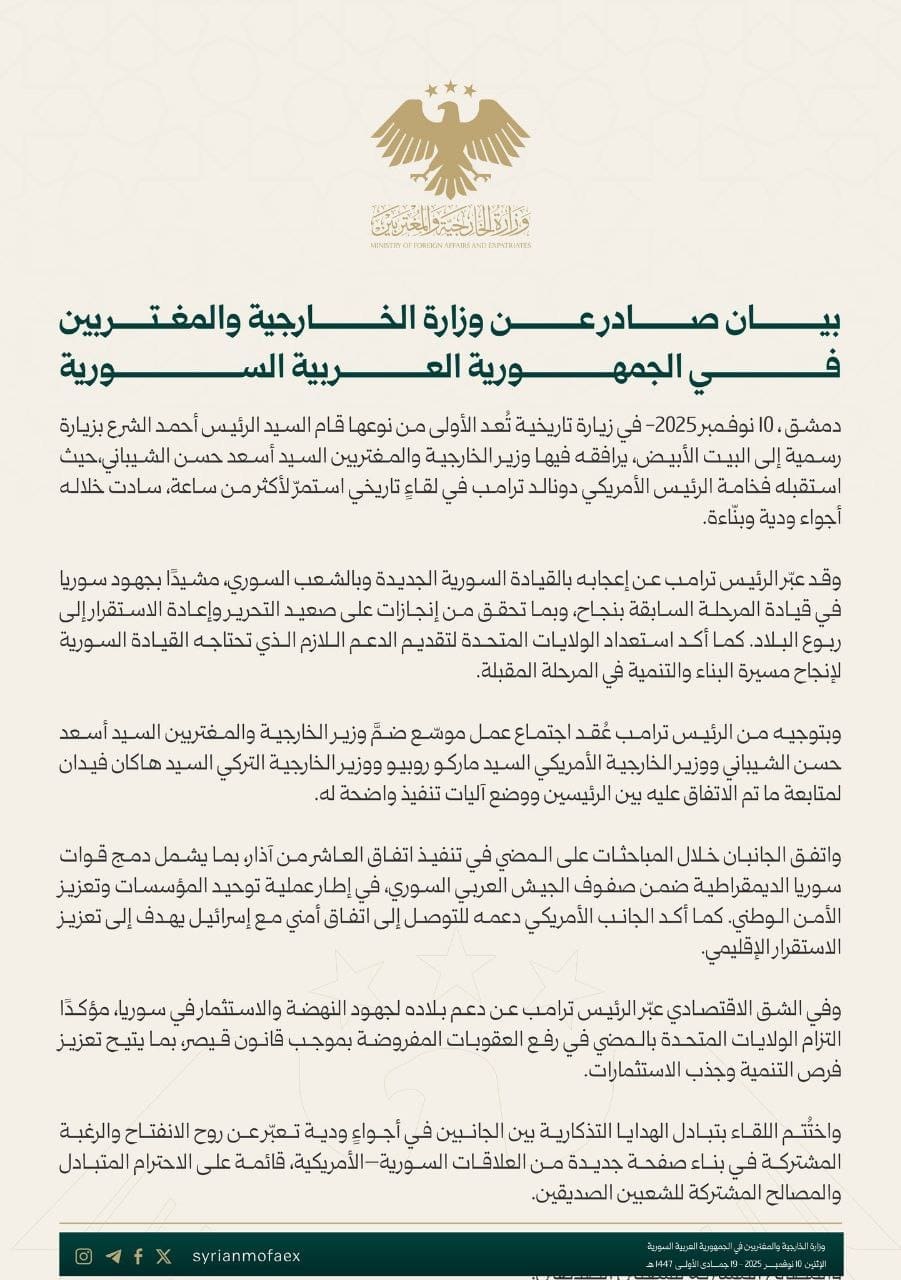
A statement issued by the Syrian Ministry of Foreign Affairs regarding Ahmed al-Sharaa's visit to the White House.
Among the most important points in the statement was the holding of an expanded trilateral meeting attended by Foreign Minister Mr. "Asaad al-Shaibani" with US Secretary of State Mr. Marco Rubio and Turkish Foreign Minister Mr. Hakan Fidan. The file of integrating the "SDF" militia was the focus of discussion, alongside the issue of a security agreement with the Israeli occupation.
Syrian President Ahmed al-Sharaa said: The situation in Syria is different from the situation in the states that signed the Abraham Accords with "Israel"; it has occupied the Golan since 1967, and we will not enter direct talks with it now.
Ahmed al-Sharaa and Foreign Minister Asaad al-Shaibani play basketball with CENTCOM commander Brad Cooper and Brigadier General Kevin Lambert.
Missiles fell today, Friday, on the Qasr Road in the Mezzeh 86 neighbourhood (Ain al-Karm alley), while another number of missiles targeted residential buildings in the Mezzeh Western Villas neighbourhood, amid preliminary information suggesting the attack may have been an assassination operation.
According to the non-final toll, a girl was killed and a number of civilians were injured as a result of the targeting of residential buildings, while ambulance and civil defence teams continue to evacuate the wounded and attempt to assess the damage.
Saba' military source told SANA that "the treacherous attack on areas in the capital Damascus was carried out using missiles launched from a mobile platform." He added: The parties behind the targeting and the means used remain unknown so far.
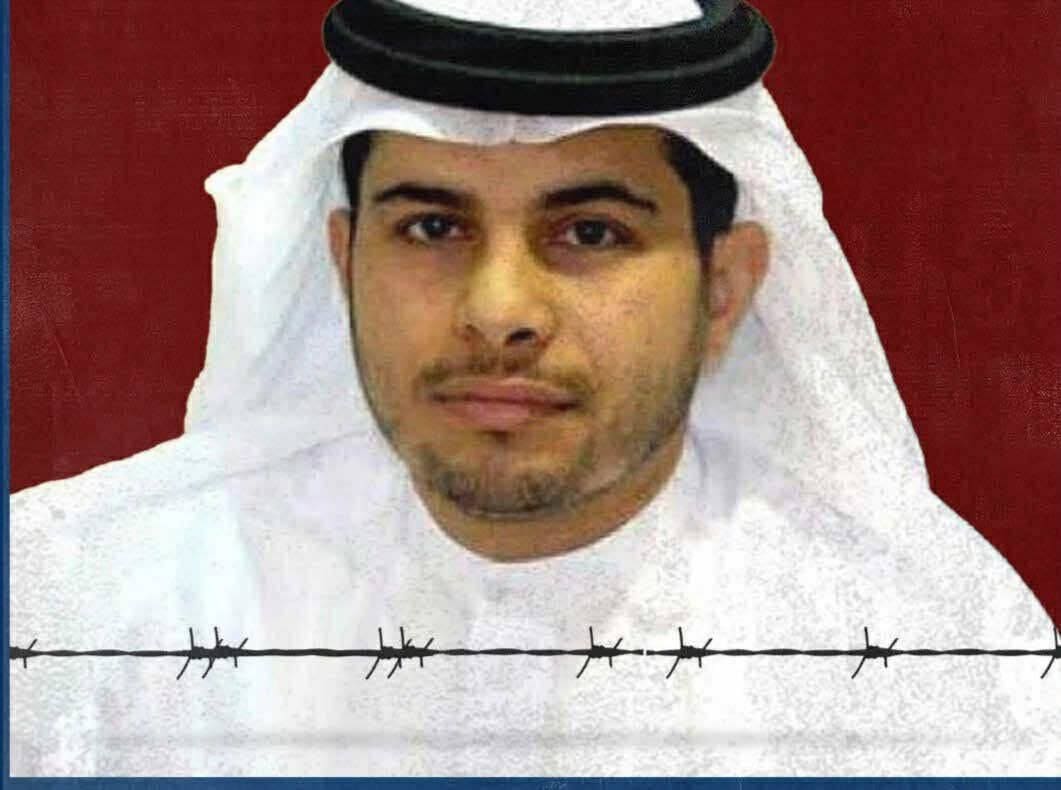
General Security arrests Emirati opposition figure Jassim Rashed al-Shamsi in Damascus, with no clear reasons so far.
Al-Shamsi had left Turkey after 10 years of residence there, heading to Syria with his Syrian wife and children, following his clear support for the Syrian revolution since 2011.
The Emirates Detainees Advocacy Centre said: The arrest of Emirati political activist "Jassim Rashed al-Shamsi" in Damascus on Thursday, 6 November 2025, his being taken to an unknown location, and the loss of contact with him so far.
The Suwayda file
A Syrian source accused forces loyal to Druze Sheikh Hikmat al-Hijri in Suwayda Governorate of continuing their attacks on General Security forces in the western countryside of the governorate for the third consecutive day. The source, who asked not to be named, told the German Press Agency today, Friday: "Outlaw groups, or the so-called National Guard affiliated with Hikmat al-Hijri, attacked General Security positions last evening, which are conflict-resolution forces, around the villages of Rimat Hazim, al-Mujadil, Walgha and Tall Hadid west of the city of Suwayda."
The source added that a number of General Security personnel were wounded while confronting the outlaw elements, and there were deaths and injuries among the attackers, and a vehicle carrying armed elements was destroyed.
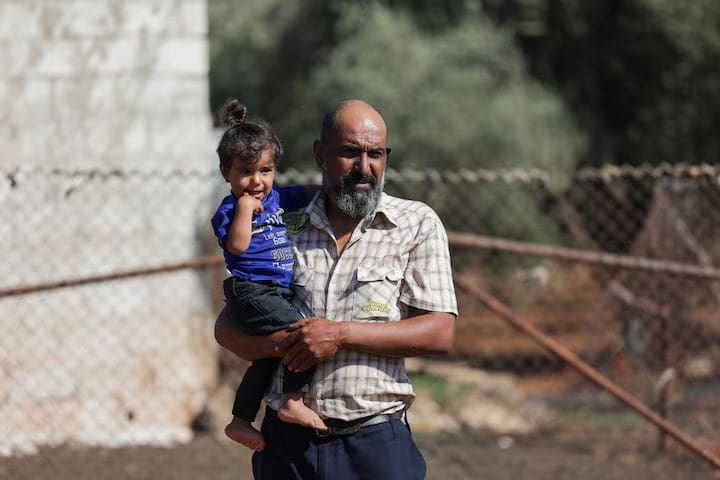
Members of the Subaih family say they were abducted by Druze gunmen and detained in a school along with others from Bedouin tribes. After three nights, when the guards disappeared, they tried to flee, but gunfire rained down on them, and the Bedouins scattered in every direction.
Faisal Subaih was separated from his wife, and three members of his family were killed, including their daughter Malak, aged twenty, who was due to be married to her groom the following day. Faisal accused the militias loyal to prominent Druze religious figure Sheikh Hikmat al-Hijri of being responsible for the displacement of his Sunni community from Suwayda, the same claim repeated by more than twelve displaced Bedouins whom Reuters met.
Faisal said in a series of interviews: "We lived together, we bought bread from the same bakery and water from the same shop, but today they do not want any of us to exist at all.
The family of ten now lives in the village of Nawa in neighbouring Daraa Governorate, where they work in the fields of a farmer who provided them with a tent to sleep in. | Reuters
The director of the Internal Security Directorate in Suwayda city, Suleiman Abdel Baqi, said:
- After the recent events and the presence of Internal Security forces, repeated attacks occur.
- There were no casualties among Internal Security personnel during the latest breach. Whenever any violations occur, there is full documentation.
- There are recommendations from Colonel Hossam Tahan to contain any tension and open the doors to dialogue.
- There are several calls to compensate the affected families in Suwayda. A large section of the gangs in Suwayda are leaders in the National Guard council.
- The chaos in Suwayda can only be resolved by the presence of state institutions. There are daily violations by the armed factions present in Suwayda.
- The external projects and illusions promoted in Suwayda Governorate harm the community there.
- Previously there was tension in Suwayda, and today many people contact us daily demanding deliverance away from blood.
Teachers in Idlib and the countryside of Aleppo in northern Syria announced the start of a strike on Sunday, until their demands are met concerning making teachers permanent, reinstating those dismissed for their participation in the Syrian revolution, and increasing wages.
The education bodies in Idlib and its countryside called for improving teachers' living conditions and guaranteeing their job rights, explaining that the strike came as a result of low teacher wages, the absence of health and psychological support, the decline of the educational environment, and the absence of legal protection for teachers.
The "Free Syrian Teachers Syndicate" had suspended its work until the teachers' demands are met, namely: "making teachers permanent, reinstating dismissed teachers, increasing salaries and wages, and activating the external transfer system."
Lebanon
According to Bloomberg:
- The United States offers to provide logistical and military support to the Lebanese army in the mission to disarm Hezbollah.
- Lebanon first requested a halt to Israeli attacks before discussing the plan.
Reuters reported: Israel urges the Lebanese army to carry out house-to-house searches in southern Lebanon to root out Hezbollah's weapons.
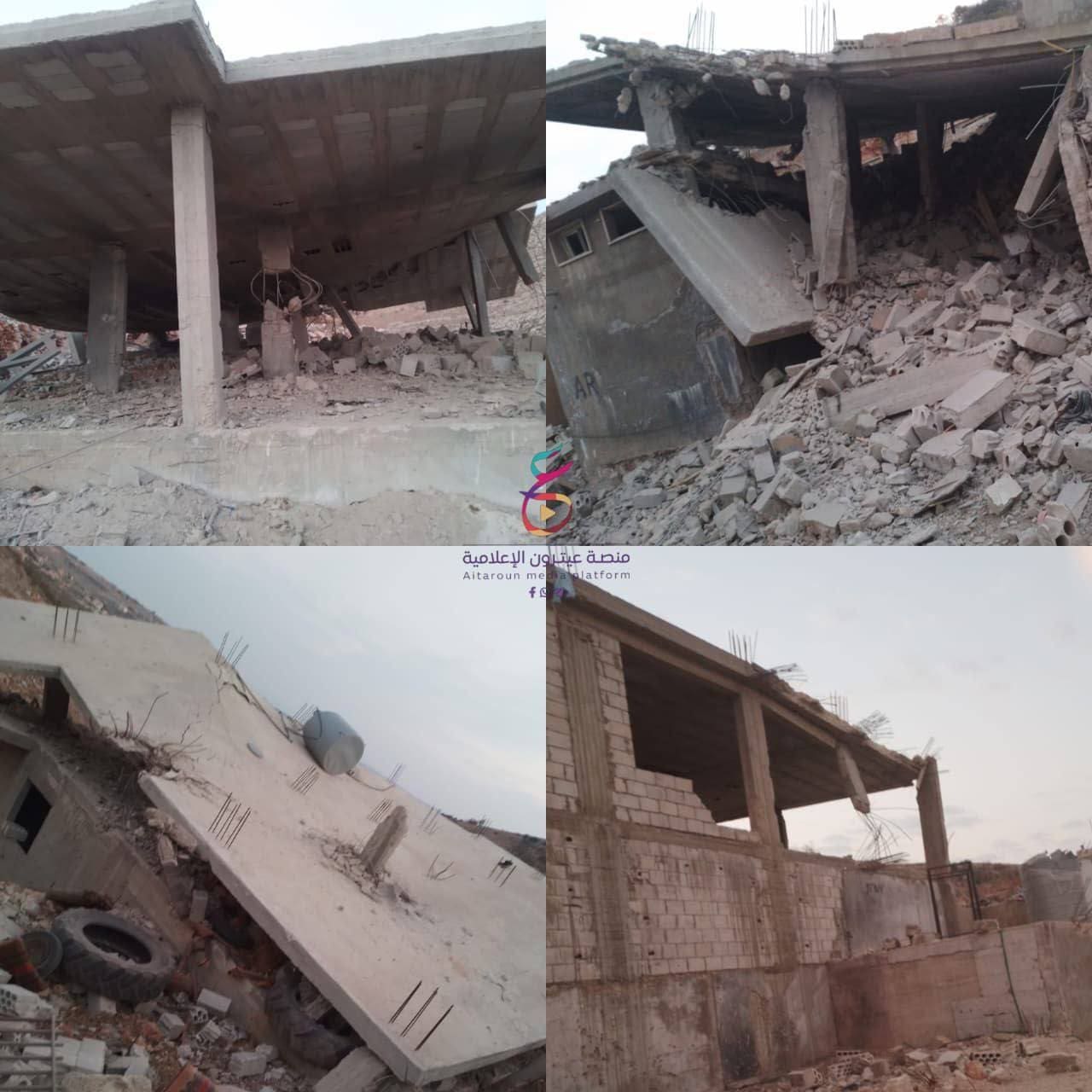
An Israeli occupation force blew up 4 homes after infiltrating Aitaroun in southern Lebanon.
Sudan
The spokesperson for the General Coordination of Displaced and Refugee Camps in Darfur, Adam Rijal, said more than 150 women were subjected to rape and sexual harassment while fleeing from El Fasher to Tawila, 60 kilometres west of the capital of North Darfur State.
Rapid Support Forces are pursuing those fleeing El Fasher on the roads, and some have gathered in the Jornei area, where thousands of stranded people remain trapped, including children separated from their families.
Rijal told Sudan Tribune that the number of people shot exceeded 1,300. Meanwhile, more than 1,210 children suffer from malnutrition, and 700 elderly people are in critical health conditions. The General Coordination for Displaced Persons and Refugee Camps is a civil body that monitors violations against displaced persons and refugees. Rijal noted that the number of survivors from El Fasher who reached the Tawila area exceeds 15,000 people, some of whom suffer from poor health conditions due to injuries and violence.
Eyewitnesses and survivors told Sudan Tribune on Sunday that Rapid Support Forces are holding more than fifty thousand civilians in five main sites inside the city of El Fasher, capital of North Darfur State, and preventing them from leaving.
The forces also confiscated Starlink satellite internet devices and mobile phones in an attempt to isolate the detainees from the outside world. One survivor reported that during the past days Rapid Support Forces carried out extensive raids in the city's neighbourhoods, particularly the First Degree neighbourhood, which had been the last refuge housing thousands of civilians.
A statement issued by the Sudan Doctors Network on Sunday accused Rapid Support Forces of collecting hundreds of bodies from the streets and neighbourhoods of El Fasher over the past days, burying some in mass graves while completely burning others. The statement explained that this comes in an attempt to erase evidence of crimes committed against civilians.
It added that the crimes witnessed in the city of El Fasher "exceeded the limits of a humanitarian catastrophe, reaching the level of systematic genocide targeting life and human dignity."
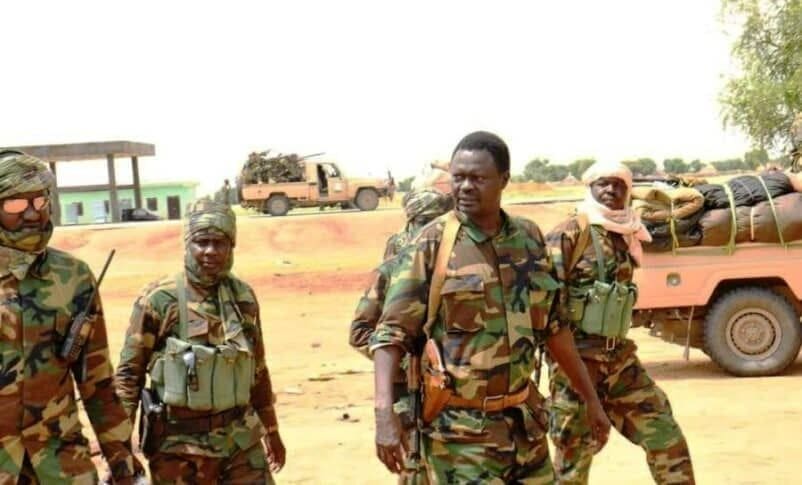
Darfur Governor Minni Minawi on Saturday demanded the withdrawal of Rapid Support Forces from cities, the release of abductees and the safe return of displaced persons as conditions for any truce. Minawi, who heads the Sudan Liberation Movement, said that "any truce without that means the partition of Sudan."
Minawi also oversees the Joint Force, an alliance of Darfuri movements fighting alongside the army. In a separate statement, the Joint Force repeated his conditions. The army's position on the humanitarian truce supported by the United States, which the Quad mechanism aims to secure, remains ambiguous | Sudan Tribune.
Sudanese Foreign Minister Mohieldin Salim affirmed that the government "does not deal officially" with the "Quad" mechanism, noting that it "was not issued by a decision of the Security Council or any international organisation." Salim added: "We deal with our brothers in Egypt and Saudi Arabia, and with friends in the United States of America, on a bilateral basis… and we coordinate with them, as happened in our coordination today with Egypt and the United Nations."
The Sudanese government objects to the presence of the United Arab Emirates in the Quad mechanism, which also includes Egypt, Saudi Arabia and America, accusing Abu Dhabi of supporting Rapid Support Forces in their fierce war against the Sudanese army, and Khartoum says the UAE should not play the role of mediator while fuelling the conflict by supporting the other side. The Sudanese minister's remarks on the Quad came after a joint trilateral discussion session held in Port Sudan on Tuesday, attended alongside him by Egyptian Foreign Minister Badr Abdelatty and UN Under-Secretary-General for Humanitarian Affairs Tom Fletcher.
A recent report issued by the Yale Humanitarian Research Lab, based on analysis of satellite images, confirmed that Rapid Support Forces used heavy machinery to close the only vital road civilians had been using to flee El Fasher towards Karni, thereby tightening the siege on some two hundred thousand civilians trapped inside the city.
Satellite images published by the lab showed "charred objects" and "columns of black smoke" at at least two sites, including the Saudi Hospital where a mass massacre took place. Experts noted that these scenes are consistent with the burning of bodies, a practice that contradicts Islamic burial rites, according to Sudan Tribune.
Rapid Support Forces militias detain women and children in West Kordofan, accusing their relatives of links to the army
The Sudan Doctors Network revealed on Tuesday that Rapid Support Forces detained women and children near the city of Babanusa in West Kordofan State, accusing their relatives of belonging to the army. The network explained that Rapid Support Forces had sent additional reinforcements to the areas surrounding the besieged city of Babanusa, in preparation for a new attack after their previous attempts to take control of the city failed.
The network's statement said: "A force affiliated with the Rapid Support Forces detained seven civilian families, including women and children, in the areas surrounding the city of Babanusa, accusing their relatives of belonging to the armed forces, continuing its approach of arbitrary detention and collective punishment against civilians."
Yemen
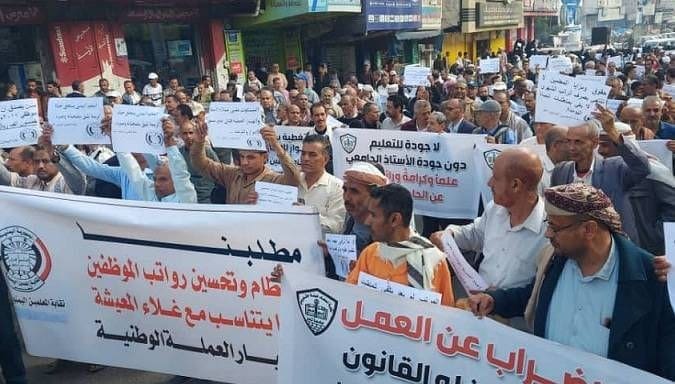
The Yemeni Teachers Syndicate described the continued delay in paying teachers' salaries as "a sustained and organised crime" and a systematic destruction of the educational process. The syndicate threatened comprehensive escalatory steps if their demands continue to be ignored, calling on students' parents and the media to stand in solidarity with them in the battle to obtain their legitimate rights and preserve their dignity.
In a statement it issued, a copy of which reached Yemen Monitor, the syndicate expressed its displeasure at the continued delay in paying the salaries of male and female teachers in a number of governorates under the control of the internationally recognised government, and their complete non-payment for more than eight years in areas controlled by the Houthi group.
The statement called on the legitimate government in Aden to quickly pay the overdue salaries regularly in accordance with laws and regulations, and also called on the Houthi group in Sanaa to pay teachers' salaries for all past years according to the 1435 AH (2014 AD) payrolls.
Record rise in arrivals of African migrants to Yemen during October
Yemen witnessed an unprecedented influx of African migrants during last October, with some 17,700 migrants arriving, the highest monthly rate this year according to the International Organization for Migration.
The organisation said in its latest report that the number of arrivals rose by 99% compared with September, with 17,685 migrants recorded, 97% of them Ethiopians, while Somalis made up the remaining share.
The report stated that most migrants set out from Djibouti, heading to various Yemeni areas, where the districts of Ahwar in Abyan Governorate and Dhu Bab in Taiz received the largest numbers, while Rudum in Shabwa was a reception centre for Somali migrants. This dense flow reflects the ongoing tensions in the areas from which migrants depart, prompting many to risk crossing Yemen in search of other destinations.
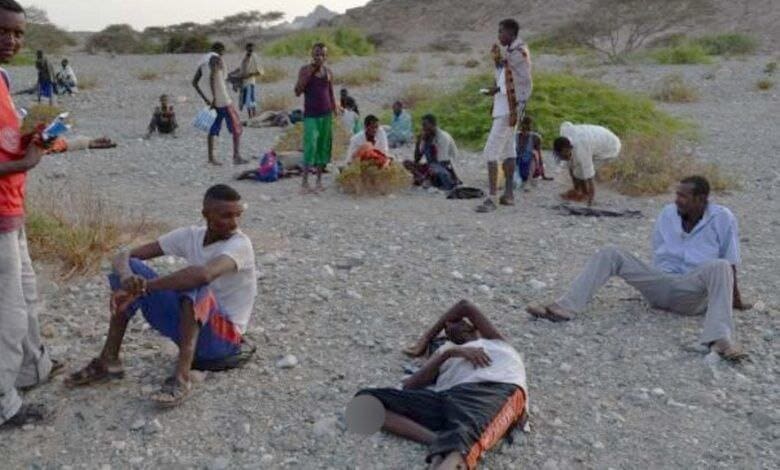
148 Somali refugees returned to the capital Mogadishu from Yemen, as part of the "voluntary" return programme run by the United Nations High Commissioner for Refugees. Commission officials confirmed the refugees' safe arrival on Tuesday, noting that they "will receive the necessary support to rebuild their lives in Somalia and start afresh."
This programme forms part of the Commission's efforts to help refugees wishing to return to their homes after years of displacement.
Human rights report documents enforced disappearance of 99 civilians by the Houthis over nine months in Ibb
The Nubala Foundation for Rights and Development documented 99 cases of enforced disappearance committed by the Houthi group in Ibb Governorate between January and September 2025. At an event launching its report, entitled "Absence Without Trace," in Marib Governorate, the foundation explained that educational staff were the most targeted, with the foundation recording 67 cases of enforced disappearance among teachers, educators and supervisors.
The report stated that disappearances affected civilians from 18 districts in Ibb Governorate, noting that the abuses took a systematic form aimed at intimidating society and subjecting it to control. It noted that the Houthi violations included raids and storming of victims' homes and workplaces, and luring them through school principals or under false official pretexts.
The detainees' stories showed the systematic terror the Houthis practised against victims in Ibb Governorate: educator al-Idrisi was abducted from an official meeting hall in front of his colleagues, while teacher al-Jabali was lured through his school principal under a job pretext. This exploitation of the educational system to subjugate educational staff is an indicator that these violations are "not individual behaviour but an organised, systematic policy."
The suffering of detainees' families: searching without trace
The suffering of detainees' families began with the raid and search campaigns, in addition to the intimidation and terror that the families of detainees, women and children, were subjected to, followed by a new chapter of suffering in searching for their relatives with the Houthis—a story repeated every day, and their daily attempts meet refusal or silence from the security bodies under Houthi control, according to Yemen Monitor.
Sabah Hatem, speaking on behalf of the detainees' families, affirmed that hundreds of families are living a real tragedy as a result of the continued policy of repression and enforced disappearance pursued by the Houthi militia, which has left deep humanitarian and psychological suffering among the victims' families.
The report listed a number of cases of enforced disappearance, including educator Mukhtar al-Shaghdari, whose news has been cut off since 19 May 2025, and whose family has been unable to learn any information about his place of detention or health condition despite their repeated appeals to the security bodies, which maintained complete silence. The same situation is faced by the family of detainee Abdulaleem al-Faqih, who suffers from a deteriorating health condition; his family has received no information about his place of detention or his health status, and their appeals have been met with Houthi silence and neglect.
Also, on Monday the Houthi militia launched a new campaign of arrests in Dhamar Governorate, targeting a number of social figures and local leaders affiliated with the Islah Party, as reported by Yemen Monitor. According to a local source quoted by journalist Fares al-Himyari, the arrests included former party leader Mohammed al-Shaghdari, the party's former media head in the governorate, who was stopped by Houthi gunmen at the Radaa junction in Dhamar city this morning before being taken to an unknown location.
This campaign comes in the context of escalating political and security tensions in the governorate, as the Houthi militia works to tighten the noose on its political opponents, according to local sources.
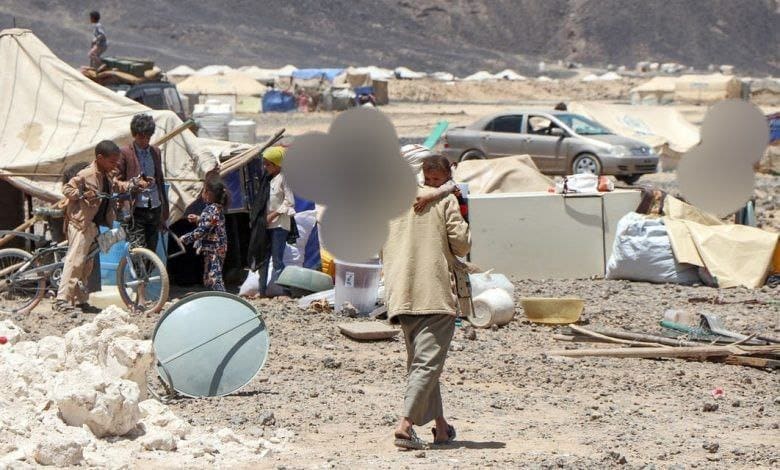
Marib displacement unit: thousands of displaced families face a harsh winter in dilapidated tents
The Executive Unit for managing displaced persons' camps in Marib Governorate (eastern Yemen) warned of the worsening suffering of thousands of displaced families in dilapidated tents as winter sets in.
It was stated that past years saw deaths among children and the elderly due to severe cold and the lack of sufficient humanitarian support, warning of a repeat of the tragedy this year unless swift action is taken to meet the essential needs. The Executive Unit called on all donors and humanitarian organisations to rapidly implement urgent winter interventions including the provision of winter clothing, blankets, heating materials, insulation, floor mats and safety equipment, giving priority to camps and the most affected families.
It affirmed that any delay in response would mean further suffering for vulnerable groups who have no hope but in God's help and then the support of humanitarian partners, expressing the wish that this winter be a season of warmth and mercy rather than cold and suffering.
According to official reports, Marib Governorate hosts 62% of the districts across Yemen, and the Executive Unit records about 3 million displaced persons in more than 197 displacement camps. The Executive Unit stated in an earlier report that the number of people living outside the camps had reached 1,575,731 individuals by the end of last year, equivalent to three times the number of displaced persons in the camps.
Electricity crisis looms in Aden after fuel tankers are seized in Abyan
Tense field developments were witnessed in the Hassan area of Abyan Governorate late on Tuesday evening after more than 150 transport trucks and lorries loaded with crude oil were seized by a group of soldiers in protest at delayed salary payments, as reported by the newspaper "Yemen Monitor". This seizure comes at a time when residents of Aden are suffering a severe electricity crisis following the shutdown of the Al-Mansoura station due to the depletion of diesel fuel, while electricity supply is limited to some generators of limited capacity.
Sources warned that the continued seizure of oil tankers would increase hours of power outages and deepen the suffering of citizens, especially with rising temperatures and humidity that multiply the need for electricity services. Activists on social media platforms expressed their urgent demands that the government pay the soldiers' salaries and ensure the passage of fuel tankers without obstruction, to avoid further deterioration of basic services in the capital, Aden.
Rohingya
Rohingya woman dies and dozens are missing after boat carrying 90 migrants sinks off Malaysia's coast
Malaysian authorities announced that a Rohingya woman died while dozens remain missing after a boat carrying about 90 migrants, most of them Rohingya, sank near the maritime border between Thailand and Malaysia. Rescue teams were able to find 10 survivors, while two other boats believed to have carried a similar number of passengers are being searched for.
It was explained that the survivors rescued include 3 nationals of Myanmar, two Rohingya refugees, and a man from Bangladesh. Preliminary investigations revealed that the migrants initially boarded a large vessel, with their total number likely being 300 migrants, and were then asked to transfer to 3 small boats near the border to avoid detection by the Malaysian authorities, which exposed them to the risk of drowning in the rough sea.
Arakan militias release Rohingya prisoners amid security restrictions and pledges
The Buddhist Arakan militias (Arakan Army) released on Friday 52 prisoners from the Rohingya minority who had been detained in Buthidaung prison in Rakhine State, coinciding with the birthday of the militia commander "Tun Myat Naing", according to local residents.
Local sources, as announced by "Mongdu Daily News", said those released include 17 people from Maungdaw city and 35 from Buthidaung, adding that the step came after months of detention of hundreds of Rohingya during the Arakan militias' control of the two areas in 2024.
According to testimonies from residents, those released were forced to sign pledges at the intelligence offices in Maungdaw not to flee to Bangladesh, and official photographs were taken of them before being allowed to leave. For those without families, administrative officials signed on their behalf. Families explained that their relatives were not permitted to return directly to their homes, but were transferred to a detention camp pending completion of final procedures.
Residents noted that a previous list was drawn up last September including the names of a large number of prisoners scheduled for release, but implementation was limited to a small part of them, while families called on the local authorities and the leadership of the Arakan militias to release the remaining prisoners as soon as possible.
Witnesses and local sources had previously reported that the Buddhist Arakan militias continue to arrest and torture Rohingya civilians in Buthidaung city, indicating that detainees are held without the right of appeal, legal representation or contact with families, according to the Arakan News Agency.
A 7-year-old Rohingya girl drowned in a water tank inside the Mebon refugee camp in Rakhine State, western Myanmar, according to the APN news agency, on Monday. It said the girl, named "Mano Sima", lives with her family in the refugee camp in the "Taung Bui" neighbourhood of Mebon city, adding that the incident occurred around one o'clock in the afternoon while the girl was playing near a drinking water tank inside the camp. It added that the girl slipped and fell into the water by mistake, and camp residents were able to find her body about half an hour later after searching.
It should be noted that Rohingya camps in Rakhine State, the majority of which are under the control of the Buddhist Arakan militias, are witnessing harsh conditions and a shortage of basic services, which expose children to multiple risks, including drowning, fires and malnutrition.
The Rohingya under the rule of the Arakan militias suffer widespread abuses, including the closing of their homes following false complaints, their seizure, confiscation of their valuable property and displacement of many families, as well as the imposition of strict restrictions preventing their movement between villages, through a network of security checkpoints at the entrances and exits of each Rohingya village.
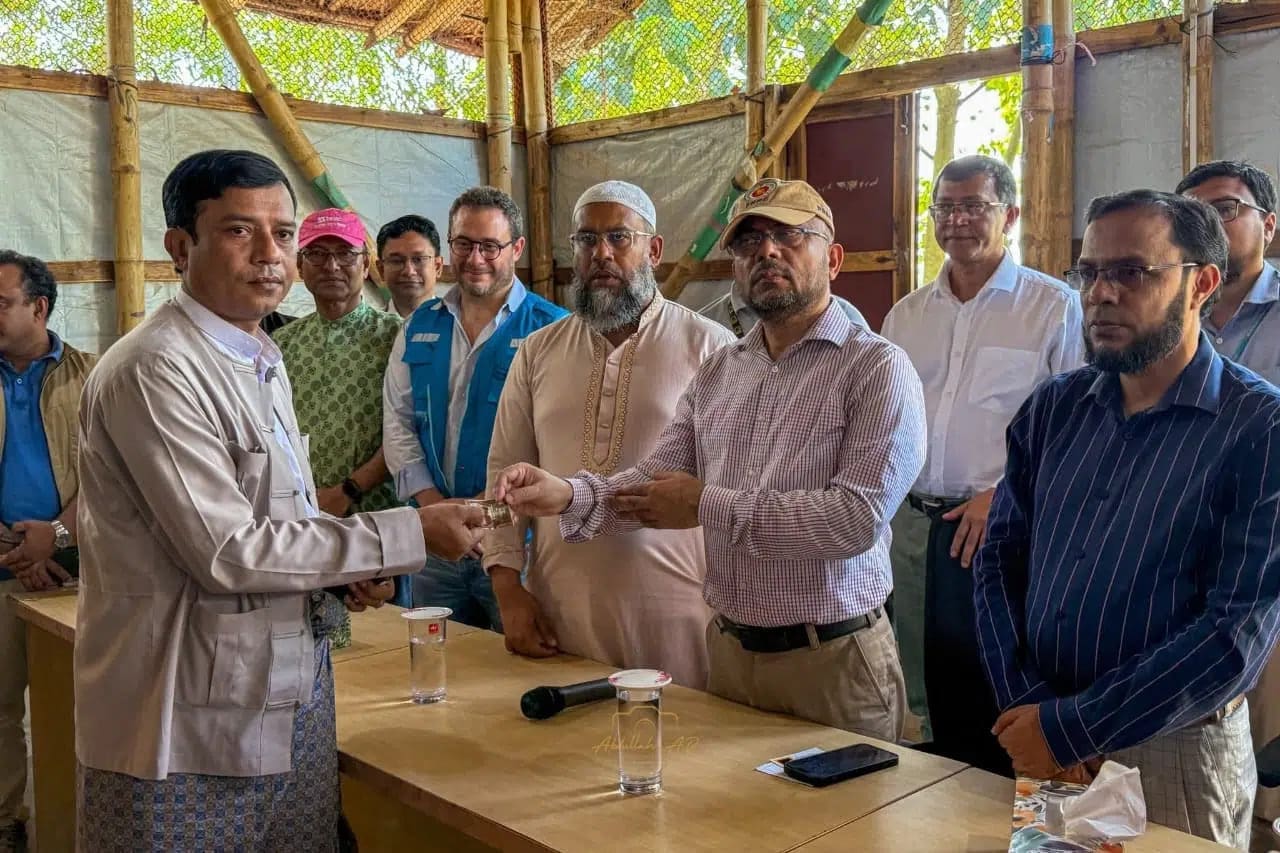
Bangladesh begins distributing legal SIM cards to Rohingya to strengthen security inside camps
In a step described as "historic", the Bangladeshi government launched on Monday an initiative to distribute legal SIM cards to Rohingya refugees in the Cox's Bazar camps, aiming to strengthen secure communication, digital inclusion, and reduce crimes linked to the use of illegal SIM cards.
The initiative was led by the Office of the Refugee Relief and Repatriation Commissioner (RRRC), headed by Commissioner Mizan ur Rahman, who handed the first legal SIM cards to the chairman and members of the executive committee of the United Council of Rohingya (UCR) during an official ceremony held in the camps.
According to the Commissioner's office, 10,000 legal SIM cards will be distributed in the first phase, with the programme gradually expanding in subsequent phases to cover all camps. The step comes after years in which many refugees relied on unregistered SIM cards due to restrictions imposed on official telecommunications services | Arakan News Agency.
Algeria
Massive fires sweep through forests in eastern and western Algeria and residents evacuated
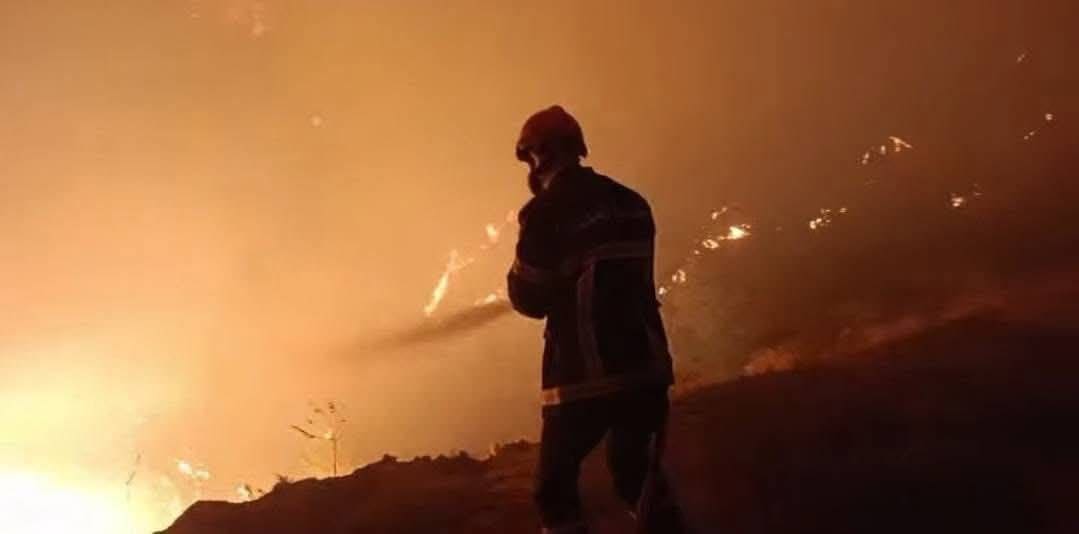
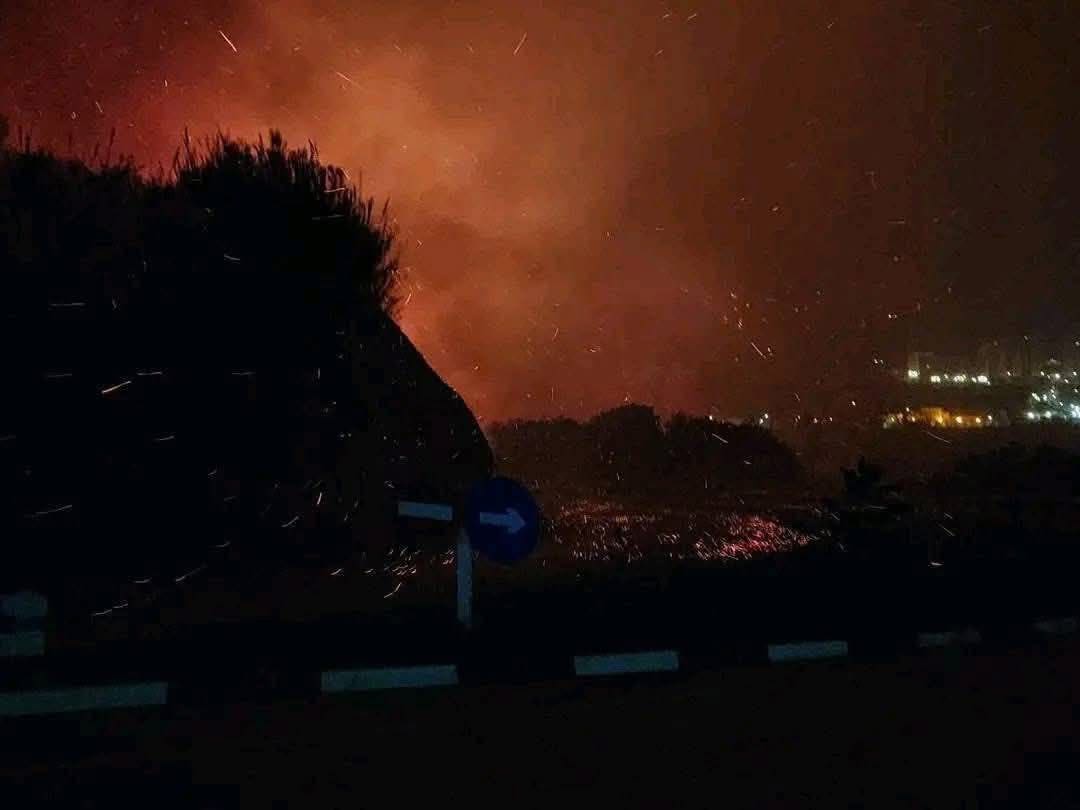
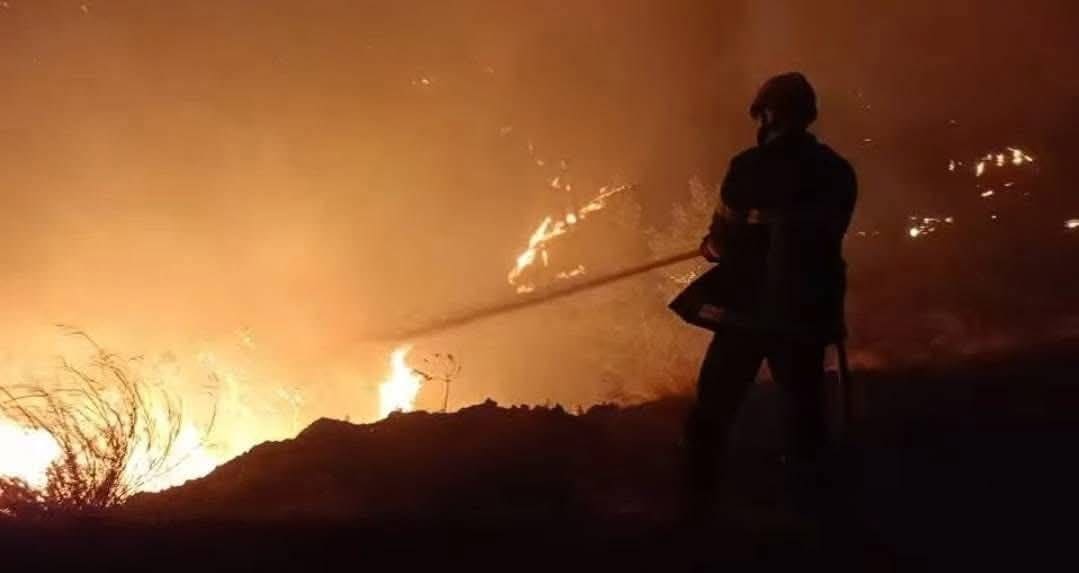
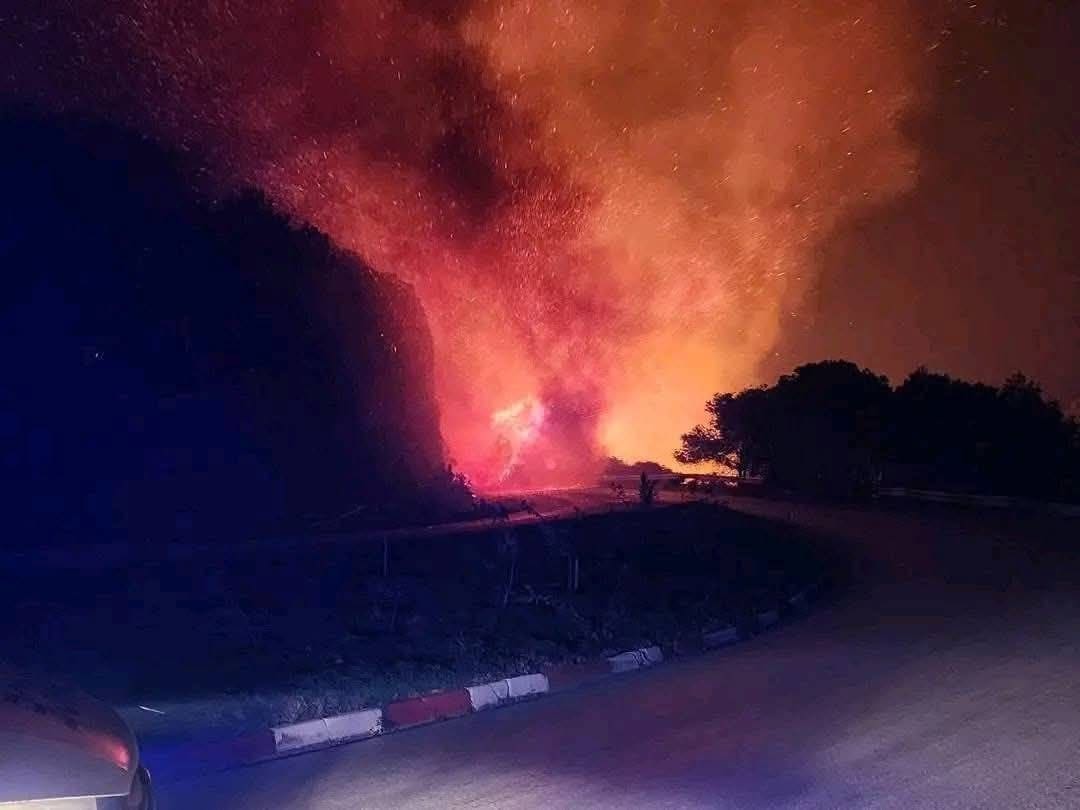
Several Algerian provinces witnessed massive fires that swept through forests, particularly in the east and west of the country, as flames spread due to dry winds and rising temperatures.
The fires led to the evacuation of residents from threatened areas to save their lives, while authorities announced the activation of emergency plans and directed firefighting teams to combat the fires and control their spread.
Reports indicated that about 22 forest fires were recorded in 8 provinces, while firefighting teams work to protect residential areas and farmland from any potential danger. The country is currently on maximum alert, amid calls from citizens to be cautious, stay away from areas near forests, and contribute to firefighting efforts.
Tipaza Province is in a worrying situation after its fires were classified among the most severe nationally, according to the General Directorate of Civil Protection. The municipality of Ara'had is witnessing the largest fires, especially in the Bou Khelija area, where ground intervention units, supported by aerial means, are working to contain the spread of the flames amid difficult terrain and strong winds that increase the spread of the blaze; families from nearby areas were also evacuated after the flames approached residential gatherings.
In the same context, authorities confirmed that wind speed and the difficulty of mountain routes hinder the movement of the teams, while Interior Minister Saïd Sayoud inspected the fire sites in Hadjret En Nes and Mesloun, confirming that maximum mobilisation will continue until full control of the situation is achieved.
Turkey
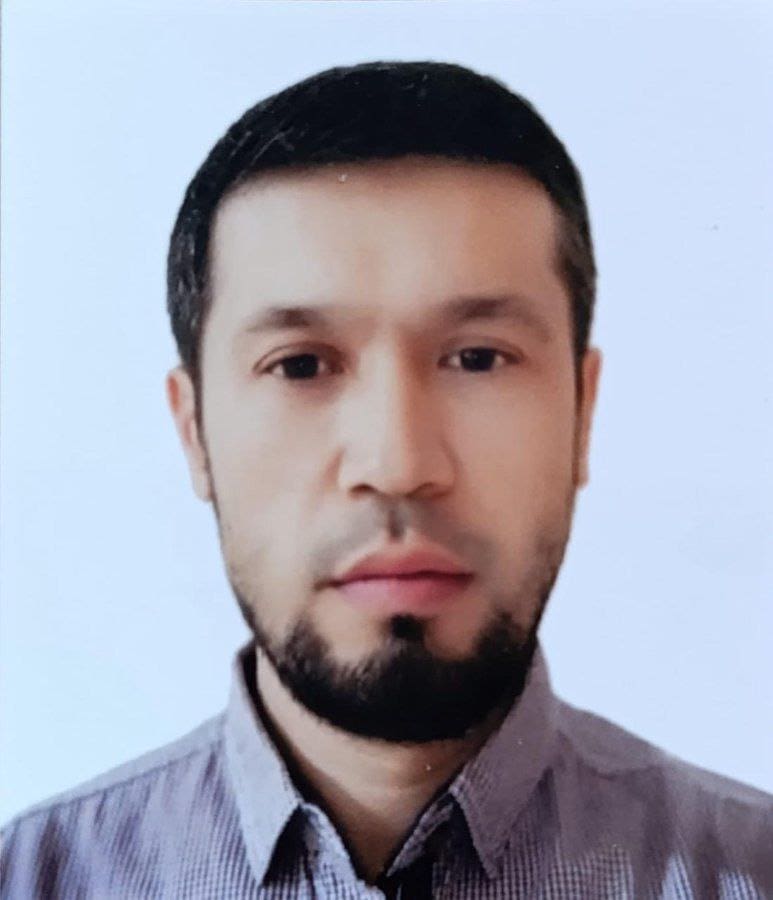
Turkish authorities deport Uzbek refugee Murodulla Musinov
Murodulla Musinov, who fled severe religious persecution in Uzbekistan and sought refuge in Turkey 13 years ago, was deported despite his asylum procedures still being ongoing. Musinov, married and father of four children, was transferred from Kocaeli to Istanbul Airport, then deported to Uzbekistan before completing his asylum procedures in Yalova, once again revealing the arbitrary treatment of refugees.
Egypt
The Minya Criminal Court sentenced to death a woman who killed her husband and six children in the village of Dalga by placing poison in bread.
The Ministry of Antiquities also opened an investigation into a video circulating on social media in which a museum visitor recites Quranic verses about Pharaoh and his people, and a source in the ministry confirmed that such practices offend society, according to local newspapers.
Egyptian engineer specialising in nuclear chemistry killed in Alexandria
An Egyptian engineer specialising in nuclear chemistry was killed this morning, Thursday, in the Karmouz area of Alexandria Governorate, after unidentified persons shot him while he was walking near the New Station, before fleeing the scene of the incident.
Security sources stated that the victim, in his mid-thirties, collapsed from several gunshots fired at him at close range, while his body was transferred to the Kom el-Dikka morgue under the disposal of the public prosecution.
Afghanistan
The spokesman for the Afghan Ministry of Commerce, Abdul Salam Jawad Akhundzada, told Reuters that "over the past six months, our trade with Iran reached 1.6 billion dollars, exceeding the 1.1 billion dollars we exchange with Pakistan". He added that "facilities at the Chabahar port reduced delays and gave traders confidence that shipments will not stop when borders are closed".
More than one million Afghan migrants return to the country in eight months
The Afghan Migrants Affairs Commission said that about 1,177,000 Afghan migrants returned to the country over the past eight months. The commission's spokesman, Maulvi Ahmadullah Wathiq, explained in a statement to Radio Azadi that these migrants were forcibly returned from Iran and Pakistan, and noted that the deportation of migrants from both countries is still ongoing.
Pakistan
Pakistani Interior Minister Mohsin Naqvi said on Thursday that two Afghans carried out two suicide bombings in Pakistan this week, one in the capital Islamabad. He said in a parliamentary session broadcast on television that "the identities of the suicide bombers involved in the two attacks have been identified and they were found to be two Afghans", according to his words. No response has yet been issued from Afghanistan.
Naqvi's remarks came after a suicide bomber blew himself up near a police patrol in front of a court building in Islamabad on Tuesday, killing 12 people and wounding 27 others. The Pakistani Taliban movement claimed responsibility for the attack, which occurred in front of the judicial complex in the capital. Another suicide bomber had stormed the main gate of a military college in a car bomb in the South Waziristan area near the border with Afghanistan on Monday, killing three people. Gunmen then stormed the college, which is run by the army but where civilians study, leading to a clash with Pakistani soldiers that lasted for more than 24 hours until all the attackers were killed.
Chechnya
In Chechnya, there is a special law of the Federal Security Service of Russia (FSB) applied specifically to Chechens: if you violate traffic rules and cause an accident that claims a person's life, your family is expelled from the republic, a blood feud is declared, and strict measures are taken against you. Recently, some people were sent to fight in the war in Ukraine due to traffic accidents, and this is a fact. But all of that applies only to ordinary Chechens.
As for people belonging to Kadyrov's circle, they are permitted to drive without a licence, and even minors among them are allowed to drive, as Ramzan Kadyrov's son, Adam Kadyrov, does. Even if one of them causes the death of a person by violating traffic rules, it is as if nothing happened.
For example, Ramzan Kadyrov's cousin, Turpal-Ali Ibrahimov, killed an entire family as a result of a blatant violation of traffic rules. And what do you think happened? At first they tried to cover up the incident by claiming that Turpal-Ali was not the driver, then when the matter became known to everyone, some posts on the official website of the Ministry of Interior were changed, and so on.
Despite all of that, Turpal-Ali did not even apologise, as if nothing had happened, and continued his blood-stained course. There are hundreds of similar cases in which people from Kadyrov's entourage violated traffic rules, causing injuries and deaths, without any of them being legally punished. This is the kind of "equality and democracy" Russia has brought us in Chechnya.
Their sole aim is to humiliate the Chechen people!
Quoted from the Niyso channel, which specialises in Chechen affairs.
Indonesia
Latest developments regarding the Jakarta mosque attack
Indonesian police seized explosive powder and writings from the home of a 17-year-old suspect in an attack on a mosque at a secondary school that left dozens of students injured, and are investigating his possible links to hate groups, officials said on Saturday.
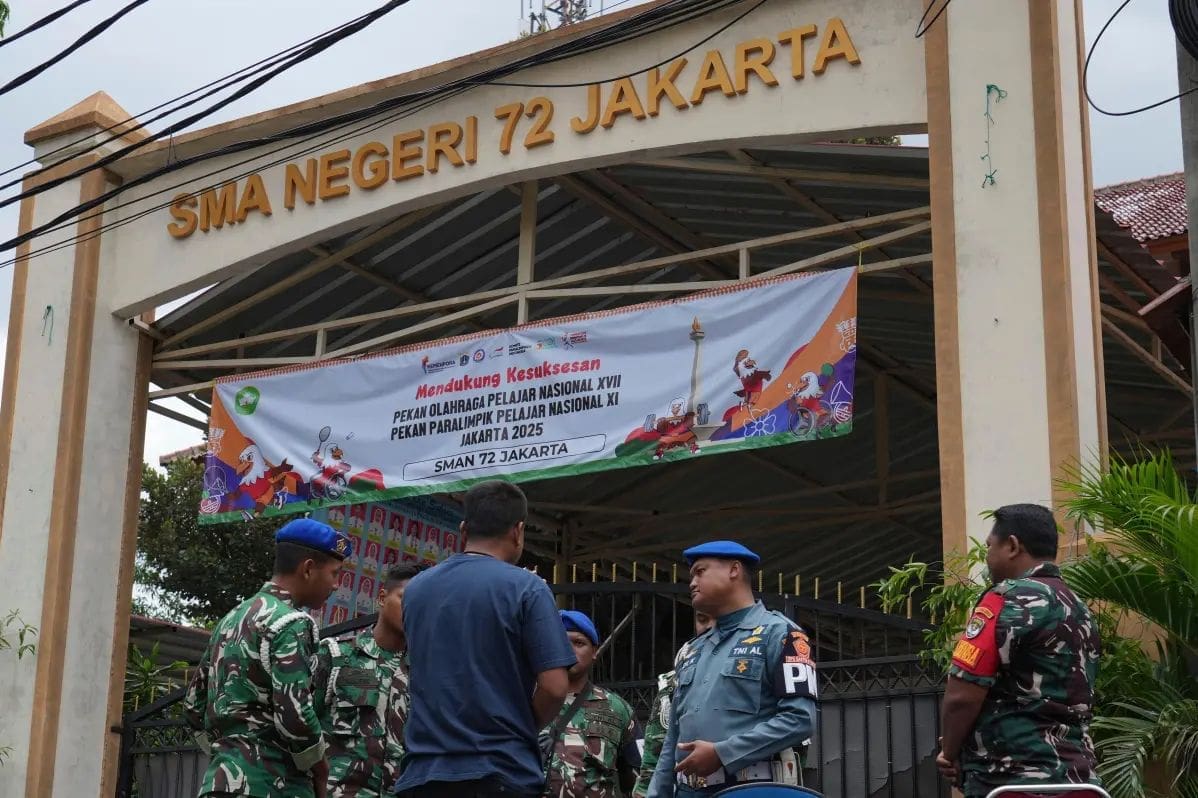
The suspect was among 54 people wounded in the Jakarta explosion on Friday and is still recovering in hospital, according to National Police Chief Listyo Sigit after visiting the victims. Police said on Friday they found a toy machine gun belonging to the suspect bearing what appeared to be white supremacist slogans and the names of two neo-Nazis convicted of fatal attacks in Canada and Italy.
Jakarta police chief Asep Edi Suheri said the type of explosives used was not immediately known, but the blasts occurred near the mosque's loudspeaker. Most of the victims who were standing near the loudspeaker lost their hearing due to the explosions, according to news agencies.
Rizwan Habib, an intelligence and terrorism analyst at Indonesia University, said the suspect had been repeatedly bullied and may have sought revenge by imitating the actions of international extremists he found through extensive online searches.
He said, "This is the first time in Indonesia that an attack has taken place inside a school carried out by a 17-year-old student and the target was his friends." Neighbours described the suspect as an introverted and unsociable teenager who lives with his father and older sister in a house used to process food for several restaurants.
Kashmir
Raids on more than 200 homes and arrest of more than 1,000 Kashmiris
A deadly explosion in Delhi was once again used as a pretext for India to launch sweeping raids in Kashmir, where entire neighbourhoods were stormed, families were evicted from their homes, and more than a thousand Kashmiris were detained under the label of "investigation."
Indian media rushed to promote the event as "terrorism," a tactic that has been used for decades to portray Kashmiris as the enemy and to justify raids, arrests, and the tightening of the military occupation's grip.
Tunisia
The defence team for Rached Ghannouchi, former head of the Ennahda Movement and former speaker of the Tunisian parliament, announced last Friday that he had begun an open hunger strike in solidarity with National Salvation Front leader Jawhar Ben Mbarek.
Ben Mbarek, who has been detained in Bouleh Prison in the Nabeul Governorate since 29 October last, entered an open hunger strike in protest against his arrest on charges of "conspiracy against state security." The defence team for Ghannouchi also stated that the strike is in defence of the independence of the judiciary and public freedoms in Tunisia, while opposition parties demand an end to what they describe as "political liquidation of opponents."
Muslim Minorities
India
Niqab-wearing woman barred from entering GTB Hospital in Delhi
In a disturbing incident that highlights the growth of religious bigotry, reports said a Muslim woman named Tabassum was prevented from entering the Guru Teg Bahadur Hospital in Delhi on 7 November 2025, despite holding a valid entry pass. Tabassum had come to visit her sister-in-law in the maternity ward after giving birth to her child.
A video circulated on social media showing Tabassum recounting her ordeal. She said security guards objected to her wearing the niqab, telling her: "You are not allowed to enter wearing this." When she asked to see the rule, the guards refused to explain it and disregarded her pass, while allowing others to enter freely.
Her family joined her, and Tabassum protested the humiliation. One of her relatives, who documented the incident, expressed regret, saying: "This is shameful. Are Muslims now being humiliated even for visiting their sick relatives?" The family questioned the selective enforcement, asserting constitutional rights to freedom of belief and dress.
Sociologist Professor Irfan Ahmad of Jamia Millia Islamia condemned the incident, noting the increasing frequency of such incidents. He said: "First schools and universities, and now hospitals? This pushes minorities to feel unsafe in basic public spaces. It is unacceptable," and linked it to the broader hostility towards Muslims and other minorities in India.
Police in the Indian state of Gujarat humiliated a niqab-wearing Muslim woman after she tried to prevent the demolition of homes and mosques belonging to Muslims, including her own home.
Germany
Experts in Germany warned that the return of Syrians to their homeland could affect the labour market, particularly in vital sectors such as health and transport, amid a political debate following calls to begin the repatriation of refugees.
Herbert Brücker, a researcher at the German Institute for Employment Research (IAB), said Syrian refugees constitute an important element of the labour market, with around 300,000 employees and 20,000 self-employed persons.
Brücker explained that the share of Syrians is small compared to some 45 million workers in Germany. However, most of them work in sectors with high demand and acute staff shortages, such as healthcare, transport, and logistics, noting that their absence would lead to a shortage of manpower and rising prices.
About 60% of Syrians in Germany work in occupations essential to the functioning of society and daily life, a share far higher than the 48% for German workers, according to the German Institute for Employment Research.
For his part, the chief physician at Jena University Hospital, Anas Jano, confirmed that Syrian doctors represent a significant asset to Germany and contribute to the stability of the healthcare system.


