

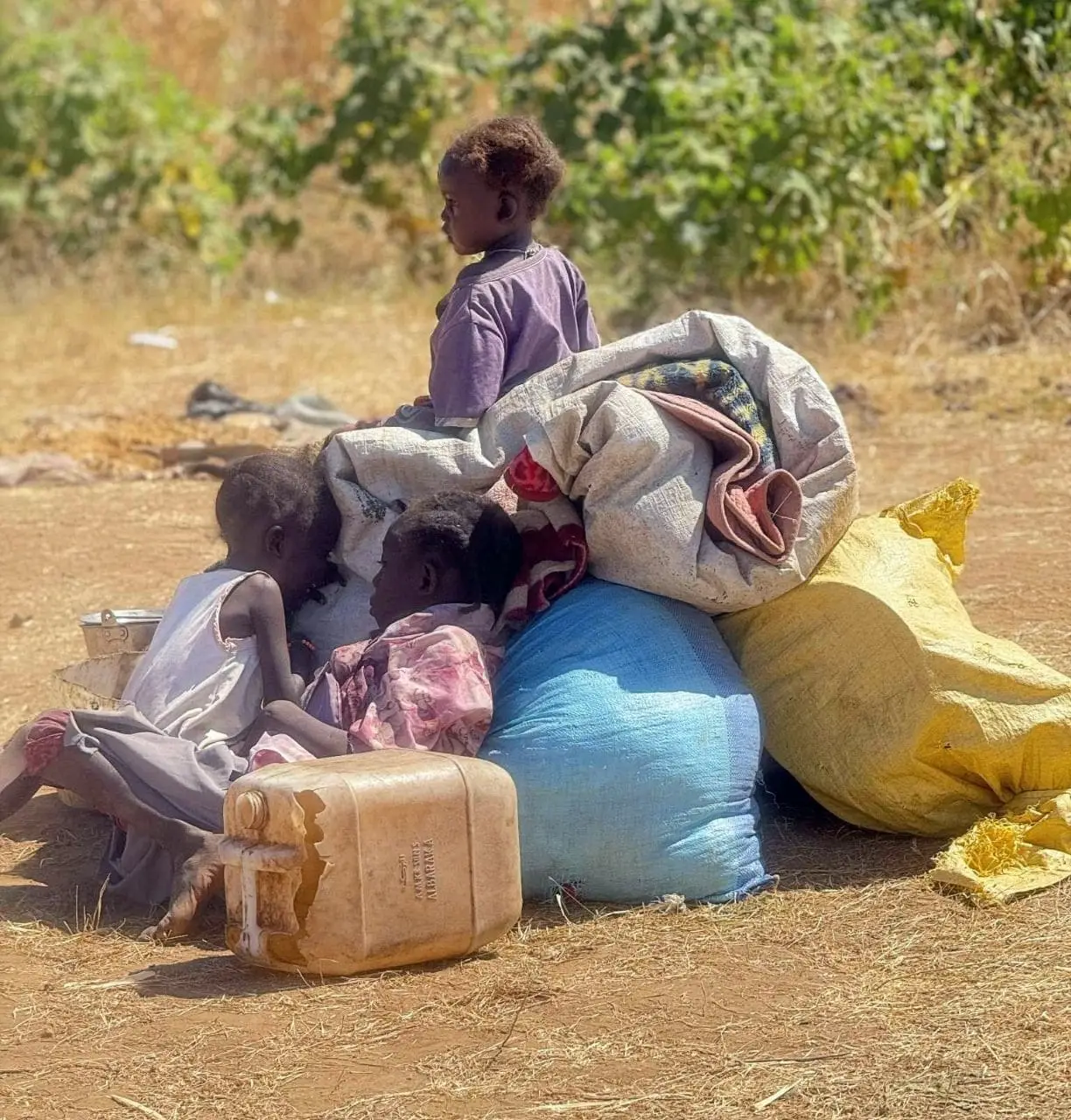
This week's highlights of events in the Muslim world, from Friday 2 Jumada al-Awwal to Friday 9 Jumada al-Awwal 1447 AH, are summarised below.
Palestine
Gaza Strip
Israel continues to use the file of its captives' bodies as a pressure card, and has carried out several violations on its part, while the Palestinian factions face complex field challenges in reaching the bodies of the captives amid massive destruction and insecurity across wide areas of Gaza.
Today, Friday, Nasser Medical Complex in the city of Khan Younis announced that Israel had returned the bodies of 30 Palestinians to Gaza, within the framework of the ceasefire agreement in the Strip. The hospital stated in a statement: "The arrival of 30 bodies of Palestinian captives from the Israeli side as part of the exchange deal." This comes a day after Hamas handed over to Israel, through the International Committee of the Red Cross, the bodies of two captives held in the Strip.
Yesterday, Thursday, Axios, citing a US official, reported that the mediators informed Hamas of a 24-hour deadline to evacuate its fighters from the area behind the "Yellow Line", the area to which Israeli occupation forces withdrew under the Trump plan and which is currently under the control of the Israeli occupation army.
Axios, citing a US official: "Hamas has been given a 24-hour deadline to evacuate its fighters from the area behind the Yellow Line. After the deadline, Israel will begin enforcing the ceasefire by force.
After the deadline, the Israeli army will act against Hamas targets within the areas under its control."
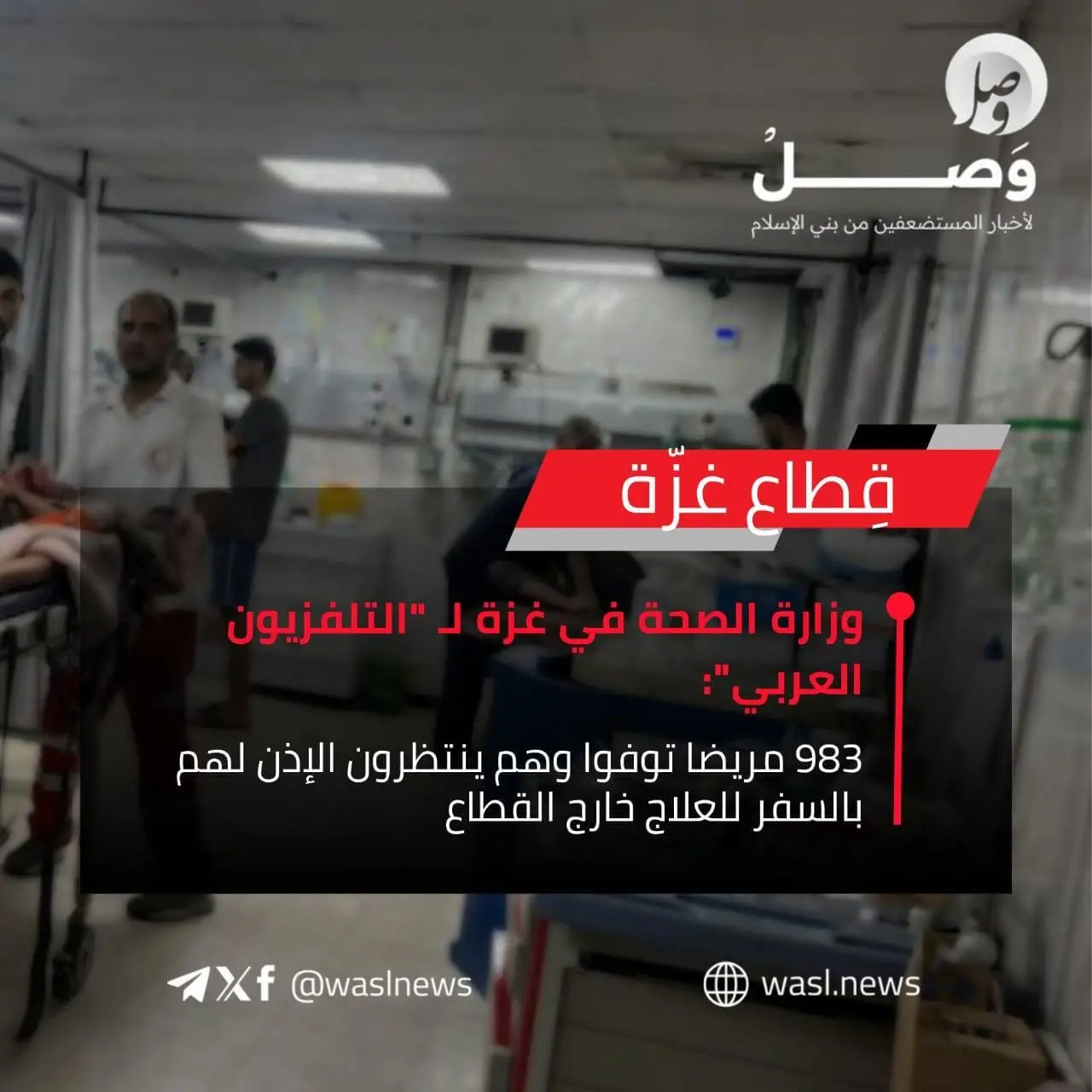
Gaza Ministry of Health to "Al-Araby TV": 983 patients have died while waiting for permission to travel abroad for treatment outside the Strip.
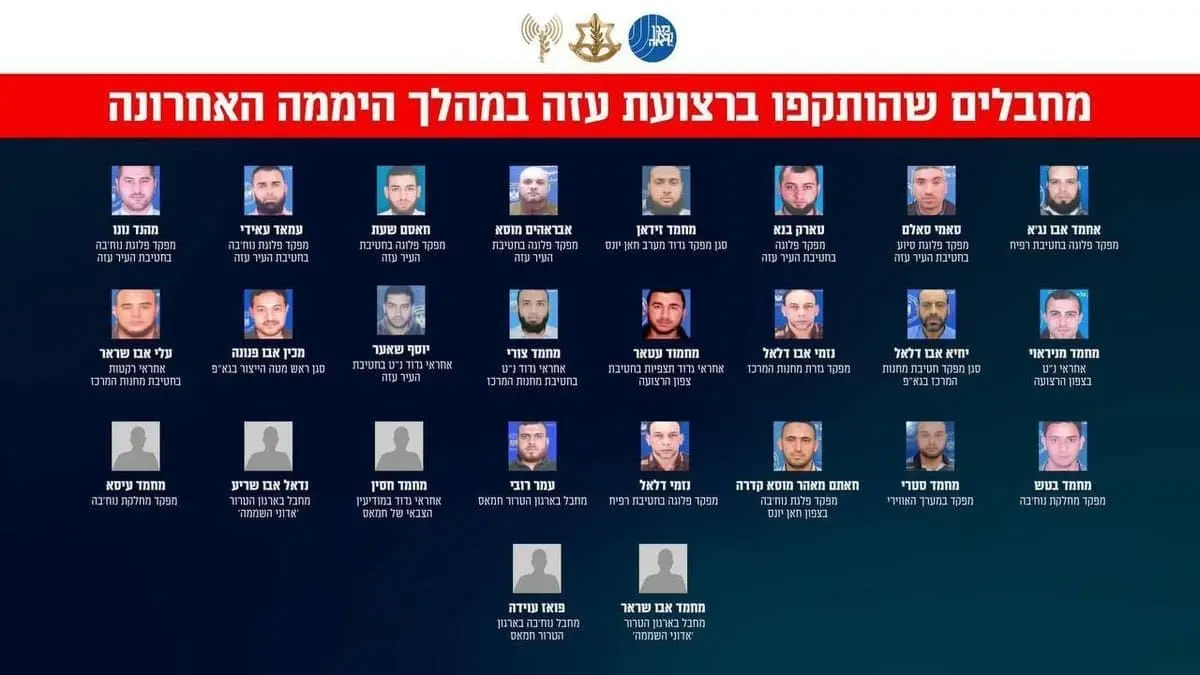
The Israeli occupation army published the identities of persons targeted during the past 24 hours, in air strikes that followed the violation of the ceasefire:
Two with the rank of battalion commanders.
Two with the rank of deputy battalion commanders.
16 persons with the rank of company commanders.
5 persons who carried out raids on Israel on 7 October, among them 3 commanders from the elite force, one of whom led the raid on Kibbutz Ein HaShlosha.
Joint official statement from the Palestinian factions from the Egyptian capital, Cairo:
Children were killed as martyrs when occupation shelling struck citizens' homes in Gaza City, at dawn on Wednesday.
Trump said:
- I think Israeli soldiers in Gaza were attacked and must defend themselves.
- We met some Hamas leaders and I think some of them are not satisfied with the killing that is taking place.
The death toll in the Gaza Strip, as we count it, from Tuesday evening until 8 a.m. on Wednesday: Total: 91 martyrs.
Distribution by area: northern Strip: 31; central Strip: 42; southern Strip: 18.
The Israeli occupation army carried out massive demolition operations east of Khan Younis city in the southern Gaza Strip.
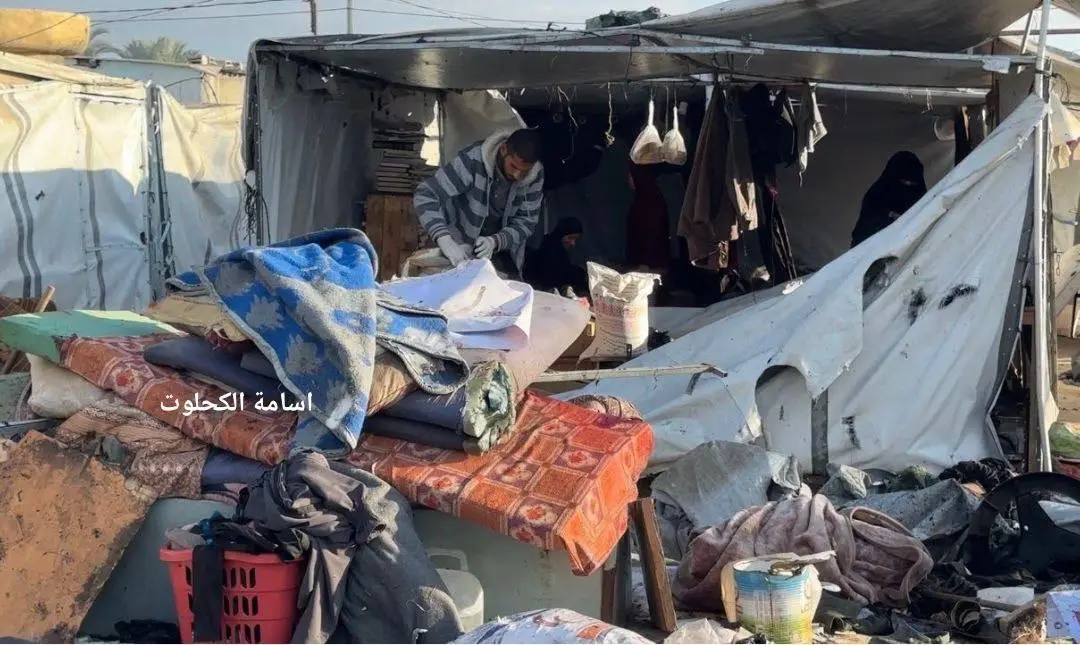
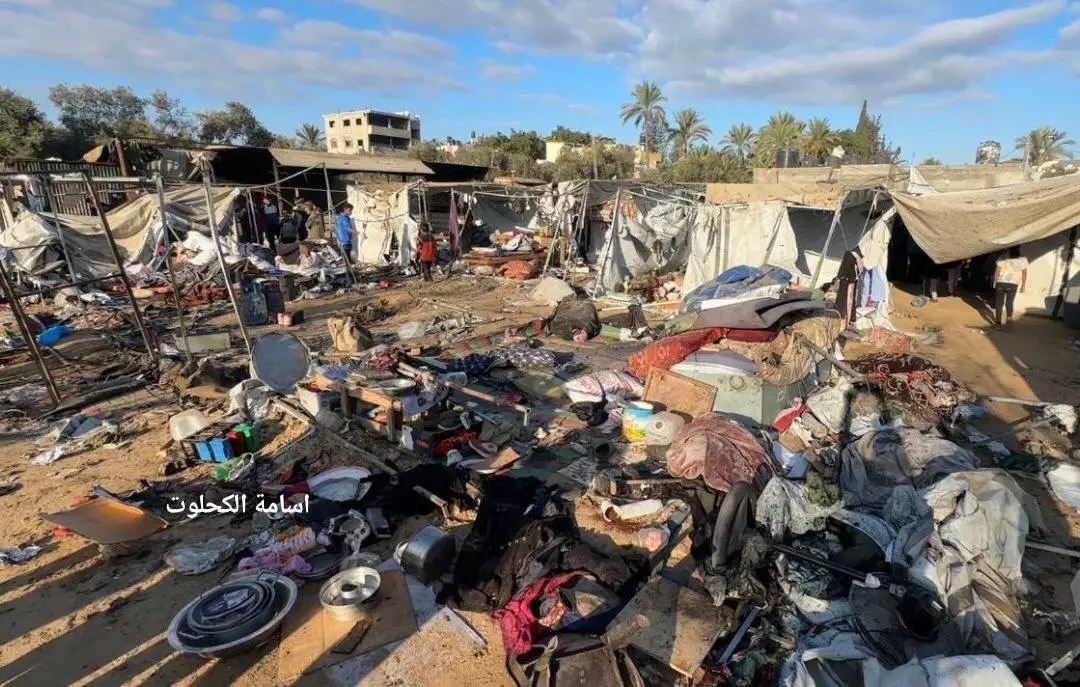
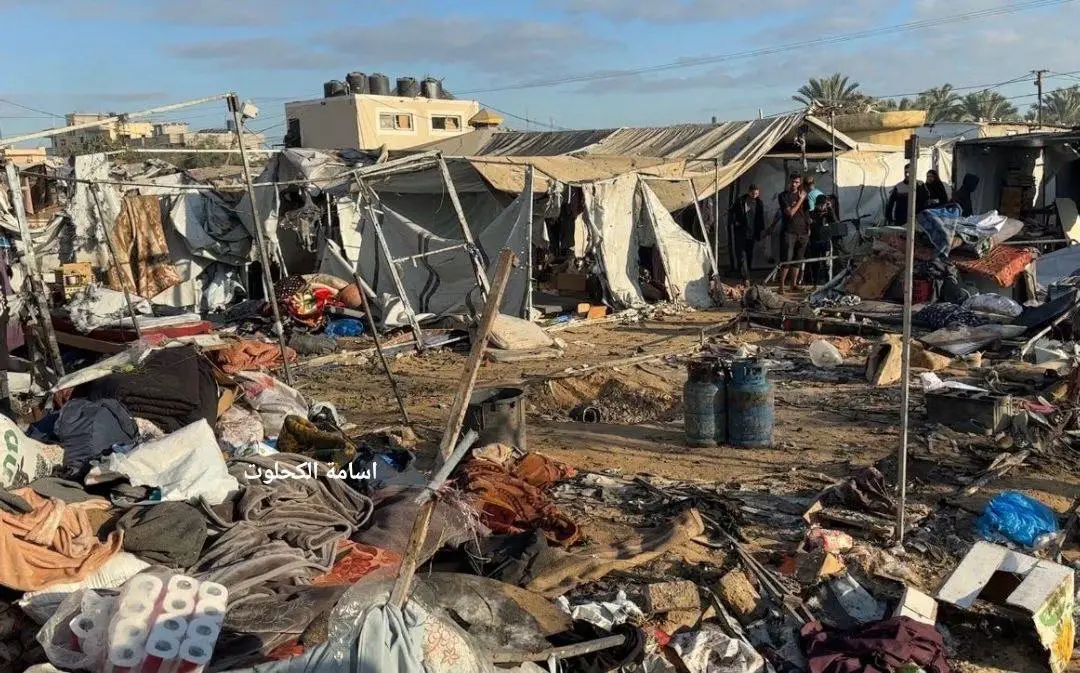
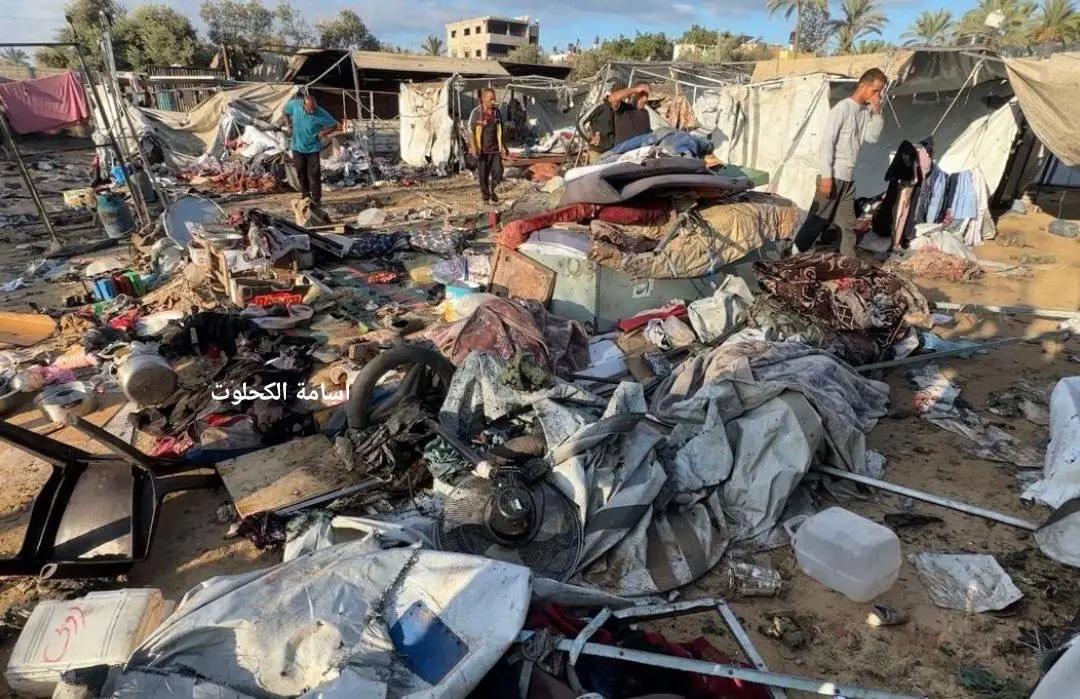
Massive destruction resulting from occupation aircraft bombing the tents of displaced people in the Insan shelter centre in central Gaza Strip.
Government media office in Gaza:
- The Israeli occupation continues its systematic campaign of deception, fabrication and dissemination of lies aimed at distorting the truth and covering up its ongoing crimes against civilians in the Gaza Strip.
- The occupation published a list of 26 names, including 21 photographs, which it claimed belong to people killed during its recent brutal aggression, which is now 24 hours old.
- Upon review, it was found that the list contains 3 names that are incorrect, not Arabic, and not included in official Palestinian records, in addition to fictitious names that have no existence in reality, and some of which were deliberately not accompanied by any photographs at all.
- The occupation included on the list names of four persons who were not martyred and were not present in the targeted areas at all, and who are alive.
- The occupation listed duplicate names after manipulating their full names so that they appear to belong to different persons, and the list included names of persons killed in places and at times entirely different from those announced.
The suffering of the people of the Gaza Strip after the announcement of the "ceasefire"
UNICEF said that the water, sanitation and hygiene sectors in Gaza are in a very critical situation, and that families' basic needs for water, sanitation and hygiene remain unmet.
UNICEF added:
- A million children have endured the daily horrors of staying alive in the most dangerous place in the world, Gaza.
- We are working to expand treatment for malnutrition in Gaza to confront famine and to provide residents with drinking water, clothing and shelter.
The United Nations said: 7,000 tonnes of unexploded ordnance threaten the lives of civilians in Gaza.
The Gaza Ministry of Health announced:
- No shipment of medicine, devices or medical equipment has entered since the ceasefire.
- The health system in the Strip still suffers, and no change has occurred since the ceasefire.
- No medical devices for emergency examinations and surgical operations have entered since the ceasefire.
- 18,500 patients in need of treatment abroad have completed travel procedures and are waiting for permission to leave.
UNRWA said: the need for shelter and warmth in Gaza is increasing as winter approaches, and we have the necessary shelter materials in our warehouses in Jordan and Egypt, but their entry is prevented.
The Gaza Ministry of Health announced: so far, 64 martyrs' bodies have been identified out of 195 bodies, within the batches of released bodies that were received from the occupation.
The Civil Defence announced: the martyrdom of a girl (9 years old) and 3 injured, as a result of the collapse of a building belonging to the Al-Balousha family on its residents, due to an earlier occupation bombardment, in the Sabra neighbourhood south of Gaza City.
From the arrival of Egyptian heavy equipment in Gaza.
Government media office in Gaza: 7,000 trucks have entered the Strip since the start of the ceasefire, of which only 1,500 are aid trucks, and the rest are commercial trucks sold to citizens.
The medical director of Kuwait Field Hospital said: We expected a breakthrough in the entry of medical supplies, medicines and humanitarian aid after the ceasefire, but unfortunately it did not happen. The simplest medicines are not available to us, and until now we cannot provide pharmaceutical services to patients.
Euro-Mediterranean Human Rights Monitor:
- Israel kills an average of 10 Palestinians and injures more than 28 others daily since the ceasefire in the Gaza Strip, and continues to carry out the crime of genocide at a less noisy pace.
- Israel follows a new methodology based on daily violation of the ceasefire through limited shelling that develops every few days into wide bombing campaigns.
- Israel has killed 219 Palestinians, including 85 children, since the start of the ceasefire agreement, and has injured about 600 others.
- Israel seeks to entrench a new fait accompli, in which it allows itself to continue its war operations in the area it controls, which represents about 50% of the Strip's area, and to remove it from the ceasefire equation.
- The crimes of Israeli shelling represent a deliberate pattern reflecting a clear orientation at the Israeli political and military levels to undermine the ceasefire under cover of international silence and political complicity.
- The most dangerous thing currently taking place is what appears to be a plan to redraw the geographic map of the Strip, which in practice leads to dismantling the unity of the geographic area and turning Gaza into an unlivable space, pushing civilians towards forced migration as the only option for survival.
Circulating: Sheikh Majdi al-Maghrabi from Gaza: "The summit of moral decline and hypocrisy in this world, to a degree that is hard to describe!!
When the whole world moves, crossings are opened, and Egyptian heavy machinery enters the Gaza Strip through the Kerem Shalom crossing, solely to extract the bodies of a number of Israelis. Extensive excavation work continues, in an exceptional mission carried out for a single Zionist body, while beneath the rubble of Gaza there are more than ten thousand missing innocents, whole families buried under the demolition, and no one has stirred a finger for them.
The crossings were not opened, and neither Arabs nor non-Arabs volunteered or were eager to extract them, bulldozers were not sent, and the world's cameras were not turned towards them. Thousands of Gazan lives lie under the rubble, and perhaps they have passed them by and overlooked them, or scattered them; they are not their target, and they do not concern them at all."
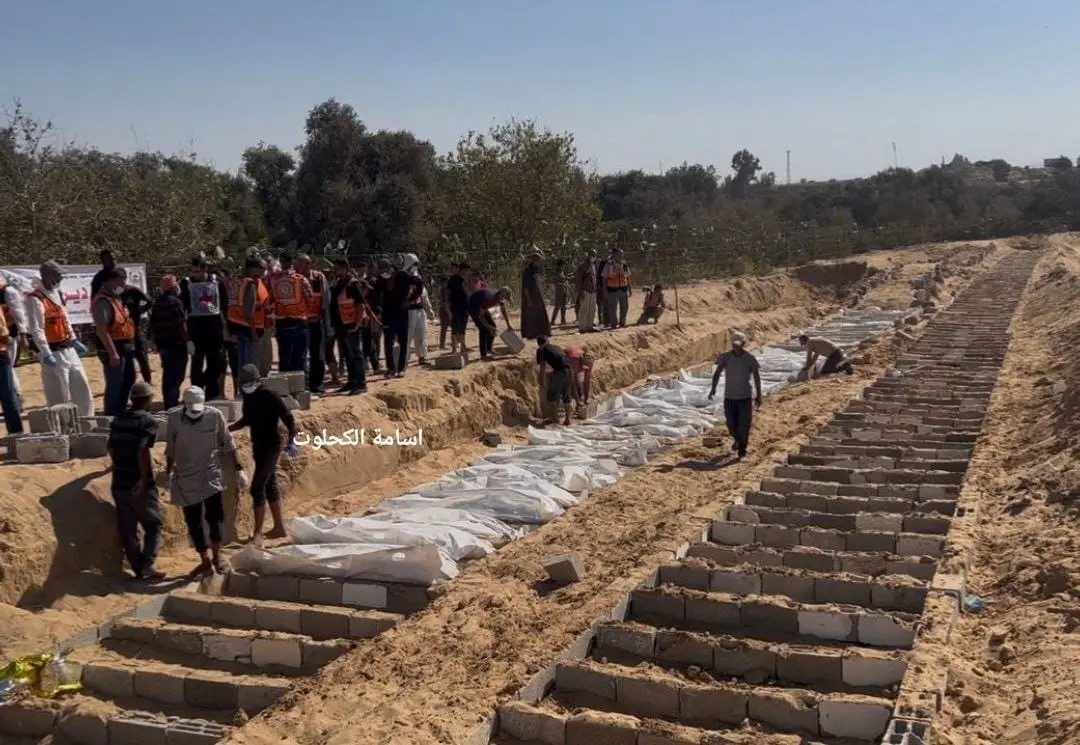
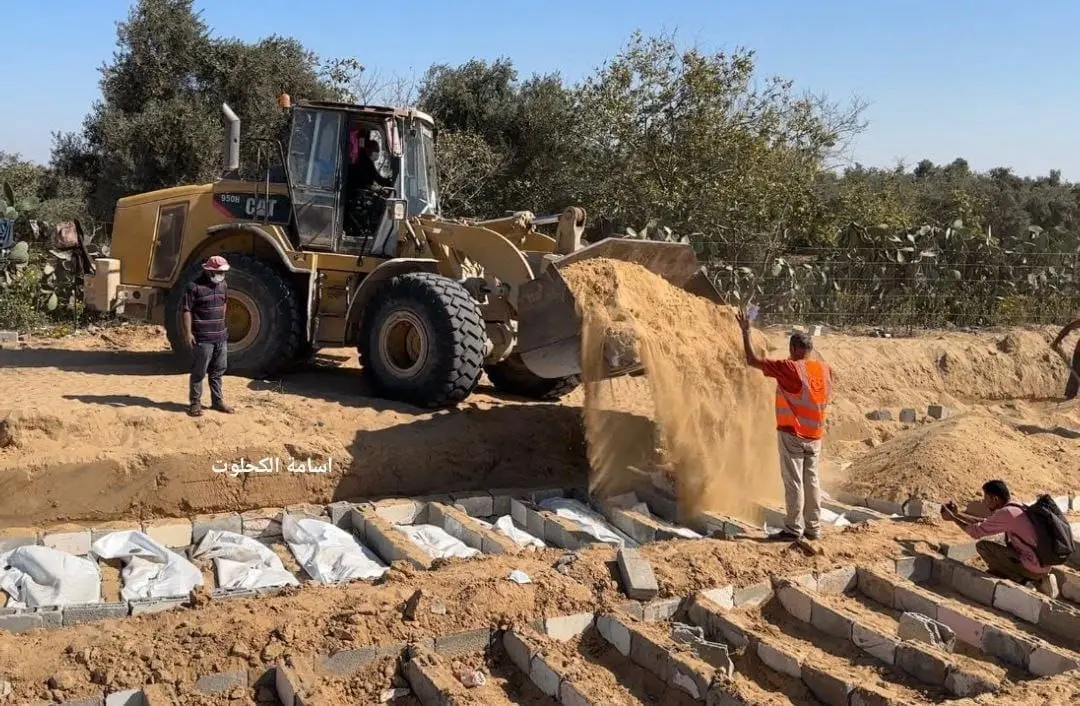
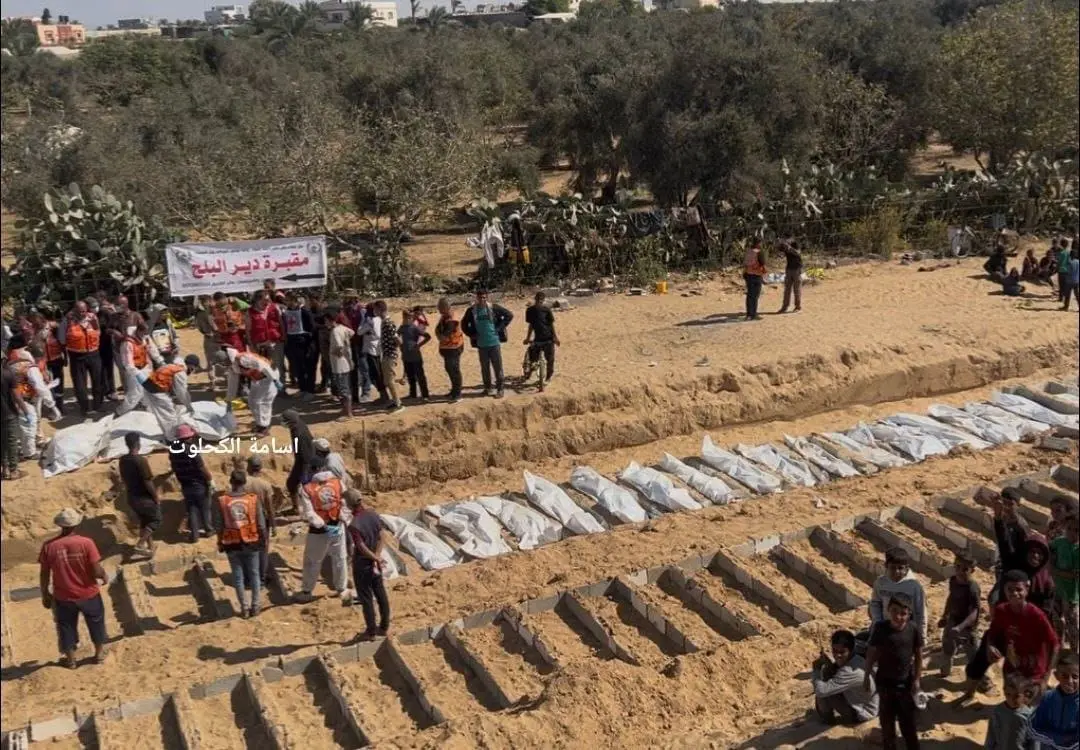
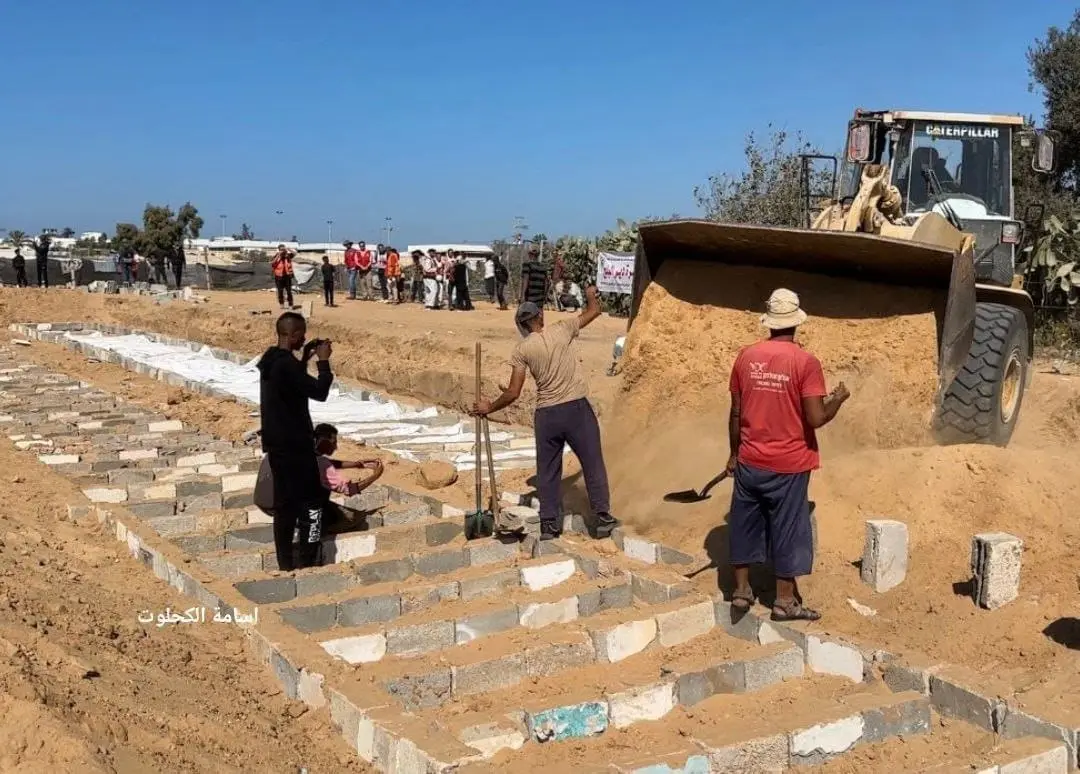
The bodies of dozens of martyrs of unidentified identity - as we count them - were buried in a mass grave in Khan Younis, south of the Gaza Strip; their families were unable to identify them because their features had disappeared as a result of the occupation's torture of them and their detention throughout the period of the war of genocide on the Gaza Strip.
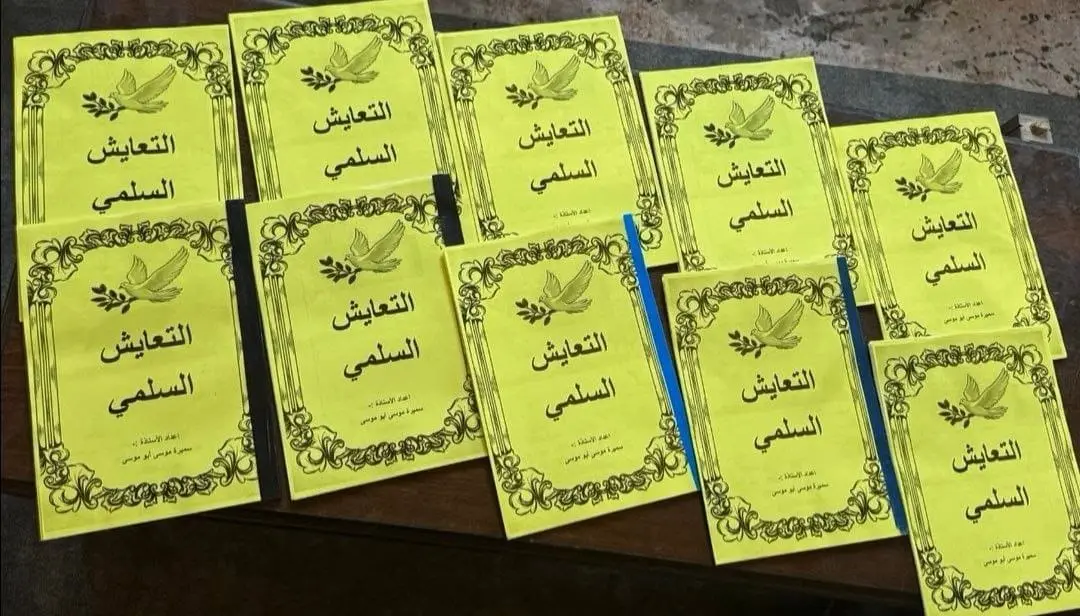
The collaborator Yasser Abu Shabab announces the publication of the book "Peaceful Coexistence" for teaching in areas under the control of the occupation army in the Gaza Strip.
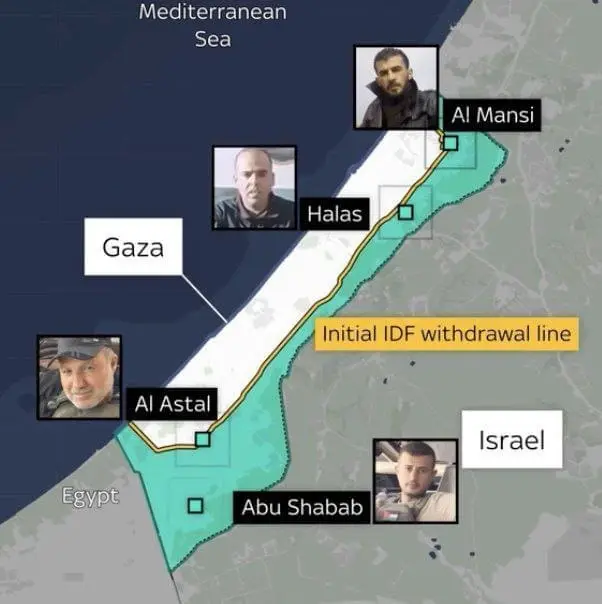
Hebrew media: four Palestinian militias opposed to Hamas operate in the Gaza Strip, in areas under Israeli control according to the withdrawal map of the Trump deal - in the north, east of Gaza City, central Khan Younis governorate, and east of Rafah. These militias are led by Yasser Abu Shabab, Hossam al-Astal, Rami Helles and Ashraf al-Mansi.
A father in Gaza surprises his children with chicken after months of the occupation preventing its entry.
The US website The Intercept reveals, based on internal documents, that Amazon provided cloud computing services and artificial intelligence tools to a number of Israeli arms companies and government bodies that used its products in the war on Gaza.
According to the report, these companies - including Rafael and Israel Aerospace Industries (IAI) - were part of Project Nimbus, which connects cloud service providers with the Israeli government, raising legal and ethical questions about the role of technology companies in supporting military operations that resulted in the killing of thousands of civilians in the Gaza Strip. | The Intercept.

More than 300 global figures announce boycott of The New York Times: "Genocide is not a matter of opinion"
More than 300 writers, academics and public figures from various countries around the world announced their boycott of The New York Times, in protest at what they described as its biased and inhumane coverage of events in the Gaza Strip.
The boycott statement, titled "Genocide is not a matter of opinion", stated that the American newspaper treats the crimes committed against Palestinian civilians as if they were a contentious issue or a political viewpoint, which the signatories considered normalisation of the crime and justification of violence against the innocent.
The signatories affirmed that genocide is an absolute crime that cannot be justified or presented as a matter of opinion, stressing that a free press is obliged to defend truth and human justice, not to equate the executioner with the victim. The list of boycotters included internationally award-winning writers, prominent artists and university professors from prestigious universities around the world, in a step considered one of the largest cultural pressure campaigns against a major American newspaper in recent years.
The statement concluded by affirming that the boycott position aims to remind of the responsibility of the media in times of war, and that "silence or justification in the face of genocide is no less dangerous than participation in it".

Investigative report reveals details of a secret contract between Israel and the technology giants Google and Amazon
Recent investigative reports revealed a huge contract signed by the Israeli government with Google and Amazon, which includes secret conditions relating to the use of cloud computing services for military and security purposes. According to the investigation, which was published in a number of international media outlets, the contract - known as "Project Nimbus" - gives Israel access to advanced digital infrastructure including artificial intelligence, data analysis and cloud storage, within a deal estimated at billions of dollars.
The report noted that some employees within Google and Amazon objected to the deal since its signing in 2021, warning that the advanced technologies could be used to monitor Palestinians and enhance Israeli military capabilities. According to documents that journalists were able to review, the contract included secret clauses preventing the two companies from withdrawing or boycotting the Israeli government for any political or human rights reason, which raised widespread concerns about the ethics of using technology in armed conflicts.
For their part, Google and Amazon declined to comment in detail on the contract's content, merely affirming their commitment to "providing secure cloud services that comply with international law".
This investigation is considered one of the most prominent recent publications on the intersection of the technology sector with Israeli military activities, amid growing global calls to hold major companies accountable for their role in conflicts and human rights violations.
West Bank and Jerusalem
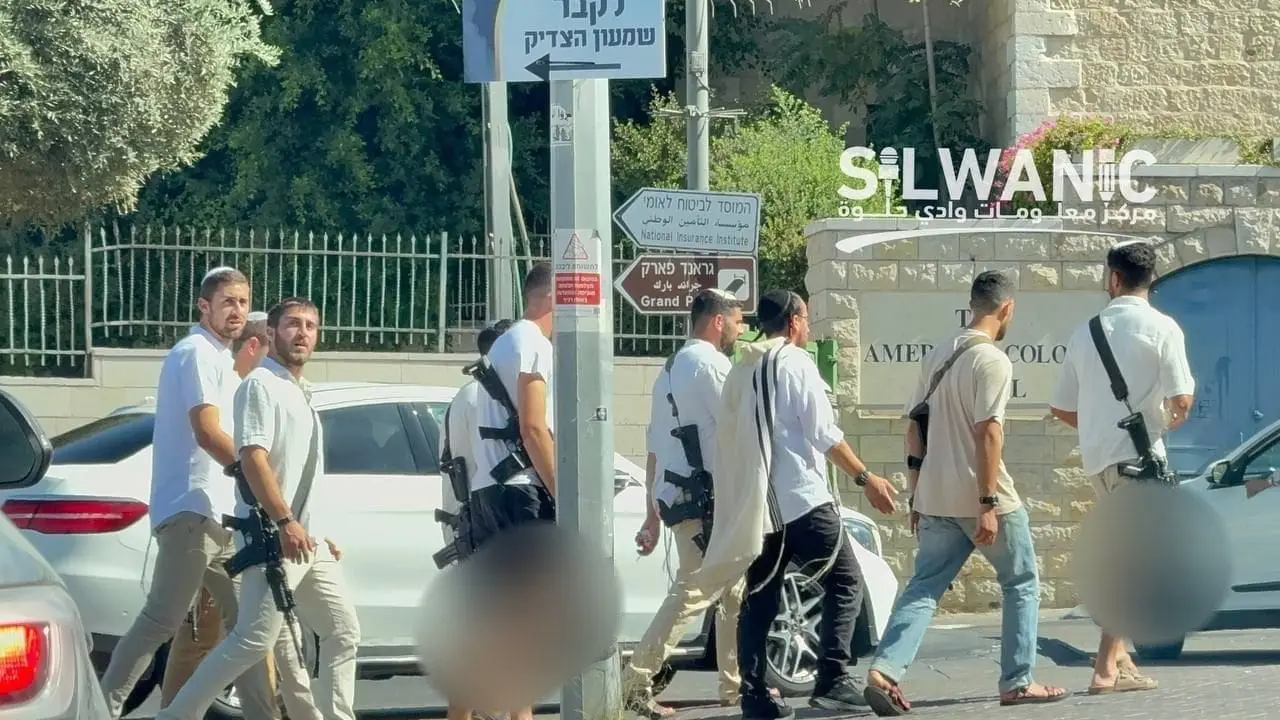
Armed settlers stormed the Sheikh Jarrah neighbourhood in occupied Jerusalem.
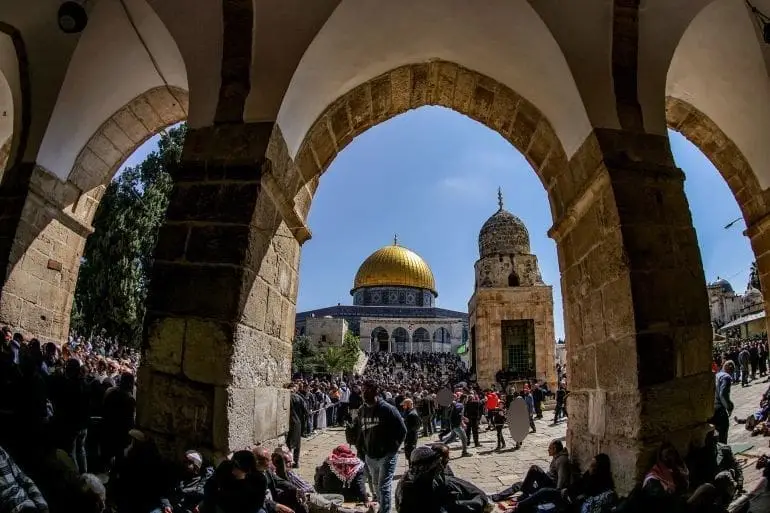
The Jerusalem Affairs Department of the Palestine Liberation Organization: bringing "tourists" into al-Aqsa Mosque under the supervision of the security agencies of the occupying state is not normal tourist activity, but a political step aimed at entrenching the occupation's presence inside the mosque and imposing a temporal and spatial division within it.
According to the Jerusalem Governorate: the occupation is isolating 3 villages north-west of the city and classifying them as contact zones in preparation for annexing them and displacing their residents.
The largest demonstrations by the Haredim in Jerusalem, in protest against the conscription law in the Israeli occupation army, on Thursday.
Settler attacks in the West Bank
158 attacks is the toll of settler attacks, facilitated by the occupation army, against olive harvesters in the West Bank since the beginning of October, ranging between violent physical assault, arrest campaigns, restriction of movement, denial of access, intimidation and terrorisation in all its forms, and direct gunfire.
The occupation army prevents Palestinian farmers from reaching their lands to harvest olives in the village of Sinjil, north of Ramallah, in the central West Bank.
Local sources announced on Tuesday: two injuries, one of them serious, after a settler militia attack on farmers in the town of Kifl Haris east of Qalqilya.
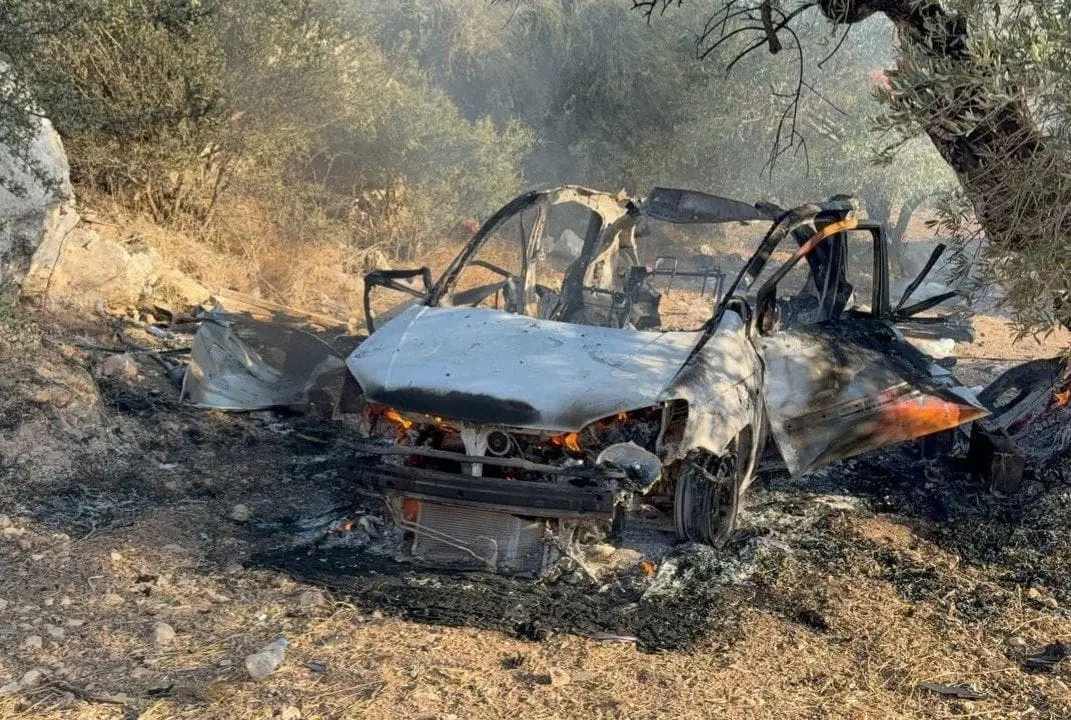
A special force besieged a house and a cave, followed by large military reinforcements, two bulldozers, and air cover from occupation aircraft. Violent clashes broke out at the site as the resistance fighters confronted the storming and refused to surrender.
The occupation's air force bombed the house and the cave more than once, while occupation snipers were around the house targeting the resistance fighters.
The names of the resistance fighters who were martyred at dawn on Tuesday after a clash with the occupation and the shelling of a house, a cave and a vehicle in Wadi Hasan near the town of Kafr Qud in Jenin are: 1 - Abdullah Muhammad Omar Jalamneh (27 years old); 2 - Qais Ibrahim Muhammad al-Bitawi (21 years old); 3 - Ahmad Azmi Arif Nashrati (29 years old).
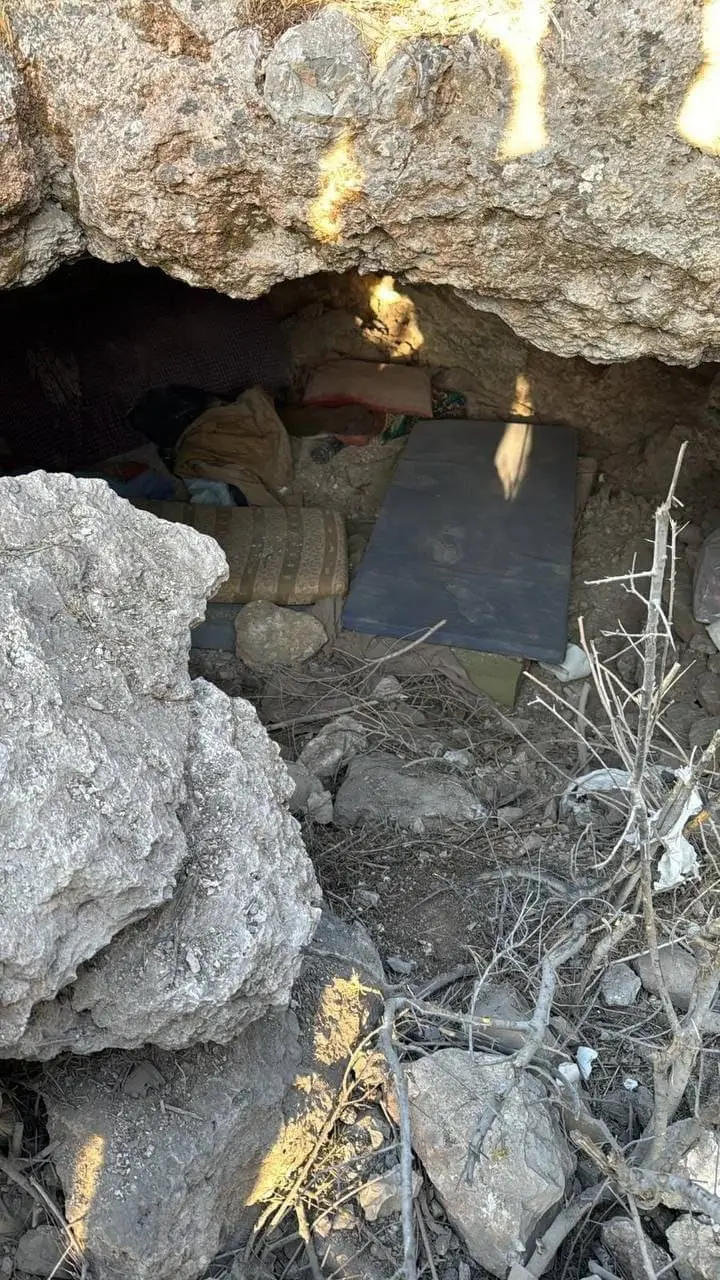
Here the three resistance fighters slept, in the Wadi Hasan area near the town of Kafr Qud in Jenin, before large occupation army forces, reinforced by sniper units and aircraft, besieged them.
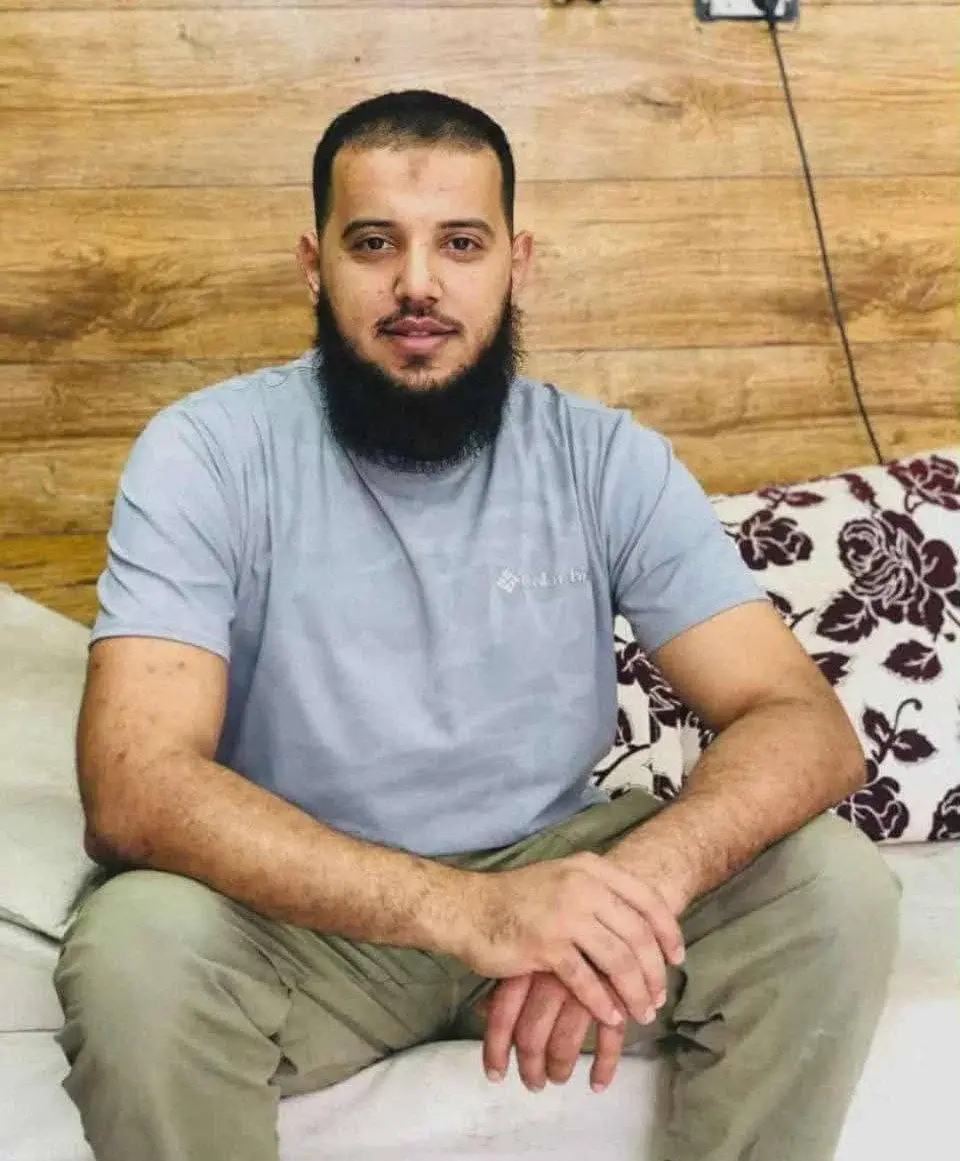
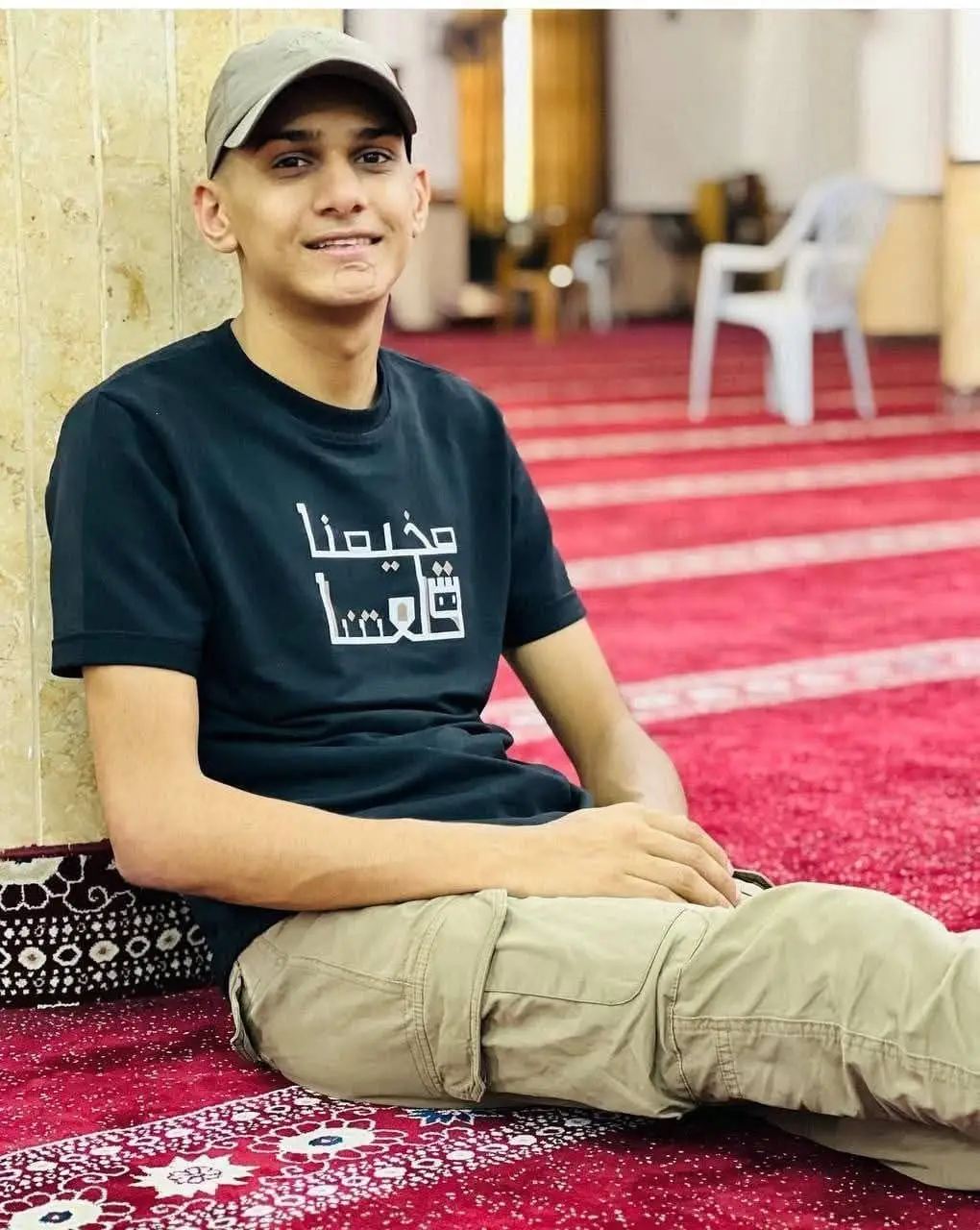
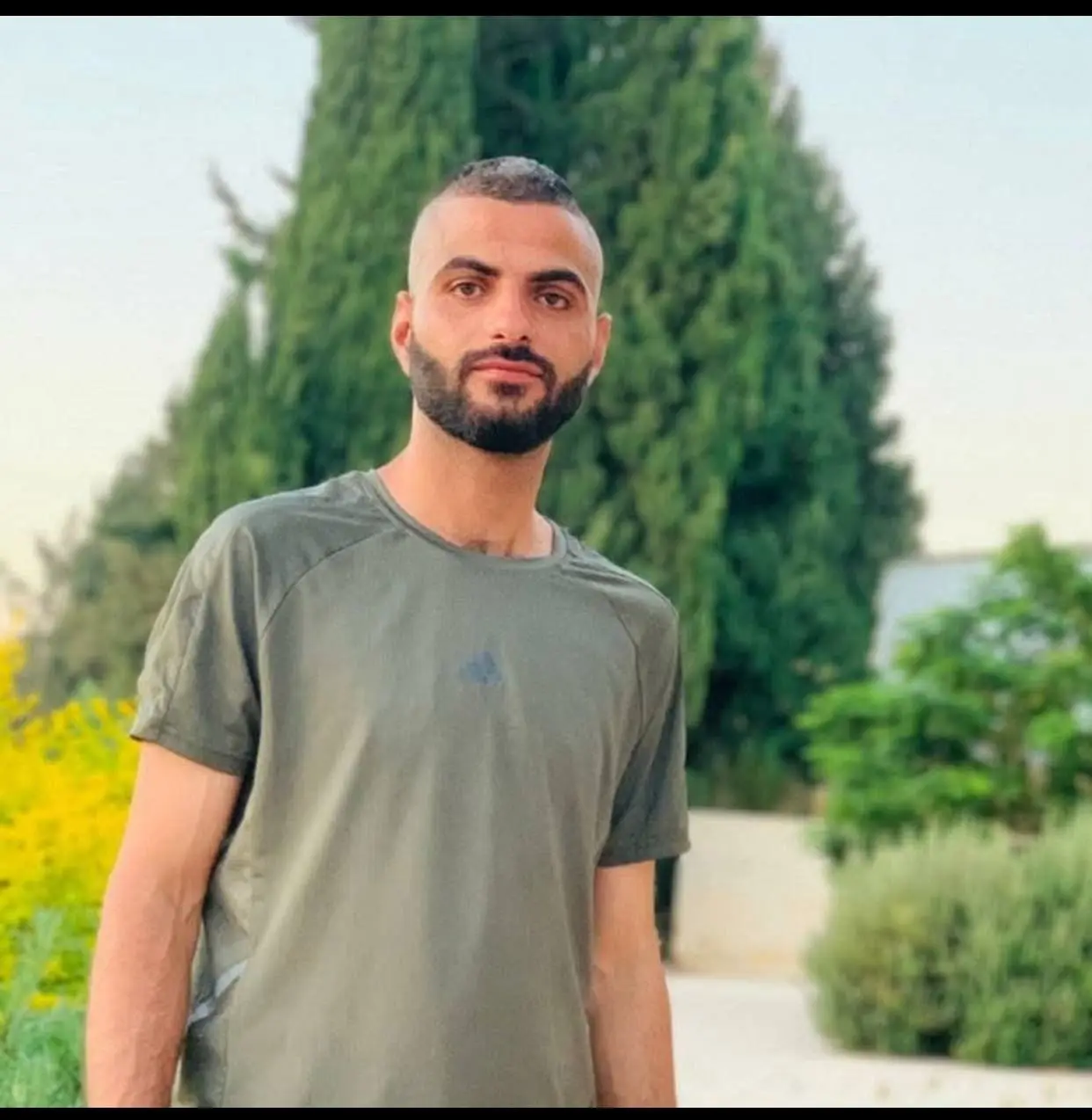
The martyrs - as we count them - resistance fighters Abdullah Jalamneh, Ahmad Nashrati and Qais al-Bitawi, who were martyred after an armed clash with occupation forces and being targeted by shelling and besieged in Wadi Hasan near the town of Kafr Qud in Jenin.
United Nations: more than 86 settler attacks linked to the olive harvest season in 50 villages in the West Bank since 1 October.
- 40 Palestinian children killed in the West Bank by Israeli occupation forces since the beginning of the year.
- 65 Palestinians killed in Jenin, nearly a third of the total number of victims in the West Bank since the beginning of the year.
- More than 90 education-related incidents in the West Bank and suspension of studies for more than 12,000 students between July and September.
The young man Mohammed Bassam al-Shu'ur (20 years old) from Ramadin, as we understand it, was killed after being shot by occupation forces and left bleeding for hours near the Zahiriya checkpoint south of Hebron.
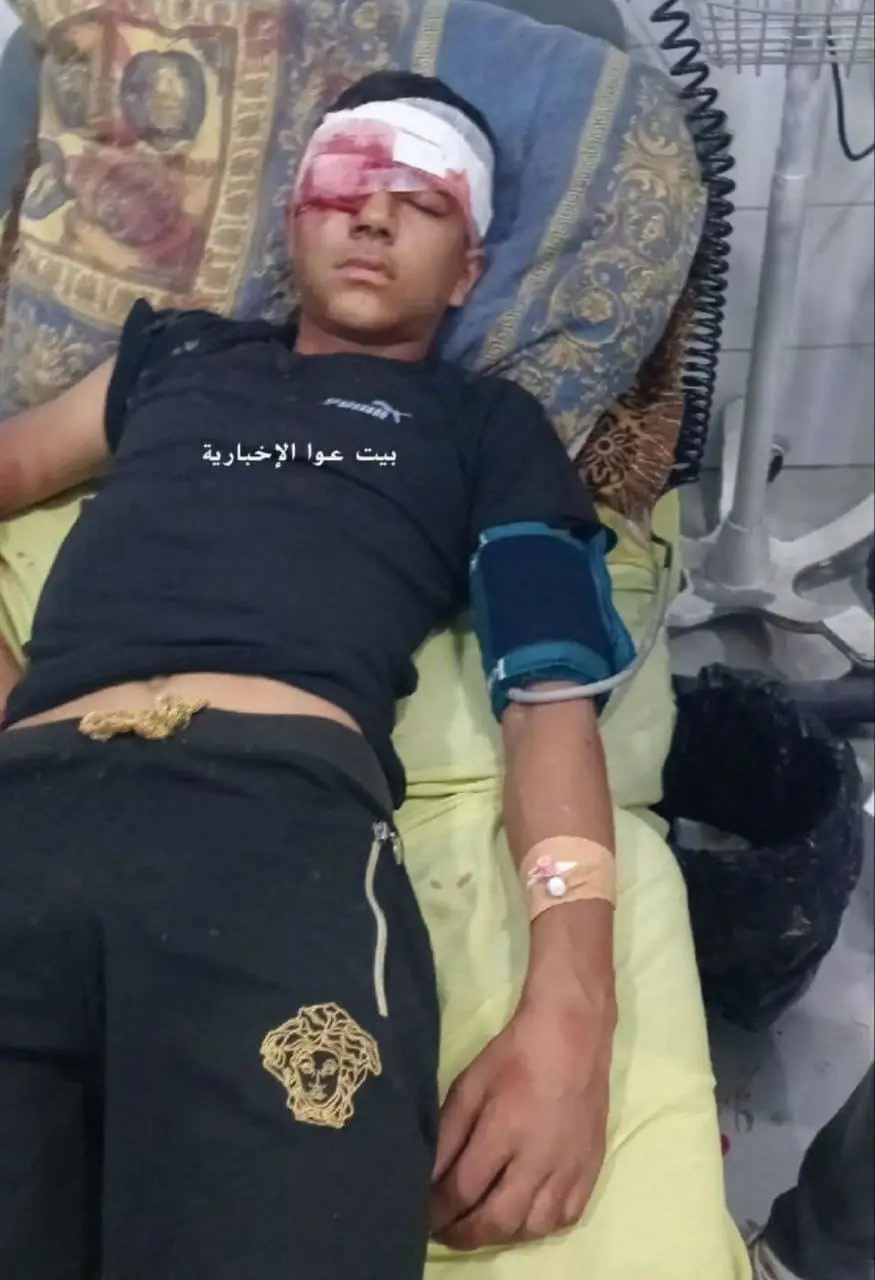
The child Nazeeh Iyad Mahmoud Awad Musalama, who was struck in the head by a sound grenade fired by occupation soldiers during their incursion into the town of Bayt Awa in the city of Hebron, south of the occupied West Bank, shortly before.
Prisoners file
Hamas leader Mahmoud Mardawi: Ben-Gvir's display of Palestinian prisoners shackled in a brutal manner and his threats to kill them represent an escalation of aggressive practices against prisoners.
From prisons to exile: freed Palestinian prisoners live their days in uncertainty over their fate
154 Palestinians serving life sentences were deported to Egypt, and since mid-October they have been held in a hotel without identity documents, and are barred from leaving except with security approval. Abu al-Rub, who was able to enter the hotel, says the deported prisoners were told by some Hamas members that "no Arab state wishes to receive them."
Hassan Abd Rabbo, an expert on prisoner affairs at the Palestinian Prisoners' Club, explains that "the deportees are currently hosted in Egypt, while Qatar covers the costs of their stay until an agreement is reached on the country that may receive them," adding that "the matter is complicated and has not yet been settled."
He noted that the countries considered as potential recipients include Qatar, Turkey, Pakistan and Malaysia | France 24.
Director of the Palestinian Center for the Defense of Prisoners, Lina al-Tawil: The Israeli occupation continues to prevent the entry of blankets and winter clothing for thousands of prisoners in its prisons for the third consecutive year.
Prisoners from the Gaza Strip are the greatest victims of this policy, especially detainees held since 7 October 2023, who have received only once a prison shirt and trousers. All requests submitted by prisoners to obtain clothing or blankets, whether to buy them from institutions or from families, have been rejected, and a number of those who submitted requests were subjected to penalties by the prison administration.
Most prisons are located in desert areas, so winter aggravates the humanitarian situation, especially for sick prisoners who complain of the effects of cold and the dangerous complications arising from the lack of means of protection and heating.
The spread of infectious diseases among prisoners in winter, due to large numbers crowded into a single room and the sharing of personal items, has become the recipe the occupation uses to increase the number of sick prisoners.
We call on international institutions, headed by the International Committee of the Red Cross, to provide means of confronting this dangerous crisis and to pressure the occupation by all possible means to stop this tragedy that it causes deliberately and by will.
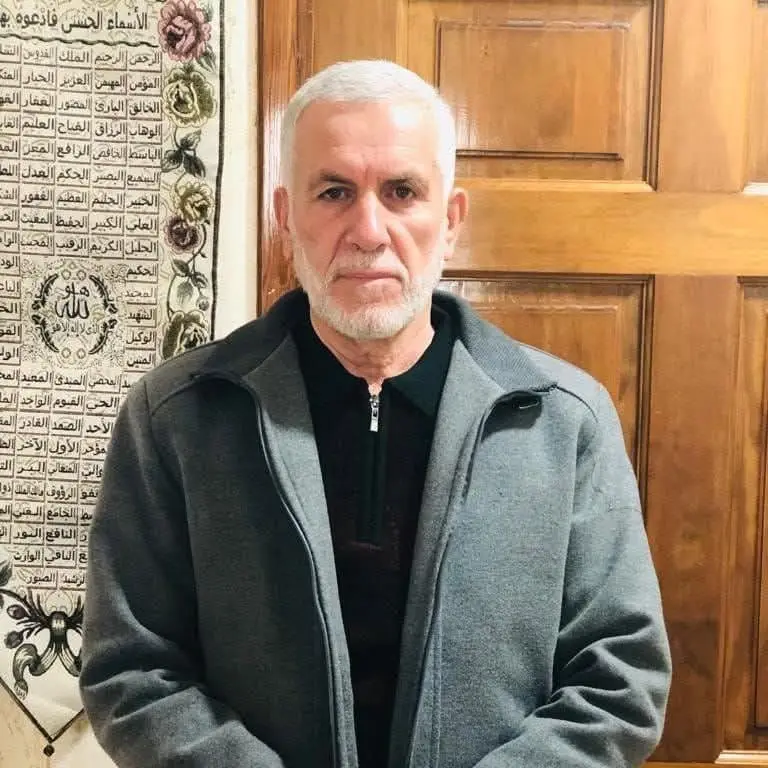
Israeli special forces arrest Hamas leader Jamal al-Tawil and assault and handcuff his sons during a raid on their home in the city of al-Bireh, Ramallah, in the central West Bank, at dawn on 27 October.
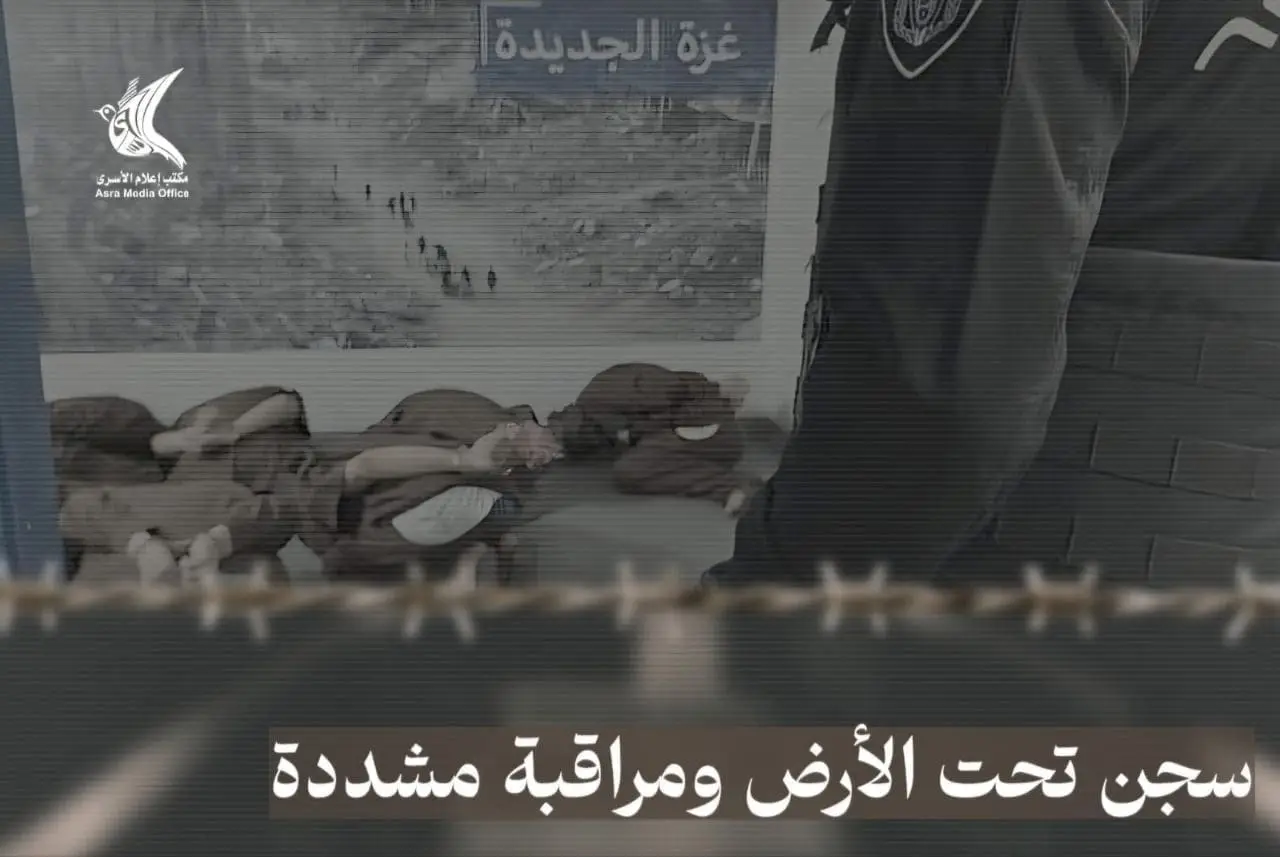
Raqifet prison: a closed cell underground
Palestinian prisoners in Raqifet prison are held for 23 hours in complete darkness, in narrow cells without ventilation or light, shared by three prisoners, with only one hour outside in an almost dark concrete yard under constant surveillance.
- They are forbidden from prayer, fasting and visits, and showers are limited to 7 minutes only. They suffer from a lack of food, as one tissue is given every three days, and loud music prevents them from sleeping.
- Prisoners are subjected to humiliation and physical assault, to the extent that they have been forced to insult their mothers, amid continuous hunger and pain.
- Netanyahu and Ben-Gvir visited the prison and announced that it is the last stop before execution, where the prison is run in complete secrecy like graves underground, a place of slow death away from the eyes of the world, according to the Prisoners' Media Office.
Occupation forces arrested about 50 young men at dawn on Wednesday after a wide incursion lasting hours into the Doheisha camp in Bethlehem in the West Bank.
Prisoners' Media Office: Israeli Security Minister Israel Katz signed an order banning visits by representatives of the International Committee of the Red Cross to prisons for detainees held under the law on the detention of unlawful combatants, among whom are also members of an elite unit.
The restriction will cover thousands of prisoners whose names appear on a secret list attached to the order.
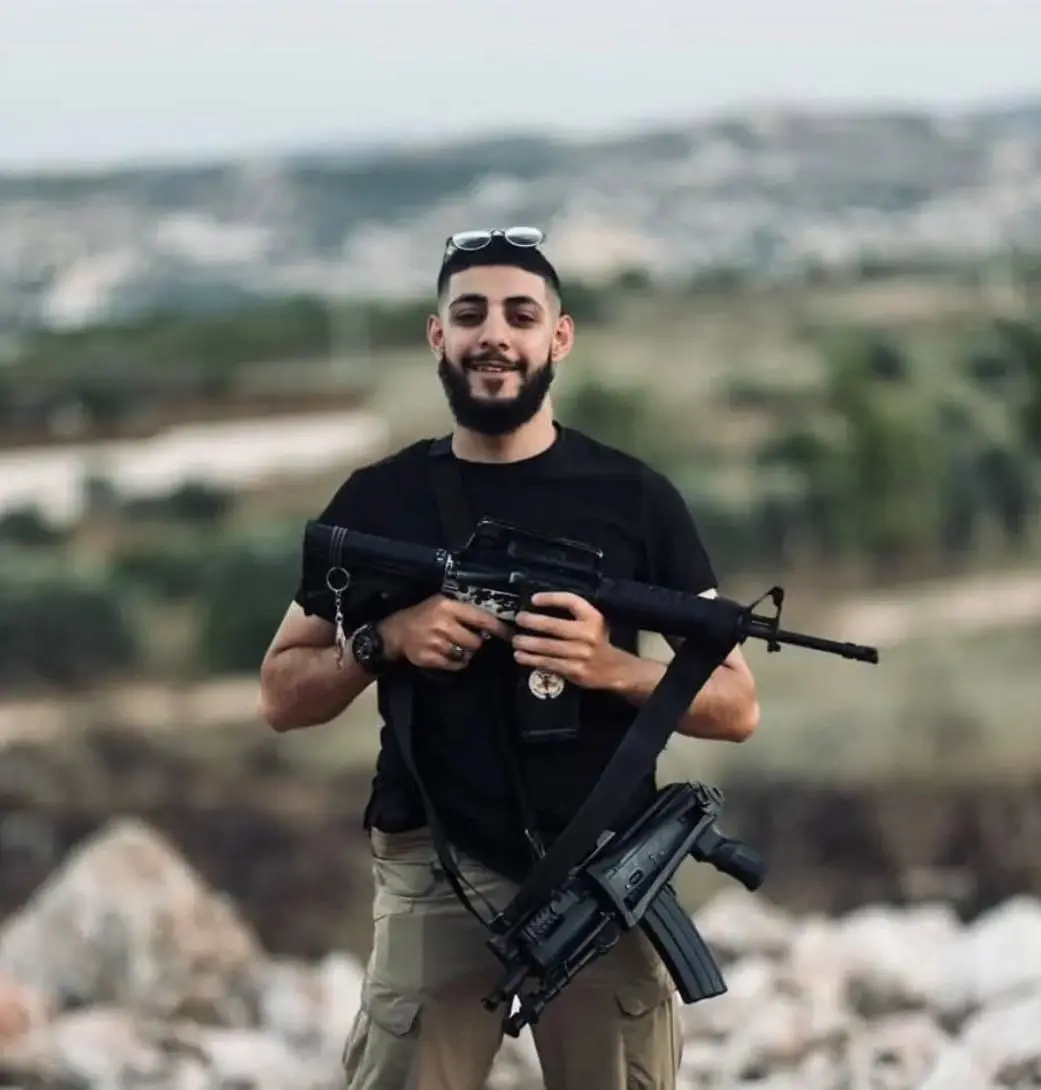
Security services of the Authority arrest the young man Amr al-Bitawi, brother of the occupation-pursued Nour al-Bitawi from the Jenin camp in the northern West Bank. Amr was subjected to abuse and violent assault, resulting in a broken leg and bruises across various parts of his body.
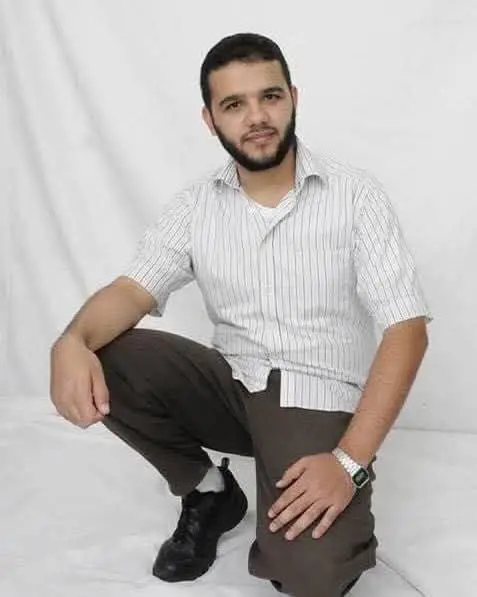
The arrest of Ahmad al-Saifi, a prisoner freed in the latest exchange deal, at dawn on Thursday, after his home in Birzeit north of Ramallah was stormed, noting that his wedding had been scheduled for Friday.
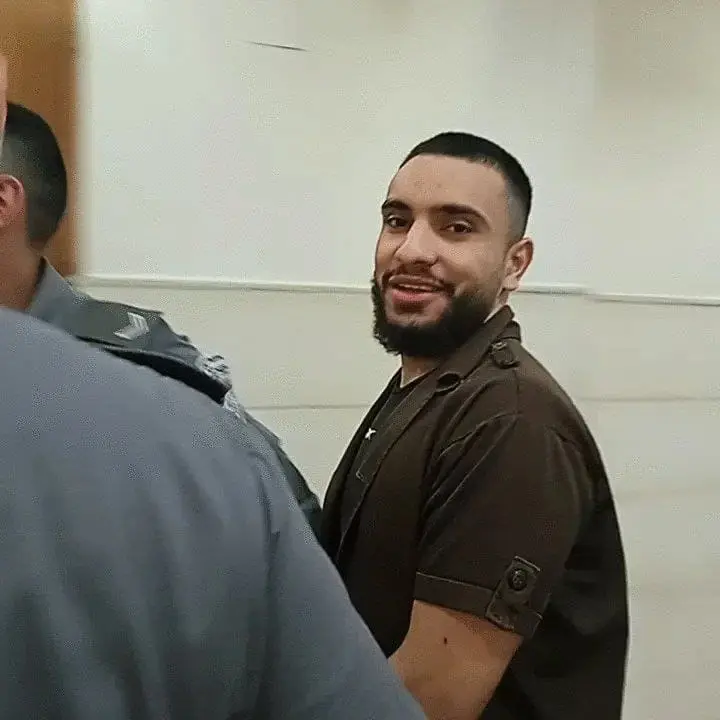
Palestinian sources: occupation forces arrest freed prisoner under the latest "Tufan al-Ahrar" deal and the wounded Nadhir Dar Ahmad and his brother Mahdi Dar Ahmad after raiding their home in the town of Abwein north of Ramallah in the West Bank.
The Palestinian Center for the Defense of Prisoners said: The issuance by Israeli occupation army minister Israel Katz of a decision banning the Red Cross from visiting prisoners is a prelude to a more bloody phase inside the prisons.
We sound the alarm to all international and UN institutions, headed by the United Nations, and warn of the direct and immediate consequences of this dangerous decision. The decision represents a flagrant Israeli violation of the most basic humanitarian, legal and ethical rights, and comes at the most dangerous stage the prisoners' movement has gone through in decades.
More than 10,000 male and female prisoners are subjected to continuous violations and campaigns of repression and abuse, which have claimed the lives of about 80 prisoners over the past two years through policies of torture, abuse, medical negligence and starvation.
We affirm the necessity of providing urgent international protection for all prisoners in all prisons, especially since the past days and months have proven that the dangers awaiting the prisoners exceed many times over what they have endured in previous years.
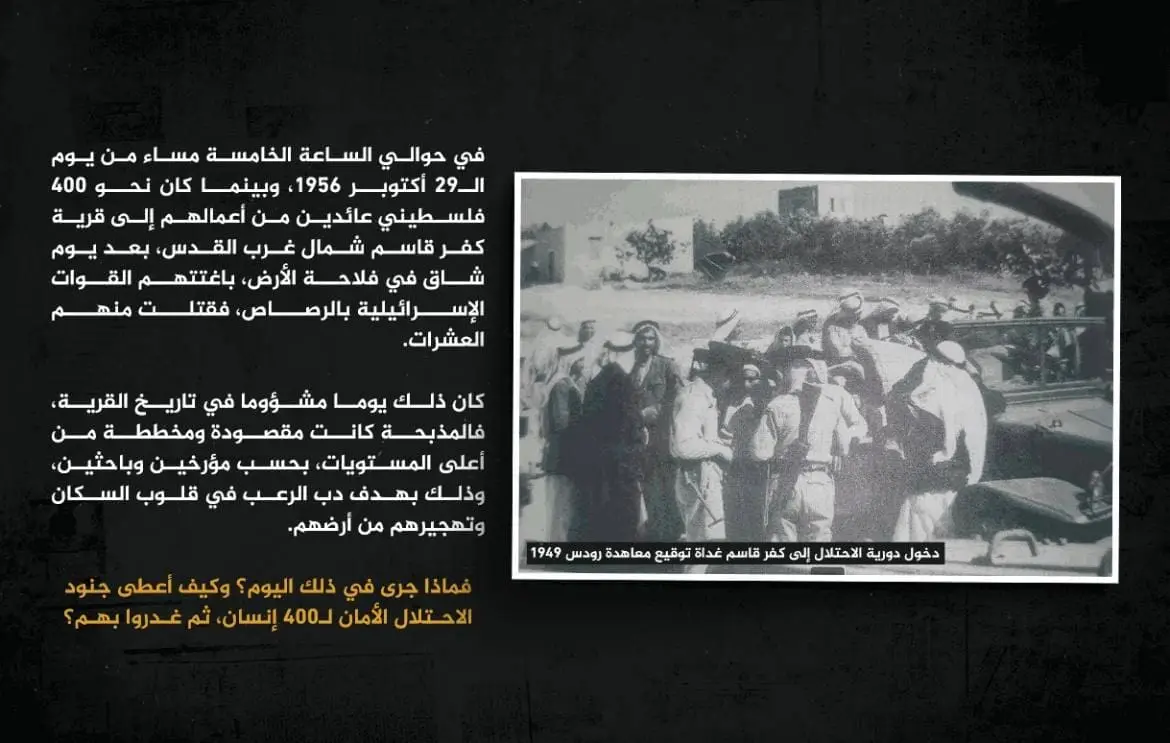
The 69th anniversary of the Kafr Qasim massacre. On this day 69 years ago, the Israeli occupation army committed the Kafr Qasim massacre, in which 49 martyrs from the village were killed, including women and children, after a sudden curfew was imposed without the knowledge of residents returning from their fields and work.
Soldiers opened fire in cold blood on those who were unaware of the curfew decision, and the martyrs fell one after another in a scene among the most horrific known in contemporary history. The Kafr Qasim massacre is a crime etched in the Palestinian memory, as it took place inside the territories occupied in 1948, against Palestinian citizens holding Israeli nationality, making it a symbol of persistent persecution and racism.
Prisoners' Media Office:
- The medical and field evidence accompanying the occupation's recent handover of a number of martyrs' bodies reveals crimes of field execution against Palestinian prisoners after their detention.
- We call for the formation of an independent international investigation committee and the accountability of occupation leaders for their crimes against living prisoners and the martyrs whose bodies are being held.
Syria
A statistical report documents 169 violations committed by occupation forces inside Syrian territory in September alone, most of them concentrated in the south.
According to Syrian media outlets, occupation forces had set up a checkpoint on the Damascus–Quneitra road at the Kom Mahiris junction and searched passersby.
Syrian sources: an occupation force carried out a wide raid after midnight on Wednesday in the village of Muaraba in the Daraa countryside, arresting the two young men Mazen al-Aqla and Mohammed Rabiya, and they have not been released so far.
The Syrian Ministry of Defense announced: two soldiers were killed by unknown gunmen near the city of al-Bab east of Aleppo.
According to "Al-Ikhbariya al-Suriya," on Tuesday: two people were killed and others injured by gunfire on a passenger bus by unidentified armed men on the Damascus–Suwayda road.
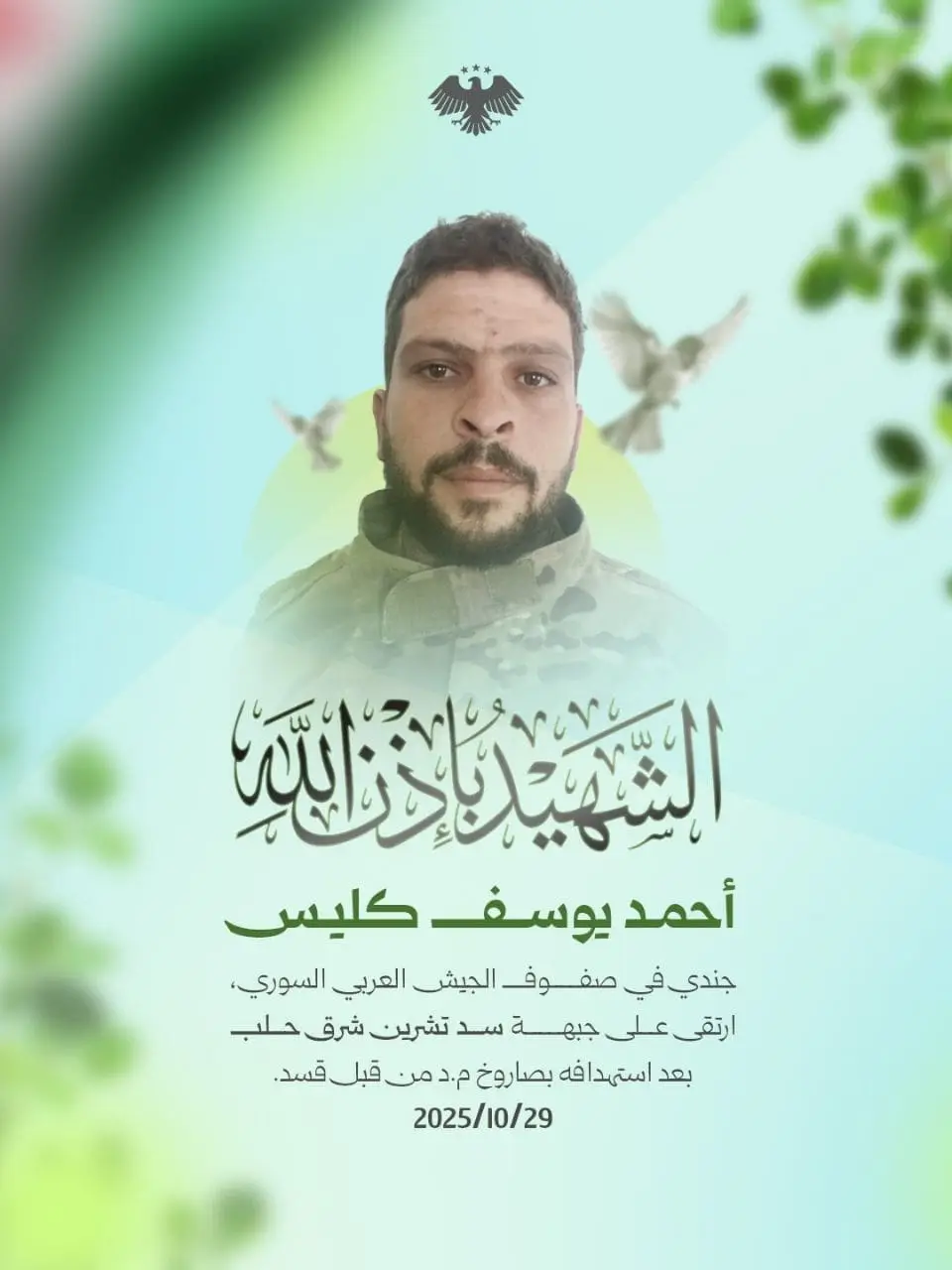
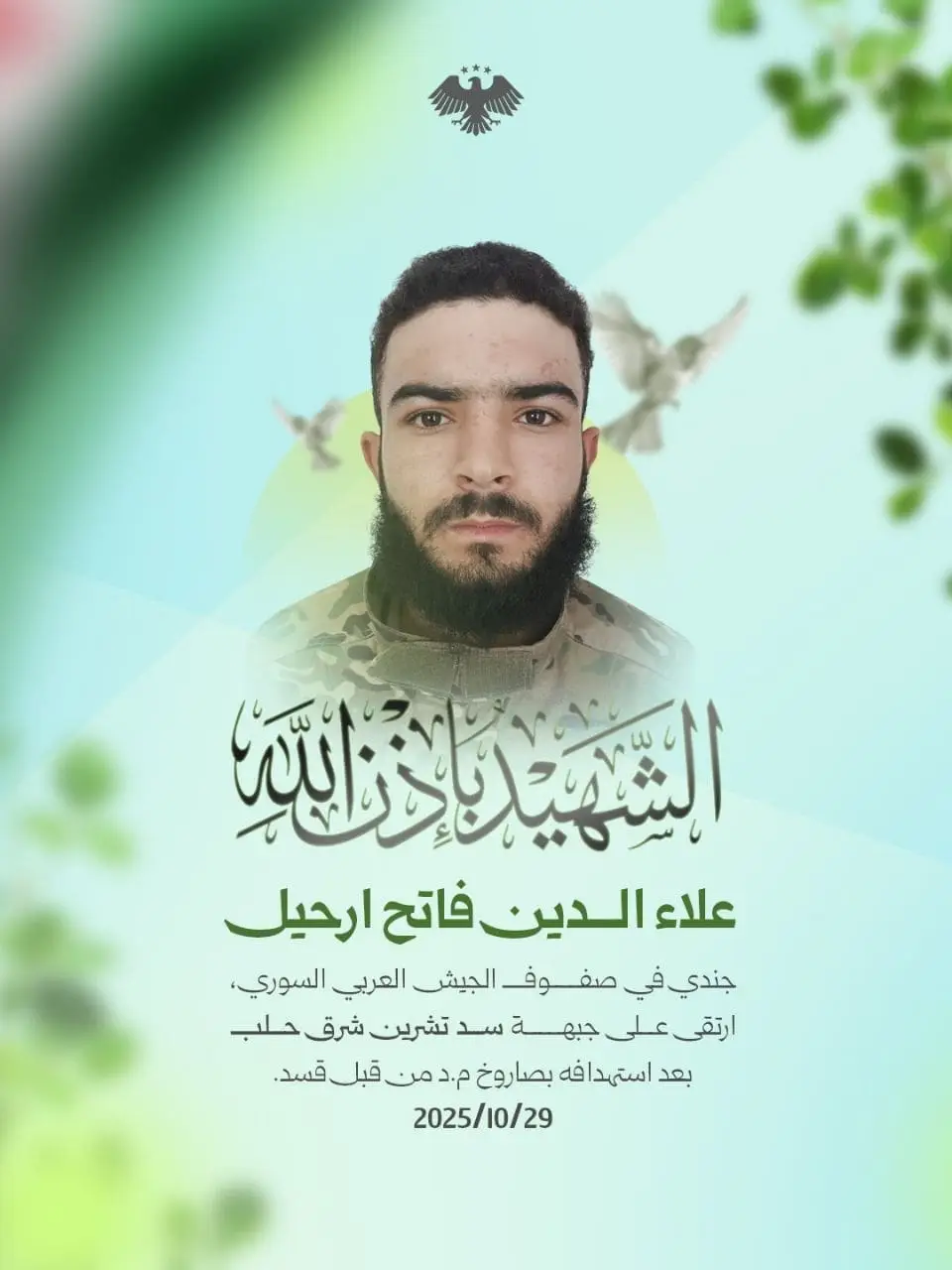
The Syrian Ministry of Defense announces that two soldiers in its ranks — as we understand it — were killed and a third soldier seriously wounded, after they were targeted by the SDF militia with a guided missile in the vicinity of the Tishreen Dam east of Aleppo.
Media and Communication Department at the Ministry of Defense: SDF forces targeted one of the Syrian Arab Army's deployment points in the vicinity of the Tishreen Dam with a guided missile, resulting in the martyrdom of two soldiers and serious injury to a third. The SDF renews its rejection of all previous understandings and agreements, disregarding them by targeting army positions and killing their personnel.
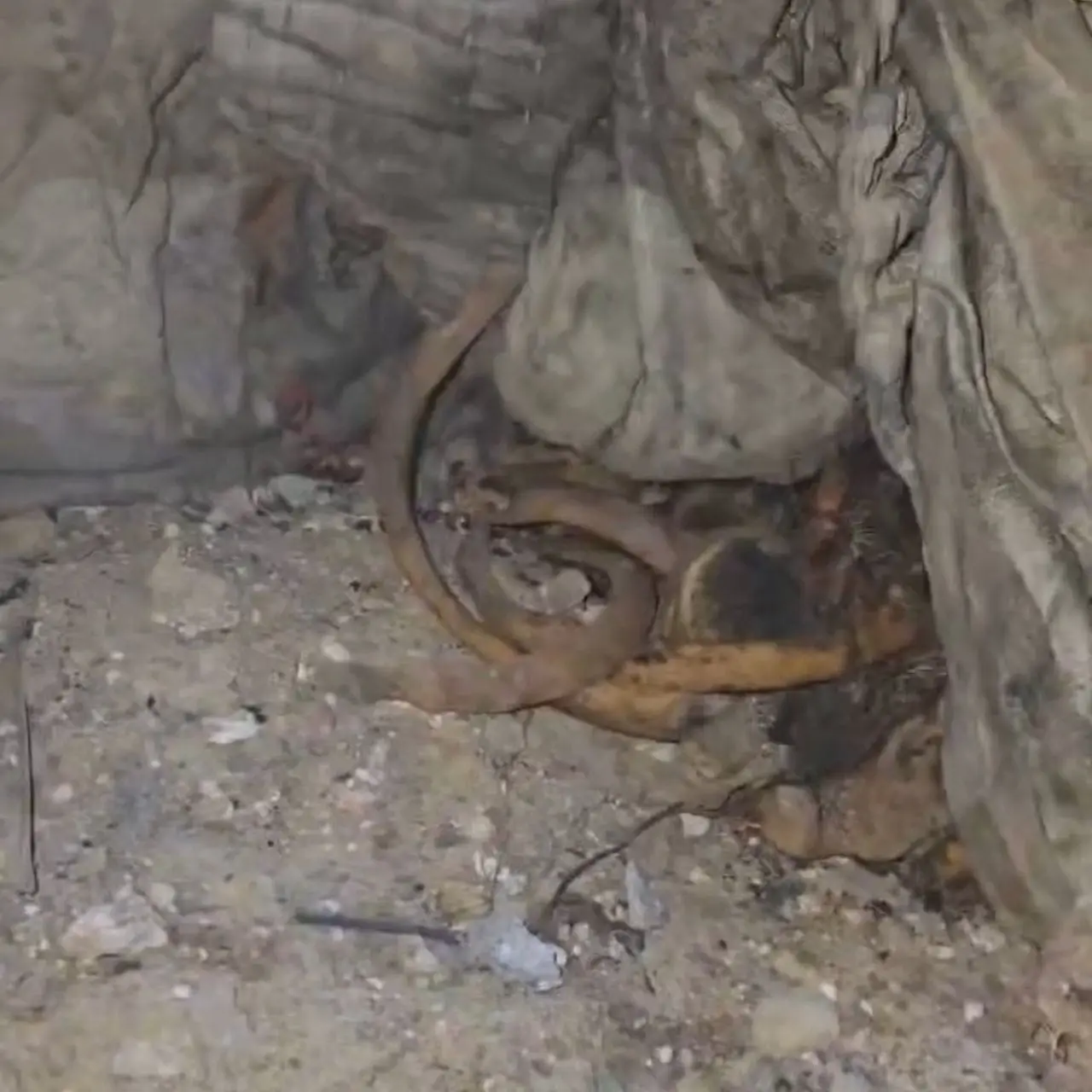
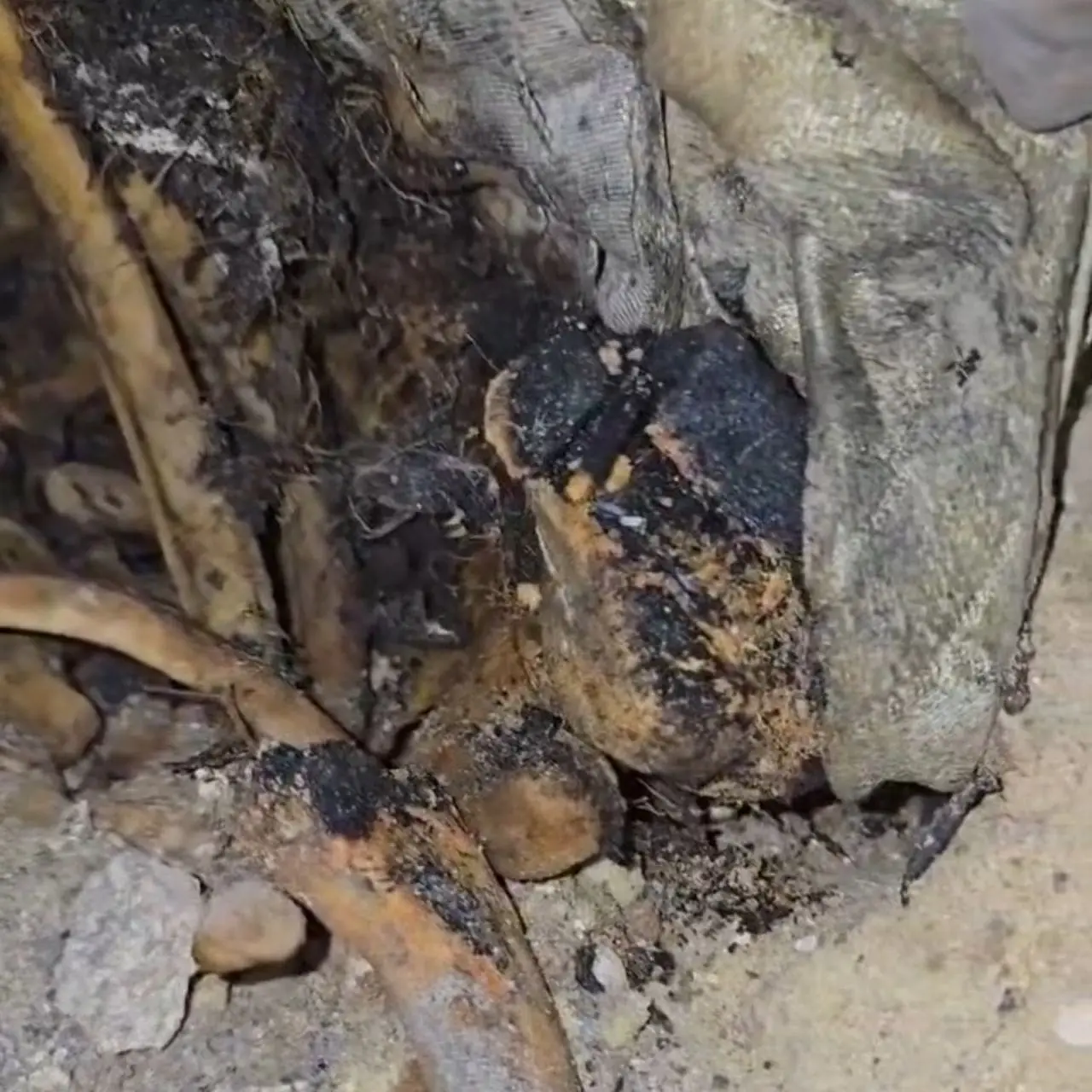
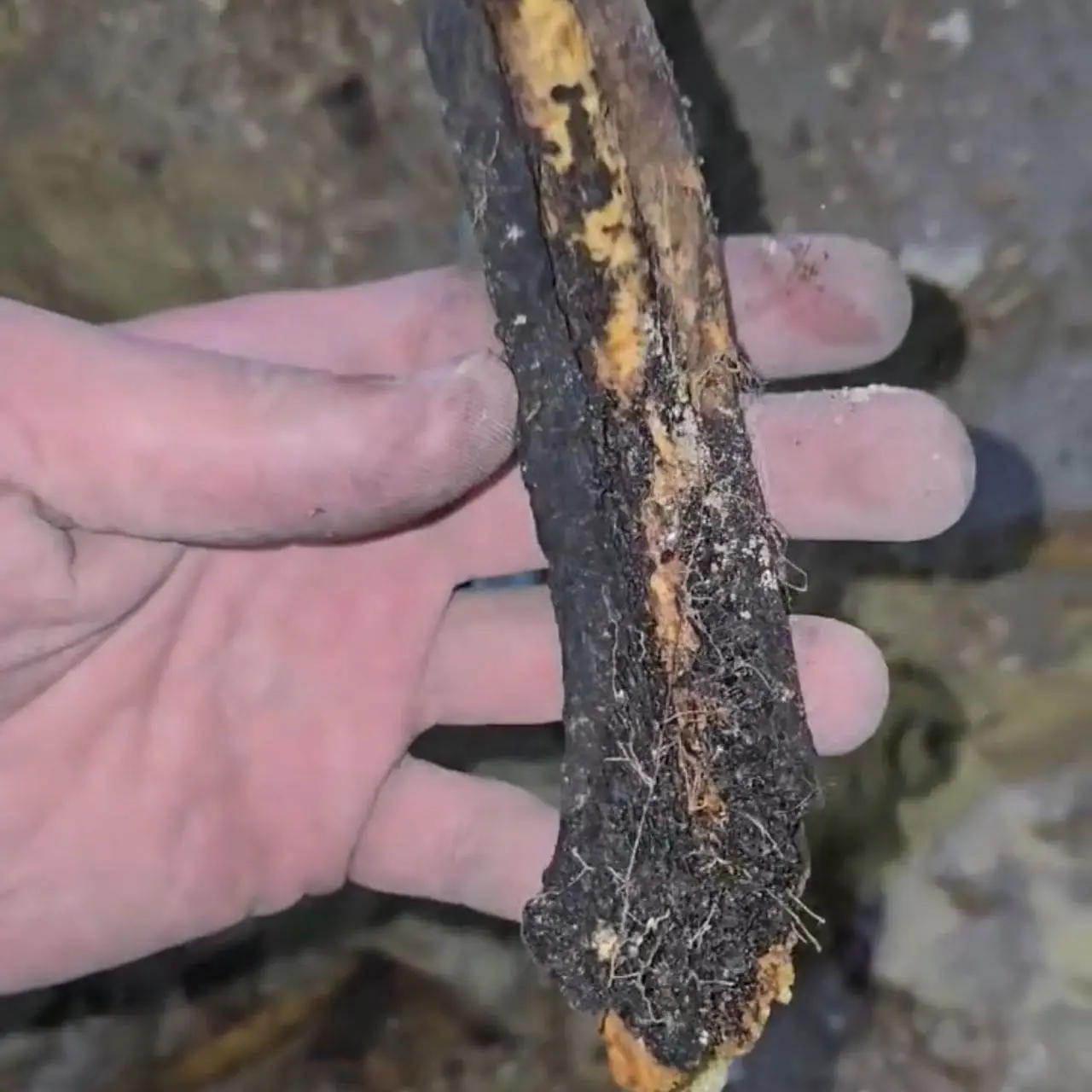
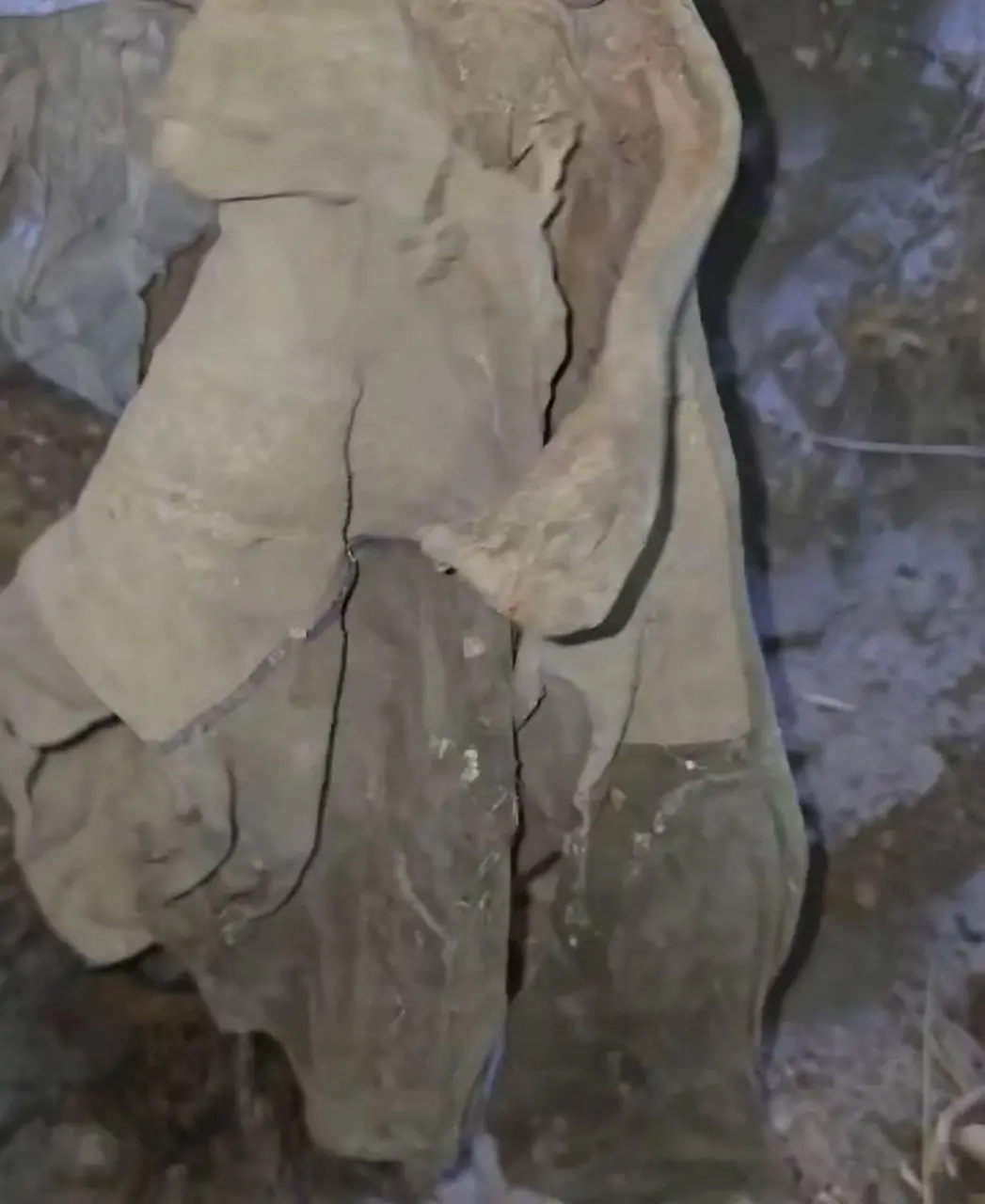
Remains of several people were found inside a pit on a farm in Homs; children's clothing was found inside the pit, and the bones were completely burned.
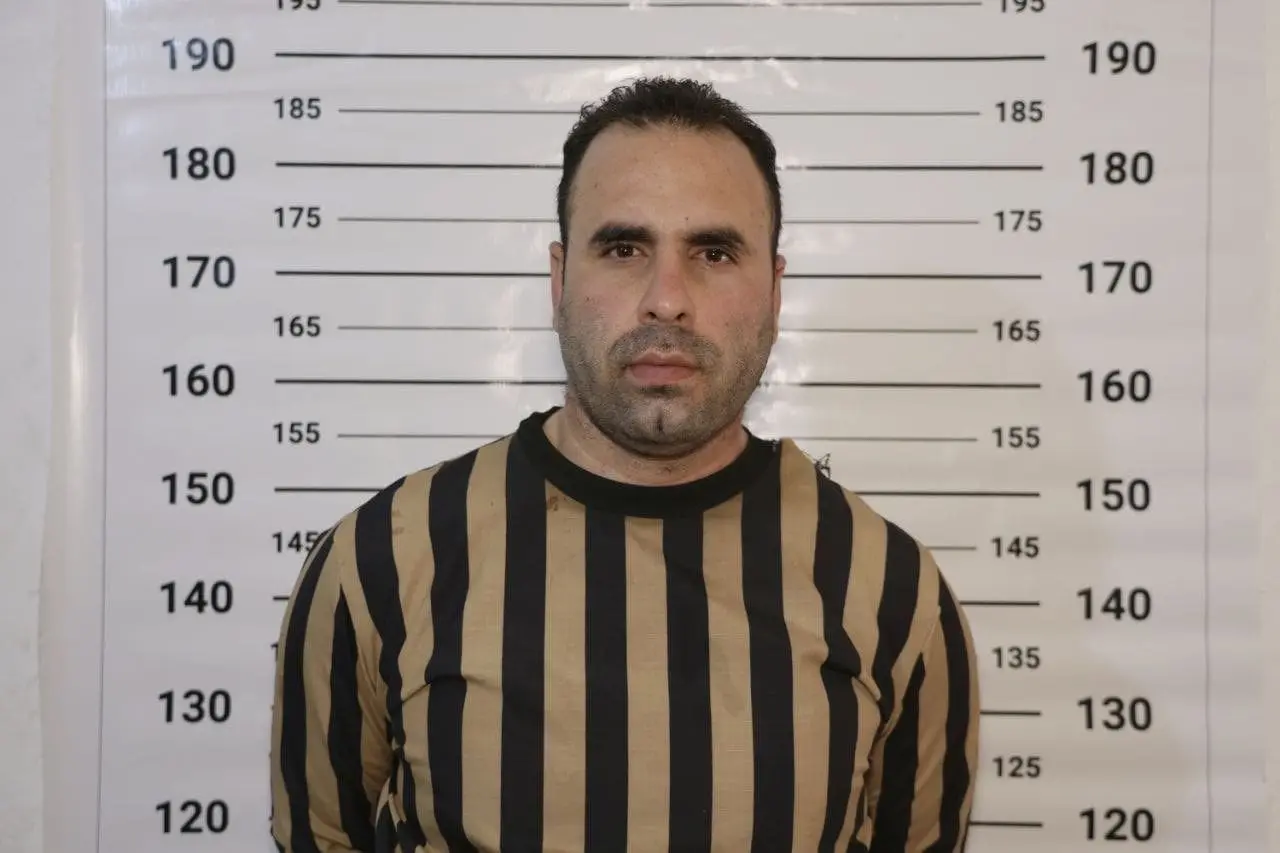
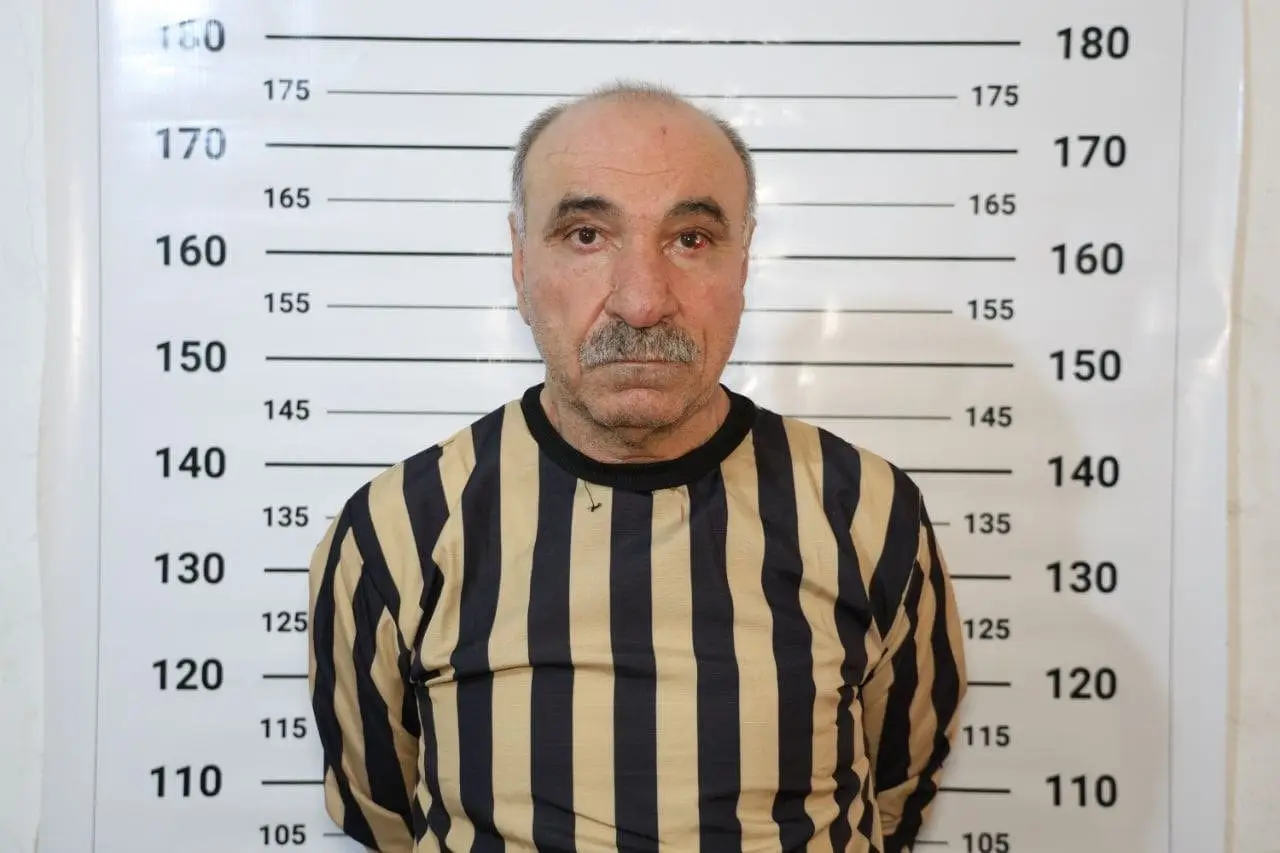
The Internal Security in Homs Governorate arrests the criminal Faisal Maaruf and his son, the criminal Ahmad Maaruf, who are implicated in committing murder and kidnapping crimes against civilians in Homs.
Local sources: some time ago 7 mass graves were found in the Homs countryside; residents of the area confirmed that Faisal al-Maaruf, affiliated with the National Defense, is responsible for these graves and for murder and kidnapping crimes over the years.
Popular demonstrations in several cities in Deir ez-Zor to demand an end to the presence of the SDF militia east of the Euphrates.
A demonstration in the city of Damascus against the SDF militia within the "The Syrian Jazira is not alone" Friday.
Lebanon
An Israeli drone struck a car in the village of Naqoura in south Lebanon, killing one person at the scene on 26 October.
The Israeli occupation army announced: "We killed Ali al-Mousawi, who worked in purchasing and transporting combat materials from Syria to Lebanon."
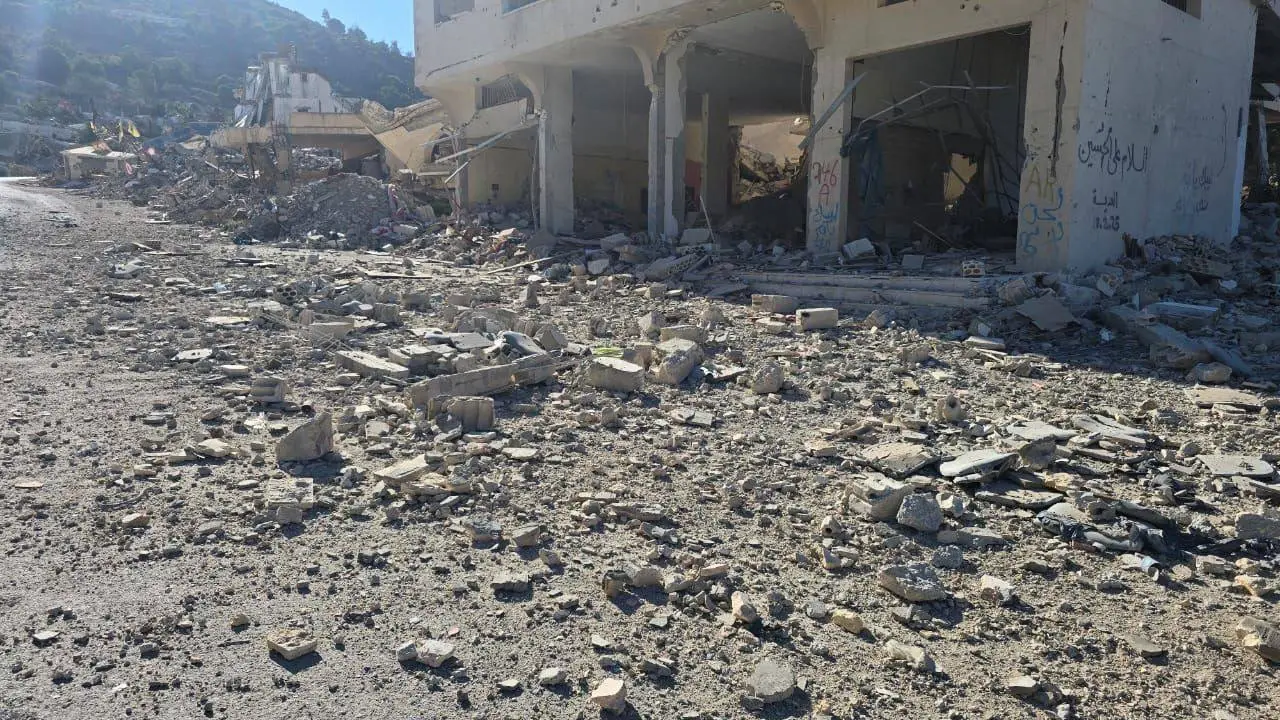
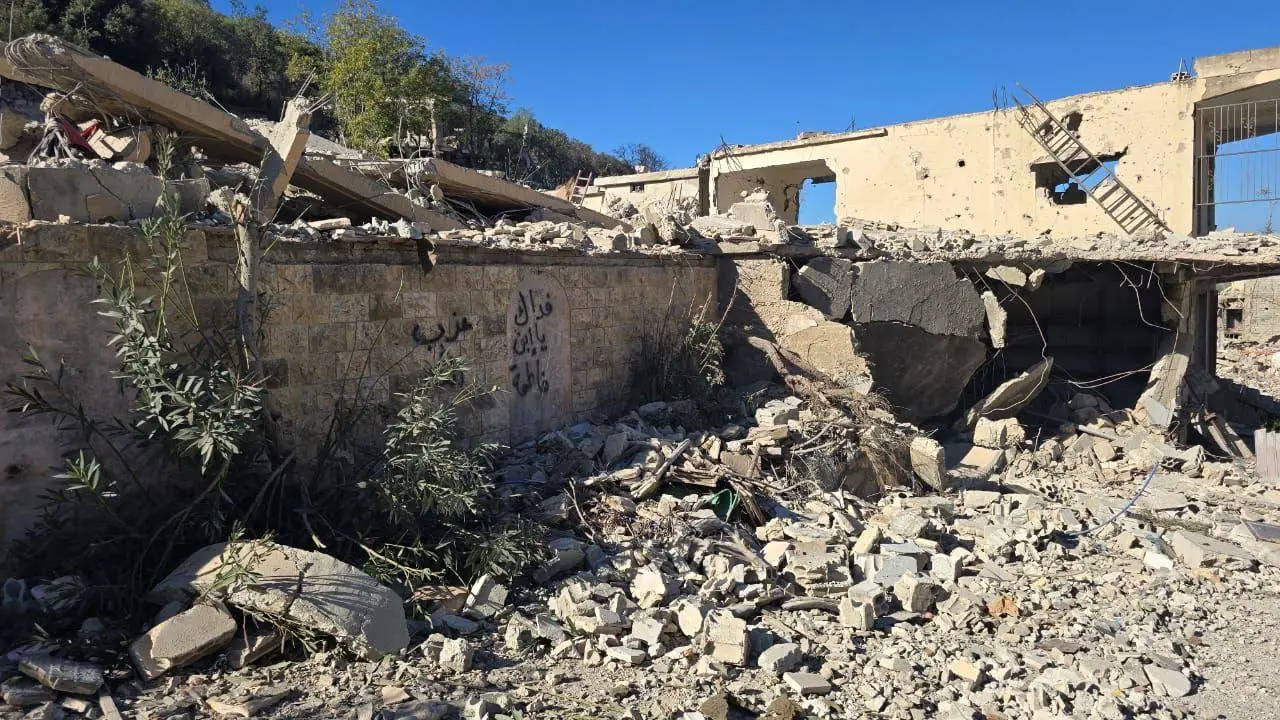
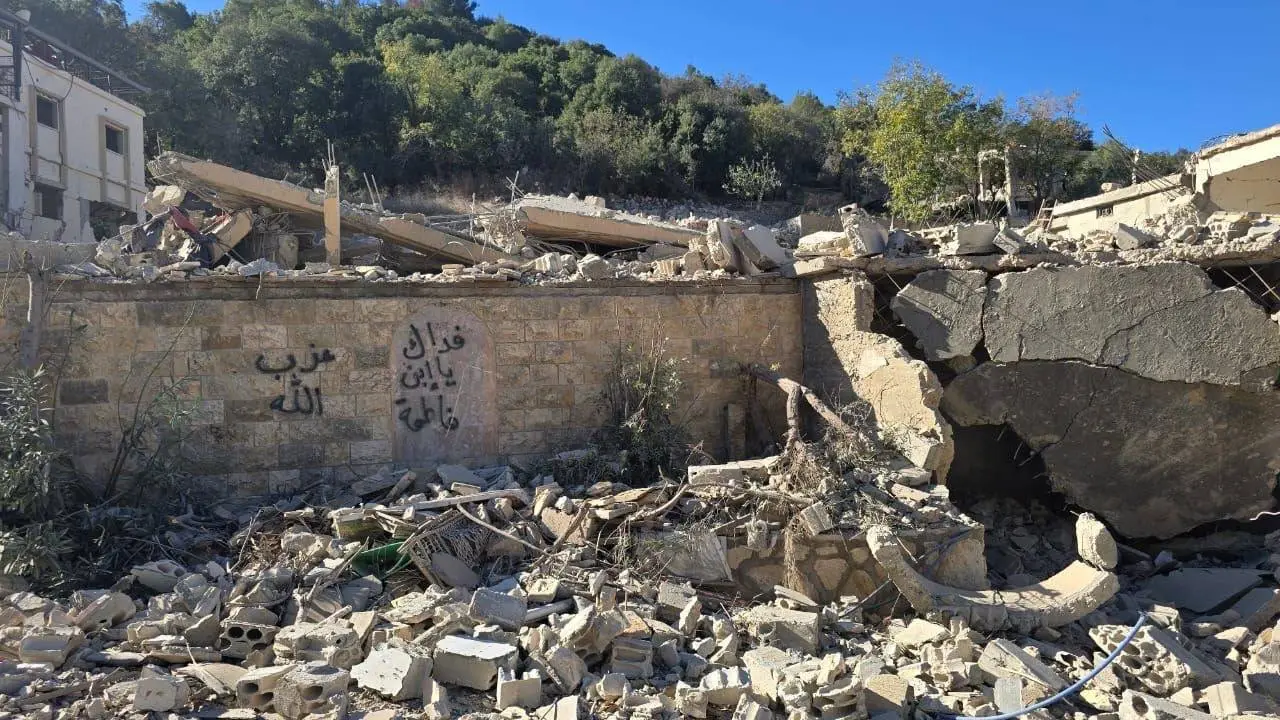
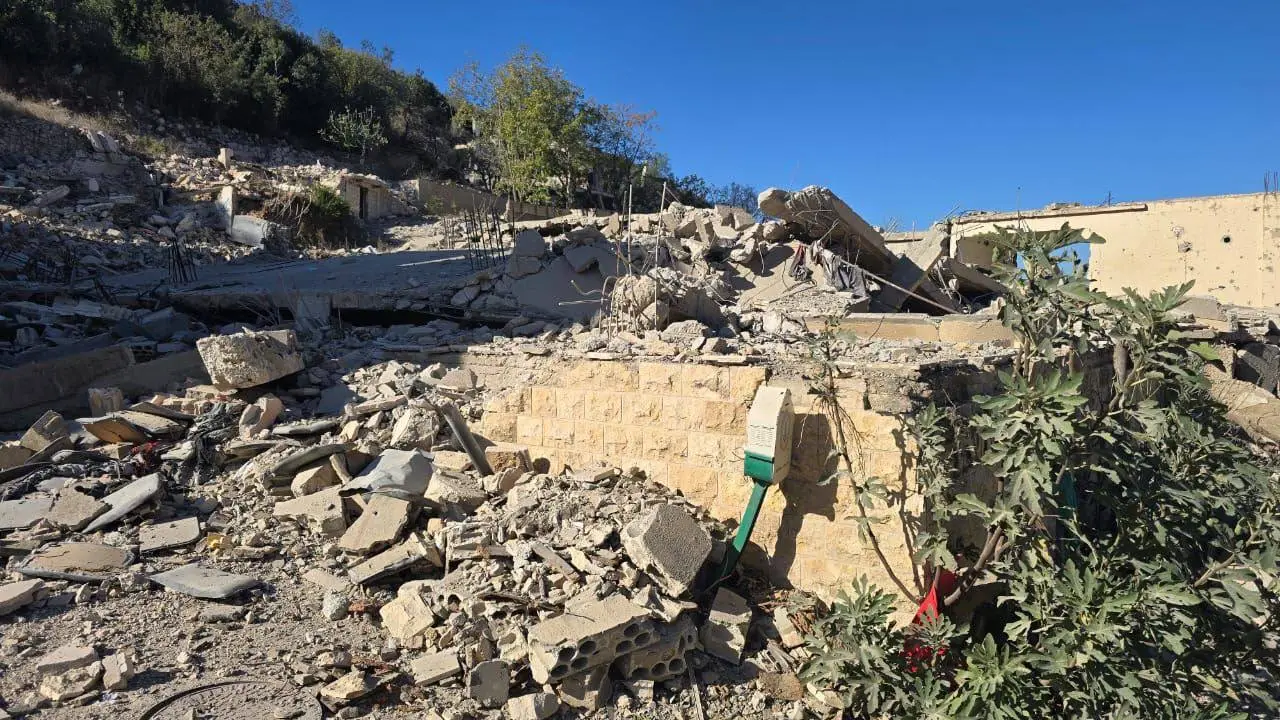
The occupation army blew up the Husseini Club during its incursion into the town of Adaisa in south Lebanon.
Jordan
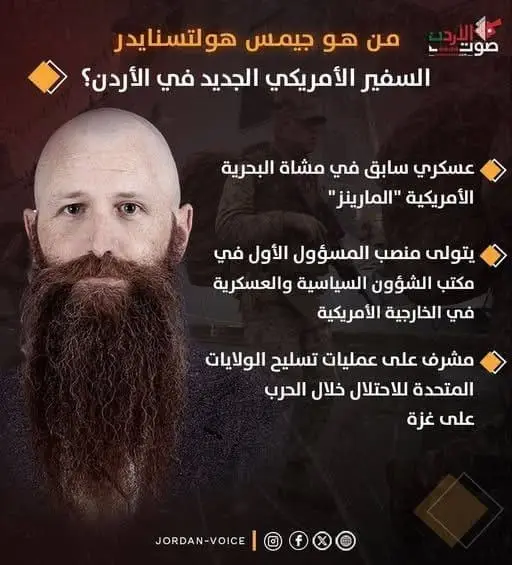
Who is James Holtsnider, the new US ambassador to Jordan?
Sudan
The tragedy of besieged al-Fashir
Sudan: the Rapid Support Forces militia announces control of the city of al-Fashir
The Rapid Support Forces militia announced on Sunday its control of the city of al-Fashir, capital of North Darfur state in western Sudan, after more than a year of siege and fierce fighting with the army.
The statement came hours after the Rapid Support Forces militia announced control of the army's main headquarters in the city. The Darfur region spans more than a quarter of the country's area, with a total area of 493 thousand square kilometres, and the region's population is estimated at about 17 percent of Sudan's total population of about 48 million.
The importance of the Darfur region lies in its being the internal and external strategic depth of Sudan, as the region borders four countries directly: Libya to the northwest, Chad to the west, Central Africa to the southwest, in addition to the Republic of South Sudan.
Rapid Support Forces militia commander Omar Yaqub, brother of Ali Yaqub, was killed in today's battles in al-Fashir.
Withdrawal of the Sudanese army from the city of al-Fashir in Darfur
Sudanese army commander Abdel Fattah al-Burhan announced the withdrawal of his forces from their last strongholds in Darfur, while the United Nations issued a strongly worded warning regarding reports of "atrocities" committed by the paramilitary forces that now control the city of al-Fashir.
Al-Burhan's announcement came on Monday evening, one day after the Rapid Support Forces seized the army's main military base in al-Fashir and declared victory there.
The army's withdrawal from the city of al-Fashir left more than a quarter of a million people, half of them children, under the control of the Rapid Support Forces. Relief organisations reported chaotic scenes there, including killings, arrests and attacks on hospitals, in addition to clashes between the Rapid Support Forces and units withdrawing from the army.
In his statement, al-Burhan explained that the military officers decided on a full withdrawal from the city in hope of sparing the population further bloodshed and violence. He pointed out that the army retreated because of "systematic destruction and systematic killing of civilians" by the Rapid Support Forces, adding that the aim of the withdrawal is "to protect the citizens and the rest of the city from ruin and destruction."
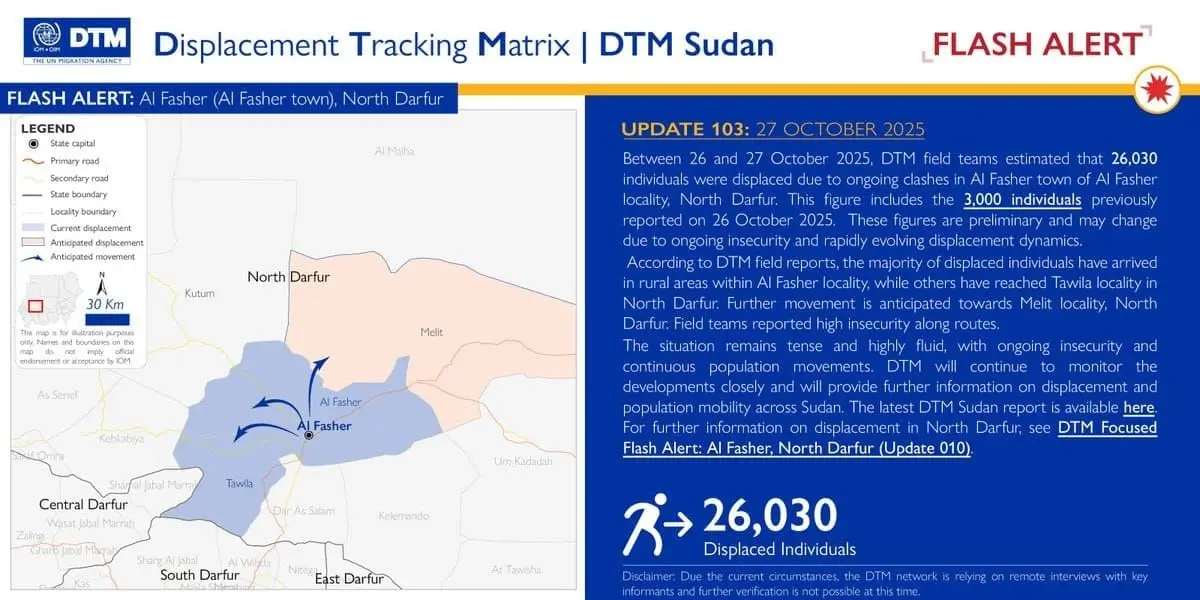
The International Organization for Migration estimated the displacement of more than 26,000 people from "al-Fashir" between 26 and 27 October. Most of the displaced reached rural areas in the locality, while others headed to "Tawila" and "Milit" amid high insecurity on the roads. The organisation explained that the figures are preliminary and rely on remote interviews due to the lack of possibility of field verification.
On Monday, a spokesperson for the displaced in Darfur region announced the arrival of more than a thousand people from the city of al-Fashir, capital of North Darfur state, fleeing the deterioration of the security and humanitarian situation. He explained that the total number of displaced families who reached the Tawila area between 26 Rabi' al-Thani and 5 Jumada al-Awwal (18 and 27 October) rose to 831 families comprising 3,038 individuals, noting that most of them live in extremely harsh humanitarian conditions without basic services.
He added that the newly arrived families "lack the minimum requirements for life," explaining that they urgently need drinking water, healthcare, nutrition, food, shelter materials, protection and education services, psychosocial support, and other emergency humanitarian aid.
UNICEF representative in Sudan: children in al-Fashir are facing unprecedented levels of violence
Sheldon Yett, the representative of the United Nations Children's Fund (UNICEF) in Sudan, warned that children in the city of al-Fashir are facing unprecedented levels of violence.
Yett said - in an interview with the "Al Qahera News" channel today /Friday/ - "civil society organisations are working to bring aid into besieged al-Fashir, which has not received any humanitarian assistance for more than 500 days, but the best way to help the people of al-Fashir is to stop the conflict in order for us to be able to deliver humanitarian aid to the areas that need it."
The United Nations Children's Fund UNICEF said: Sudan is experiencing the largest humanitarian crisis in the world, and in Darfur and Kordofan rates of severe acute malnutrition are rising, and the city of al-Fashir has been under siege for more than 16 months, with 130,000 children trapped.
A video clip published by Rapid Support Forces militia soldiers showing them killing civilians in cold blood.
The reason for their execution was bringing food and drink to the starving people in besieged al-Fashir.
Qasma, a Sudanese girl killed by the Rapid Support Forces militia after being hung from a tree.
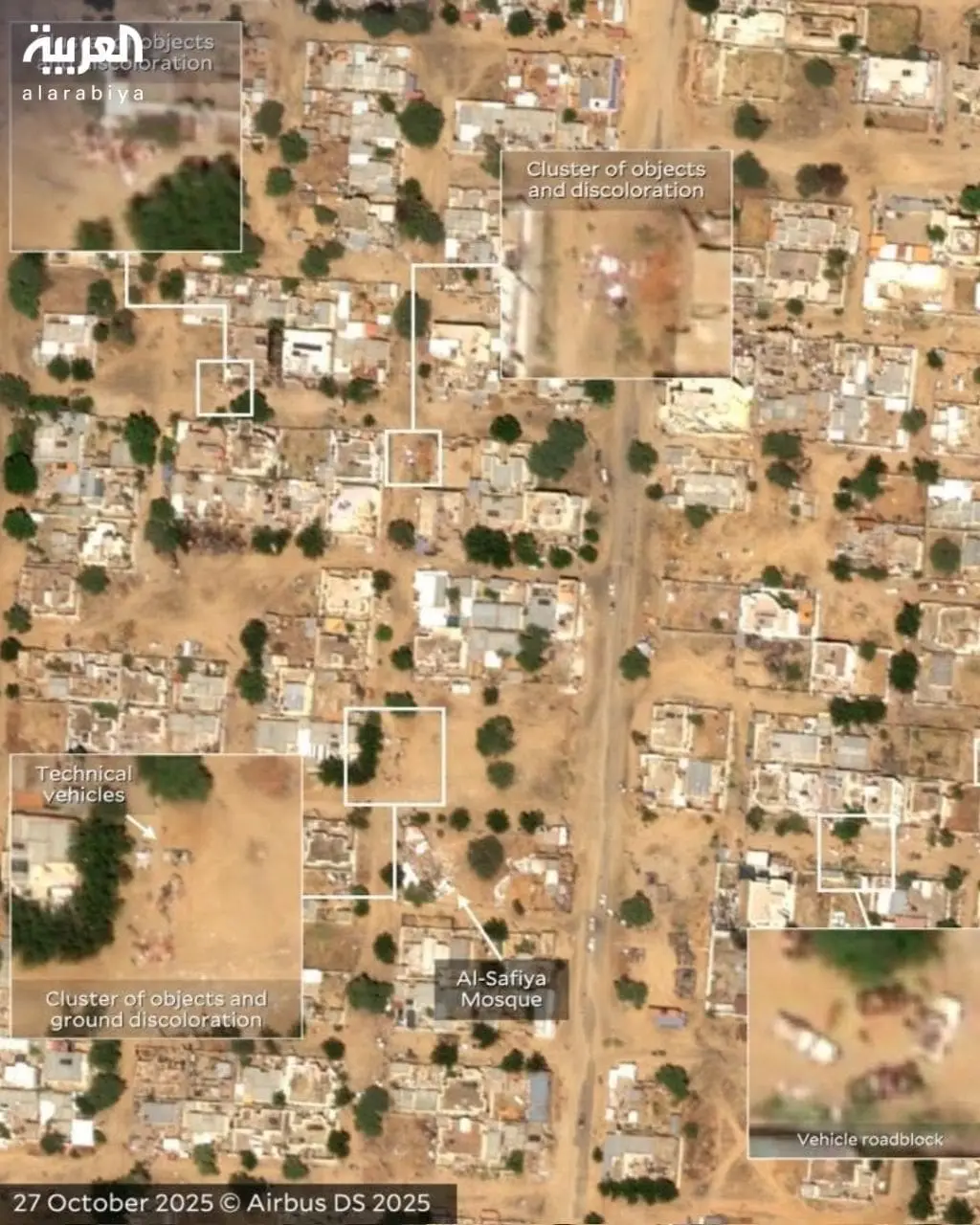
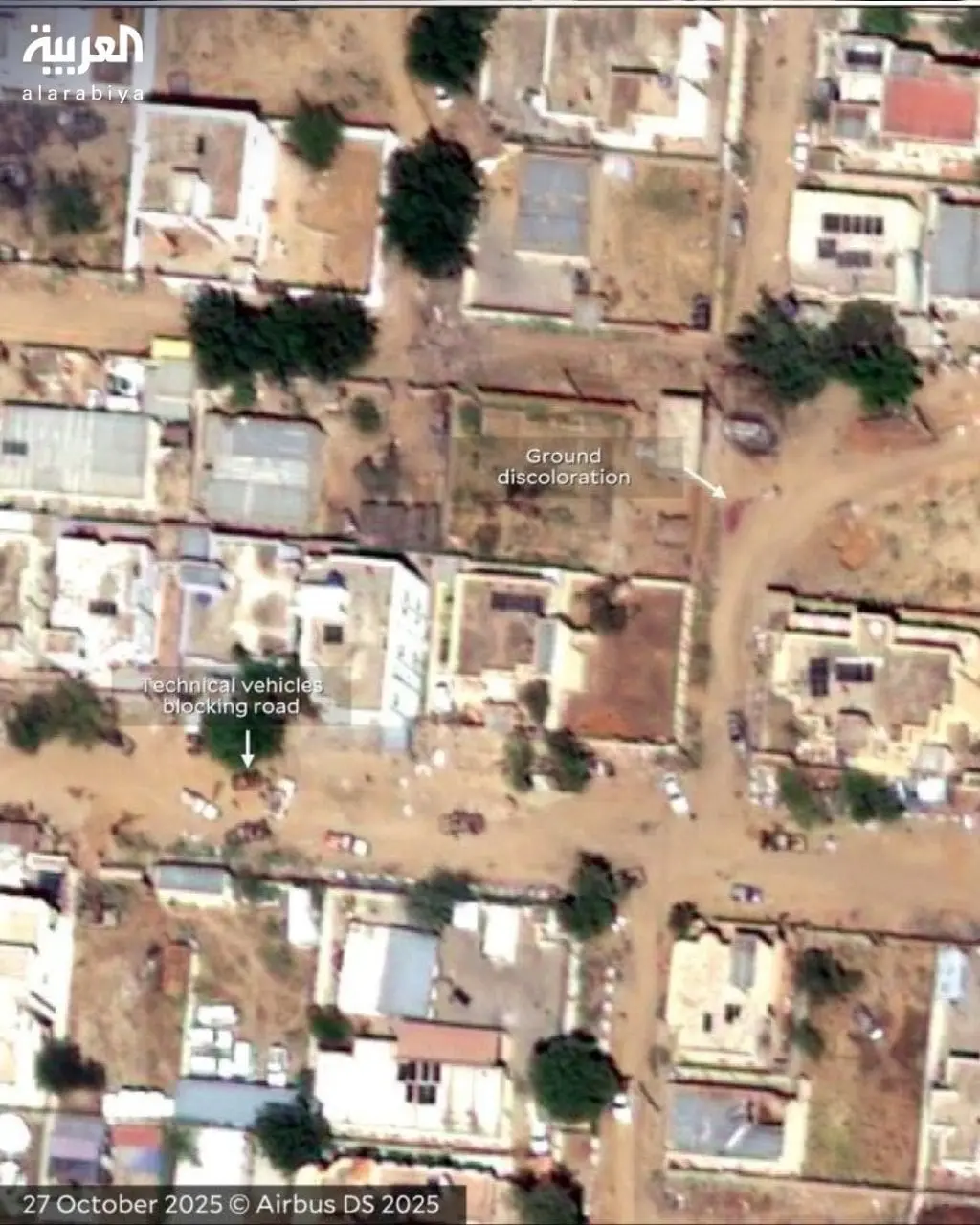
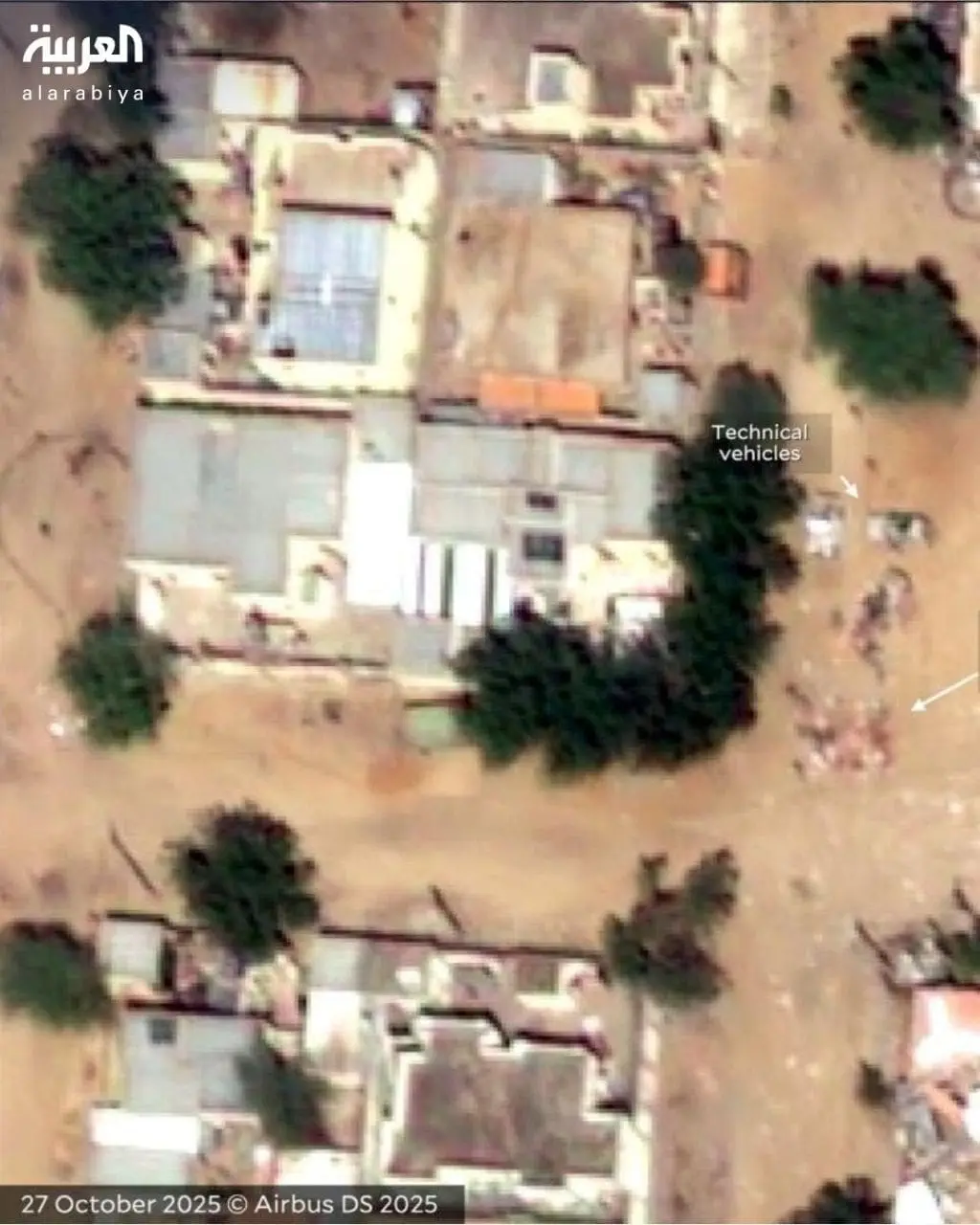
New images captured by Maxar satellites of the city of al-Fashir in Sudan show red stains around houses, most likely blood, indicating mass killings of civilians at the hands of Rapid Support Forces.
The Washington Post, on videos, satellite images and testimonies:
- The Rapid Support Forces carried out a killing campaign after seizing al-Fashir.
- We received accounts of men and boys being separated from their families and subjected to torture or killing in al-Fashir.
- Military vehicles in al-Fashir are seen from the air near corpses and large pools of blood.
The Washington Post, quoting an aid worker: reports of hundreds, if not thousands, of civilians in al-Fashir being targeted and killed on ethnic grounds.
Darfur governor Minni Arko Minawi, on Tuesday, accused foreign intelligence agencies of helping the Rapid Support Forces take control of al-Fashir by cutting off his forces' communications, while at the same time acknowledging "serious mistakes" committed by the side under his command.
In a televised speech following the city's fall into the hands of the Rapid Support Forces on Saturday, Minawi said that its seizure was the result of coordinated effort by "aggressor states" that provided the Rapid Support Forces with material, logistical and intelligence support.
Minawi added that "al-Fashir would not have fallen had intelligence services in the area not cut off all communications via modern satellites," pointing out that this measure succeeded in severing communication between his forces on the ground and their command rooms.
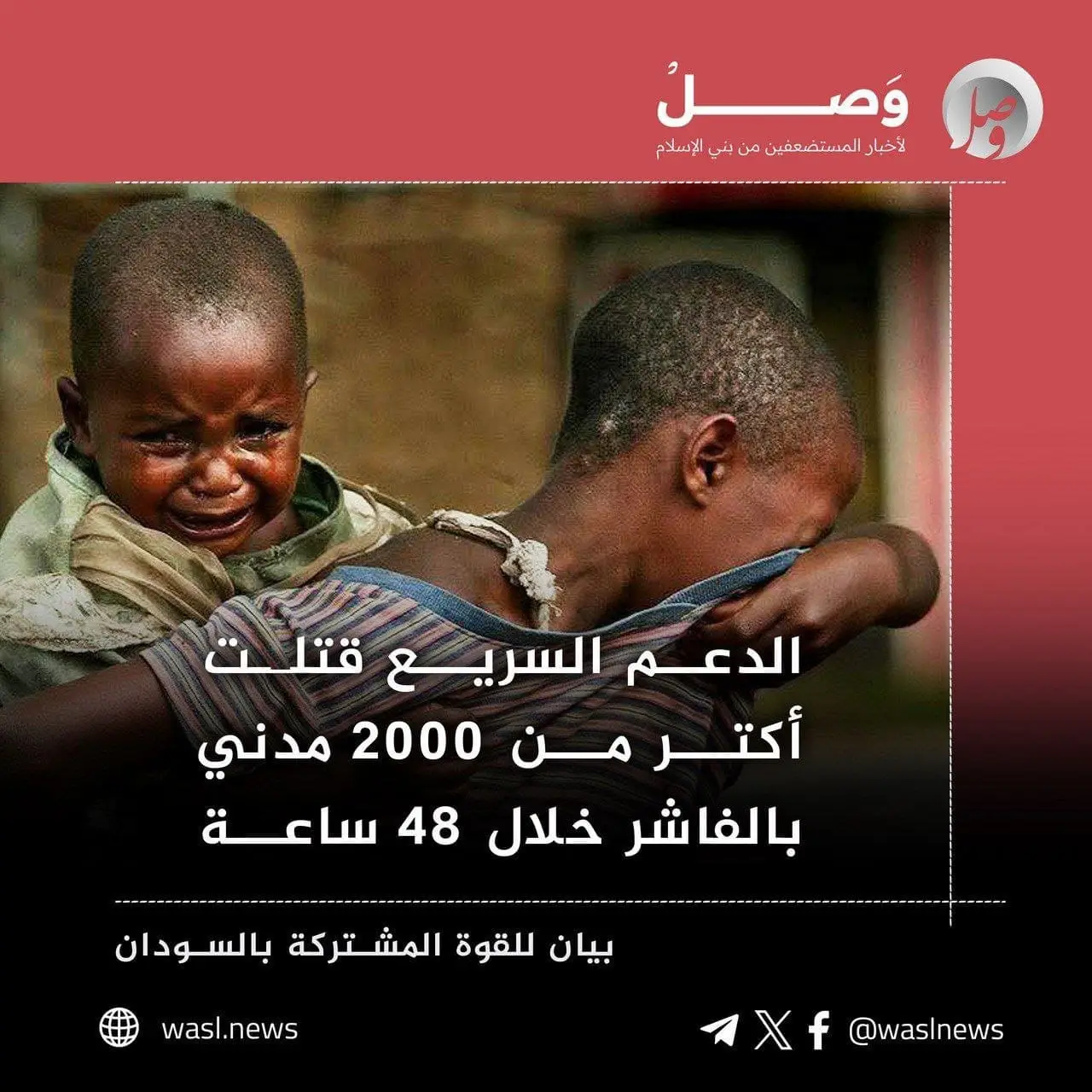
Joint Forces statement in Sudan: the Rapid Support Forces killed more than 2,000 civilians in El Fasher within 48 hours.
The El Fasher Resistance Committees Coordination said: all the wounded and injured inside the "Saudi Hospital" and the "First Degree" wards, the "University" and the "Interior" have been collectively liquidated by the Rapid Support Forces militia in brutal ways. They were killed while still between life and death, at a time when there is no longer any place for humanity.
Documentation of the Rapid Support Forces militia's crimes as it liquidates the wounded at the Saudi Hospital in El Fasher.
From the crimes of the Rapid Support Forces militias in occupied El Fasher.
From the crimes of the Rapid Support Forces militias in Sudan.
Crimes of the Rapid Support Forces militias in Sudan.
Executions by the Rapid Support Forces militia of Sudanese citizens who were treacherously seized.
The Guardian: British-made weapons reach Rapid Support Forces in Sudan via the UAE
Press reports said British-made military equipment was found in the possession of the Rapid Support Forces (RSF) in Sudan, a paramilitary group accused of committing war crimes and genocide, particularly in Darfur (El Fasher). The equipment came after it was purchased by the United Arab Emirates, raising questions about British arms export policies and re-export to conflict zones.
The British government confirmed that it was not aware that the equipment it exported to the UAE had reached Sudan. The report indicates that the British-manufactured weapons include small targeting systems and engines for armoured tanks, and they were found at sites belonging to the RSF, prompting human rights organisations to call for a strict review of British arms export licences.
This revelation sheds light on the complexities of the global arms trade and the risk of exported equipment being diverted to conflict zones, and it raises debate about the responsibility of exporting states to prevent their weapons from reaching groups implicated in crimes against humanity.
The Sudanese government on Tuesday expelled two senior officials of the United Nations World Food Programme, declaring them persona non grata amid tensions over reports of widespread hunger.
The Sudanese Ministry of Foreign Affairs informed the WFP country director Laurent Bukera and head of operations Samantha Cutrege that they are considered "persona non grata", according to the Sudan News Agency (SUNA).
The Sudan News Agency said the ministry summoned the two men and ordered them to leave the country within 72 hours. The official news agency did not disclose the reason for the expulsion, but the government indicated that many international relief organisations do not abide by local laws. The government also regularly denies reports by international bodies of famine in the country, claiming they lack credibility.
The expulsion comes days after the WFP highlighted the dangerous humanitarian situation | Sudan Tribune.
The Rapid Support Forces have recently intensified their shelling of the Daraja Oula neighbourhood, one of the few areas still inhabited by tens of thousands of trapped civilians, after making significant military advances since August.
The same forces have also carried out house-to-house raids in the neighbourhoods they recently seized, burning homes. Their fighters are also reported to be carrying out field executions, extortion, and sexual assaults against those fleeing the city | Sudan Tribune.
Sudan Doctors Network: The Rapid Support Forces kill 47 citizens, including 9 women, inside their homes in the city of Bara
The Rapid Support Forces committed a new massacre added to its continuing massacres in Kordofan, executing 47 unarmed citizens inside their homes in the city of Bara, including 9 women, on the accusation of belonging to the army.
The network confirms that since the RSF overran the city, it has continued to carry out field executions, looting of property and abduction of citizens in an attempt to spread terror among residents. A number of citizens remain missing to this moment, and the Sudan Doctors Network team is working to document these crimes and follow up on the missing through its sources inside.
Dozens of displaced families from the city of Bara arrived in the city of El Obeid on Monday morning, after being received from the militia. The militia had overrun the city yesterday according to activists from the area, and killed a number of civilians on the accusation of belonging to the army, prompting dozens of families to flee.
A Sudanese army source said on Tuesday: We have managed to repel an RSF attack on the Jabal Hashab area in North Kordofan.
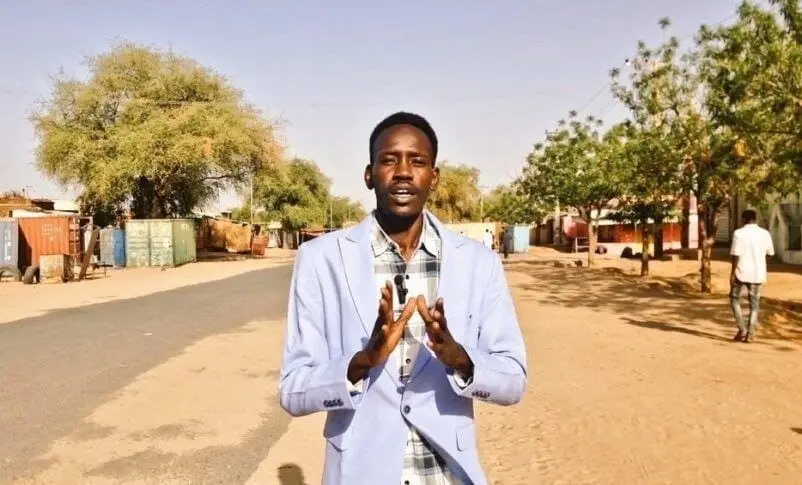
On Sunday, the Rapid Support Forces arrested journalist Muammar Ibrahim, correspondent of Al Jazeera Mubasher, in the city of El Fasher, capital of North Darfur State. Ibrahim was the only journalist providing daily television reports from inside the besieged city.
A video circulated by RSF personnel showed the journalist being arrested while attempting to leave El Fasher. His arrest came hours after the paramilitary forces announced their full control of the city, the last stronghold of the Sudanese army in Darfur.
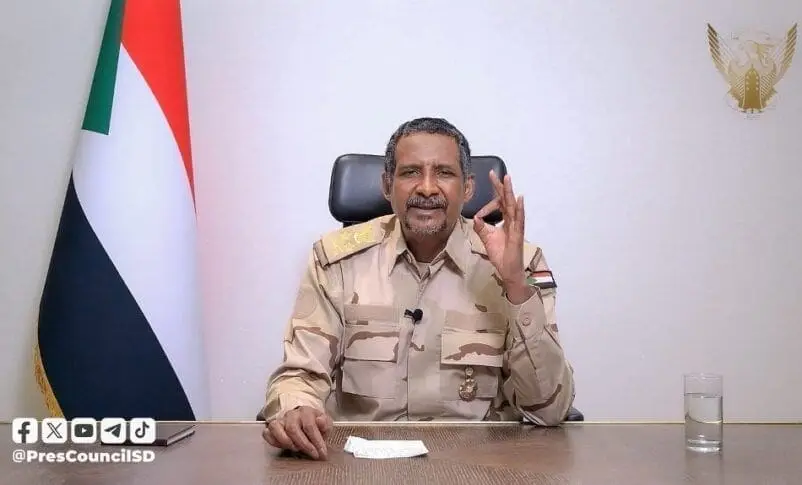
The commander of the Sudanese Rapid Support Forces militia, Lieutenant General Mohamed Hamdan Dagalo, on Wednesday acknowledged "violations" committed by his forces during their recent seizure of the city of El Fasher, and announced the formation of immediate investigation committees.
In a speech broadcast on social media, Dagalo said he had "observed violations in El Fasher" and pledged to hold accountable "any soldier or officer who committed a crime". He confirmed that military and legal investigation committees had arrived in the capital of North Darfur to begin their work, claiming that any trials would be public and immediate.
The announcement echoes earlier pledges by the RSF commander, which critics say have produced no tangible results. After his forces took control of Al Jazirah State, Dagalo announced a "special force to protect civilians" on 12 August 2024, followed by an "exceptional order" on 31 August to strengthen civilian protection. Nevertheless, the security and humanitarian situation in the state continued to deteriorate until the Sudanese army regained control in early 2025.
Dagalo ordered his forces to withdraw from the residential neighbourhoods of El Fasher, but conditioned a full withdrawal on "cleansing the city and achieving stability". He said his engineering units had begun removing landmines and unexploded ordnance.
He explained that once the city is secured, the "Federal Police" force will be fully responsible for internal security, while military forces will remain outside the city. The Federal Police is a security body set up by the deputy commander of the Rapid Support Forces, Abdelrahim Dagalo, from former police personnel, and it is active in other cities controlled by the RSF | Sudan Tribune.
The Rapid Support Forces militia beats and tortures a Red Crescent crew, and accuses its members of being military personnel to justify killing them.
Videos showing the Rapid Support Forces militias detaining hundreds of people in the city of El Fasher in North Darfur State, western Sudan, after they announced control of the city following a siege that lasted more than 18 months.
A clip of an injured man bidding farewell to his daughters and family after being shot in the chest in the city of El Fasher.
The militia pursues displaced people fleeing El Fasher along the road, looting, killing and documenting its crimes.
The North Darfur State Ministry of Health said the Rapid Support Forces militia carried out large-scale reprisals against civilians in the city of El Fasher and those fleeing it, committing horrific massacres, physical liquidations, ethnic cleansing and systematic killing that affected men, women, children and the elderly, resulting in thousands of deaths, and also carried out rape, robbery and looting of citizens' property.
In a statement, it said El Fasher is experiencing the worst humanitarian catastrophe in the world due to the massacres and liquidations it has been subjected to.
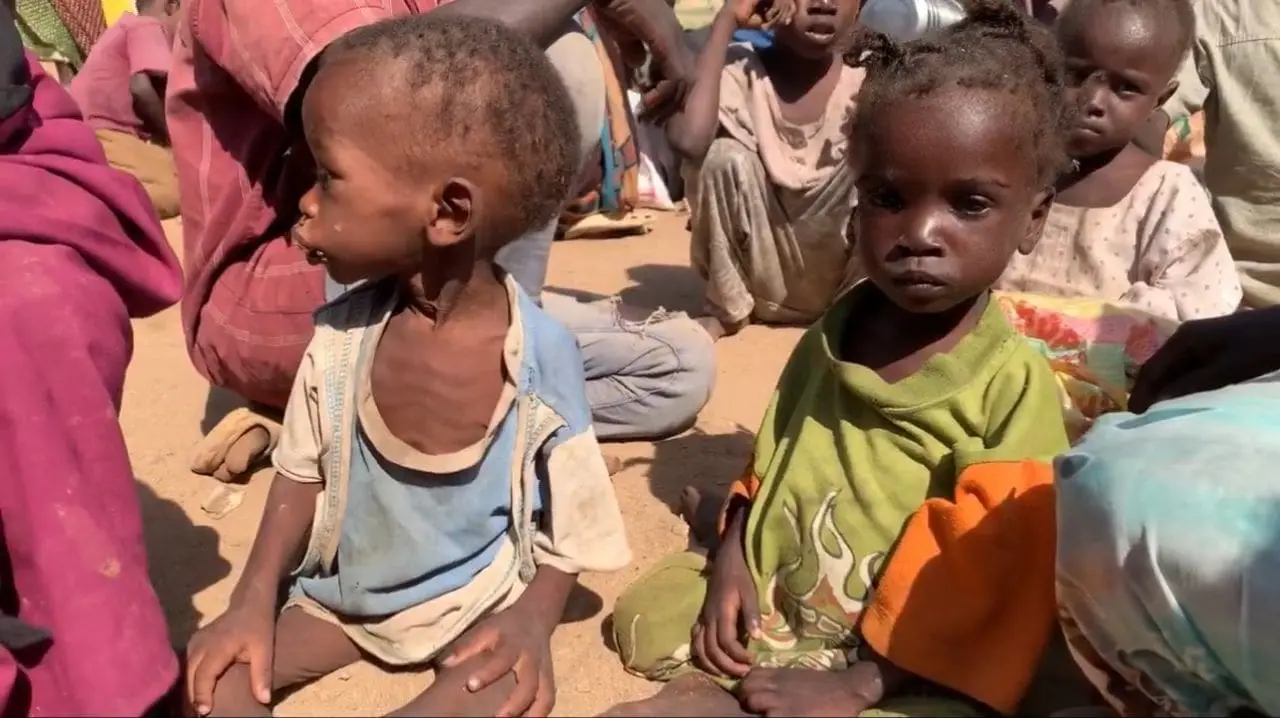
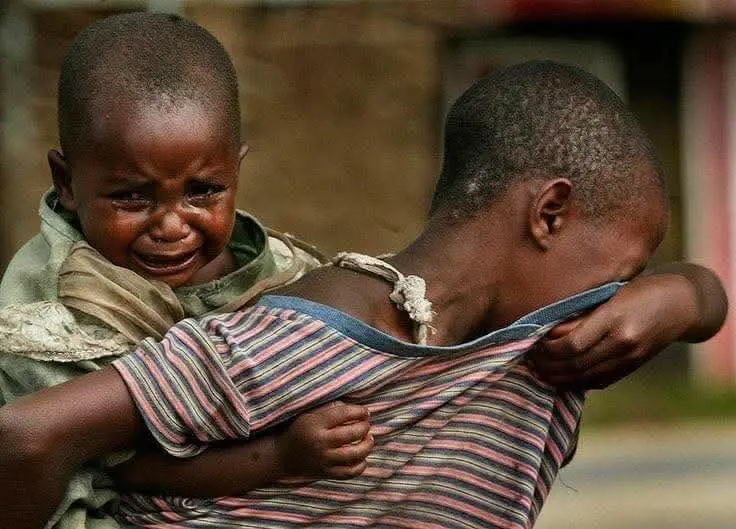
On Saturday, the United Nations International Organization for Migration revealed the deterioration of conditions for Sudanese people, with 86% of households experiencing difficulties in purchasing their needs, pushing them to adopt negative coping mechanisms.
The organisation published the results of a multi-sector assessment it conducted in August through field interviews with 24,403 households in 178 localities located in all 18 states, while it relied on informants in the locality of Kassala, which could not be accessed in the field.
Sudan Doctors Network: The militia Rapid Support Forces coldbloodedly liquidates 38 unarmed citizens in the "Umm Dam Haj Ahmed" area of North Kordofan State, on the accusation of belonging to the army.
Mishad Observatory: The militia kills dozens and abducts more than 60 girls from villages around El Fasher
The Mishad Human Rights Observatory revealed field information indicating that the militia carried out horrific attacks on villages west and north of El Fasher, resulting in the killing of dozens of civilians, the looting of their property, the arrest of a number of native administration leaders, and the abduction of more than 60 girls.
The observatory confirmed that these acts constitute war crimes and crimes against humanity, and called for urgent international intervention to protect civilians and for a transparent investigation ensuring that those responsible for these grave violations are held accountable.
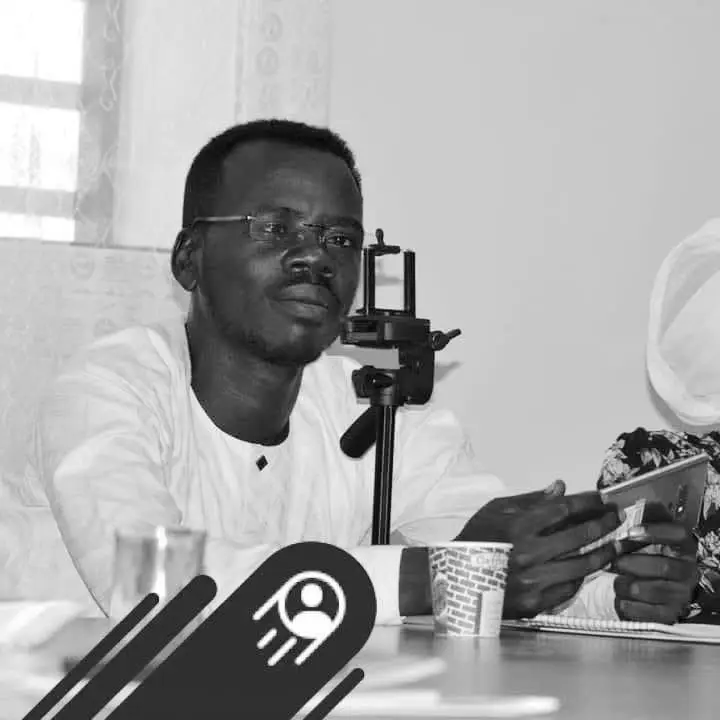
The martyrdom of the spokesperson of the Zamzam displacement camp, as we believe, the upright young man "Mohamed Khamis Dodo", in the city of El Fasher by the gunfire of the Rapid Support Forces militia.
The Rapid Support Forces militias continue to document their crimes and boast about them.
A Sudanese child recites Surat Al-Buruj.
Yemen
The US airstrike on the migrant detention centre must be investigated as a war crime
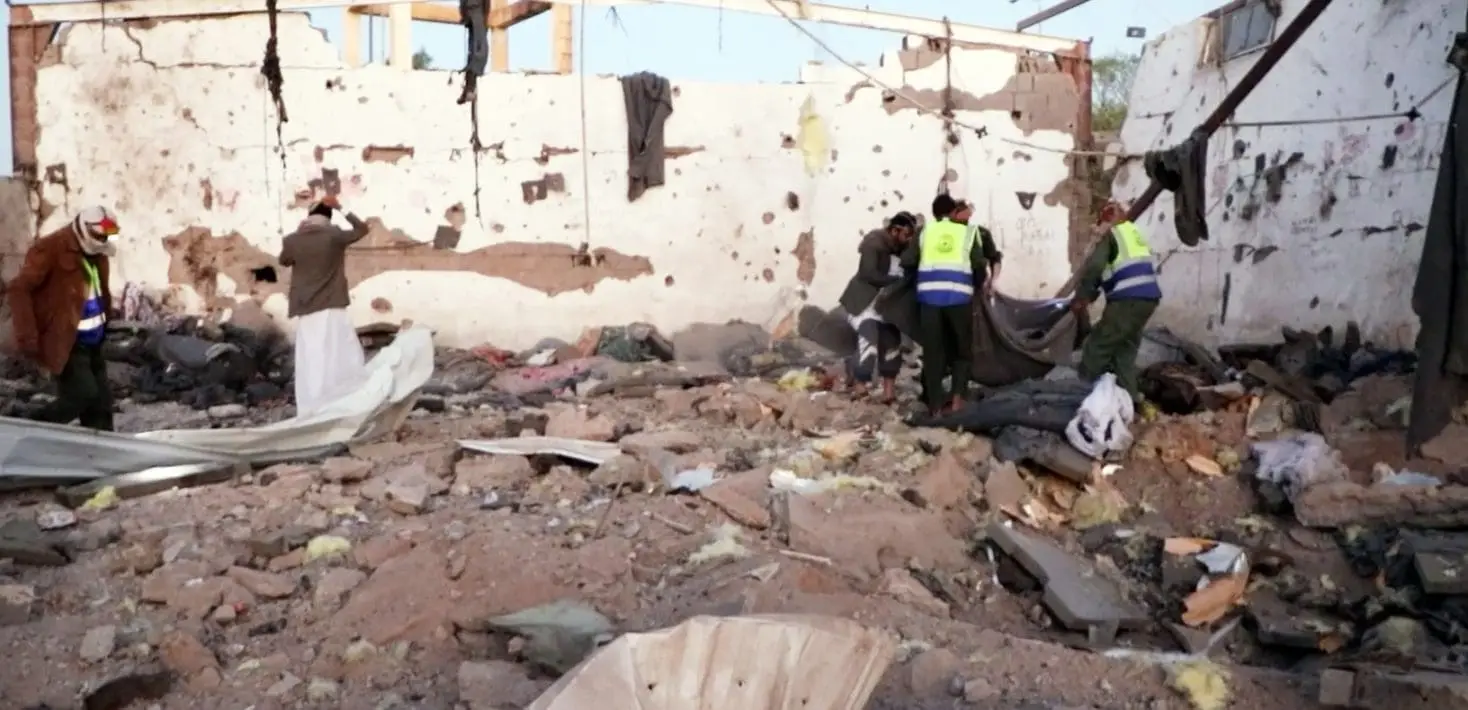
A new in-depth investigation by Amnesty International has found that the US airstrike on a migrant detention centre in Saada, north-west Yemen, on 6 Jumada al-Awwal 1447 AH (28 April 2025), which killed and injured dozens of African migrants, constitutes an indiscriminate attack. US authorities must urgently and transparently investigate it as a war crime.
The strike was carried out by US forces during "Operation Rough Rider", causing catastrophic harm to vulnerable migrant civilians, many of whom were detained by the de facto Houthi authorities at the centre merely for their status as irregular refugees.
Amnesty International's investigation found no evidence that the migrant detention centre was a military target. Survivors confirmed that the centre was an open space, which allowed them to see everyone in the building, all of whom were detained migrants.
The facility, part of the Saada prison complex, had been used for years by the Houthis to detain migrants, and its civilian character was widely known; humanitarian organisations had visited it.
Most of the fifteen survivors Amnesty International spoke to said they were asleep when they heard the sound of a nearby explosion, at some time between 4 and 4:30 a.m. It is believed that this strike was a US air attack on another building within the Saada prison complex, carried out minutes earlier.
The survivors said they woke up terrified and rushed to the gate of the detention centre, shouting for help and knocking on the gate, asking the prison guards to let them out to seek safety. But the guards fired warning shots to keep the detainees inside the centre. Minutes later, a second US air strike hit the migrant detention centre.
The collapse of electricity service continued in the interim capital Aden on Saturday, with hours of outages increasing to around 22 hours against only two hours of operation.
Sources working at the Aden Electricity Corporation told "Al-Masdar Online" that all generating stations running on fuel oil and diesel have gone completely out of service due to fuel running out. The sources added that the President "Petromasila" station, which depends on crude oil, is currently the only one operating at partial capacity not exceeding 65 megawatts, a limited capacity that is insufficient to supply more than small parts of the city.
The sources confirmed that the situation is likely to deteriorate further if urgent quantities of fuel are not secured...
Tribes of Hadramawt and Al-Mahra criminalise smuggling and cooperation with the Houthis and affirm their support for the Yemeni government
The tribes of Hadramawt and Al-Mahra (eastern Yemen) announced today, Wednesday, the criminalisation of smuggling, terrorism and cooperation with the Houthis, and their support for the efforts of the Yemeni government to achieve security and stability.
In a statement obtained by "Yemen Monitor", the tribes confirmed the signing of a tribal covenant of honour uniting the tribes of Hadramawt and Al-Mahra to criminalise dealing or cooperating with the Houthis in any form, and to criminalise all forms of smuggling across the territory of Hadramawt or Al-Mahra and its coast.

Three fishermen from one family killed by a naval mine explosion in Kamaran, Yemen
Three fishermen from one family were killed when naval mines planted by the Houthi militia exploded off the coast of Kamaran Island in Hodeidah Governorate, western Yemen.
The first deputy governor of Hodeidah, Walid al-Qadimi, said that "the explosion of a Houthi mine on the Mahab al-Rih beach on Kamaran Island killed two brothers and their maternal uncle." According to local sources, the Houthis laid highly explosive naval mines and linked some of them to remote detonation devices, making them a permanent threat to the lives of fishermen and island residents, and turning the sea into a "death zone" that claims innocent lives from time to time.
This incident is an extension of a series of mine-related crimes that the Houthi militia has planted along Yemen's coasts and islands, which over the past years have caused the death and injury of dozens of fishermen and the destruction of their boats and sources of livelihood.
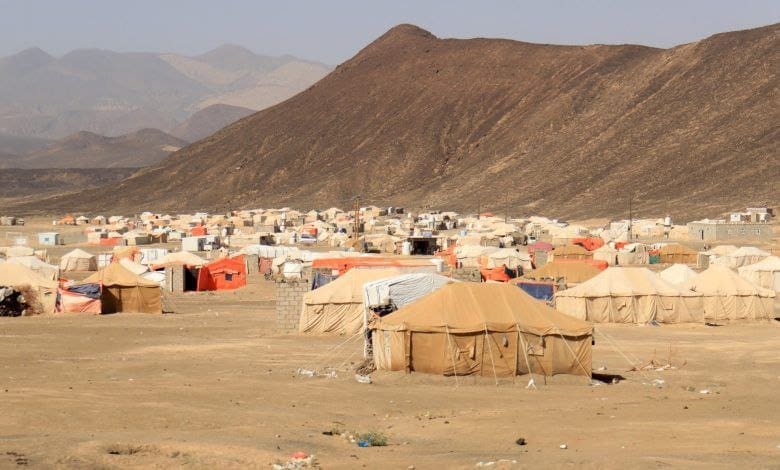
Government official to "Yemen Monitor": New displaced people arrive in Marib daily and organisations are evading their responsibilities
The general director of the Planning and International Cooperation Office in Marib Governorate, engineer Saleh al-Saqqaf, warned of the worsening humanitarian situation in the governorate, which bears enormous humanitarian burdens amid declining aid.
In a special statement to "Yemen Monitor", al-Saqqaf said that the latest report of the International Organization for Migration confirmed that Marib was and still is at the forefront of governorates receiving displaced people, affirming that the governorate receives new displaced families every day despite the decline in humanitarian interventions.
The International Organization for Migration stated in its report issued last Monday that Marib Governorate received 1,261 families out of 2,615 families (about 15,690 people) displaced in Yemen since the beginning of January until 25 October of this month, making Marib the recipient of the equivalent of 47% of the total displaced.
Al-Saqqaf stressed that the humanitarian situation in Marib has reached a catastrophic stage, noting that humanitarian needs are very large in the areas of food, shelter, education, health and water, along with the spread of malnutrition among children and women, especially pregnant women.
Three sisters died on Wednesday evening by drowning inside an underground water tank next to a house in the village of al-Barha in the Al-Shiraja enclave, belonging to the Jabal Habashi directorate in Taiz Governorate, while trying to fetch water, according to local sources.
The sources told "Al-Masdar Online" that one of the girls fell into the tank while drawing water, and her two sisters tried to rescue her, but they all drowned inside it. The tank is about four metres deep and is a "sigaya" dug into the ground and lined with stones and cement, which residents use to store rainwater for dry days in the mountainous area.
Local activists called for securing all water tanks and open wells in villages and rural areas to avoid the repetition of such tragic accidents, noting that dozens of children died in similar accidents in past years due to negligence and the absence of safety measures | Al-Masdar Online.

Houthi mines kill three fishermen in Hodeidah and injure a girl in Taiz
Three fishermen were killed yesterday, Friday, by the explosion of a naval mine left over from Houthi militia operations on Kamaran Island, west of Hodeidah (west Yemen), while a girl was injured by a land mine explosion in Taiz Governorate.
Walid al-Qadimi, first deputy governor of Hodeidah Governorate, said in a post that Nu'aim Abdo Doum, Aslam Abdo Doum and Isa Busaili were killed by the explosion of mines left by the Houthi group, which it had planted on the windswept beach on Kamaran Island, west of Hodeidah.
Al-Qadimi noted that Isa al-Busaili was the maternal uncle of the two brothers (Nu'aim and Aslam), and that all three were killed while seeking a livelihood at sea. In a related development, the girl Dada Bajash (13) was injured last Friday by the explosion of a land mine left over from the Houthi war, in the area of "al-Kadhha" in the Maafir district of Taiz Governorate (central Yemen).
In Hajjah, a land mine exploded, killing a number of livestock, and the child who was tending the livestock was struck by shock from the force of the explosion.
President of the "Mothers of the Abductees" Association reveals to Yemen Monitor the horrors endured by detainees in Houthi prisons in Sanaa during the Israeli bombardment
The president of the Association of Mothers of Abductees in Yemen, Umma al-Salam al-Haj, revealed harrowing details about the harsh conditions endured by detainees in the Security and Intelligence Prison in Sanaa, which is under the control of the Houthi group, after it was struck by an Israeli bombardment in late September of last year. She noted that the inmates "witnessed death" and suffered deliberate neglect and subsequent punitive measures.
In a special statement to Yemen Monitor, al-Haj, the president of the association, confirmed that the abductees experienced "difficult moments and witnessed death" during the bombardment, which caused partial destruction to the prison.
She explained that the conditions of the abductees deteriorated severely after the incident, as "medicine was prohibited from being brought in, all their clothing was confiscated, and they were left in light blue prison clothing," causing them severe colds, especially as temperatures in Sanaa reach 6 degrees Celsius at the beginning of winter.
Most of these abductees were seized from their homes for publicly criticising the armed Houthi group at family gatherings or on social media.
The humanitarian and human rights crisis is also deepening in Ibb Governorate, central Yemen, as the Houthi group continues to conceal more than 120 forcibly disappeared persons, who were arrested in a broad campaign launched by the group at the beginning of last July. Dozens of families are living under the weight of daily suffering, in which the bitterness of forced absence intersects with anxiety over the fate of their relatives, amid the absence of official information and the disregard of their repeated demands.
Forces of the so-called "Preventive Security" and the military police affiliated with the Houthi militia carried out a broad campaign of arrests on Sunday evening in the village of Hadiya Ulya in the Muqbil district, west of Taiz Governorate, resulting in the arrest of a number of its members and unarmed civilians.
Local sources told "Al-Masdar Online" that the campaign, led by the so-called commander of the Sixth Brigade, Karrar Abu Hamid al-Shadhili, targeted members of the company previously led by Sheikh Abdo Ahmed Awad, who defected from the group, and whom the Amaliq Forces announced the day before yesterday they had received after his defection and return to the embrace of the homeland.
Yemeni Interior Minister Major General Ibrahim Haydan confirmed that the gradual announcement by the Houthi group of the targeting of its military and civilian leaders, such as the chief of staff Muhammad al-Ghamari, is a clear indicator of the weakness the group is experiencing and its fear of internal collapse.
Haydan explained, in televised remarks to the "Al-Hadath" channel on Sunday, that the Houthi group understands that announcing the scale of losses immediately and in full could cause great confusion and collapse within its ranks. He pointed out that this gradual announcement of the names of leaders targeted from the "Houthi leadership pyramid" aims to "arrange the internal ranks" and avoid sudden collapse.
After a commander defects from their forces... Houthis raid a village in Taiz and abduct civilians
The Houthi militia carried out a campaign of abductions and retaliatory violations against residents of a village in the Muqbil district, west of Taiz Governorate, south-western Yemen, days after the sheikh of the area defected from the group's forces.
The Yemeni Network for Rights and Liberties said that the Houthi militia stormed, on Sunday evening, the village of Jabal Salim in the "Hadiya Ulya" area, in the Mujaghma isolated area of the Muqbil district, west of Taiz Governorate, with a number of military vehicles led by the individual known as Abu Hamid al-Shadhili.
In a statement, the network added that the Houthi campaign carried out a violent raid on a number of citizens' homes, assaulted women and children with beatings and threats, and terrorised residents by firing shots inside the village. It confirmed that the Houthi campaign abducted a number of men and young people and took them to an unknown location.
UN warns of a humanitarian catastrophe in Yemen, the worst yet
One family in every 3 spends 24 hours without food. The UN warned of a new humanitarian catastrophe, saying that 18 million people will face acute hunger while the residents of 166 districts slide to emergency levels as a result of food insecurity.
According to the monthly update from the UN Office for the Coordination of Humanitarian Affairs on the humanitarian situation in the country, Yemen has once again become on the brink of a humanitarian catastrophe, as it ranks as the third most food-insecure country in the world as of the current month, with 18 million people facing acute hunger (Phase 3 and above of the Integrated Food Security Phase Classification).
The office warned of the worsening of hunger across the country, and expected that up to 166 districts would slide to emergency levels of food insecurity (Phase 4 of the Integrated Food Security Phase Classification) during this month.
According to the report, without sustained and large-scale assistance, up to 41,000 people will face the risk of catastrophic conditions similar to famine (Phase 5 of the Integrated Food Security Phase Classification). It described this as the worst projection in Yemen since 2022, when the country was suffering from a full-scale conflict.
According to the United Nations, the situation is worsening for internally displaced persons, with nearly 7 in 10 households reporting in mid-year that they were unable to meet their basic food needs. In the same month, one in every 3 households spent a full 24 hours without food.
The UN report noted that, as in other crises around the world, women and girls face increasing vulnerability due to acute food insecurity, often eating the least amount of food and finding themselves more exposed to protection risks.
The continuation of the conflict, the (Israeli) air strikes and the restrictions imposed on Yemen's financial system have led to further damage to infrastructure and livelihoods. Furthermore, delayed rainfall and acute water shortages have disrupted agriculture, and it was expected that the drought that followed, and the flooding that is now ongoing, would lead to further destruction of crops and endanger livestock.
The report estimated that 5.1 million farmers and 9.7 million livestock herders are at risk of losing their livelihoods, which exacerbates food insecurity across the country and widens consumption gaps. Households across almost the entire country have exhausted nearly every survival strategy.
In June, according to the report, nearly 4 in 5 households reported having no savings to meet their basic needs, and households are selling their assets, such as livestock and shelter, in addition to cutting medical and essential expenses. The report said these measures have partly fuelled an unprecedented malnutrition crisis, in which nearly half of young children suffer from malnutrition.
The operations room of the "Masam" mine clearance project in Yemen announced on Saturday that its field teams were able, during the past week, to remove 805 mines, unexploded ordnance and explosive devices from scattered areas, as part of ongoing efforts to clear Yemeni land of war remnants that threaten civilian lives and hinder development.
The room said the removal operations included 676 unexploded ordnance, 102 anti-tank mines, 25 anti-personnel mines, and two explosive devices, noting that these devices pose a direct threat to residents of residential and agricultural areas.
The statement explained that a total of 4,130 devices of various types of mines, unexploded ordnance and explosive devices had been removed since the beginning of October until the 24th of the month, including 3,786 unexploded ordnance, 272 anti-tank mines, 62 anti-personnel mines, and 10 explosive devices, reflecting a rising trajectory in the efficiency of operations.
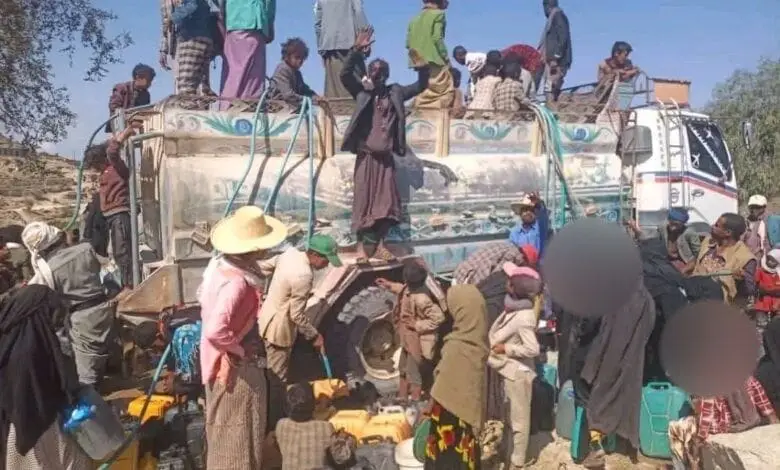
Severe water crisis threatens the lives of more than 120,000 people in Kushar, Hajjah
The Kushar district in Hajjah Governorate, north-west Yemen, is living through tragic conditions due to water scarcity, with more than 120,000 people lacking even the basic necessities of life amid the silence of official bodies and the investors of the coup group.
In moving scenes, children sleep by moonlight waiting for a drop of water to quench their thirst, while women and residents of Kushar stand in long queues to obtain small quantities that do not meet their needs, increasing the suffering of residents and threatening their daily lives.
Activists said that the official authorities in Hajjah Governorate today focus their efforts on costly secondary road projects instead of addressing the acute humanitarian crisis suffered by the people of Kushar.
They added that this disparity in the distribution of attention and resources falls within the framework of discrimination and racism practised by the Houthi militias against the people of the Hajur tribes | Yemen Monitor.
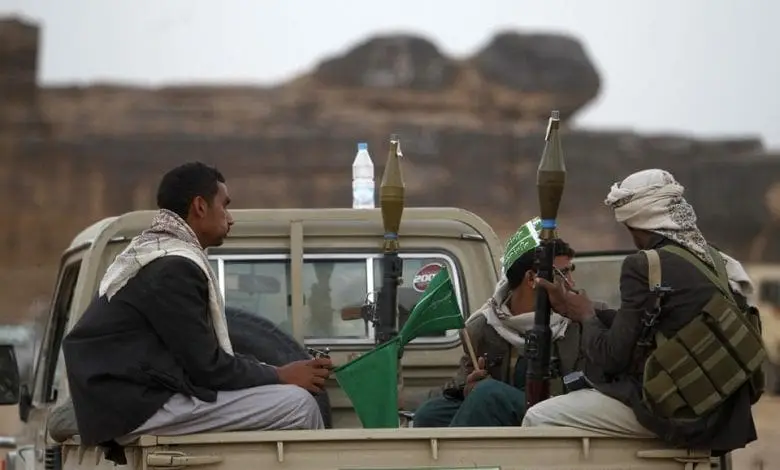
Human rights organisation: 80 people abducted by the Houthis in Dhamar, most of them patients and elderly people
A human rights organisation revealed that 80 people were abducted by the Houthi militia in Dhamar Governorate on Tuesday, most of them patients and elderly people.
The Musawa Organisation for Rights and Freedoms said in a statement obtained by "Yemen Monitor" that a broad campaign of raids and arbitrary arrests carried out by the Houthi group had affected more than 80 people, most of them patients and elderly people, confirming that the campaign was still ongoing at the time of writing the statement.
Dhamar Governorate witnessed a broad campaign of abductions from the early hours of the morning, including the former deputy governor Muhammad Ahmad al-Hajri and dozens in various districts of Dhamar. The campaign was accompanied by raids on homes and the terrorising of children and women.
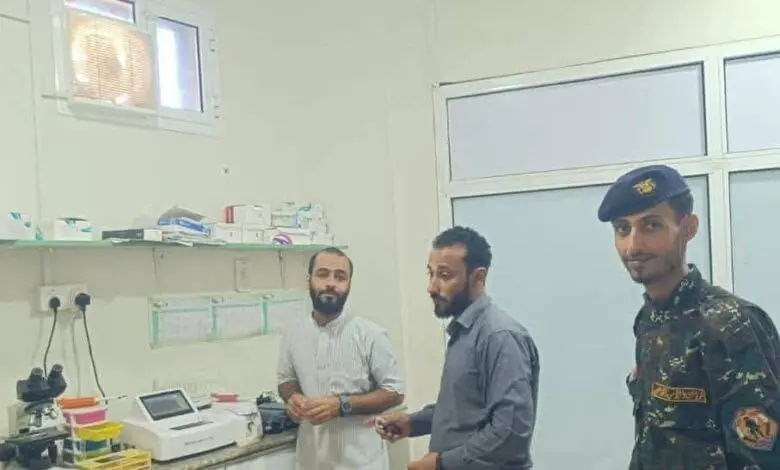
On 27 October, the city of al-Ghaydah in al-Mahra Governorate witnessed an intensive inspection tour covering a number of pharmacies, during which a committee specialised in monitoring prices made a field visit to determine the extent to which pharmaceutical establishments were adhering to official drug pricing and ensuring the availability of basic medical supplies to citizens.
The committee included representatives of several government bodies, among them the Health and Population Office, the Industry and Trade Office, as well as Environmental Health, with the aim of following up the implementation of approved sales regulations and monitoring prices.
Radiotherapy in Mukalla on the verge of collapse... a vital shipment stuck in Muscat for 16 days
Millions of health cases in Hadramawt and southern Yemen face a direct threat to their lives after the radiotherapy machine at the Mukalla Radiotherapy Centre stopped working; it is the only source of radiotherapy for cancer patients in the area.
The centre's administration appealed to the relevant authorities to take urgent measures to save patients' lives, noting that a vital spare part had been shipped from the United States via Muscat, but has been stuck there since 16 October 2025, with customs and logistical procedures not having released it.
The centre's administration said the required part had been officially identified by the manufacturer, and the shipment was prepared via the company DHL, but its arrival in Mukalla was halted because of administrative backlogs and delays in customs clearance, even though the shipment had been classified as a medical emergency. It confirmed that the delay is not due to a technical defect, but to a delay in handling the receipt procedures, which threatens to delay the treatment of hundreds of patients who depend on this device to save their lives.
The appeal pointed out that the centre has provided its services free of charge to patients continuously and without interruption for years, despite major environmental and logistical challenges in the region. While the centre's administration continues to try to contact all the relevant authorities, the situation has become an acute humanitarian crisis, especially as the condition of patients who are at a critical stage of their treatment worsens | Yemen Monitor.
Iraq
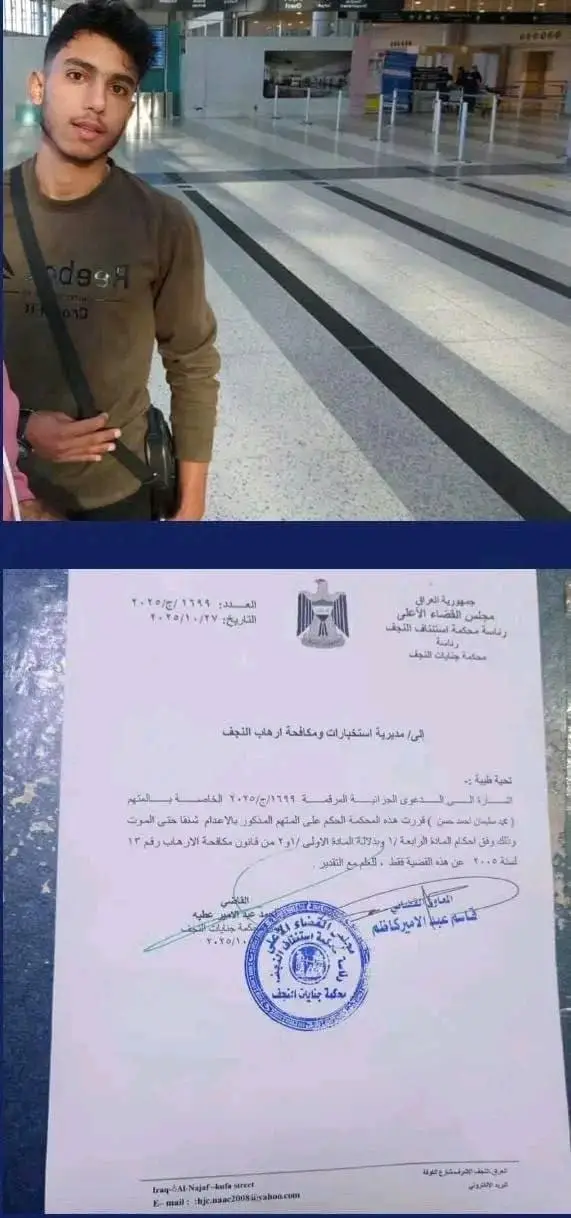
The "Suria Al-Aan" platform, citing the relatives of the Syrian young man Muhammad Sulaiman Ahmad Hassan:
- The Najaf court in Iraq issued a death sentence against Muhammad Hassan (22 years old) following his arrest at the beginning of this year for posting a video of President Ahmad al-Sharaa on his Facebook page.
- A video clip was found on Hassan's phone during a search showing members of the Free Army capturing fighters of the Iraqi Nujaba Movement.
- Hassan was subjected to severe torture, electrocuted, and forced to fingerprint papers whose contents he did not know during the interrogation.
The Supreme Judicial Council of Iraq claims:
- A death sentence was issued by the Najaf Criminal Court against a convicted Syrian for promoting the Islamic State organisation; the accused was convicted of publishing videos glorifying the leader of the Islamic State, al-Baghdadi, and inciting the killing of members of the Iraqi army and the Popular Mobilisation Forces.
- The young man asked people to join the Islamic State via his social media page and published videos in which he is seen burning an image of Imam Ali, with the aim of inciting strife within society.
- The circulating claims that the reason for the sentence was glorifying the Syrian president or the Free Army are untrue.
- The sentence is not final and will be submitted to the Federal Court of Cassation for review.
Residents of the city of Al-Bukamal in the countryside of Deir ez-Zor blocked the road in front of Iraqi vehicles in protest against the death sentence issued against a Syrian young man.
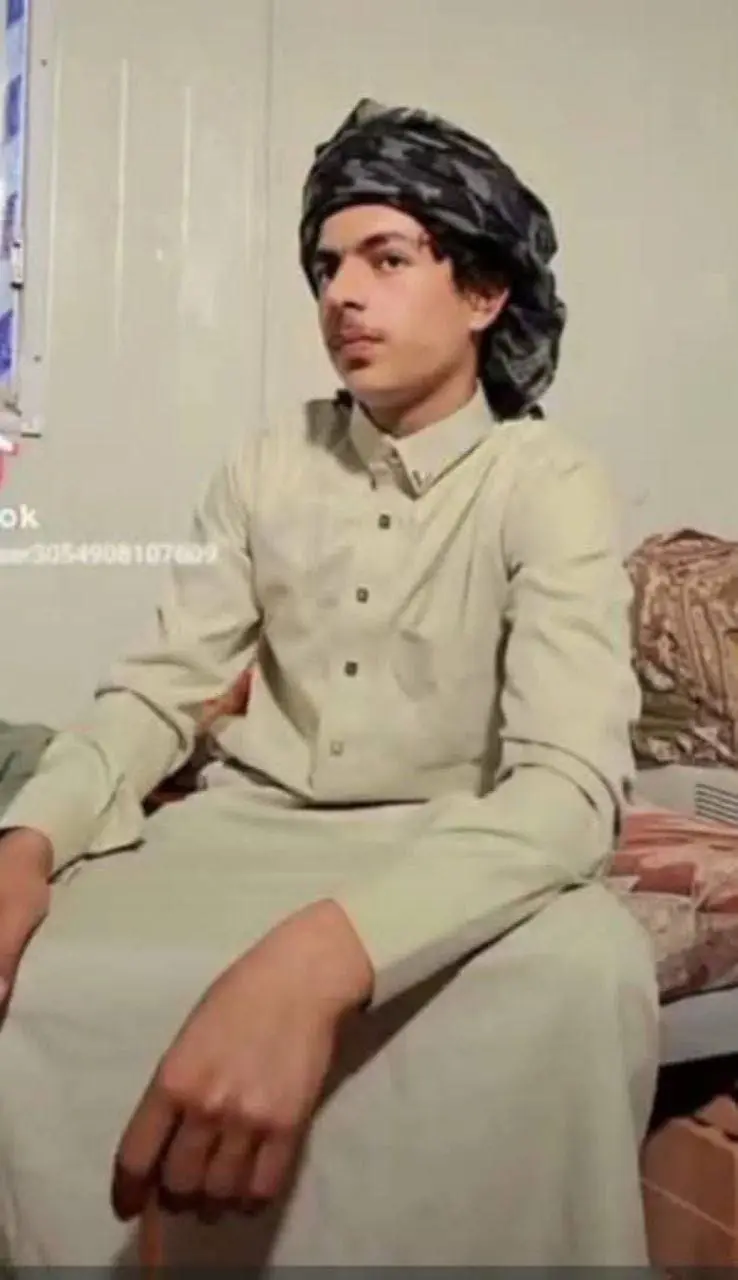
A Syrian young man named "Muhannad al-Aswad" — as we understand it — was killed after armed men shot him in the city of Mosul, Iraq, this morning, Friday. The young man originates from the city of "Hajin" east of Deir ez-Zor.
"Shafaq News" agency: One person was killed and six others injured by an explosion at an oil storage base in the al-Zubair area west of Basra Governorate in southern Iraq.
Iraqi journalist Uthman al-Mukhtar, commenting on the report "Iraq... Iran's last ally in the Middle East":
A dangerous report from The Atlantic: the Iraqi Ministry of Communications awarded the "Al-Muhandis" company, affiliated with the "Popular Mobilisation Forces", a contract worth tens of millions of dollars to maintain Iraq's fibre optic network and build an alternative network.
The company, which includes Iranian experts, has become able to exercise technical control over the national fibre optic network, which means access to the data traffic of all Iraqis, along with surveillance and espionage.
Control of the Iraqi fibre optic network means the ability to access vast amounts of data, intercept communications, or alter data routes.
This would enable the targeting of activists and opponents of militia and Iranian influence in Iraq and the monitoring of their activities. The government of Mohammed Shia' al-Sudani agreed, under pressure, to award the contract to the company, which is on the US sanctions list, without any announcement.
Egypt
A major error at the Grand Ethiopian Renaissance Dam caused the flooding in Sudan and also threatened the collapse of the Roseires Dam
Dr. Abbas Sharaqi, professor of geology and water resources at Cairo University, said Ethiopia committed a serious error in managing the Grand Ethiopian Renaissance Dam (GERD), which led to a man-made flood that inundated Sudan last September. He stressed that the cause was not climate change, as Addis Ababa claims, but the clear mismanagement of the dam.
During his interview on the programme "Ahl Misr," broadcast on Al-Azhar channel, he explained that Ethiopia kept the dam's reservoir completely full and did not drain it in preparation for the new rainy season, despite warnings of the danger of doing so. He noted that the turbines were not operating, which forced the authorities there to open four gates at once to discharge the excess water.
He added that this enormous volume of water, which reached some 750 million cubic metres per day, caused the Blue Nile's level to rise and widespread areas of Sudan to be submerged. It nearly led to the collapse of the Roseires Dam due to its limited capacity, as it cannot pass more than 600 million cubic metres per day.
Sharaqi affirmed that Sudan "saw the danger with its own eyes," after some had assumed that the GERD would protect it from floods. He noted that what happened is a clear message about the danger of Ethiopia's unilateral management of the dam without coordination with the downstream countries.
Rohingya
Dhaka considers reopening the "humanitarian corridor" for the Rohingya amid rising violence in Myanmar's Rakhine State
Security and diplomatic circles in Bangladesh are once again considering reviving the controversial "humanitarian corridor" to transfer aid across the border with Myanmar, amid escalating attacks by Rohingya armed groups in Rakhine State. The initiative, which was previously frozen due to political reactions, returned to the table of political discussions held in Dhaka last Thursday, according to intelligence sources.
Speakers, including academics from Dhaka and Jahangirnagar universities, called for reinstating the "humanitarian corridor" on Bangladesh's national security agenda — this time not only to deliver humanitarian aid, but as a mechanism for "returning Rohingya refugees to their country in an organised and safe manner."
Cuts in US aid have deepened the malnutrition crisis in Rohingya refugee camps, and the effects of this decline are being felt in Cox's Bazar, the largest refugee camp in the world: UNICEF recorded an 11% increase in the number of children suffering from severe acute malnutrition between January and September of this year.
Supplies from the US Agency for International Development are currently dwindling, and regular food donations are also declining.
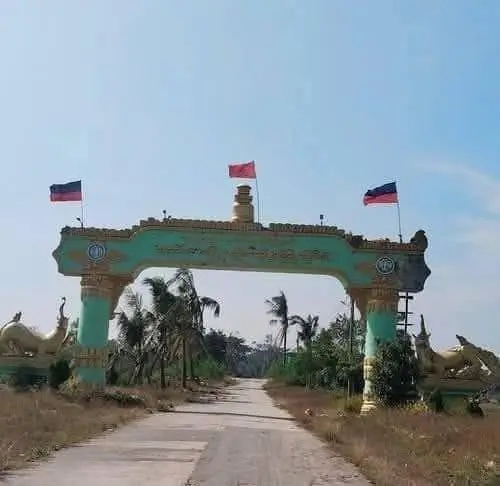
A drug dealer close to Arakan militias kills a Rohingya man and secretly buries him in Maungdaw
A Rohingya man was killed in the village of "Dil Fara," belonging to the "Shwe Zar" area in the city of Maungdaw in Arakan State, western Myanmar, by a person called "Oo Rashid," known by the nickname "King of Drugs" and for his close ties with the Myanmar military council and the Buddhist Arakan militias (Arakan Army). He secretly buried the body within half an hour of committing the crime.
The crime occurred on 22 October 2025 at around 2:10 p.m., when "Rashid" killed "G. Or Rahman," also known as "Maung Maung," after falsely accusing him of stealing fish from one of his private ponds. Local sources, as announced by the Maungdaw Daily News website, said the perpetrator intercepted the victim on his way home from work and took him to his house, where he was severely tortured to death.
Local residents reported that the perpetrator later tried to turn the case into a suicide to conceal the crime, but eyewitnesses revealed the truth, while local reports confirmed that the Arakan militias denied knowledge of the incident | Arakan News Agency.
Steadfastness of a Rohingya refugee in the Rohingya camps in Bangladesh. The Rohingya man Abu Bakar contracted polio in his childhood because the vaccine was given only to Buddhists and not to Muslim Rohingya.
Rescue of 24 Rohingya, including women and children, from human smugglers in Bangladesh
The Rapid Action Battalion (RAB) in Bangladesh rescued 24 Rohingya, including women and children, from human smugglers in the remote Teknaf hills in Cox's Bazar.
Assistant director of the Rapid Action Battalion "M. Farooq" explained that the rescued group included 4 men, 10 women and 10 children, all residents of the Rohingya camps. He added that the smugglers lured the victims with the promise of transporting them to Malaysia before forcibly holding them in a house on top of the hills. Farooq noted that the smugglers fled after sensing the presence of the RAB team, and that the rescue operation lasted 3 hours.
A case was registered with the Teknaf police against members of the smuggling gang, with efforts continuing to arrest the remaining perpetrators. Arrangements were also made to return the rescued individuals to their original camps | Arakan News Agency.
Uyghurs
The tiger chair, for which China became known for its use in torture: a person sits on it for days and weeks until the flesh festers and blood oozes from it.
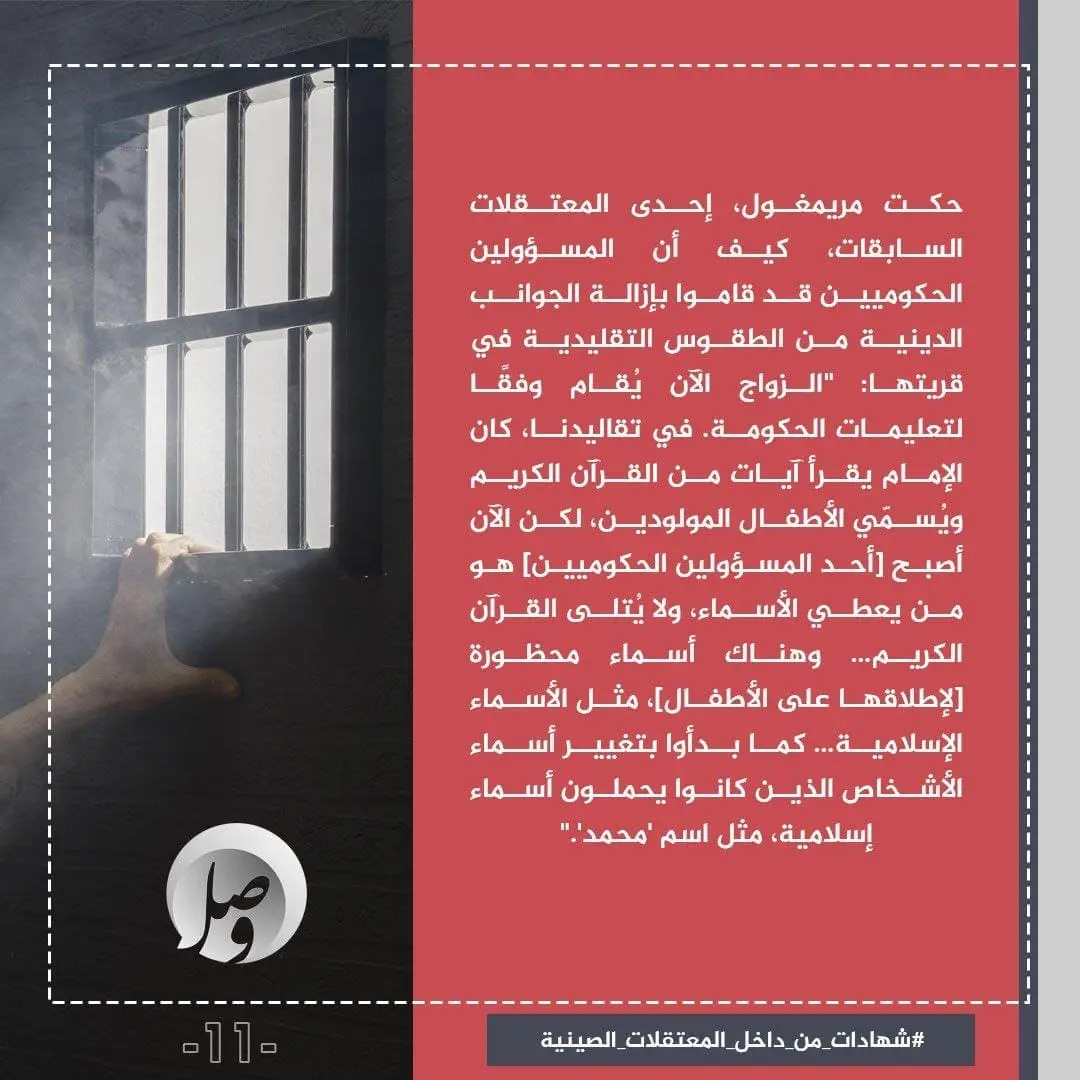
Mirgul, a former detainee, says: "Marriage is now conducted according to government instructions... they have begun changing the names of people who had Islamic names, such as the name 'Muhammad.'"
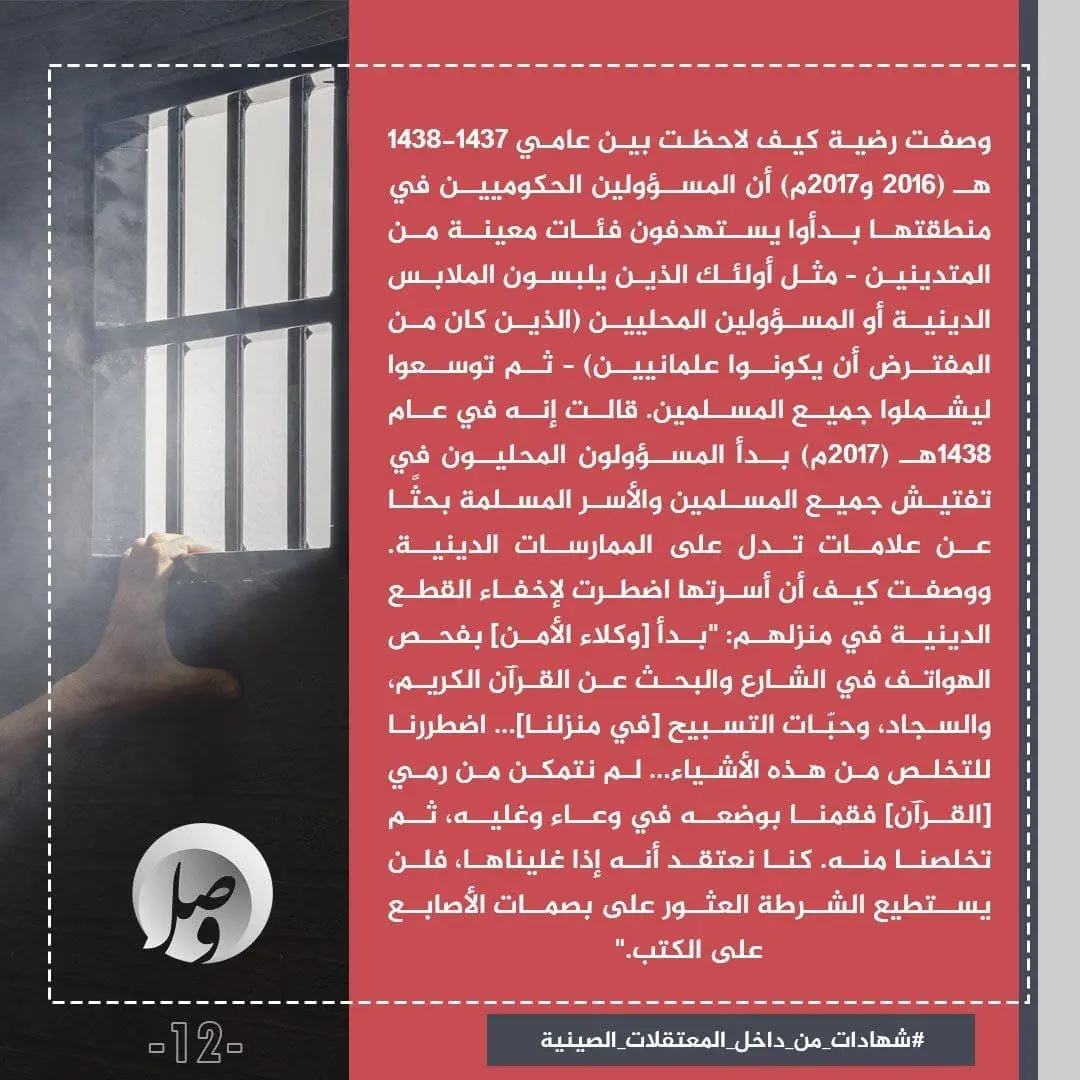
Rahila said that in 1438 AH (2017 CE), local officials began searching all Muslims and Muslim families for signs of religious practice. She described how her family was forced to hide religious items in their home.
"[Security agents] began checking phones on the street and searching for the Holy Qur'an, prayer rugs, and prayer beads [in our home]... we were forced to get rid of these things... we could not throw [the Qur'an] away, so we put it in a pot and boiled it, then disposed of it. We thought that if we boiled them, the police would not be able to find fingerprints on the books."
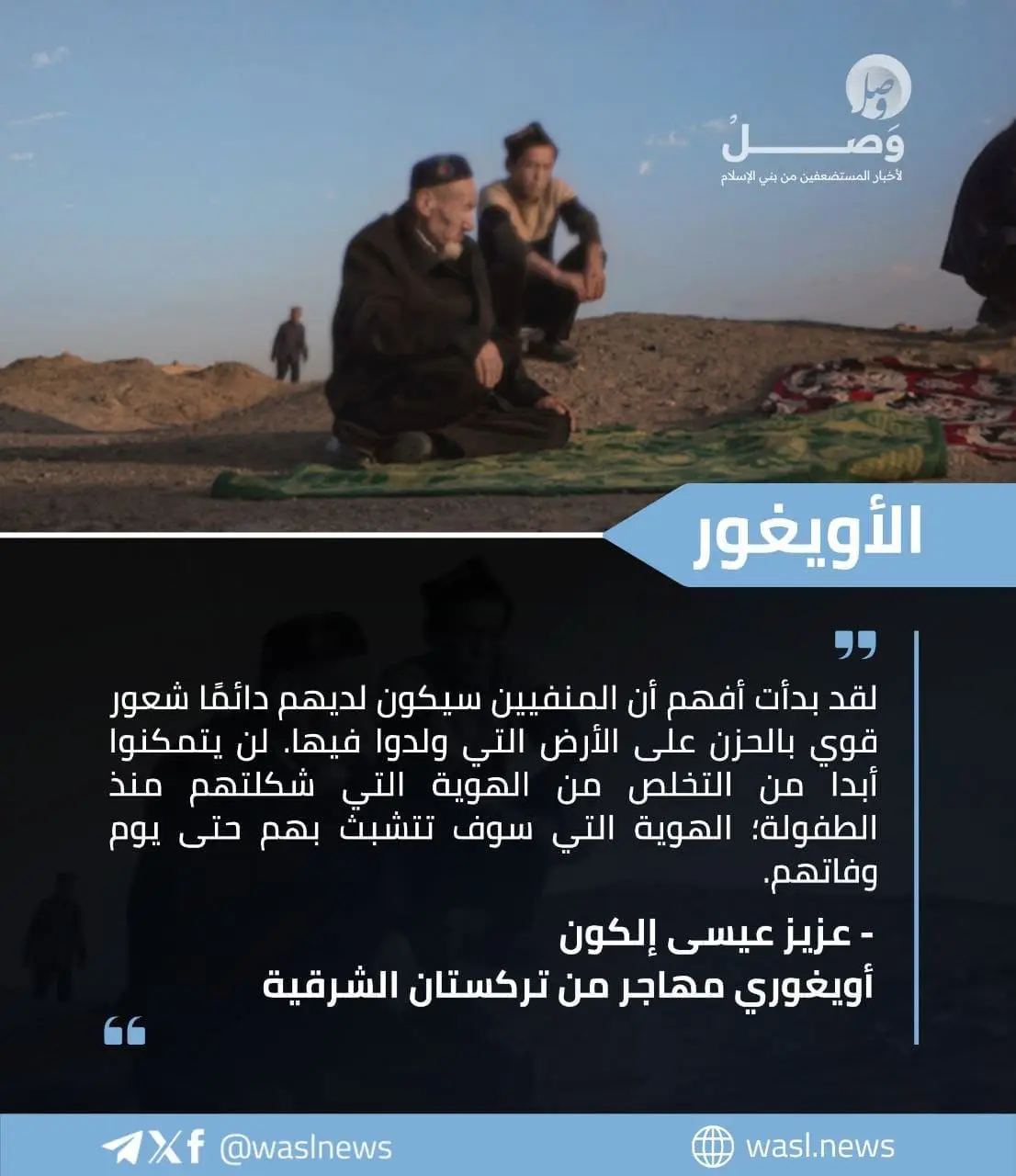
"I have come to understand that exiles will always feel a deep sadness for the land where they were born. They will never be able to shed the identity that shaped them from childhood; an identity that will cling to them until the day they die."
What is the forced labour that China practises against the people of East Turkestan?
China warns a Saudi tourist against visiting mosques in East Turkestan (Xinjiang).
Bangladesh
Sheikh Hasina, Bangladesh's ousted leader, warns of a possible mass boycott by voters after her party was barred from contesting the elections
Sheikh Hasina, Bangladesh's former prime minister, said in an interview with Reuters on Wednesday from her exile in New Delhi that millions of supporters of the Awami League party will boycott the national elections scheduled for next year, after the party was barred from taking part.
Hasina, 78, explained that she will not return to Bangladesh under any government formed following elections from which the Awami League is excluded, affirming her intention to remain in India, where she took refuge in August 1445 AH (2024 CE) following a bloody student uprising.
Since her ouster, an interim government headed by Nobel Peace Prize laureate Muhammad Yunus has been administering the country's affairs, and it has pledged to hold elections in February next.
Iran
The Iranian regime assassinates the Ahwazi Arab opposition activist Hashem Eidani
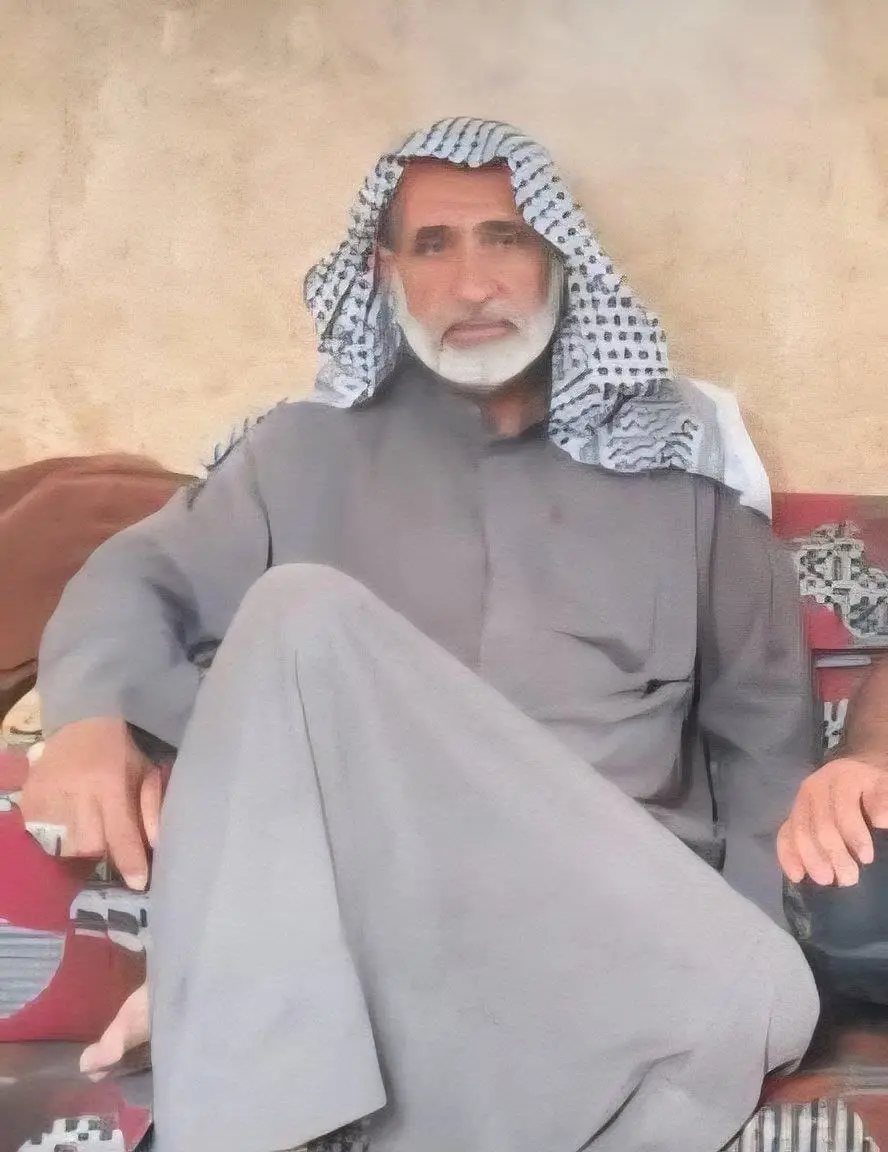
Following the large-scale attack launched by Iranian regime security forces on the village of Khobeyneh Olya in the Ismailiyeh district of the Ahvaz region, Hashem Eidani, an Arab citizen and political activist opposed to the government, was killed by security personnel's gunfire in a deliberate killing carried out by the state.
Eidani, 65 years old, who was known among local residents for defending the rights of Arabs in Ahvaz and opposing the policies of the Iranian regime, had previously been subjected to raids by intelligence agencies.
Security forces surrounded the village of Khobeyneh Olya and Eidani's house using dozens of civilian and military vehicles. It is said that he attempted to flee to the Karun River, but he was killed by direct gunfire, and then finished off by being shot again. Security forces recovered his body from the river, but informed his family that "the body was not found," and have not handed it over to date.
Eidani's family was also threatened not to hold any mourning ceremonies. This act comes within the framework of the suppression of Arab activists and spreading terror and fear among the population. On the other hand, Amir Khalfiyan, the prosecutor of Ahvaz, described Hashem Eidani as a person with "takfiri" or "separatist" inclinations, a "dangerous criminal with multiple prior convictions," and one of the "most dangerous elements of crime in the province," adding that he had been wanted for years — claims that Eidani's family and residents of the area deny | Quoted from the Iranian researcher Majid al-Abbasi.
Libya
The danger of death in Libya's camps
Conditions in Libyan detention camps — to which migrants intercepted by the coast guard are returned — are described as catastrophic, especially for children.
For years, Libya has faced sharp international criticism over human rights violations, despite its agreement with the European Union worth millions of euros to reduce migrant numbers and control the borders.
"Young people told me stories of horrific sexual violence, torture, forced child labour, the disappearance of relatives, and cases of human trafficking. Some showed me scars, photos, and videos from inside the camps that prove what they were subjected to," said Esther.
Agence France-Presse, citing the International Organization for Migration: 18 migrants die in a boat sinking off the coast of Libya.
Turkey
In north-east Turkey, Turks hung a doll shaped like Israeli occupation Prime Minister Benjamin Netanyahu from a large crane, with the writing: "Execution of Netanyahu."
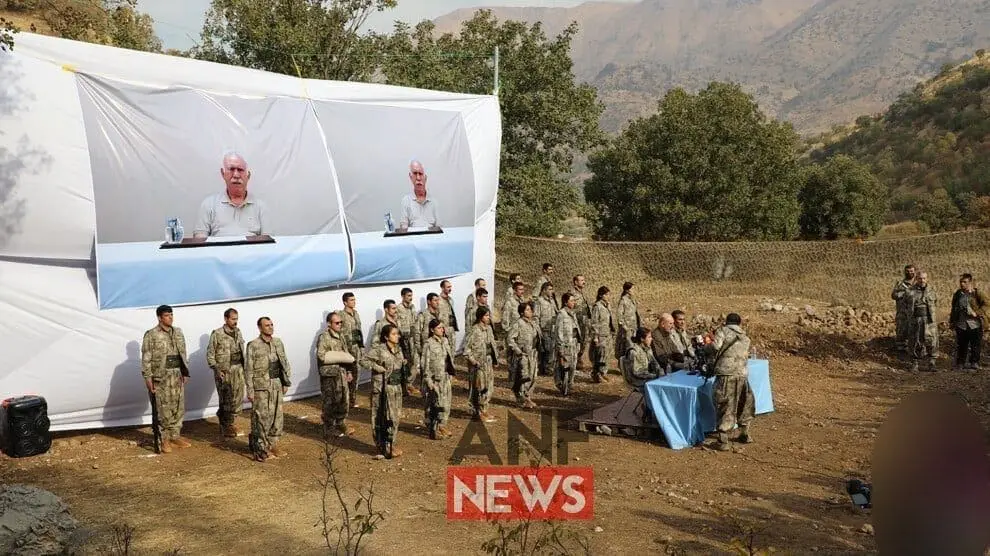
The Kurdistan Workers' Party (PKK) announces that it has begun a full withdrawal of its fighters from Turkey as part of peace talks with the Turkish government, implementing a call from its leader Öcalan.
The Kurdistan Workers' Party announced the withdrawal of all its fighters from Turkey to northern Iraq.
The group said at a press conference at the foot of Mount Qandil, where 25 fighters gathered, including eight women: "We are withdrawing all our forces from Turkish territory." This step followed a symbolic disarmament ceremony in July, and is accompanied by a call on Turkey to take the "legal and political measures" necessary to guarantee the process and the transition of PKK fighters into democratic politics.
Pakistan
Reuters, citing the Pakistani Defence Minister: Afghanistan wants peace, but failure to reach an agreement means open war.
The spokesman for the Afghan government said:
- We seek relations with Pakistan based on mutual respect and non-interference in internal affairs.
- The negotiations in Istanbul were complex but fruitful, and it was agreed to hold new rounds.
Afghanistan
Circulating: When Sharia rules, a human being is honoured even if he is your opponent!
Malaysia

Trump and Malaysian Prime Minister Anwar Ibrahim sign several cooperation agreements between the two countries, and an agreement on investment and trade in rare earth minerals.
Trump at the ASEAN summit:
- I came on a mission of friendship and goodwill, to deepen our trade relations, strengthen our common security, and work to achieve stability, prosperity and peace for all the countries in this hall and beyond.
- We have concluded or are close to concluding trade agreements with many other partners in the Indo-Pacific region. Together, we will create unbelievable prosperity for the countries on both sides of the Pacific Ocean, and seize new opportunities for all our peoples.
- The United States stands with you. We are committed to a free, open and prosperous Indo-Pacific region. My message to the countries of South-East Asia is that the United States is 100% with you, and we intend to be a strong partner and friend for many generations to come.
In protest against Trump's visit to Malaysia, massive demonstrations in the capital Kuala Lumpur.
Indonesia
An earthquake with a magnitude of 6.2 on the Richter scale struck an area off the coast of Indonesia this week.
Muslim Minorities
India
Indian authorities force Rohingya to vacate a settlement after cutting off their water and electricity
Indian authorities forced dozens of Rohingya refugees to vacate their settlement in the Channi Rama area of the city of Jammu, after cutting off their water and electricity supplies, following complaints from local residents concerning the legitimacy and safety of the settlement.
The authorities explained that the decision to cut services was taken for reasons related to public order, pointing out that the land on which the settlement stands belongs to a citizen from the Rajouri area, which required action against some 30 to 40 refugees.
Officials indicated that the police recently intervened to carry out the eviction, while the displaced refugees face the possibility of being transferred to a detention centre in Kathua prison, amid uncertainty about their future.
This measure is part of a series of steps taken by the authorities to limit the presence of foreign refugees in Jammu. A similar operation took place in December 2024, followed by an extensive verification campaign in 2021.
According to government data, more than 13,700 foreigners live in the Jammu region, the majority of them Rohingya and Bangladeshis, reflecting the rising official efforts to regulate their presence in the region | Arakan News Agency.
Germany
Pace of migrant deportations rises since the beginning of the year in Germany
The German government announced a 20% rise in the pace of deportations from the country since the start of the year, amid a wave of protests and concern among migrants.
In an official statement in response to a briefing request from the parliamentary group of the "Left" party, the government said that the total number of deportees reached 17,651 persons during the period from January to September, compared with 14,706 persons during the same period of last year.
The vast majority of deportees were sent to Turkey, numbering 1,614 persons, and Georgia, 1,379 persons, while about one fifth of the 3,095 deportees were children or adolescents.
Clara Bünger, the Left party's spokesperson for domestic political affairs, criticised this increase, stressing that mass deportations to countries such as Turkey, which "suppress opponents," should not take place without consideration of the political and humanitarian situation.
Merz explained that his statements targeted migrants without residence permits or jobs who do not abide by German laws. Some 5,000 people are expected to take part in protests today, Saturday, in cities such as Hamburg, Magdeburg and Nuremberg, expressing their rejection of current policies on deportation and migration.
Source: AP.
United States

US authorities detain British journalist and political commentator Sami Hamdi during his visit to the United States and cancel his visa because of his positions against the occupying state, which is committing genocide against the Palestinian people.
Belgium
Belgian authorities arrested Egyptian activist Anas Habib and his brother Tarek Habib in the capital Brussels on 23 October 2025, during a visit by Egyptian President Abdel Fattah el-Sisi to take part in an Egypt–European Union summit.
According to several international media sources, the arrest came after accusations related to "threatening or plotting to target" the Egyptian president during the visit.
The authorities released them after several days.
It is worth noting that Anas Habib is an Egyptian activist known for his positions opposing the Egyptian regime, and he had previously taken part in protest activities against the Egyptian government in Europe.


