


This summary outlines the most prominent events that took place during this week, from Friday, 14 Jumada al-Thani to Friday, 21 Jumada al-Thani 1447 AH, in the Islamic world.
Palestine
Gaza Strip
- Despite the ceasefire, the Israeli occupation army continues to shell homes and neighbourhoods in various areas of the Strip.
- Occupation reopens Jordan–West Bank crossing: The occupation reopened the only crossing under its control on the border between Jordan and the occupied West Bank on Wednesday to allow aid trucks into Gaza, after nearly three months of closure, according to Israeli and Palestinian officials.
The occupation had closed the crossing after a Jordanian truck driver opened fire on an Israeli soldier and a reserve officer at the border in September.
A Palestinian official who spoke on condition of anonymity confirmed that the crossing had opened. The official said that on Tuesday 96 trucks carrying cement-production materials were allowed through the crossing. On Wednesday, an additional 20 trucks of humanitarian aid entered. - Child malnutrition remains at critical levels: Despite the announcement of a ceasefire two months ago, rates of child malnutrition in Gaza remain at critical levels. UNICEF reported that 9,300 children were admitted to hospitals for severe acute malnutrition in October, along with 8,300 pregnant and breastfeeding women suffering from malnutrition. UNICEF spokesperson Tess Ingram warned that the effects will continue for years, and that the number of babies born with low birth weight is expected to rise in the coming months.
- Suffering of residents intensifies in winter: Heavy rains swept through the Gaza Strip on Thursday, flooding hundreds of tents sheltering families displaced by the two-year war, and leading to the death of an infant from exposure to the cold, according to local health sector officials. Paramedics said that Rahaf Abu Jazar, eight months old, died from exposure to the cold after water flooded her family's tent in Khan Younis in the south of the Strip.
Municipal and civil defence officials said they are unable to keep pace with the storm due to fuel shortages and damaged equipment. They noted that the Israeli occupation destroyed hundreds of vehicles, including bulldozers and water-pumping machinery, during the war that displaced most of the Strip's population of more than two million people and left large parts of Gaza in ruins.
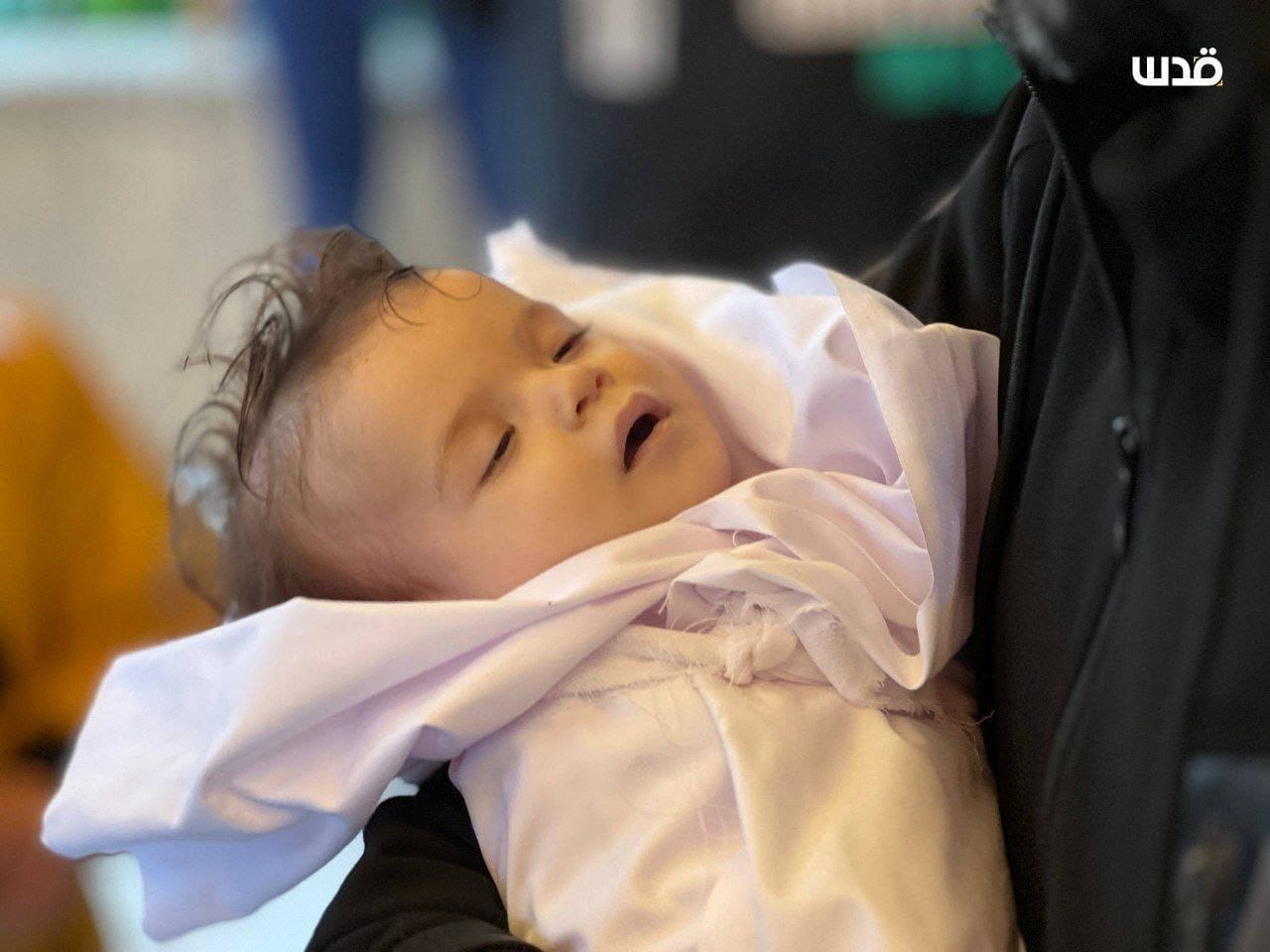
The Civil Defence service reported that most of the tent camps spread across the Strip have been flooded, and that it received more than 2,500 distress calls. Some displaced people's belongings were seen floating on pools of rainwater. A UN report stated that 761 displacement sites sheltering about 850,000 people face a significant risk of flooding, and that thousands have left their sites in anticipation of heavy rainfall.
Displaced people's tents flooded as the weather system reached the Gaza Strip, amid extremely harsh humanitarian conditions.
A large number of displaced people's tents in the Gaza Strip were flooded as the rainfall intensified.
Collapse of a four-storey building in Gaza, which had previously been damaged by Israeli shelling.
UN and Palestinian officials said that at least 300,000 new tents are urgently needed for some 1.5 million residents who remain displaced, as most existing shelters are worn out or made of plastic sheeting and thin fabric.
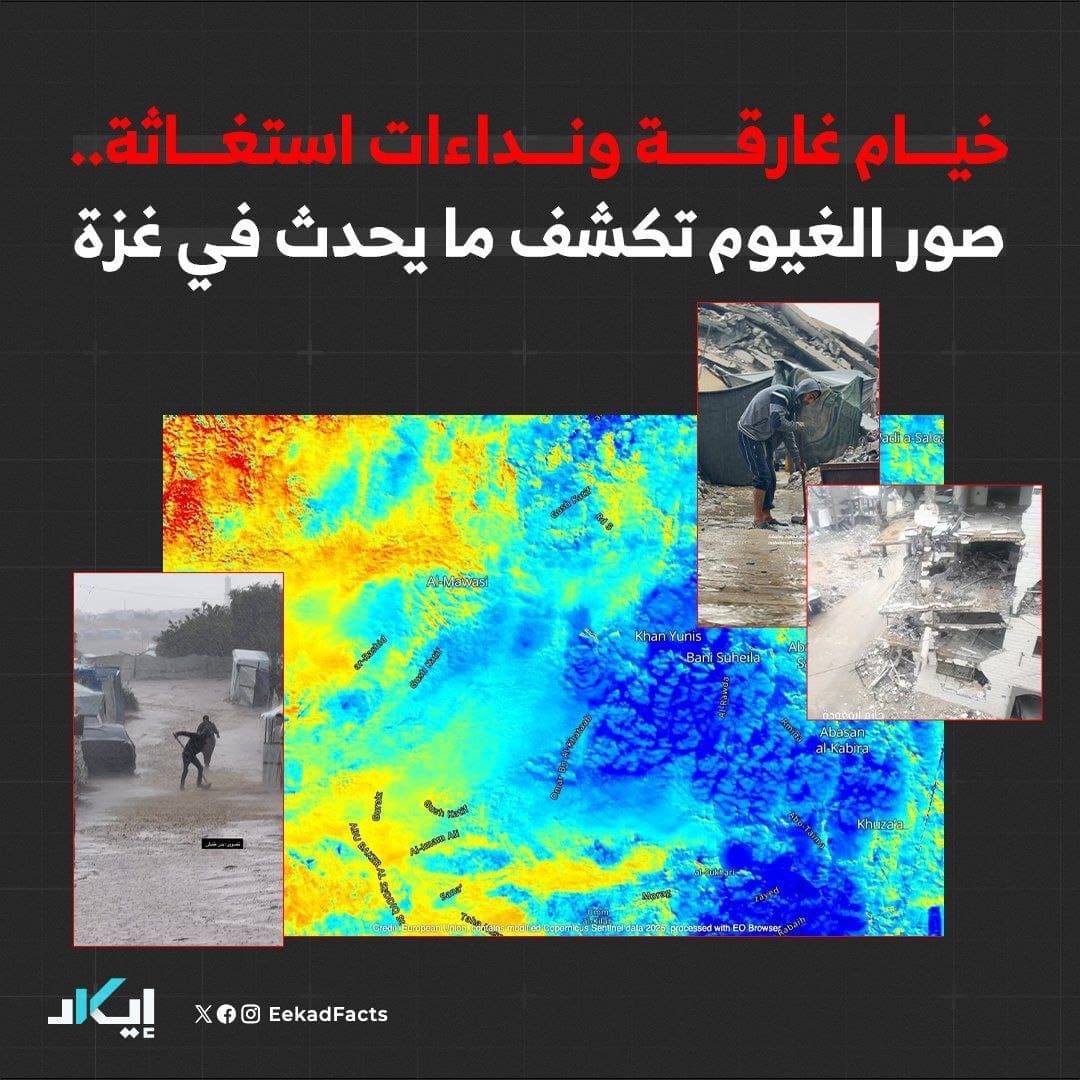
Gaza is experiencing one of the harshest and most violent winters for displaced people whose tents have been flooded in Al-Mawasi and other areas of the Strip.
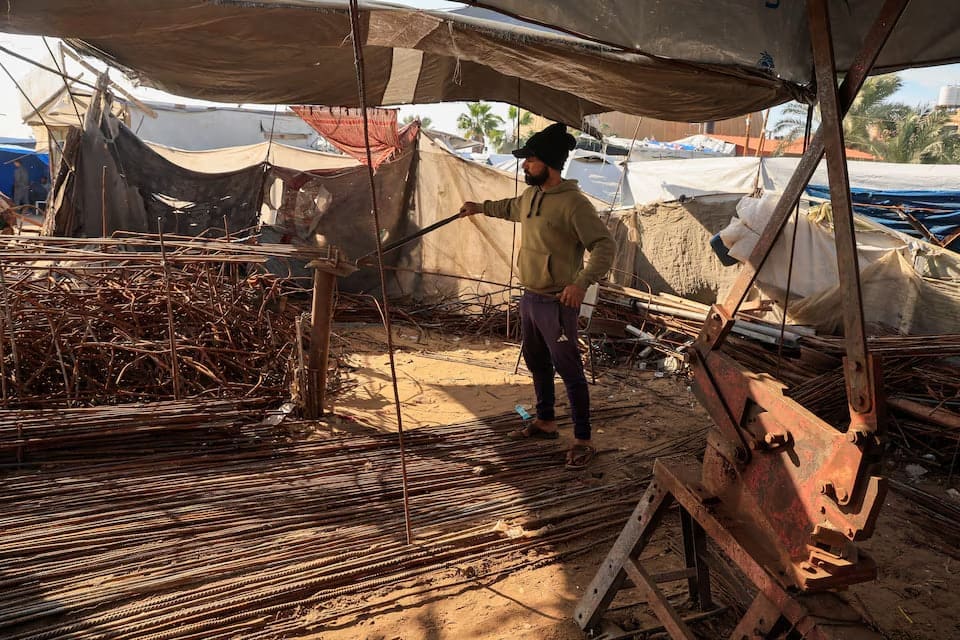
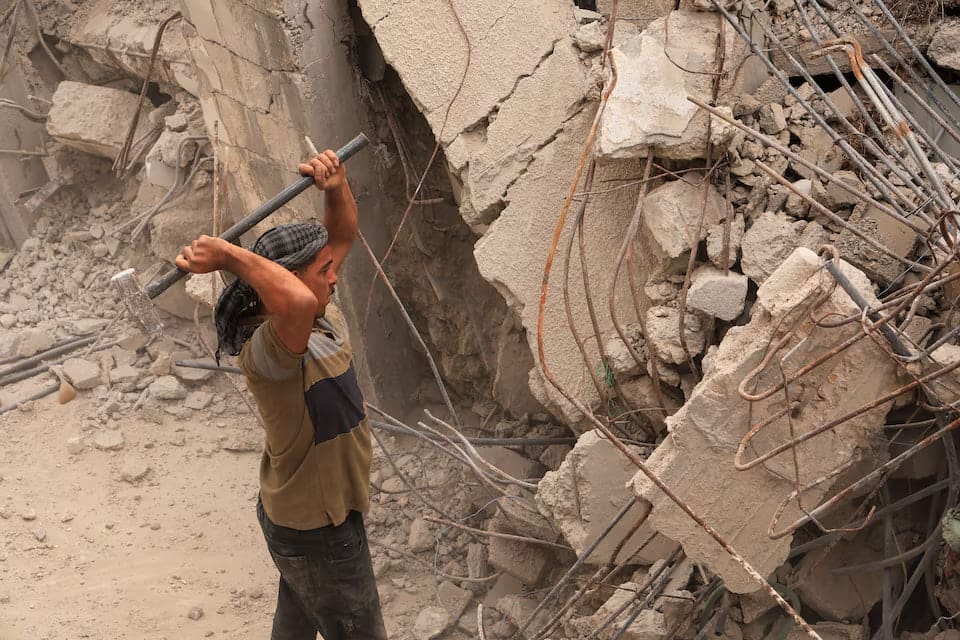
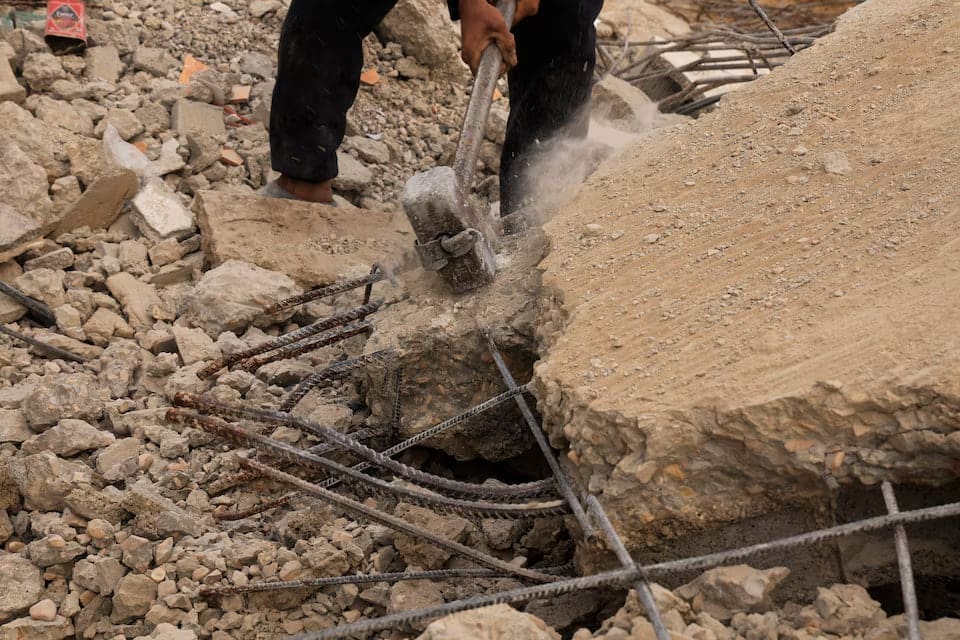
Residents of Gaza are trying to benefit from the rubble amid a shortage of materials, especially with the onset of winter. Palestinians who lost their homes in the war go out every day to houses destroyed by the Israeli occupation. There they pull iron rods from the walls to brace their fragile tents, or sell them to earn a small livelihood in a besieged enclave whose recovery from the effects of the war will take many years.
Some residents spend days knocking at the thick concrete blocks to extract them, and others toil at this exhausting work for a week or more. A ten-metre metal rod costs displaced families fifteen dollars, an amount that is burdensome for those who barely have any cash.
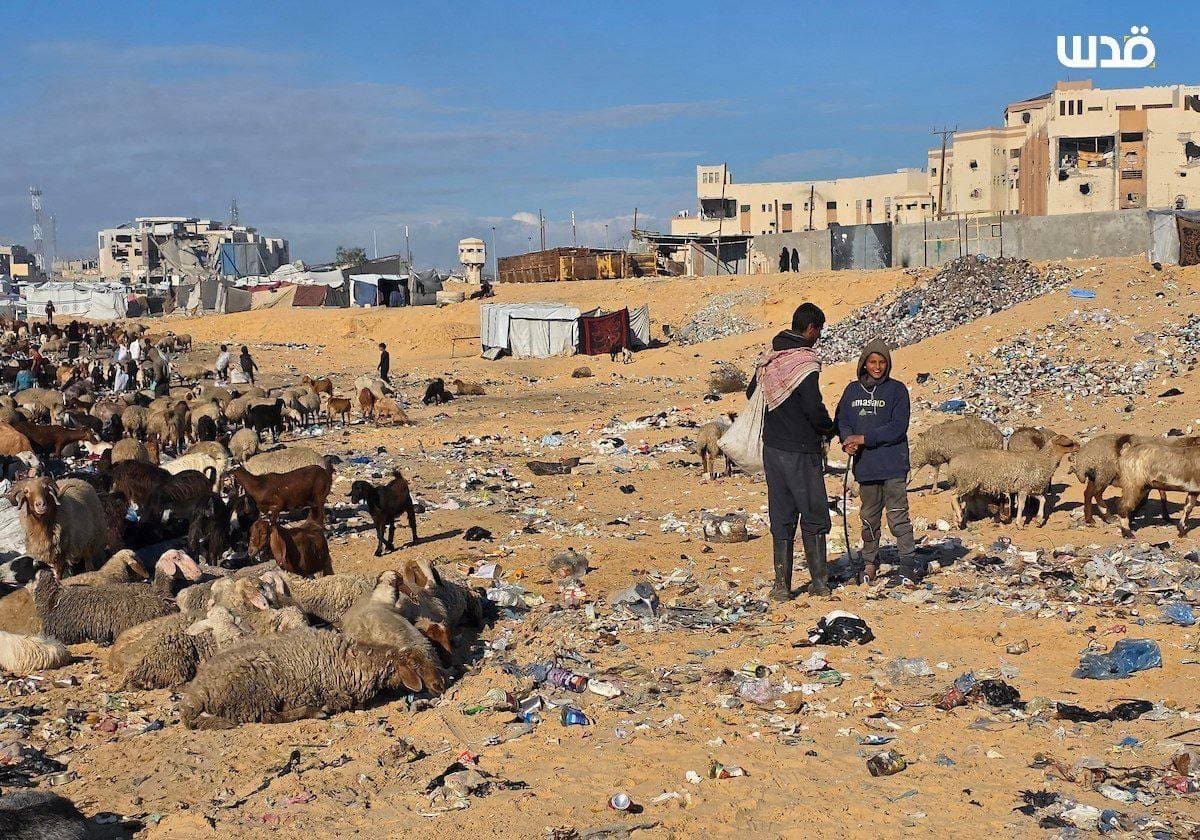
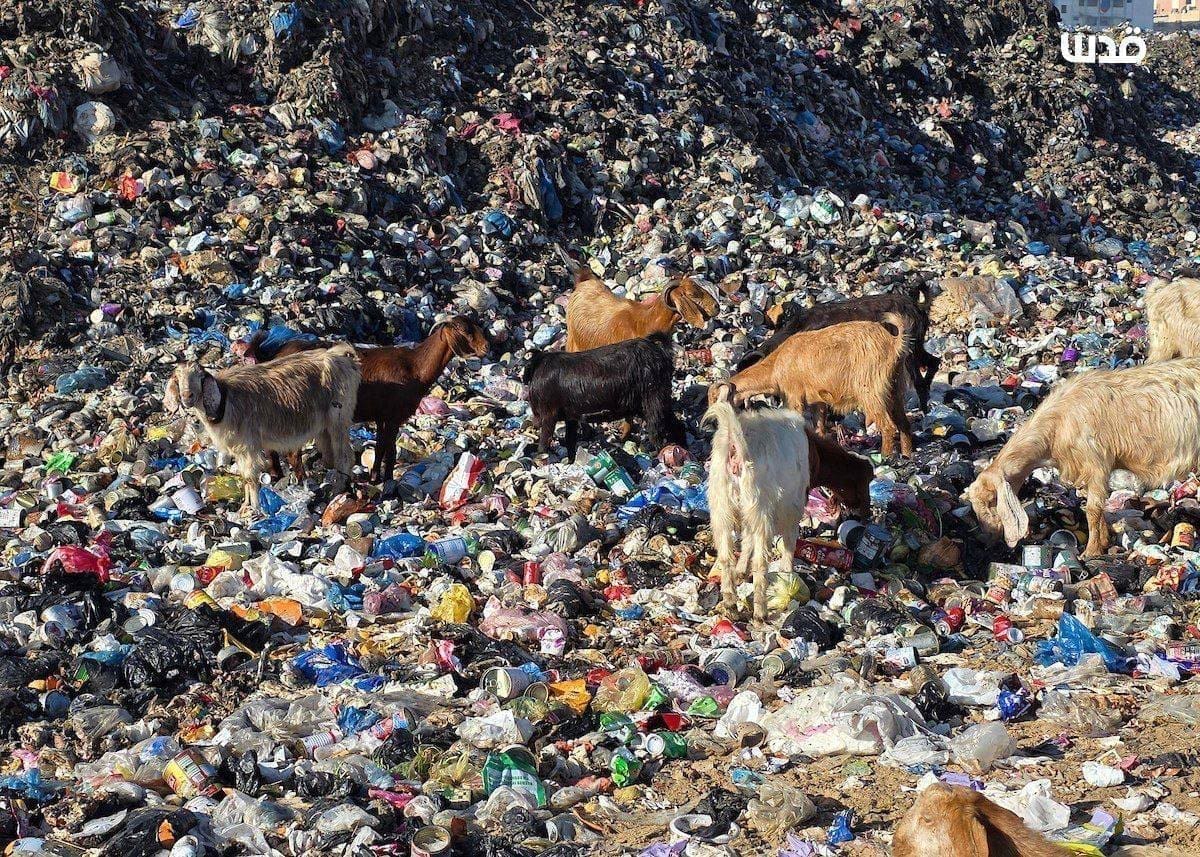
Disease spreads among livestock: Goat herders in the Gaza Strip are forced to feed their animals from garbage dumps, after pastures have been lost and fodder has become unavailable due to the war's siege and the destruction of large areas of farmland.
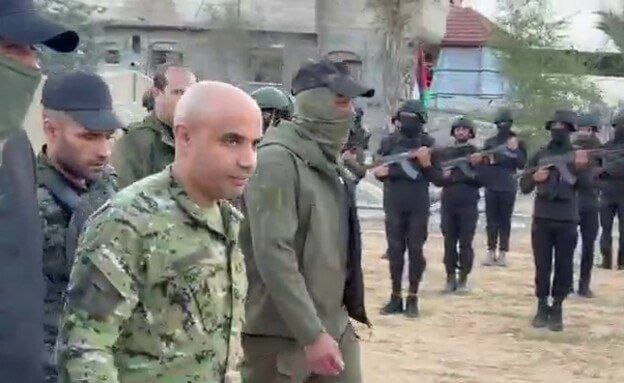
The collaborator Ghassan al-Duhaini, Khalifa Abu Shabab, said in an interview with Israeli Channel 12: The popular forces continue their work. It is true that the commander-in-chief was dear to us and his absence is painful, but this will not stop the war on terrorism. We continue with the same strength, indeed with greater determination. The goal is to demonstrate readiness and to reassure the state of the forces and the men there, who have high morale.
He said: "How would I fear Hamas when I am fighting them? I fight them, arrest their men, confiscate their equipment, fight them, and drive them out. I do what they deserve."
- Israeli Broadcasting Corporation: Militia members in Gaza have begun surrendering to Hamas: Dozens of gunmen belonging to clan militias have, over the past 48 hours, begun voluntarily surrendering themselves to Hamas security services in the Gaza Strip. Self-surrender operations have accelerated markedly since Friday, concentrated in the Rafah and Khan Younis areas, where the most prominent armed militias, which had been receiving open support from "Israel", are active.
The Egyptian Foreign Minister said:
- Egypt will not govern Gaza, and no state will govern the Gaza Strip.
- We cannot accept the partition of the Gaza Strip.
- The Rafah crossing will not be a gateway for displacement or for removing people from their land and homes.
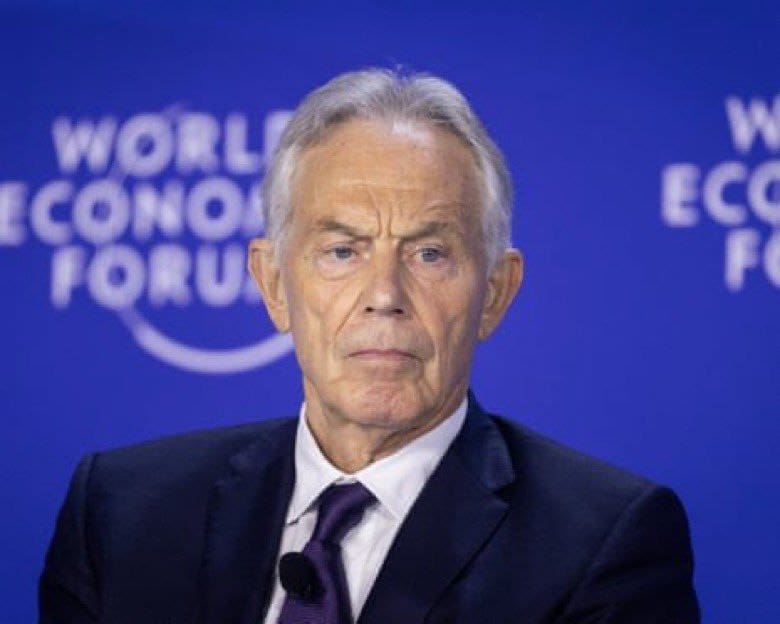
Financial Times: After objections from Arab and Islamic states, Tony Blair has been excluded from the Board of Peace that will oversee Gaza after the war, according to President Trump's plan.
Khaled Meshaal: Disarming the resistance is an attempt to strip the Palestinian of his spirit and his right to defend his land
- He stressed that demanding that Palestinians abandon the weapons of resistance means "stripping away the spirit", and that this weapon is part of the right to defend the land and the people, and Palestinians will not accept any infringement upon it.
- He said that relief for Gaza is not a goal in itself, but a necessary means to move to the second phase of the agreement to end the war, and that the movement is making efforts through the mediators to ensure this.
- We approach the philosophy of the stabilisation force from a single entry point: that it be present on the borders to ensure there are no clashes, and that it preserve peace rather than impose it, and that it be the Israeli side that is pressed, as it is the one that possesses the instruments of destruction. The entry of these forces into Gaza would mean they have become occupation forces replacing the Israeli occupation, and no Arab or Muslim state, or any self-respecting state, could accept this.
- We agreed that the administration of Gaza be handed to a technocratic government from within Gaza, after efforts to find a formula for a government that extends its role to Gaza and the West Bank stalled, especially given the circumstances of the war on Gaza and the Israeli veto. From here came the establishment of a technocratic body to govern Gaza, and the matter has matured. An in-depth dialogue was held with the factions and the Egyptian administration, and a list of 40 names was submitted, from which 8 competent figures were selected, representing the diversity of Gazan society, which possesses capability and creativity, and police forces will be attached to them to maintain security, and we will create the image of a genuine civil society in which Hamas and the resistance forces do not interfere.
- The Board of Peace that has been discussed, chaired by Trump, is fraught with risks, as it proposed that the board include a number of heads of state, and that there be an executive council under this board that would form the real government in Gaza. This is what we pause at, because it is unacceptable to us; it is a form of trusteeship, and it recalls the British Mandate of a hundred years ago.
West Bank
Israeli Prime Minister Benjamin Netanyahu said on Sunday that the political annexation of the West Bank is still under discussion, and that the current situation is expected to remain unchanged in the foreseeable future.
Occupation approves construction of hundreds of additional homes in three settlements in the occupied West Bank
The occupation has given the green light to the construction of 764 additional homes in three Jewish settlements in the occupied West Bank, and a monitoring organisation accused the Israeli government of moving toward the "de facto annexation" of Palestinian land.
Israeli Finance Minister Bezalel Smotrich said on Wednesday that the Supreme Planning Council, the body responsible for construction plans in the settlements, approved 478, 230 and 56 housing units in the settlements of Homesh, Beitar Illit and Givat Ze'ev, respectively.
Smotrich, who sets settlement policy and is himself a settler, described the council's decision as part of "a clear strategic step to strengthen settlement and ensure the continuity of life, security and growth". He added in his statement that Wednesday's decision raises the number of housing units approved in the West Bank since he took office to 51,370 units.
Violations by the Israeli occupation and settler militias continue in the West Bank:
- The UN Office for the Coordination of Humanitarian Affairs (OCHA), in its weekly briefing issued on Friday, 5 December, said that Israeli military operations in the northern West Bank — particularly in Jenin and Tubas — affected more than 95,000 Palestinians during the past week. OCHA also pointed to a sharp rise in settler attacks, documenting 1,680 attacks targeting more than 270 Palestinian communities since the beginning of the year, an average of five attacks per day.
- More than 100 Palestinians arrested in the West Bank: The Palestinian Prisoners' Media Office reported that more than 100 Palestinians were arrested on Wednesday during a wave of Israeli military raids across the occupied West Bank. Nablus was among the most affected areas, where about 30 Palestinians were arrested and some were interrogated before others were released. Most of those detained had previously been imprisoned.
- Death of a Palestinian young man in Israeli custody: The Palestinian Authority confirmed the death of Abdul Rahman al-Sabatin, aged 21, whom Israeli soldiers had detained in late June, while in Israeli custody. It was noted that the detainee showed no signs of health or physical problems when his family visited him during a court session on 25 November.
- Two Palestinians were killed by occupation fire — as we understand it — and their bodies were withheld, and one soldier was injured in a ramming attack in Hebron in the West Bank on Saturday evening. Among those killed was the young man Ahmad Khalil al-Rajabi, whom the Israeli army admitted was killed by mistake and was not inside the vehicle; its driver was also killed, on the allegation of carrying out a ramming attack.
- Eyewitnesses said that Israeli soldiers executed the sanitation worker Ziad Naim Abu Dawoud while he was working in the Bab al-Zawiya area of Hebron.
- Ben-Gvir threatens to demolish al-Qassam's grave… occupation forces storm the cemetery in the first practical step: Israeli forces stormed the al-Qassam cemetery in the town of Sheikh near Haifa and removed a tent placed near the shrine of the fighter Izz al-Din al-Qassam, hours after the extremist Itamar Ben-Gvir threatened to take "the first step" toward demolishing the grave.
The prisoners file
Prisoner allowances: The Authority cuts the salaries of the wounded: More than 12,000 wounded Palestinians classified as "wounded of the intifada" are living in poverty and deprivation after their salaries were cut by the Palestinian Authority, following — according to the wounded — the Authority's submission to European and American dictates that conditioned the halting of allowances for prisoners, martyrs and the wounded. This came after their files were transferred from the Institution for the Care of Martyrs' and Wounded Families, affiliated with the Palestine Liberation Organization, to the Palestinian National Institution for Economic Empowerment.
The chairman of the board of directors of the "Tamkeen" institution is Ahmad Majdalani, Secretary-General of the Popular Struggle Front, by a decision issued by President Mahmoud Abbas, who in a separate decision on 10 February of this year ordered the transfer of authority to disburse the salaries of martyrs' and prisoners' families to this institution under the heading "reform of the financial system", within the "Reform of the Authority" plan that external parties — most notably the European Union states and the United States — pressed for, with full Israeli support | Quds News Agency.
The Prisoners' Media Office published the following on administrative detention in occupation prisons:
- 3,718 administrative detainees as of 28/10/2025.
- 2024 was the peak year: 1,522 administrative detainees within a single year.
Qassam al-Barghouti, son of the prisoner leader Marwan al-Barghouti, published:
"I woke up this morning to a phone call from a freed prisoner, who told me that your father was physically beaten, his teeth and ribs were broken, part of his ear was cut off, and his fingers were broken in stages for amusement… What am I to do? Who do I talk to? Where do we turn?? We live with this nightmare every day… Lord, have mercy, O God, my father is now 66 years old, Lord, where will he find the strength?"
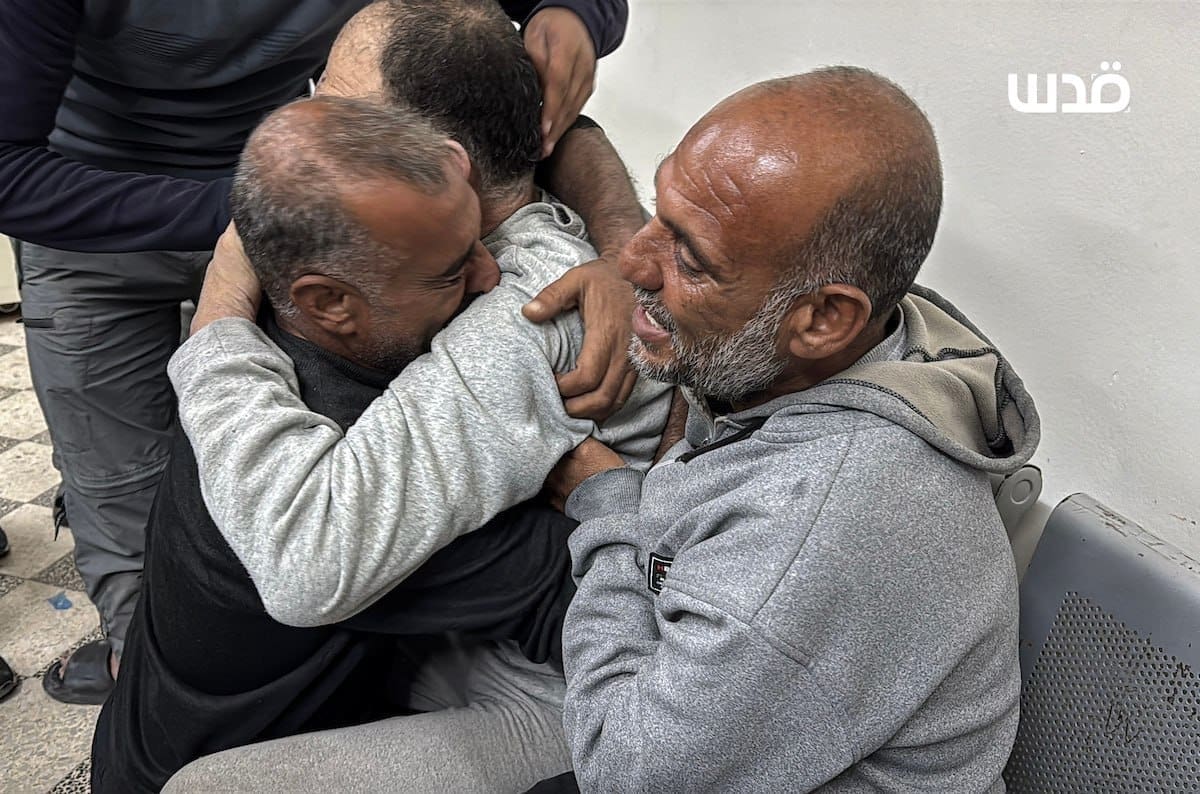
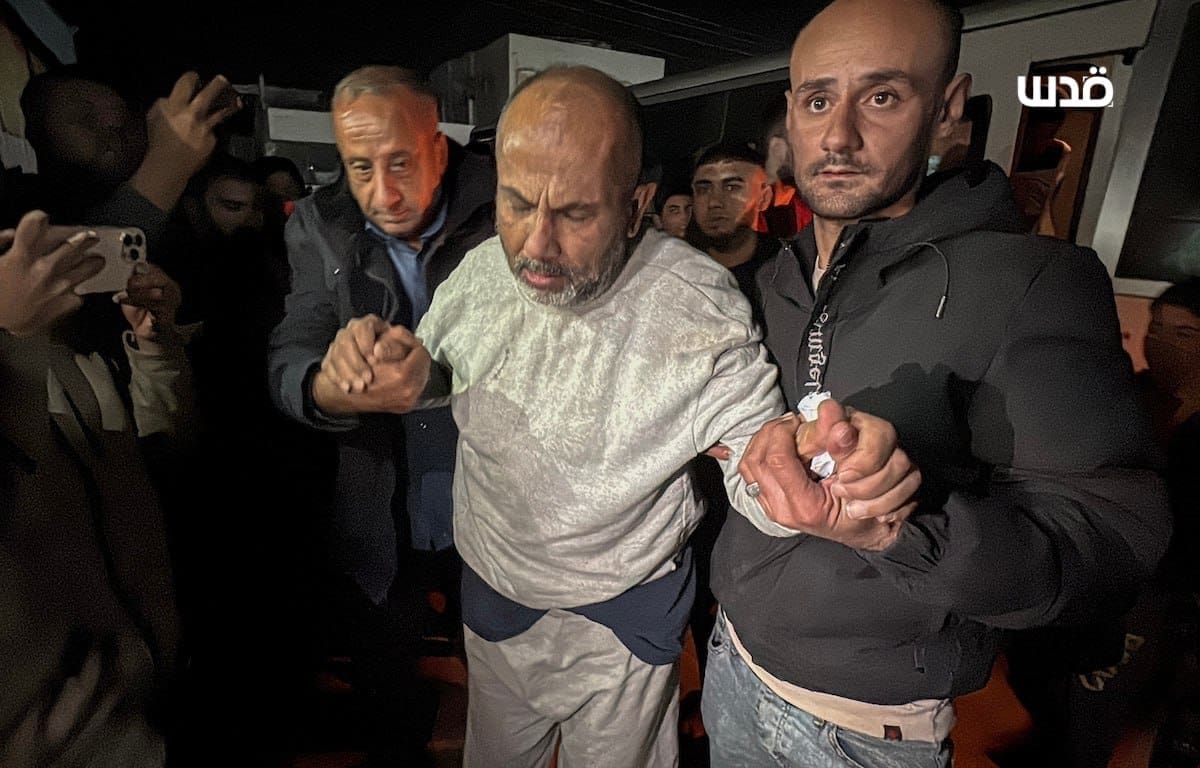
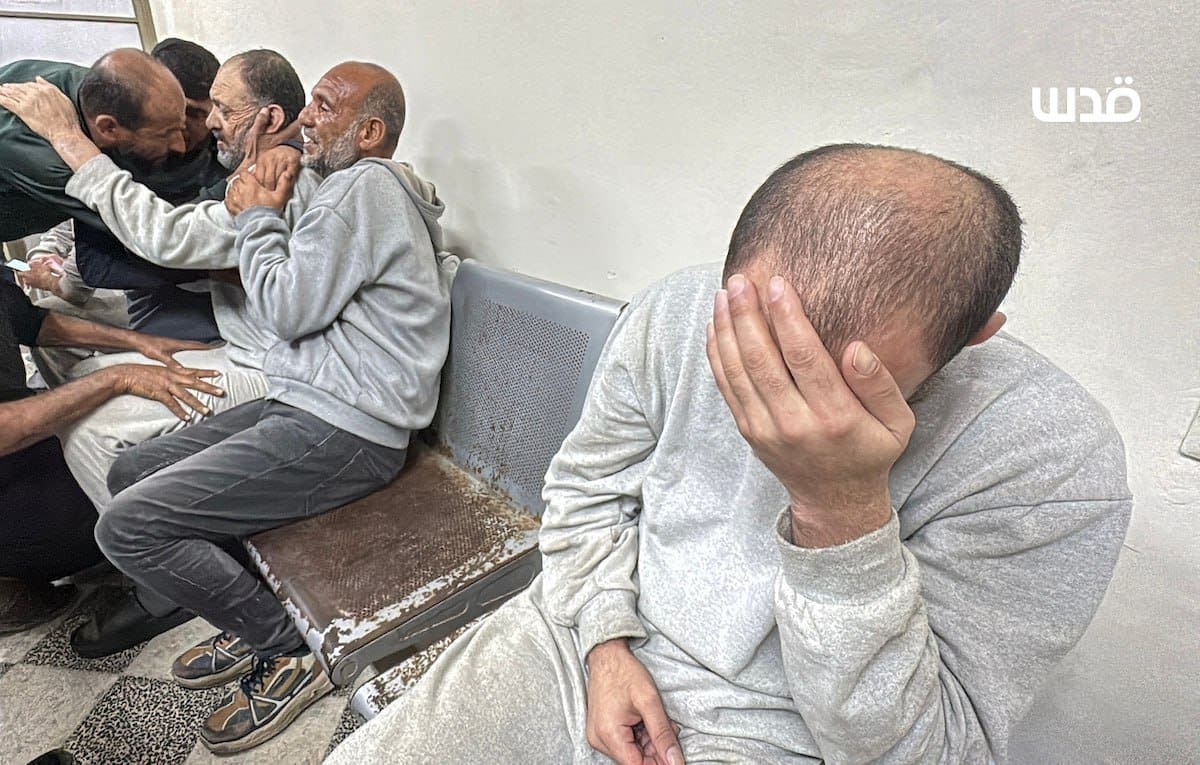
In difficult health conditions: five prisoners from the Gaza Strip arrived at the "Martyrs of al-Aqsa" hospital in Deir al-Balah after their release by the occupation.
Syria
On Monday, Syrians celebrated the first anniversary of the overthrow of Bashar al-Assad and his harsh rule with joyful celebrations in the major cities. Saudi Arabia presented Syria with a piece of the Kaaba's covering as a gift on the occasion of the liberation.
"Gaza is a slogan… shelling and destruction": chants repeated by the Syrian army during a military parade in the streets of Damascus, coinciding with the commemoration of the first anniversary of the fall of the regime.
The moment a convoy of Syria's General Security passed through an Israeli occupation checkpoint in southern Syria.
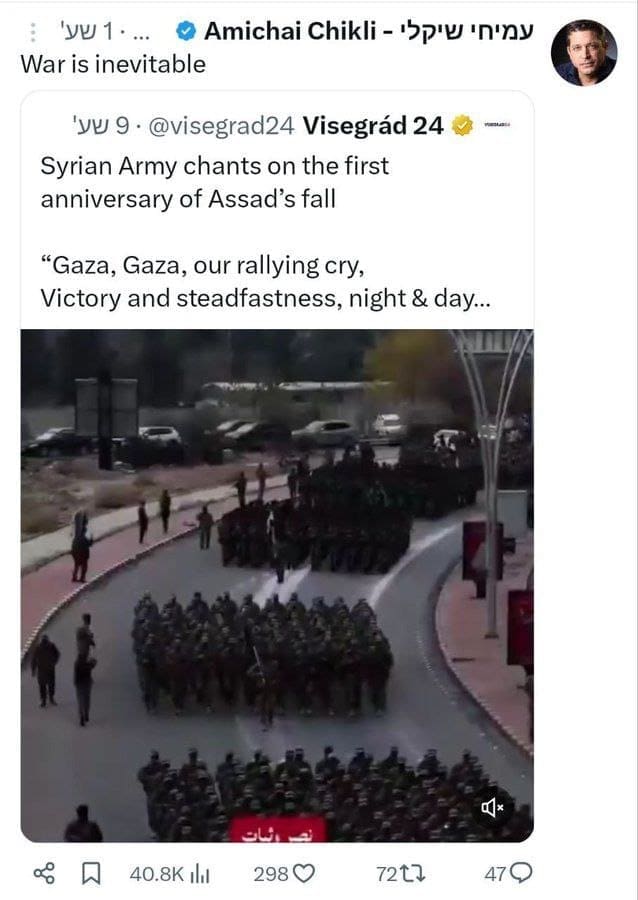
Israeli Diaspora Minister publishes a display of the Syrian army yesterday, commenting: War is inevitable.
The US Congress voted in favour of a bill ending the harsh sanctions imposed on Syria under the Caesar Act during the rule of the former dictator Bashar al-Assad. The bill to repeal the sanctions was passed on Wednesday as part of a larger defence spending package known as the National Defense Authorization Act (NDAA).
The bill now goes to the Senate, and it is expected to be voted on before the end of the year. However, repealing the Caesar Act will not fully lift US pressure on Syria, as the White House will require the new Syrian government to submit periodic reports on "the government's fight against extremist groups" as well as on ensuring the rights of ethnic and religious minorities in the country.
Israeli occupation violations in Quneitra: Three Syrians were injured on Tuesday by fire from Israeli forces that advanced into the countryside of Quneitra governorate in south-western Syria. Syria's al-Ikhbariya channel reported "three people injured by Israeli occupation forces' fire in the town of Khan Arnabeh in the countryside of Quneitra". It explained that "occupation forces used several military vehicles and troop carriers and fired smoke canisters".
- In preparation for his trial, the competent investigating judge issued a decision referring the defendant "Wassim Badi' al-Assad" to the referral judge, within the framework of transitional justice.
Retired Israeli intelligence officer Hanan Geven: "Israel is preparing for the worst-case scenario, which appears likely to materialise: that Syria disintegrates and chaos prevails. The minorities would then be Israel's allies. As for the possibility of a centralised regime, this is the least likely scenario…"
After occupation forces stormed and shelled the town of Beit Jinn in the countryside of Damascus in southern Syria, children of Beit Jinn: "The Israeli will only enter over our blood, even if we become martyrs."
Ahmed al-Sharaa said that Israel is working to export crises to other countries and escape the massacres it is committing in the Gaza Strip, and to justify everything by security concerns, while Syria since liberation has sent positive messages to establish the pillars of regional stability.
He added: Any agreement must guarantee Syria's interests, as it is the one being subjected to Israeli attacks. Is it not more appropriate to demand a buffer zone and withdrawal? Israel has responded to Syria with extreme violence, carrying out more than a thousand raids and 400 incursions into its territory. The latest of these assaults was the massacre it committed in the town of Beit Jinn in the Damascus countryside, which claimed dozens of lives. We are working with influential countries around the world to pressure Israel to withdraw from the territories it occupied after 8 December 2024, and all countries support this demand of ours.
He said that "Syria insists on Israel's commitment to the 1974 disengagement agreement, and the demand for a demilitarised zone raises many questions: who will protect this zone if there is no presence of the Syrian army? There are negotiations with Israel, and the United States is engaged with us in these negotiations, and all countries support our demand that it withdraw to its positions prior to 8 December."
Regarding the word "terrorism," he said: If we applied this description of terrorism to several countries around the world, we would find it in the number of victims in Gaza, who are some 60,000 innocent people. Under the former regime, more than one million Syrians were killed, more than 250,000 people were forcibly disappeared, and more than 13 million people were displaced. There have been wars in the region, such as in Iraq and Afghanistan, in which most of the victims were innocent, and it is the killers who label others as terrorists.
Regarding the elections, he said: After 4 years we will go to presidential elections in accordance with the constitutional declaration. He added that "the constitution is what will be the governing part of the country and the basic reference for the mechanism and system of government."
In a statement that sparked a wave of criticism on social media, he said: "We cannot know that the revolution was a Sunni revolution alone."
US Special Envoy for Syria Tom Barrack said: "Syria knows that its future depends on a security agreement and a border fence with Israel, and it is not fundamentally interested in attacking Israel, but is instead preoccupied with the threats of the organisation, remnants of foreign fighters and Iranian proxies."
Violations by the SDF militia
- Journalist Zain al-Abidine: In a new crime by the organisation (SDF, PKK) in the northeastern countryside of Aleppo, the young man "Iman Hamidi al-Bakouri" was killed, and the young man "Ali Ibrahim Othman" (19 years old) was wounded in his hand and leg, after members of the organisation opened fire on them while they were fishing near the "Euphrates River" on the shore of Jarabulus.
- Local sources in the Syrian city of Raqqa reported that the Syrian Democratic Forces (SDF) militia arrested citizen Raji Abdul Karim Khalifa yesterday, Monday. He is from the city of Al-Bukamal and currently resides in Raqqa near the Romanian Bridge.
- According to the sources, Khalifa's arrest came after he filmed a video of an SDF militia patrol carrying out a previous arrest of another young man, named Ahmed al-Bosh, at the clock roundabout in the city centre. The young man Ahmed al-Bosh had been arrested by SDF members after raising a banner on which was written: "We have the right to celebrate, O SDF," in reference to his rejection of the restrictions the militia imposes on public freedoms and expression.
- Both "Khalifa" and "al-Bosh" have so far been taken to an unknown location.
- Leaked videos circulated of the ousted Bashar al-Assad with Luna al-Shibl, in which he mocked the eagerness of Syrians to restore mosques and compared them to the Pharaohs who restored the pyramids. His adviser Luna al-Shibl acknowledged the looting of their forces in Jobar.
In another leaked video, Bashar al-Assad said that Putin "is all cosmetic surgery." In response, the Kremlin spokesman said: The authenticity of the video in which Bashar al-Assad and Luna al-Shibl are heard talking about President Putin undergoing cosmetic surgery is being verified. He confirmed that this procedure is being carried out at the direct request of President Putin, because the leaked conversation constitutes a direct insult to the head of a state of the stature of Vladimir Putin.
Lebanon
Supporters of Hezbollah and the Amal Movement in the city of Sidon attacked Syrians celebrating the anniversary of the fall of Bashar al-Assad.
Sudan
Since the outbreak of the conflict with the Sudanese army on 15 April 1444 AH (2023 CE), these paramilitary forces have been arresting large numbers of regular soldiers, politicians, activists and businessmen. Following recent military setbacks in the states of Khartoum, Gezira and Sennar, a large number of detainees have reportedly been transferred to detention facilities in Darfur.
A statement from the Sudanese Doctors Network reported that at least four detainees lose their lives every week due to medical negligence and lack of access to hospitals.
- Deterioration of the situation in West Kordofan: The security situation in Kordofan has deteriorated since 1 December, when Rapid Support Forces, after a week of fierce fighting, seized the base of the 22nd Division of the Sudanese Armed Forces in Babanusa, West Kordofan. In South Kordofan, civilians remain trapped in cities such as Kadugli and Dilling. While women, children and the elderly try to flee, men and young people are often left behind because of the high risks they face on escape routes, such as being arrested by armed groups who believe they belong to the parties to the conflict.
- The South Kordofan government reported that "the death toll from the shelling by the SPLM-North led by Abdelaziz al-Hilu, and its ally the Rapid Support Forces, on last Thursday has risen to 114 martyrs — as we count them — including 63 children, and 71 wounded," according to the Sudan News Agency. Idris described the shelling of a kindergarten and hospital in Kalogi by the "Rapid Support Forces" as "savage barbaric action."
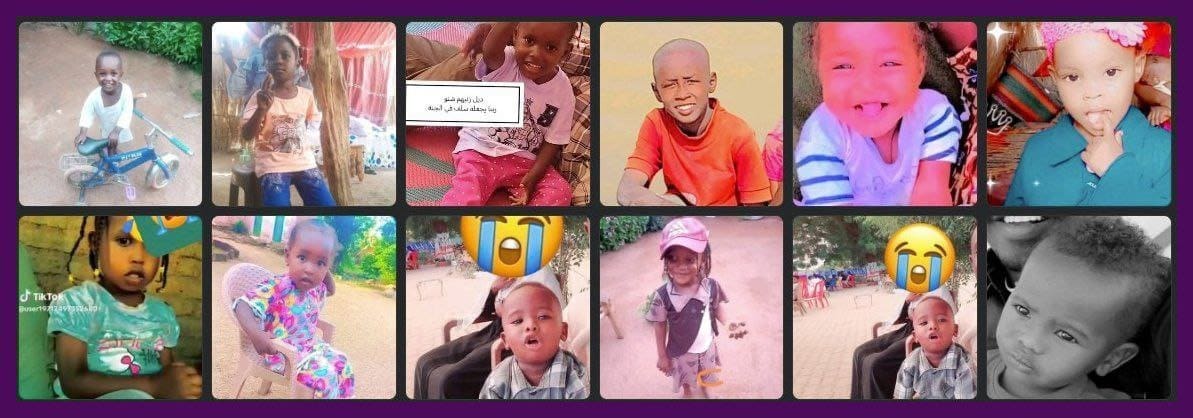
- Suffering of civilians trapped in El Fasher: Interviews with families recently displaced to Al-Dabba, in Northern State, confirmed that some civilians remain trapped in El Fasher, in North Darfur. Many cannot leave due to high transport costs, ransom demands and the absence of safe corridors. The situation in El Fasher is tragic, with confirmed famine and families unable to buy the little food still available. According to the Displacement Tracking Matrix of the International Organization for Migration (DTM), more than 106,000 people were displaced from the city of El Fasher and surrounding villages to other states of Darfur, Northern State, West Kordofan and White Nile by the end of November.
- Overcrowding of camps: Joint inter-agency assessments in Tendelti, White Nile State, revealed severe overcrowding in two pre-existing displacement camps, which were hosting 2,975 families and have now received an additional 368 families from Darfur and Kordofan. Up to six families share a single shelter, and critical shortages of food, shelter and non-food items such as sleeping mats and cooking utensils, as well as health services, continue.
- Without food assistance, women, who make up some 70% of the population, have been forced to engage in dangerous and exploitative work to meet their families' needs, leaving children alone and increasing other protection risks such as family breakdown. According to the United Nations Office for the Coordination of Humanitarian Affairs (OCHA), more than 13,000 people fled the conflict in North Kordofan and North Darfur to White Nile State, taking refuge mainly in Duwaym, Kosti, Rabak and Tendelti.
- Rape: The Horn of Africa Women's Network "SIHA" said on Thursday that it had documented 1,294 confirmed cases of sexual violence in 14 Sudanese states between 2023 and 2025. It noted that the Rapid Support Forces are responsible for the vast majority of violations, to which 87% of the cases in which perpetrators were identified were attributed.
The statement explained that sexual violence in this war is "systematic" and not merely "collateral damage," as it follows the movements of the conflict and reflects shifts in regional control. It stated that 77% of cases for which detailed information was available were rape, and the network documented 225 cases involving children, most of them girls aged between 4 and 17, who were subjected to conflict-related sexual violence, representing 18% of the total documented cases.
- Cholera rising in El Fasher: The Popular Resistance in North Darfur State said that cholera cases had risen rapidly in the city of El Fasher, noting that the disease had spread within detention sites run by the militia, amid acute shortages of medicine and food. The Resistance confirmed the recording of hundreds of deaths among detainees from cholera due to poor health conditions, pointing out that detainees are held in narrow rooms and containers unfit for habitation.
- Sudan recorded the highest global unemployment rate, at around 62%, according to the International Monetary Fund. The International Organization for Migration reported that 86% of households face difficulty buying their basic needs due to low income and high inflation.
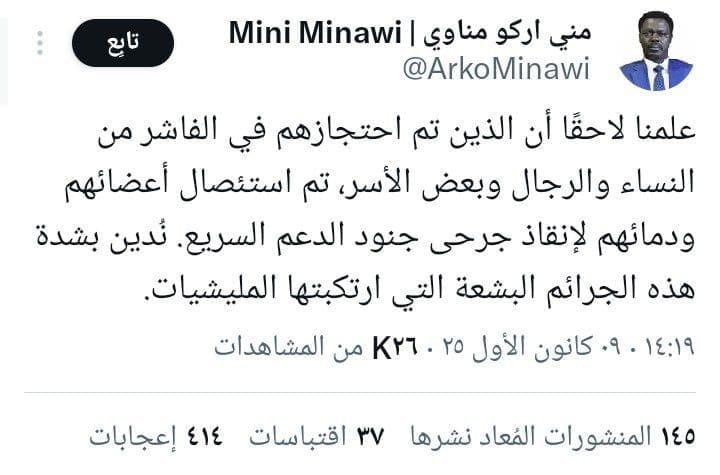
The governor of Darfur region wrote on the X platform: We later learned that the men, women and some families detained in El Fasher had their organs and blood extracted to save wounded Rapid Support Forces soldiers.
A report by Reporters Without Borders revealed that four Sudanese journalists were killed while carrying out their duties this year, two of them killed after being abducted by the Rapid Support Forces militia.
South Sudan's army deploys to secure the Heglig oil field following the agreement reached with Sudan and the Rapid Support Forces militias
South Sudan's army began deploying on Wednesday to secure the Heglig oil field, following a tripartite agreement concluded between Juba and the two warring parties in Sudan to protect vital energy infrastructure.
The deployment comes after Rapid Support Forces seized the strategic town on 8 December, forcing the Sudanese army to abandon its defensive lines and retreat across the border into South Sudan, where its forces were disarmed.
With the fall of Heglig and Babanusa, and the whole of West Kordofan state in the hands of the "Rapid Support Forces," the map of the war in Sudan is shifting to redraw the military and geopolitical situation on the ground, particularly as what happened in Heglig has cut the oil artery and led to the collapse of the army's defence lines there. This prompts expectations that what happened amounts to a re-arrangement of spheres of influence, opening the way for a new positioning of forces that favours the Rapid Support Forces, unless the government in Port Sudan reconsiders its military and political calculations and succeeds in turning the situation into a temporary development.
The Heglig field contains 75 oil wells and a central processing facility for 130,000 barrels of South Sudanese oil, which is produced in fields in Unity State and exported through pipelines 1,600 kilometres long that cross Sudanese territory to the port of Bashayer on the Red Sea.
Sudan rules out possibility of indirect talks with the Rapid Support Forces in Washington
Sudanese diplomatic sources ruled out on Wednesday the possibility of indirect negotiations between the army-led government and the paramilitary Rapid Support Forces in Washington. Prospects for negotiation remain complex, while international diplomatic efforts struggle to make progress amid escalating combat on the ground.
Al-Burhan has repeatedly rejected the "Quad" proposal for a truce, stating that the government will accept only the full withdrawal of Rapid Support Forces from occupied areas and the gathering of their forces in barracks as a precondition for any talks.
- Sudanese official sources told Al Jazeera Net that Sudan is preparing for the opening of a new military front in its east, after neighbouring Ethiopia allowed the opening of a training camp for Rapid Support Forces and foreign mercenaries affiliated with them to attack the Blue Nile state bordering Ethiopia. The government sources, who asked not to be named, said the Ethiopian authorities have military coordination with the Rapid Support Forces through regional forces supporting them, and that supply lines, training camps and airstrips have been agreed.
- According to the same sources, the movement of supplies and the arrival of combat vehicles, artillery systems and jamming devices has begun via the city of Asosa, capital of Benishangul-Gumuz region in north-western Ethiopia bordering Sudan's Blue Nile state, where the Renaissance Dam is located.
Egypt
Egypt intensifies deportations of Sudanese refugees: An investigation conducted last year revealed large-scale illegal deportations of thousands of Sudanese, carried out secretly in violation of international refugee conventions that Egypt has long ratified. The investigation also revealed the locations of the appalling facilities that security services used to detain people.
Subsequent reports, based on material recently obtained from local refugee organisations, leaked Egyptian government documents, and testimonies from dozens of refugees and lawyers gathered over more than a year, reveal a further escalation in the deportation campaign.
The number of refugees being detained and deported is increasing significantly, as security services conduct inspections and arrests not only in the border areas through which people enter the country, but also deep inside major cities. The authorities have also targeted refugee-led initiatives, including the closure of dozens of schools run by Sudanese.
Yemen
Latest developments in the Hadramawt file
- The Yemeni House of Representatives expressed its "deep regret" over recent developments in southern Yemen, where the Southern Transitional Council took control of the governorates of Hadramout and al-Mahra last week. The House stated that these "unilateral" measures came "outside the framework of national consensus and the terms of the reference governing the political process," without explicitly naming the UAE-backed Southern Transitional Council, according to the Al-Musaddir Online newspaper.
The Southern Transitional Council and the internationally recognised Yemeni government both take part in the Presidential Leadership Council, which was established in 2022 as part of peace agreements between several parties. The House warned that the military seizure of the two governorates could lead to further violence and benefit the "Houthi enemy," whose rival administration controls the Yemeni capital, Sanaa.
- A military source had earlier told Al Jazeera Net that Southern Transitional Council forces arrested Colonel al-Dhabawi, commander of the Second Battalion in the First Military Region, during their storming of the region's command headquarters last Wednesday, and arrested three of his companions with him (Assistant Sadiq al-Bashari, Assistant Mohammed Qutaybar and Assistant Rajih al-Sharafi).
The source added that the separatist forces took al-Dhabawi and his three companions to a detention facility at Seiyun airport and held them for two days before executing them extrajudicially and outside the law of prisoners of war, and then delivered their four bodies, riddled with bullets, to the hospital.
- Nearly 100 people killed in clashes in Seiyun: Preliminary estimates indicate that the total number of dead from all parties concerned is close to 100, roughly distributed as follows: Southern Transitional Council forces – 34, Hadramout Alliance – 17, First Military Region – 24, in addition to one civilian. Although the clashes were geographically limited and did not initially escalate on a wide scale, their consequences were severe in the affected areas, according to the US Center for Justice.
- Activists on social media circulated new photos and videos of what they said documented looting that took place in Wadi Hadramout following the recent events in which the cities and towns of the wadi were seized by Southern Transitional Council forces.
- Hadramout Governor Salem al-Khanbashi acknowledged in a television interview that looting had indeed occurred in the governorate in recent days, and called on what he termed forces arriving from outside the governorate to leave Wadi Hadramout, stressing that "Hadramout has forces capable of imposing security and protecting citizens."
- On Saturday, the Hadrami Elite Forces affiliated with the Southern Transitional Council and backed by the UAE acknowledged that their members were involved in serious violations inside several camps of the First Military Region in the city of Seiyun after entering it. In a statement, these forces confirmed that some soldiers and officers exploited the confused security situation and sold quantities of weapons and ammunition to citizens.
- Tariq Saleh, a member of the Presidential Leadership Council and commander of what is called the National Resistance in Mokha, clearly declared his alignment with and support for the Southern Transitional Council in its military control of the eastern governorates, during a phone call he made with the Southern Transitional Council's president, Aidarous al-Zubaidi. According to what the Southern Transitional Council's official website published, the two sides presented a joint vision holding that the stability of the South is the essential pivot for any move to liberate what remains of the North, affirming that the battle and the risks are one.
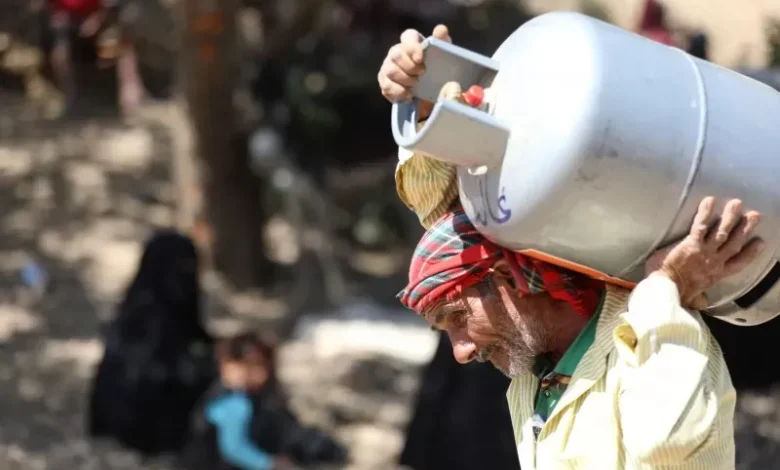
The director of the Yemen Gas Company's branch in Taiz Governorate reassured citizens regarding the domestic gas crisis the governorate witnessed in recent days, confirming that the blockage that caused supply to halt in Marib has been fully resolved, and that quantities for Taiz have begun arriving in succession. He explained that the crowding in front of filling stations and the panic among citizens resulted from the complete cutoff of gas to all governorates, not Taiz alone, adding: "The blockage in Marib lasted for ten days, and even Marib Governorate itself was affected by the halt in supplies."
- The internationally recognised Yemeni government announced the handover of 26 bodies of Houthi militia fighters who were killed on the fronts in the governorates of Marib and al-Jawf, after they were identified by the other party. The government confirmed that the handover was carried out as a unilateral initiative for humanitarian reasons, under the supervision of a local mediator and with the knowledge of the International Committee of the Red Cross, with the aim of demonstrating the principle of good faith in addressing the file of detainees, abductees and the forcibly disappeared.
- This initiative comes within the framework of preparations for a new round of negotiations expected to be held in the coming days, under the sponsorship of international partners, on the basis of an "all for all" release, to enhance prospects for understanding and an end to the file of abductions and the disappeared, and to strengthen the environment conducive to dialogue and peace, according to Yemen Monitor.
Houthi militia violations
The Houthi group imposed a suffocating siege on the village of Al Arad in the Al-Tafa district of al-Bayda Governorate, central Yemen, using armoured vehicles and military trucks in the siege, as part of a new escalation that reveals the group's approach of protecting killers and pursuing victims. Tribal sources told "Al-Mijhar" that the Houthi siege of the village dates back to a double murder committed years ago by the group's leader Ali al-Rassas al-Bahji against two sons of Al Arad.
The sources added that the victims' families attempted two days ago to take revenge on the killer on one of the roads, whereupon the Houthi group launched a broad military campaign that besieged the village, in an attempt to arrest the victims' families instead of apprehending the perpetrator. This escalation provoked widespread tribal outrage in the Al-Tafa district, amid accusations against Houthi authorities of undermining justice, subverting tribal customs, and using armed force as a tool to protect killers affiliated with them, in a scene embodying what residents describe as "the group's justice," which reaches only the victims. | Al-Mijhar News
Iraq
Demographic change continues… Displacement of residents of the al-Bakriya neighbourhood west of Baghdad and bulldozing of their land continued yesterday, 7 December, after the land was allocated to officers of the National Security Service, the Counter-Terrorism Service and the army.
Iraqi Kurdistan
Floods inundate homes in Chamchamal and close vital road: Two people were killed and five others injured on Tuesday by floods and torrents that hit Sulaymaniyah Governorate in the Kurdistan Region of northern Iraq. Heavy rains caused torrential flooding that swept through the city of Chamchamal, submerging homes and vehicles, and forcing authorities to fully close the vital road linking the district to the city of Sulaymaniyah.
The torrents, which began in the early hours of Tuesday 9 December 2025, turned the streets into rivers, and emergency teams mobilised in desperate efforts to rescue residents trapped by the rising waters.
Conditions in Chamchamal deteriorated rapidly as rainfall rates rose. According to official data issued by the General Directorate of Meteorology in the Kurdistan Region, the district received 81.2 mm of rain over the past 24 hours, a rate that exceeded the capacity of local drainage networks to absorb it. | News agencies
Aghjalar subdistrict: The floods caused significant damage; two bridges collapsed and a road was also swept away.
At least one person was killed and another injured in Kirkuk on Wednesday in two separate electrocution incidents resulting from sudden flooding that swept through the disputed city. One of the victims was an elderly woman who died after floodwater inundated her home, while the injured person is a municipal worker.
Morocco
- At least 22 people killed as two buildings collapse in the Moroccan city of Fez: At least 22 people were killed and sixteen others injured last night when two adjacent buildings collapsed in the city of Fez, one of Morocco's most historic cities, according to the public prosecutor's office on Wednesday. One of the buildings was unoccupied, while the other was hosting an aqiqah celebration.
The official channel indicated that cracks had appeared in both buildings before the collapse.
One survivor, who lost his wife and three of his children, told Medi 1 channel that the rescue team had recovered only one body, while they are still waiting to find the others.
Afghanistan
The spokesman for the Islamic Emirate affirmed that Afghanistan will not reopen its border crossings with Pakistan unless Pakistan provides reliable guarantees regarding their reopening. This comes after Pakistan had earlier requested the reopening of the crossings to facilitate the delivery of humanitarian aid.
However, Pakistani media outlets, citing the spokesman of the Pakistani Foreign Ministry, reported that the crossings would remain closed if Afghan territory is used against Pakistan.
Afghan Foreign Minister: No one is authorised to carry out military activities outside the country's borders
The acting Afghan Foreign Minister, Amir Khan Muttaqi, said at an event in Kabul that preserving the existing system is not the responsibility of security forces alone, but a duty shared by the entire nation, based on a recent fatwa issued by the scholars.
Muttaqi added that the scholars also determined that jihad becomes obligatory in the event of any foreign aggression. Muttaqi further stressed that Afghan territory must not be exploited to harm any other country. He added that the leadership, in accordance with the scholars' fatwa, does not authorise anyone to undertake military activities outside the country's borders.
Muttaqi said: "The fifth clause affirms, as before, that the scholars call on Muslims to hold fast to the unity of ranks and to accept one another."
A number of Afghan children distribute sweets in the streets of Kabul to express their joy at the liberation of Syria and its victory over the Assad regime last year.
Turkey
Boycott brings down Lipton in Turkey: The British company Lipton has officially ended its production presence in Turkey following a wave of global boycotts over its stance on Gaza. The company completed procedures to transfer ownership of its factories in Bazar and Vendikli in the province of Rize to the Turkish company "Özgür Çay."
It announced its legal withdrawal from the production sector in the Turkish market, while maintaining its packaging activity only.
Indonesia
Government data showed that the known death toll from floods and landslides caused by cyclones in three Indonesian provinces in Sumatra, including Aceh, reached 916 people as of Saturday, with 274 others listed as missing. The storms also killed around 200 people in southern Thailand and Malaysia.
On 8 December, data from Indonesian authorities showed that the death toll from floods and landslides in the country had risen to 950 people, and search operations for 274 people are ongoing.
Dimas Firmansyah, a 14-year-old pupil at a residential Islamic school, said the Aceh Tamiang area was cut off from the world, and that students remained at the school for a week, taking turns searching for food and boiling and drinking floodwater.
Muslim minorities
The Rohingya
On the deception and abduction of the Rohingya, Chris Lewa, coordinator of the Arakan Project, says: "If they are late in paying the ransom, they are beaten. Often this happens in front of the camera, so that the family in Bangladesh can watch it." She adds: "It is difficult to know the exact number of people who have left. Refugees are held in secret sites – in warehouses, forests or along the coast – and then transferred in small boats to a larger ship at sea where hundreds are held." Smugglers demand money from the families of the migrants. Lewa continues: "I have testimonies from families saying their daughters or wives are being beaten, and sometimes their feet are placed in wooden stocks – horrific things."
- Britain and Qatar jointly announce $11.2 million to support the Rohingya and host communities in Bangladesh: Britain and Qatar jointly announced a contribution of $11.2 million to support more than 647,000 Rohingya refugees and their host communities in the Cox's Bazar area of south-eastern Bangladesh. According to a statement issued on Sunday by the British High Commission in Dhaka, the joint funding will be allocated to provide liquefied petroleum gas (LPG) to the most vulnerable refugee households, with the aim of improving their living conditions and reducing environmental degradation inside and around the camps.
The suffering of the Rohingya in Myanmar
- Local sources reported that the Arakan Army (the separatist Buddhist militia) has begun emptying Rohingya villages in Maungdaw township in northern Rakhine State, and has started establishing new settlements to house Rakhine Buddhist families in those areas. Residents of the township said the militia took control of Rohingya villages that had been destroyed earlier, and also seized agricultural land and divided and distributed it among Buddhist families, with each family receiving one or two acres depending on the number of its members.
- Residents of some rural areas of Maungdaw confirmed that the resettlement of Buddhist families had actually begun inside the villages where the Rohingya lived, with homes and agricultural land handed over under the resettlement plan. Local sources indicated that these operations are still continuing as the Arakan Army's influence expands in northern Rakhine State, amid growing fears among the Rohingya of permanently losing their land and property.
- The website "Arakan Now" reported that a new Rakhine village comprising more than 90 houses has been built between the Rohingya villages of "Yut Nyo Taung" and "Yo Hla Bay" in Buthidaung township. Another settlement comprising more than 100 houses was established in the northern Rohingya village of "Sin Oh Bayin Ywar Gyi (Sao Parang)", with Rakhine families resettled from other areas.
- These developments appear consistent with the so-called "Rakhita roadmap" of the Arakan Army, which aims to change the demographic composition and reduce the presence of the Muslim population.
- During a meeting held on 6 December of this month, the Arakan Army (the separatist Buddhist militia) informed a number of displaced Rohingya from the village of "Kya Kyat Bet Kan Bin" belonging to the "Tat Ya" villages in Buthidaung, Rakhine State, that they would not be allowed to return to their villages unless they paid 3,000 Myanmar kyat. Some residents who attended the meeting said that what they heard was a real shock that ended whatever remaining hope they had of returning to their homes.
A villager told "Arakan Now" that the militia officials had informed them that paying the amount would not mean that families would be allowed to return to their original homes, as they would not be permitted to live in their burned houses or on their former land.
- Thirty-three civilians, including 4 Rohingya, were killed in an airstrike carried out by a military aircraft belonging to the Myanmar army on the People's Hospital in the town of "Mrauk-U" in northern Rakhine State, on the night of 10 December of this month.
Uyghurs
The three Thursen brothers – Adil, 23, Abdulkhaliq, 22, and Salmu, 20 – remain detained to this day in Indian prisons.
They were arrested in 1434 AH (2013 CE) at the Indian Himalayan border after fleeing what is described as a "genocide" carried out by Beijing against Muslims in East Turkistan, and the brothers have been held without a specified term since then.
Their lawyer, Mohammad Shafi Laso, who represents them without pay and even sends them money to cover prison and medical expenses, says: "The youngest has developed health problems. They suffer from hemorrhoids because of the poor quality of prison food – which consists mostly of lentils – and which does not suit them, and they receive little medical care."
- International human rights organisations, including Global Rights Compliance (GRC), have called for a coordinated global movement to halt what they described as "systematic forced labour" practised by the Chinese government against Uyghurs and other Muslim minorities in the Xinjiang region (East Turkistan).
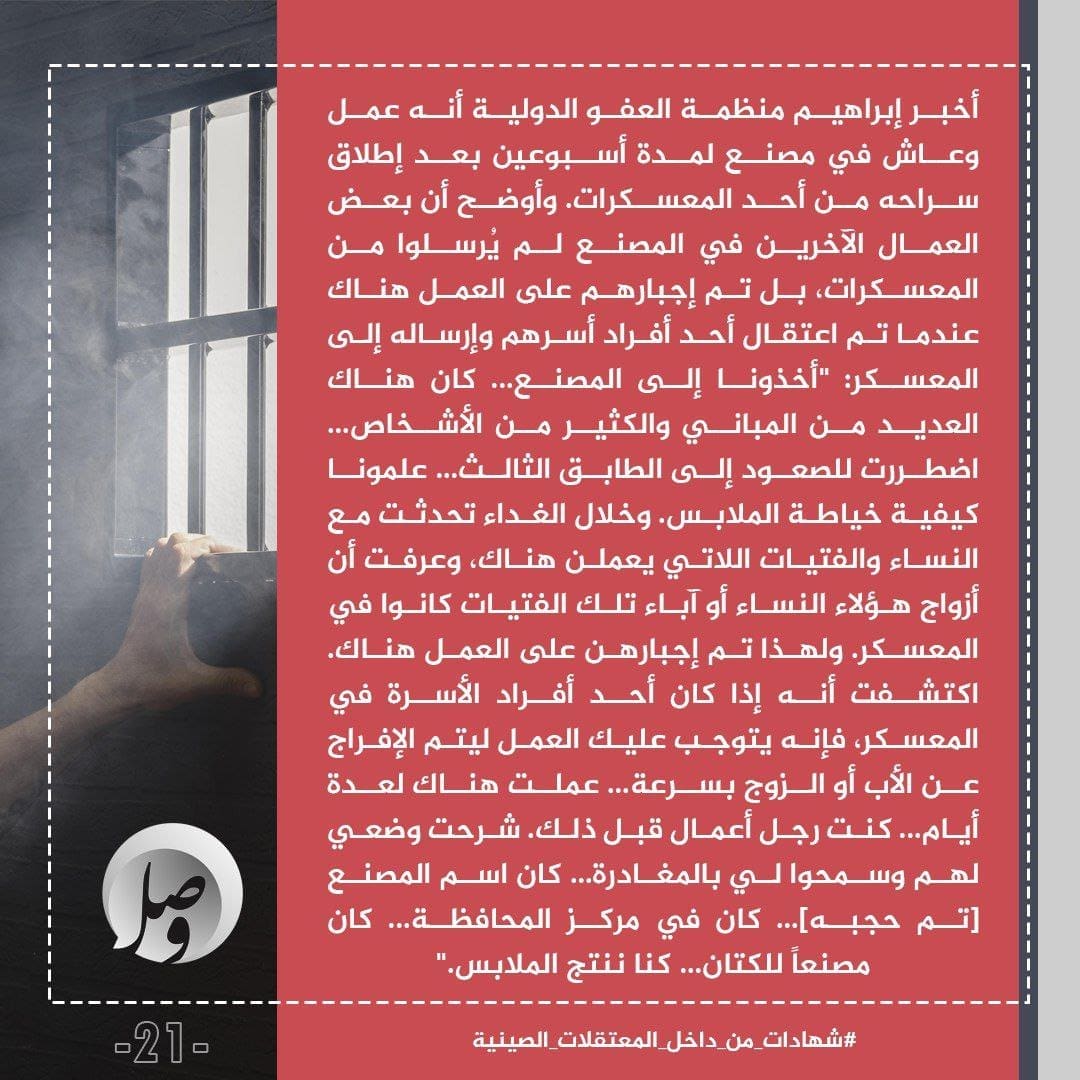
Ibrahim told Amnesty International that he worked and lived in a factory for two weeks after his release from one of the camps. "I discovered that if a member of the family is in the camp, you have to work so that the father or husband is released quickly… I worked there for several days… I was a businessman before that. I explained my situation to them and they allowed me to leave.. We were producing clothes."
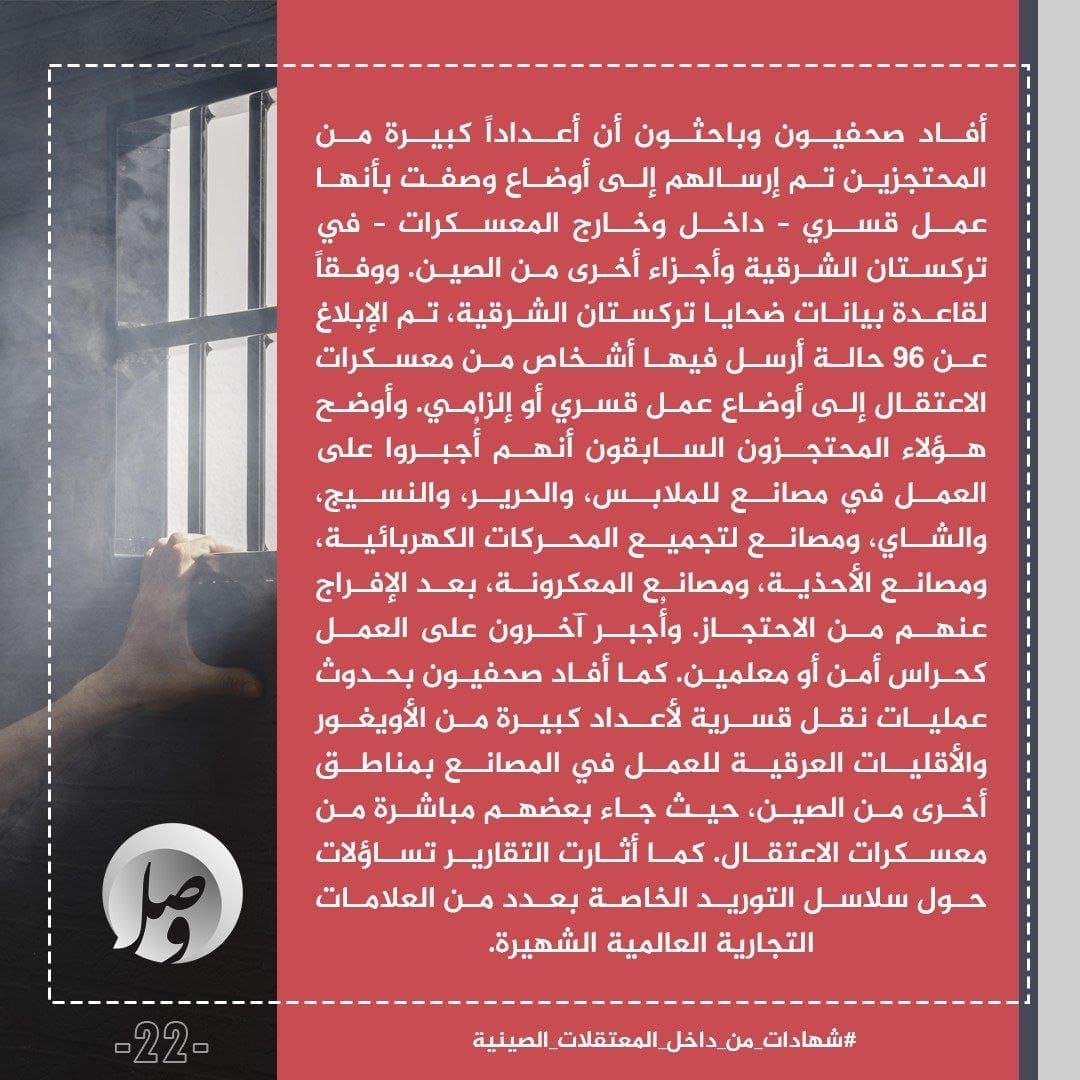
According to the East Turkistan Victims Database, 96 cases have been reported in which people were sent from detention camps to conditions of forced or compulsory labour. These former detainees explained that after their release from detention they were forced to work in factories producing clothing, silk, textiles and tea, as well as factories assembling electric motors, shoe factories and pasta factories.
Uganda
The Ugandan government has suspended the granting of asylum and refugee status to people arriving from Eritrea, Somalia and Ethiopia, citing a severe shortage of funding as the reason for this major change in policy.
Onek added that Uganda used to receive 240 million dollars annually from the United Nations High Commissioner for Refugees (UNHCR), and with the number of refugees rising to nearly two million, it now receives less than 100 million dollars, noting that the country has received only 18 million dollars this year.
United States
Trump said about migration from third-world countries to the United States:
"Why do we only take people from filthy countries, right? Why don't we take some people from Norway, Sweden and Denmark? We always take people from Somalia, and from filthy, disgusting, repulsive places."
Florida governor describes a Muslim rights group as a terrorist organisation: Florida Governor Ron DeSantis signed an executive order describing one of the country's most prominent Muslim rights groups, the "Council on American-Islamic Relations (CAIR)", as a "foreign terrorist organisation", making him the second prominent Republican governor to take a similar step in recent weeks.
Last month, Texas Governor Greg Abbott took a similar step against CAIR, which challenged that decision before the federal court as an unconstitutional attempt to punish the organisation merely for its opinions. The Florida executive order stated that the Council on American-Islamic Relations (CAIR) has ties to the Hamas movement.
CAIR denied any link to Hamas. In a joint statement on Monday, CAIR and its Florida chapter described DeSantis's decision as "unconstitutional and defamatory".
As with Abbott's order, DeSantis's order also included the Muslim Brotherhood on the list of foreign terrorist organisations | Reuters.
Austria
- Agence France-Presse: The Austrian parliament passes a law banning the wearing of the headscarf in schools for girls under the age of 14.


