


Many of our people still view the wars now raging as aggression, ambition, crime or the like, failing to recognise their undoubted reality: that they are, par excellence, wars of faith. They have not learned from the lessons of the past, when the Crusades drew on a religious discourse that gave the fighting a sacred dimension, and when Europe in the Middle Ages used religious texts to justify the persecution of various groups.

On 22 Rabi' al-Awwal 1445 AH, corresponding to 7 October 2023, the war on the Gaza Strip did not begin with rockets alone. It also began with words carrying deep religious connotations. In the first hours of the Israeli attack, a term that had remained confined to religious texts for many centuries returned to the fore: "the Amalekites".
Invoking this name was not a mere historical allusion. It quickly became part of Israeli political, military and media discourse, until it became one of the most widely circulated concepts used to justify military operations that resulted in the deaths of tens of thousands of Palestinians and the destruction of the Gaza Strip.
This concept was championed by religious nationalist currents within Israel, which revived this narrative as an ideological framework that explains the conflict and gives it a religious dimension that goes beyond political and military calculations. Here a deeply troubling question arises: how did texts written thousands of years ago become justifications used in one of the bloodiest wars of the twenty-first century?
"The Amalekites": the eternal enemy in the Torah and Bible narrative
References to the Amalekites appear in several books of the Old and New Testaments, most notably Exodus, Deuteronomy and 1 Samuel. According to the Torah narrative, the Amalekites were the first people to confront the Israelites after their exodus from Egypt, attacking the rear of the Israelite camp and targeting the weak and those who lagged behind. For this reason, their name became associated in Jewish religious memory with the idea of the "eternal enemy".
The most famous text appears in Deuteronomy (25:17-19): "Remember what Amalek did to you... you shall blot out the remembrance of Amalek from under heaven; do not forget."
This text is among the most contested in comparative religious studies, because it contains a command for total genocide encompassing civilians, children and animals.
For this reason it has remained a focus of long debates within Jewish thought itself, over whether it represents a historical ruling specific to a particular time or carries a lasting significance.
From history to doctrine
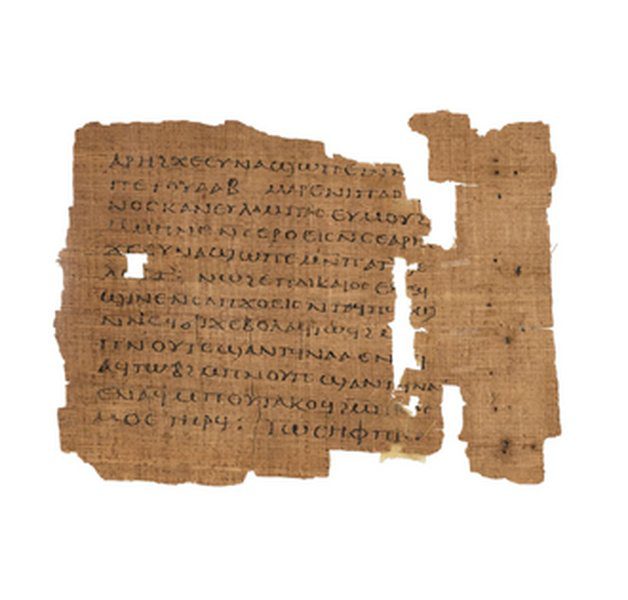
According to historical accounts, the Amalekites were nomadic tribes who lived in southern Palestine, the Sinai Peninsula and northern Arabia during the second millennium BCE. Over time, however, the name Amalekites no longer referred to a specific people; it became a religious symbol for anyone regarded as an existential enemy of the Jewish people.
In later Jewish religious literature, particularly in some texts of the Talmud and Midrash, the use of the term expanded to include various figures and nations considered symbolic extensions of the Amalekites.
In some early interpretations, Haman, minister of the Persian Empire in the Book of Esther, was described as a descendant of the Amalekites; for this reason, the festival of Purim came to carry in some of its rituals the symbolism of victory over "Amalek".
Over the centuries, the question was no longer "Who are the Amalekites?" but rather "Who resembles the Amalekites?" and here the door opened to reinterpreting the texts in line with each new conflict.
The modern state and the revival of ancient texts
When the so-called "State of Israel" was declared on 14 May 1948, the Zionist project was largely of a secular nationalist character. Yet the following decades saw a growing rise in religious nationalist currents, especially after the war of 28 Safar 1387 AH, corresponding to 5 June 1967.
Many rabbis considered the occupation of East Jerusalem and the West Bank the fulfilment of a biblical promise, and held that the state was not merely a political entity but a stage in a larger religious project. Since then, biblical texts have been present in political debate in an unprecedented way, and their citation has no longer been confined to religious institutions, gradually moving into the official discourse of some politicians and army leaders.
"Remember what Amalek did to you"
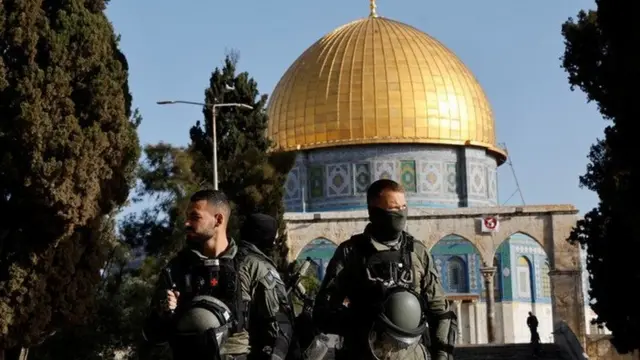
After Operation "Al-Aqsa Flood", Israeli Prime Minister Benjamin Netanyahu revived this text directly. In one of his official statements he cited the verse from Deuteronomy: "Remember what Amalek did to you."
Although Netanyahu did not name the Palestinians within the quotation, the message was clear to his audience, especially in light of the repeated use of the term "Amalekites" in Israeli media, on social media platforms and in the sermons of a number of rabbis.
Invoking this text therefore does not merely represent a religious appropriation; it redefines the war itself. Instead of being a confrontation with an armed organisation or a political dispute, it becomes a battle against a "biblical enemy" who must be eliminated. This shift carries major psychological and political consequences, because it moves the conflict from the space of possible settlement to the space of existential struggle.
When the enemy becomes "absolute evil"
Modern wars generally rely on stripping the adversary of humanity, but the use of the concept of "Amalek" gives this process a religious dimension. The enemy is not portrayed as a political adversary with whom one can negotiate, but as an entity embodying evil itself.
This pattern of discourse is well known in genocide studies. In most historical genocides, massacres were preceded by propaganda campaigns portraying the victim as less than human, or as an existential threat that must be eradicated.
For this reason, the language used during wars is never merely words; it can become an element of incitement when coupled with actions on the ground.
Do these Jewish texts represent all of Judaism?
Despite the rise of this discourse, within Jewish thought itself there are broad schools that reject a literal treatment of genocidal texts. A number of Jewish rabbis and scholars affirm that the commands to destroy the Amalekites were tied to a specific historical circumstance and are not a basis for any contemporary war. Some also point out that after the destruction of the Second Temple, the rabbis affirmed that the identity of the Amalekites had disappeared, making the execution of these commands religiously impossible.
Nevertheless, the rise of the religious nationalist current within Israel has given the most rigid interpretation growing space in the public sphere, a trend clearly reflected in the discourse accompanying the war in Gaza.
From houses of worship to battlefields: how religious texts became part of Israeli military doctrine
Invoking biblical texts in Israel is no longer confined to religious sermons or religious occasions. Over recent decades it has become part of the political and military landscape. With the rise of the religious nationalist current, concepts such as "the Promised Land", "the Chosen People" and "the Amalekites" have moved from the realm of belief into the realm of decision-making, shaping public consciousness and justifying policies related to war and settlement.
This shift did not happen suddenly. It was the result of a long process that began after the Six-Day War of 28 Safar 1387 AH, corresponding to 5 June 1967, when many rabbis regarded the occupation of East Jerusalem and the West Bank as a "divine sign" that biblical prophecies were beginning to be fulfilled. From that moment, discussion was no longer limited to borders or security; sacred texts entered the equation of politics with force.
"The Holy War": an ancient concept returning in new guise
The Torah does not use the term "holy war" in its modern technical sense, but it presents numerous accounts of battles the Israelites fought on direct divine command, according to the biblical view. Among the most prominent are the battle of Jericho in the Book of Joshua, where the city fell after seven days of circling its walls; the wars against the Canaanites; the war against the Midianites in the Book of Numbers (chapter 31); and the war against the Amalekites in 1 Samuel.
Amid the attacks now being witnessed, clear evidence shows that these texts are still treated as rulings that can be invoked.
The Talmud between religious law and political interpretation
Alongside the Torah, the Talmud holds a central place in Jewish religious thought. It is not a single book but a vast compendium of legal discussions, interpretations and commentaries by rabbis over many centuries. Regarding war, the Talmud distinguishes between two main types:
First: obligatory war, a war regarded as a religious duty, such as defence of the people or the execution of commands contained in the sacred texts.
Second: optional war, wars that require the approval of religious and political authorities and are not in themselves a religious obligation.
This distinction remained for centuries a theoretical legal debate, but some religious Zionist currents have re-employed it in modern times, considering the conflict with the Palestinians to fall within the framework of an "obligatory war" to protect the Land of Israel. This interpretation does not enjoy consensus within the Jewish religious establishment.
Religious Zionism: when belief met the state
At the emergence of the Zionist movement in the late nineteenth century, its main leaders held secular orientations and were not driven primarily by religious motives. The picture changed gradually after the establishment of Israel, and then to a greater extent after the 1967 war, when the "Gush Emunim" (Bloc of the Faithful) movement emerged. It was founded after the October war of 10 Ramadan 1393 AH, corresponding to 6 October 1973, and called for regarding settlement in the West Bank and Jerusalem as a religious duty that must not be abandoned.
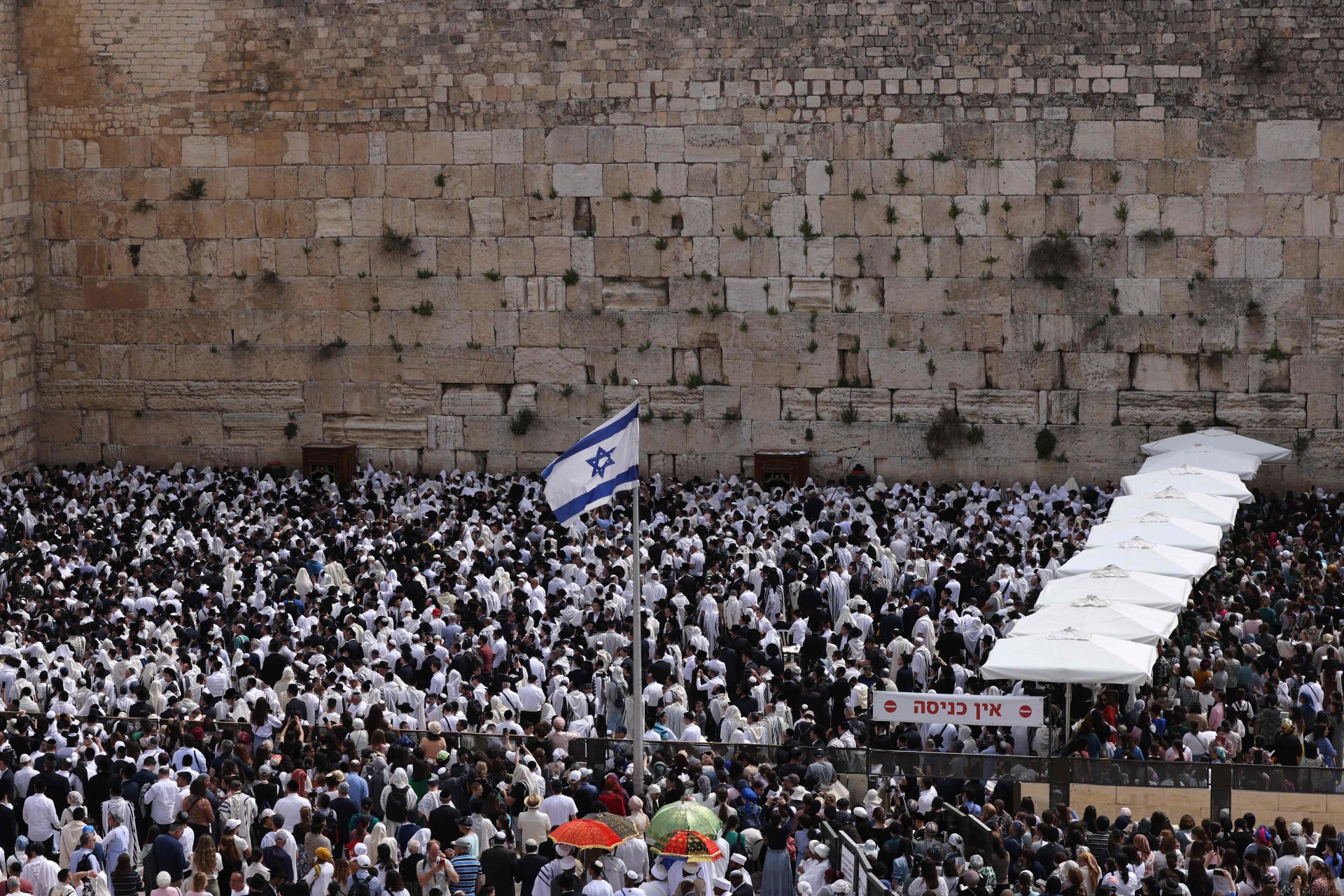
The movement relied on the interpretations of Rabbi Abraham Isaac Kook and his son Zvi Yehuda Kook, who regarded the restoration of biblical lands as a stage in divine redemption. Since then, the relationship between religion and politics has become more intertwined, especially within religious right-wing parties.
Rabbis as a power parallel to political decision-making
The influence of rabbis is not limited to issuing religious rulings; it sometimes extends into the political and military sphere. In nearly every escalation, statements are issued by some rabbis describing the war as a "battle between good and evil", or linking adversaries to the enemies of the Israelites in ancient texts.
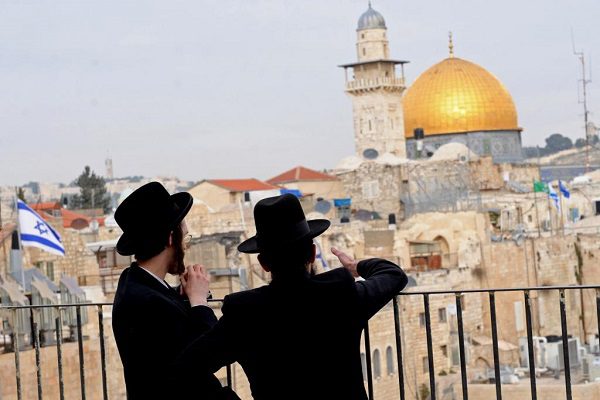
During the war on Gaza, recordings and sermons by a number of hardline religious figures circulated, using expressions such as "Amalekites" and "biblical extermination", reflecting the degree of influence gained by religious nationalist currents in recent years.
From education to media: reproducing the narrative
Grand narratives are not built only on battlefields, but within schools, universities and the media. Specialists in Israeli studies point out that the curricula of some religious schools present Old Testament accounts as part of modern national identity, with emphasis on the idea of "restoring the land" and "historical continuity" between ancient Israel and the present state.
In right-wing media, these references are used repeatedly to explain the conflict with the Palestinians, reinforcing the view of the dispute as a civilisational and religious struggle rather than merely a political contest over land.
Social media platforms have also played a role in accelerating the spread of this discourse, with biblical verses, images and videos linking the current war to ancient narratives being recirculated, giving them wide presence within Israeli public opinion.
When war becomes doctrine
The most dangerous consequence of employing religious texts in war is the transformation of the adversary into a matter of doctrine. A political opponent can be negotiated with; but an opponent presented as "an enemy of God" means any settlement with him may be portrayed as betrayal of the faith.
Hence, invoking the story of "Amalek" becomes more than a religious metaphor; it turns into a mental framework that reshapes society's view of war, affects the nature of military decisions, and prepares public opinion to accept higher levels of violence.
Therefore, if invoking the story of "Amalek" began as a religious discourse, the more important question is: has it remained mere discourse, or has it been reflected in the very nature of the war itself?
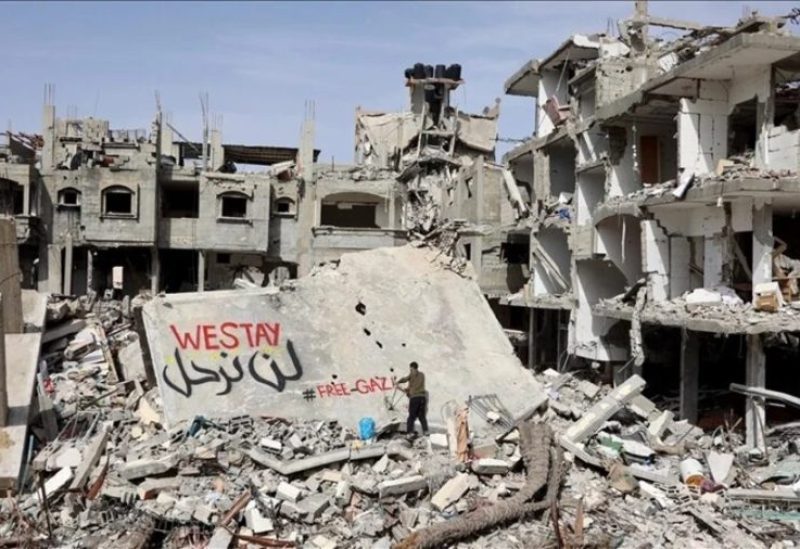
Since the outbreak of the war on the Gaza Strip, talk of "Amalek" has not remained an isolated case. It has become part of a broader discourse that has invoked religious and biblical concepts in an unprecedented way, at a time when military operations have caused vast destruction and large numbers of civilian casualties.
In genocide studies, researchers note that most mass crimes did not begin with killing; they began with language. Language that strips a human being of humanity, turning them into "absolute evil" or an "eternal enemy", makes violence against them easier to accept.
Recent history offers many examples. In the Rwandan genocide of 1414 AH, corresponding to 1994, the radio station "Radio Television Libre des Mille Collines" played a role in inciting the killing of the Tutsi after describing them as "cockroaches".
During the Balkan wars of the 1990s, ethnic cleansing was preceded by a nationalist and religious discourse that portrayed the other as an existential threat.
"Amalek" in the South Africa case before the International Court of Justice
When South Africa filed its case against Israel before the International Court of Justice on 21 Jumada al-Akhirah 1445 AH, corresponding to 29 December 2023, it did not rely on military facts alone. It also cited a number of statements issued by Israeli officials, arguing that they could be understood as incitement to genocide or as evidence of a discourse that strips Palestinians of their humanity.
Among the points raised in the legal debates was the repeated citation of the story of "Amalek" as an example of the use of religious references to describe the adversary.
The Court did not, at that stage, settle the final facts concerning genocide. However, on 16 Rajab 1445 AH, corresponding to 26 January 2024, it issued provisional measures stressing the need to take steps to prevent any acts that may fall within the Genocide Convention, with emphasis on preventing direct and public incitement to commit genocide.
At that point, religious discourse acquired a legal dimension, having become part of the debate before the highest judicial body of the United Nations.
From the biblical narrative to political discourse
Invoking religious texts in war is not new to human history. The Crusades, which began in 488 AH, corresponding to 1095, drew on a religious discourse that gave fighting a sacred dimension. In medieval Europe, religious texts were used to justify the persecution of various groups.
But the distinctiveness of the Israeli case lies in the fact that biblical texts are invoked within a modern state that possesses a regular army, constitutional institutions and international relations, which makes the impact of this discourse different from its impact in ancient societies.
When a political official quotes a religious text speaking of "blotting out" a historical enemy, at the same time as an ongoing war, the message goes beyond its symbolic dimension, even if some defenders insist it is merely a metaphor.
Does this reading represent Judaism?
Within Judaism itself there are multiple schools of thought, and there is no consensus on a literal reading of the war texts. The rabbi and Jewish philosopher Moses Maimonides (Ibn Maymun), who lived between 532 and 601 AH, corresponding to 1138 and 1204 CE, laid down strict conditions for war, among them calling on the adversary to make peace before fighting. A number of researchers regard this as an attempt to restrict the use of force. Many contemporary rabbis also hold that the commands to destroy the Amalekites have lost their historical referent, since the identity of that tribe has been unknown for centuries and therefore cannot be applied to any contemporary people.
Moreover, rabbis from the Reform and Conservative movements, as well as Jewish academics in Israel and abroad, have sharply criticised the invocation of these texts in the context of the war on Gaza, considering it a distortion of the religious heritage that turns religion into a tool of political mobilisation.
Between History and Doctrine
Tracing the biblical texts, their interpretations, and the way they are invoked in contemporary Israeli discourse reveals that the issue is not merely a matter of religious quotations, but of an integrated intellectual framework that sees in certain ancient narratives a lens for interpreting the modern conflict.
Accordingly, their growing presence in the discourse of some politicians and rabbis, coinciding with one of the bloodiest wars in the region's history, makes the matter a subject of wide legal, academic and ethical concern.


