


The Trump administration is pressing ahead with a major arms sale to Israel worth roughly $660 million, covering more than 27,000 bombs, in a deal with an unusual detail: the munitions are produced by a company owned by a Turkish defence manufacturer.
The sale, announced by the US State Department late on Friday evening, includes thousands of bombs from the MK-80 series and associated equipment. Secretary of State Marco Rubio declared that the war with Iran constitutes an "emergency requiring immediate sale," allowing the administration to bypass the congressional review normally required for arms exports.
The emergency designation allows the administration to bypass Section 36(b) of the Arms Export Control Act, which requires congressional oversight of major foreign arms sales.
Under the deal, Israel will receive more than 20,000 bombs with a total value of approximately $660 million. According to the official details, the package includes 12,000 BLU-110A/B bombs, each weighing about half a tonne, valued at nearly $151.8 million. Israel will also receive 10,000 bombs each weighing about 250 kilograms, and 5,000 small-diameter bombs, in addition to technical, logistical and support services.
Israel is expected to fund part of the deal using the $3.8 billion in annual US military aid it receives.
The deal marks the first time that the administration has formally used emergency powers since the start of Trump's second term to bypass Congress in order to speed up arms sales to Israel. The administration has previously pushed through several military aid packages by circumventing informal review procedures in the Capitol, but has so far refrained from formally declaring a state of emergency.
Earlier this year, the State Department bypassed congressional review to approve four arms packages to Israel worth $6.5 billion, including Apache attack helicopters and armoured vehicles, after months of delay in congressional committees.
The emergency authority is rarely used, but it is not without precedent. The Biden administration used the same provision twice in 2023 to send tank shells and artillery ammunition to Israel shortly after the 7 October attacks, and used it in 2022 to expedite arms shipments to Ukraine following the Russian invasion.
Trump himself used this authority during his first term in 2019, in a controversial move to approve arms sales worth $8.1 billion to Saudi Arabia and the UAE, citing tensions with Iran.
The MK-80 bombs in this package were under informal congressional review but had not yet received approval from the relevant committees before the administration proceeded with the emergency declaration.
The move has drawn sharp criticism from lawmakers who say it undermines congressional oversight.
Representative Gregory Meeks of New York, the ranking Democrat on the House Foreign Affairs Committee, said: "The use of emergency authority creates a fundamental contradiction at the heart of the administration's justification for this war. The Trump administration has repeatedly insisted it is fully prepared for war with Iran, yet rushing to bypass Congress tells a very different story."
In the State Department's notice, documents revealed that the main contractor for the project is Repkon USA, based in Garland, Texas.
However, the company is not owned by Americans. Repkon USA is a subsidiary of the Turkish arms manufacturer Repkon.
In March 2025, the Turkish company bought the Garland production facility from the US defence giant General Dynamics. This plant is the only facility in the United States capable of producing bomb bodies for the MK-80 series, which form the core component of the JDAM precision-guidance kits widely used by the US military and the Israeli Air Force.
Turkish ownership has raised concerns among some American defence analysts and policymakers.
Jim Fein, a researcher at the conservative Heritage Foundation, criticised the Committee on Foreign Investment in the United States (CFIUS) for approving the acquisition last year, which in effect allowed a foreign-owned company to control the production of a key component in the US military supply chain.
Analysts warn that this arrangement could create a potential supply-chain vulnerability for both US and allied forces.
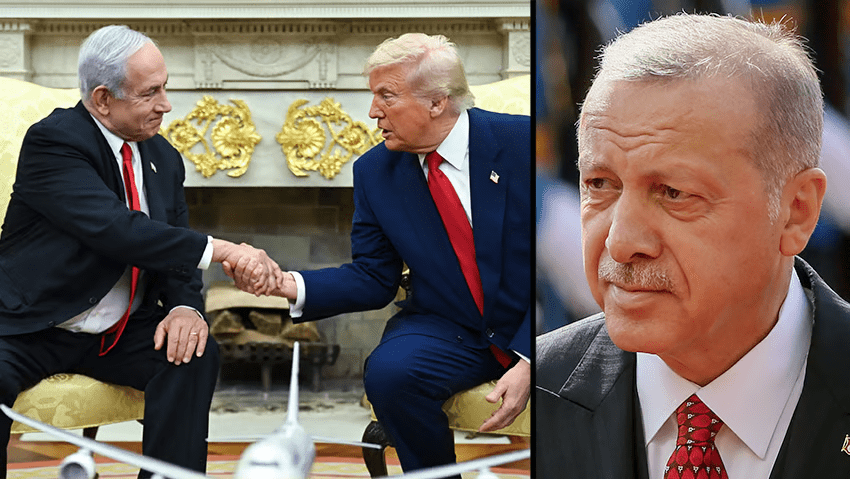
Although Turkey remains a NATO member and relations between Trump and Turkish President Recep Tayyip Erdoğan have improved, Ankara has increasingly pursued policies that conflict with American interests.
Turkey purchased the Russian S-400 air defence system, which led to its exclusion from the F-35 fighter programme and US sanctions in 2020. Ankara has also carried out operations against US-backed Kurdish forces in Syria and has repeatedly threatened Greece.
Most importantly for Israel, Turkey has strongly supported Hamas since the 7 October attacks and has imposed a diplomatic and economic boycott on Israel.
Security experts say Repkon maintains close ties with the Turkish government through contracts and regulatory approvals, raising the possibility that Ankara could exert indirect pressure on production if geopolitical tensions escalate.
Even without an outright refusal to manufacture weapons, a step that could lead to a major confrontation with Washington, analysts say Turkey could affect the supply chain by delaying production, labour disputes or technical problems that slow deliveries during crises.
Repkon is also involved in other US munitions production programmes and recently won a contract to build an explosives manufacturing facility in Kentucky.
The State Department defended the sale, saying the weapons would contribute to US national security by strengthening a key regional ally.
In its official statement, the department said the sale "will support the foreign policy and national security of the United States by helping to improve the security of a strategic regional partner that is an important force for political stability and economic progress in the Middle East."
US officials added that the bombs would enhance Israel's ability to counter threats, strengthen the defence of its homeland, and provide a significant deterrent.
At the same time, the prominent role of a Turkish-owned company in producing key weapons components highlights the complex and growing web of alliances and conflicting interests in the Middle East, where Israel's ability to fight, in some cases, relies on weapons produced by one of its harshest critics.


