


For the first time in a notable military development between Algeria and Niger, four Algerian Sukhoi Su-30 fighter jets arrived in the Nigerien capital, Niamey, in a move that Algeria said was made at the request of the Nigerien leadership, following an attempt to destabilise the country that targeted military and sovereign sites in the capital.
The Algerian Ministry of Defence announced on 30 August 2026, corresponding to 16 Rabi al-Awwal 1448 AH, the dispatch of two patrols of fighters, totalling four Su-30 aircraft, to Niger on a mission to support the Nigerien army in confronting what it described as an attempt to destabilise the country. It said the aircraft arrived at Niamey airport the same morning, accompanied by an aerial refuelling aircraft.
The move follows hours of violent military unrest in the capital, turning the crisis from an internal confrontation in Niger into a regional development in which a neighbouring state is participating with advanced combat air capabilities.
An attack that began at an air base and ended with a thwarted mutiny
Events in Niamey began before dawn on 29 August 2026, when gunfire and explosions broke out around sensitive sites in the capital. A main military base within the Diori Hamani International Airport complex was among the most prominent targets of the attack, before the clashes spread to the area surrounding the presidential palace and the building of the state broadcasting corporation.
According to the Nigerien Ministry of Defence, forces loyal to the military council moved to retake the targeted sites, while reports indicated that rebel elements detained some of their colleagues at the air base and opened fire on sensitive sites.
The clashes continued for hours, and state television broadcasts were cut off for a period, before the authorities gradually announced that they had regained control of the main sites.
Base "101": a military knot at the heart of the capital
One of the most prominent sites around which the confrontations centred was what is known as "Base 101" within the Niamey airport complex. The base has considerable military importance, as it houses air force facilities and lies within the perimeter of the international airport, and it was previously used by US forces.
It hosts military aircraft and drones, alongside facilities linked to counter-terrorism. Control of the base therefore does not only mean seizing a military site; it gives the controlling party the ability to influence the capital's airspace and threatens one of the most important links in the system protecting the authority in Niamey.
Coup attempt or mutiny within the army?
The Nigerien authorities described the events as an attempt to destabilise the country, while other sources spoke of a mutiny carried out by soldiers from within the armed forces.
The attack was not carried out by an armed group from outside the military establishment; rather, it involved soldiers who rebelled against the existing leadership. Among their targets were sites housing the presidential palace, the air base and government media, targets that reflect the nature of an attempt aimed at the centres of decision-making and control in the state.
Some participants were from military units operating in areas already suffering attacks by armed groups, and the discontent within the army was reportedly linked in part to the deterioration of the security situation and mounting losses in the confrontation with armed organisations.
Russia intervened on the ground to protect the authority
Nigerien forces were not alone in taking part in restoring control over the targeted sites.
According to international reports, elements of the Russian "Africa Corps" assisted forces loyal to the authority in retaking the air base and other sites in the capital.
Reports indicate that the Russian force present in Niger numbers roughly 200 to 300 personnel, and that it took part in support operations during the clashes, including air and ground operations.
Thus, from the outset the crisis saw foreign military presence alongside local forces, before Algerian support arrived in a more explicit form with the arrival of the Su-30 fighters.
Why did Algeria move?
The Algerian Ministry of Defence announced that the dispatch of the fighters was made in response to a request from the Nigerien leadership, following the events in Niamey, and within what it described as strengthening strategic cooperation between the two countries.
According to the official statement, President Abdelmadjid Tebboune, in his capacity as Supreme Commander of the Armed Forces and Minister of National Defence, issued directives to provide support, while the Chief of Staff of the Algerian Army, Lieutenant General Saïd Chengriha, ordered the dispatch of the four air patrols.
The decision follows an earlier Algerian move to support the Nigerien army in August itself, when Algeria transferred four helicopters, of the Mi-24P and Mi-171 types, to Niger, along with munitions, spare parts, maintenance equipment and logistical support.
The helicopters arrived in Niamey on 9 August 2026, corresponding to approximately 25 Safar 1448 AH, under a military support agreement that Algeria said aims to strengthen cooperation between the two countries.
The dispatch of the fighters was therefore not Algeria's first military step towards Niger, but it marks a transition to a different level of support, from helicopters and support equipment to advanced combat aircraft.
What is the significance of the Su-30 in this mission?
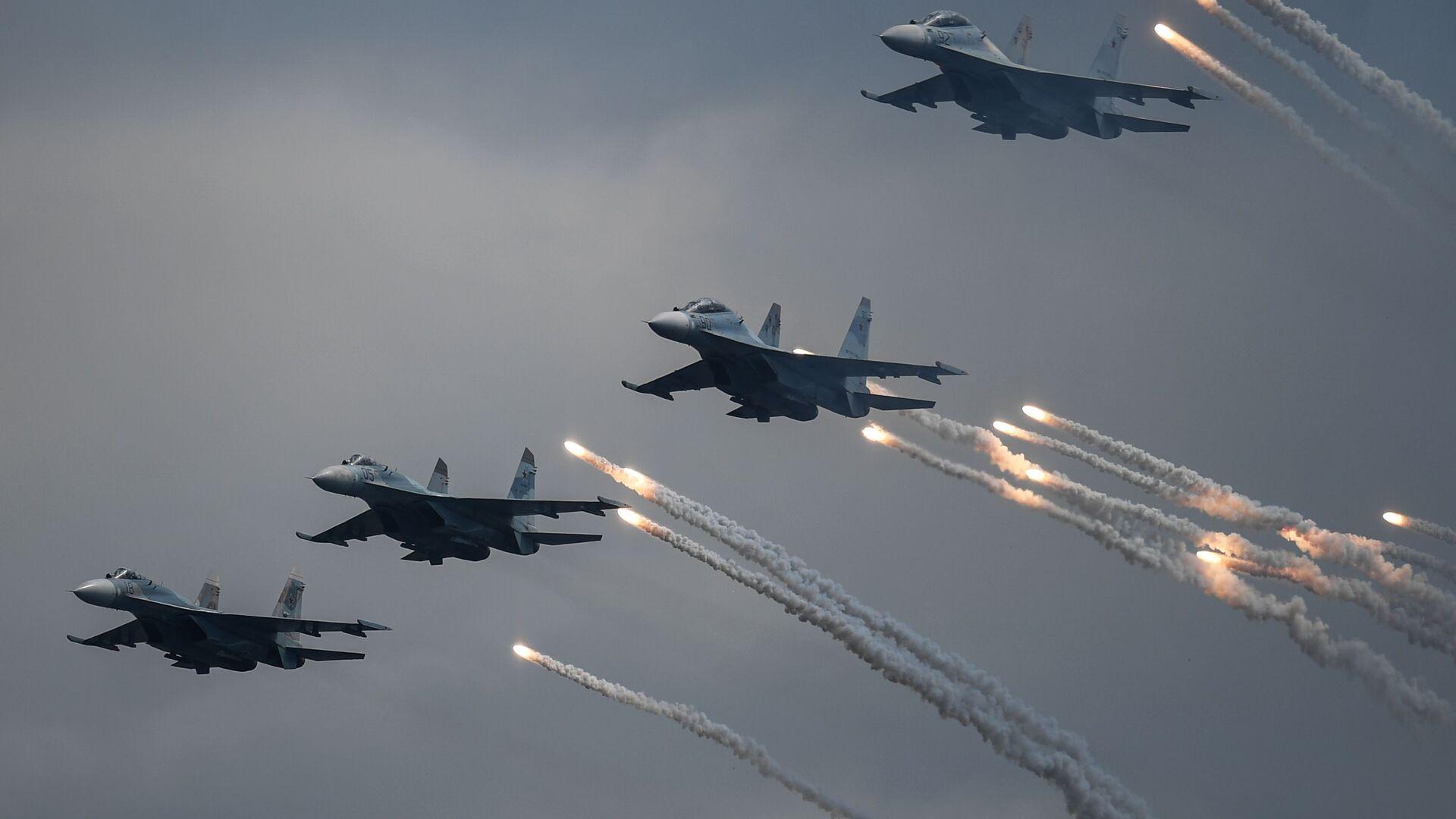
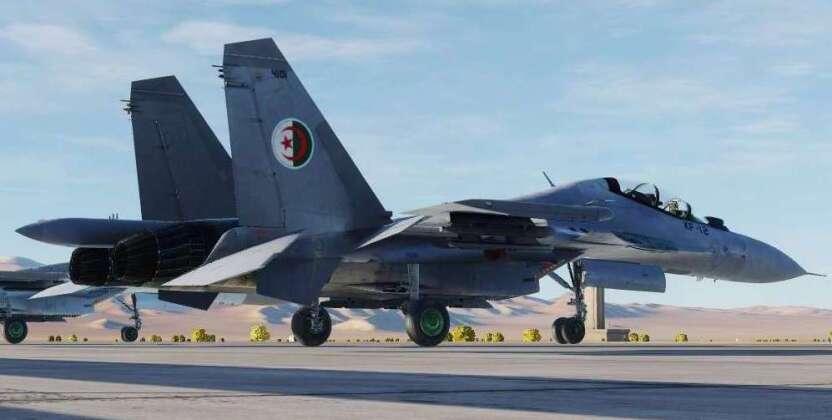
The Su-30 is one of the most prominent multirole fighters in the Algerian air arsenal. It is a heavy twin-engine aircraft capable of air-to-air and air-to-ground missions, and of operating over relatively long distances compared with many tactical fighters.
The aircraft belongs to the Su-27 family and is distinguished by its ability to carry a large number of weapons and fuel, along with advanced radar, navigation and fire-control systems.
In the current mission, however, Algeria has not announced that the fighters will carry out offensive combat operations inside Niger; it described the mission as support for the Nigerien army in confronting an attempt to destabilise the country.
This is an important point, since the official announcement did not refer to air strikes or to the fighters engaging in aerial combat, but to their deployment in Niamey within a support mission.
An aerial refuelling aircraft: why do the fighters travel with one?
A notable detail of the Algerian move is that the four fighters arrived in Niamey accompanied by an aerial refuelling aircraft. Tanker aircraft extend the time fighters can remain in the air and increase the distance they can cover without repeated returns to base.
This carries added importance given the large distance between Algeria and Niger, as well as the nature of potential air operations in the Sahel region.
The Algerian Ministry of Defence did not specify the type of refuelling aircraft used in the mission.
Official reception in Niamey
The aircraft landed at Niamey airport on the morning of 30 August 2026, corresponding to 16 Rabi al-Awwal 1448 AH, and were received by Nigerien Prime Minister Ali Mohamed Lamine Zeine.
The Nigerien official expressed his country's thanks to Algeria, affirming the Nigerien leadership's appreciation for the Algerian initiative.
Algeria said the step confirms its commitment to supporting Niger, its government and its people, and to strengthening security and stability in the region.
A relationship that extends beyond security to shared borders and interests
Algeria and Niger are linked by a long land border, which makes the security deterioration in Niger directly relevant to Algerian security, especially in the southern regions.
For years Niger has faced growing activity by armed groups linked to the "Islamic State" and "al-Qaeda" organisations in various parts of the country.
At the same time, the region has seen profound changes in security alliances following military coups in Sahel states and the withdrawal of French forces from Niger, as well as the rapprochement between the military regimes in Niger, Mali and Burkina Faso and Russia.
International reports indicate that the deteriorating security situation was one of the factors that fuelled tension within the Nigerien army itself.
Niger between pressure from armed groups and an army in crisis
The latest mutiny came at a time when Nigerien forces face continuing security challenges. Armed groups are active across wide areas of the country, carrying out attacks on military positions and civilians, while the authorities struggle to maintain control over remote areas and secure transport routes and population centres.
Reports indicate that some of the mutinous soldiers came from areas that had suffered heavy military losses, and that dissatisfaction with the government's security performance was among the factors that fuelled the movement within the armed forces.
Here lies the political paradox: the military council that came to power in 2023, corresponding to 1445 AH, presented improving the security situation as one of the justifications for the change, while armed attacks have continued.
What does the Algerian presence in Niamey mean?
Sending four fighter jets to a neighbouring country differs from providing military aid or defence equipment. The step moves Algerian-Nigerien cooperation to a level directly tied to air capability, even though the announced nature of the mission remains defensive and supportive.
At the same time, published information does not yet specify whether the fighters will remain in Niger for a long period, or whether their deployment is temporary and linked to the recent crisis.
Nor has Algeria disclosed details on the rules of engagement for the aircraft or the nature of the operational tasks they may perform.
The Sahel enters a new security phase
The Algerian move comes in a region undergoing a complete reshaping of its security relations. Niger, Mali and Burkina Faso formed the "Alliance of Sahel States" after their relations with several Western powers deteriorated, while military cooperation with Russia expanded.
In this context, the borders between the three states and Algeria, Libya and other areas of North Africa have become part of an interlinked security system in which counter-terrorism, border protection, confronting armed groups and protecting ruling military regimes overlap.
Algeria seeks to preserve its influence and its border security in a regional environment of intense instability, while publicly rejecting military interventions aimed at changing governments, and at the same time continuing its security cooperation with neighbouring states.
From helicopters to fighter jets
The sequence of events in August 2026, corresponding to Safar and Rabi al-Awwal 1448 AH, reveals a clear escalation in the level of military cooperation between Algeria and Niger.
At the beginning of the month, four Algerian helicopters arrived in Niamey with equipment, munitions and spare parts. Then, after a military attack that targeted sensitive sites in the capital, Algeria dispatched four Su-30 fighters and an aerial refuelling aircraft.
Algeria has not announced that its fighters took part in military strikes inside the country; it officially defined their mission as supporting the Nigerien army in confronting an attempt to destabilise the state.
Has the crisis ended?
By 30 August 2026, corresponding to 16 Rabi al-Awwal 1448 AH, the Nigerien authorities had announced that they had regained control of the capital, and life was gradually returning to the streets of Niamey, with security deployments continuing around the presidential palace and the airport.
However, reports indicated that the effects of the crisis had not ended with the retaking of the sites, especially since the movement revealed tensions within the military establishment itself, at a time when the country is fighting a long war against armed groups.
Algeria, for its part, chose to make its response clear and direct: support for the existing authority in Niamey through a level of military assistance that was not limited to equipment, but extended to the deployment of combat aircraft on Nigerien territory.
While the nature of the future mission of these aircraft remains unannounced, the arrival of the Su-30s in Niamey opens a new chapter in military cooperation between the two countries, and confirms that Niger's internal crisis is increasingly bound up with the wider security arrangements across the Sahel region.


