

Uncovering the Troubled Legacy of the Russian Paramilitary Wagner Group in Mali
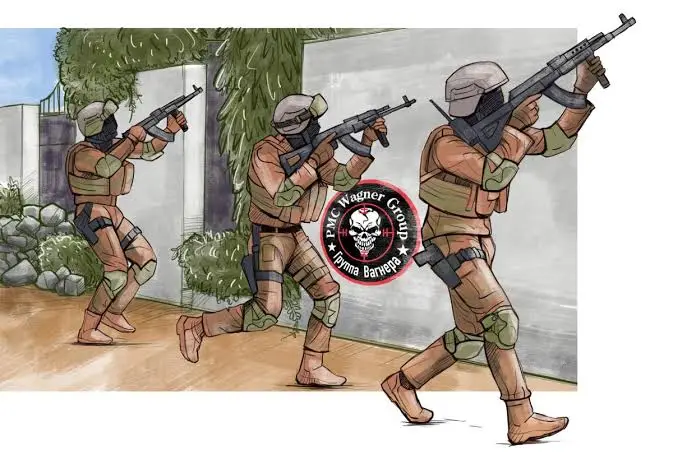
The Russian paramilitary Wagner Group left a troubled record in Mali, according to a report published by the US-based war crimes monitoring organisation The Sentry.
The organisation assessed Wagner's impact in the Sahel country between January 2022 and June 2025, when its mercenaries were replaced by the Africa Corps, a new force under direct Moscow command.
When the Wagner Group announced its departure earlier this year, it claimed that its "mission was accomplished."
However, the report's findings point to three and a half years of insecurity and strategic failure.
"Triple Failure"
The report addresses what it calls Wagner's "triple failure."
The first problem is military: Russian fighters proved unable to secure northern and central Mali, despite high expectations from the transitional authorities in Bamako.
Second, their arrival coincided with a "significant increase" in attacks against civilians.
Third, far from strengthening relations between the army and local populations, their actions "seriously undermined trust," creating fertile ground for jihadist groups to strengthen recruitment.
The Sentry notes that Wagner's presence also destabilised Mali's security apparatus.
The report states that "Wagner fighters sowed chaos and fear within the military hierarchy," describing a chain of command that now suffers from mistrust and weak communication.
A Fragile Partnership
Speaking to Radio France Internationale, Justyna Gudzowska, executive director of The Sentry, said Malian authorities turned to Wagner believing that the Russian mercenaries "would take greater risks and genuinely commit to fighting [the jihadists and rebels]."
Instead, she explained, "Wagner fighters refused to work without payment, refused to help without financial compensation, and in some cases flatly refused to take risks."
She said what was supposed to be a partnership with the Malian Armed Forces quickly soured. "Wagner treated Malian soldiers as subordinates, committed serious abuses, and instilled such intense fear that even Malian soldiers were afraid to speak out publicly."
Despite Wagner's departure and the replacement of its personnel by the Russian Africa Corps, Mali's security crisis shows no sign of easing.
Jihadist groups remain active across large parts of the country.
Earlier this week, reports indicated that they had seized the strategic town of Farabougou in central Mali, days after the army was forced to abandon one of its largest camps in the region.
-----------
Source: Radio France Internationale (RFI) website


