


The Wall Street Journal reported, citing informed sources, that the United Arab Emirates sent a direct message to the administration of Donald Trump warning of the consequences of any disruption to the availability of the US dollar for its energy-sector transactions.
According to the report, Abu Dhabi told the American side that any potential shortage of dollar liquidity resulting from policies or geopolitical tensions could prompt it to request the establishment of currency swap lines with the United States to ensure the stability of its financial and commercial dealings.
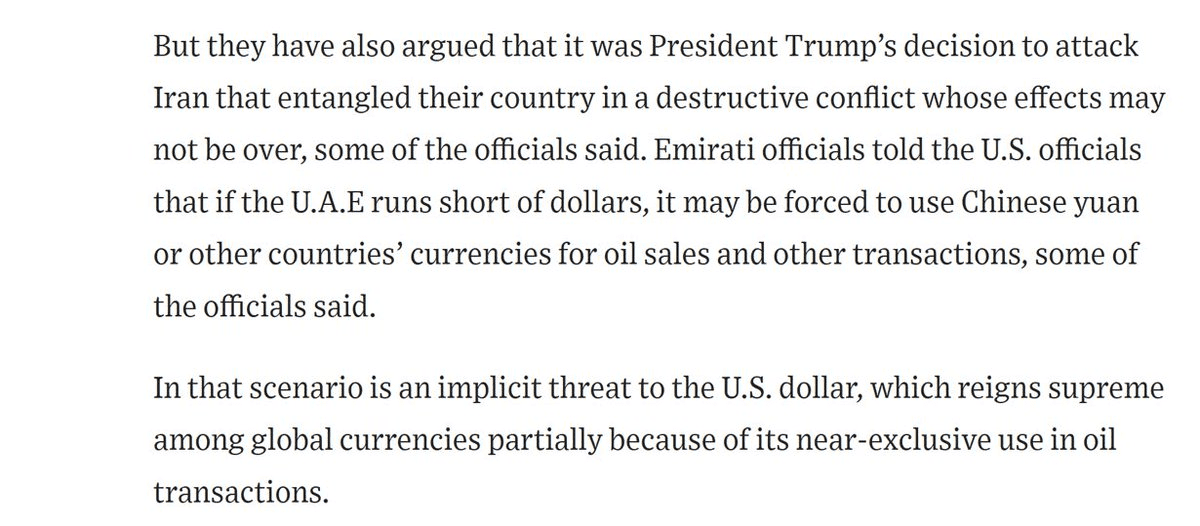
The message further stated, according to the report, that if this request is not met, the UAE may be forced to diversify the currencies in which it prices its oil and gas exports, including dealing in the Chinese yuan or other currencies, rather than relying exclusively on the dollar.
Observers believe that this step, if it materialises, could reflect a significant shift in the dynamics of global energy markets, where the dollar has for decades been the main currency for pricing oil and gas, in what is known as the "petrodollar system."
These statements also come amid rising global debate over reducing reliance on the dollar in international trade, particularly among some major economies, against a backdrop of growing political and economic tensions.
No immediate official comment has been issued by the American side regarding these statements, and Emirati authorities have not publicly confirmed the details of the message.
Analysts note that any actual move in this direction could have wide-ranging effects on global financial markets, supply chains, and the balance of economic power among international currencies, particularly as China's role in the global energy sector grows.


