

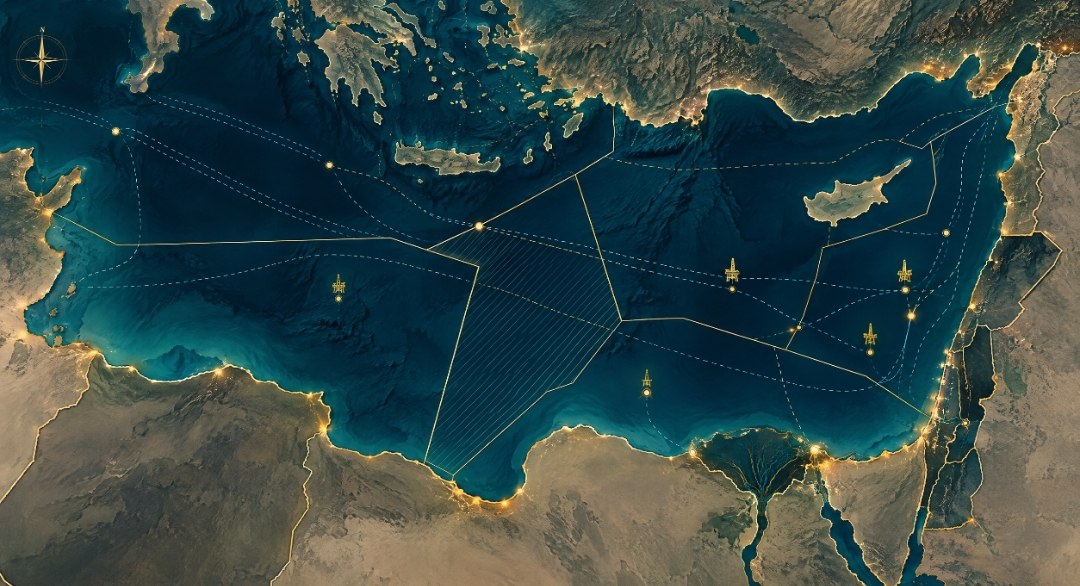
Egypt is studying a possible Turkish offer for maritime boundary demarcation, which could grant it around 15,000 square kilometres in additional area, according to circulating Turkish statements. Any Egyptian-Turkish rapprochement on this file would affect the balance in the Eastern Mediterranean and energy and maritime interconnection projects between the entity "Israel", Cyprus and Greece. However, Cairo still officially maintains its rejection of the Turkish-Libyan memorandum of understanding.
The Istanbul meeting and the files on the table
This development followed a meeting held in Istanbul on 23 October, which brought together the foreign ministers of eight countries. On one side of the table, Turkey, Egypt, Saudi Arabia and Pakistan met within a format called "R4", while the other side included Britain, France and Germany as the "E3" group, before Italy joined the meeting.
The "E3" group goes back more than two decades of European coordination on the Iranian nuclear file. The "R4" format is a more recent regional framework, which first met in Riyadh in March and includes Turkey, Saudi Arabia and Pakistan, the states that signed a mutual defence agreement in August, while Egypt attended the meetings without formally joining the agreement.
The Istanbul meeting was the seventh within the mechanism of the four states, and the first to bring them together directly with the Europeans. The agenda was topped by regional and international files, including Houthi attacks on Saudi Arabia, the security of maritime corridors, the Iranian nuclear file, the Palestinian question, the Russian-Ukrainian war and Black Sea security.
Regarding Yemen, available information indicates that Houthi attacks escalated and reached King Khalid Airport in Riyadh, causing deaths and injuries and damaging oil facilities. The meeting affirmed solidarity with Saudi Arabia and its right to defend itself, without any commitment to send troops, aircraft or missiles in support.
As for the maritime corridors, the available information focuses on the Strait of Hormuz, which it says has been closed since the outbreak of war on Iran in February, and on the Bab al-Mandab Strait, which faces Houthi threats. It also points to the stalling of the US-Iranian dialogue, and the eight states unanimously rejected a new military strike on Iran. The German foreign minister was quoted as saying the three European states were prepared to negotiate with Tehran, while Italian Foreign Minister Antonio Tajani said the problem could not be solved from a purely military perspective.
Other files included commitment to a two-state solution for Palestinians and Israelis in line with international resolutions, alongside the Russian-Ukrainian war and Black Sea security. The matter raises the question of whether these issues can be addressed without Washington, and links this to the composition of the meeting: Turkey maintains channels of communication with Iran, Pakistan is a neighbouring state with nuclear weapons, Saudi Arabia has weight in oil markets and investment, Egypt controls the location of the Suez Canal and the Red Sea, while European states possess sanctions instruments and experience on the Iranian nuclear file.
A possible negotiating equation would be based on guaranteeing freedom of navigation in exchange for easing tensions with Iran and lifting the blockade on it, and curbing Houthi attacks in exchange for guaranteeing Saudi security and its borders, in addition to a return to a US-Iranian memorandum of understanding reportedly signed in June. French Foreign Minister Jean-Noël Barrot announced that the eight states would continue coordination through periodic meetings.
The Turkish-Libyan memorandum of understanding returns to the spotlight
However, the most prominent development was not the group photo of the meeting, but a side meeting that brought Turkish Foreign Minister Hakan Fidan together with his Egyptian counterpart Badr Abdelatty. This meeting is linked to the vote by the Libyan House of Representatives in Benghazi on the maritime demarcation memorandum between Turkey and Libya, the memorandum signed in Istanbul on 27 November 2019.
The Libyan House of Representatives approved the memorandum unanimously, in a development that was described as a shift from the eastern Libya's previous position, and it said this meant the memorandum now enjoys acceptance in both eastern and western Libya. Cairo responded by considering the memorandum null and void, with no legal effect for Egypt.
Information indicates that Abdelatty conveyed the Egyptian position to Fidan during the side meeting, and that the Turkish minister affirmed Ankara's understanding of Cairo's concerns and its readiness to continue consultation and coordination. The following day, Turkish Defence Minister Yaşar Güler announced his country's readiness to sign a maritime agreement with Egypt along the lines of the Turkish-Libyan agreement.
Güler said the proposed agreement could give Egypt around 15,000 square kilometres in additional area compared with a possible agreement with Greece. The maritime boundary demarcation agreement between Egypt and Greece, signed in August 2020, was partial, and part of the demarcation remained subject to consultations that were not completed. On the other hand, the Turkish-Libyan memorandum line is described as a maritime corridor running from south-western Turkey to north-eastern Libya, affecting Greece's claims relating to the island of Crete and areas facing Cyprus, Egypt and "Israel".
Joining a maritime arrangement of this kind could expand the maritime area Egypt claims and open opportunities for gas exploration, and could also open the door to trilateral coordination between Ankara, Cairo and Benghazi. Fidan also hinted at positive news soon on the unification of Libya, without providing further details.
Greek, Cypriot and Israeli objections
The interests of Greece, Cyprus, "Israel" and the European Union are expected to be affected by any Egyptian-Turkish understanding based on the memorandum. Greece objects to the line because it ignores the island of Crete and the rights of the Greek islands, and has described the memorandum as illegal and null. Cyprus has also described it as illegal and void.
The Israeli position is linked to the project for an electricity interconnection between what is called "Israel", Cyprus and Greece, which passes through a disputed area. The European Union refused to recognise the memorandum and announced its solidarity with Athens and Nicosia. In response, Greece moved towards Cairo to discuss expanding their maritime agreement eastward towards Cyprus.
Cairo therefore faces a choice between continuing the existing maritime understanding with Athens and Nicosia, and the Turkish offer, which includes a potential additional maritime area. Egypt still officially maintains its commitment to the law of the sea and its rejection of the Turkish-Libyan memorandum, while consultations between the two foreign ministers continue.
The Istanbul meeting and the bilateral contacts may open a door to redrawing maritime understandings in the Eastern Mediterranean, but settling this possibility remains tied to Cairo's position and to legal and political negotiations with the parties concerned. The matter is not only about maritime area, but also about energy interests, navigation, regional alliances and the positions of states bordering the Mediterranean.


