

US President Donald Trump pledged to keep US military assets in the Middle East until a peace agreement with Iran is reached, and warned of a major escalation of fighting if Iran does not comply. Oil prices rose amid concerns over supplies and restrictions in the Strait of Hormuz.
In a post on social media, Trump said US ships and aircraft, along with their personnel, would remain in their positions, equipped with additional ammunition and weapons, to destroy a "severely depleted enemy" if necessary. However, he expressed confidence that a lasting agreement would be reached and honoured.
Trump said: "If that does not happen for any reason, which is highly unlikely, then "the War will begin", and it will be bigger, better, and stronger than anyone has ever seen", adding that, contrary to "the false rhetoric", Iran had agreed not to seek nuclear weapons and to reopen the Strait of Hormuz.
"In the meantime, our Great Military is getting ready and getting ready, and is, in fact, looking forward to its next invasion. America is back!"
Despite both the United States and Iran declaring victory in a war that lasted five weeks and killed thousands, their fundamental differences remain unresolved, as each side holds to its conflicting demands for an agreement that could reshape the Middle East for generations to come.
بنود اتفاق وقف إطلاق النار بين إيران وأمريكا وما نعرفه عنها
Iran Describes Talks as "Illogical" Amid Israeli Strikes
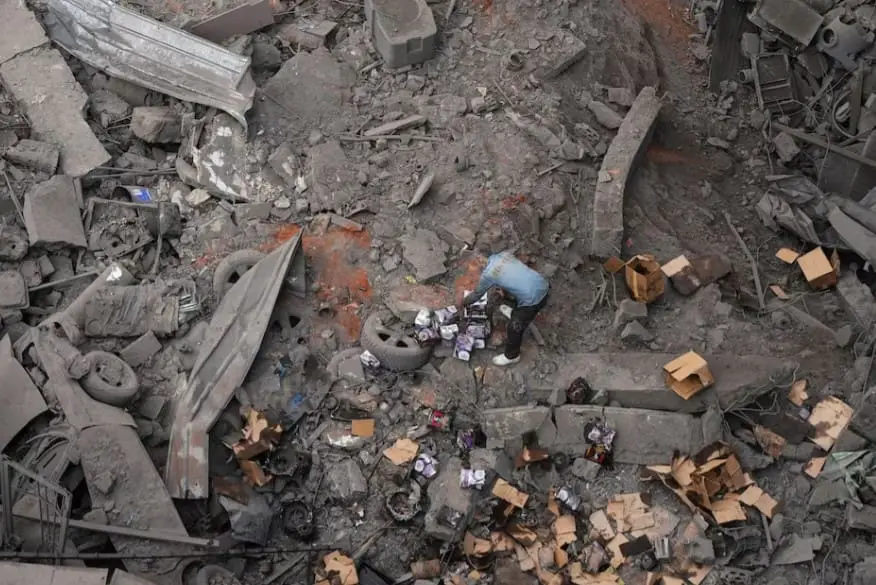
Trump's latest post came after the largest coordinated strike carried out by Israel on Wednesday, which killed more than 250 people in Lebanon, prompting Iran's chief negotiator to warn that Israel's escalation of its parallel war, and Washington's insistence that Tehran abandon its nuclear ambitions, could jeopardise talks aimed at a lasting peace agreement.
Iranian Parliament Speaker Mohammad Bagher Ghalibaf said in a statement on Wednesday: "In such a case, a bilateral ceasefire or negotiations would be illogical."
Oil prices rose on Thursday amid investor concerns over the fragility of the truce and growing geopolitical risks related to Middle East supplies, with growing doubts about whether restrictions on the Strait of Hormuz could be eased soon.
Brent crude futures rose $1.96, or 2.07%, to $96.71 a barrel at 03:25 GMT, while US West Texas Intermediate crude rose $2.6, or 2.75%, to $97.01 a barrel, a day after both crudes had fallen sharply following the announcement of the ceasefire.
Brent and West Texas Intermediate prices remain well above the levels of $70.75 and $65 a barrel respectively that prevailed before the start of the joint US-Israeli attack.
Asian stock markets were calm on Thursday amid anxiety over the ceasefire, with Japan's Nikkei index (.N225) steadying near zero after rising 5.4% in the previous session, while the MSCI index for broader Asia-Pacific shares excluding Japan (.MIAPJ0000PUS) fell 0.7%.
On Wall Street, S&P 500 and Nasdaq futures fell 0.2% as the rally seen on Wednesday ran out of steam. In Europe, Euro STOXX 50 futures fell 0.1%, DAX futures fell 0.5%, while FTSE futures rose 0.4%.
أجندات متناقضة
Conflicting Agendas
Intensive Israeli air strikes on Wednesday raised questions about regional truce efforts, with conflicting messages on the scope of the ceasefire and differing agendas for the peace talks scheduled to begin on Saturday in Pakistan.
The United States and Israel affirm that Lebanon is not covered by the agreement, while Iranian President Masoud Pezeshkian stated that a halt to hostilities in Lebanon is a basic condition for Tehran's agreement with Washington.
Hezbollah, which is backed by Iran, announced that it fired rockets early on Thursday at the Israeli kibbutz of Manara, pointing to what it described as Israeli violations of the ceasefire, and warning of more until the "Israeli-American aggression" stops.
Pakistan's Foreign Ministry condemned the Israeli operations on Thursday, saying they "undermine international efforts to establish peace and stability."
French President Emmanuel Macron had previously stated that Lebanon "must be fully covered by the ceasefire."
The Iranian delegation was due to arrive in Islamabad on Thursday evening to take part in the talks.
Ambassador Reza Amiri Moghadam said in a post on X on Thursday: "Despite Iranian public skepticism due to the repeated ceasefire violations by the Israeli regime… an Iranian delegation arrives in Islamabad tonight to conduct serious talks based on ten points proposed by Iran."
"Freedom of Navigation Means Navigation Must Be Free"
There have been no notable signs of the Strait of Hormuz actually reopening since the truce agreement, as Iran still insists on its control of this vital artery, which serves as a passage for one-fifth of the world's oil and liquefied natural gas supplies, and charges fees for safe passage. Tehran's newly demonstrated ability to cut energy supplies to Gulf states through its control of the strait, despite decades of massive US military investment in the region, shows how the conflict has already changed the balance of power in the Gulf.
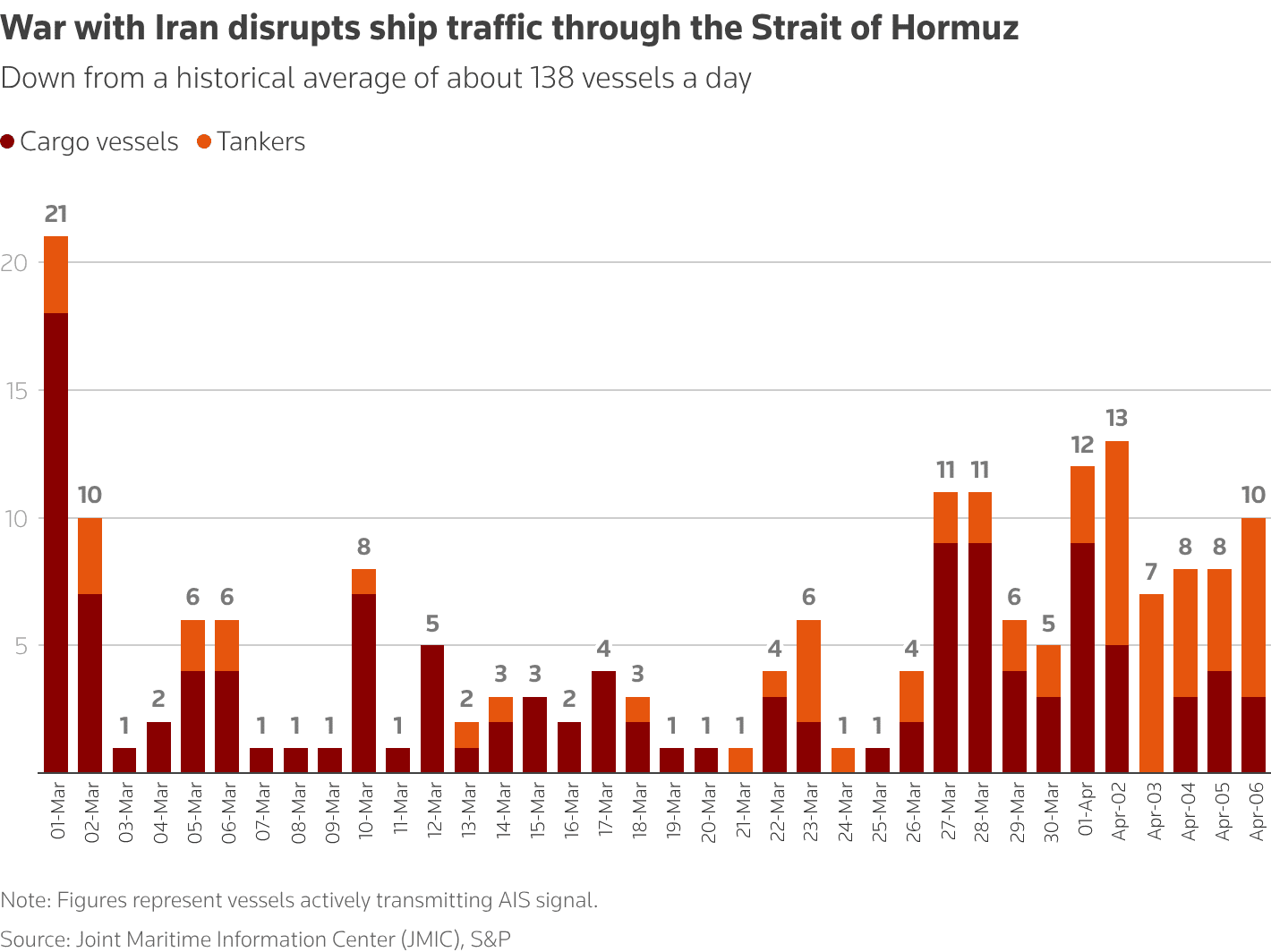
Daily shipping traffic through the Strait of Hormuz fell to less than 10% of its historical average after the start of the US-Israeli war. On Thursday, the Iranian Revolutionary Guard Navy published a map showing alternative navigation routes in the Strait of Hormuz to help ships avoid naval mines, according to the semi-official Iranian Students' News Agency (ISNA).
British Foreign Secretary Yvette Cooper is due to announce on Thursday that navigation through the Strait of Hormuz must be free, in response to Iran's efforts to control this waterway, which has long been treated as an international waterway.
Cooper will deliver an annual foreign policy speech in London, according to advance excerpts, saying: "The fundamental freedoms of the seas cannot be unilaterally withdrawn or sold to individual actors. Nor can any charge be imposed on an international waterway."
Reuters


