


The United States has ended one of the oldest rounds of legal isolation imposed on Syria, after revoking its designation as a "state sponsor of terrorism," in parallel with removing the remaining designation on Hayat Tahrir al-Sham as a "specially designated global terrorist."
The American decision, announced the day before yesterday, adds a new step to a series of measures through which Washington has begun dismantling the broad sanctions regime on Syria since 2025. The US Treasury Department announced that the measure lifts restrictions that had been linked to terrorism designations, while specific sanctions on individuals, entities and particular activities remain in place.
The decision does not mean that all US restrictions on Syria have ended, but it reshapes the legal framework through which Washington manages its dealings with the new Syrian state.
A designation that began in 1979
Washington placed Syria on the list of state sponsors of terrorism in 1979, and it remained in this category for some 47 years.
Listing a country had entailed a number of legal restrictions relating to US assistance, exports of goods and technology, defence trade, and certain forms of financing and international transactions. The designation also raised the level of risk that financial institutions and companies attached to any dealings with Syria.
But Washington, in return, kept sanctions targeting specific individuals, entities and activities.
What was lifted and what remains?
The Syrian file has seen several different legal tracks in recent period, and it is important to distinguish between them. The "Caesar Act for the Protection of Syrian Civilians", passed in 2019 corresponding to 1440 AH, has been repealed; it mainly targeted the regime of Bashar al-Assad and those providing it with significant support.
As for Syria's designation as a "state sponsor of terrorism", it was revoked on 24 August 2026, corresponding to 11 Rabi' al-Awwal 1448 AH.
The legal situation can therefore be summarised in three points: the "Caesar Act" has been repealed, Syria's designation as a state sponsor of terrorism has been revoked, while the "Syria Accountability Act" still stands, with parts of its restrictions suspended through waivers.
Why was repealing Caesar not enough?
Repealing Caesar was a broad step towards easing sanctions, but it did not automatically lift all restrictions based on other laws and designations.
Syria's continued presence on the list of state sponsors of terrorism had meant the continuation of a separate set of legal restrictions, and international financial institutions were still dealing with Syria as a country falling under a high-risk US designation.
Removing Syria from the list was therefore a step separate from repealing Caesar, because it removes the legal designation attached to the Syrian state itself.
What does the decision mean for banks?
Removing Syria substantially reduces the legal risks that financial institutions faced when considering dealings with Syrian institutions and banks.
In principle, US and international banks can deal with Syrian institutions as long as those institutions and the parties associated with them are not separately listed on sanctions lists.
However, the decision does not mean that the international banking system automatically returns to dealing with Syria. Banks will still be required to carry out checks related to anti-money laundering, countering terrorist financing and financial compliance, and international institutions will themselves determine the level of risk they accept when opening accounts or establishing correspondent relationships with Syrian banks.
Does this mean the return of the dollar to Syria?
The decision opens the way to broader financial transactions, but it does not guarantee an automatic return of dollar transactions.
International dollar transactions depend to a large degree on the willingness of correspondent banks to deal with Syrian institutions, and on the ability of Syrian banks to meet transparency, compliance and anti-money laundering and counter-terrorist financing requirements.
Removing the American legal obstacle therefore does not mean that international banks will rebuild their relations with Syria the day after.
Foreign investment faces a wider space
Easing sanctions opens a larger field for American, European and Gulf companies to consider the Syrian market, especially in sectors that need external financing, technology and international partnerships.
Areas that could benefit from the removal of comprehensive restrictions include energy, infrastructure, telecommunications, transport, industry and services.
However, foreign participation will remain tied to ensuring that companies, individuals and counterparties are not listed on individual sanctions lists.
Sanctions have not disappeared entirely
Despite the wide scope of lifted restrictions, Washington still uses sanctions selectively against figures and entities linked to the former regime or to files on human rights, narcotics, terrorism and proliferation, in addition to the "Islamic State" (ISIS), al-Qaeda, Iran and its proxies.
The US Treasury Department explains that the United States has moved from a model of comprehensive sanctions on Syria to targeting specific individuals, entities and activities.
This means that dealing with Syria as a state has become broader, but dealing with persons or entities listed on US lists remains subject to restrictions.
What happened to Hayat Tahrir al-Sham?
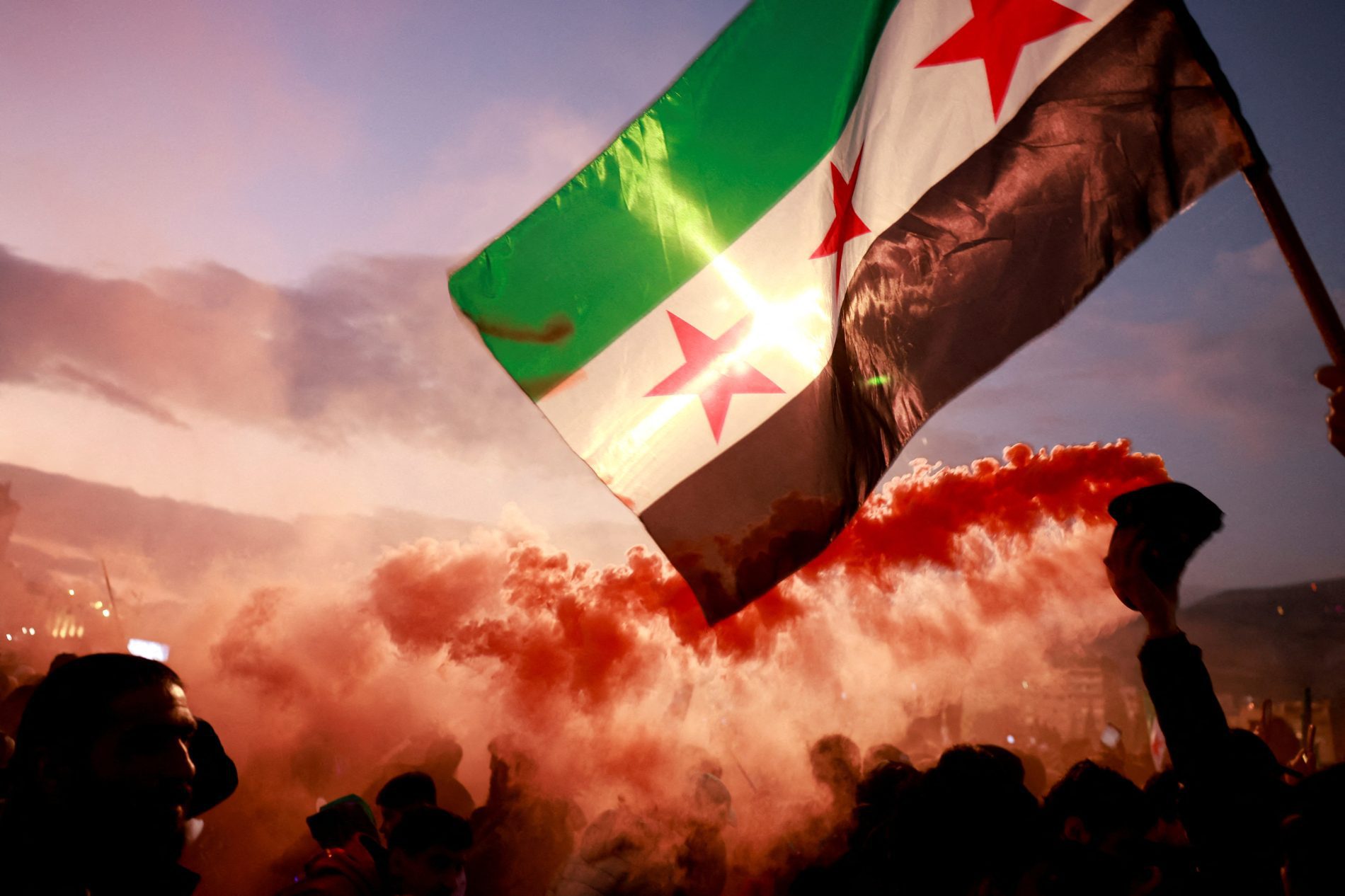
The second step in the American decision concerned Hayat Tahrir al-Sham. The US State Department revoked its designation as a "specially designated global terrorist" (SDGT), and the Treasury Department removed the group from the list of "Specially Designated Nationals and Blocked Persons" (SDN).
This means that the financial sanctions imposed on the group under this designation no longer apply to it.
The Treasury Department clarified that Americans no longer need a licence from the Office of Foreign Assets Control (OFAC) to carry out transactions with the group, provided that such transactions do not involve blocked persons or other activities that remain subject to sanctions.
Washington had removed another designation in 2025
This decision was not the first American removal of a designation concerning Hayat Tahrir al-Sham. On 8 July 2025, corresponding to 13 Muharram 1447 AH, Washington revoked the group's designation as a "foreign terrorist organisation" (FTO).
However, the FTO designation differs legally from the SDGT designation. The former is issued under the Immigration and Nationality Act and is mainly linked to criminalising the provision of "material support" to the organisation and to restrictions relating to immigration and visas.
The SDGT designation is a tool of financial sanctions, and leads to the freezing of property and financial interests and to preventing Americans from carrying out transactions with the designated party.
It was therefore necessary to address the two designations separately.
What changed after removing the financial designation?
With the revocation of the SDGT designation and the removal of the group from the SDN list, the American financial restrictions associated specifically with this designation have disappeared.
Those restrictions had constituted an obstacle to dealing with figures or institutions linked to the new Syrian government, especially in cases where individuals in the current authority have a past history in Hayat Tahrir al-Sham.
Earlier licences issued by OFAC are also no longer necessary for transactions whose prohibition rested solely on the group's designation, according to official US clarifications.
What is the fate of General License No. 25?
General License No. 25 has become unnecessary after the latest legal change. The licence permitted certain transactions that sanctions might otherwise have prohibited, particularly transactions involving persons who had previous ties to the group.
After removing the financial designation from the group, the legal framework has become different: a transaction is not prohibited merely because of its previous link to the group, but must instead be checked to see whether it involves another person or entity that remains subject to sanctions.
And what about Ahmed al-Sharaa?
A distinction must be made between the steps concerning Syrian President Ahmed al-Sharaa and the decision concerning Hayat Tahrir al-Sham as an entity.
Earlier American measures had already lifted the terrorism-related sanctions against him, so the decision of 24 August concerns completing the removal of designations from the group as an entity, and does not concern lifting sanctions from al-Sharaa for the first time.
Can Syria buy American technology?
Access to American civilian goods and technology has become much broader after the lifting of comprehensive sanctions.
However, sensitive materials, dual-use technologies and some products subject to American export controls still require review or a licence, depending on the nature of the product and the beneficiary.
And what about American weapons?
Removing the "state sponsor of terrorism" designation and suspending parts of the restrictions linked to the "Syria Accountability Act" remove legal obstacles that had restricted defence trade.
However, this does not mean that the United States has taken a decision to arm Syria, because the sale of American weapons remains tied to political and legal approvals and separate licences, and to the nature of the deal, the beneficiary and the type of weapon.
What about cases before American courts?
Removing Syria from the list of state sponsors of terrorism does not automatically cancel cases in which judgments have been issued against the Syrian state, or lawsuits filed before the decision.
Under exceptions in the US Foreign Sovereign Immunities Act, the designation had allowed compensation lawsuits against states designated as sponsors of terrorism in specific cases.
With Syria's removal, the legal basis for new lawsuits changes, but earlier judgments and compensation already awarded do not disappear automatically. There are cases before American courts seeking compensation from Syria exceeding 20 billion dollars.
The Syria Accountability Act: what remains of it?
The "Syria Accountability and Lebanese Sovereignty Restoration Act" dates back to 2003 corresponding to 1424 AH, and was linked to the policies of the Syrian regime at the time, including its support for groups that Washington classifies as terrorist, its military and security presence in Lebanon, and its weapons and missile programmes.
After the withdrawal of the Syrian army from Lebanon in April 2005, corresponding to Safar 1426 AH, a fundamental part of the circumstances surrounding the adoption of the law changed, but it was not repealed by legislation.
American official statements explain that the administration used the waiver powers available to it to suspend important parts of the restrictions. Among the latest measures in this context was the amendment of restrictions relating to certain exports of items listed on the "US Munitions List" on 24 August 2026, corresponding to 11 Rabi' al-Awwal 1448 AH.
What remains on the sanctions lists?
Opening the way to dealings with the Syrian state does not mean that all Syrian names have been removed from American lists.
According to the US Treasury Department, sanctions still target former president Bashar al-Assad and persons linked to him, individuals accused of human rights violations, captagon trafficking, terrorism and proliferation, in addition to organisations such as the "Islamic State" and al-Qaeda, and networks linked to Iran and its proxies.
At the same time, on 24 August 2026, corresponding to 11 Rabi' al-Awwal 1448 AH, the Treasury Department listed two former individuals linked to Hayat Tahrir al-Sham whom it said continue to support al-Qaeda and Hurras al-Din, reflecting the continuation of a targeted sanctions approach despite the removal of the designation from the group itself.
One legal step, multiple consequences
The American decision redrew Syria's legal situation on more than one level at the same time.
The state has left the list of "state sponsors of terrorism", and one of the most important sanctions frameworks targeting the former regime has been repealed. Meanwhile, the remaining financial designation on Hayat Tahrir al-Sham has been removed, and economic dealings with Syrian institutions are less exposed to general American obstacles.
On the other hand, Syria has not become a country free of sanctions. Lists still target specific individuals, entities and activities, some sanctions and export laws remain in force, and any international banking or investment dealings will remain tied to compliance rules and risk assessment.
In this way, a phase in Washington has ended in which dealings with Syria were governed essentially by the logic of comprehensive isolation, while the new framework now rests to a greater extent on dealing with the state and its institutions, with the continued pursuit of individuals, entities and activities that the United States places within the scope of sanctions.


