


In a new development reflecting the complexities of the US-Israeli war on Iran, US President Donald Trump announced the suspension of military strikes that Washington had been preparing to carry out, justifying the decision by citing an opportunity to quickly reach an agreement that would end the nuclear crisis and fully open the Strait of Hormuz to navigation.
Trump said his decision came after requests from Iran and other countries in the region, and that he had agreed to temporarily cancel the attack in the hope of reaching a swift "deal" that includes fully reopening the strait and ending what he described as the "Iranian nuclear threat."
However, the American announcement found no positive echo in Tehran. The Iranian agency "Mehr" denied that Iran had asked Trump to halt the strikes, describing the American account as a "new lie," and affirmed that Iranian forces are on alert and ready to confront any development. Likewise, the agency "Fars," citing a source close to the Iranian negotiators, reported that the strait will remain closed as long as the United States continues what Tehran described as "hostile acts."
Saudi Pressure and Fears of a Wider War
Trump's decision does not appear to have been tied to the Iranian track alone. It came after a phone call that Saudi Crown Prince Mohammed bin Salman made to the US president on Saturday, amid Gulf fears that an expansion of the strikes could lead to attacks on energy facilities and infrastructure in the countries of the region.
According to reports carried by "Axios" and the Associated Press, bin Salman urged Trump to de-escalate and avoid carrying out new strikes, amid concerns that Iran might respond by targeting vital facilities in Saudi Arabia and other Gulf states if its own installations were attacked by the United States or Israel.
This coincided with field developments that heightened the sensitivity of the situation. Kuwait announced the interception of Iranian drones that targeted vital facilities, while the UK Maritime Trade Operations centre spoke of two maritime incidents off the coast of Oman, one of which caused damage to the engine room of an oil tanker.
Iranian Foreign Minister Abbas Araghchi warned that any American or Israeli attack, or the participation of regional states in it, would be met with a "proportionate" response. Iranian media also warned that targeting Iranian energy facilities could expand the scope of the response to include energy facilities in several Gulf states.
Hormuz: The Key to the Crisis
The Strait of Hormuz has become one of the main axes of the conflict, having shifted from an issue linked to international navigation into a political and military card of pressure between Washington and Tehran.
The Trump administration wishes to reopen the strait fully to navigation, while Iran holds firmly to its position on controlling transit and the conditions of navigation. The continuation of tensions has disrupted the movement of ships and raised concerns over global energy supplies.
Tensions in the strait had previously caused a sharp rise in oil prices, before prices fell with indications of US-Iranian de-escalation in late July. However, markets remained cautious, as any collapse of negotiations could bring the risk of disrupted energy supplies back to the forefront.
From Threatening War to Seeking a Deal
Trump's latest retreat comes within a series of shifts in his position over recent weeks. After military escalation and repeated threats to resume attacks, the White House suspended strikes temporarily in late July to make room for the diplomatic track, while Trump spoke of the need to reach a swift agreement with Tehran.
At the same time, however, the US president kept the option of force open, asserting that the United States could return to "powerful military action" if the talks fail. For its part, Tehran says communication with Washington is taking place indirectly through intermediaries, reflecting the continued gap between the two sides over the very nature of the negotiations.
Thus Washington appears to be trying simultaneously to keep military pressure in place and open a window for negotiation. This equation makes any possible agreement fragile and liable to collapse at the first field test.
Another Paradox: Political De-escalation Does Not Halt Military Spending
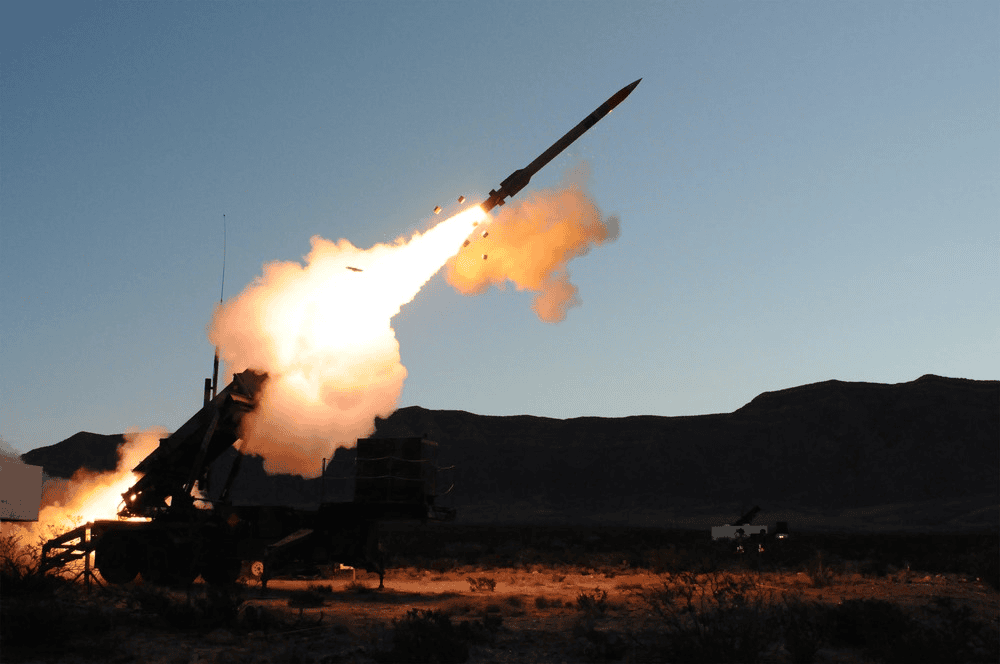
At the same time as Trump speaks of the possibility of cancelling strikes if a swift agreement can be reached, the US military continues to strengthen its defensive capabilities after the heavy depletion of munitions during the war.
In this context, a major contract was announced with the company Lockheed Martin to increase production of missile interception systems used by US forces, at a time when published estimates indicate that the American stock of interceptor missiles has declined significantly since the start of the war in February.
The company had earlier in the year obtained another contract to increase production of long-range defensive systems. This reflects the scale of attrition that US defensive capabilities suffered during the confrontation, and reveals a striking paradox: while the American administration moves politically towards de-escalation, the military establishment and defence industries continue to prepare for a long and costly war.
This contradiction suggests that Washington does not treat the diplomatic track as a final alternative to the military option; rather, military pressure and the ability to sustain the war still appear to be part of the American negotiating tools.
Are We Facing a Real De-escalation?
So far, there are not enough indications that the American retreat represents an actual end to escalation. Iran has essentially denied the American account regarding its request to halt the strikes, while Washington has kept its threatening rhetoric and affirmed its military readiness.
Moreover, the file of the Strait of Hormuz, the Iranian nuclear programme and the American military presence in the region, alongside the fears of Gulf states that the war could spread to their territories, make reaching a comprehensive agreement extremely difficult.
Accordingly, Trump's step appears closer to a new negotiating opportunity under the pressure of war than to a completed settlement. The United States wants to reopen Hormuz and impose limits on Iran's nuclear programme, while Tehran wants an end to attacks and to American and Israeli pressure, along with guarantees that prevent a renewed war.
While both sides continue to exchange threats, the Strait of Hormuz remains the most important test of any forthcoming agreement: if it can be reopened in a stable manner, this could mark the beginning of a broader path of de-escalation; but if negotiations fail, the region could quickly return to the cycle of strikes and responses, with greater risks for Gulf states and global energy markets.
In sum, Trump is backing away from a new strike in hope of a swift deal, Iran denies that it requested a truce, Gulf states are pressing to prevent the war from widening, and American military contracts reveal a parallel readiness for the possibility that confrontation continues. Between diplomacy and weapons, the US-Iranian crisis appears to be at a decisive testing stage, not a stage of complete peace.


