

The United Nations' top court has opened a landmark case accusing Myanmar of committing genocide against the Rohingya, a predominantly Muslim minority.
Gambia's Minister of Justice Dawda Jallow told the International Court of Justice in The Hague on Monday that the Myanmar military deliberately targeted the Rohingya minority in an attempt to destroy the community.
"This is not about obscure questions of international law. It is about real people, real stories, and a real group of human beings. They are the Rohingya of Myanmar. They have been targeted with genocide," Jallow said.
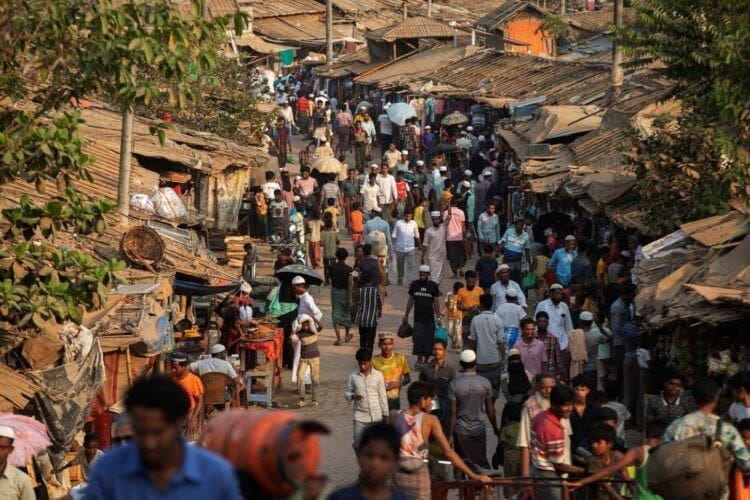
The Gambia filed a lawsuit against Myanmar at the International Court of Justice, also known as the World Court, in 2019, two years after the military launched an offensive that forced some 750,000 Rohingya to flee their homes, most of them to neighbouring Bangladesh.
Refugees recounted mass killings, rape and deliberate burning.
The trial is the first full genocide case heard by the International Court of Justice in more than a decade, and its outcome will have repercussions beyond Myanmar. It is likely to influence South Africa's application against Israel's military campaign in Gaza, which South Africa has described as genocide.
The hearings will last three weeks.
The UN fact-finding mission at the time concluded that the 2017 offensive included "acts of genocide."
However, the authorities in Myanmar rejected the report, claiming that their military campaign was a legitimate counter-terrorism operation in response to attacks by Rohingya armed groups.
Nicholas Koumjian, head of the UN Independent Investigative Mechanism for Myanmar, told Reuters: "This case is likely to set crucial precedents for how genocide is defined and how it is proven, and how violations are addressed."
Jennifer Begum, 37, a mother of two, said: "Our women lost their dignity when the military council launched the eviction campaign. They burned villages, killed men, and women became victims of widespread violence."
Others said they hoped the case would bring real change, although the International Court of Justice has no means of enforcing any ruling it issues.
Amid continuing abuses against the Rohingya, the world must stand firmly in pursuit of justice, find a way to end impunity in Myanmar, and restore our rights.
"The International Court of Justice hearings will mark the first time Rohingya victims of atrocities are heard by an international court, although the sessions will be closed to the public and the media for reasons of sensitivity and privacy.
Separate case before the International Criminal Court
During the preliminary hearings in the International Court of Justice case in 2019, Myanmar's then leader Aung San Suu Kyi rejected The Gambia's genocide allegations, describing them as "incomplete and misleading." The military later ousted her in a coup in 2021.
The seizure of power plunged Myanmar into chaos, as the military's violent suppression of pro-democracy protests triggered a nationwide armed rebellion.
While Myanmar's military continues to deny the genocide allegations, the opposition National Unity Government, formed by elected lawmakers after the 2021 coup, said it had "accepted and welcomed" the jurisdiction of the International Court of Justice, adding that it had "withdrawn all preliminary objections" it had previously raised in the case.
In a statement issued before the hearing, the National Unity Government acknowledged government failures, which it said had "enabled grave atrocities" against minorities. It also acknowledged the name Rohingya, which the former elected government, including Aung San Suu Kyi, had refused to use.
The government of Namibia said: "We are committed to ensuring that such crimes never happen again."
Myanmar's military chief, General Min Aung Hlaing, faces a separate arrest warrant from the International Criminal Court for his role in the persecution of the Rohingya.
The ICC's Office of the Prosecutor said the general "bears criminal responsibility for crimes against humanity of deportation and persecution of the Rohingya, committed in Myanmar and, in part, in Bangladesh."
In addition, the Burmese Rohingya Organisation UK (BROUK) accused the military government of "intensifying genocide" against the Rohingya since it seized power in 2021.
Myanmar is currently holding multi-stage elections that have been criticised by the United Nations, some Western countries and human rights groups as neither free nor fair.
Al Jazeera.


