


Timbuktu, located in present-day Mali on the edge of the Sahara, was not merely a stop for caravans crossing between North Africa and the Western Sudan. During the fifteenth and sixteenth centuries CE, it became one of the most prominent centres of Islamic learning in West Africa, where scholars, jurists, copyists and merchants gathered, and where mosques, teaching circles and manuscript libraries flourished.
From a Caravan Station to an Islamic City
Timbuktu arose in a strategic area close to the trans-Saharan trade routes and the course of the Niger River, benefiting from its intermediary position between North Africa and the gold-producing and agricultural regions of the south. A variety of groups settled there, including the Tuareg, merchants and scholars, as well as local communities linked to the commercial and cultural movement of West Africa.
Historical accounts do not agree on a single date for the founding of the city, but its importance grew with the expansion of trans-Saharan trade and the spread of Islam in the region. The caravans carried salt, textiles and goods, and returned with gold, grains and other products. The movement of merchants also contributed to the transmission of the Arabic language, books, knowledge and religious ties among communities.
In the fourteenth century CE, the city was tied to the Mali Empire, one of the leading Islamic powers in West Africa. Historical sources mention a visit to the area by the ruler Mansa Musa on his return from the Hajj around 724 AH/1324 CE, and his name is associated with sponsoring the construction of the Great Mosque known as Djinguereber, which later became one of the city's most prominent landmarks.
Timbuktu under Songhai: The Age of Prosperity
Timbuktu entered a decisive phase with the rise of the Songhai Empire, which extended its authority over wide areas of West Africa. In the late fifteenth century CE, the city's political and scholarly prosperity was linked to the reign of the ruler Askia Muhammad I, who came to power in 898 AH/1493 CE and continued until 935 AH/1528 CE.
Askia Muhammad worked to strengthen the standing of scholars and judges, relied on jurists in matters of governance, and the prosperity of the state allowed religious and educational institutions to grow. Scholars in Timbuktu were not merely teachers within mosques; some played roles in judiciary work, issuing legal opinions and settling disputes, in addition to their links with political authority and merchants.
The city was part of a wider network of Islamic urban centres, bound by scholarly and commercial ties to centres in the Maghrib, the Sahara and the Western Sudan. These connections facilitated the movement of books and legal methodologies, and helped entrench the Maliki school, which held an important place in the religious and judicial life of the region.
Sankore: Circles of Learning and Scholars' Gatherings
The name of Timbuktu is associated with the Sankore Mosque, which became a prominent centre of Islamic education. The expression "Sankore University" is used to describe this scholarly environment, but historically it is more accurate to understand it as a network of teaching circles, mosques and teachers rather than a central university in the modern institutional sense.
A student received instruction from scholars, studying the Qur'an, hadith, jurisprudence and its principles, the Arabic language and exegesis, according to the specialisation of the teacher and the books in circulation in his circle. The paths and duration of study varied according to the level of the student and the scholar from whom he learned, while certification (ijazah), scholarly transmission and ties of discipleship formed part of the transfer of knowledge.
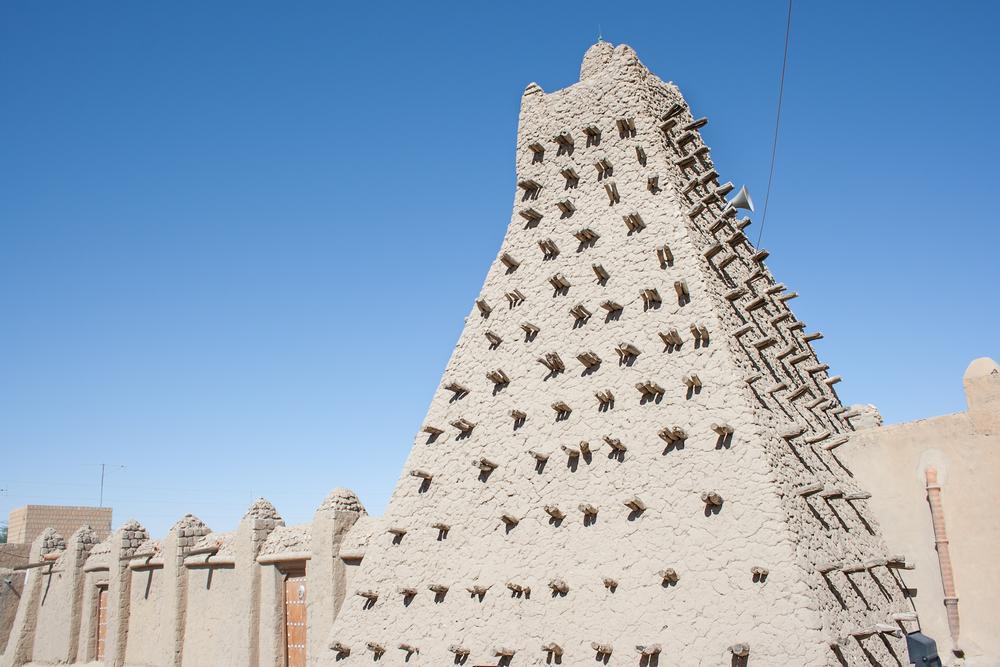
Alongside Sankore, the Djinguereber Mosque and the Sidi Yahya Mosque stood out among the city's major religious and scholarly landmarks. These mosques were not places of prayer alone; they were linked to teaching, legal opinions and social life, and formed centres around which scholars, students and the city's residents gathered.
Ahmad Baba al-Timbukti: A Scholar Who Faced the Trial of Invasion
Among the most prominent figures of Timbuktu was Ahmad Baba al-Timbukti, born in 963 AH/1556 CE and died in 1036 AH/1627 CE. He grew up in a long-established scholarly family and studied jurisprudence, hadith, the Arabic language and other disciplines under the scholars of his city, until he became one of the best-known Maliki jurists in West Africa.
His life was also linked to a dangerous political transformation, as his scholarly rise coincided with the Moroccan invasion of the Songhai Empire, which ended with the defeat of Songhai forces at the Battle of Tondibi in 999 AH/1591 CE. The invasion led to the collapse of the empire's central power and a change in the balance of rule in the region.
Ahmad Baba was arrested and exiled to Marrakesh, where he continued his scholarly activity despite the ordeal, before returning to Timbuktu in the later part of his life. His biography shows how scholars were able to sustain their intellectual presence even in times of political upheaval, and how the history of the city was bound up with the paths of both learning and conflict at once.
The Moroccan Invasion and the Shift in the Balance of Power
The invasion of 999 AH/1591 CE was not merely a transfer of authority; it struck the political structure that had supported Timbuktu's prosperity under Songhai. The city came under the influence of rulers tied to Moroccan power, while the unity of the empire, which had provided a broad political framework for trade and learning, declined.
Over time, Timbuktu no longer held the same political position it had enjoyed in the era of Askia Muhammad. Yet the decline of central authority did not bring an end to intellectual life: scholarly families continued to teach, copy and preserve books, and mosques and libraries remained among the most important institutions of local society.
This period offers an important lesson in the history of Islamic urban centres: a city may flourish when trade, stability and the patronage of learning converge, but it may be transformed when trade routes change or the state that protects its institutions collapses.
Manuscripts: The Memory of a Scholarly City
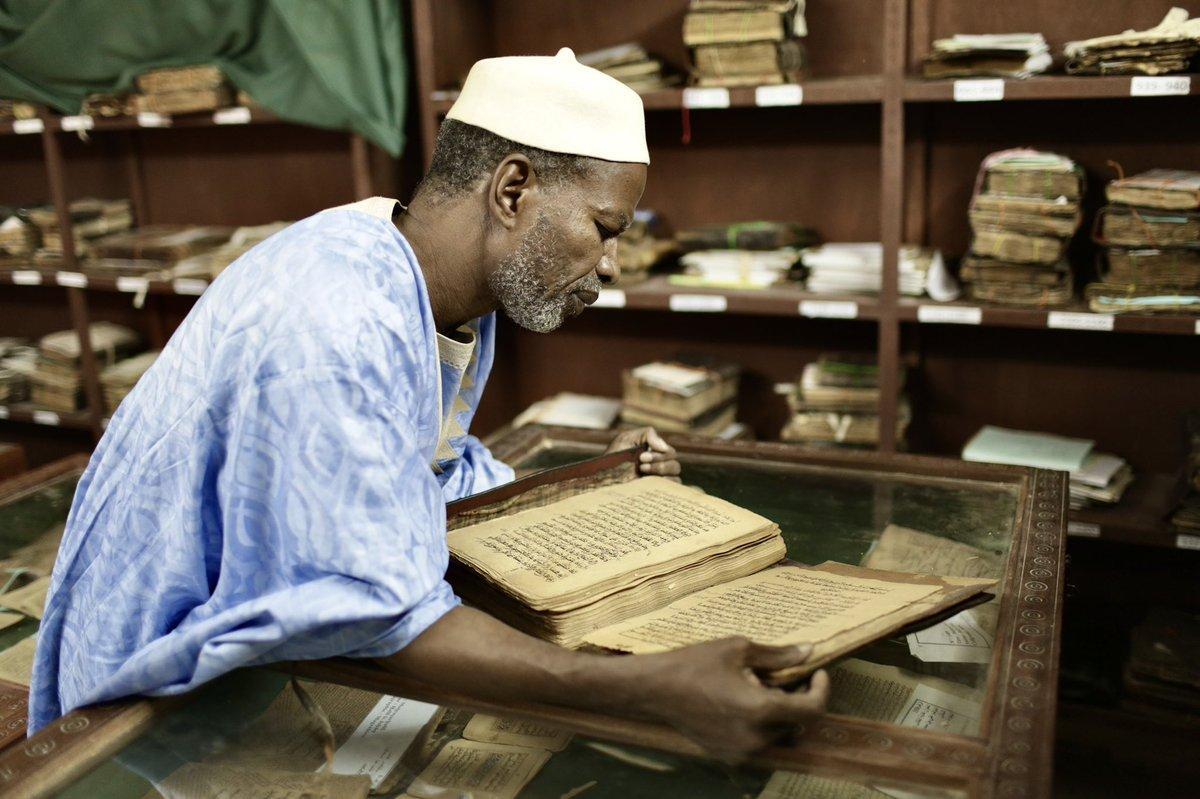
The manuscripts of Timbuktu reveal the broad range of interests of scholars in West Africa. Alongside jurisprudence, exegesis and hadith, manuscript collections include material on language, literature, history, arithmetic, astronomy and medicine, as well as documents relating to transactions, endowments and correspondence.
The importance of these manuscripts lies in the fact that they document not only religious knowledge, but also details of social and economic life, the relations of scholars with rulers and merchants, and the city's connections with other parts of the Islamic world.
Local families passed down collections of these books across successive generations, preserving an important part of West Africa's written memory. The protection, restoration and cataloguing of manuscripts became a cultural and scholarly necessity, particularly after the dangers the city and its institutions faced during modern armed conflicts.
Architecture of Clay and an Identity That Defies Time
The historic mosques of Timbuktu are distinguished by their use of local building materials, notably clay and timber, suited to the desert and semi-desert environment. The Djinguereber Mosque stands out as one of the most important examples of Islamic architecture in the region, alongside Sankore and Sidi Yahya.
These buildings require continuous maintenance to resist erosion and climatic factors, and their preservation is tied to the continuing transmission of traditional knowledge among builders and the local community. The value of this architecture, therefore, lies not only in its walls and minarets but also in the traditions of collective work that have kept them standing across the centuries.
What Remains of Historic Timbuktu?
Timbuktu remains a symbol of a period when West Africa was an active part of the network of learning and trade in the Islamic world. Its mosques, manuscripts and the names of its scholars provide evidence that Islamic knowledge was not confined to the centres known in the East or the Maghrib, but also flourished in distant cities beyond the Sahara.
The city's political and economic standing changed over time, yet its scholarly heritage has remained present in historical studies, in efforts to preserve manuscripts and in the revival of local memory. Its story stands as testimony to the role played by mosques, scholars and trade in spreading Islam and shaping cultural life in West Africa.


