


The crisis in Ethiopia's Tigray region entered a more dangerous phase in recent hours, after Ethiopian government forces and their allies took control of Mekelle, the regional capital, and Tigray People's Liberation Front forces withdrew from the city, while tensions escalated between Ethiopia, Eritrea, Egypt and Sudan, amid fears that fighting could expand into a wider regional confrontation in the Horn of Africa.
According to Reuters, Ethiopian government forces and their allies regained control of Mekelle, days after the most severe escalation in the area since the end of the previous Tigray war with the peace agreement signed in Pretoria in 2022. The Tigray People's Liberation Front announced its withdrawal from the city and said it would temporarily relocate the regional government's seat.
Federal forces had earlier retaken Alula Aba Nega Airport in Mekelle, which Tigray forces had seized during the offensive that began on 23 September, while residents and local sources spoke of gunfire, widespread disruption and cuts to communications and services within the city.
Washington warns of a new regional war
As fighting widened, the United States called on Ethiopia and Eritrea to exercise "maximum restraint" and return to dialogue, warning that the growing tension between the two countries could affect the entire Horn of Africa region.
US State Department spokesperson Tommy Pigott, in a statement issued on 3 October 2026, said the region "cannot afford another military conflict and humanitarian crisis", and urged Addis Ababa and Asmara to respect the sovereignty of neighbouring states and return to cooperation within the framework of the peace agreement the two countries agreed in 2018.
The US warning came after a sharp deterioration in relations between Ethiopia and Eritrea. Addis Ababa closed its embassy in Asmara and expelled ten Eritrean diplomats, before Eritrea announced it was severing diplomatic relations with Ethiopia. Ethiopia and Egypt also expelled each other's diplomats, an additional sign of the crisis spreading beyond the borders of Tigray.
Mutual accusations and neighbouring states enter the picture
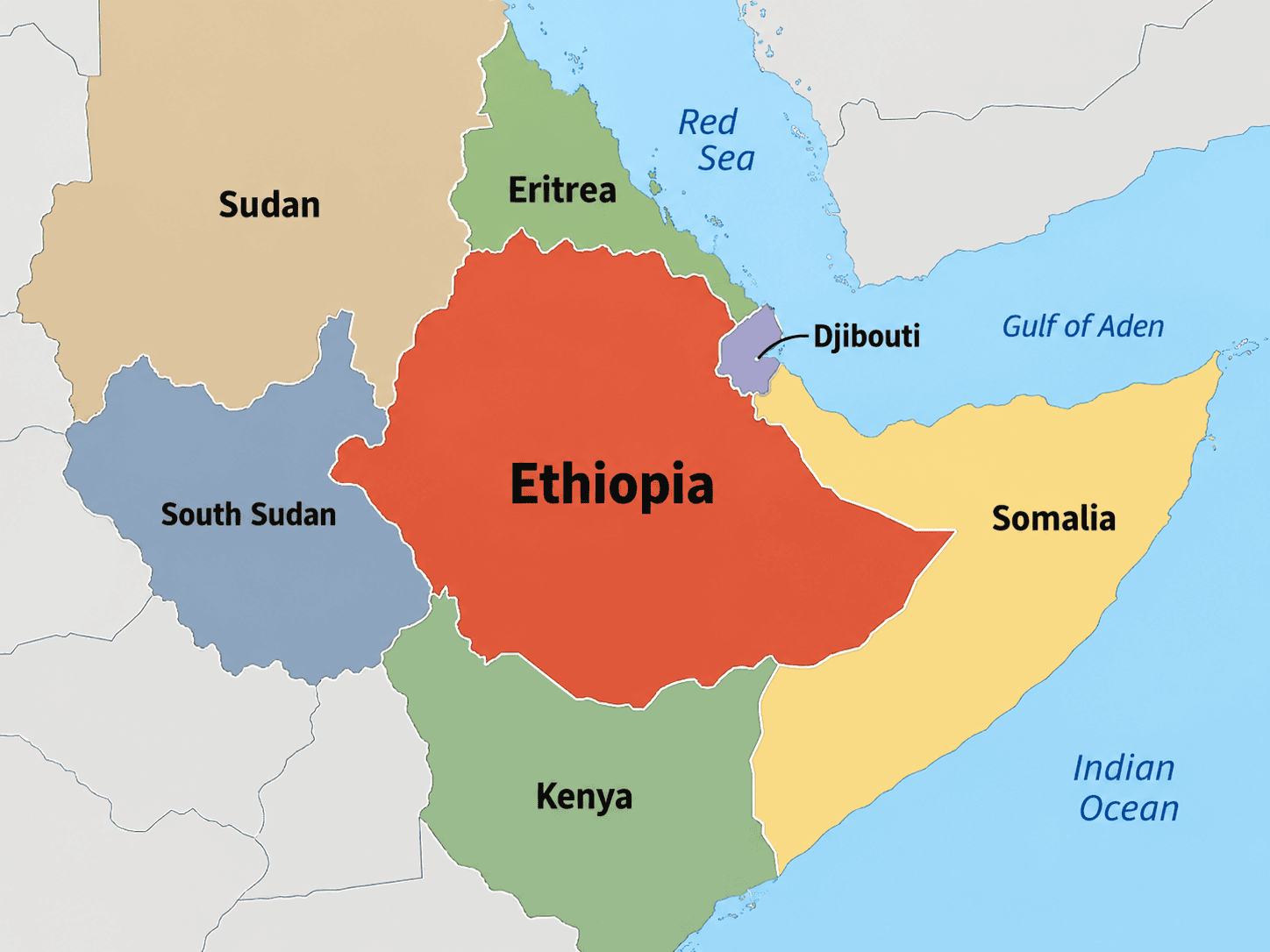
The Ethiopian government accuses Eritrea, Egypt and Sudan of supporting the opposition alliance led by the Tigray People's Liberation Front, accusations that all three countries have denied. Ethiopian army chief Berhanu Jula had accused those countries of providing political and military support to the opposition, at a time when disputes between Addis Ababa and Asmara over border security and access to the Red Sea are intensifying, and between Ethiopia and Egypt over the Grand Ethiopian Renaissance Dam and other regional issues.
Amid this escalation, the African Union in turn called on Ethiopia, Eritrea and Egypt to exercise restraint and avoid any steps or statements that could increase tensions, calling for disagreements to be resolved through diplomatic channels and peaceful dialogue.
Meeting in Egypt amid fears of a widening war
In a notable regional move, Agence France-Presse reported that leaders from Egypt, Eritrea and Somalia, along with Sudanese army commander Abdel Fattah al-Burhan, are meeting today, Sunday 4 October 2026, corresponding to 23 Rabi' al-Thani 1448 AH, in the Egyptian city of El Alamein on the sidelines of an African economic forum, with discussions focused on the risk of the conflict in Ethiopia widening and its repercussions for the region.
These moves come as the Tigray crisis is increasingly linked to broader regional rivalries in the Horn of Africa, where disputes between Ethiopia and Eritrea, the Sudanese conflict, competition over the Red Sea, and the Egyptian-Ethiopian dispute over Nile waters and the Grand Ethiopian Renaissance Dam intersect.
Civilians once again face the risk of a wide war
The renewed fighting raises serious humanitarian concerns, particularly as the people of Tigray are still suffering the effects of the 2020–2022 war, which left wide-scale destruction, collapsed services and mass displacement. During the current wave of fighting, medical sources spoke of hundreds of wounded and the displacement of around 150,000 people from areas of northern Ethiopia.
The recent fighting has also led to closed roads, suspended flights and disrupted communications in Tigray, heightening fears that civilians will once again be cut off and that humanitarian aid will struggle to reach them.
The Pretoria agreement signed in November 2022 had ended two years of war between the Ethiopian government and the Tigray People's Liberation Front, but key parts of it were never fully implemented, and disputes over disarmament, governance arrangements and disputed territories remained unresolved.
With Mekelle once again falling to government forces and the diplomatic confrontation between Ethiopia and its neighbours escalating, the crisis is no longer confined to Tigray. It threatens to reshape alliances and open new fronts of tension in an already volatile Horn of Africa.


