


After three years, what began as a power struggle between the Sudanese Armed Forces, led by Abdel Fattah al-Burhan, and the Rapid Support Forces (RSF), led by Mohamed Hamdan Dagalo "Hemedti", has forced more than 14 million people to flee their homes, creating one of the largest displacement and humanitarian crises in the world.
According to the Armed Conflict Location & Event Data Project (ACLED), an independent conflict monitoring organisation, more than 50,000 people have been reported killed across the country over the past three years. However, the true number of victims is believed to be much higher when indirect deaths caused by disease, malnutrition and lack of healthcare are taken into account.
This report traces the course of the conflict in ten of Sudan's most heavily attacked areas and records first-hand testimony from local residents. More than 13,400 documented attacks, between 24 Ramadan 1444 AH (15 April 2023) and 8 Shawwal 1447 AH (27 March 2026), were recorded, at least 13,401 attacks, an average of 12 attacks per day, according to data from the Armed Conflict Location & Event Data Project (ACLED).
The Sudanese army was responsible for 53% of all documented attacks (7,100 attacks), while the RSF militias carried out 35% (4,705 attacks). The remaining 12% (1,596 attacks) were attributed to other groups, including the Popular Defence Forces, the Sudan People's Liberation Movement, the Tuic tribal militia and others, according to the report's data.
These attacks include armed clashes, airstrikes or drone attacks, artillery or missile shelling, looting or destruction of property, and the remote planting of explosives or landmines.
Timeline of Attacks
The conflict evolved from a sudden power struggle in 1444 AH (2023) into a scattered war of attrition overseen by two rival governments. During the first year, fighting erupted in central areas of the capital, Khartoum, where the RSF rapidly seized large parts of the city and the presidential palace before expanding west into Darfur and south into Al-Jazirah. By 1445 AH (2024), the front lines had turned into sieges and prolonged battles for control of territory. In Dhu al-Qi'dah 1446 AH (May 2025), the army established an official civilian administration in Port Sudan. The RSF responded by forming a rival government in Nyala. This political division was compounded by escalating use of drones and the RSF's seizure of El Fasher in Rabi' al-Thani 1447 AH (October 2025).
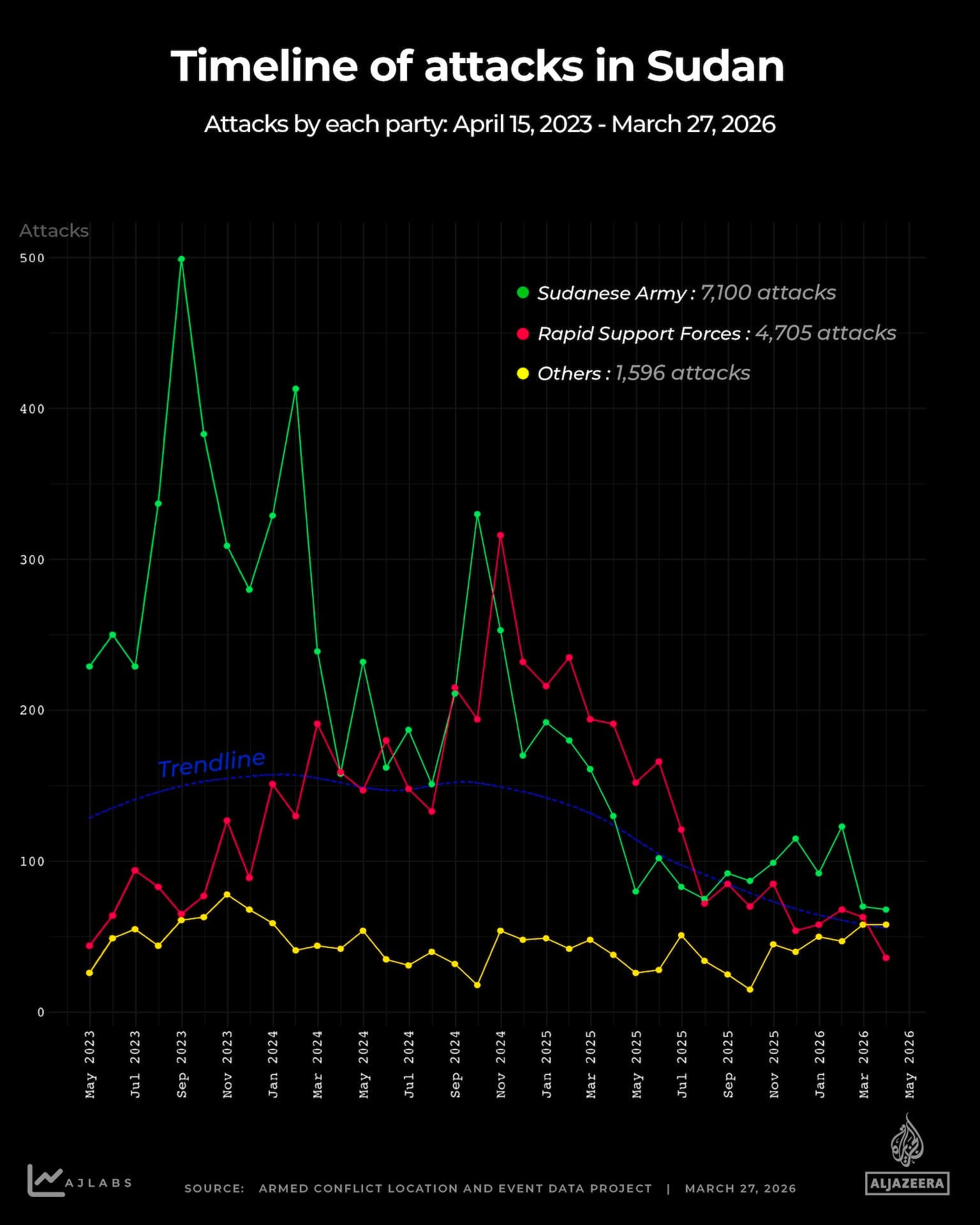
Timeline of attacks.
Green: Sudanese Armed Forces; Red: RSF militia; Yellow: others.
Who Controls the Ground?
Since Ramadan 1444 AH (April 2023), control of territory in Sudan, home to some 48 million people, has continuously shifted between the Sudanese Armed Forces and the RSF. Initially, the RSF quickly seized large parts of Khartoum and Al-Jazirah and expanded to cover Darfur and West Kordofan.
During 1446–1447 AH (2025), the army launched counter-offensives, gradually recaptured the capital and secured the Nile corridor. By around Rajab 1447 AH (early 2026), Sudan had effectively divided: the army now controls the eastern and central regions, while the RSF remains entrenched in Darfur and parts of Kordofan, with scattered and disputed front lines between them.
Khartoum
Khartoum, the capital of Sudan, lies at the confluence of the White Nile (flowing from Lake Victoria) and the Blue Nile (flowing from Ethiopia), which form the Nile River flowing north into Egypt. This city, with a population of about seven million, has been a centre of the war's attacks, recording 5,651 attacks, equivalent to 42% of all recorded attacks. The battles fought in this city constituted the first and intermediate phases of the war.
In Ramadan 1446 AH (March 2025), the Sudanese army regained control of the city, and in Rajab 1447 AH (January 2026), the government returned from its wartime base in Port Sudan.
Ahmed Hammad (a pseudonym) (50 years old), from Khartoum, is a father whose children have been out of school for three years:
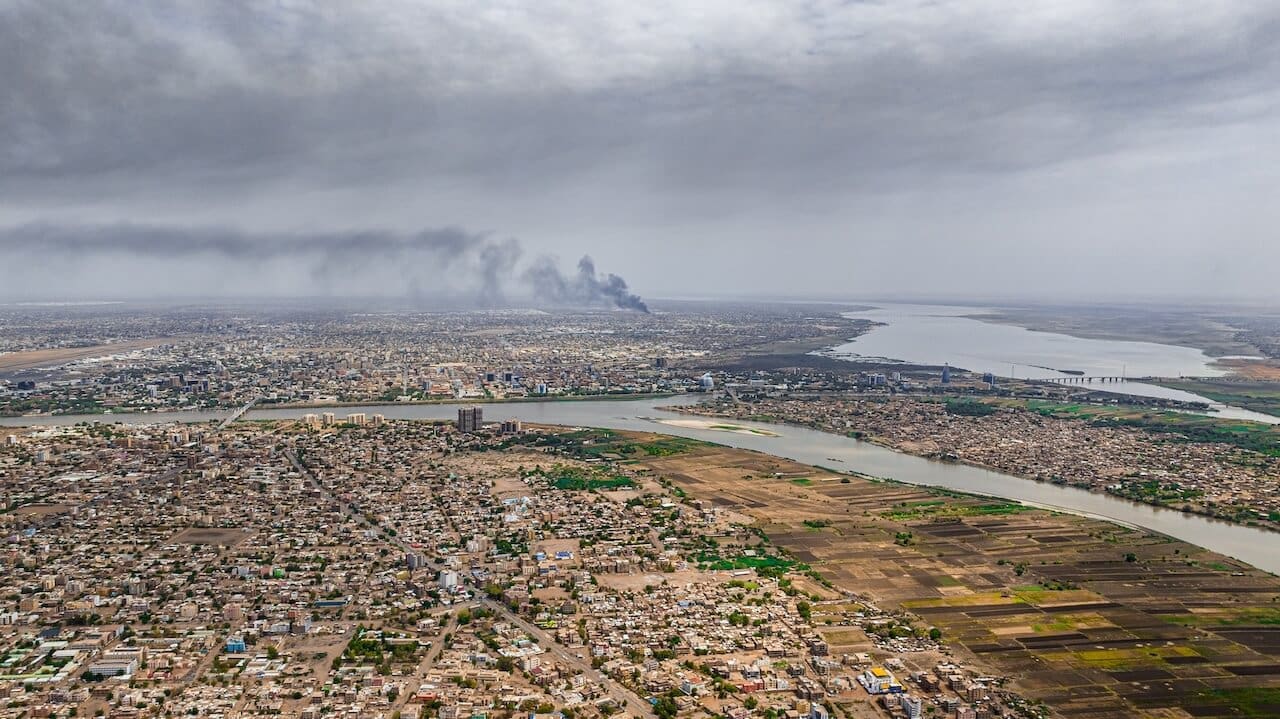
An aerial photograph dated 1445 AH (June 2023) shows smoke rising over the skyline of Khartoum.
Omdurman
Omdurman lies directly west of Khartoum, on the opposite bank of the Nile. As part of the Greater Khartoum area, where nearly half of the attacks were concentrated, the city has witnessed some of the fiercest urban fighting of this conflict. Its neighbourhoods became battlegrounds, shaped by direct armed clashes, the most common form of violence in the war.
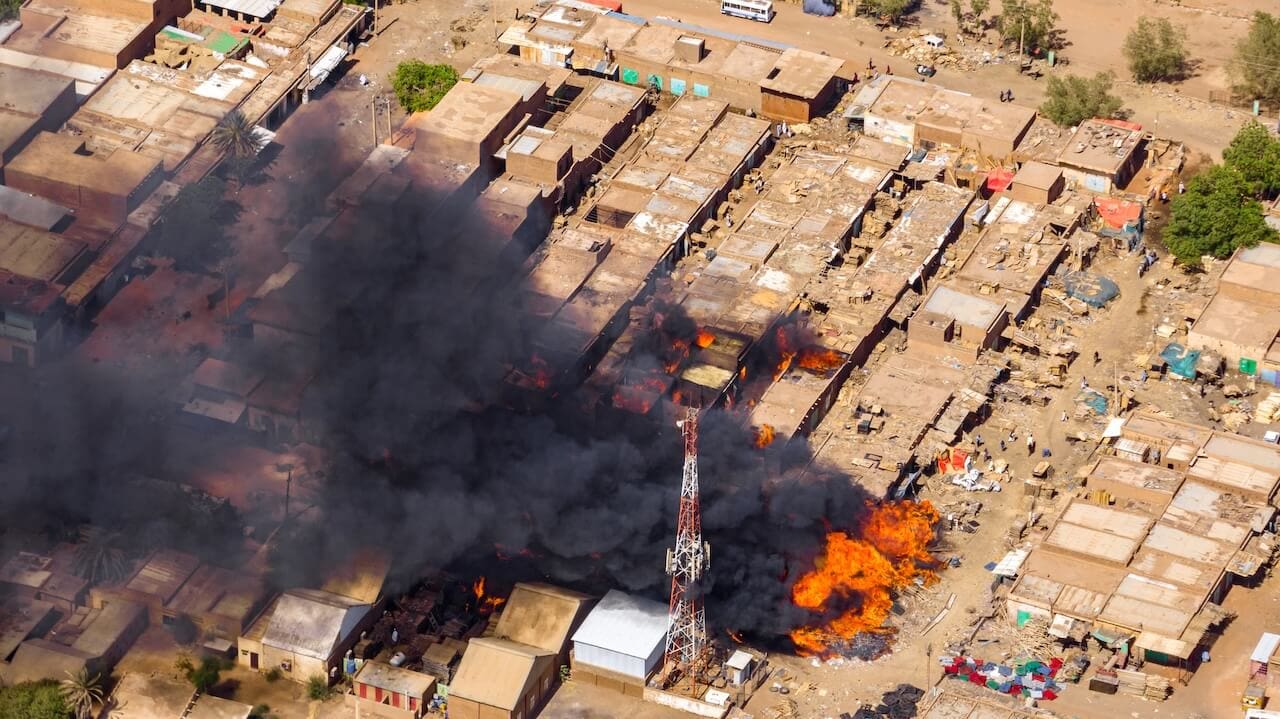
An aerial photograph shows flames burning in the Al-Arab market in the city of Omdurman in 1444 AH (2023).
Dr Abu Mihab (58 years old), from Omdurman, a university lecturer who returned to Omdurman after a brief flight:
Bahri (North Khartoum)
Bahri lies directly north of Khartoum. The Blue Nile separates it from the capital, which made it vulnerable to intensive artillery shelling and airstrikes. Its strategic assets, including a major oil refinery, made it a highly important target. The army regained near-complete control of the city in Rajab 1446 AH (early 2025).
In Rajab 1447 AH (January 2026), the government's return to Bahri represented an attempt to re-establish its authority, but after a long period of fragmentation in the capital.
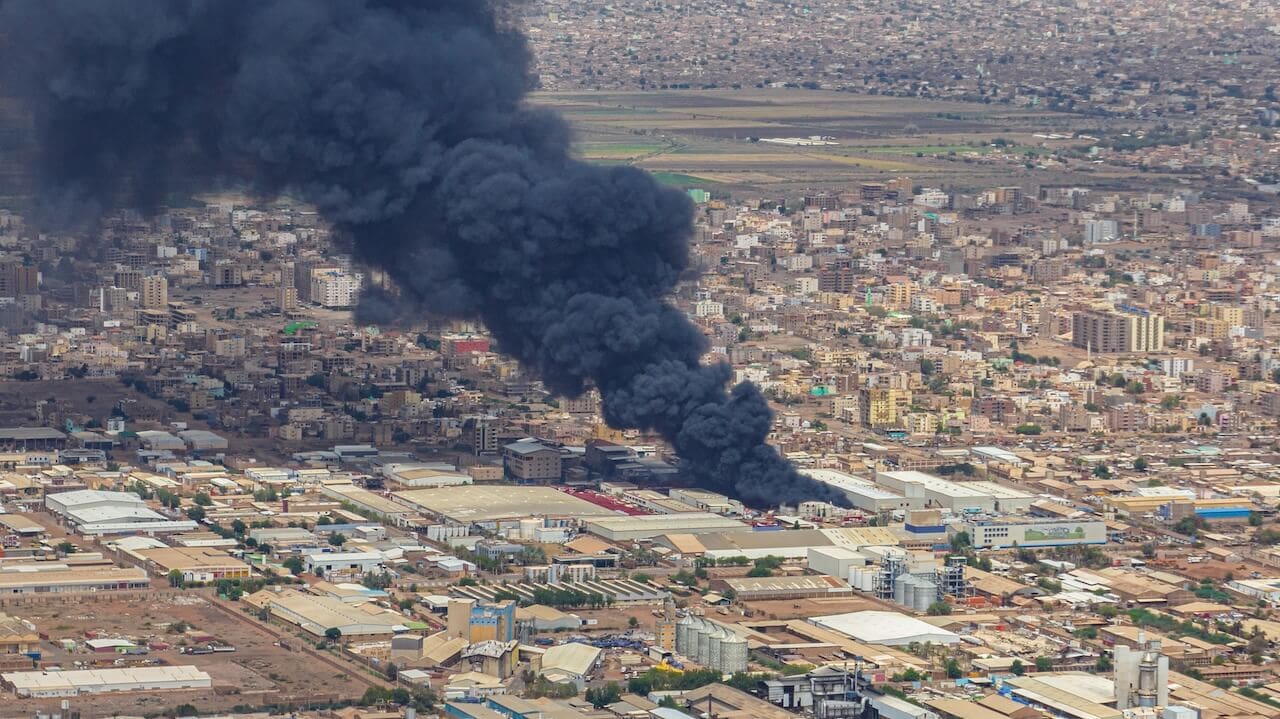
An aerial photograph dated 1445 AH (2023) shows smoke rising over the skyline of the city of Bahri.
Wad Madani – Al-Jazirah State
Wad Madani, widely regarded as the heart of Sudan's agricultural sector, lies about 170 kilometres (105 miles) south of Khartoum in Al-Jazirah State. With 1,424 attacks recorded (10%), Al-Jazirah State was among the most affected regions outside the capital.
When the RSF seized the city in Jumada al-Ula 1445 AH (December 2023), it caused mass displacement and exposed the fragility of areas that had previously been stable. The army regained control of Wad Madani in Rajab 1446 AH (January 2025), cutting off key RSF supply lines. However, reports of retaliatory acts highlighted a recurring pattern: changes in control, but violence continues.
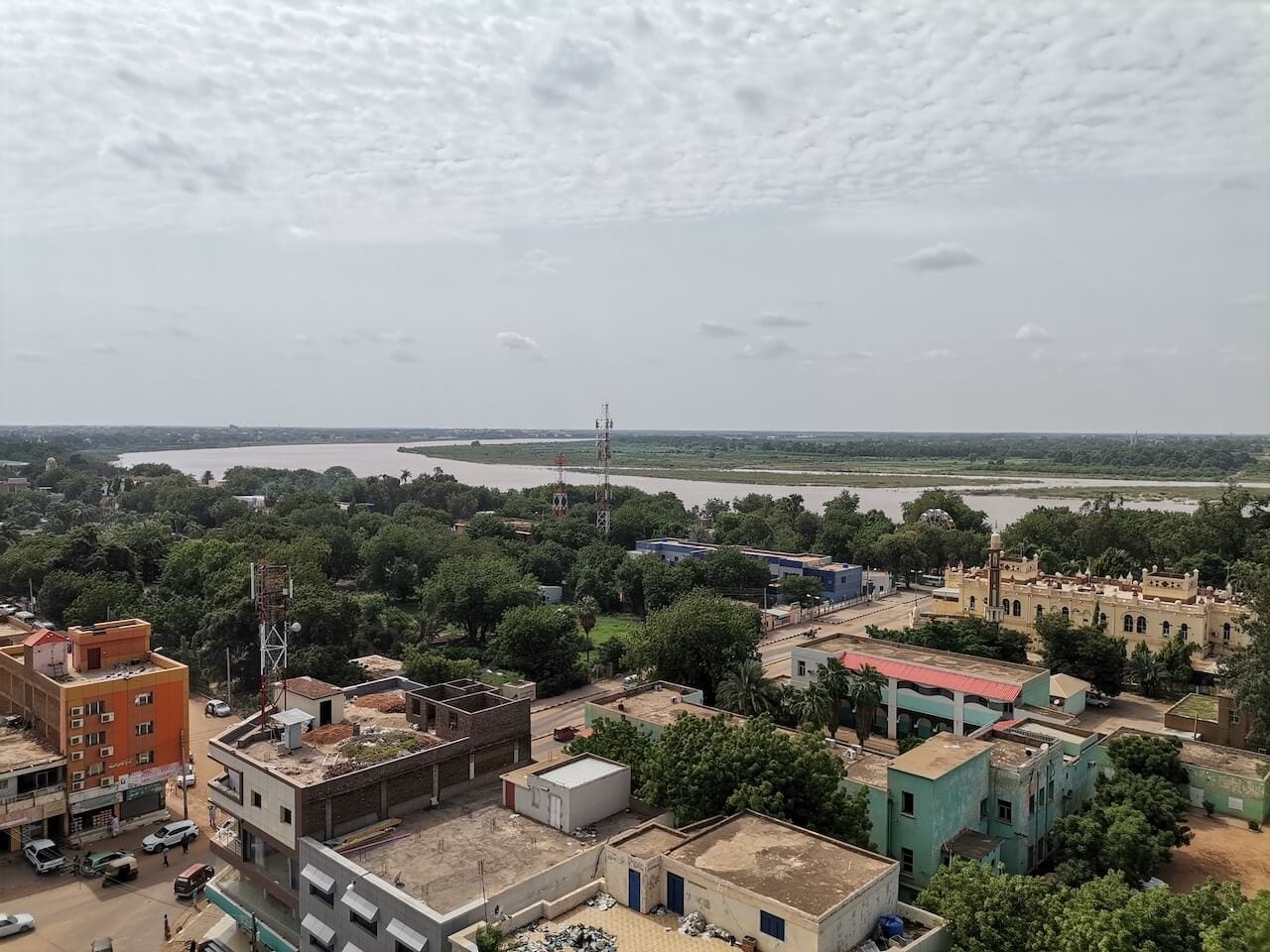
A view of the Blue Nile from the Wad Manadi area in 1442 AH (2021).
Atef Abdullah Jadain (50 years old), from Wad Madani, a displaced person who dreams of Sudan's renaissance:
El Obeid – North Kordofan State
El Obeid, the capital of North Kordofan State, lies at a strategic crossroads, linking Khartoum in the centre with Darfur in the west. The city has been repeatedly targeted by drone strikes, recording 929 attacks, or 7% of all attacks in the country.
In Rajab 1447 AH (January 2026), the army broke the siege of the nearby town of Dilling, easing pressure on El Obeid.
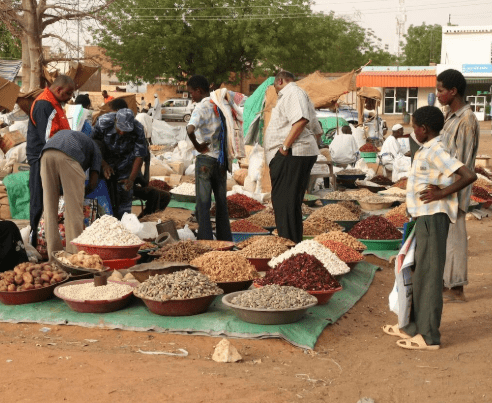
The daily fruit and vegetable market in El Obeid, the largest city in North Kordofan State, located in the heart of Sudan.
El Fasher – North Darfur
As the last army stronghold in Darfur, El Fasher withstood an 18-month siege before falling to the RSF in Rabi' al-Thani 1447 AH (October 2025). North Darfur recorded 15,000 deaths, the highest rate (30%) in the country. The city was home to more than one million displaced civilians. Its fall, and the massacre that followed, highlighted the vulnerability of the civilians trapped in the expanding conflict zones.
Atef Adam Abdel Rahman (26 years old), from El Fasher, a young man who was displaced across several states before settling in Khartoum:
Nyala – South Darfur
After a long siege, the RSF took control of the city in Rabi' al-Awwal 1445 AH (October 2023), making it a central hub for consolidating its influence in the region. The takeover was followed by widespread looting, killing and displacement, patterns that recurred across all areas under RSF control.
Suhaiba Ali (22 years old), from Nyala, who fled on foot to Mahajiriya seeking safety:
Zalingei – Central Darfur
The city of Zalingei fell in Muharram 1445 AH (early August 2023) during a rapid RSF advance. Although Central Darfur recorded a lower proportion of deaths, the city suffered the systematic looting, killing of civilians and forced displacement seen across Darfur as a whole.
Its fall consolidated RSF control over most of the region and isolated El Fasher as the last city still held by the government at that time.
Geneina – West Darfur
The city of Geneina, capital of West Darfur, is marked by the nature of the violence it has witnessed. During the first year of the war, the city saw the "Battle of Geneina." Since the RSF took control of it in 1444 AH (mid-2023), international human rights organisations have documented severe ethnic violence within the city and its surroundings.
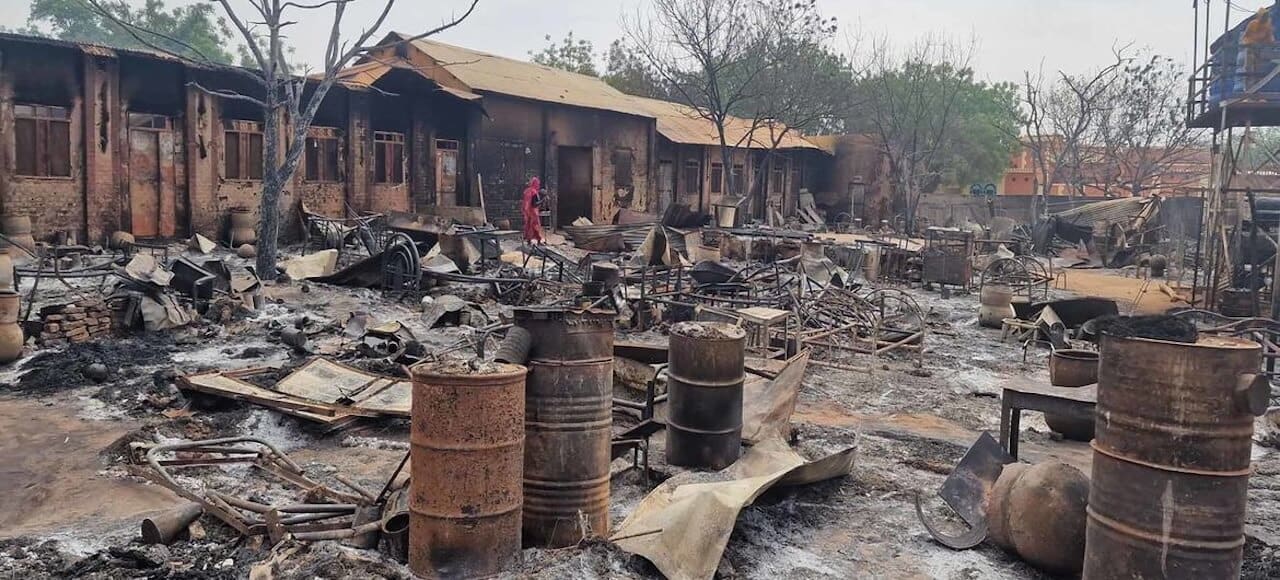
A school in the city of Geneina in West Darfur State, which was being used as shelter for displaced people, was burned.
Port Sudan
Far from the first front lines, the city of Port Sudan lies more than 650 kilometres (400 miles) from Khartoum along the Red Sea coast. From Ramadan 1444 AH (April 2023) to Rajab 1447 AH (January 2026), Port Sudan served as the government's official capital during the war and the main centre for humanitarian aid and diplomatic efforts. Despite its relative distance, the war reached the city in 1447 AH (late 2025) through drone strikes by the RSF.
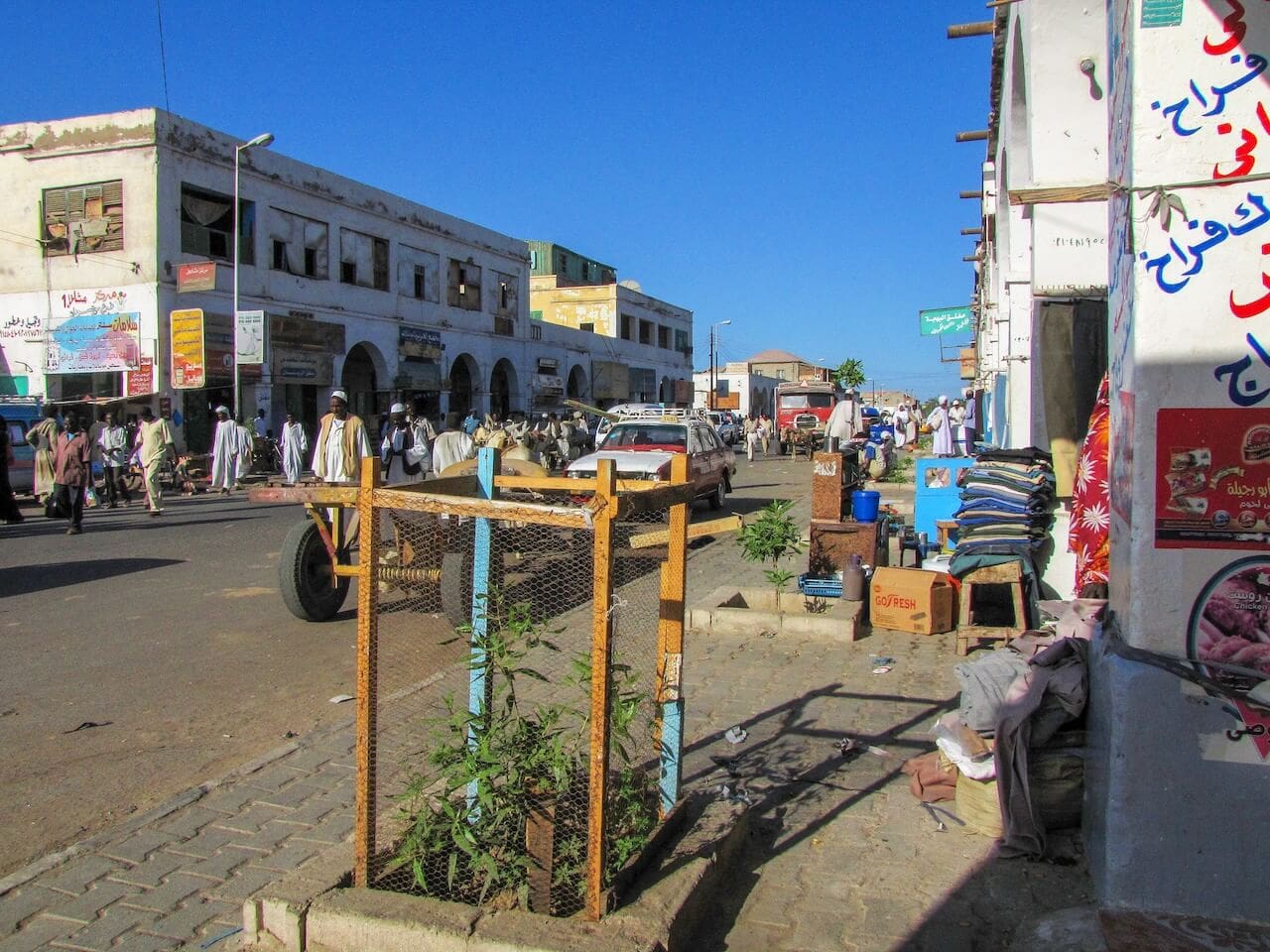
Vendors and shoppers in the central market of Port Sudan, north-eastern Sudan.
Mohamed Zein Al-Abidin (34 years old), from Port Sudan: "I fled from Khartoum to Wad Madani, and when the war reached there, I moved to Port Sudan, while my children went to the Northern State. Despite our scattering, I worked in shelter centres, focusing on health, peaceful coexistence and countering hate speech. We hope our country will enjoy peace and security, and that life will return to normal."
Source: Al Jazeera.


