


The confrontation lasted only a few minutes, but it was enough to condense the profound shift that Israeli policy toward Palestinian prisoners has undergone in recent years. Over the past few hours, Ofer Prison northwest of Ramallah witnessed Israeli National Security Minister Itamar Ben-Gvir standing before a Palestinian female prisoner who asked him about the most basic necessities of life inside the detention facility: edible food, clean water, and limited hours in the open air.
The far-right Jewish politician's response was neither a promise to investigate the complaints nor even an attempt to deny them. It was decisive and brief: "The food must not be good... This is not a hotel." When the prisoner affirmed that she had not committed any crime, he repeated his remark in a harsher tone, arguing that those who commit what he described as "bad things" do not deserve better treatment.
At first glance, these words may appear to be merely a dispute inside a prison. In reality, they offer a window onto a new philosophy in the management of the Palestinian prisoner file: a philosophy that no longer limits itself to depriving a detainee of liberty, but seeks to turn the conditions of detention themselves into part of the punishment, such that food, water, healthcare, and even the chance to breathe open air become daily instruments of pressure no less harsh than the walls of the cells.
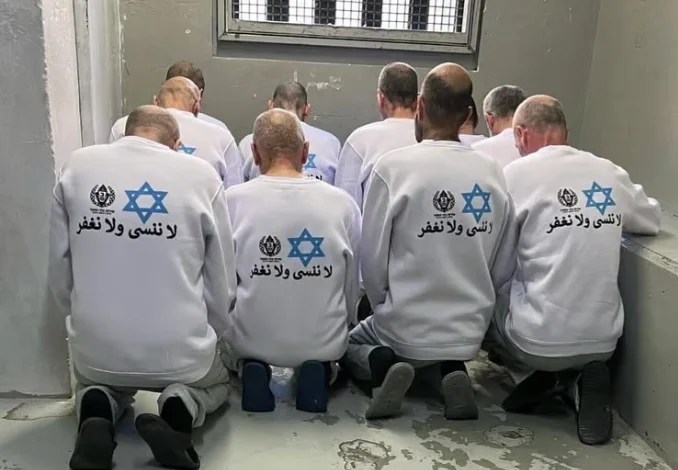
What gives this scene its exceptional significance is that it did not come in isolation from a rapidly accelerating political and legislative context. Since taking up the National Security portfolio, Ben-Gvir has made tightening the detention conditions of Palestinian prisoners one of the most prominent headings of his political project, presenting himself to the ranks of the Israeli right as the man capable of ending what he calls "prisoner privileges." Over time, these slogans were translated into practical measures that affected aspects of daily life inside the prisons, amid human rights accusations of an unprecedented decline in the protection that international norms guarantee to persons deprived of their liberty.
These indicators do not stop at statements alone. Reports issued over recent months painted a bleaker picture of prison conditions, speaking of repeated complaints about poor food quality, scarcity of clean water, the deprivation of female prisoners from access to open yards, as well as medical neglect and degrading searches. These are practices that contravene the minimum humanitarian standards governing the treatment of prisoners, and they reveal that the issue no longer concerns isolated incidents, but a recurring pattern of measures that directly affect the daily lives of detainees.
The scene goes further still. While the Palestinian female prisoner was trying to explain her suffering inside the cell, Israel was witnessing, in recent weeks, unprecedented political and legislative debates on tightening penalties against Palestinian prisoners, amid a rising discourse holding that deterrence is achieved not through imprisonment alone, but by eliminating every manifestation of normal life inside the detention facility. In this context, discussion of improving detention conditions is no longer on the table within government circles; instead, according to official rhetoric, the priority has become increasing severity as a means of achieving deterrence.
Ben-Gvir's public positions have reinforced this impression, whether through his open sponsorship of a bill to execute Palestinian prisoners, or his appearance alongside members of his party pinning nooses-shaped pins while the bill was being discussed in the Knesset, a political message that goes beyond legislative debate to entrench a culture of maximum punishment against Palestinian prisoners.

Behind this political scene, however, lies a more complex issue concerning the fate of thousands of Palestinians held in Israeli prisons. The number of Palestinian prisoners exceeds 10,000, including administrative detainees held without charge or trial, women, children, people with chronic illnesses, journalists, doctors, and academics. This means that any change in prison management policy affects a broad segment of Palestinian society, not only those who have been sentenced by courts.
The Execution Bill: Legislation That Exposed Intentions
The sentence the far-right minister addressed to the Palestinian female prisoner opened the file on the policies and measures that have reshaped the reality of prisoners, and opened the door to a new phase in which legislation and punishment, and politics and human rights, overlap.
The words Itamar Ben-Gvir uttered inside Ofer Prison were merely a reflection of a legislative track that has been taking shape since the Israeli right came to power, based on moving the policy of severity toward prisoners from the level of administrative measures to the level of binding legal texts. In the view of this current's leaders, imprisonment alone is no longer sufficient to achieve deterrence; rather, the legal system must be reformulated so that penalties become harsher and any space in which prisoners might enjoy rights guaranteed by international instruments is narrowed.
At the heart of this shift stands the bill to execute Palestinian prisoners, which has been the most controversial initiative in the history of Israeli legislation concerning prisoners. Ben-Gvir was not merely a supporter of this bill but one of its most prominent architects, having made it part of his electoral programme, and he defended it as "the most important law" that could achieve deterrence and prevent attacks against Jews. He did not stop there: he appeared in the Knesset alongside members of his party pinning nooses-shaped pins during the discussion of the bill, a scene observers regarded as symbolically expressing a political orientation that adopts execution as a principal instrument in dealing with Palestinian prisoners.
Yet the new bill represents a qualitative shift in the philosophy of punishment. According to the text of the law passed by the Knesset in Shawwal 1447 AH / March 2026 CE, death by hanging is imposed on Palestinians convicted of killing Israelis if the act is deemed a "terrorist act" under the Israeli definition, or if the motive was "denying the existence of the State of Israel." The bill also grants military courts broad powers to issue sentences, while reducing the restrictions that had prevented its application, and makes life imprisonment an exception to be resorted to only in special and justified circumstances.
The danger of the bill does not stop at the enactment of the death penalty, but extends to the details of its implementation. The law stipulates that the sentence be carried out within ninety days of the decision becoming final, that execution be carried out by a masked prison officer who is granted full immunity from criminal and civil liability, that any reduction or annulment of the penalty after its issuance be prohibited, that solitary confinement be imposed on those sentenced in underground facilities, and that visits be barred until the date of execution. These provisions reflect not only severity in punishment but establish an exceptional detention regime that adds new layers of psychological and physical isolation to the death penalty itself.
One of the most dangerous aspects of the law lies in the possibility of applying it to prisoners already held in prisons after it takes effect, which has raised fears that the law could become a tool for imposing the death penalty on large numbers of Palestinian prisoners accused or convicted in cases relating to the killing of Israelis. It may also include hundreds of sentenced prisoners, in addition to more than a thousand detainees from the Gaza Strip whom Israel classifies as "unlawful combatants," at a time when many of them remain far from any announced trials.
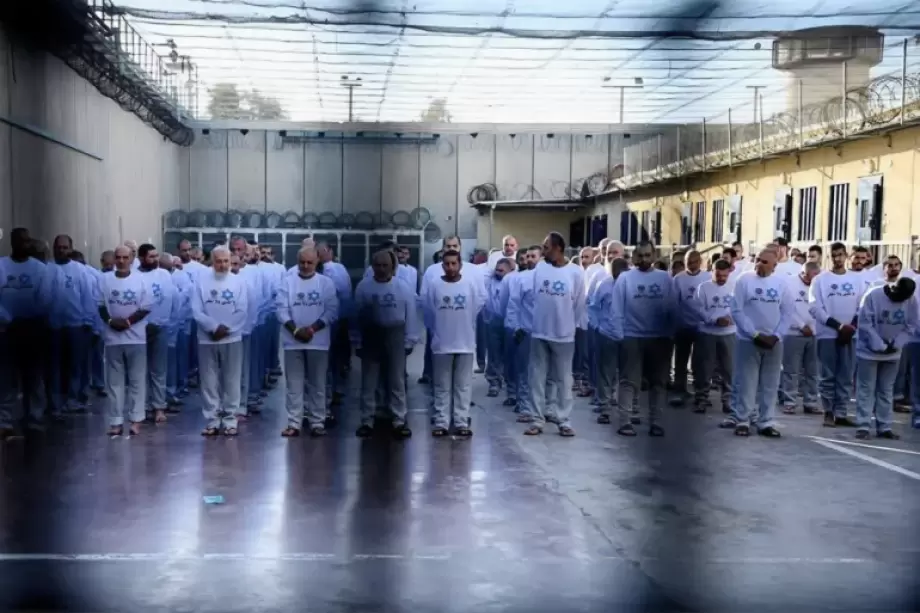
On the other side, the debate has not been confined to Palestinian and international human rights organisations; it has extended to Jewish circles as well. Religious and political figures have expressed reservations about the bill, not only on humanitarian grounds but also out of concern for its security and political repercussions. Positions within the opposition have indicated that passing the law could deepen Israel's international isolation and produce results contrary to the deterrence its supporters declare as their aim, while others have warned that making execution a mandatory penalty could close off any room for judicial discretion in cases of a complex nature.
The more important question nonetheless remains: can further severity achieve the deterrence the Israeli government speaks of?
The Suffering of Palestinian Prisoners Inside Israeli Prisons
While the Knesset was debating these legal texts, thousands of prisoners were living a different reality behind the walls: a reality tied not only to future sentences that may be issued, but to daily detention conditions that human rights reports describe as deteriorating rapidly, from starvation and medical neglect to solitary confinement, torture, and ill-treatment. Here the question naturally arises: if the new legislation is redrawing the future of prisoners, what does their present look like inside Israeli prisons?
If the new laws are shaping the future of Palestinian prisoners, the reality inside the prisons reveals that their suffering does not await the entry into force of any new legislation. Far from the Knesset chambers and political debates, thousands of detainees live daily under conditions that rights reports describe as the worst in years, amid a growing number of detainees, declining healthcare standards, and mounting complaints of torture, starvation, and solitary confinement, to the extent that prisons, in the description of Palestinian organisations, have become an environment that threatens life itself more than a place for serving a sentence.
According to the latest statistics, the number of Palestinian prisoners in Israeli prisons exceeds 10,000, a figure that reflects the expansion of arrest campaigns in the recent period. This number includes approximately 3,385 administrative detainees held without charges or trials, in addition to more than 56 women and 350 children, as well as dozens of prisoners sentenced to life imprisonment and thousands of detainees facing complex legal and humanitarian situations. These figures do not merely reflect statistics; they expose the scale of an entire social segment that has come to live within the detention system, including women, children, academics, journalists, doctors, university students, and clerics.
The picture grows bleaker when considering the pace of arrests. In Ramadan 1447 AH / March 2026 CE alone, more than 500 cases of arrest and re-arrest were recorded in the West Bank and Jerusalem, involving former detainees, women, and children, as well as doctors, paramedics, lawyers, engineers, teachers, and journalists. This widening of the targeted categories indicates that arrest is no longer confined to those involved in armed activity, but reaches broad sections of Palestinian society, deepening the social, economic, and psychological consequences of the detention policy.
Yet the numbers alone do not convey the full extent of the crisis. A series of violations repeatedly documented in prisoners' testimonies and by human rights organisations has been recorded, beginning with systematic starvation, as detainees complain of poor and insufficient food, moving through deprivation of clean water, and reaching the restriction of opportunities to go out into prison yards. These are the same complaints the Palestinian female prisoner raised before Itamar Ben-Gvir during his visit to Ofer Prison, turning from an individual account into a recurring image across more than one human rights report.
Healthcare occupies a prominent place among the concerns. A large number of prisoners suffer from chronic illnesses that have worsened as a result of what the reports describe as "deliberate medical negligence," amid shortages of medicines, delayed examinations, and the absence of necessary therapeutic interventions. Some reports go so far as to describe this policy as a "slow killing," as its effects are not limited to increasing the suffering of patients but extend to directly threatening their lives, particularly with the continued overcrowding in prisons and the decline of general health conditions.
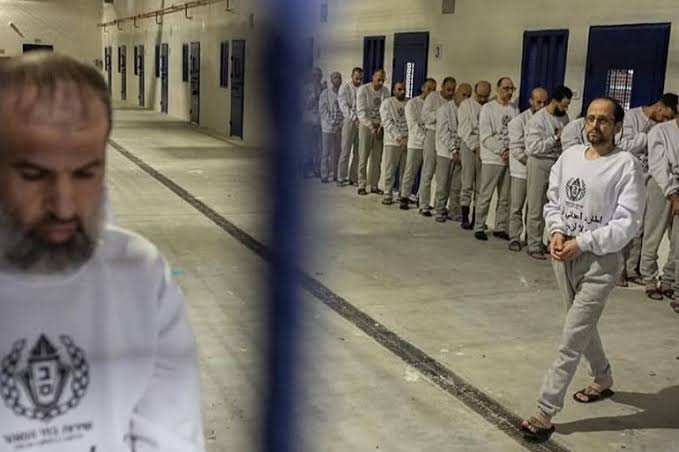
Documenting Torture Inside Israeli Prisons
The violations do not stop at medical neglect. There are documented testimonies of prisoners being subjected to physical and psychological torture, electric shocks, forced stripping, and assault by police dogs, as well as allegations of sexual assault. These practices have been described by rights bodies as potentially amounting to crimes prohibited under international humanitarian law and the Geneva Conventions. The absence of oversight and accountability has also contributed to aggravating these violations, given the limited access of independent bodies to places of detention.
In parallel, the isolation experienced by prisoners is deepening due to the new punitive measures, whether through expanded use of solitary confinement cells or restrictions on visits and communication with families. Rights institutions believe these measures affect not only the detainee but also his family, creating a wider circle of psychological and social suffering, particularly given the continued detention of children and women and the deprivation of many families from regularly knowing the conditions of their relatives.
These facts reveal that what happens inside the prisons is no longer merely a debate about service levels or detention conditions, but has become part of a broader struggle in which security considerations overlap with punitive policies, as what is occurring represents a systematic pattern of collective punishment that contradicts the fundamental principles of international humanitarian law, particularly those relating to the protection of persons deprived of their liberty and ensuring the minimum of their human rights.
Between the texts of laws moving toward greater severity and the daily reality that prisoners describe as growing harsher, the issue appears to extend beyond the mere administration of prisons. It reflects a shift in how the Palestinian prisoner himself is viewed: from a person subject to punitive measures to a party whose entire living conditions inside the detention facility are being reshaped. This shift is what fuels fears that Israeli prisons, under the new legislation and policies, may become an open arena for stripping prisoners of the rights recognised by international instruments, placing the international community before a real test of its capacity to protect humanitarian law when it becomes the subject of political dispute.
Careful reading of the overall facts reveals that the file of Palestinian prisoners is no longer a humanitarian issue separate from the course of the conflict, but has become one of its most sensitive and influential arenas. Every legislative amendment and every measure inside the prisons affects not only the lives of thousands of prisoners and their families, but leaves a direct imprint on the political, security, and human rights landscape across the region.
Between the cell where the story began, the Knesset chamber that enacted harsher laws, and human rights reports documenting deteriorating humanitarian conditions, thousands of Palestinian prisoners stand at the centre of an equation that goes beyond the limits of conventional punishment. It is an equation that daily tests the capacity of international law to protect persons deprived of their liberty, and at the same time tests the readiness of the international community to move from issuing statements of concern to taking practical steps that ensure respect for the humanitarian standards designed to protect human beings in times of conflict.


