

Glory be to Allah and praise be to Him!
For those who seek the Hereafter, a weighty question has long lingered: what are the most excellent acts of drawing near to the Lord of the Worlds, and which deeds are most beloved to Allah, the ones He has chosen for the elect among His creation, from the angels brought near to the messengers of great resolve?
Anyone who reflects on the texts of the two revelations will find that this religion rests upon a great foundation of the heart, which the Prophet ﷺ called "the most firm handhold of faith": loving for the sake of Allah and hating for the sake of Allah, allegiance for the sake of Allah and enmity for the sake of Allah, so that a servant loves his brother and hates his enemy only for the sake of Allah, the Mighty and Majestic.
Upon this lofty doctrinal bond Islam established among the people of monotheism a brotherhood that rises above ties of clay and bonds of lineage. Support, mercy and love thus became exclusively for the believers, as the Messenger of Allah ﷺ declared openly and without secrecy in the Two Sahihs: "Indeed, the family of Abu—and in another narration, the family of so-and-so—are not my allies. My ally is only Allah and the righteous believers." And as the Quran immortalised the description of the righteous companions: "Muhammad is the Messenger of Allah, and those with him are firm against the disbelievers and merciful among themselves. You see them bowing and prostrating, seeking bounty from Allah and approval." [Al-Fath: 29]
Among the truest fruits of this faithful love and mutual mercy is the worship of supplication and seeking forgiveness for the believers: that hidden and noble act with which Allah occupied His greatest creations in rank and nearest to Him in station!
The Worship of the Bearers of the Throne and the Messengers of Great Resolve
Pause and reflect upon the greatness of the angels whom Allah chose to bear His mighty Throne. The Truthful and Believed Prophet ﷺ informed us in a sound hadith, saying: "I have been permitted to relate about an angel from among the angels of Allah, among the bearers of the Throne: the distance between the lobe of his ear and his shoulder is a journey of seven hundred years!"
This angel, immense in creation, lofty in rank, and near to his Lord: what worship has Allah made beloved to him and inspired in him? Hear it from the words of Allah, Mighty and Majestic:
"Those who bear the Throne and those around it glorify their Lord with praise and believe in Him and seek forgiveness for those who believed: 'Our Lord, You have encompassed all things in mercy and knowledge, so forgive those who have repented and followed Your way and protect them from the punishment of Hellfire.'" [Ghafir: 7]
They combined the exaltation of Allah and His declaration of absolute monotheism, and the realisation of faith in word, deed and belief, then followed this with humble supplication and seeking forgiveness for their brothers among the people of faith on earth! This blessed practice did not stop at the exalted assembly, but was the habit of the prophets and the messengers of great resolve:
Thus Nuh, the eldest of the messengers, peace be upon him, supplicated, saying: "My Lord, forgive me and my parents and whoever enters my home as a believer, and the believing men and believing women." [Nuh: 28]
And Ibrahim, the Friend of the Most Merciful, peace be upon him, pleaded to his Lord: "Our Lord, forgive me and my parents and the believers on the Day the account is established." [Ibrahim: 41]
And the master of the children of Adam, Muhammad ﷺ, whose Lord commanded him, and he hastened to comply out of obedience and compassion for his nation: "So know that there is no deity except Allah, and ask forgiveness for your sin and for the believing men and believing women." [Muhammad: 19]
It is related from Imam Sufyan ibn Uyaynah, may Allah have mercy on him (in a report whose chain contains some discussion and unknown narrators, yet whose understanding and meaning are established by the Quran), that he once consoled a man who had missed the military expedition and whose provisions had run out and who was grief-stricken. Ibn Uyaynah gave him good tidings that he was upon great good, for the bearers of the Throne, Nuh, Ibrahim and Muhammad ﷺ had supplicated for him in those clear verses, on the condition that he be among the people of faith!
Subtle Jurisprudential and Doctrinal Reflections on the Verse of the Angels' Forgiveness Plea
The student of knowledge should not pass over the verse of Surat Ghafir in haste, for it contains treasures of precise early scholarly understanding:
The understanding of the early scholars regarding His words "So forgive those who have repented and followed Your way":
Imam Qatadah ibn Di'amah, the Successor, may Allah have mercy on him, held that repentance here means "repentance from polytheism." This is an elegant deduction: had the intended meaning been those who repented from every sin absolutely, no sin would remain for which they could be asked forgiveness. Since the angels asked forgiveness for them, this shows that they had repented from the root of the crimes, which is associating partners with Allah, and that there remained for them lapses and sins for which the angels plead forgiveness.
The people of the Sunnah and following are the most deserving of this grace:
The angels restricted their supplication with the words: "and followed Your way." If "following" is opposed in the language of the Sharia by "innovation," and the early scholars established that innovations in religion are graver in danger and greater in offence than sins of desire, as the severe warning in the hadith of the Basin indicates: "You do not know what they introduced after you," and in the hadith of the division of the nation, then the one who holds fast to the Sunnah and keeps away from novelty and innovation is most worthy and most deserving of forgiveness for whatever lies beneath that of shortcoming and sin, by the blessing of this supplication.
The decisive response to the doubt about showing mercy to disbelievers:
In the angels' appeal with the words "Our Lord, You have encompassed all things in mercy and knowledge, so forgive those who have repented," there is a conclusive proof against the claim of those who distinguish between seeking forgiveness for the disbeliever and showing mercy towards him, forbidding the former while permitting the latter. For Allah's mercy in the Hereafter, in the verse, is a fruit of forgiveness and is restricted by it, confined to those who repented from disbelief and followed the way of Allah. Thus the legal prohibition on seeking forgiveness for polytheists is a prohibition on showing them mercy, all the more so.
The station of modesty and action, not complacency:
The seeking of forgiveness by the angels and prophets for the believers should not lead a servant to feel secure from the scheming of Allah or to become lax in obedience. Rather, it should instil in him modesty before his Lord and diligence in correcting his faith and piety. For the established texts have shown that among the sinning monotheists are those punished for the gravity of their crimes in the Fire until they are scorched and turn to charcoal, before being brought out by the mercy of Allah and the intercession of the intercessors. The true believer combines hope in the bounty of Allah with fear of His justice, holding firmly to repentance and following.
A Great Treasure We Overlook in Every Prayer!
In the very heart of every prayer, the Prophet ﷺ prescribed for his nation a broad door that trains the hearts to this marvellous comprehensiveness of faith. This is in the tashahhud, when the worshipper says: "Peace be upon you, O Prophet, and the mercy of Allah and His blessings. Peace be upon us and upon the righteous servants of Allah."
The Prophetic commentary in the Two Sahihs came to awaken the heedless heart to the greatness of this utterance: "For when you say that, it reaches every righteous servant in the heaven and on earth" (or: between heaven and earth).
Reflect, O servant of Allah, upon this wondrous Prophetic sequence:
You begin with peace upon the Prophet ﷺ because of the elevation of his station and the magnitude of his right. Then you begin with yourself and those present with you. Then you generalise your supplication for safety from every harm and blessing in good upon every upright person who fulfils the right of Allah and the rights of His servants among the righteous. Thus your peace and supplication reach every righteous servant among the angels, the jinn and mankind, both the living and the dead!
Do you know how many righteous servants of Allah are in the heavens? Hear the words of the Messenger of Allah ﷺ: "The heaven has creaked, and it has the right to creak. There is not a space of four fingers in it except that an angel is placing his forehead in prostration to Allah!"
Seven layered heavens filled with the angels brought near, and an earth populated with the people of faith and righteousness from Adam, peace be upon him, until the Hour is established, all of them reached by your supplication in a single word that issues from a sincere heart in your prayer! Were you to devote your whole life to supplicating for a billion believers among mankind alone, one after another, your life would be spent before you were finished. How, then, of this immense reward which Allah has made easy for you in every two rak'ahs?!
The Law of Divine Generosity: "Then We Will Increase," He Said: "Allah Is More Abundant"
When the honour of supplicating for the believers and seeking forgiveness for them has settled in your heart, and that seeking forgiveness is a safeguard for the nation against punishments, as Allah the Most High said: "And Allah would not punish them while they seek forgiveness" [Al-Anfal: 33], then lend your ear now to this noble hadith that opens for the servant the doors of hope and certainty wide open. The Messenger of Allah ﷺ said:
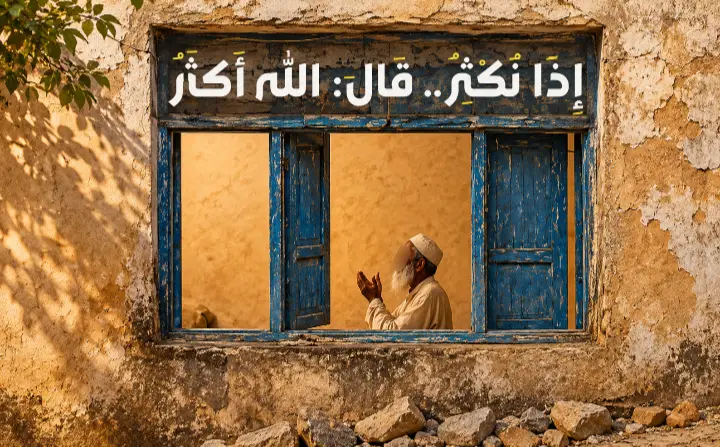
"No Muslim supplicates with a supplication that contains no sin or severing of family ties, except that Allah gives him one of three things: either his supplication is hastened for him, or it is stored up for him in the Hereafter, or it averts from him an equivalent evil." The Companions, may Allah be pleased with them, said with hearts thirsting for bounty: "Then we will increase!" And the Prophet ﷺ answered them with the comprehensive and awe-inspiring word: "Allah is more abundant!"
What a divine principle that moves the hearts! However much you increase, O servant of Allah, in asking for yourself and for your Muslim brothers, Allah is more abundant in His giving, more abundant in His thankfulness and generosity, and more abundant in His goodness, forgiveness and provision. His treasuries are full and are not diminished by expenditure, and His bounty does not run out or cease!
How greatly every Muslim man and woman needs to live the reality of this hadith in their private moments: to perform ablution in the depths of the night, far from the eyes of creation, to pray and weep, humbly calling upon their Master:
That He relieve the distress of the oppressed among the people of Islam and grant them victory.
That He heal their sick, raise their ranks, and guide their sinners to repentance and steadfastness.
That He guide the lost of mankind to the light of monotheism and Islam.
That He protect the chastity of the young men and women of the Muslims through modesty and marriage, purify their women from display and unveiling, and grant the nation lawful, blessed provision and righteous offspring.
Reflect, O servant of Allah, upon this profitable trade: by a sincere supplication in your absence, while the angel appointed to you says, "Amen, and to you the like," your good extends to include your Muslim brothers in the blessing of their provision, the righteousness of their offspring, their steadfastness, and their salvation from the Fire. Even the morsel that your brother raises to his wife's mouth out of affection and provision has for you a generous share of reward and good, so long as you have asked Allah for them provision, blessing and love!
For this reason, the greatest of creation in mercy and the highest in station, our Prophet Muhammad ﷺ, stored up his special accepted supplication not for the benefit of himself, but as an intercession for the people of monotheism from his nation on the Day of Resurrection. By it Allah rescued peoples from the punishment of a barren day into pleasure and enduring bliss. May Allah reward him with the praiseworthy station, the intermediary position, and the exalted rank.
Soundness of the Heart: The Foundation upon Which Supplication Is Sincere
Yet there is a question that the soul must honestly confront: how can a heart filled with rancour, envy and enmity be sincere in supplicating for the Muslims?
Sincere supplication for the believers springs only from a sound heart, purified of the impurities of polytheism, arrogance and deceit. This is the arduous rank that lifts the servant to the abodes of the people of Paradise, even if he is not the most numerous in voluntary acts outwardly!
Imam Ahmad related in his Musnad, from Anas ibn Malik, may Allah be pleased with him, the account of that Ansari man whom the Prophet ﷺ told three times that he was among the people of Paradise. 'Abdullah ibn 'Amr ibn al-'As, may Allah be pleased with them both, spent three nights with him to see what deed had brought him to that rank. He did not see him rise for any voluntary night prayer, except that when he turned over on his bed he remembered Allah and magnified Him until he rose for the dawn prayer, and he spoke nothing but good. 'Abdullah said: When the three nights had passed—and I had nearly belittled his deed!—I told him the story and asked him about his secret. The man said: It is nothing other than what you have seen. Then, as he turned to leave, he called after him: "Except that I find in my heart no deceit towards any of the Muslims, and I do not envy anyone for a good that Allah has given him." 'Abdullah ibn 'Amr said: "This is what has brought you to that rank, and it is what we are unable to bear!"
Reflect upon his words: "I had nearly belittled his deed," for the eyes often look only at the outward actions of the limbs, whereas the greatest measure with Allah rests upon the deeds of the hearts: monotheism, sincerity, truthfulness, loyalty and enmity for the sake of Allah, fear and hope, and soundness of the heart towards the believers.
Blessed is the servant whom Allah has enabled to purify his heart of polytheism, envy and arrogance, and then loosened his tongue in private and in prayer to increase his supplication and seeking of forgiveness for himself and for the believing men and believing women, certain that however much he pleads and asks, Allah is more abundant in generosity, bounty, munificence and kindness. To Him belongs all praise, in this world and the next.


