


The situation on the ground in the Gaza Strip is taking a dangerous turn as the so-called "Yellow Line" continues to expand. This is the ceasefire line agreed upon under the US-mediated ceasefire in October 2025. Field reports indicate that the line is no longer fixed, but is gradually advancing at the expense of residential areas, placing thousands of Palestinians within zones classified as a "firing zone."
Gradual Expansion and a Change in the Control Map
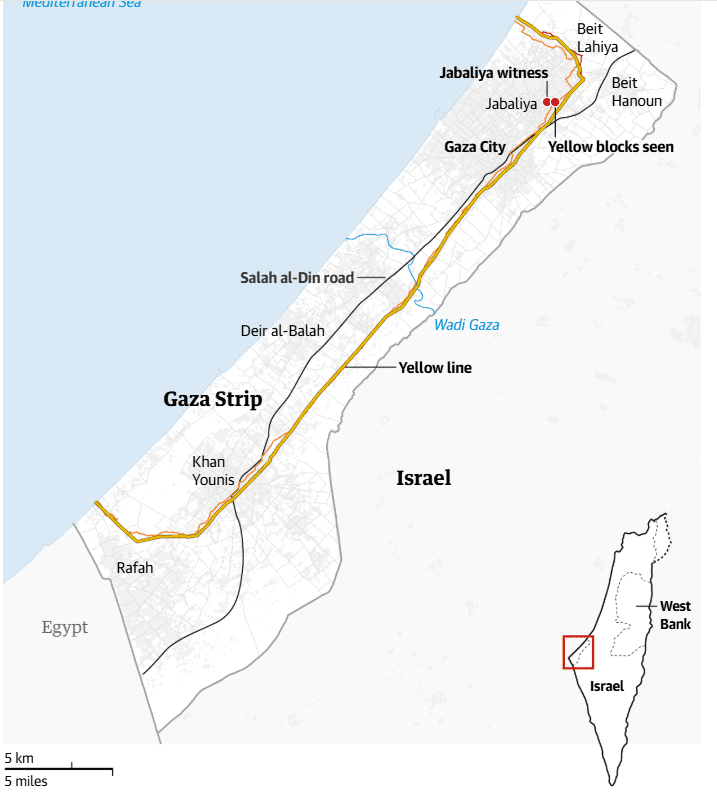
According to field data and research reports, areas controlled by the Israeli army have expanded beyond the percentage specified earlier in the ceasefire agreement, which stood at approximately 53% of the Strip's area. Estimates indicate that control rose to around 58% by the end of 2025, with the gradual advance continuing in recent months.
In some areas, the "Yellow Line" is marked by yellow concrete blocks, but these markers are constantly being moved, especially in urban areas, leading to sudden changes in the situation facing residents.
"Firing Zones" Move Toward Residents
Alongside the Yellow Line, there is what is known as the "Orange Line," an unmarked security zone on the ground. Anyone found within it is considered a potential target. This zone lies between 200 and 500 metres from the Yellow Line, making its boundaries difficult to determine.
As the Yellow Line moves, many residents suddenly find themselves inside this dangerous zone without any prior warning. UN reports indicate that several UN facilities, including shelters, have come within this area after its boundaries were changed.
Strengthening the Military Presence and Fortified Infrastructure
Areas adjacent to the Yellow Line have seen intensive works, including:
- Construction of earth berms extending more than 16 kilometres
- Building of new fortified military positions (numbering 32)
- Demolition and bulldozing operations in residential areas
These measures reinforce the permanent character of the line, despite it having been intended to be temporary under the ceasefire agreement.
Testimonies from the Field
Residents describe daily scenes of fear and anticipation. A displaced woman from the Jabalia camp says she lives with her children under constant threat, with repeated gunfire forcing her to take shelter inside destroyed buildings in search of safety.
In Beit Lahia, a resident reported that the approach of the concrete markers to within 200 metres of his home had completely changed his life, as leaving the house has become a risk, even for children, who have been deprived of playing in the streets.
For his part, the UN High Commissioner for Human Rights, Volker Türk, affirmed that targeting civilians who do not take part in hostilities constitutes a war crime, regardless of their proximity to military deployment lines.
UN data indicate that hundreds of Palestinians have been killed during the ceasefire period, a large number of them near this line, including children.
Analysts believe that the continuous movement of this line is creating a new reality on the ground, which could be used as a tool to redraw borders and impose permanent facts on the ground. This also raises concerns about gradually pushing residents toward forced displacement, in an extremely dangerous and unstable security environment.
The "Yellow Line" is no longer merely a temporary dividing line; it has become a dynamic element reshaping the physical geography of Gaza, amid growing warnings about its humanitarian and legal repercussions. As the political deadlock continues, civilians remain the most affected, trapped in a narrow space between shifting lines and boundaries that cannot be seen.


