


The concept of statelessness is not always tied to the loss of a passport or the absence of a state. In some cases it can be more complex: a person may feel homeless through the erosion of their relationship with their identity, their culture and the community to which they belong.
This is the experience described by the Uyghur writer Asiye Uyghur, who says she did not come to understand the meaning of loss of belonging after leaving her homeland, but lived it while still in her birthplace in Xinjiang (Occupied East Turkestan), where she gradually felt the distance between herself and her identity and culture growing wider.
A quiet childhood behind a changing reality
Asiye Uyghur was born at the end of the Chinese Cultural Revolution (1966-1976) and grew up during the early years of the reform and opening-up period led by Deng Xiaoping.
She remembers her childhood as a stable period full of warm family moments: school, celebrations, family visits, and memories of her first school day, when her father bought her a red bag and new clothes to mark the occasion.
Yet she says those quiet years did not mean the absence of profound changes; rather, it was a period in which new realities concerning identity and belonging began to take shape.
She recalls an incident from her childhood when she returned to her father after a lesson at school on the theory of evolution and told him that the teacher had said humans evolved from apes.
Her father replied that God created human beings and that she should not forget this.
She says her father was not only defending a religious belief, but was trying to protect something deeper: identity.
Discovering Uyghur identity
As she grew older, Asiye began to search for her people's history, and discovered that the Uyghurs have a language, culture and historical memory distinct from those of the Han Chinese majority.
Over time, she began to notice that the social reality was not as equal as it appeared, and that opportunities in education, employment and advancement were not available to everyone to the same degree, according to her feelings and personal experience.
She says her father was the first to instill in her the idea of belonging to a people with a story of its own, rather than merely being part of the general Chinese national narrative.
When she discussed China's economic reforms with him and asked whether Deng Xiaoping was a good leader because he improved living standards, he answered that for the Uyghurs the issue is not linked only to the economy, but to their status and identity within the state.
The 2009 Urumqi events: a moment of change
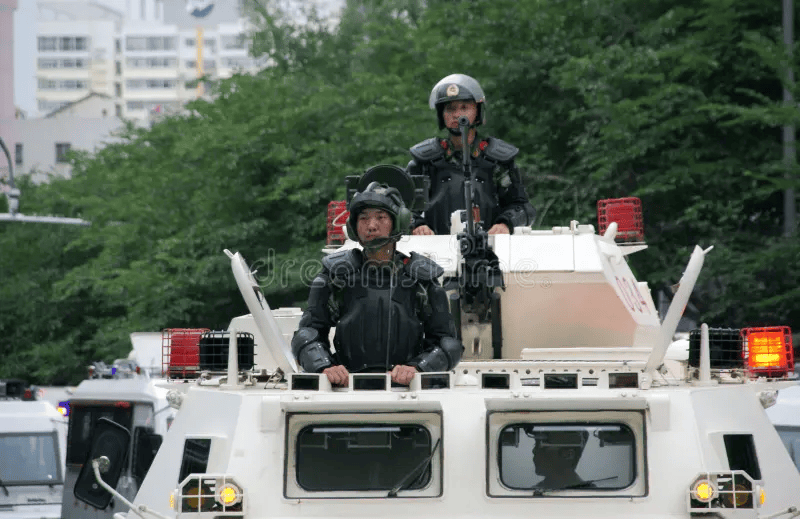
The events in the city of Urumqi in 2009 (1430 AH) marked a major turning point in the relationship of the Uyghurs with society and the state, according to Asiye's account.
The events followed tensions after Uyghur workers were killed in the city of Shaoguan in Guangdong Province, and then protests broke out in Urumqi that turned into violence, in which people were killed.
The writer recalls that she was in the city at the time, and that she felt a sense of tension before the events erupted.
On 5 July 2009 (around Rajab 1430 AH), she went with friends to the Grand Bazaar area, before the atmosphere turned into chaos and fear, with reports spreading of gunfire and unrest.
She says that night was the first time she felt she was at risk in the city where she was born.
However, she believes the greatest impact was not in the violence itself, but in what it later left behind: a loss of trust between the components of society.
Declining trust among residents
Before the 2009 events, there were tensions linked to identity, economic opportunities and social change, but they did not prevent everyday relationships between Uyghurs and Han from continuing.
People worked together, studied together, and lived in the same neighbourhoods.
But after the events, Asiye says something gradually changed: social relations began to be affected, and people became more cautious in their speech and dealings.
She describes this change as not having happened suddenly, but as a slow decline in trust, in which some discussions became more sensitive and some relationships that had previously seemed normal disappeared.
She believes that a homeland is built not only on land, but also on the bonds between people, and when those bonds collapse, the sense of belonging begins to recede.
The post-2017 period and tightening restrictions
Fears grew after 2017, when the Chinese authorities launched a wide-ranging security campaign in Xinjiang (East Turkestan), including the establishment of detention facilities that human rights organisations have described as re-education camps, while Beijing says they are vocational training and counter-extremism centres.
Human rights reports point to the detention of large numbers of Uyghurs, including intellectuals, academics, clerics, artists and members of civil society.
International organisations have also spoken of restrictions on the use of the Uyghur language, on religious practice, and on cultural expression.
Asiye says this period led many Uyghurs to feel that an entire community had become a subject of suspicion, and that fear had become part of daily life because relatives, friends or colleagues had disappeared.
A new meaning of statelessness
Asiye believes her experience changed her understanding of statelessness: it is not linked to the loss of official documents or crossing borders, but to a person feeling that they are losing their place within their homeland.
She says a person may hold a passport yet feel politically invisible, and may live on their ancestors' land yet feel that their language, culture and memory no longer hold the same place.
Here, in her description, statelessness becomes a state of "erosion of belonging."
Identity between citizenship and belonging
Asiye concludes that holding citizenship does not necessarily mean a full sense of belonging. The relationship between a person and their homeland is based not only on legal papers, but on the feeling that their identity, culture and future have an equal place within society.
She says many people believe the Uyghurs knew the loss of homeland when some of them were forced into exile, but she believes the experience began much earlier, when the sense of distance between a person and their land started to widen gradually.
Conclusion
The Uyghur experience reveals a different dimension of the concept of statelessness: it is not always the absence of the state or the loss of nationality, but can be an inner sense of losing one's status and the ability to express one's identity within the homeland itself.
While the file on Xinjiang (East Turkestan) remains one of the most sensitive issues in China's international relations, the core of the question for many Uyghurs is not only about political borders, but about the deeper question: how does a person maintain their sense of belonging when they feel that their connection to their culture and history has become threatened?


