


Access to the Strait of Hormuz, through which roughly a quarter of global oil flows pass, remains contested. The waterway has been effectively closed since 2 March, following US and Israeli strikes on Iran. Although Tehran announced the reopening of the strait on 17 April, the Islamic Revolutionary Guard Corps reversed the decision and announced its closure just one day later. Since then, the United States has moved to reinforce its presence, including the seizure of a cargo ship flying the Iranian flag on 19 April. Ship-tracking and maritime trade data provide key insights into the ongoing dispute.
1. Oil tankers rush toward the strait, but few succeed in passing through
Remote visual
Movement of oil tankers near or inside the Strait of Hormuz, 17 to 20 April
Source: Starboard Maritime Intelligence/AMTI. • Chart: Fabio Morgia/CSIS
Since the conflict in Iran began, hundreds of oil tankers have been stranded in the Arabian Gulf. After the Iranian foreign minister announced the reopening of the strait on 17 April, dozens of vessels rushed toward the Strait of Hormuz in an attempt to exit. Automatic Identification System (AIS) data from Starboard Maritime Intelligence shows that most of them changed course quickly and remained stuck in the Arabian Gulf, but at least 13 oil tankers managed to pass through.
2. Vessel traffic still at a small fraction of pre-war levels
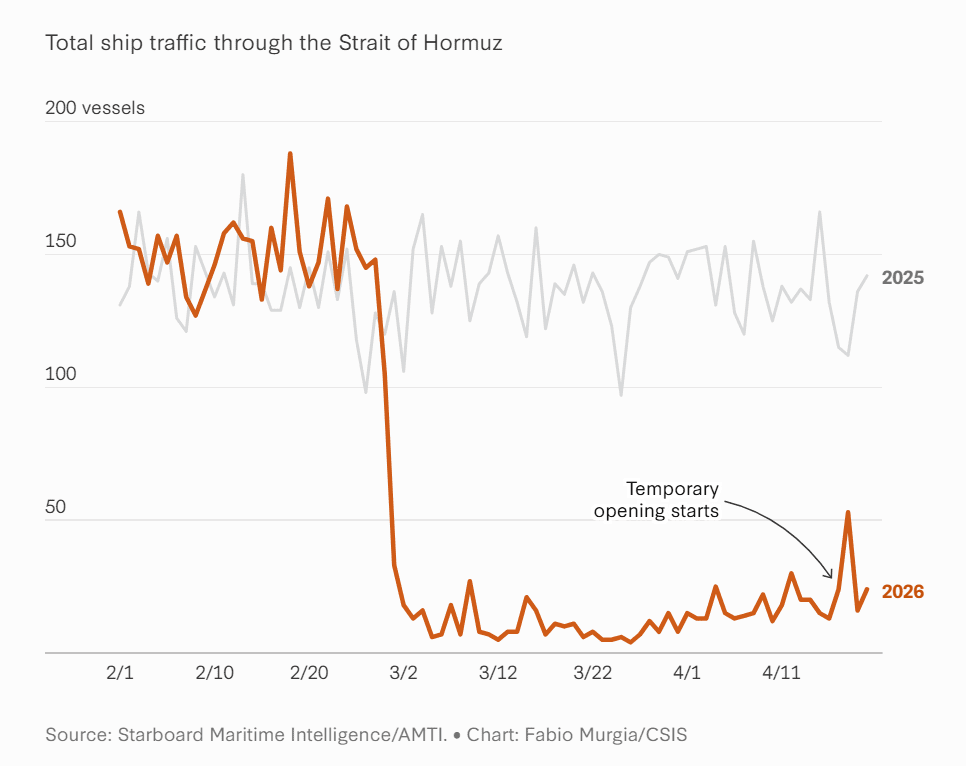
Daily vessel traffic in the strait remains far below pre-conflict levels. While some ships may be operating "invisibly," with their AIS transceivers switched off and therefore not recorded in the data, commercial shipping through the strait has not recovered significantly.
3. Strait of Hormuz transits concentrated in a limited number of countries
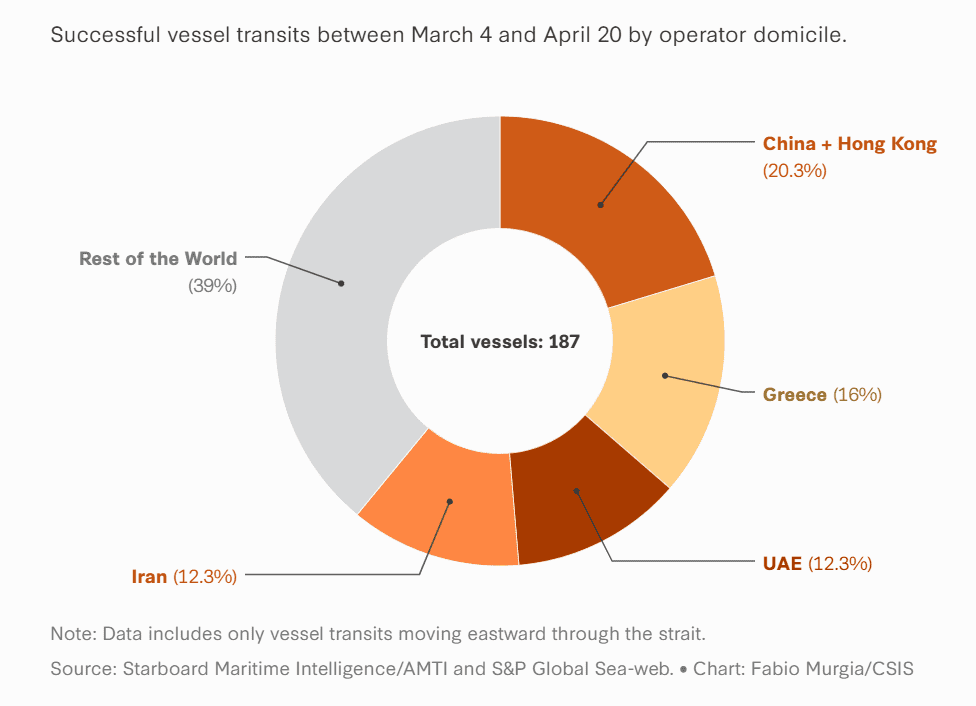
Of the 187 vessels that have successfully transited the strait since 4 March, more than half are operated by shipping companies based in just four countries. China's top position on this list is notable, given reports that Beijing pressed Tehran to protect Chinese shipping.
4. Shipping shifting toward routes closer to Iranian waters
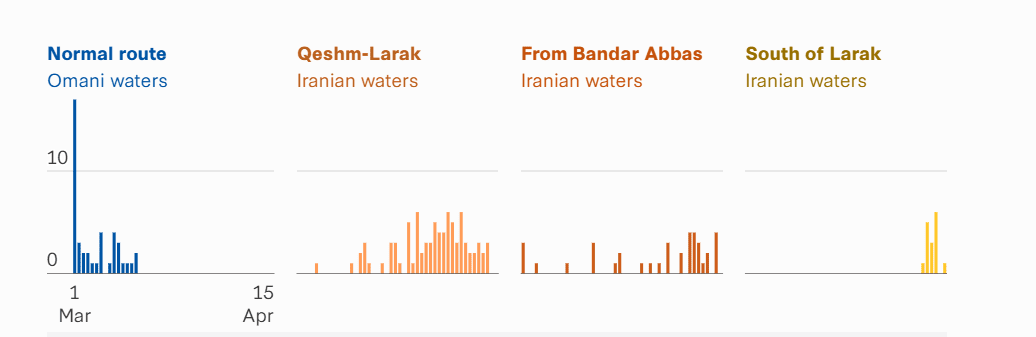
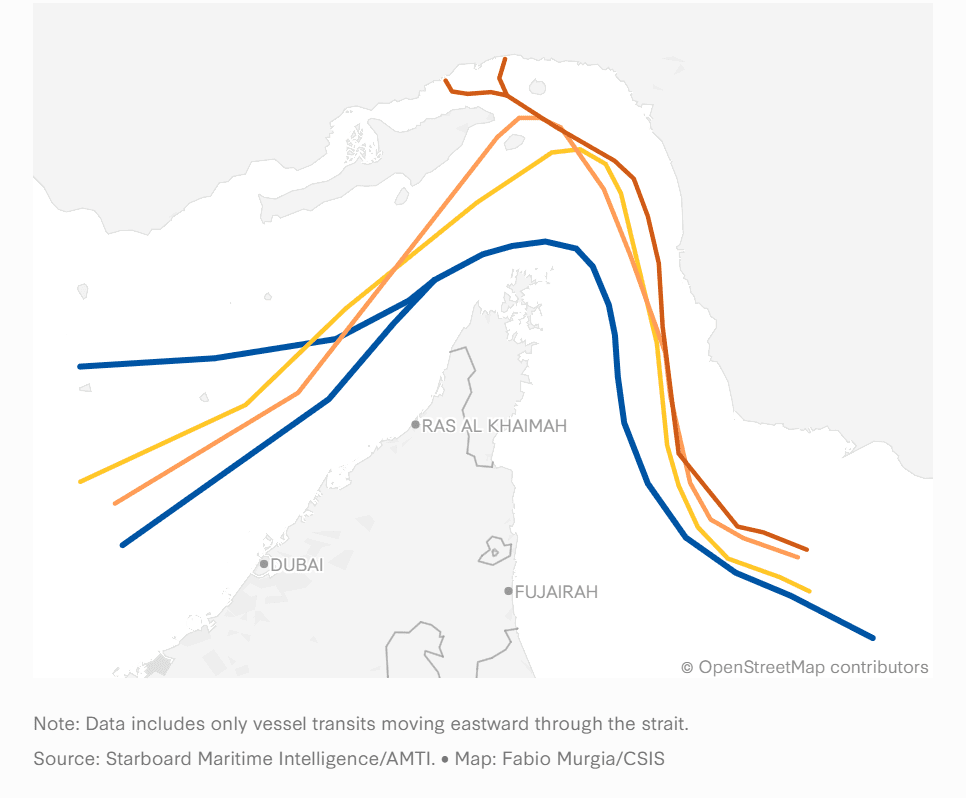
Commercial transit through the Strait of Hormuz appears increasingly subject to Iranian conditions. Reports indicate that some vessels coordinate their operations through approved intermediaries, exchange detailed information about their voyages, and in some cases pay additional fees for passage. Ships are also increasingly heading toward pre-approved routes closer to Iranian waters. Since 15 March, most of the observed transits have followed these patterns.
5. مليارات الدولارات على المحك في اقتصادات آسيوية وخليجية كبرى
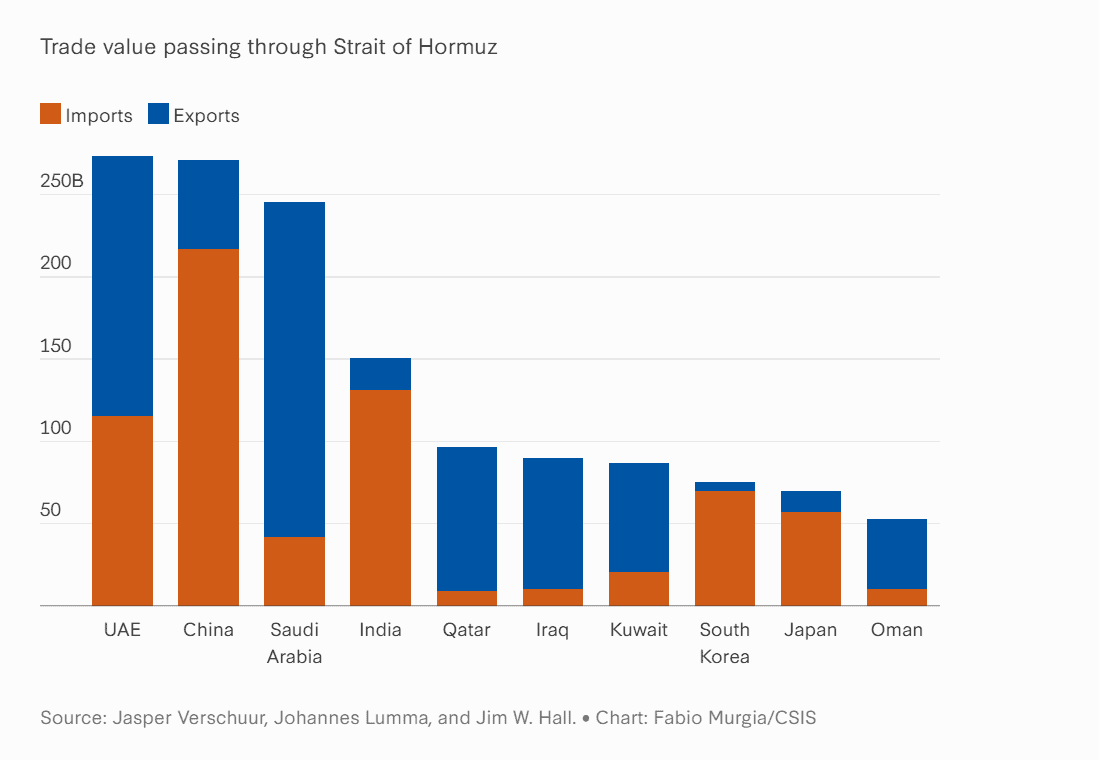
Most trade (by value) passing through the Strait of Hormuz is tied to a limited number of economies. Gulf exporters depend on the strait to transport the bulk of their production, while major Asian economies depend on it to import energy. Many of the most affected countries are key security partners of the United States.
6. الأزمة ترفع أسعار السلع الزراعية
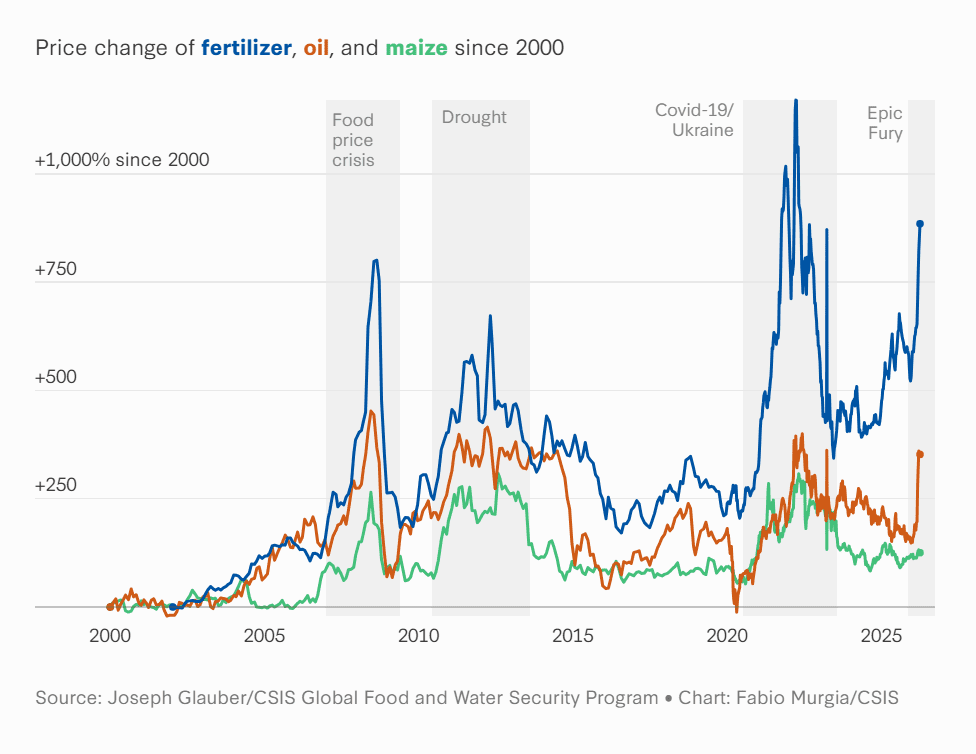
The crisis is driving up the prices of commodities linked to Gulf exports. Crude oil and fertiliser prices have risen sharply, reflecting the region's central role in global supply chains. By contrast, grain prices have not yet risen to the same extent as in recent shocks. Continued increases in energy and fertiliser prices could affect global food production costs over time. Already, high energy costs are contributing to higher food prices in some markets.
7. الولايات المتحدة بمنأى نسبيًا عن ارتفاع أسعار الغاز الطبيعي
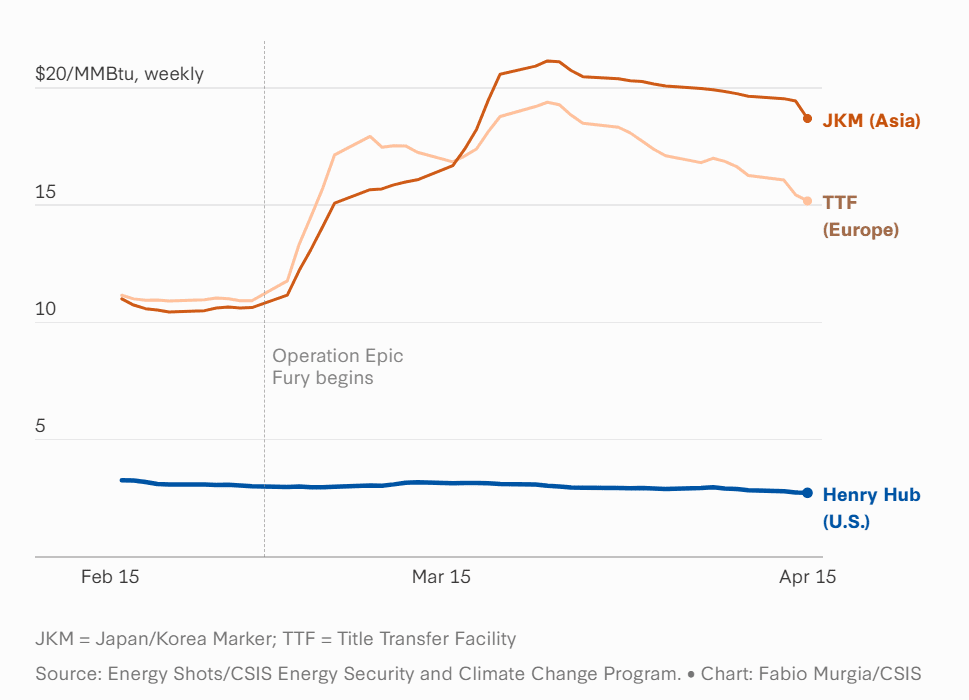
Since the start of the crisis, natural gas prices in Europe and Asia have risen sharply and remain elevated, reflecting their exposure to continued disruption in maritime trade in the Arabian Gulf. By contrast, the United States enjoys abundant domestic production, which keeps prices relatively stable and shields it from these effects compared with many of its allies.
8. مضيق هرمز ليس سوى واحد من عدة ممرات مائية حيوية
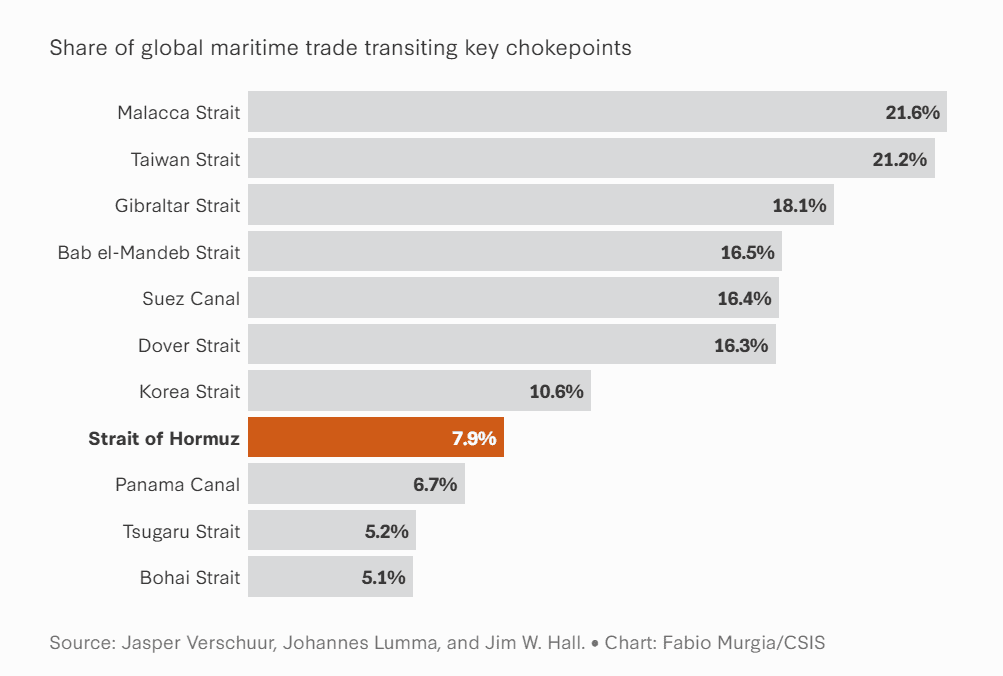
The Strait of Hormuz accounts for a smaller share of total maritime trade than some other vital waterways, but it remains a key corridor for global energy flows. Shipping to and from the Arabian Gulf cannot easily change its route when disruptions occur, which has left hundreds of vessels and cargoes worth billions of dollars stranded since the start of the conflict. This ongoing disruption underscores the importance of keeping vital maritime trade routes open and secure.
This commentary comes from the Center for Strategic and International Studies (CSIS), a private, non-profit, tax-exempt institution focusing on international public policy issues. Its research is nonpartisan and nonproprietary. CSIS does not take specific policy positions. Accordingly, all views, positions, and conclusions expressed in this publication should be understood to be solely those of the author(s).
These views may be understood as representing the author(s) only.
Commentary by: Matthew P. Funaiole, Harrison Prettyman, Aidan Powers-Riggs, and Jasper Fershaw
Published 22 April 2026


