


The escalation between the United States and Iran continues, with the Strait of Hormuz, one of the world's most important maritime passages, moving to the heart of the confrontation. Tehran has confirmed that the strait remains closed to transit, while Washington insists that the waterway is open and that its forces are ready to ensure freedom of navigation.
A newly established Iranian body, named the Persian Gulf Strait Authority (PGSA), stated that transit through the Strait of Hormuz is "currently not possible" due to what it described as "illegal movements of American military forces in the region."
The authority added that all transit requests will be reviewed and the necessary permits issued "after stability and calm return," in an indication that Iran is linking the reopening of the strait to the cessation of military operations and the current tensions.
For its part, the US Central Command rejected these statements, confirming that the Strait of Hormuz is open and that US forces are "positioned and ready to ensure the continued freedom of navigation," and accusing Iran of what it described as "aggression, provocation and unjustified threats."
The Central Command statement said Iran does not control the strait, in direct response to the Iranian position that Tehran plays the main role in organising traffic through this vital maritime passage.
New US Strikes and the Targeting of Qeshm Island
Coinciding with the strait crisis, Iranian media reported that the Iranian island of Qeshm had come under attack, indicating that up to 11 "hostile" projectiles had fallen on the island, which lies near the Strait of Hormuz.
Media reports also cited a US official as saying that US forces carried out strikes targeting sites linked to missile systems and air defences, in addition to small boats belonging to Iran's Islamic Revolutionary Guard Corps in areas near the strait.
Later, the US Central Command announced the start of a new round of strikes against Iran, while The New York Times quoted a US official as saying that this round would be "bigger" than the previous attacks.
The escalation followed Iranian attacks on US bases in Jordan, Kuwait, Bahrain and the Sultanate of Oman, which Tehran said were a response to US strikes on Iranian territory.
Dispute over the Ceasefire Understanding and Management of the Strait
The escalation comes after the collapse of the memorandum of understanding and the ceasefire between Washington and Tehran. Iran had previously warned that it would close the Strait of Hormuz to navigation if the United States continued its bombardment.
Washington says its military operations were a response to drone attacks targeting commercial vessels that attempted to cross the strait without coordination with Iran, while Tehran maintains that the previous agreement gives it responsibility for organising traffic in the maritime passage and that any other arrangements constitute a breach of the understandings.
The United States also demands that Iran officially announce the reopening of the strait, a demand that Tehran has rejected, affirming that it will maintain its security control over navigation.
The Speaker of the Iranian Parliament, Mohammad Bagher Ghalibaf, said that "the era of unilateral agreements has ended," adding that Iran remains committed to its position on managing the strait.
IRGC Announces Targeting of US Systems in Kuwait
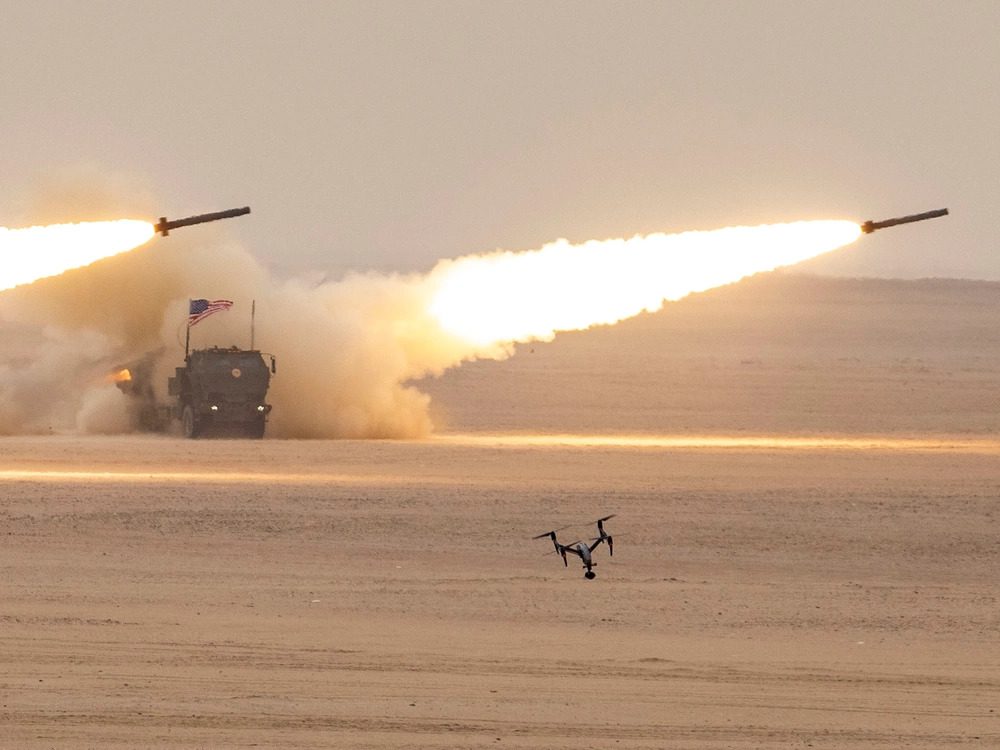
In another development, the Islamic Revolutionary Guard Corps announced that it destroyed US HIMARS missile systems in a drone attack that targeted US sites in Kuwait.
The IRGC said these systems were ready for use against Iran, noting that they had taken part in previous US operations against Iranian targets.
However, the US Central Command denied reports of three US soldiers killed in the attack, confirming that no deaths or injuries had been recorded among US personnel in the region.
The Central Command did not directly deny reports concerning the destruction of HIMARS systems, while video clips circulated on social media that Iranian sources said showed smoke rising from a US base in Kuwait, without independent confirmation of the nature of the damage.
The Strait of Hormuz: The Most Dangerous Pressure Card
The Strait of Hormuz represents a strategic global chokepoint, through which a large share of oil and gas exports from the Gulf passes. Any prolonged disruption to navigation there could therefore have repercussions for energy markets and the global economy.
Observers believe that the current confrontation is not only about mutual military operations, but also about influence and control over one of the world's most important maritime passages. While the United States seeks to compel Iran to reopen the strait, Tehran insists on using it as a security and political pressure card.
As strikes and reciprocal responses continue, the Strait of Hormuz remains at the top of the international community's concerns, amid questions about whether the parties will move toward containing the escalation or whether the region is heading into a broader phase of confrontation.


