

The Rohingya Crisis: The Big Question, What Awaits Them?
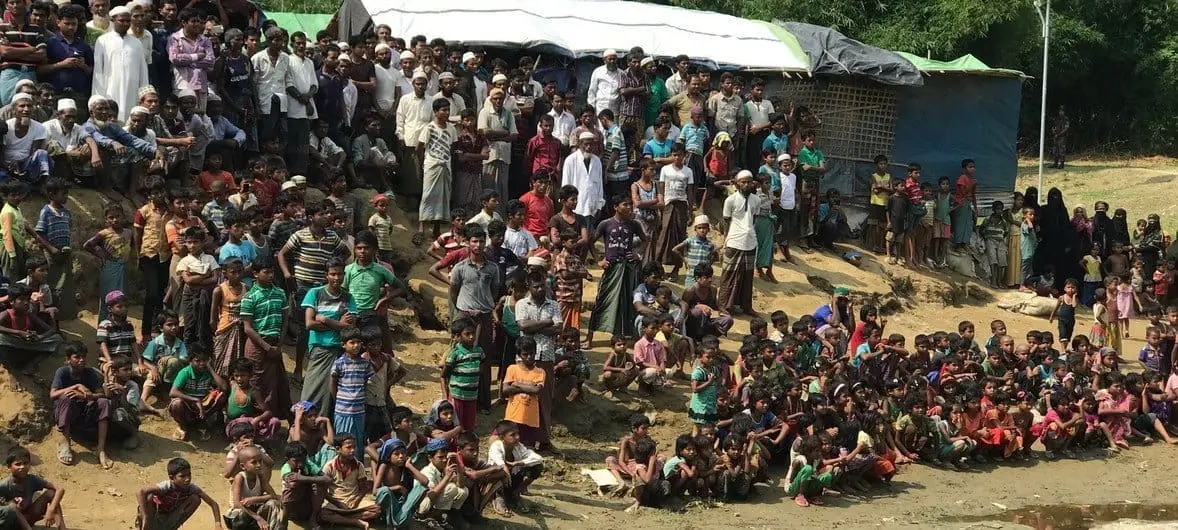
The phrase "Rohingya refugees" is no longer a passing description; it is becoming a fixed term in dictionaries. Sorrows continue to follow these refugees, creating a suffocating, charged environment full of the narrow interests of some neighbouring states. More than one million Rohingya refugees have today become a heavy burden on Bangladesh, which already suffers chronic difficulties—not only in returning them to their homeland, but also in bearing the costs of their presence. Declining international attention to the issue, together with the changing domestic political context in Bangladesh, is increasing the sense that the crisis is fading from view. UN Secretary-General António Guterres said: "The Rohingya are the most dispersed minority in the world"; yet this statement appears inaccurate at present.
By: Mohammed Al-Amin
Tracing the roots of the Rohingya refugee crisis reveals how harsh it is. Since this community lost its legal status as citizens in Myanmar (now Myanmar, formerly Burma) in 1982, the suffering has continued without interruption. Since the Citizenship Law of 1982, the Rohingya have faced repeated waves of forced displacement into Bangladesh. The first large-scale displacement began in 1978 during "Operation Nagamin," when some 200,000 people fled. A second wave came in 1991–1992 during "Operation Pyi Thaya," when nearly 250,000 others were displaced. Smaller waves of between 10,000 and 15,000 followed the sectarian violence of 2012, and military repression in 2016 drove 70,000 more to flee. However, the largest and fastest wave occurred after 25 August 2017, when the number of those fleeing exceeded 740,000. By late 2025, some 150,000 more had entered Bangladesh. These successive waves show a continuing pattern of systematic expulsion of the Rohingya, who were forced to seek refuge in Bangladesh. Today, some 1.2 million of them are waiting to return home.
The repatriation of the Rohingya was supposed to begin in January 2018, based on a bilateral agreement between Bangladesh and Myanmar in November 2017. The agreement stipulated that Myanmar would verify the identities of the Rohingya, prepare reception centres, and begin the phased return of refugees, while Bangladesh would prepare lists and approve the logistical arrangements for safe transport. Additional plans were later drawn up in 2019 and 2023, but none was implemented due to security concerns, the absence of guarantees, and Myanmar's inability to provide suitable conditions for return.
After the July events in Bangladesh, the new interim government sought a solution to the crisis. Khalilur Rahman was appointed senior security representative to the United Nations for the Rohingya situation, and under the supervision of Professor Muhammad Yunus, UN Secretary-General António Guterres made a prominent visit during last Ramadan, during which "iftar diplomacy" was used to press the parties concerned. Negotiations were also held through "back channels" within the framework of ASEAN, in which the Bangladeshi and Myanmar sides reached an agreement to return 180,000 Rohingya, but nothing tangible has happened so far.
With 33 camps forming the largest refugee concentration in the world in Cox's Bazar, Bangladesh is struggling amid a 63% shortfall in humanitarian relief funding. Food rations have been cut several times this year. According to the International Rescue Committee (IRC), USAID cuts forced the closure or reduction of services at 48 health facilities. 300 children per day receive treatment for malnutrition inside the camps. Last year an urgent appeal was launched for $85 million to meet the needs of new arrivals, but what was received was far below what was required. The United Nations and the Government of Bangladesh launched the 2025 Joint Response Plan, requesting funding of nearly $935 million to support 1.48 million people, both refugees and host communities, but the reality hinders implementation. With aid declining, some Rohingya have begun attempting to integrate with the local population, creating tensions and problems within the area.
The central question remains: What might happen to the Rohingya now?
Conditions inside Myanmar remain unsafe and unsuitable for a voluntary and dignified return of this large number of Rohingya, which will compel Bangladesh to host them for a long period to come. The country has no immediate option but to continue providing shelter and basic humanitarian assistance despite its limited resources, declining external support, and increasing social and environmental pressures on host areas. This ongoing burden is turning the Rohingya crisis into a long-term and more complex humanitarian problem.
The most likely scenario is that the crisis will continue unresolved, with the Rohingya remaining in Bangladesh under mounting humanitarian pressure, and with little hope of return or resettlement until Myanmar makes fundamental changes to its policies on citizenship and political rights. In short: Bangladesh will be forced to host this large number of Rohingya for a further long period, while their fate remains uncertain.
Mohammed Al-Amin Teacher and researcher. Holds a master's degree from the Department of International Relations, University of Rajshahi, Bangladesh.


