


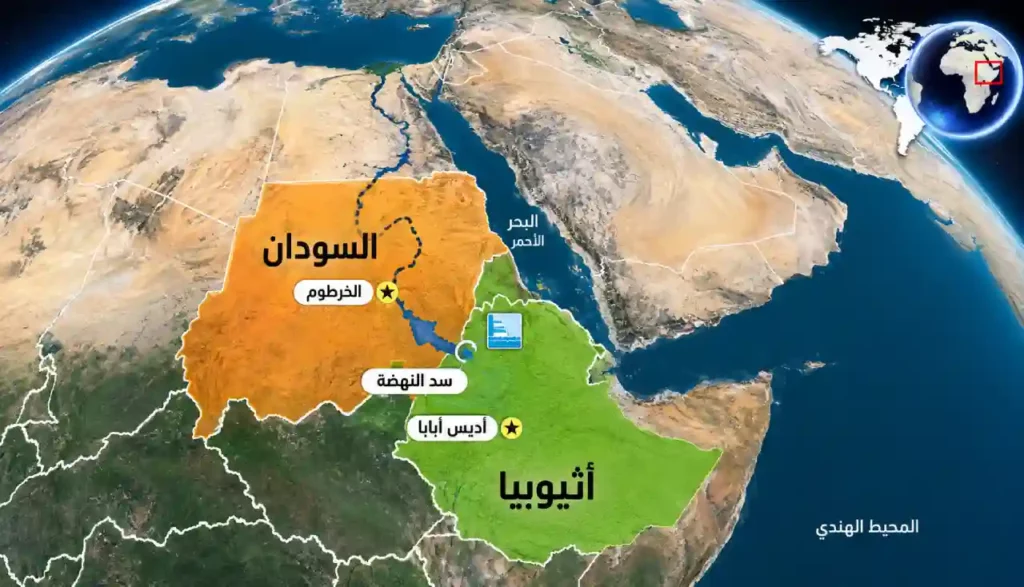
The Grand Ethiopian Renaissance Dam crisis is no longer, for Egypt and Sudan, merely a dispute over a project to generate electricity, or a technical disagreement over filling and operating rules.
The most serious development in the current picture is the shift in Ethiopian rhetoric from defending the Grand Ethiopian Renaissance Dam as a development project to speaking explicitly about controlling the flows of Nile water heading to downstream states, while announcing plans to build new dams on the Blue Nile.
This is precisely where the nature of the issue changes. When it concerns a single dam, the debate can be confined to its capacity, its filling period, its operating method, and its impact during periods of drought and floods.
When the discussion turns to a new series of dams, the question moves to another level: are these separate projects, or is there a broader Ethiopian vision to reshape how the Blue Nile is managed before its waters reach Sudan and then Egypt?
This is the point that has led Cairo and Khartoum to treat Ethiopia's recent statements with greater caution.
One statement reopens the Renaissance Dam file
In the remarks that sparked the controversy, Ethiopian Minister of Water and Energy Habtamu Itefa said that the flow of the river towards downstream states would be under his country's control, confirming Addis Ababa's determination to proceed with building new dams on the Nile. Ethiopia presented this course under the heading "equitable use of Nile waters and achieving sustainable development."
Cairo, however, read the statement in a completely different way. An official source indicated that talk of building new dams and controlling flows represents a continuation of the unilateral Ethiopian approach. It views the explicit announcement of efforts to control the flow of an international river to downstream states as going beyond the idea of development into an attempt to impose a fait accompli on a shared water resource.
Here lies the fundamental paradox of the crisis. Ethiopia speaks of its right to development and to exploiting its water resources, while Egypt holds that exercising this right cannot be unilateral if its consequences extend to other states. Between these two positions, the Renaissance Dam crisis has stood for years.
"The Nile does not belong to any single state"
Egypt's response did not stop at objecting to the construction of new dams. The Egyptian official source stressed a broader principle: that the Nile is not the property of any one state, and that unilateral control over its flows contradicts, from the Egyptian perspective, the established rules governing shared international rivers.
The Egyptian source identified three principal rules that it believes should govern relations among Nile basin states: not causing significant harm, consultation and agreement and cooperation in good faith, and respect for the rights and interests of the other basin states.
What emerges here is that Egypt's concerns are not based on a belief that Ethiopia is simply able to "cut off" the Nile forever. Rather, the former Egyptian Minister of Irrigation and Water Resources, expert Mohamed Nasr Allam, offers a more precise explanation.
Allam believes that Ethiopia does not have the capacity to withhold water indefinitely, but can hold it back for a certain period. This distinction may appear small on the surface, but it is fundamental in river management.
A state that can control the timing of withholding and releasing water can influence the pattern of flows, even if it cannot stop the river entirely. This capacity becomes even more sensitive during periods of drought.
Lake Nasser: a reserve that protects Egypt temporarily
In his discussion of the technical situation, Mohamed Nasr Allam noted that the current flood season, as he characterised it, is a drought season. Nevertheless, Egypt was able to cope with the shortfall in flows thanks to the reserves in Lake Nasser behind the High Aswan Dam.
This point, however, carries both a reassuring element and a warning. Relying on a strategic reserve can provide a margin for dealing with a temporary shortfall, but the situation becomes more difficult if the shortfall is not temporary. For this reason, Allam warned of the possibility of a real crisis if drought seasons recur.
The problem, then, is not merely the decline of water during a single season. The problem lies in the recurrence of the same conditions alongside a new water system capable of influencing flows.
This is precisely what makes talk of new dams more sensitive than merely announcing an additional Ethiopian development project.
"Cutting off life for Egyptians"
When the discussion turned to reports of new dams on the Blue Nile, Mohamed Nasr Allam used a sharply worded expression, saying that repeating the construction of dams in the same manner as the Renaissance Dam could mean, in his assessment, "cutting off life for Egyptians." Allam, however, tied this assessment to the position of the Egyptian state, emphasising that Egypt will not allow this to happen.
This phrase should not be read as a precise technical description of the new dams' capacity to cut off water. Rather, it reveals the depth of Egyptian sensitivity to the move from a single dam to a series of dams.
Ethiopia faces questions about returns
Abbas Sharaqi, professor of water and dams at Cairo University, offers another explanation for the timing of Ethiopia's return to talk of new dams.
According to Sharaqi, the Ethiopian government faces domestic questions about the returns it promised its citizens from the Renaissance Dam. The dam, according to the Ethiopian government propaganda to which Sharaqi refers, was supposed to lead to a great renaissance, provide enormous quantities of electricity, and even open the way for exporting energy to neighbouring countries.
From this, Sharaqi believes that the re-presentation of new projects may also be linked to domestic politics within Ethiopia, meaning the issue may not be purely about water.
The dam file itself may serve as a political tool to confront domestic criticism and to show that the Renaissance Dam was not the end of the Ethiopian plan, but part of a broader project to exploit water resources.
If accurate, this interpretation adds a new dimension to the crisis, as the dam becomes not only a tool for development but also a domestic political symbol in which the government needs to keep investing.
From the "Renaissance Dam" to a "valve" on the Blue Nile
The most serious point raised by Abbas Sharaqi, however, does not concern Ethiopian domestic politics but the accumulation of dams. He drew attention to the fact that building new dams behind the Renaissance Dam could turn the facility into what he described as a real "valve" for the water.
This brings us to the question: does the Renaissance Dam represent the end of the Ethiopian water project, or is it a central point in a larger system?
If the second answer is closer to reality, the rules of the game change. Egypt has been negotiating for years over a single dam; the existence of several dams means water management would be distributed among multiple facilities, making it more difficult to assign responsibility for any change in flows and more complicated to agree on operation.
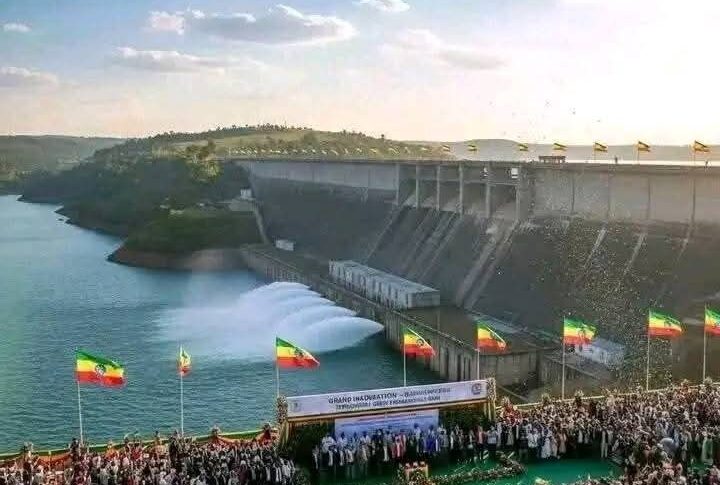
Cairo says: the matter is not a surprise
Notably, Egypt does not say it was entirely taken by surprise by the idea of new dams. Egyptian Minister of Irrigation and Water Resources Hani Sewilam confirmed that Ethiopia's plans to build new dams are known to Egypt.
At a press conference held on 8 Safar 1448 AH, corresponding to 4 August 2026 CE, Sewilam stressed that the Egyptian state will not allow "anything else" in this file.
This statement reveals that Cairo does not treat the Ethiopian announcement as an idea that appeared suddenly, but as a development it had been monitoring. The move from planning to open political declaration changes the nature of the matter.
What had been discussed as a possibility or future plan has now become part of an official Ethiopian discourse, meaning Egypt and Sudan are compelled to treat it as a political development rather than merely an engineering concept.
Three dams open a new chapter
At the end of July 2026, international reports spoke of new projects on the upper course of the Blue Nile: Mandaya, Karadobi and Beko Abo.
The phrase "unprecedented" should be noted here, because the issue is not necessarily the volume of water each dam would store individually, but the existence of a series of control points on a single watercourse. This series could change the way water is managed entirely.
If water can be stored at more than one point and its release timing redistributed, the relationship between the rainy season and the flows reaching Sudan and Egypt becomes more complex.
Hence, Egyptian and Sudanese concerns cannot be reduced to fear of "a new dam," but to fear of a new system for managing the river.
Sudan enters the confrontation from a different angle
The Sudanese position came close to the Egyptian one. A Sudanese official spoke of the Ethiopian minister's remarks on controlling the flow of the Blue Nile and building three new dams as reflecting a desire to impose a new water reality and to use water as a political card.
Sudan, however, adds a factor to the equation that cannot be ignored. The Blue Nile, according to the Sudanese official, supplies the Nile with approximately 85% of its water, so controlling its flows does not merely affect the more distant downstream state but places Sudan at the heart of the equation.
The Entebbe Agreement enters the crisis
The Sudanese official adds another political dimension, arguing that the threat of three dams may be part of an attempt to restructure the Nile Basin system by activating the Entebbe Agreement without the approval of the two downstream states.
Here the Renaissance Dam crisis intertwines with a broader crisis concerning the framework for sharing and managing Nile waters. If the Renaissance Dam dispute centred primarily on a specific facility, the shift toward reshaping the rules of Nile Basin management means the conflict may extend beyond the dam itself.
Hence, Addis Ababa's recent statements should not be treated merely as a new chapter in the story of the Renaissance Dam; they may be the beginning of a very different story, one titled: who holds the decision on the Blue Nile?
From the filling dispute to the operation dispute
If disagreement in the early stages of the Renaissance Dam crisis focused mainly on the size of the dam and the filling period of its reservoir, subsequent developments pushed the conflict into a more complex space. The dam is no longer merely a project under construction; it has become part of a new water reality that Ethiopia requires others to treat as a settled fact.
Hence the question that has remained unresolved throughout years of negotiation emerges: who sets the operating rules of the dam when water conditions change?
Egypt and Sudan demand a legally binding agreement governing filling and operation, specifying what should be done during prolonged drought years, and ensuring data exchange and coordination among the three countries.
Ethiopia, for its part, insists on its right to exploit its water resources for electricity generation and development, and rejects any formula it sees as restricting its sovereignty over its natural resources.
Between these two positions, negotiations have continued in repeated cycles without reaching a final formula that ends the dispute.
The problem here is that the absence of agreement means the absence not only of rules but also that each state will act according to its own interpretation of its interests, which raises the level of mistrust whenever new developments emerge on the ground.
Why drought is the real test
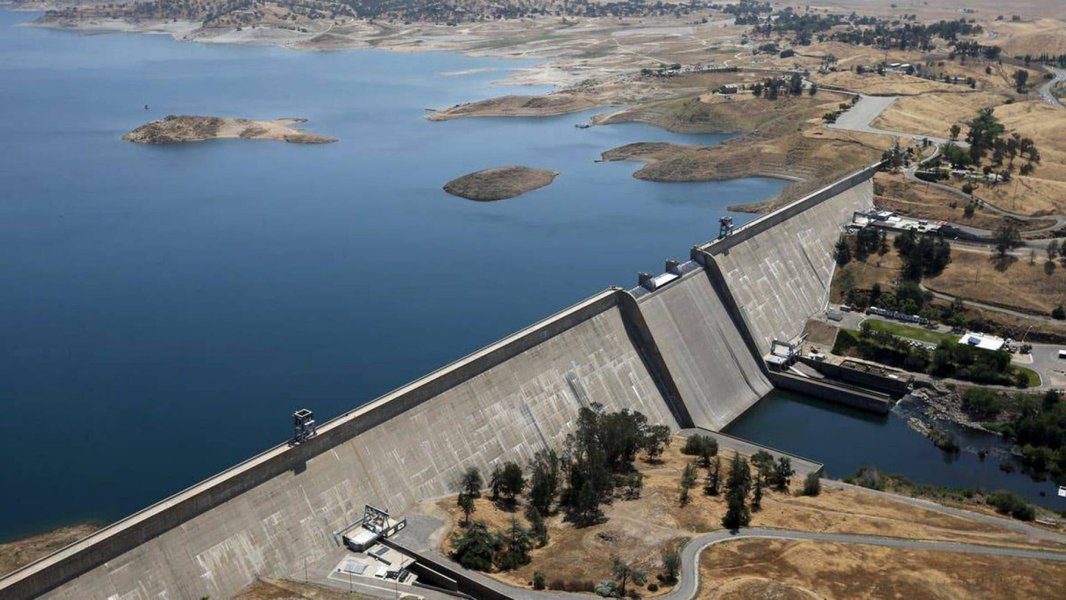
Under normal water conditions, disputes may be relatively easy to manage, since high flows allow all parties to obtain their needs without any one feeling that another's gains come directly at its expense.
The real dispute, therefore, is not only about what Ethiopia can do in wet years, but about what it will do when water revenues decline, and whether it will continue operating its facilities in the same way or be forced to hold back larger quantities of water behind its dams.
This is why Egypt and Sudan focus on having clear rules for drought periods. The two countries do not want the handling of drought to depend each time on a unilateral decision by a single state.
Ethiopia, meanwhile, believes that imposing permanent restrictions on the operation of its projects could undermine the main purpose of the dam, which is energy production and development.
Thus drought years turn from a mere natural phenomenon into a political and legal test of the relationship among the Nile states.
Egypt has a reserve, but for how long?
The former Egyptian Minister of Irrigation and Water Resources, Mohamed Nasr Allam, noted that Egypt was able to cope with the shortfall in water flows during the flood season he described as dry, benefiting from the reserves in Lake Nasser behind the High Aswan Dam. This capacity gives Egypt a margin of manoeuvre in facing temporary fluctuations, but it does not eliminate the underlying problem.
A strategic reserve is not an inexhaustible source; it is a means of getting through shortfalls when they are limited in time. For this reason, Allam believes that repeated drought seasons could lead to a real crisis.
This point reveals one of the most important elements of both strength and weakness in the Egyptian position.
Can Ethiopia "withhold" water?
The answer provided by Mohamed Nasr Allam is relatively clear: Ethiopia cannot withhold water indefinitely, but it can hold it back for a period of time.
This is the core of the Egyptian and Sudanese concern. If Ethiopia has the Renaissance Dam and other dams are added on the Blue Nile, its capacity to regulate water will necessarily expand in operational terms.
However, the actual scale of this effect depends on several factors, including the storage capacity of the dams, their locations, their operating methods, the volume of annual water revenues, and climatic conditions.
For this reason, the danger should not be framed in exaggerated terms, since the more realistic point is that increasing facilities raises the ability of the upstream state to manage the timing and quantities of water passing to downstream states.
The Blue Nile: the figure that explains the stakes
According to a Sudanese official who asked not to be named, the Blue Nile supplies approximately 85% of the Nile's water.
This figure explains why the Blue Nile has become the focus of the dispute. Any change in this tributary does not remain confined to Ethiopia; it moves geographically and politically to Sudan and then to Egypt.
For this reason, any new water project on the Blue Nile cannot be viewed as entirely local, since water does not stop at political borders.
This is the problem that makes the disagreement between upstream and downstream states different from any conventional dispute over an infrastructure project. The state building the dam sees its facility within its borders, whereas the state downstream sees the effects of that facility beyond the borders of the state that built it.
Here the real struggle begins between the principle of sovereignty and the principle of not causing harm.
The Entebbe Agreement: a battle larger than the Renaissance Dam
According to the Sudanese official, the Ethiopian threat to build three new dams may be linked to an attempt to restructure the Nile Basin system by activating the "Entebbe Agreement" without the consent of Egypt and Sudan.
If this reading is correct, the crisis is not only about dams; it concerns redefining the rules for managing Nile waters themselves. Here the Renaissance Dam becomes part of a broader struggle over the future of the basin.
Ethiopia holds that upstream states should have greater room to use their water resources.
Egypt and Sudan, meanwhile, insist on respecting existing rights and interests and avoiding unilateral measures that could affect other states.
Hence the struggle over the Entebbe Agreement carries significance beyond the details of the agreement itself.
The three dams: why do they raise concern?
BODY 3f527934>>>
There are three new projects, Mandaya, Karadobi and Beko Abo, located on the upper course of the Blue Nile. Here the concern lies not only in the construction of each dam separately, but in the possibility that the effects of several facilities could accumulate on a single watercourse.
The impact of one dam can be studied through specific hydrological and technical models, but when facilities multiply, calculating flows becomes more complex.
Each dam can change the timing of water retention and release, and each reservoir can become a new factor in managing the river.
Technical Risks: The Other Side of the Crisis
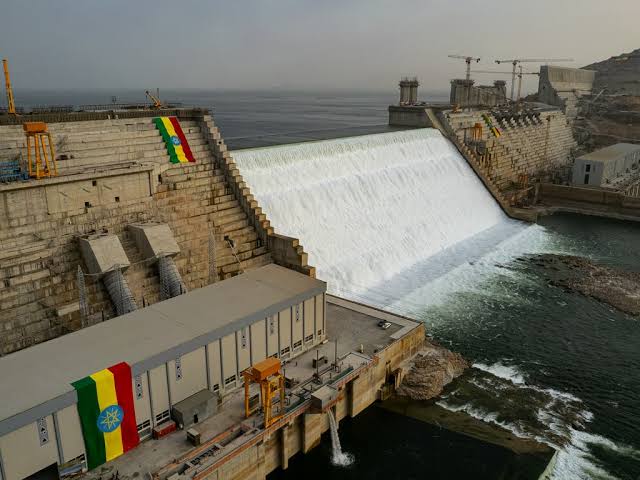
Beyond politics, there is another file no less sensitive, relating to the technical safety of the Grand Ethiopian Renaissance Dam. Some reports have spoken of certain turbines having stopped, and linked this to questions about operational efficiency and the dam's capacity to achieve its objectives.
The Role of International Mediation and Future Paths
Many international and regional parties have attempted to mediate a resolution to the crisis, but without success so far.
Challenges of Mediation
The efforts made by the African Union and the United States have not produced tangible results, which is attributed to the intransigence of the parties and the lack of sufficient political will to make concessions. Many are calling for strengthening the role of mediators and developing new negotiating mechanisms that focus on shared interests instead of rigid positions.
Possible Scenarios
The crisis could move toward several possible scenarios:
- Continued deadlock: This is the most likely scenario at present, in which Ethiopia continues to operate the dam unilaterally, while Egypt and Sudan continue to mobilise international support and signal various options.
- Military escalation: Although it is a destructive option, military escalation remains a possibility if the crisis reaches a dead end and no diplomatic solution is reached.
- Return to negotiations with a new agreement: New international or regional pressures may emerge that push the parties back to the negotiating table in a new format or with more effective mediation, which could lead to a binding agreement.
- Intervention by the UN Security Council: If tensions rise and threaten regional security and peace, the UN Security Council may intervene to impose a settlement or supervisory mechanisms over the operation of the dam.
Potential Consequences of the Continued Crisis
The continuation of the deadlock over the Grand Ethiopian Renaissance Dam file has grave consequences at the regional and international levels.
The Impact of the Crisis on International Relations
The Grand Ethiopian Renaissance Dam crisis directly affects relations between the three countries, and could lead to destabilising the entire region. It also tests the effectiveness of international law and mediation mechanisms in resolving transboundary disputes over natural resources.
Economic and Social Impacts
For Egypt and Sudan, a water shortage could lead to a decline in agricultural production, environmental degradation, and increased social and economic pressures.


