


From Afghanistan and Iraq to Gaza, Ukraine and Iran, decision-makers repeatedly hold the conviction that military superiority can impose a decisive end to wars. But history reveals a striking paradox: armies can collapse, capitals can fall and military capabilities can be destroyed, without this meaning that the war has ended or that the political objectives for which it began have been achieved. Could absolute military victory, in its full sense, be a mere strategic illusion that drives states into wars they know how to start but not how to end?
In an analytical study published by the American magazine Foreign Affairs on 6 October 2026, titled "The Myth of Military Victory: The Dangerous Idea Driving Wars of Choice Today," the researchers Stephen Biddle, Sam Winter-Levy and Yuri Zhukov examine one of the most entrenched ideas in modern military thinking: the belief that inflicting a crushing defeat on the enemy is enough to compel it to accept the victor's will and end the war on the victor's terms.
The study argues that this conviction is not merely a military miscalculation but a strategic error that affects decisions to wage wars and prolong them, as well as how armies are built, how munitions are stockpiled and how political objectives are formulated.
According to the researchers, wars do not end when one party loses its capacity to achieve victory on the battlefield, but when a ceasefire, under certain conditions, becomes a option that the belligerents prefer to continued resistance.
What is the difference between winning a battle and winning a war?
The study starts from a distinction that is often confused: military victory and the achievement of a war's political objectives.
A state may succeed in destroying its adversary's air force, crushing its ground forces or occupying its capital, yet discover that these achievements did not compel it to abandon its aims or accept the political order it wishes to establish.
The researchers argue that military force can change the bargaining balance by raising the cost of continuing the war for the other side, but it cannot always extract its political will or eliminate its capacity to resist.
The reason is that the defeated party may continue fighting by different means, even after losing its regular army and main cities, or it may accept an unfavourable settlement if it finds that better than continuing the war.
The study draws on historical data indicating that defeated parties in interstate wars since the end of the Napoleonic Wars in 1815 lost, on median average, about 8% of their forces, and that losses remained below 10% in two-thirds of cases.
According to the researchers, these figures show that most wars do not end by exhausting one side's capacity to fight entirely, but by its acceptance of political or military terms that prevent the confrontation from continuing.
The 1991 Gulf War: a decisive victory without destroying the Iraqi army
The study cites the 1990–1991 Gulf War as one of the best-known examples invoked by proponents of the idea of decisive military victory.
The coalition led by the United States succeeded in expelling Iraqi forces from Kuwait and achieving its main political objective, during a relatively short military campaign.
However, the Iraqi army had not been completely destroyed by the end of the fighting.
According to the figures cited by the researchers, up to 50,000 Iraqi soldiers were killed and some 75,000 were wounded, out of a force whose strength exceeded one million, while more than 800,000 remained capable of continuing to fight.
Nevertheless, Iraqi President Saddam Hussein agreed to halt military operations, after the cost of continued resistance and the likelihood of coalition forces advancing towards Baghdad became higher than the gains that could be achieved.
For its part, the coalition declared a ceasefire, which signalled that it would not continue advancing if Iraqi forces stopped fighting.
Thus, the war ended with the coalition achieving its main objectives, but not as a result of eliminating Iraq's capacity to resist; rather, as a result of two political decisions to halt fighting meeting on terms that tilted the balance in the victor's favour.
Iraq 2003: the fall of Baghdad was not the end of the war
Twelve years later, the American invasion of Iraq in 2003 presented a completely different picture.
The regular Iraqi army collapsed, Baghdad fell and the institutions of authority disintegrated, while Iraqi forces lost the ability to confront the American occupation in a conventional war.
Had the collapse of the army and the occupation of the capital been sufficient to achieve final victory, the war should have ended within weeks.
But what happened was the opposite.
Many fighters turned to irregular armed activity, and a resistance broke out that lasted for years, despite overwhelming American military superiority.
The study indicates that US forces suffered fewer than 3,000 casualties, killed and wounded, during 2003, compared with more than 33,000 over the following eight years.
The researchers link the continuation of fighting to the refusal of sections of the former regime's supporters to accept the political arrangements that followed the occupation, particularly living under a new Iraqi authority formed under US sponsorship.
Military superiority enabled Washington to topple the regime, but it was not sufficient to make all Iraqi parties accept the alternative system.
The war thus became an example of the gap between controlling territory and ending the political conflict.
Afghanistan: when the defeated party returned to power
According to the study, Afghanistan offers an even clearer example of the limits of military victory.
By mid-2002, the United States had overthrown the Taliban's rule, taken control of Kabul and pushed the movement's leadership to leave the country.
At that time, the Taliban did not have the capacity to confront US forces in a conventional battle or to retake the capital.
But this defeat did not lead to the end of the war.
The movement refused to accept political arrangements that excluded it from power, and its fighters continued to fight through a long war relying on irregular methods.
The study notes that representatives of the former regime sought, after the fall of Kabul, to reach an agreement that would give them a legal status and a role in the new Afghanistan, but the administration of President George W. Bush rejected these efforts, on the basis that it had achieved a military victory that did not require negotiating with the defeated party.
The researchers argue that this decision contributed to prolonging the war, which lasted nearly two decades and cost tens of thousands of lives and trillions of dollars.
In August 2021, the Taliban retook Kabul and returned to power, after the withdrawal of US forces.
Herein lies the paradox the study highlights: a movement that lost power and its conventional military capabilities in 2001 was able, twenty years later, to regain control of the country, while the strongest military power in the world failed to impose a political settlement guaranteeing the continuation of the system it had supported.
The Second World War: even a crushing defeat did not abolish negotiation
Citing the Second World War may appear to be a strong objection to the researchers' thesis, since the war ended with the defeat and surrender of Nazi Germany and Japan before the Allies.
But the study offers a different reading of this ending.
In Japan, more than six million military personnel were still in service at the surrender in August 1945, despite the enormous destruction the country had suffered and its diminished ability to fight a winning war.
The Japanese leadership understood that recovering its former areas of control was impossible, but it was betting that continued resistance would make an invasion of the Japanese islands extremely costly for the United States, pushing Washington to offer less harsh surrender terms.
The study draws attention to the importance of the Potsdam Declaration issued on 26 July 1945, which contained conditions relating to Japan's future, among them its retention of its main home islands, the return of military personnel to their homes, and the non-subjection of the population to forced labour.
The most sensitive matter, however, was the fate of Emperor Hirohito.
The declaration avoided specifying his fate, which was understood in Tokyo as a possibility of retaining the imperial system. Indeed, Hirohito remained emperor until his death in 1989.
The researchers argue that these arrangements show that Japan's surrender, although a crushing defeat, was not free of calculations of negotiation and concessions.
As for Germany, it still had more than three million soldiers armed and resisting at the time of its surrender in May 1945.
The study indicates that the Allies modified some of their conceptions of Germany's future after the Morgenthau Plan, which envisaged dismantling German industrial capacity and permanently weakening the country, provoked fears that helped reinforce calls for resistance.
According to the researchers' analysis, easing some of the proposed conditions helped create the conditions for accepting surrender, despite the complete loss of the objectives for which Germany had waged the war.
Thus, the study does not deny that the Allies achieved a decisive victory; rather, it argues that this very victory needed political terms that made the halt to fighting an option acceptable to the defeated party.
Gaza and Iran: when total defeat becomes an unattainable goal
The study moves from history to contemporary wars, considering that the belief in the possibility of achieving a final military victory continues to influence major political decisions.
In Gaza, the researchers argue that the insistence of Benjamin Netanyahu's government on the goal of eliminating Hamas militarily contributed to prolonging the war that began in October 2023.
Their argument is that destroying military installations and capabilities does not necessarily end the ability of armed organisations to continue resistance, nor remove the political causes that allow the conflict to persist.
The study also addresses the American war on Iran in February 2026, and criticises the way the administration of President Donald Trump designed its military campaign.
According to the researchers, Washington proceeded from the assumption that intense military pressure could compel Iran to surrender unconditionally, rather than using military operations to improve the terms of a specific political settlement.
The study criticises the surprise attacks that occurred during negotiations, and the targeting of Iranian officials whom Washington had previously regarded as more willing to negotiate, arguing that such policies may undermine prospects for reaching an agreement to end the war.
It holds that the American strategy led to a costly impasse, with munitions depleted, expenses rising and economic disruption widening, without a clear political vision for ending the confrontation.
In the researchers' reading, the two cases reveal a problem that goes beyond the scale of force used: when the declared aim is to subdue the adversary completely, a political settlement becomes a sign of failure rather than a means of ending the war.
Ukraine: a war that began with quick expectations and ended in prolonged attrition
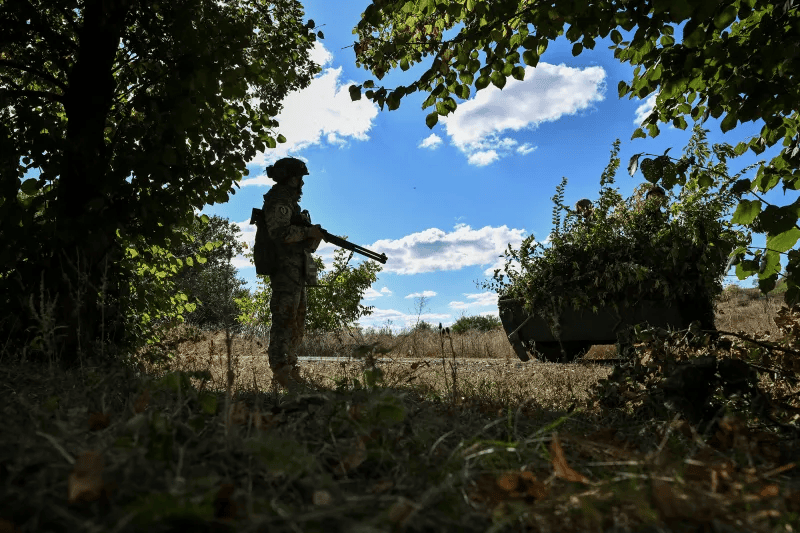
In Ukraine, the study considers that Russia made the same mistake when it launched its invasion in February 2022, on the basis of expectations that its objectives could be achieved quickly and at limited cost.
But the stalling of the Russian advance led Moscow to expand operations, rather than returning to the negotiating track that briefly appeared in March of the same year.
In September 2022, Russia announced the annexation of four Ukrainian regions that it did not fully control, a decision the study regards as a further factor complicating prospects for settlement, as Moscow became bound by broad territorial demands.
For their part, the researchers argue that American and European assistance, however important, does not guarantee that Ukraine can impose a military end to the war without Russia accepting a settlement.
According to the study's logic, this reading does not mean that the two sides bear the same responsibility for the outbreak of the war; rather, any strategy to end it must take into account each party's capacity to continue fighting and its political will.
The study concludes that Western states should have planned from the outset for the possibility of a long war, by expanding their industrial and military capacities and making sustained commitments, rather than relying on short-term aid packages that suggested the war might end quickly.
Taiwan: the risk of a war that is easy to start and hard to stop
The warning is not limited to existing wars but extends to the possibility of a military confrontation over Taiwan.
China may believe that a rapid military operation could impose a new political reality before Taiwan and the United States could respond effectively.
But the study warns that the duration of such a war will not be determined solely by the number of ships, aircraft and missiles Beijing possesses, but also by Taiwan's readiness to endure blockade and bombardment, by Washington's decisions, and by the Chinese leadership's calculations regarding the costs of continuing the conflict.
Conversely, American superiority in certain advanced military capabilities does not in itself guarantee a swift end to the war if China chooses to keep fighting.
The researchers indicate that planning for short, decisive wars may lead to reduced munitions stockpiles, neglect of preparations to replace losses of forces and equipment, and a failure to develop the capacity to fight prolonged attritional wars.
Hence the danger lies not only in the possibility of losing battles, but also in entering a war that no party can end on the terms it anticipated at the outset.
Why do states keep pursuing military victory?
The study attributes the persistence of this problem to the appeal of the idea of decisive victory for decision-makers.
Negotiation involves making concessions, acknowledging the adversary's ability to influence outcomes, and the possibility of prolonged talks without guaranteed success.
Military victory, by contrast, promises a different outcome: subduing the adversary by force, securing acceptance of the victor's terms, and avoiding political concessions.
According to the researchers, however, this image leads governments to overestimate their capacity to control the course and endings of wars.
It may push them to reject opportunities for negotiation at early stages, to continue fighting after the prospects of achieving the original objectives have vanished, or to widen the war in search of a more decisive victory.
The result is that military operations may shift from being a means of achieving specific political goals into an end in themselves, so that fighting continues despite the absence of a clear vision of what should follow its cessation.
The study also notes that American military planning has often been separated from planning for political settlements, citing the operations carried out in Afghanistan between 2009 and 2013, when officials responsible for political settlement were insufficiently integrated into the design of military campaigns.
Use of force thus becomes detached from the most important question: how these operations will change the adversary's calculations, and what terms could lead it to halt fighting?
Force may win battles, but it does not guarantee peace
The study does not call for ignoring military force or minimising its importance. On the contrary, the researchers affirm that the outcomes of battles fundamentally affect the balance of bargaining, and may permit the imposition of very harsh terms on the defeated party.
But they reject the belief that force alone can eliminate an adversary's will or ensure its acceptance of the outcome defined by the stronger side.
Within this framework, genuine military effectiveness becomes tied to a state's ability to convert battlefield superiority into sustainable political gains, rather than merely counting the territory it has seized or the forces it has destroyed.
The experiences examined in the study show that the fall of a capital may be the beginning of a new phase of fighting, that the disintegration of an army does not prevent the emergence of irregular resistance, and that a victorious state may face, years later, political consequences that contradict what it sought to achieve when the war began.
Although treating all modern wars as ending in settlements, explicit or implicit, remains an analytical proposition open to debate, the historical examples that researchers cite offer an important warning against reducing the end of wars to the outcome of battles.
Armies may succeed in destroying the military capabilities of an enemy, yet fail to compel it to accept the political order they wish to impose. The side that is stronger militarily may win, only to find itself facing a prolonged war of attrition that consumes the gains it has achieved.
Herein lies the central idea of the study: the most dangerous illusion of war is not the belief that victory in battle is possible, but the belief that such victory gives its holder the ability to determine the end of the war alone.
A war may begin by a decision taken by one side, but ending it requires dealing with the will of the other side, however great its military losses.
As long as states ignore this reality, they will continue to wage wars whose outbreak they have the means to bring about, without necessarily having the political means needed to end them.
Source: Foreign Affairs magazine, study titled The Myth of Military Victory: The Dangerous Idea Driving Today's Wars of Choice, by Stephen Biddle, Sam Winter-Levy and Yuri Zhukov, published 6 October 2026.


