


After six months of U.S. military operations against Iran, the cost of the war has begun to extend beyond the Middle East, appearing within the U.S. military establishment itself. A report by The Washington Post revealed that a number of senior military commanders warned Defense Secretary Pete Hegseth that continuing large-scale operations at the current level is no longer sustainable, and that the depletion of forces, ships and munitions in the Middle East threatens the United States' ability to confront potential threats in other regions, including the defence of U.S. territory itself.
These warnings point to a deeper problem than the rising cost of the war alone. Washington faces the dilemma of distributing a global military force designed to handle several theatres at once, while the war with Iran absorbs a growing share of U.S. ships, aircraft, air defence systems and munitions.
An unusual objection within the military command
According to the newspaper, the warnings appeared in the August 14 edition of the "Secretary of Defense's Order Book", a classified document normally prepared twice a month that shows the availability of U.S. ships, aircraft, personnel and weapons systems around the world, and helps the Pentagon's leadership distribute forces according to the priorities of the president and the defence secretary.
The significance of what the document contains lies in the level of objection. The commanders of U.S. commands in Europe, the Pacific and South America, together with the chief of naval operations, recorded what is known militarily as "non-concurrence" with continuing to allocate some of their forces to support the Iran war. This does not mean refusing to carry out orders, but rather formally registering an objection to the decision while complying with its implementation.
The Army and Air Force leaderships agreed to extend the deployment of their forces, but also stressed the significant risks that would result from continuing on this course.
According to one person familiar with the assessment, the general impression among the military leadership has become that the Iran operation has become "more than it should be and for longer than it should be", an expression that sums up the level of concern within the military establishment after the war reached its sixth month.
The Middle East draws forces away from the rest of the world
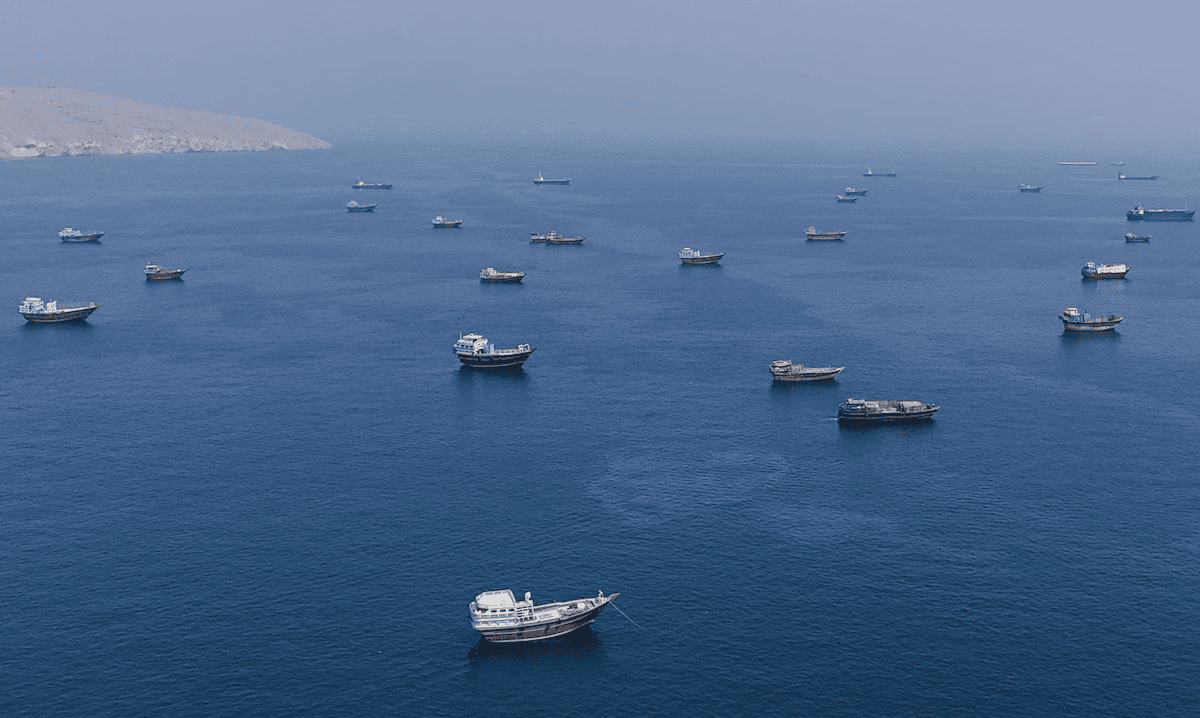
The core dilemma is that the reinforcement of U.S. Central Command does not happen in a vacuum, but through withdrawing military assets from other commands.
Ships, aircraft and equipment have been moved from forces assigned to Europe, Asia and Latin America to support operations against Iran, which, according to the assessment, has limited these commands' ability to carry out their missions and maintain the required levels of training and readiness.
Concern has reached the issue of defending the United States itself. The commanders of U.S. European Command and U.S. Southern Command warned that sending their ships and surveillance aircraft to Central Command has reduced their capacity to fulfil some commitments related to the defence of the American homeland.
In the Pacific, the commander of the U.S. command there, Admiral Samuel Paparo, objected to the level of continuous support required of him for the war, which includes a carrier strike group and destroyers.
Here one of the most serious strategic consequences of the war becomes apparent: every military unit sent to the Middle East is at the same time a unit that is not available in the Pacific, Europe or other regions.
The U.S. Navy at the centre of attrition
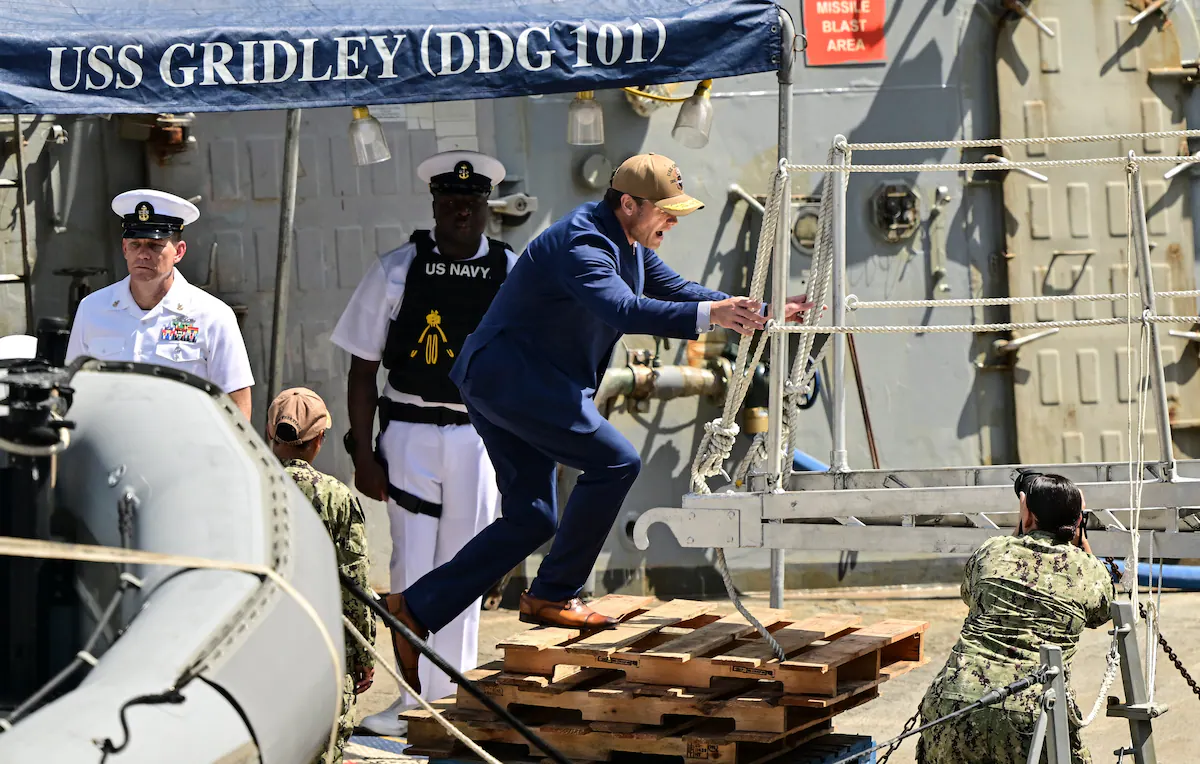
The U.S. Navy appears to bear the greatest burden. It was obliged to provide dozens of ships for the campaign against Iran, first to take part in U.S. strikes and respond to Iranian retaliation, then to take part in the blockade of Iranian ports as part of the Trump administration's attempt to pressure Tehran to reopen the Strait of Hormuz. This led to extending the deployment of some ships and their crews by additional months.
The most striking figure came from the chief of naval operations, Admiral Daryl Caudle, who told Hegseth, according to the newspaper's sources, that the Navy cannot sustain the current level of support for the war while there is no expected date for its end.
According to what was reported from the assessment, only about a quarter of the U.S. destroyer fleet is now ready for deployment, a sharp decline compared with pre-war levels. The document also warned that continued pressure on ship maintenance operations could threaten fleet readiness if another conflict broke out.
This aspect is critically important: military capability is not measured by the number of ships a state owns on paper, but by the number of units actually ready to fight at the moment required. The longer ships remain deployed, the greater the need for maintenance, crew rest, training and rehabilitation.
An ammunition crisis beyond the ships
The attrition is not limited to personnel or naval assets. The war has also led to the consumption of interceptor missiles from the Patriot system, after U.S. stockpiles had already been strained by earlier assistance provided to Ukraine. According to the report, the shortage of Patriot interceptor missiles has limited the Trump administration's ability to re-escalate the war, at a time when Iran is still able to target American facilities across the Middle East.
The war has also depleted stocks of the THAAD air defence system missiles and Tomahawk long-range missiles, while the United States has lost around 25% of its MQ-9 Reaper drone fleet, and U.S. bases in the region have sustained damage estimated at billions of dollars, according to the newspaper, citing earlier reports.
For its part, the Trump administration denies reports of a shortage of U.S. munitions.
A war whose effects extend to a confrontation with China
Perhaps the most dangerous aspect of the warnings is that they relate to the Pacific, where over the past years the United States has built a large part of its military strategy on preparing for the possibility of a confrontation with China.
But the Iran war has begun to draw away some of the resources that are supposed to serve this strategy.
According to The Washington Post, the depletion of U.S. missiles and interceptor munitions has raised concern among Washington's allies in the Pacific that this could increase their vulnerability to China. The only U.S. aircraft carrier permanently assigned to the Pacific was also sent to the Middle East to replace another carrier whose deployment exceeded 300 days.
This paradox reveals the strategic dilemma facing Washington: the United States wants to deter Iran in the Middle East, Russia in Europe and China in Asia at the same time, but the military tools needed for these theatres are not entirely separate.
Air defence missiles, destroyers, aircraft carriers, drones and long-range munitions are limited resources, and every long war consumes part of the reserve needed to confront another possible war.
Warnings existed even before the war
Most telling is that the sustainability problem did not appear only after fighting began. According to the newspaper, the Chairman of the Joint Chiefs of Staff, General Dan Caine, had warned the White House before the war broke out that the United States did not have enough munitions and allied support to conduct a broad and prolonged military campaign against Iran.
In other words, the current warning does not represent a surprise so much as the gradual realisation of concerns that existed before the war.
Nevertheless, U.S. Central Command has kept more than 50,000 soldiers on alert for months in anticipation of President Donald Trump ordering additional strikes, while current orders keep some forces in the Middle East until September, and others until 2027.
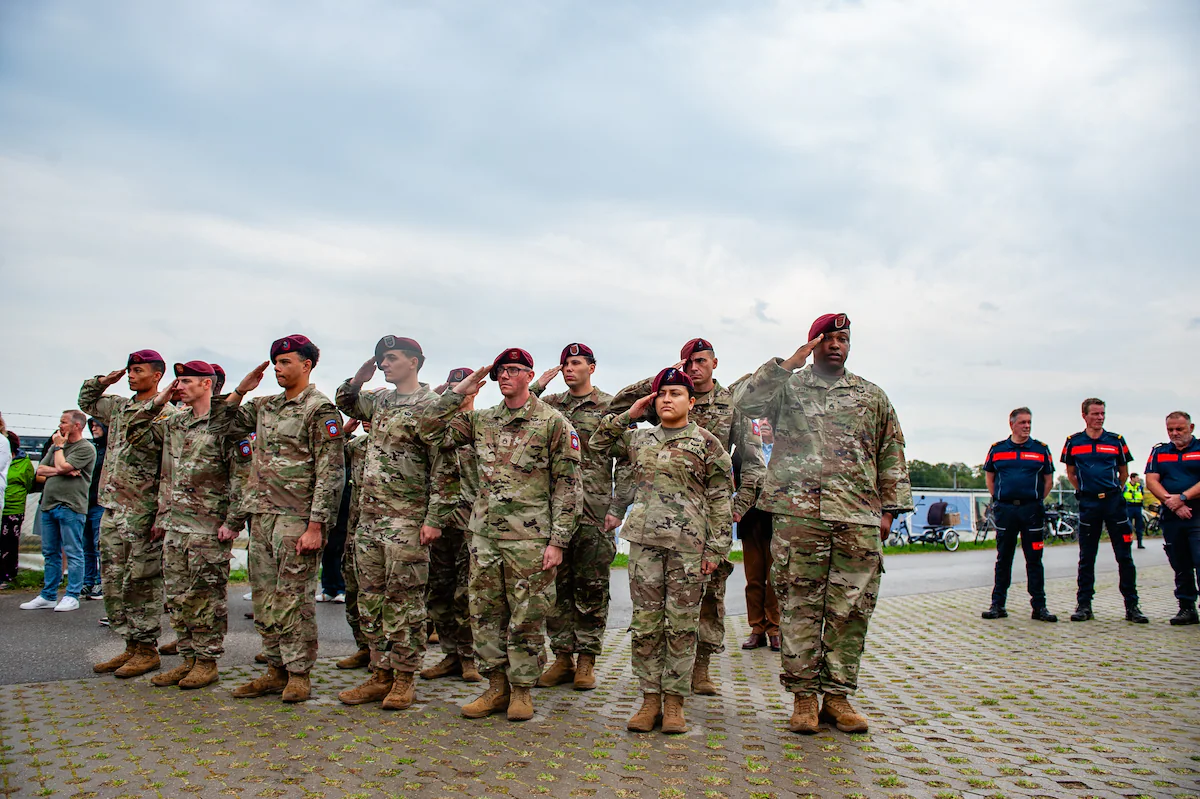
Among these forces are elements of the 82nd Airborne Division, which mobilised 2,000 soldiers in March in response to the war, and whose units are expected to remain in the region until at least September, with the possibility of the deployment being extended. This division is of particular importance because it would be among the pivotal units should the war develop into a ground invasion of Iran.
Washington's dilemma: how to end the war without appearing to retreat?
These developments show that the problem facing the Trump administration is no longer tied only to achieving its objectives in Iran, but to the cost of time.
Every additional month of war means more flying hours, consumption of munitions, postponed maintenance, extended deployment of sailors and soldiers, and the transfer of ships and aircraft from other regions.
On the other side, according to the newspaper's analysis, Tehran is aware that the war is unpopular with the majority of Americans and that it is draining the U.S. arsenal, which reduces its incentive to submit to American conditions.
Thus the prolonged war becomes a test of wills as much as a test of military strength: Washington possesses an immense military superiority, but must at the same time maintain global commitments stretching from Europe to the Pacific, while Iran can concentrate more fully on its direct regional theatre.
Who has the power, and who can sustain it?
The report does not mean that the U.S. military has become incapable of continuing the war, nor that the United States has lost its military superiority. Its importance lies in something more precise: the difference between possessing enormous military strength and being able to use it intensively for a long period without weakening readiness for other wars.
When the matter reaches the point of military commanders responsible for Europe, the Pacific and Latin America objecting, and the naval chief warning that the current level of support cannot be sustained, the issue goes beyond an ordinary debate about allocating resources.
It is a sign that the Iran war has begun to impose on the United States what its global strategy long sought to avoid: a trade-off between fronts.
This may be the deepest strategic cost of the war. Even if Washington can bear its direct financial and military cost, its continuation means that a growing share of the force meant to deter other adversaries will remain tied to the Middle East.
The question facing the Pentagon thus becomes less about whether the United States can keep fighting Iran, and more about what it may not be prepared to face elsewhere if the fighting continues for a long time.
The Washington Post


