

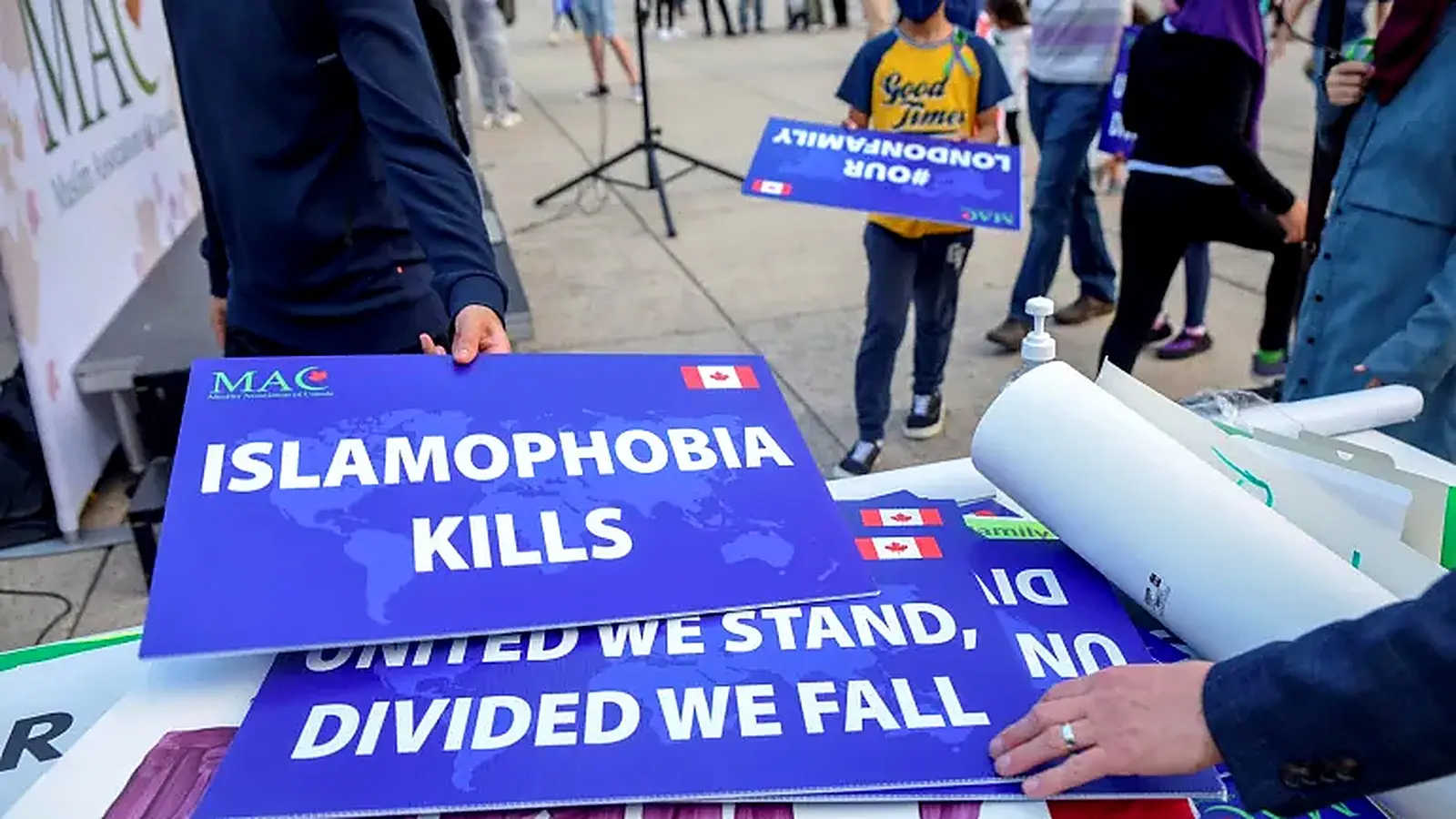
Attention turns to the Supreme Court of Canada on Friday, 27 November, as a ruling is awaited on the secularism law in the province of Quebec, known as "Bill 21", in a case that extends beyond the province's borders to open a broad constitutional debate on religious freedom, equality, and the limits of government power to impose restrictions on the hijab and other religious symbols in public institutions.
The ruling is expected at 9:45 a.m. Eastern Time, in the challenge led by the English Montreal School Board and other parties against the Government of Quebec, concerning the constitutionality of the secularism law, which prohibits certain categories of public employees from wearing religious symbols while performing their duties, according to the categories covered by the law.
The ruling comes after years of legal and political controversy over the law, which the Government of Quebec adopted in 2019. In applying it, the government relied on a constitutional provision that allows legislative authorities to override some of the rights and freedoms set out in the Canadian Charter, which has made the case one of the most prominent legal confrontations in the country over the relationship between secularism and the rights of religious minorities.
Law 21: Banning Religious Symbols in Public Employment
The Government of Quebec passed the secularism law known as "Bill 21" in June 2019, with the aim of affirming the secular nature of the state and regulating the relationship between government institutions and religion. However, it included a ban on wearing clothing that reveals the religious identity of public employees while they carry out their functions.
The law covers categories of public sector workers, including teachers, police officers, and some officials in positions of authority. It also requires some workers in government institutions to perform their duties with their faces uncovered, in accordance with the provisions of the law.
The Government of Quebec says the legislation reflects its understanding of secularism and aims to ensure the neutrality of the state and its institutions. It maintains that the law regulates the exercise of public functions and does not target any particular religion.
Opponents of the law, by contrast, argue that its application imposes unequal restrictions on people who express their beliefs through their clothing, especially Muslim women who wear the hijab, placing them before a difficult choice between adhering to their religious beliefs and obtaining employment in certain government positions.
The hijab is among the most prominent symbols that have fuelled the controversy over the law, alongside the turban. Defenders of religious rights argue that the ban is not limited to regulating the work of institutions but extends to individuals' freedom to express their beliefs in the public sphere.
The Constitutional Override Clause: How Quebec Shielded Its Law from Challenge
One of the most contentious aspects of the law is the Government of Quebec's use of the so-called "Notwithstanding Clause", set out in Section 33 of the Canadian Charter of Rights and Freedoms, which allows legislatures to enact laws that operate despite their conflict with some of the rights and freedoms contained in the Charter, for a period specified by law.
Quebec used this clause in advance within the secularism law, a step that drew wide objections from human rights organisations and religious groups, who regard it as limiting the courts' ability to strike down the law for violating certain fundamental rights.
The case before the Supreme Court centres on the extent of the use of this clause, and whether a legislature can shield a law from judicial review on matters relating to rights and freedoms, in addition to other constitutional questions connected with the rights of linguistic minorities, the constitutional structure, and the distribution of powers.
Groups opposed to the law call on the court to set limits on the use of the override clause, arguing that its advance and repeated use may weaken the effective protection of rights and freedoms. The Government of Quebec, for its part, defends its right to use the constitutional mechanism as part of the balance on which the Canadian system is built.
A Challenge Led by the English Montreal School Board, with 38 Interveners
The case stems from challenges brought since the law came into force by parties, individuals, and organisations, including the English Montreal School Board, the Canadian Civil Liberties Association, and the National Council of Canadian Muslims, alongside other parties.
In January 2025, the Supreme Court of Canada agreed to hear the constitutional challenge to the law, and in July of the same year it granted permission to a large number of parties, 38 in total, to intervene in the case, an indication of the wide scope of the legal debate over the legislation.
Over four days in March 2026, the court held hearings in which it considered the legal arguments presented by supporters and opponents, including interpretations relating to fundamental rights, religious freedom, equality, and the constitutional override clause.
The challenge also raised questions concerning the educational rights of Quebec's English-speaking minority and the extent to which the law affects those rights, issues that were addressed in earlier rulings by lower courts before the case reached the Supreme Court.
The anticipated ruling is set to settle a stage of the lengthy legal dispute and determine whether the arguments presented on the law's constitutionality and the limits of applying the override clause will bring about a change in the existing legal position.
Muslims in Quebec: Concerns over Employment and Integration
The law is directly consequential for segments of Quebec's Muslim community, especially Muslim women who wear the hijab and who wish to work in education and in the public sector positions covered by the ban.
Organisations opposed to the law say the legislation forces some women to choose between keeping a religious symbol and working in public employment, which may limit their professional prospects and affect their presence within educational and government institutions.
The Canadian Civil Liberties Association considers the law a violation of religious rights and equality, and maintains that banning the wearing of religious symbols harms groups who express their beliefs through their dress and affects their access to public professions.
The National Council of Canadian Muslims is also taking part in the legal challenges against the legislation, as part of its defence of the rights of Muslims and of religious freedom, focusing on the law's effects on affected individuals and communities.
On the other side, the Government of Quebec rests on the concept of secularism it embraces, and considers that the law reflects a vision of religious neutrality in public institutions and that regulating religious symbols in certain positions falls within its legislative powers.
This divergence places the case before the Supreme Court facing a broad constitutional question: can the state impose restrictions on religious symbols in specific jobs in the name of secularism, and where are the limits of those restrictions when they conflict with individuals' rights and religious freedoms?
Friday's Ruling: A New Test of Rights and Freedoms in Canada
The importance of the anticipated ruling extends beyond the future of Quebec's secularism law. It also bears on the interpretation of the use of the constitutional override clause, the limits of provincial governments' power to restrict certain rights and freedoms, and the extent of the courts' ability to review legislation that relies on this clause.
The decision is expected to have implications for constitutional debate in Canada, particularly as controversy grows over the use of Section 33, and over whether its advance use in legislation could weaken the role of the Canadian Charter of Rights and Freedoms in protecting minorities.
For Muslims in Quebec, the case is directly tied to their right to practise their beliefs, to the participation of veiled women in professional and public life, and to access to government jobs without having to give up religious clothing that expresses their identity.


