


A young Guinean migrant has described severe abuse he says he suffered inside an unofficial detention centre in the Mayya area, west of the Libyan capital Tripoli, including beatings, electric shocks and starvation, aimed at forcing him to call his family and pay a ransom for his release.
On 11 September 2026 (30 Rabi' al-Awwal 1448 AH), InfoMigrants published the testimony of the 24-year-old migrant, who used the pseudonym "Othman". He said he still bears marks of torture on his back, wrists and torso after being held at the centre during June of this year.
Interception at sea, then detention
According to his account, Othman's journey began in mid-June 2026 (Dhu al-Hijjah 1447 AH), when he attempted to cross the Mediterranean Sea as part of a group of around 60 migrants.
He says that only about ten minutes after the boat set off, armed Libyan men not wearing military uniforms intercepted them and took them to the port of Zawiya, west of Libya.
Othman stated that the armed men were not from the Libyan Coast Guard but from one of the militias. InfoMigrants said it had not been able to independently verify this detail.
According to the testimony, the gunmen searched the migrants and confiscated their phones and money, before transporting them in a small truck towards the Mayya area on the western outskirts of Tripoli, where there is an unofficial detention centre that migrants know for its bad reputation.
Gunfire near the detainees' feet
Othman recounts that upon the group's arrival, the men were ordered to take off their clothes, while the women were taken to another wing. The detainees then underwent a new search while wearing only their underwear.
He said they were made to stand in a line with their hands against the wall, before an official at the centre fired several shots from his weapon at the ground near their feet. The guards then forced them to walk towards the cells, beating them one after another.
According to his testimony, what happened on arrival was only the beginning of what he endured in the following days.
"They torture you, then call your family"
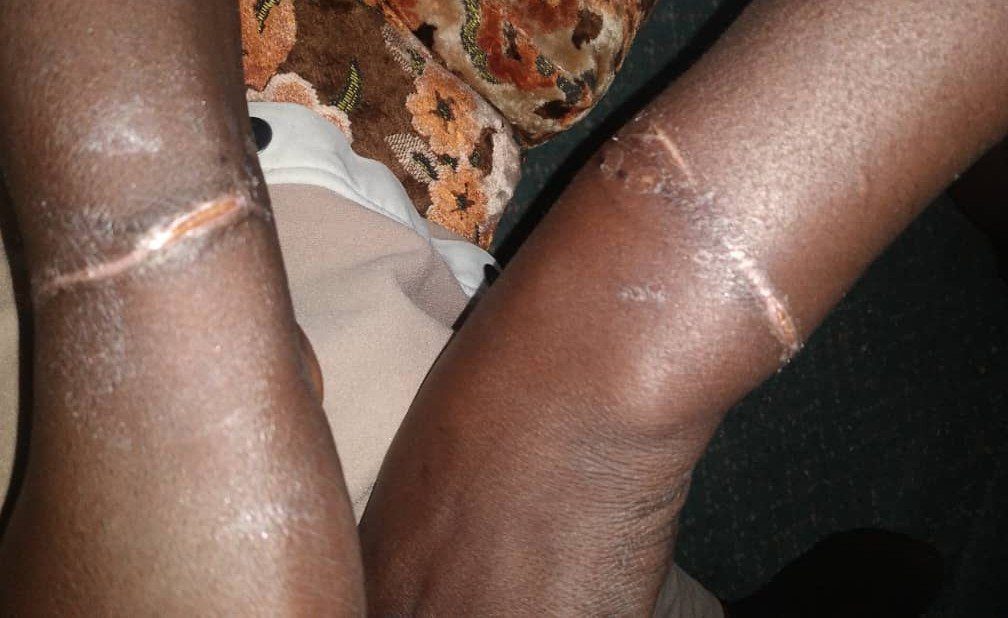
Othman said the guards took detainees to a torture room and beat them with pipes. He also described some being given electric shocks after their feet and lower legs were tied with wires.
He added that the torture sometimes took place in front of the other detainees in the cell, while calls were made to the victims' families demanding money transfers.
According to his testimony, the ransom demanded could exceed 1,000 euros, and if the money does not arrive, the level of violence increases. He also said that a family member responding in a way that angers the guards could lead to further assault on the detainee.
Describing what he went through, Othman said: "The Libyans torture you daily", adding that his cell held around 20 migrants and that everyone with him was subjected to some form of violence.
He said he heard the screams of men and women throughout the day, and noted that the marks of what he endured are still visible on his back, wrists and torso.
Four days without food
The Guinean's testimony was not limited to physical torture. He said he received no food during the four days he spent in the centre, and was given only a small amount of water.
Othman was eventually able to gather the sum required for his release, but questioned the fate of migrants who have no families or friends who can pay on their behalf.
Describing the centre, he said: "That prison is inhumane", and argued that staying there for long periods puts detainees' lives at risk.
Earlier allegations of abuse at the Mayya centre
The allegations concerning the Mayya centre do not rest on Othman's testimony alone. According to InfoMigrants, rights organisations, including Amnesty International and Libya Crimes Watch, have previously documented claims of torture, forced labour, sexual exploitation and poor detention conditions linked to the centre.
The Mayya centre is an unofficial detention facility run by the Stability Support Apparatus, an armed force established in 2021. Personnel linked to the apparatus have previously been accused of involvement in intercepting migrants at sea and committing abuses against migrants and refugees.
Rights organisations have also reported severe overcrowding and shortages of water and food in detention sites linked to these bodies.
Othman's testimony once again highlights the dangers migrants face while attempting to cross Libya and reach Europe via the Mediterranean. Attempts to cross may end not only with boats being intercepted and returned to the coast but, according to testimonies and rights reports, may be followed by another journey of detention, extortion and violence.


