


Why is the United States bombing Somalia? And who are the victims of these airstrikes?
Mark Townsend and Mohamed Gabobe in Mogadishu
Published by The Guardian
They had only just begun their breakfast when they heard the noise. Some stopped eating their slowly cooked fava beans – ambulo – alarmed by the piercing, frightening hum. Others pressed their faces against the windows, looking up at the sky. Farmers in neighbouring maize fields watched the objects hovering over the town of Jamaame, in southern Somalia.
Shortly after 9am on 24 Jumada al-Awwal 1447 AH (15 November 2025 CE), the town of Jamaame was shaken by a series of explosions.
The home of Abdullahi Mohamed Abushaykh Ali, who was tending his fields that day, was among those destroyed. His grandfather Mohamed rushed to the rubble.
"Clothes and books were scattered on the ground, but I could not focus on them," he said. "I was in shock, standing before the bodies of my two grandchildren. They had been torn to pieces."
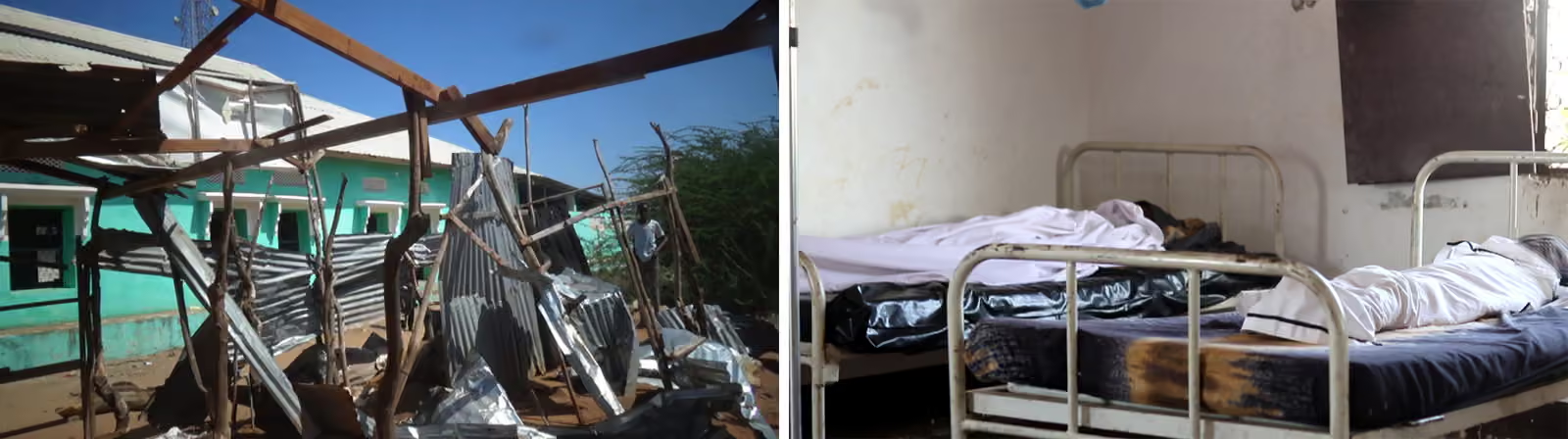
Two images: the first shows a damaged building, the second shows two bodies wrapped in white shrouds.
The images and screenshots from a video filmed at the Jamaame site show the damage caused by the bombing (left) and the victims of the strike.
The images were published by Shahada news agency, affiliated with the Harakat al-Shabaab al-Mujahideen, but were checked for authenticity and showed no signs of digital manipulation.
Among the rubble, Mohamed found the body of Safiya Hassan Abukar, his son's wife. She was in the final months of pregnancy. Beside her lay the body of Abdulfatah, her eldest son. It was not surprising that the ten-year-old was found close to his mother.
Mohamed says: "Abdulfatah never left his mother's side, and he always helped her with household chores. When he was there, she did not need anyone else."
Abdunasir, aged seven, lay dead nearby. Abdunasir was very attached to his grandfather. "He always asked me to pray for him to memorise the Quran. Sometimes I called him 'the one seeking prayers' and he would smile."
The bodies of two other brothers – Hussein, six years old, and Abdulrahman, four years old – were also among the rubble.
The family were killed during a US airstrike in Somalia. According to an investigation by The Guardian, at least 12 civilians, including eight children, were killed in the attack.
It is the deadliest US operation against civilians in Somalia during Trump's presidency. The United States has not killed this many innocent people in a single incident in this East African country in 18 years. The previous record for the highest confirmed toll was that of the failed US military operation in the capital, Mogadishu, known as the "Black Hawk Down" incident in 1993.
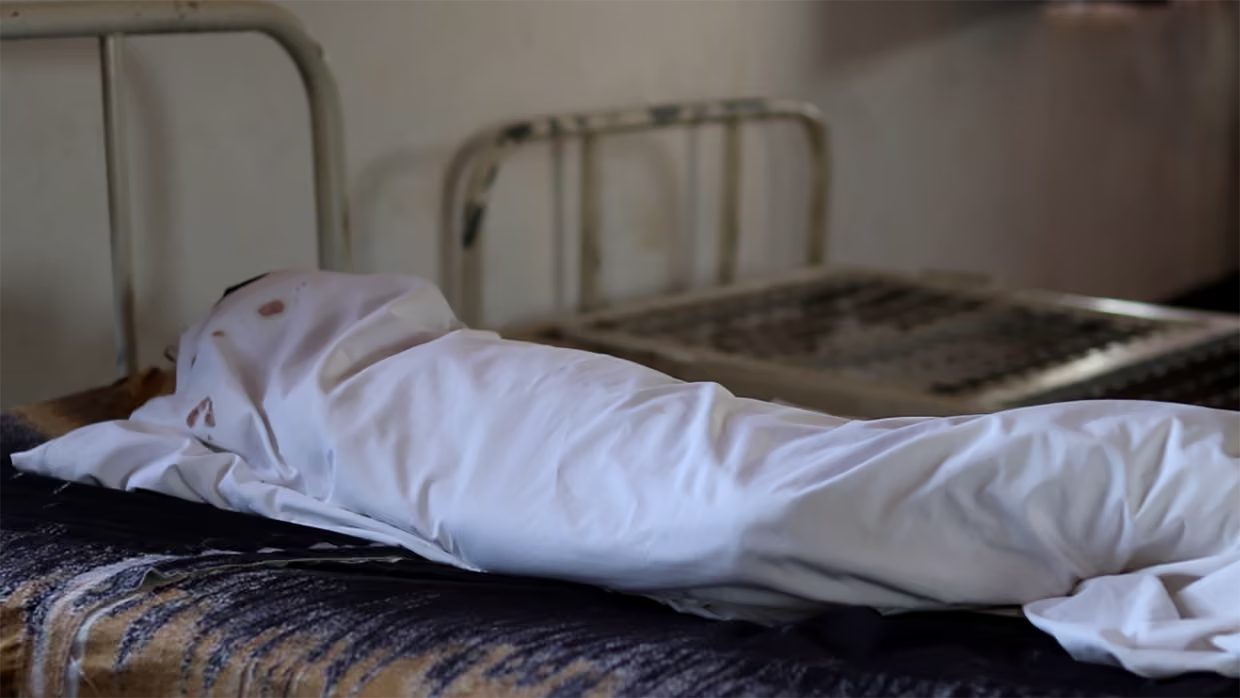
A body covered with a sheet on a metal bed frame.
A victim lies covered with a sheet after US drone airstrikes in the town of Jamaame killed at least 12 civilians, eight of them children.
Despite the scale of the disaster, no investigation into the Jamaame attack had been opened six months later. No one has been held accountable for these deaths, as the United States has refused to acknowledge the death of any civilian in the town that day.
Using photographs, videos, X-ray images of children's injuries from bomb fragments, and witness testimony, The Guardian has compiled the first detailed account of this massacre.
This massacre raises questions not only about US intelligence, but also about Washington's escalation of its campaign in the Horn of Africa. The Trump administration has carried out hundreds of strikes in a secret war that is legally ambiguous, with no clear accountability for civilian losses.
Who approved the attack on a densely populated residential neighbourhood? And why, and who was the intended target, if any? Testimony suggests it is highly likely that the teams operating the US drones were aware that children were present in the area.
More broadly, the Jamaame case calls for scrutiny of how the US military treats the lives of ordinary Somalis. Donald Trump, commander-in-chief of the US armed forces, has repeatedly attacked Somalis, describing them as "stupid" and "low IQ" and their country as "disgusting".
Did the president's derision of Somalis lead senior officials to believe they could escape punishment for killing civilians?
The US drones approached. Shortly before, they are believed to have taken off from Camp Simba, a military base to the south on the Kenyan coast. From its elevated position, Somalia appeared stunning: vast, pristine sandy beaches surrounded by white waves. Eight kilometres (five miles) inland, the town of Jamaame sits on a bend of the Juba River.
Full motion video (FMV), as the live video feed from the drones is known, transmitted the details of life inside Jamaame with extraordinary precision to a team of pilots and analysts. Brett Felkowitz, a former US Army special operations intelligence analyst, says: "You can read licence plates."
US airstrikes since 2022
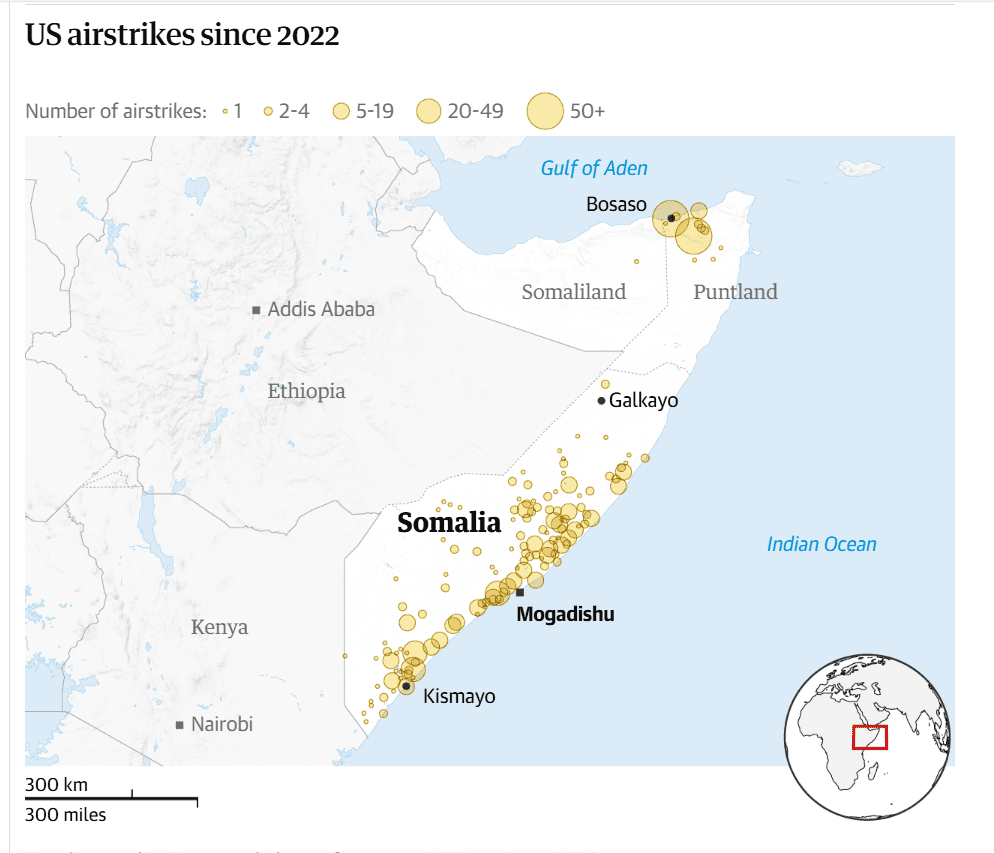
In Jamaame, people watched the aircraft in the sky. Although the United States declined to comment on the weapons used in the attack, they were most likely MQ-9 Reaper drones, known as "hunter-killer" aircraft, equipped with Hellfire missiles.
In the Burburka neighbourhood, Marian Hajji Abdi Gulleid recalls how her front door suddenly opened to reveal her three children, smiling, returning from the Quran school.
But Gulleid was alarmed and frightened by the "very loud" noise heard overhead. Her house shook, and the children ran outside to see what had happened.
Suddenly, another missile was launched from the sky, and Gulleid rushed outside. "All my children were lying on the ground, covered in blood. When I tried to help them, the shells began falling everywhere. Wherever I turned, shells and missiles rained down on me."
Nearby, Burugi's pregnant stepdaughter, Nur, had taken refuge at the Quran school, carrying her two-year-old daughter on her back.
At around 9:30am, eyewitnesses reported two missiles falling on the school. Burugi's stepdaughter was killed, while the little girl, who was still clinging to her mother's body, miraculously survived.
Amid the chaos, Mohamed Hassan Abdullahi rushed to a friend's house to borrow a motorcycle to move his family away from danger.
A neighbour says: "He told me he would help his family escape first and then come back for mine."
But Abdullahi arrived too late. His house had been levelled. Beneath the rubble lay the bodies of his wife, Farhiyo Hassan Nur, aged 26, and their 10-month-old daughter, Leyla Mohamed Hassan.
He stood beside his destroyed home as the entire neighbourhood burned. He says: "I could not even find anyone to help me carry the bodies of my wife and daughter."
Outside Jamaame, Jido Ibrahim was tending a sesame crop when he received a panicked phone call from his wife, Nortu Hussein Abukar, aged 30.
He said: "There was intense fear in the town because of the drones flying overhead. I asked her to stay at home."
At around 10am, he received another call, this time from a neighbour urging him to return home immediately. His house had been destroyed.
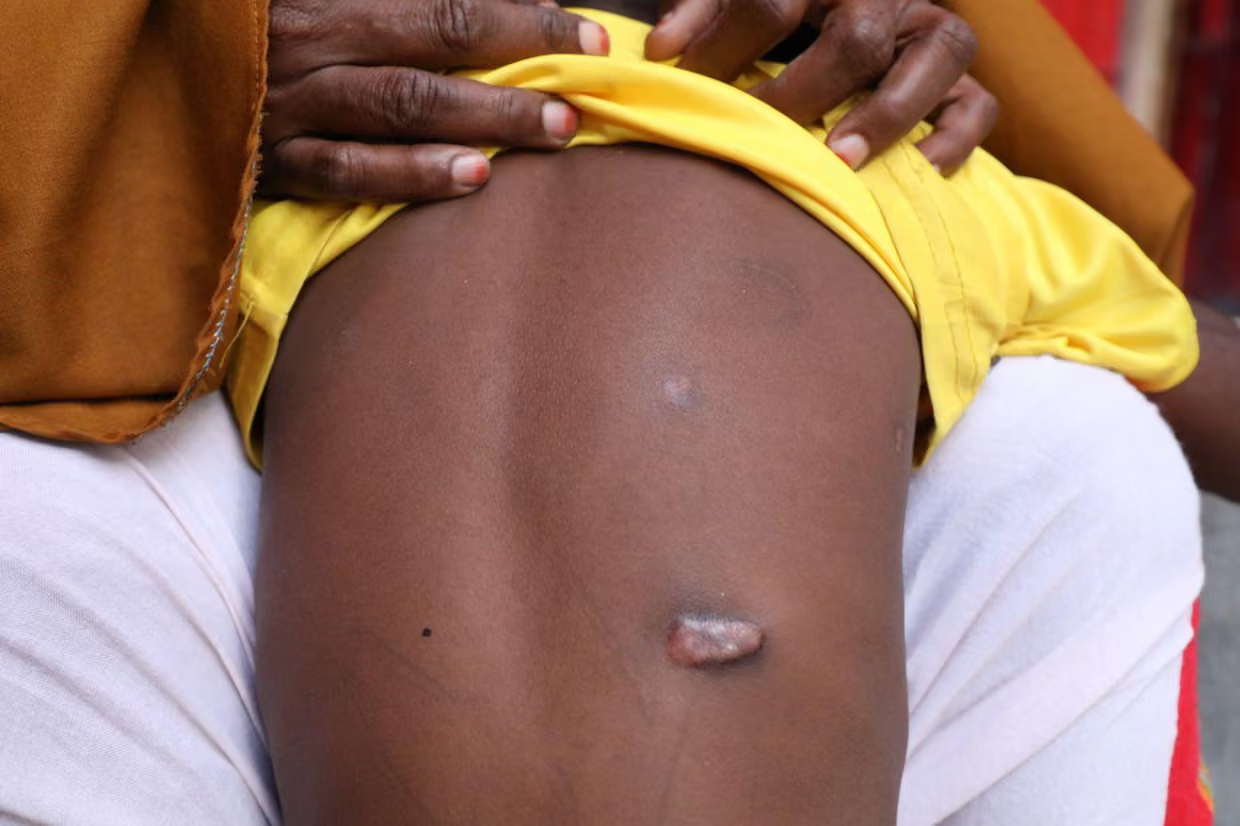
A young African child shows the marks of shrapnel on his back.
Marian Hajji Abdi Gulleid's children were injured by drone missile fragments. Doctors say her seven-year-old son, Abdulqadir, needs the fragments removed or he may be paralysed.
Her two daughters, Marian, aged nine, and Farhiyo, aged seven, died in the rubble of their home.
I saw my children's bodies lifeless. One had his left arm amputated, and another had shrapnel in his back that came out through his chest. Her daughter Amin, aged eight, was covered in fragments: metal shards pierced her shoulder, thigh, hip and leg.
Abdullahi Mohamed Abushaykh Ali, the farmer and grandson of Mohamed, was also summoned from his fields. He too faced a horrific scene of destruction and discovered that his family had been wiped out.
Abdullahi could not comprehend the death of his wife and four children, and entered a state of severe shock. Mohamed says: "He is no longer the same."
Others were also killed, including Imam Jalil.
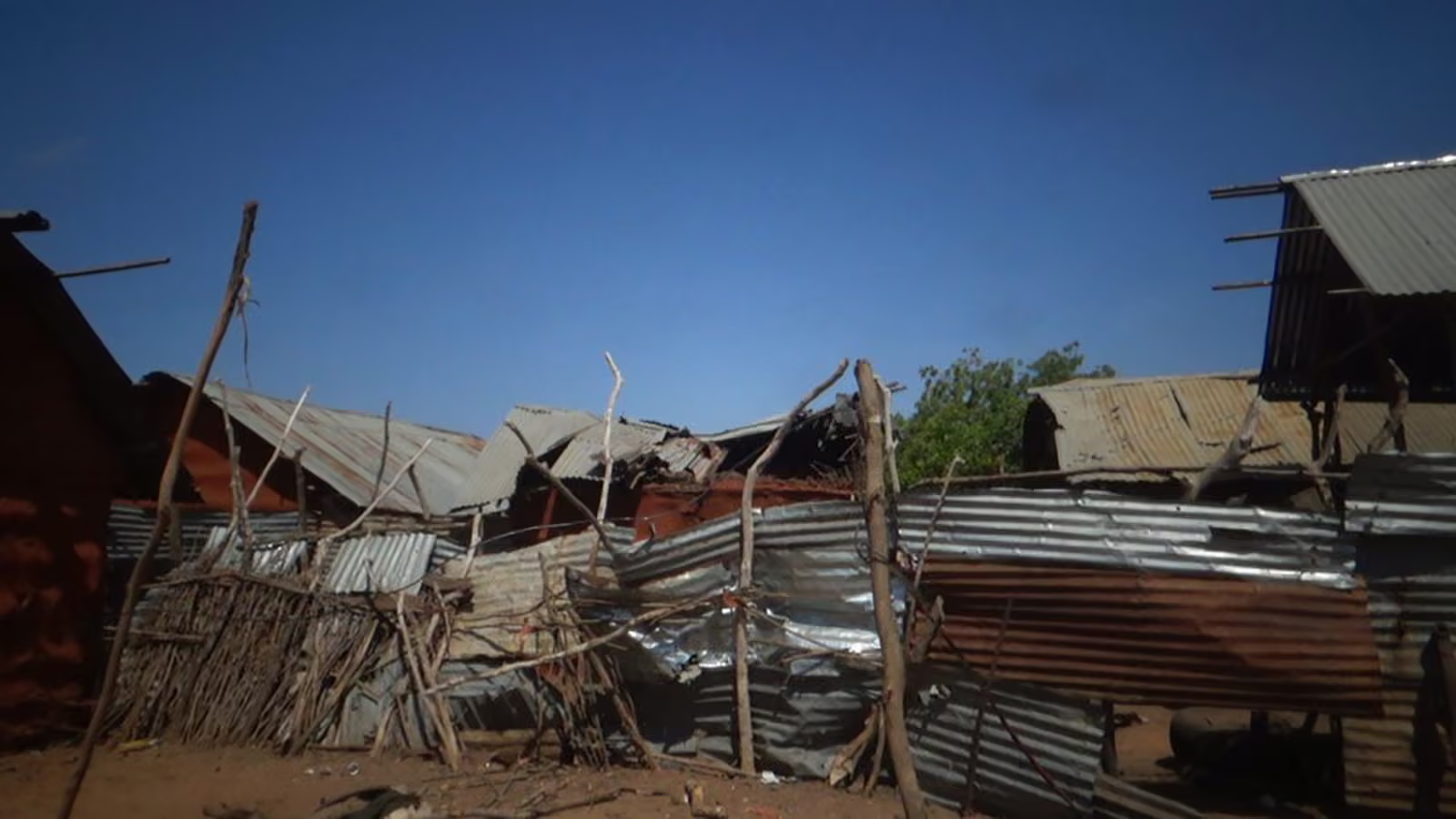
Cracked metal sheets surround the shacks.
Eyewitnesses say that at least 15 explosions occurred during the US drone attack on Jamaame, in which many homes and a school were destroyed.
Although it is difficult to verify the precise sequence of the strikes, eyewitnesses counted at least 15 explosions. Mohamed says at least 18 houses were destroyed, and the school was reduced to a destroyed frame. Gulleid counted nine strikes in the Burburka neighbourhood alone.
Abdullahi, who is struggling to come to terms with his loss, finds clarity in identifying the perpetrator. He says: "The Americans bombed us. They bombed children, women and the elderly. They spared no one."
When Trump began his second term, analysts wondered how Somalia would figure in his foreign policy. On his first foreign trip – in February 2025 – Trump's defence secretary, Pete Hegseth, met senior officers from US Africa Command (AFRICOM) in Germany.
The press release omitted that Hegseth had signed a directive that brought about a change that would have profound consequences for the families of Jamaame nine months later.
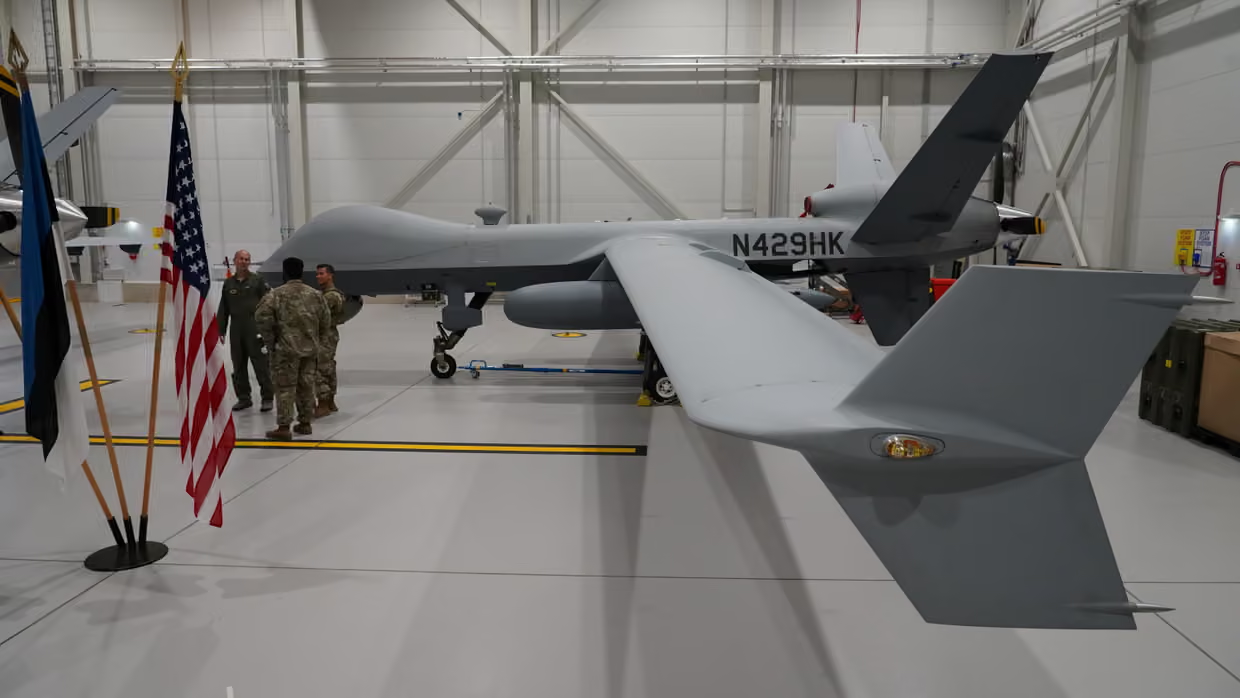
A huge drone in a hangar, with an American flag beside it.
The controls governing drone strikes were lifted. The restrictions imposed by the Biden administration, which required White House approval for drone strikes in Somalia, were also removed.
AFRICOM generals can now make a unilateral decision to approve any strike.
Jeremy Norman, of the Danish Institute for International Studies, says: "They were given the green light for intensive operations with minimal oversight."
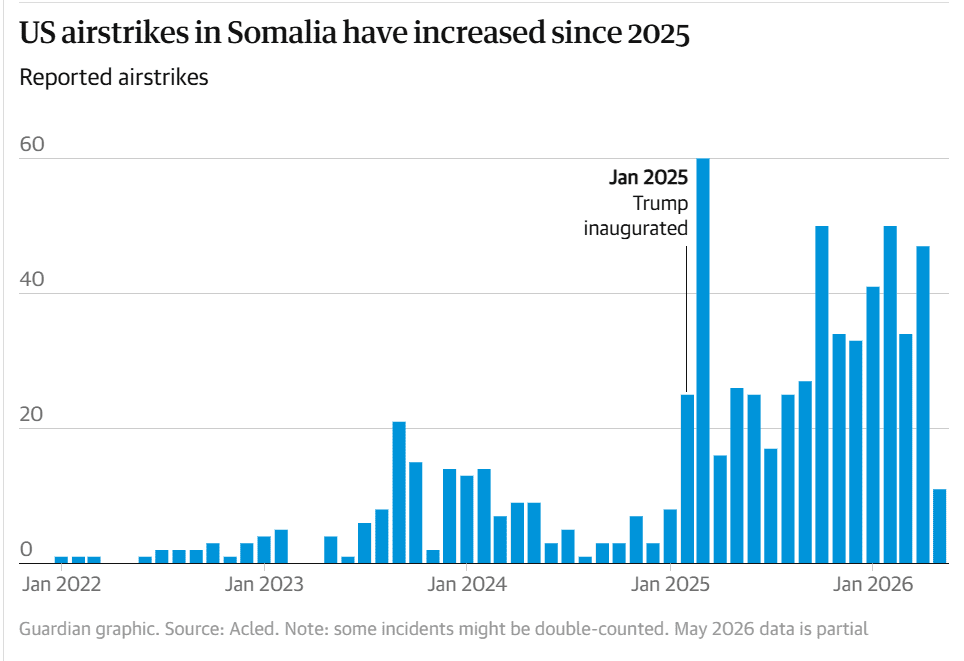
The easing of rules of engagement led to a sharp escalation in US operations in Somalia. The Armed Conflict Location and Event Data Project (ACLED), which monitors global conflicts, recorded 123 US airstrikes last year, more than six times the number in the previous year and double the previous record set in 2019. The pace of operations accelerated this year to unprecedented levels: by April, 49 strikes had been documented, roughly one airstrike every two days.
US airstrikes in Somalia have increased since 2025
So what triggered the attack on Jamaame?
The US military has never denied its involvement in the strikes. The following day, a statement from US Africa Command said it had conducted airstrikes in the area on 15 November.
In a reference to the Somali Islamist group al-Shabaab, which emerged in the early 2000s, the statement added that the attack on the town of Jamaame was part of an "operation aimed at degrading al-Shabaab's ability to threaten US territory, our forces and our citizens abroad".
While Jamaame lies within an area generally controlled by al-Shabaab, all the witnesses interviewed by The Guardian said the group had no presence in the town. All of them testified that the militants had never set foot in the town, preferring to hide in rural areas.
Gulleid says: "Al-Shabaab had no presence in our town, only women, children and the elderly. Before the airstrikes, the situation in Jamaame was calm and stable."
Burugi adds: "The only people here are herders and farmers."
Their accounts raise questions about US intelligence: whom was the strike team trying to kill, and how precise was the "target identification" in the weeks before the attack?
Drones, Felkowitz says, allow "precision munitions" to be directed at specific individuals.
When Felkowitz was carrying out his own drone strikes in Somalia, he would carefully study the daily routine of his target: who they met, when, and where. "I didn't sleep for three days, watching these men over and over."
Yet most of those killed in Jamaame were children and their mothers. The Quran school, which had been full of children shortly before the attack, was struck, along with residential buildings for families who had lived there for decades. Gulleid had lived in the same house for her entire 42 years until it was destroyed. There was no clear reason for her home to be targeted.
They would call an hour before and say: "We are going to strike this target, please sign this paper."
Jeremy Norman, Institute for Defence Studies
Perhaps there was no prior planning of the target. Norman, an expert on military operations in Somalia, says some airstrikes may be notably hasty.
He adds that AFRICOM sometimes seeks permission from Somali government officials almost as soon as the strikes begin. "Sometimes they would call an hour before and say: 'We are going to strike this target, please sign this paper.'"
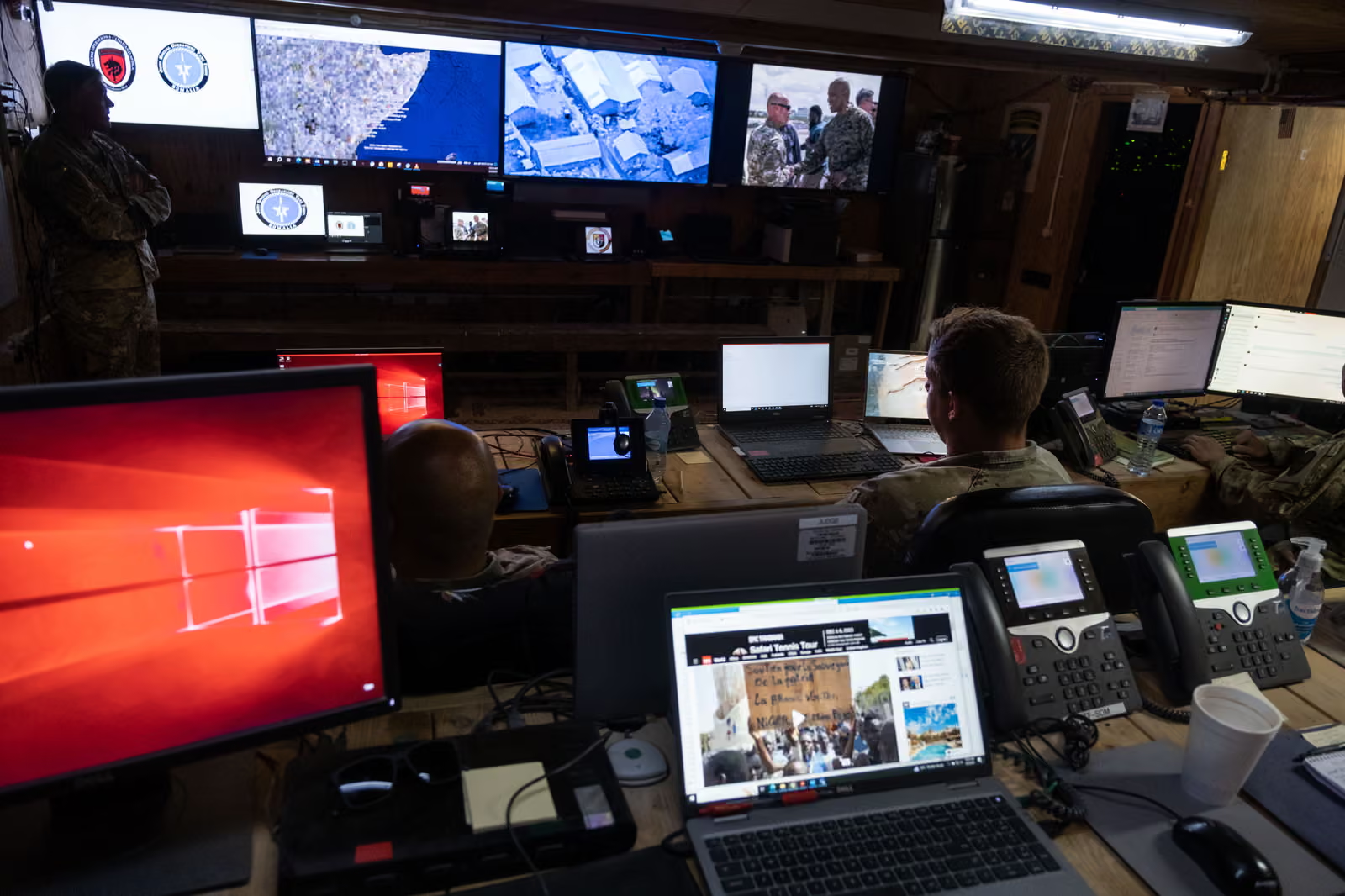
The Joint Operations Center in Mogadishu, where US special forces train the Danab Somali commando brigade to fight al-Shabaab.
Another theory is that the group's intelligence was deliberately misleading. According to Norman, US officials are vulnerable to receiving misleading information.
He says: "The Americans do not have real knowledge of what is happening at the local level. It is easy for some Somalis to eliminate their tribal or political rivals by leaking information."
Regardless of intelligence shortcomings, US drone operators should be strongly protected.
Surveillance: they can see everything on the ground in real time. For example, the MQ-9 Reaper is equipped with high-quality multispectral cameras.
Live drone feeds allow operators to clearly distinguish between adults and children, and they are trained to identify men of fighting age.
Children were outdoors in Jamaame, which should have halted the operation. Gulleid's sons, aged 16 and seven, and her daughter, aged 14, were in the street when the attack was launched.
Felkowitz says: "A great deal of money is spent on cameras and intelligence to verify the identity of the attacker; part of that is aimed at accuracy and avoiding mistakes."
This is the kind of view the pilot sees, using satellite links to control the drones.
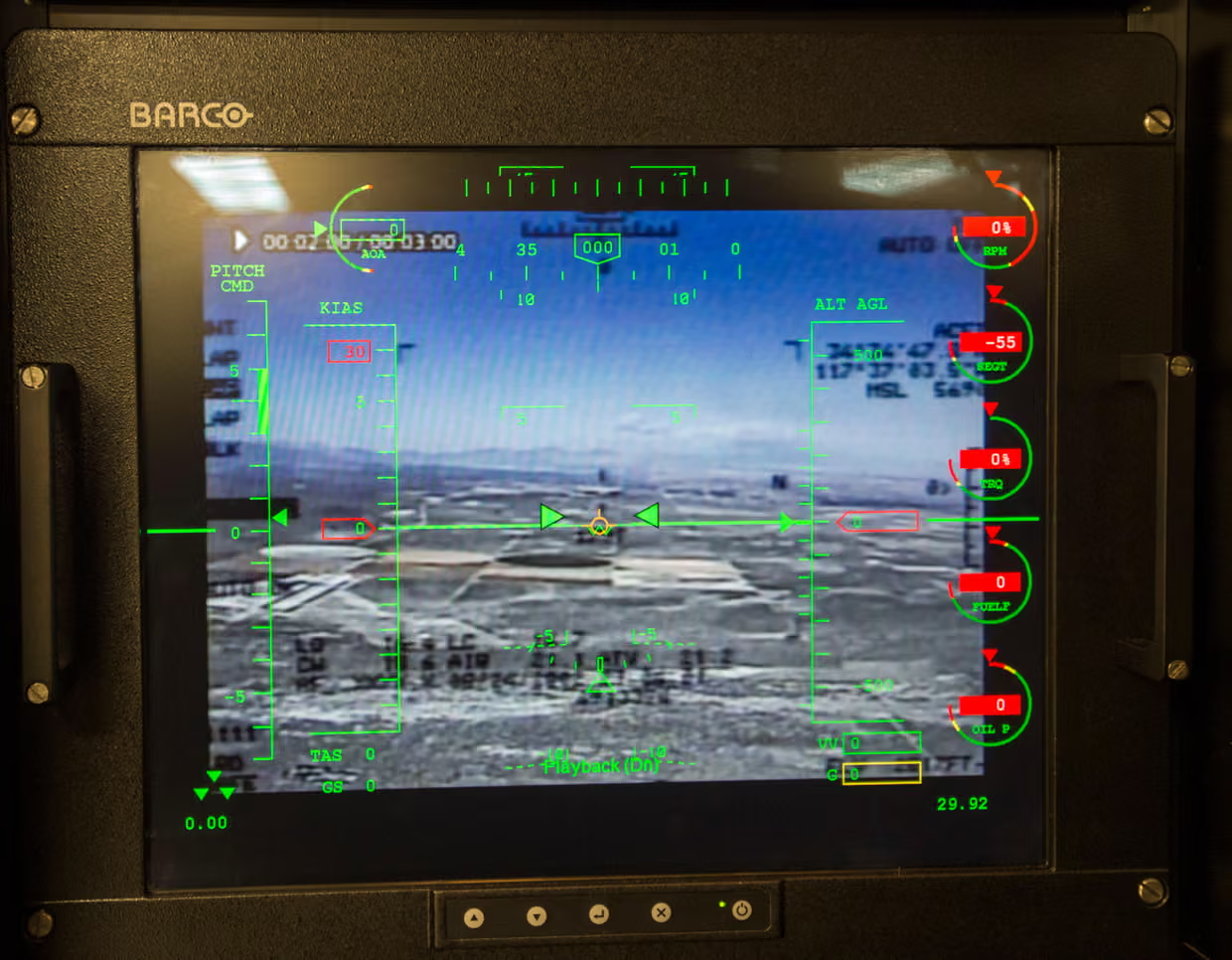
A typical view for the pilot, using satellite links to control the drones. Image: Alamy
After the children were killed, the missiles were described as still hitting neighbouring homes. The US Department of War declined to comment on the reasons for its decision to continue firing.
Even under the current relaxed rules of engagement, US officials should ensure the safety of civilians in the vicinity.
The attack may have been based on "signature strike" patterns – observed activities that appear suspicious, making civilians targets. Norman says: "But you are essentially killing people without confirming their identity," and the dead in Jamaame in no way resembled militants.
The strikes become more opaque as the drones fly higher. Multiple eyewitnesses described the sound of their rotors as "extremely loud," suggesting they were flying at a relatively low altitude. Feliukovich confirmed that the lower the drones fly, the clearer the live-stream images are.
So who were the people analysing the images? How experienced was the drone strike team? Had they served in Somalia, and were they able to understand what they saw? The United States declined to comment.
Some suspect the strikes point to something beyond mere faulty intelligence, rooted in the contempt of the commander-in-chief of the US armed forces for Somalia.
Trump described the country as "totally broken and crime-ridden" in a scathing speech in 2017 against congresswoman Ilhan Omar.
Seventeen days after the Jamame massacre, the president criticised Somali immigrants and described them as unfit to live in the United States. In March, as drone strikes escalated, Trump described Somalis as having "low intelligence" and coming from a "corrupt country."
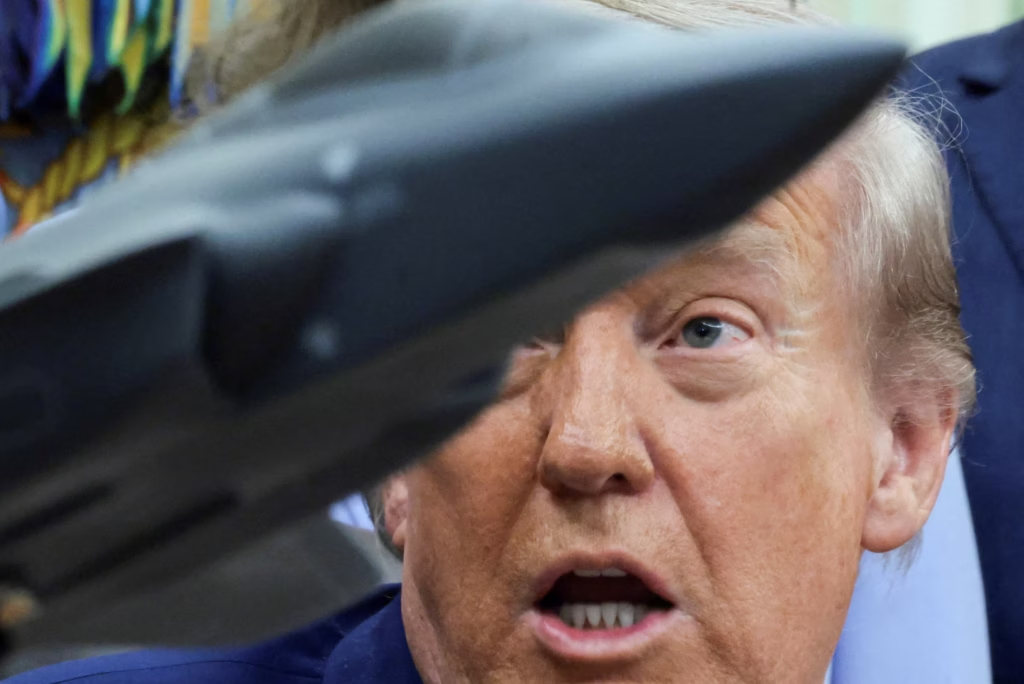
A close-up of Donald Trump speaking to someone outside the frame, with a model fighter jet in the foreground.
Trump's hostile rhetoric towards Somalia has intensified. Photo: Reuters.
Norman says Trump's hostile sentiments towards Somalia are striking in the context of civilian casualties. The escalation of this rhetoric, and the way Trump himself promotes it, implicitly gives military commanders a green light to treat Somalis as dehumanised. They receive a message that amounts to: "Carry on, these lives have no value."
When the White House was asked to comment on the Jamame strikes, deputy press secretary Anna Kelly asked the Guardian whether it would also focus on "the fraud committed by Somalis in the United States?"
Kelly added: "Describing law enforcement and the bombing of terrorists as 'racist' is the kind of absurd opinion that can only be expected from the Guardian."
The official US account of the airstrike is brief and vague. The statement from US Africa Command (Africom) did not mention any civilian deaths. When US officials were asked to provide their assessment of the losses from the attack, they declined to comment. They also refused to disclose the identities of the individuals targeted or killed.
This lack of information extends to strikes across Somalia. Last May, Africom "temporarily" suspended publishing casualty statistics for the country. A year later, this self-imposed opacity persists.
Refusing to acknowledge civilian casualties makes it impossible for their families to obtain answers. Jalal Getachew Bero of the Acled organisation says: "There is no transparency, and no justice when civilians are killed."
The Jamame airstrikes received support from Somali ground forces, raising the possibility that these forces may have caused some of the damage. US officials declined to answer questions about the role of Somali forces in the attack on Jamame.
But eyewitness testimony suggests that drone missiles, rather than ground forces or mortar shells, killed the civilians. Guled says it was "impossible" for the explosions to have been caused by mortar shells.
Burogi says: "My wife's daughter did not die in fighting, but from a missile that fell from the sky. Shrapnel from the missile hit her in the chest and neck. That is how she died."
We cannot sleep because of the disturbing noise of the drone engines. They hover above us every night.
Mohamed
None of the victims' families have so far contacted US officials or the Somali government.
An apology appears unlikely, despite the clear failure to offer a sufficient apology.
Targeting civilians is a violation of international law. Compensation also seems unlikely. The United States allocates an annual budget of $3 million (£2.2 million) to compensate civilians for drone casualties, but nothing has been paid to Somali families.
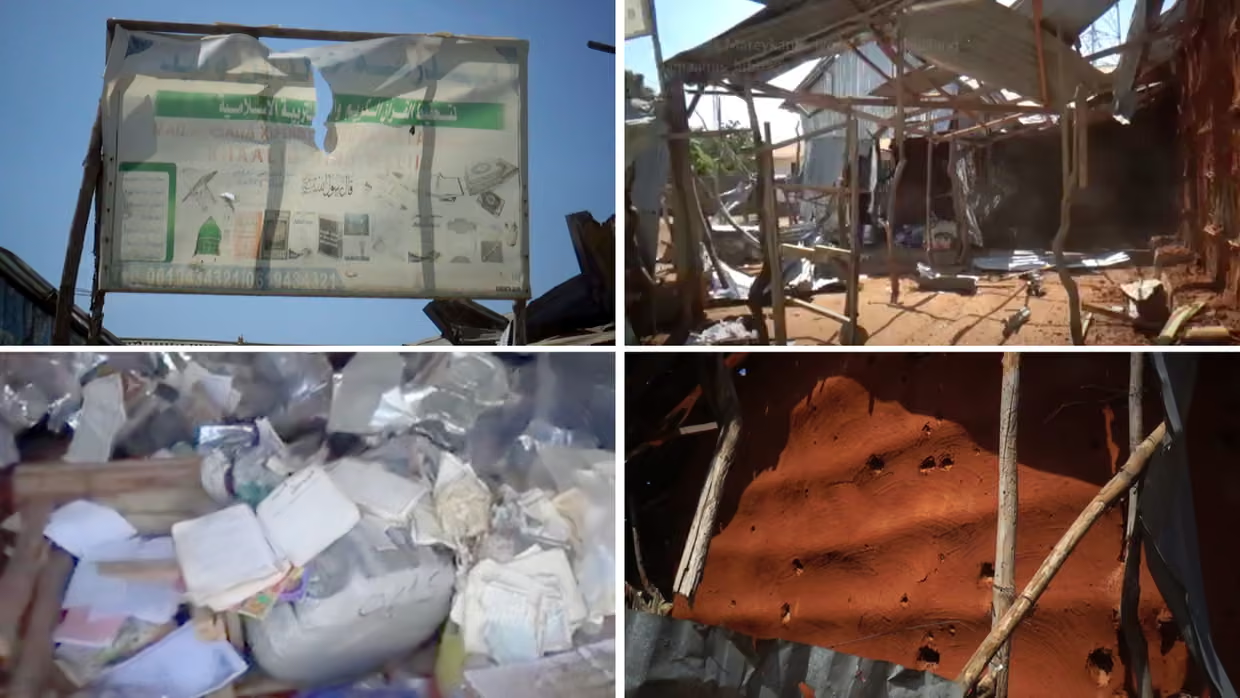
A series of images showing: a school sign, a damaged building, books and debris on the ground.
Screenshots from footage showing damage to the Jamame Quranic school, which was bombed during the attack. The Shahada News Agency, affiliated with al-Shabaab, published some videos showing the aftermath of the attack, but after verification, no signs of digital manipulation appeared. Photo: Shahada News Agency.
Burogi says: "I demand compensation for the atrocities committed against our family. I do not even have anything to eat."
Ibrahim wants answers before compensation. "I want to know why my children were bombed while returning from Quran school."
Guled adds: "I appeal to the Americans to deliver justice and compensation for what happened to my sons."
Some Jamame residents left after the strikes. But the drones continued for months to fly over the city, watching the empty streets. Their constant presence, and the fear they provoke, made life unbearable.
Mohamed says: "We cannot sleep because of the disturbing noise of the drone engines. Every night they hover above us. When we try to sleep, we fear we will be killed."
Across southern Somalia, US operations against al-Shabaab appear to have had little discernible effect. The group's threat has grown. Its forces have reached within 20 miles of the capital.
David Sterman, analyst at the New America think tank, says: "If the goal is to eliminate al-Shabaab, it is abundantly clear that these [drones] are not very effective."
Some warn that Trump's strategy in Somalia may in fact be a powerful recruiting factor for the al-Shabaab mujahideen.
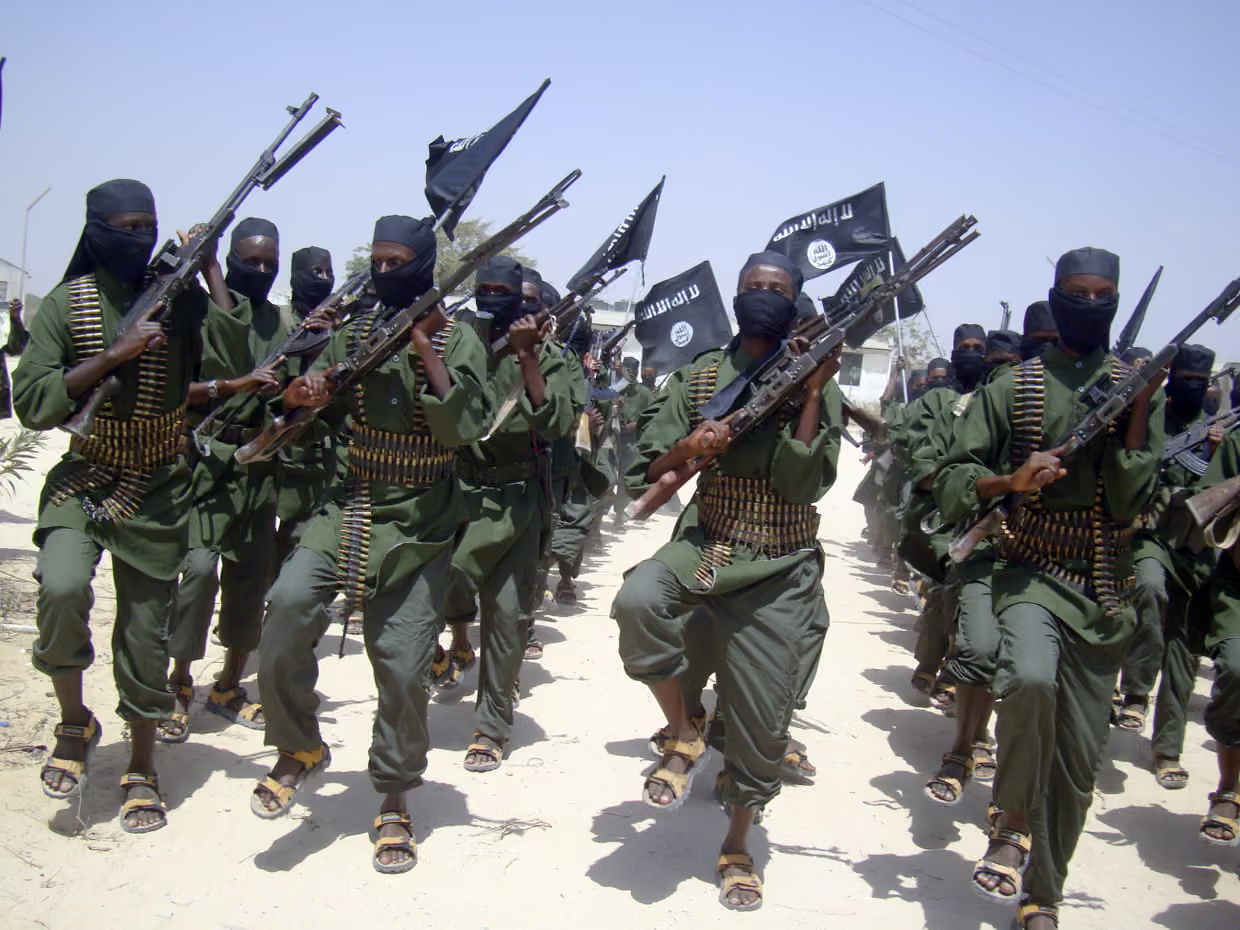
Mujahideen fighters of al-Shabaab march with their weapons during military manoeuvres on the outskirts of Mogadishu, Somalia. Photo: Mohamed Sheikh Nor/Associated Press.
For Mohamed, the horrific moments he spent searching for the remains of his four grandchildren still replay constantly in his mind.
He says they were extremely slippery, constantly slipping from his hands. "There was nowhere to grip them because they were torn to pieces."
He describes his body as "burning", swinging between anger and grief. "I don't know whether this is pain or rage, so I cry."
My grandchildren loved memorising the Quran. On their last day, they were not even given the chance to eat breakfast.
The Guardian


