


The confusion gripping the US military!
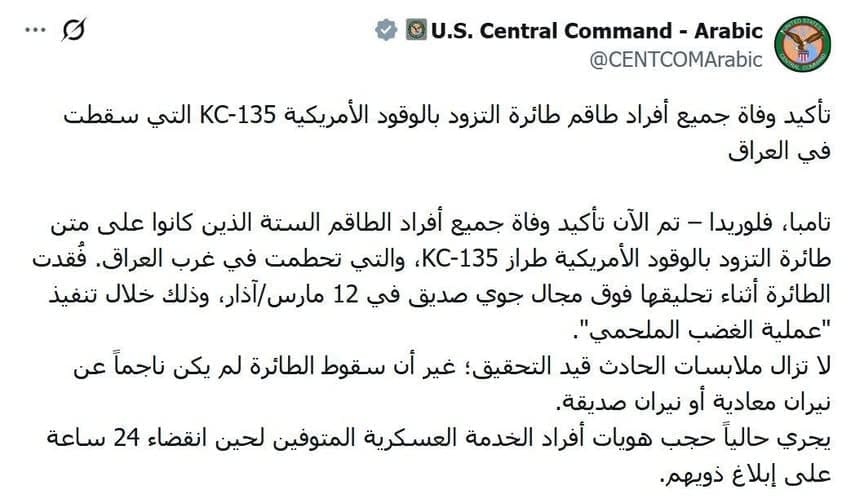
A piece of news like this should not pass quickly, for it reveals the confusion gripping the US military.
A propaganda discourse boasts of the strength of the military arsenal and of dominance in the world, yet since the beginning of the war it still flounders in an attempt to conceal its losses. It is ironic that every blow that strikes its prestige becomes merely an external cause unrelated to the war!
What the author of this statement overlooks is that such an event, in a power that claims it cannot be defeated or affected, opens the door to the second explanation that the statement leaves open for the causes of the advanced aircraft's fall, and reveals an aspect of the suffering of the US military. Let us suppose, for the sake of argument, that the cause of the fall lies outside the scope of the war.
It recalls what the US aircraft carrier "USS Gerald R. Ford" experienced with its sewage crisis, a story that spread widely and provoked resentment among soldiers and their families.
In recent years, numerous reports within the United States have spoken of a crisis in infrastructure and maintenance systems, particularly regarding roads, bridges, and energy and water networks.
These reports indicate that a large part of US infrastructure was built in the mid-twentieth century and has not received renewal and maintenance adequate to the current scale of use. Reports issued by engineering bodies and oversight institutions have warned that postponing maintenance for many years has created what is called the "deferred maintenance gap";
that is, the accumulation of faults and problems until the cost of repair later becomes far greater than periodic maintenance. This situation has led to accidents and outages in some networks, in addition to economic losses and disruption of transport chains and services. Therefore, the modernization of the maintenance system and the renewal of infrastructure have become a strategic domestic issue in the United States, because it is directly linked to economic efficiency, national security, and the state's capacity to preserve its industrial and service superiority.
These details make the difference in a major international contest in the wars of advanced armies.


