


The history of war is not merely a record of battles; it is an open laboratory for studying the strategic decisions that build empires or lead them to their demise. In this context, a critically important geo-military concept stands out, known as the "complexity trap": the moment when an obsession with technological superiority and engineering brilliance becomes a fatal weakness that undermines the efficiency of armies and drains the economies of states.
Germany's Tiger Tanks versus the Soviet T-34: The Doctrine of Engineering against the Doctrine of Flooding


Perhaps the clearest mathematical and historical model of this dilemma is embodied in the armoured confrontation during the Second World War between the German war machine and the Soviet Union:
● The German doctrine (excessive engineering): Germany introduced the "Tiger I" tank as an engineering marvel, with an 88 mm gun and formidable steel armour. Yet this technical superiority came at the expense of operational reality: the Tiger was heavy, consumed enormous quantities of fuel, and required complex maintenance and precision spare parts that could not be supplied under the harsh conditions of the front. The result? Germany was able to produce only around 1,350 of them throughout the war.
● The Soviet doctrine (sustainable quantity): The Soviets, by contrast, focused on the "T-34" tank. It was not of the Tiger's quality, but it was simple to build, easy to maintain, and required only 3,000 working hours to produce. This simplicity enabled the Soviet Union to produce more than 57,000 tanks and to rely on a strategy of "quantitative flooding."
The Modern American Arsenal: Reproducing the German Error
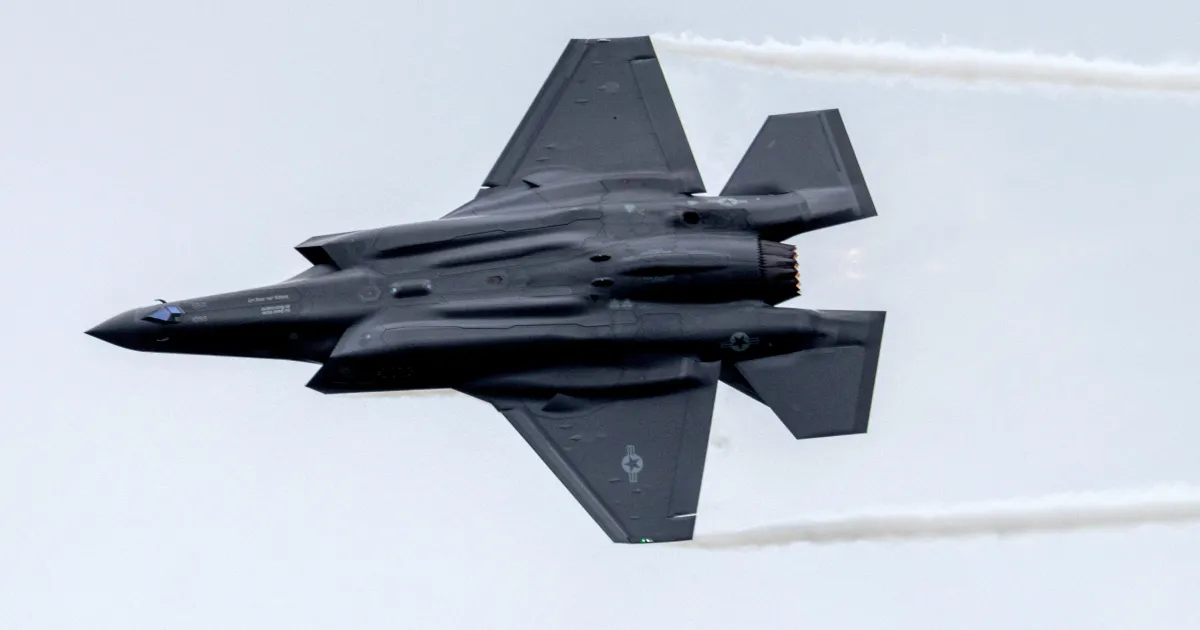
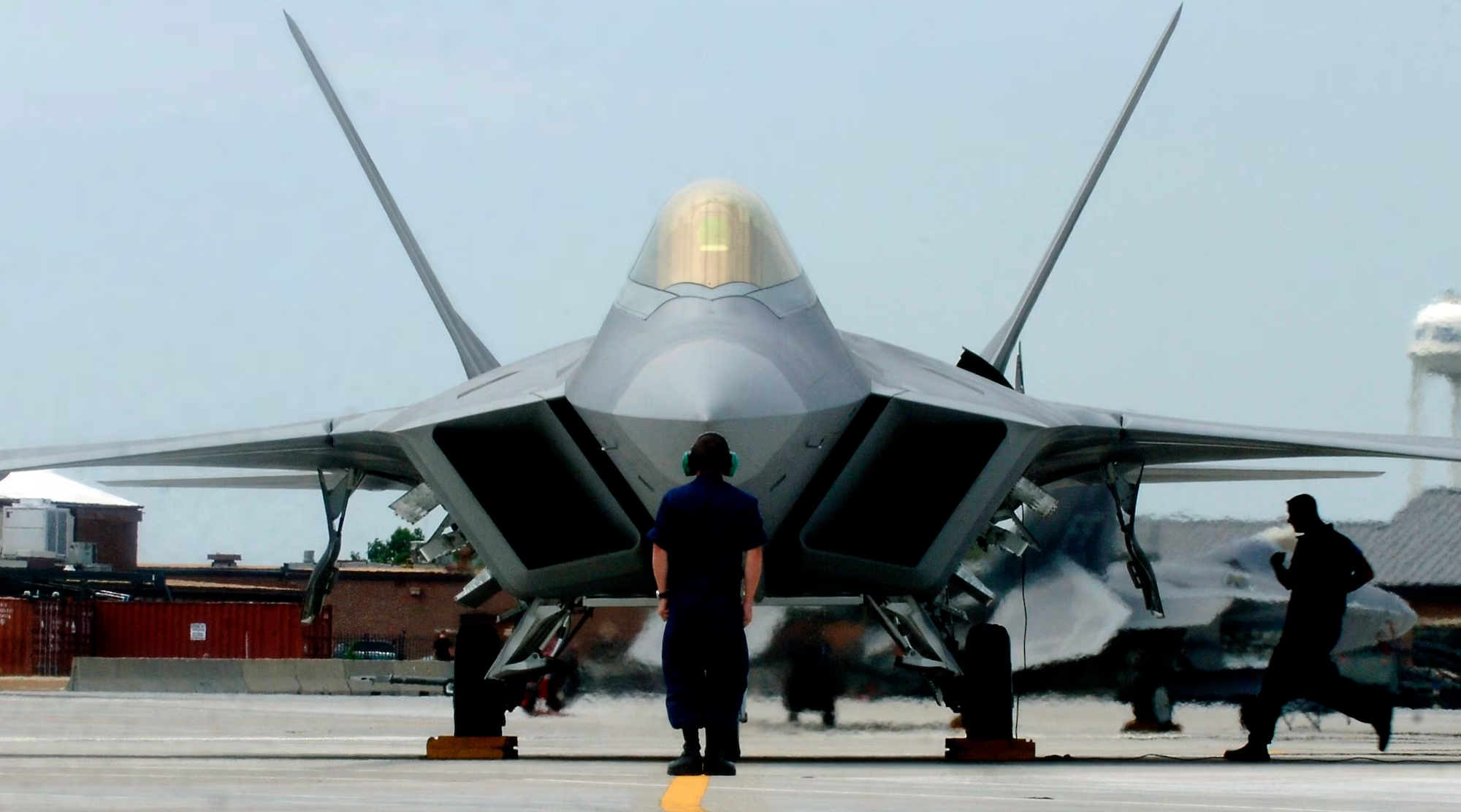
When this historical equation is applied to the military doctrine of the United States today, the world's most powerful empire is found to be falling into the same trap that Nazi Germany fell into:
- The F-22 Raptor: golden superiority that is impractical
The F-22 is classified as the most powerful air-superiority fighter in the world, but its exorbitant production cost, which reached around 350 million dollars per aircraft, and its operating cost, which exceeds 85,000 dollars per flight hour, led the Pentagon to halt its production at 187 aircraft. The weapon shifted from a tool of sustainable decision into an expensive "showpiece" that cannot be risked in prolonged battles. (It should be noted that this figure is operational and does not include missiles and munitions.) - The stealth dilemma and F-35 maintenance
The F-35 programme, despite its recency, has faced sharp criticism over its "radar-absorbing paint" (RAM). This smart coating requires complex periodic repair and maintenance after every sortie, and takes days to dry in specially equipped environments. This complexity deprives the weapon of its essential advantage: "immediate readiness" in the climate of continuous and sudden combat.
Tacit Admission of Failure: The American Return to Conventional Weapons against Iran
The peak of this historical paradox is evident in the recent naval and aerial confrontations in the Middle East, specifically in the hybrid strategies adopted by Iran and its allies through the use of cheap drones and fast boats.
Here, the United States found itself facing an unprecedented operational and economic dilemma, and was effectively compelled to take two steps back and return to old, conventional weapons for several reasons:
● Destruction of economic viability: When advanced American air-defence platforms (such as the Patriot system or the Sea Sparrow SM-6 naval missile) fire a missile costing between 2 and 4 million dollars to bring down a crude suicide drone that costs no more than 20,000 dollars, America suffers a frightening financial drain that bankrupts the war economically before it has begun.
● Depletion of strategic stockpiles: Highly advanced smart missiles take months, and sometimes years, to produce in limited numbers. Iran and its network, by contrast, have a vast production capacity for cheap drones. This "flooding" has made the American stock of advanced missiles at risk of rapid depletion.
● Reverting to simpler past methods: To break this zero-sum equation, the Pentagon was forced to revive and adopt old, conventional, unguided weapons, such as fast-firing conventional machine guns (such as the Phalanx and the Bushmaster), to modify old helicopters, and even to consider returning simple, low-cost turboprop aircraft to hunt these slow drones.
The American Exceptionalism Complex and Augustine's Law
The "American exceptionalism complex" forms the intellectual and psychological foundation of decision-makers in the United States: the firm belief that America is a unique nation with a distinctive global mission. This instils in its collective consciousness a kind of "strategic arrogance" that often prevents it from learning from the mistakes of history and from the fates of previous empires.
This intellectual detachment from reality is clearly reflected in its approach to armament, where it falls into the trap of "excess complex power" predicted by "Augustine's Sixteenth Law." This mathematical law was formulated by the former chief executive of Lockheed Martin in 1983, and holds that the cost of modern American weaponry rises rapidly, far beyond inflation rates, to the point that by the year 2054 America would have to spend its entire defence budget to purchase a single tactical aircraft!
Thus, the psychological complex meets the economic law, revealing how America's point of strength (superior technological development and imperial pride) turns into a fatal point of weakness. This system produces a weapon that is dazzling, rare and prohibitively expensive to build and maintain, one that is unable to deliver decisive results in prolonged attrition wars against armies or powers that rely on a "strategy of flooding" with simple weapons in vast quantities.
The Inevitability of Empires Falling to Excess Power
Technological development in weaponry is necessary, on the condition that it does not become a "logistical nightmare." Armies that build their doctrine entirely on smart and excessively complex weapons become incapable of waging long wars of endurance (as the American experience in Vietnam and Afghanistan showed), because complex weapons are designed for swift and surgical strikes, and are defeated by sustainability and simplicity. Empires fall militarily when their supply lines lose the capacity to keep pace with the "luxury of engineering," and the days prove once again that true military genius lies in "sustainable simplicity."
Sources:
Media outlets, and contemporary military data and statistics
- The attrition crisis of interceptor missiles (Patriot): A comparison between America's limited production capacity for Patriot missiles (the Pac-3 MSE variant), which amounts to roughly 500-600 missiles per year at a unit cost of up to 5.5 million dollars, and the cheap drones used by countries such as Iran and Russia to inflict economic and military attrition and to upset the balance of the war.
- The costs and problems of military aircraft: A comparison of costs and price leaps between older aircraft such as the P-51 Mustang and modern aircraft such as the F-22 Raptor, whose cost reaches 350 million dollars and whose operating cost is 85,000 dollars per hour, and the fifth-generation F-35, with its problems of repainting with radar-absorbing materials that cost millions of dollars after just a few sorties.


