


The "Islamic Palestinian" question is one of the most complex issues in contemporary history. It is the product of historical and political accumulations that began with the British occupation of Palestine and the Western and American support that followed for the Zionist project.
This article reviews the historical roots of the occupation and the role of Western powers in enabling the establishment of a "national home for the Jewish people" on Palestinian land, while highlighting the grave crimes, forced displacement, and systematic injustice to which the Palestinian people have been subjected, and whose consequences they continue to endure to this day.
The British Occupation and the Balfour Declaration: The Beginning of Tragedy and Brutality
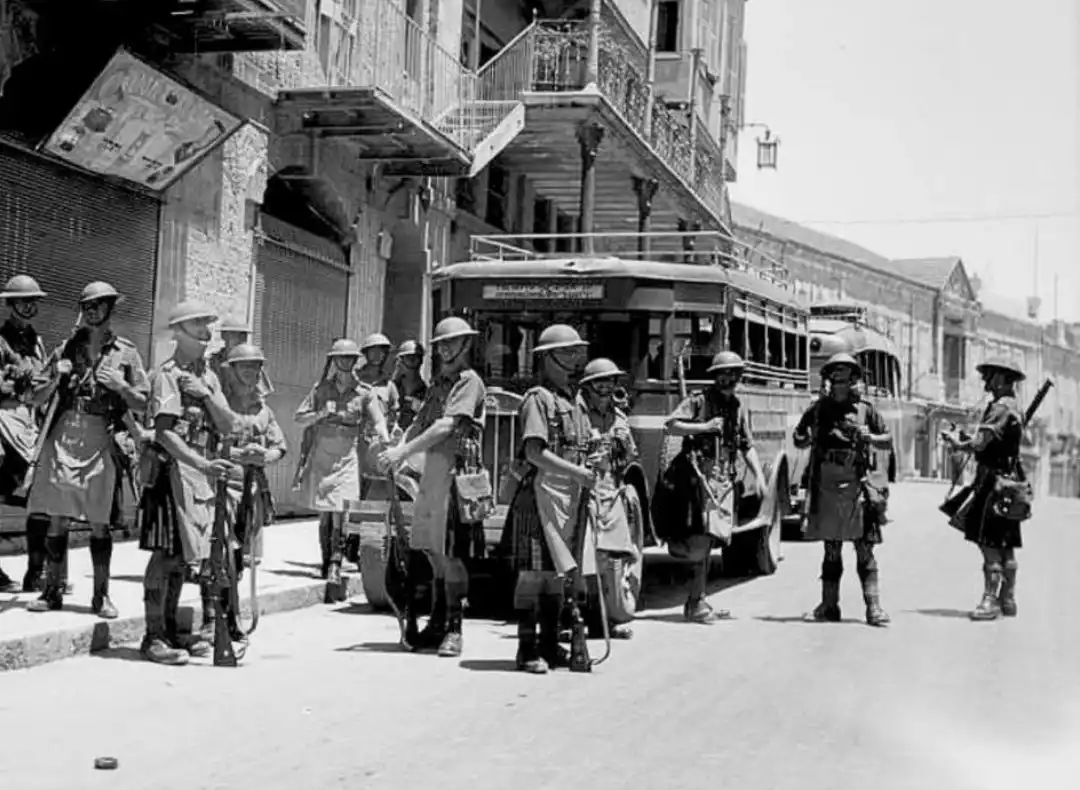
Following the defeat of the Ottoman Empire in the First World War, Britain occupied Palestine in 1917. This occupation was not merely a change of authority; it marked the beginning of a pivotal phase in Palestine's history, in which Britain, over three decades of Mandate rule, pursued repressive and brutal policies that included direct killing, organised suppression, arbitrary arrest, and forced expulsion of the Muslim inhabitants of the land.
The most prominent feature of this colonial policy was the "Balfour Declaration," issued on 2 November 1917 as a letter from the British Foreign Secretary Arthur James Balfour to Lionel Rothschild, a leading figure in the Jewish community in Britain. It stated that "His Majesty's Government view with favour the establishment in Palestine of a national home for the Jewish people, and will use their best endeavours to facilitate the achievement of this object."
This promise, given by one who did not own it to one who did not deserve it, directly contradicted British promises to the Arab Muslims of independence, and paved the way for the flow of Jewish immigration into Palestine, which marked the beginning of a scheme of forced demographic change.
The Mandate Charter: The Deception of the "Non-Jewish Communities" and the Facilitation of Settlement
In 1922, the League of Nations granted Britain the Mandate over Palestine. The Mandate Charter affirmed the sponsorship of the Zionist project, referring to "the historical connection of the Jewish people with Palestine."
In contrast, the Charter referred to the majority of the original Arab Muslim population as "non-Jewish communities." This wording was not innocent; it was a deliberate political and legal deception aimed at stripping Palestinians of their status as a people with the right to self-determination, portraying them as mere religious groups on the margins, confining their rights to the civil sphere, and deliberately dropping their religious and political rights.
This manipulation of words was intended to facilitate the establishment of the "national home for the Jews" at the expense of the rightful owners of the land. Britain worked persistently to facilitate Jewish immigration into Palestine and the seizure of its lands, and issued multiple decrees for this purpose.
Between 1930 and 1936, the number of Jewish immigrants increased substantially, Jewish settlements grew rapidly, and Jews penetrated the institutions of the British Mandate, enabling them to take control of the key sectors of life in Palestine.
Suppression of the Palestinian Revolts: Massacres and Displacement
British colonial policies and Zionist schemes faced fierce resistance from the Muslim Palestinian people, expressed in several revolts and uprisings.
Britain used the utmost degrees of violence and brutality to suppress these revolts, resulting in the deaths of hundreds, the destruction of villages, and the arrest of thousands of innocent Palestinians. Among the most prominent of these revolts were:
The 1920 revolt: The first Palestinian uprising against the Mandate, which began in Jerusalem and developed into violent clashes that resulted in casualties on both sides.
The 1929 Buraq (Western Wall) revolt: It erupted over clashes at the Wailing Wall (Buraq Wall), and was suppressed by British forces with excessive violence, resulting in the killing of 116 Palestinians and the injuring of 232 others, against 133 Jews killed and 339 injured. These figures reveal the brutality of British repression, which aimed to protect the Jewish settlers.
The 1935 al-Qassam revolt: It was led by Izz al-Din al-Qassam, who called for armed resistance against the British Mandate, and he was killed in its wake, as we believe, God is his reckoner, after violent clashes with the British army.
The Great Palestinian Revolt of 1936:
It lasted three years, witnessed a widespread general strike, and was suppressed by Britain with brutal and criminal methods: a state of emergency was declared, curfews were imposed, and violent mass arrests were carried out, leaving thousands dead and wounded. The Peel Commission also recommended the partition of Palestine and the transfer of more than 200,000 Palestinians from their homes to make way for the establishment of a "Jewish state," which represents a clear beginning of the scheme of forced displacement.
Western and American Support for the Zionist Project: The Continuity of Injustice
After the Second World War, the principal support for the Zionist project shifted largely to the United States.
Since 1948, the United States has provided Israel with vast financial and military assistance, amounting to approximately 158.6 billion dollars, with the aim of ensuring its military superiority and security in the region, and supplying it with the latest weapons, which were used in committing massacres against the Muslim Palestinian people.
US President Harry Truman was the first to recognise the "Israeli" state in 1948. Since then, unconditional American support has continued, disregarding Palestinian self-determination, rejecting the return of refugees by Israel, and working to block any international resolutions condemning Israel.
This absolute support is partly attributed to the powerful influence of Zionist lobby groups in the United States, which press decision-makers to support Israel and to place its interests above justice and human rights.
Israel is also regarded as a strategic instrument for American interests in the region, which explains this unlimited support.
The Crimes of Displacement and Continuing Injustice: The Ongoing Nakba
These colonial policies, and the policies supporting the occupation, caused the forced displacement of hundreds of thousands of Palestinians from their homes, known as the "Nakba" of 1948, whose chapters continue to this day.
The brutality of this displacement peaked with the expulsion of more than 80% of the Palestinian population in the areas where Israel was established in 1948, as approximately 70% of the total Muslim Palestinian people today have become refugees and displaced persons deprived of the right of return.
Historians such as Ilan Pappé, in his book "The Ethnic Cleansing of Palestine," have documented how Palestinians were expelled from their lands and more than 500 villages were systematically destroyed to facilitate the establishment of the Jewish state.
The crimes committed against the Palestinian people include confiscation of land, destruction of villages, arbitrary arrests, suffocating siege, and systematic racial discrimination, producing a reality of injustice and bleakness that still hangs over the lives of Muslims in Palestine because of the occupation. These crimes are not confined to the past; they are renewed daily in Gaza, the West Bank, and Jerusalem.


