

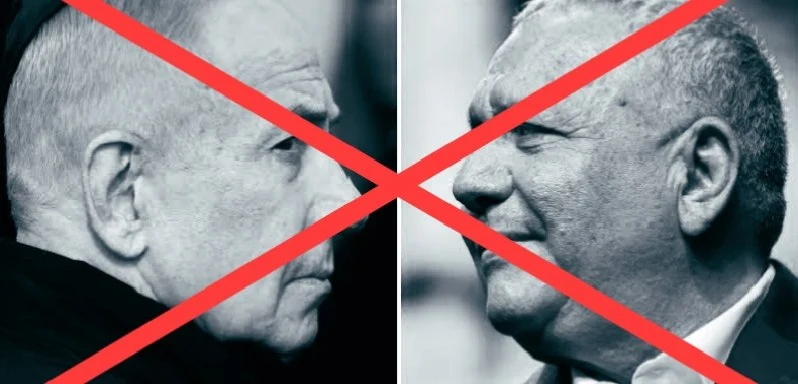
Israel's political arena is going through one of the most critical and unclear periods in an ongoing struggle over the legitimacy of power and the mechanisms for handing it over. With former Chief of Staff Gadi Eisenkot emerging as a central force capable of mobilising the opposition and centre bloc to unseat Benjamin Netanyahu, the most pressing question in political circles is: will Netanyahu accept defeat and voluntarily hand his post to Eisenkot should the latter succeed in forming a coalition, or is the country heading towards a constitutional deadlock?
The numerical picture: the majority problem and the challenge of 61 seats
Electoral and political assessments agree that the traditional right-wing bloc led by Netanyahu faces an unprecedented challenge in maintaining the cohesion of its "absolute majority" within the 120-seat Knesset.
By contrast, the opposition and centre bloc, led by figures such as Yair Lapid and Gadi Eisenkot, with backing from other parties, is moving to build a blocking bloc exceeding 61 seats. If Eisenkot secures the recommendation of a majority of Knesset members before the head of state, Isaac Herzog, the mandate to form a government will formally pass to him.
Netanyahu's strategy: challenge and manoeuvre to obstruct the transition
An analytical reading of Netanyahu's political conduct across decades indicates that he will not concede power easily, and is expected to resort to layered strategies should Eisenkot advance:
- Media and popular pressure: Netanyahu typically rallies his base and portrays any alternative coalition, especially one that enjoys support or a safety net from the Arab parties, as a "threat to Israel's security" and an illegitimate government that harms the national interest.
- Exploiting legal delay: According to constitutional analyses, Netanyahu could remain in office as head of a "transitional government" with full powers throughout the coalition negotiations, exploiting any legal loopholes or emergency security files to prolong his stay on "Balfour Street."
The legal path: the final word belongs to constitutional and security institutions
From a purely constitutional standpoint, Israel's Basic Law stipulates that powers transfer automatically once a new government wins the Knesset's confidence by a majority of 61 votes or more.
If Eisenkot succeeds in completing his coalition, presents his ministerial lineup to the Knesset and wins its confidence, Netanyahu's previous government immediately expires in law. In this scenario, Netanyahu would have no option but to vacate the post, because any attempt to refuse would place him in direct confrontation with law-enforcement bodies (the police, the Shin Bet security service, and the Attorney General), which are constitutionally bound to recognise the new prime minister who has won parliament's confidence.
Circumvention scenarios: booby-trapping the coalition and unity offers
Analysts expect Netanyahu to avoid direct confrontation with the judiciary and the security establishment, relying instead on political manoeuvres to thwart his rival:
• Unity government offers: At the last moment, Netanyahu may propose a rotation deal on the premiership with parties within Eisenkot's camp, seeking to split their ranks and tempt them with power.
• Exploiting ideological contradictions: Netanyahu understands that any coalition led by Eisenkot would be a heterogeneous mix uniting the national right, the centre, the left and the Arab parties. Accordingly, Likud will focus on booby-trapping the government formation negotiations to make it fail to gather the required votes within the legal deadline, pushing the country back towards early elections and keeping Netanyahu in power.
Ultimately, the provisions of Israel's Basic Law will compel Netanyahu to step down should Gadi Eisenkot succeed in passing his government through the Knesset. Although the security and military establishment (to which Eisenkot belongs as a former general) will not allow any rebellion against the democratic process, the transfer of power will not pass smoothly; rather, it will be fraught with political noise and Netanyahu's desperate attempts to delay in order to preserve his political immunity in the face of the court cases pursuing him.


