


Wasl for News | The Ba'ath Party: From the Promise of Renaissance and Unity to a State of Party and Wars
The Ba'ath Party in Syria and Iraq was not a single, identical political experience, despite both branches belonging to one intellectual project and sharing the slogans of Arab renaissance, national unity, independence from foreign domination, and social justice in its socialist form. Yet the distance between the project the party proclaimed and the regimes it established in its name widened quickly. The true test of the Ba'ath was not the appeal of its slogans but the nature of the state it built, the limits of the power it monopolised, and the outcomes of the policies it pursued.
In Syria and Iraq, the Ba'ath experience did not lead to the desired Arab unity. Instead, the two branches ended in a bitter conflict between two regimes contesting the legitimacy of representing the same national project. Within each country, the party's monopoly on power became entrenched, the role of the security services swelled, and loyalty to the leadership came before the independence of institutions, until the state became, to varying degrees and in different forms, a tool for protecting the regime and perpetuating its survival, rather than a framework uniting society and its interests. This course was tied to political repression, the elimination of opponents, and the weakening of the public sphere, in addition to internal conflicts and wars that caused heavy human and material losses and cast a shadow over the future of the Levant for decades.
This experience cannot be read by reducing the history of the Ba'ath to a single verdict, by erasing the differences between its Syrian and Iraqi paths, or by holding all its members equally responsible. It requires a historical reading that distinguishes between declared ideas, organisational transformations, the conditions for reaching power, and the mechanisms of exercising it. Yet these distinctions do not cancel the central question the experience raises: how did a project that raised the slogans of renaissance, unity and liberation turn into regimes that made the survival of the party and its leadership a priority above freedoms and institutions, ending in conflicts and wars that contradicted a fundamental part of its founding promises?
From this question, this study sets out to trace the trajectory of the Ba'ath Party from its intellectual and political origins to its consolidation of power in Syria and Iraq; to analyse the factors that contributed to its shift from a project of national and social change into a state of the party and the security apparatus; and then to examine the principal political, social and military outcomes of this transformation, while taking into account the differing contexts and paths of the two countries.
Origins and Doctrine: An Arab Renaissance Led by a Single Party

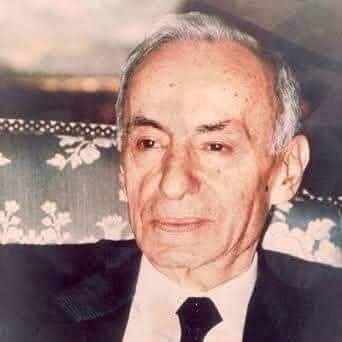
Ba'ath ideas took shape in Damascus during the 1940s, and the movement is associated with Michel Aflaq and Salah al-Din al-Bitar, while Zaki al-Arsuzi also contributed to the Ba'athist national current whose paths intertwined with the party's emergence. Dates of the party's founding vary across references depending on the phase in question: there was intellectual and organisational activity before the party was formally established, while the founding congress held on 7 April 1947 is adopted as the date of the establishment of the Arab Ba'ath Party. In 1953, the party merged with the Arab Socialist Party led by Akram al-Hourani, and the organisation took the name the Arab Socialist Ba'ath Party.
The party's three slogans—unity, freedom and socialism—encapsulated a project that went beyond the borders of the existing territorial state. It called for uniting the Arabs in a single state, liberation from occupation and foreign dependence, and the reshaping of the social and economic structure in a way that would curb the influence of feudalism and traditional privileges and expand the role of the state in development. Ba'athist socialism was not an exact copy of Marxism but a nationalist formula that sought to combine Arab unity with social change, drawing on what its theorists saw as positive values in the Islamic heritage, within a secular nationalist conception of state and society.
This discourse found resonance in an Arab environment burdened by the legacy of occupation and mandate, social inequality, crises of political representation, and the stalling of independence projects in building states capable of achieving development and justice. The expansion of education, the army and the modern administration also opened new avenues of political advancement for groups within the middle class and rural strata, at a time when traditional parties appeared, in the eyes of sections of young people, incapable of bringing about the desired transformation. The Ba'ath thus gained its appeal not only from its nationalist slogans but from presenting itself as an organisation capable of mobilising society and rebuilding the state.
Yet at the heart of this project lay a political dilemma that would grow more dangerous as the party moved into power: who has the right to define the interest of the nation, and who holds the party to account if it claims to be its vanguard and its truest spokesman? When a political organisation sees itself as the sole bearer of a historic renaissance project, it becomes easy to regard those who differ as obstacles, and opposition as a threat to the project, regardless of the credibility of that opposition or the grounds on which it stands.
This is not an inevitable outcome of every nationalist idea or every call for social reform, but it is a risk that intensifies when centralised leadership is combined with the absence of a doctrinal and ethical balance that weighs decisions and judgments, weak independence of institutions, and the entanglement of the party organisation with the army and state apparatus. Hence the key to understanding the Ba'ath experience lies not only in the contrast between dazzling slogans and tragic results, but in tracing the transformation that reshaped the party's own structure: how it moved from a political movement promising renaissance and liberation into an organisation competing to monopolise the representation of the nation; and how this logic, in the Syrian and Iraqi contexts and along different paths, paved the way for regimes that made preserving power the criterion for distinguishing loyalty from treason, and the interest of the state synonymous with the survival of the party and its leadership. This transformation is the necessary entry point for understanding what the following phase of Ba'ath history reveals about the relationship between ideology, organisation and power.
Syria: From the 1963 Coup to the Assad State

The Ba'ath Party came to power in Syria through the coup of 8 March 1963, opening a phase of political turbulence and struggle within the party and the army. The regime did not settle into its final form until Hafez al-Assad consolidated his grip on power through the coup of November 1970. From then on, the regime gradually moved towards concentrating power in the presidency, the security services and networks of loyalty, and the 1973 constitution stated that the Ba'ath Party is the "leading force in the state and society." Thus the party became a principal gateway to political and social advancement and, at the same time, one of the regime's instruments for controlling the public sphere and excluding rivals.
The early Ba'athist period had a broad social and economic impact, although assessments of its outcome remain contested. The state adopted central planning, nationalisation and agrarian reform, and expanded the public sector and services; later, under Hafez al-Assad, it allowed limited economic liberalisation that gave private trade and investment wider scope. However, early nationalisations weakened part of the private sector and contributed to the departure of some capital and skilled people, while the expansion of education and services remained closely tied to the structure of the state and the party. Studies of Syrian education show how the party's influence extended into curricula, student organisations and appointments, and how education was officially linked to the project of forming "a socialist, nationalist Arab generation." Thus the expansion of educational and service opportunities was accompanied by the politicisation of their institutions and their subordination to the regime's dominance.
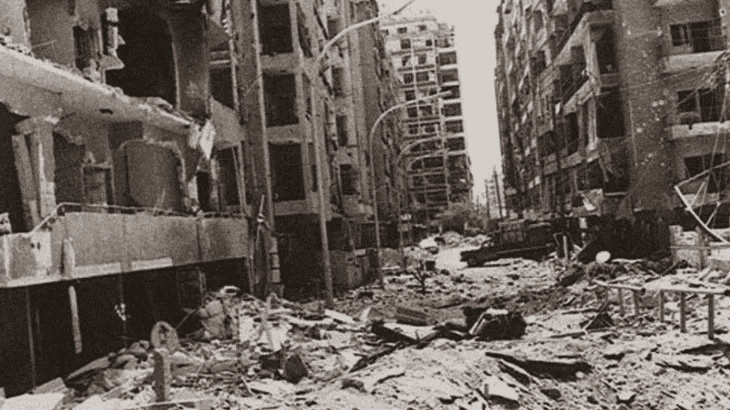
The Hama massacre of February 1982 was among the events that most clearly revealed the nature of rule in that period. The military operation followed an armed uprising led by groups from the Muslim Brotherhood, along with assassinations and attacks against officials, institutions and individuals associated with the regime. But the state's response went beyond targeting armed groups: the city was besieged and shelled, government forces carried out arrests, executions and torture, large numbers of civilians were killed, and extensive damage was inflicted on the city and its facilities. Sources differ widely in estimating the number of dead, so a single definitive figure is difficult to adopt; nonetheless, historical studies and human rights organisations agree that the victims numbered in the thousands.
After Bashar al-Assad assumed the presidency in 2000, the basic structure of rule remained unchanged: a highly centralised authority, security dominance, and a severely narrowed political sphere. Human rights organisations, including Human Rights Watch, documented the continuation of the state of emergency imposed since 1963, arbitrary arrest, enforced disappearance, torture and unfair trials, alongside restrictions on activists, journalists and committed Muslims, and discriminatory practices affecting Kurds, including the deprivation of nationality of large numbers of them in earlier periods.
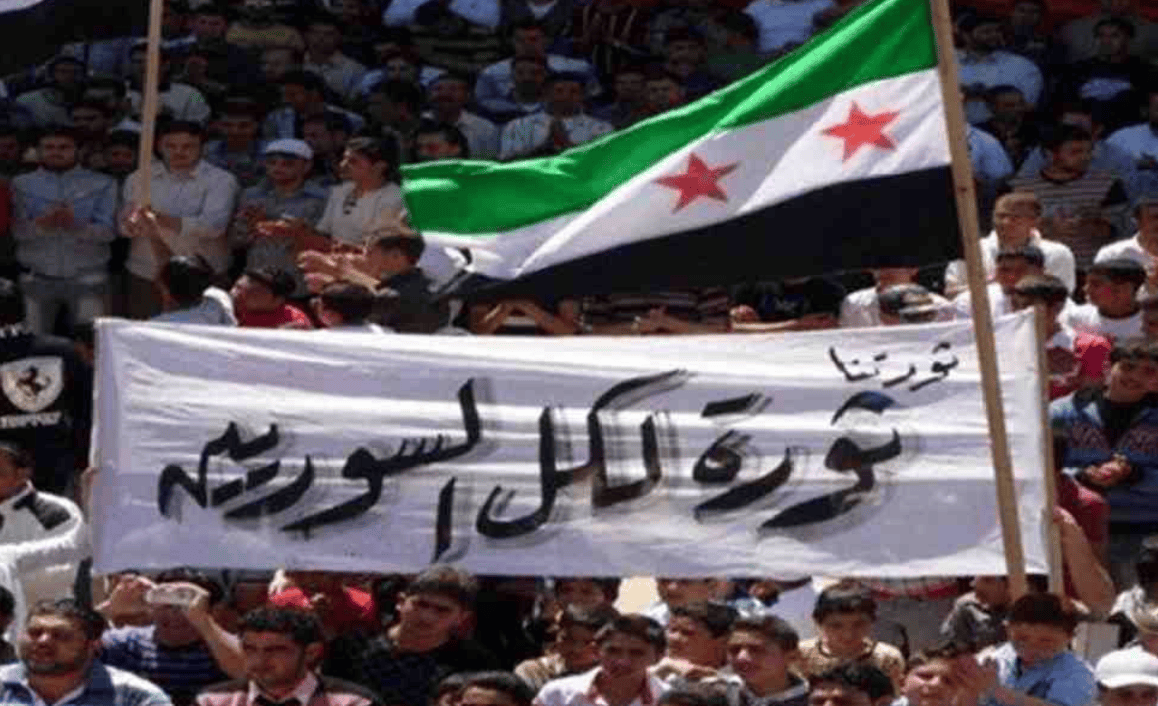
When protests erupted in 2011, the government responded with arrests and force, and the crisis then turned into a broad armed conflict that quickly became a multi-party, multi-dimensional war, in which regional and international forces (Shiite militias and Russia) and multiple armed factions (jihadist and national) became involved.
According to a report by the Syrian Network for Human Rights, the number of people killed in Syria from the outbreak of the war in March 2011 until August 2015 reached about 215,834, including about 180,000 civilians. The network attributed the killing of 207,348 people, including 178,491 civilians—among them more than 18,000 children, 18,000 women, and about 11,500 people it said died under torture—to the forces of the ousted Syrian regime.
The network also estimated that bombardment by regime forces damaged about 2.9 million buildings, of which nearly 920,000 were almost completely destroyed, noting that its figures do not include deaths among regime forces and pro-regime militias, due to the difficulty of obtaining reliable data on them.
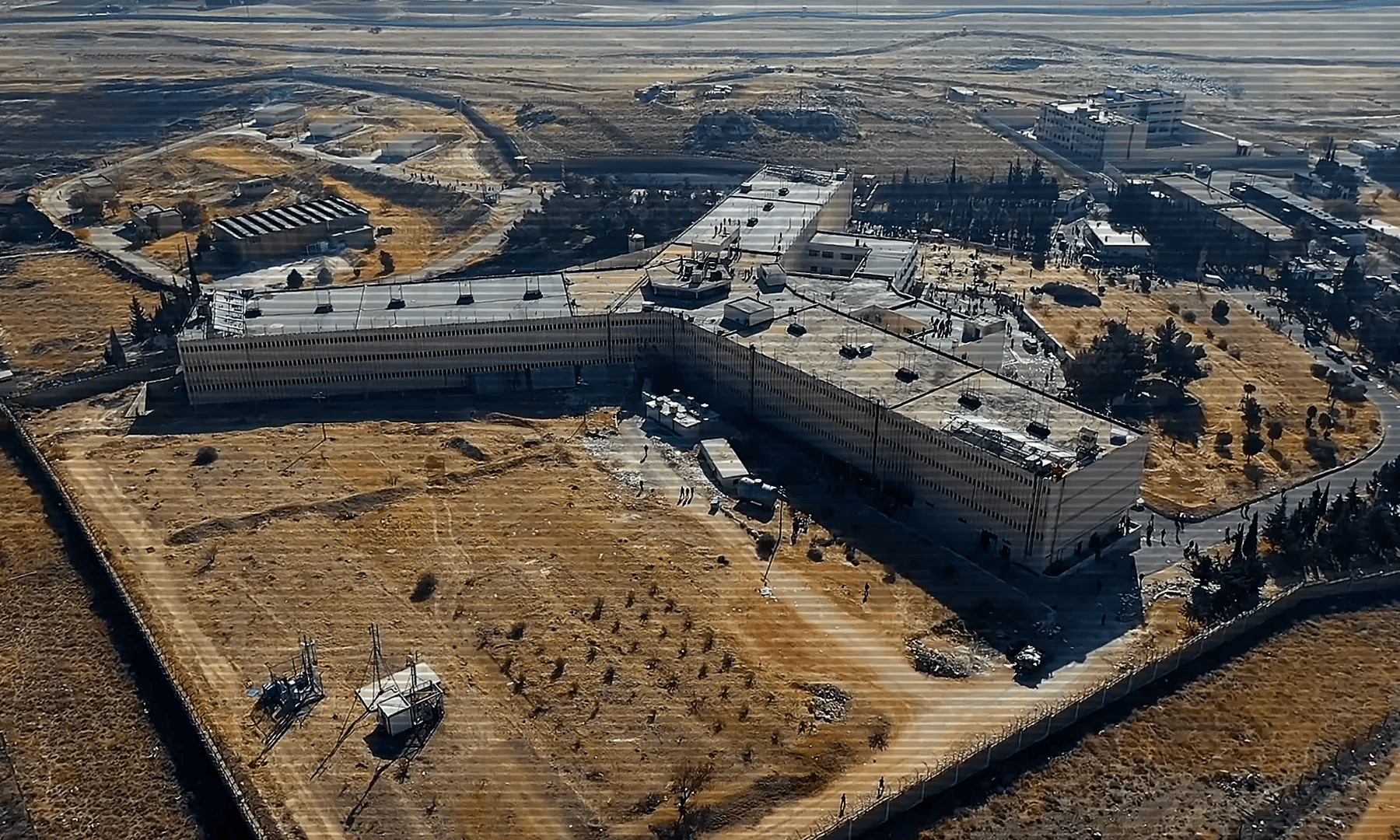
Sednaya prison alone is enough to reveal part of the scale of the repression practised by the Ba'athist system of rule in Syria. The tragedy there requires no exaggeration: the testimony of survivors, reports of human rights organisations, and even the prison's walls and architecture bear witness. The prison was built during the era of Hafez al-Assad and in subsequent decades became one of the country's most notorious detention and repression centres, to the point that its name became associated in Syrians' memory with torture, enforced disappearance and killing. Amnesty International, following an investigation based on 84 witnesses, including former detainees, guards, officials, judges and lawyers, documented a pattern of systematic torture, deprivation of food, water and medical care, and mass hanging executions; it concluded that what took place at Sednaya since 2011 was part of a widespread and systematic attack on civilians and constitutes crimes against humanity.
This was not merely scattered testimony. The prison's design itself was part of the system of control: isolation, darkness, enforced silence, and corridors and doors through which the detainee could not see the outside world. The team at Forensic Architecture, in cooperation with Amnesty International, was able to reconstruct a three-dimensional model of the prison based on survivors' memories, the sounds of the place and its architectural details, so that the architecture itself became evidence that helps in understanding what happened behind its walls.
At Sednaya, killing was not an isolated incident or the excess of a single guard. Investigations documented mass executions carried out secretly at night, and indicated that the bodies of victims were transported and buried in mass graves; testimonies also recorded torture, beatings leading to death, starvation and denial of medical treatment. Amnesty International estimated that up to 13,000 people were hanged at Sednaya between 2011 and 2015 alone, stressing that the figure is an estimate and that victims who died as a result of torture and inhumane conditions must be added to it.
For this reason, the history of the Ba'ath in Syria cannot be condemned by slogans alone: prisons too are historical documents, victims are witnesses, and walls preserve what the authorities tried to conceal. Sednaya is not merely the story of a prison, but a witness to the moment when the monopolisation of power turns into a system of fear, and when a person faces a state that controls the prison, the weapons, the judiciary and the security services, so that the law no longer protects him, but may itself become part of the machinery of tyranny. These outcomes are what make the study of the Ba'ath experience go beyond critiquing its theoretical slogans to questioning what that system produced when the state, the party and power monopolised the public sphere.
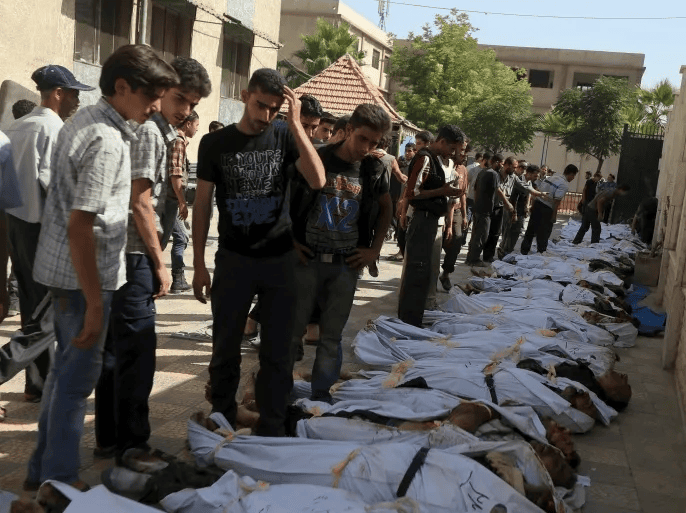
Regarding crimes committed by state agencies, the Independent International Mechanism of the United Nations published in December 2024 an analysis based on more than 300 interviews with witnesses, in addition to medical evidence, government documents and other sources. The analysis concluded that there were widespread and systematic patterns of torture, ill-treatment, sexual violence and enforced disappearance in more than one hundred government detention facilities. This report is not a final judicial verdict, but it provides an important documentary and analytical basis for accountability efforts, and reinforces the evidence that the abuses were not merely isolated incidents.
In December 2024, the rule of Bashar al-Assad collapsed after the advance of revolutionary factions and the fall of Damascus, ending more than five decades of Ba'ath Party rule in Syria. On 29 January 2025, the new transitional leadership announced the dissolution of the Ba'ath Party and the security institutions of the former regime, and the suspension of the 2012 constitution, as part of the transitional arrangements.
The Ba'ath and the Nusayri Question under the Assad Regime
Like his father, Bashar al-Assad's affiliation with the Nusayri sect was part of his personal identity, but he assumed power as the head of the Assadist Ba'athist regime, not as the leader of a Nusayri religious project. This is an important point in reading the experience: in its political origins the Ba'ath presented itself as a secular nationalist project that transcends sectarian affiliations, yet the record of exercising power in Syria revealed an intertwining of party ideology with networks of family, security and sectarian loyalty. Historical studies document that the Ba'ath's rise to power from 1963 coincided with the rise of officers from rural and minority backgrounds, and that after 1970 Hafez al-Assad strengthened a network of power resting notably on members of his own Nusayri sect and his relatives, while the regime retained the institutions and nationalist and socialist slogans of the Ba'ath.
Hence the Syrian tragedy cannot be reduced to "rule by a sect" alone; this would obscure an essential part of the truth, namely that repression emanated from a Ba'athist security system of power that used the party, the state, the army and the intelligence services to tighten control over society. At the same time, it is not valid to ignore the deep sectarian dimension within the structure of power and in networks of trust, appointment and protection, especially when some sensitive security and military posts became closely linked to family and sectarian networks loyal to the regime. Studies have noted that sectarianism and regional and partisan loyalties intertwined in Syrian military policy, rather than being a phenomenon separate from the Ba'athist state project.
Here the paradox emerges: a party that raised the slogan of transcending sectarianism under the banner of nationalism ended, in practice, as a regime that used sectarian, family and security loyalties alongside Ba'athist ideology to entrench its rule. Criticism of the experience should therefore be directed at the system of despotism in all its details: when the party monopolises the state, the power monopolises the party, and then power becomes entangled with family, security and networks of loyalty, political and sectarian affiliation together become part of the mechanism for protecting the regime, and the people become the greatest losers.
Iraq: The Party's Rise to Saddam's Rule and the Wars of the State
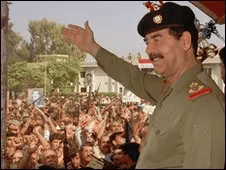
The Ba'ath Party came to power in Iraq for a brief period in 1963, then returned to power through the coup of 17 July 1968. The Ba'athists quickly reordered the balance of power within the state and the army. The Revolutionary Command Council was established as a central seat of authority, while the party's influence expanded within state institutions and professional and popular organisations. Saddam Hussein, who was deputy to President Ahmed Hassan al-Bakr, gradually rose until he became the de facto centre of power, and then assumed the presidency in 1979. Over time, the independence of state institutions declined, and the party and the security services became the main instruments of political control and the elimination of opponents.
During the 1970s, Iraq saw a major expansion of public spending. The nationalisation of oil and the rise in its revenues helped finance education, health, industrialisation, infrastructure projects and the strengthening of the Iraqi army. These transformations cannot be erased from the account merely because the regime was authoritarian. Yet this modernisation was top-down, in the absence of independent oversight and the rotation of power. As Saddam's rule became entrenched, membership in the party, the security services and networks of loyalty became an important source of access to jobs, privileges and protection. Power became increasingly concentrated around the president, his family and his security apparatus, until a personalist character came to dominate the institutions of the republic.
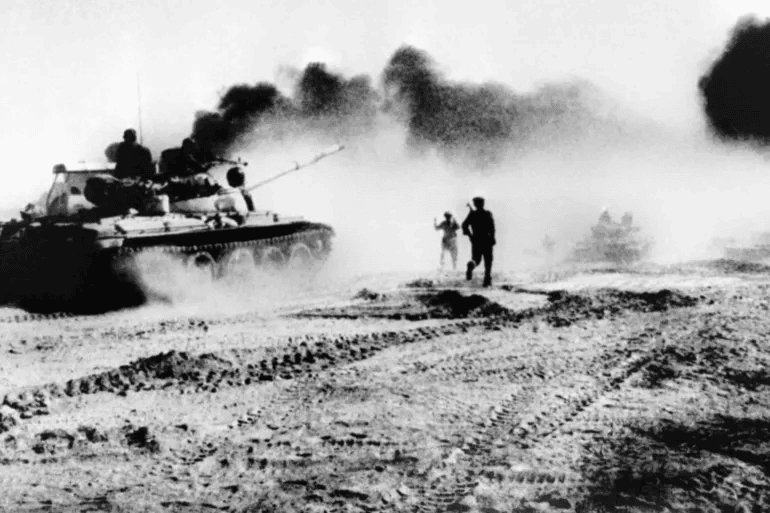
On 22 September 1980, Iraq invaded Iran, and a war broke out that lasted eight years until a ceasefire in 1988. The war was rooted in border and political factors, including the dispute over the Shatt al-Arab, the tension between the two countries after the Iranian Revolution of 1979, and the Iraqi leadership's belief that internal turmoil in Iran offered a military opportunity. However, these conditions explain the context but do not justify the decision to invade, which opened a devastating war that did not end until after many years of attrition and enormous loss of life.

In the final phase of the war, the Iraqi regime launched the Anfal campaign against Kurdish areas between February and September 1988. Drawing on Iraqi documents and survivors' testimonies, Human Rights Watch documented mass executions, enforced disappearances, chemical weapons attacks, the destruction of villages and widespread displacement of the population. The organisation estimated the number of deaths in the Anfal campaigns at roughly 50,000 to 100,000, and concluded that what occurred amounted to genocide. This figure remains an estimate, not an agreed final toll.

In March 1988, chemical weapons attacks struck Halabja, in which thousands of civilians were killed. A study by Human Rights Watch estimated the number of deaths in the attack on the city at between 3,200 and 5,000 people. Reports confirmed that some Kurdish factions had military cooperation with Iran during the war, but the Ba'athist punishment was collective.
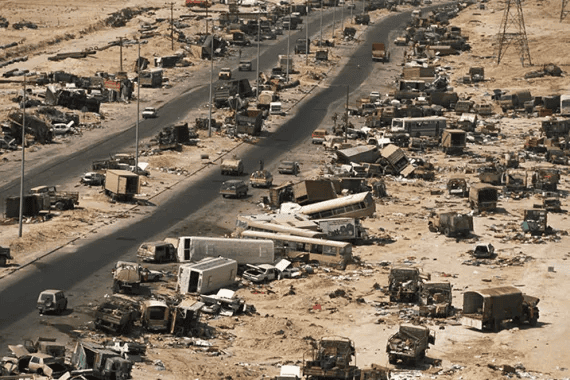
After the end of the war with Iran, Iraq emerged burdened with debts and economic strains. On 2 August 1990, it invaded Kuwait and then announced its annexation. Border, oil and financial disputes were part of the background to the crisis, but the invasion of a neighbouring state and the annexation of its territory came at a heavy price for the Iraqi regime. The invasion was followed by international sanctions and a war led by a US-led international coalition, which expelled Iraqi forces from Kuwait in 1991. In the aftermath of the war, the regime suppressed widespread uprisings in southern and northern Iraq, and continued its security campaigns against its opponents and rivals.
Ba'ath Party rule in Baghdad ended with the US invasion of Iraq in 2003 and the fall of Saddam Hussein's regime. The Iraqi constitution of 2005 then banned "Saddamist Ba'athism and its symbols". Saddam Hussein was captured, and his fate ended in execution.
But the fall of the regime, the de-Ba'athification and the killing of Saddam Hussein do not explain everything that happened after 2003. The occupation and the dismantling of parts of state institutions, the struggle for power, sectarian and ethnic divisions, the emergence of armed groups, and regional and international interventions intertwined to produce successive waves of upheaval and chaos.
What distinguished the Ba'ath, and what it cost the region
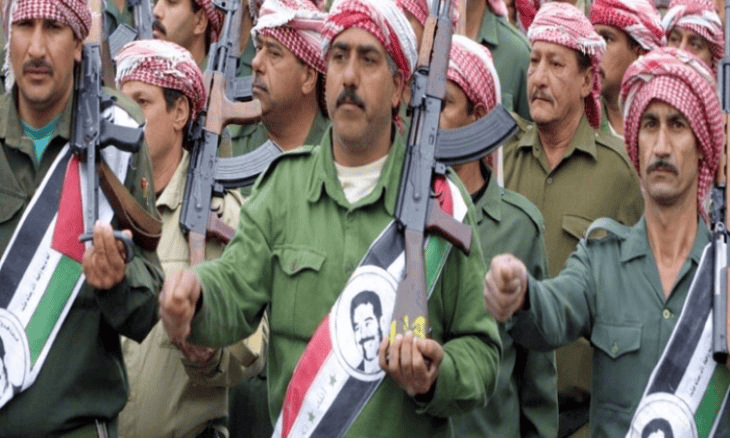
The Ba'ath distinguished itself by its capacity to mobilise broad sections of society around slogans of Arab unity, independence and social justice, by building a party organisation that extended into the army, the school and the administration, and by establishing centralised states capable of mobilising resources and expanding education and services. At certain stages, this helped open doors of social advancement to people from rural areas and classes that had been less present in traditional centres of influence. But the strength that enabled the state to mobilise and develop could itself be turned into an instrument of surveillance and subjugation. The school, the youth organisation and the public service no longer remained consistently neutral institutions; to varying degrees they became intertwined with a structure of loyalty to the party, the state and the leader.
The greatest paradox of the Ba'athist project appears in its effect on the region itself. A party that raised the slogan of Arab unity ended up as two rival branches in Damascus and Baghdad, each with its own state, apparatus and power interests. The division among Arab states was not eliminated; rather, a single party became part of the conflict between two rival regimes.
In Iraq, the decision to invade Iran led to a war lasting eight years, and then the decision to invade Kuwait led to another war, along with a siege and international isolation whose effects lasted for years. In Syria, the closure of the political space and the wide reliance on repression in the face of the 2011 protests transformed the country into a devastating war, which left dead, displaced people and refugees, and opened the way to broad regional and international interventions. Yet these catastrophes cannot be reduced to the Ba'ath alone; regional, international, economic, sectarian and ethnic factors were entangled with them, and many parties were involved in the conflicts. This does not, however, cancel the responsibility of governing choices: the monopoly of power, the weakening of independent institutions, the placing of party loyalty above legitimacy, and the broad use of force against opponents were central factors that helped ignite major crises or prolong them.
The slogan that reordered reference points
The Ba'ath slogan was not merely political words raised on occasions; it expressed a complete conception of the human being, the nation and power. The party raised the slogan "One Arab nation with an eternal message" and made its principles "Unity, Freedom, Socialism". Here the imbalance began: Arab nationalism moved from being a linguistic and historical bond among Arab peoples into an ideological framework that defines the nation, determines its goal and sets its political project.
Instead of the supreme reference for the Muslim being revelation, and the bond of Islam being the unifying tie that does not erase the differences among peoples, races and homelands, national identity became the basis of a comprehensive political project, and Islam was re-presented within the nationalist conception of the nation. The state no longer remained merely a means of securing people's interests and protecting their rights; it became a tool for realising the project of a party that claimed to represent the nation.
The practically most dangerous formulation was the linking of "unity", "freedom" and "socialism" to the party's own project; in practice the party became the sole bearer of the nation's project. The idea of representing the nation turned into a monopoly on power, and the slogan of freedom became a power that accepts neither competition nor accountability. Thus a contradiction arose between slogan and practice: a party that speaks in the name of the nation ends up subjecting the nation to the party; it speaks of freedom, then builds a system that does not allow addressing the authorities; it speaks of unity, then ends up in conflict and division, even within the Ba'athist movement itself.
This is one of the gravest lessons of the Ba'athist experience: a grand slogan does not give an idea the right to monopolise a human being, and talk of the nation, unity and renaissance does not protect a political project from deviation when its reference point is distorted and the balance between the rights of the nation and the rights of the individual, and between power and accountability, is lost.
The gravest revelation of the Ba'athist experience
Perhaps the gravest thing the Ba'athist experience reveals is not only what was written in the party's texts, but where political language ended up under despotism: expressions appeared that go beyond glorifying the party or the leader to competing with religious meanings themselves. In the context of the events of Hama in 1982, a slogan was documented on one of the walls: "There is no god but the homeland, and no messenger but the Ba'ath". This phrase reveals, in its shocking form, how far political loyalty could turn into a conception that places homeland and party in the position of absolute reference.
Later, under Bashar al-Assad, a slogan spread among supporters of the regime: "God, Syria, Bashar and that's all", documented as being chanted at pro-regime demonstrations in the early years of the Syrian revolution. Although the phrase does not, on its face, equate God with the ruler, linking the ruler's name with the homeland in a slogan of absolute loyalty, and then reducing Syria to his person, reveals how the state, in the political consciousness of the regime and its supporters, shifted from a public entity transcending individuals to an entity reduced to the ruler. It was therefore no coincidence that the revolutionary response came in the same form: "God, Syria, freedom and that's all", replacing the person's name with the demand for freedom and restoring the idea that Syria belongs to neither a ruler nor a party.
Documented testimonies of crimes committed by the Assad regime have also revealed the torture of detainees and their being forced to kneel and prostrate before a picture of Bashar al-Assad and to call him Lord and God, in a scene that shows how far tyranny reached in the era of the criminal Ba'athist regime.
Here appears one of the gravest consequences of despotism: when the party monopolises the representation of the nation, and then the ruler monopolises the representation of the party and the state, opposition to the ruler comes to be seen as opposition to truth itself; the dissenter is branded a traitor, the leader's image is sanctified, and the regime's survival becomes synonymous with the survival of the state. The slogan then ceases to be mere words repeated by the masses and becomes a tool for reshaping consciousness: the homeland is the regime, the regime is the leader, and whoever opposes the leader opposes the homeland and opposes the truth. This is the point at which political deviation reaches its peak: the state turns from an institution serving society in accordance with what God commands into an entity to which society is required to devote itself to its survival as its servants, thus becoming a tyrant worshipped besides God, the Mighty and Majestic.
Shari'ah assessment: critique of Ba'athist actions and ideas
The Ba'ath Arab Socialist Party is a secularist nationalist party, which holds that the national bond is the only bond in whose crucible all sectarian, confessional and tribal loyalties melt, and therefore its poet said, God forbid:
I believed in the Ba'ath as a lord with no partner... and in Arabism as a religion with no second.
The party devotes its educational policy to creating a generation of Arab nationalists who believe in the party's message and disbelieve in everything else, to the point that the atheist Ibrahim Khallas, philosopher of the party in Iraq, said: the only path to building Arab civilisation and the Arab society is to create the new Arab socialist human being who believes that God, religions, feudalism, capital and all the values that prevailed in the former society are nothing but mummified dolls in the museums of history.
From a Shari'ah perspective, the root of the problem in Ba'athist thought is not limited to political errors committed by its leaders, nor to the despotism to which its experience led, but goes back to the reference point on which the project itself was built. The Ba'ath made Arab nationalism the central unifying axis, raised the slogan "One Arab nation with an eternal message", and tied its project to the principles of unity, freedom and socialism; so national belonging became a political framework that accommodates Muslims and non-Muslims on the basis of Arabism, while the Islamic creed is not the foundation around which the political community is organised.
This differs fundamentally from the Islamic conception of the nation. God Almighty says: "The believers are but brothers", and He says: "Indeed, the most noble of you in the sight of God is the most righteous of you". The Prophet ﷺ said: "Leave it, for it is foul", when a call based on tribal partisanship was raised.
This does not mean that Islam cancels homelands or denies the particularity of the Arabs. Arabism is a language, culture, lineage and historical belonging that carries no fault in loving it. The problem arises when nationalism turns into a supreme bond placed above the bond of faith, or into a political ideology required to take the place of the reference that revelation brought. The Arab and the non-Arab are equal in the origin of accountability and human dignity; superiority is by piety, and the noblest of the Arabs did not rise by their Arabism but by Islam.
Hence Salman al-Farisi, Suhayb al-Rumi and Bilal al-Habashi, may God be pleased with them, were among the leaders of guidance, while Abu Lahab, Abu Jahl and Uqba ibn Abi Mu'ayt were Arabs, and their Arabism did not benefit them when they opposed the truth. More serious still, separating religion from the public sphere reduces the Shari'ah to the rank of a private affair, instead of being a revealed reference in belief, worship, morality, transactions, justice, politics and all other aspects of life. Studies of the history of the Ba'athist Syrian state have described how the Ba'athist revolution from the 1960s onward led to the exclusion of scholars labelled "reactionaries" from the state apparatus, and then to the management of the religious sphere under strong and oppressive security surveillance.
Here lies the essential Shari'ah critique: Islam does not admit to being mere isolated personal rituals detached from the guidance of society and the state, and no party or leader may make himself a source of legislation besides God. He, the Exalted, says: "The decision is only for God".
Furthermore, socialism, when it moves from being certain economic policies open to debate into a creed that explains property, wealth and society in a way that contradicts the rulings of the Shari'ah, also collides with a principle Islam established: the affirmation of private ownership, the acceptance of differences in provision, together with the prohibition of injustice, monopoly and consuming people's wealth unjustly, and the imposition of zakat, financial rights and social solidarity. Islamic justice does not mean abolishing ownership merely because inequality exists, nor leaving the wealthy to oppress the poor; rather, justice means regulating ownership by God's rulings, taking from wealth its due, and preventing oppression and aggression.
From this it becomes clear that the flaw did not lie in the Ba'ath calling for Arab unity, resisting occupation or pursuing social justice; these are aims on which people may in principle agree in part. The flaw lay in turning them into an ideological system that competes with Islam and even fights it, in defining the nation, determining its reference and setting its goals. Historical studies have shown that the thought of Michel Aflaq, founder of the Ba'ath, who was originally Christian, took shape within the contexts of Arab nationalism and modern European philosophies, and that the Ba'ath was not merely an administrative project but an ideological movement with a particular conception of the nation, history and society.
The deeper Shari'ah problem, therefore, is not that the Ba'ath said "we want the unity of the Arabs", but that it made Arabism a unifying framework that precedes the bond of Islam, the party an instrument for representing the nation, and ideology the reference for organising society. Here the flaw arises in the ordering of loyalties and reference points: membership in the party becomes the political criterion of belonging, opposing its project becomes departure from "the nation", and the state itself can then turn into a tool for protecting the party and its project. When monopoly on power and the crushing of dissenters are added to this, the idea shifts from a slogan about unity and renaissance into a system that makes the individual a follower of the project, rather than the project serving the individual, truth and justice.
Islam, by contrast, does not make a nationality, a party or a homeland an object of worship besides God; rather, it makes the foundation on which hearts gather monotheism, truth and justice, and it makes the diversity of tongues, colours and peoples a sign of God, not a justification for turning nationalism into a political religion. He, the Exalted, says: "O mankind, indeed We have created you from male and female and made you peoples and tribes that you may know one another. Indeed, the most noble of you in the sight of God is the most righteous of you." The Arab loves his Arabism, the Syrian loves his country, the Iraqi loves his land, but none of that rises above monotheism, and belonging may not become a partisanship placed above the truth, nor an ideology that contends with Islam for its reference.
Murder of civilians, torture, enforced disappearance, forced displacement, plundering of property, and unjust aggression against people are not mere political disputes or partisan interpretations; they are forbidden acts that contradict the principle of justice and the sanctity of blood and property. God Almighty says: ﴿And when he turns away, he strives throughout the land to cause corruption therein and destroy crops and animals. And Allah does not like corruption﴾ [Al-Baqarah: 205]. And He says concerning the killing of a soul without right: ﴿Because of that, We prescribed for the Children of Israel that whoever kills a soul unless for a soul or for corruption [done] in the land – it is as if he had slain mankind entirely﴾ [Al-Ma'idah: 32]. And He, the Mighty and Majestic, says: ﴿And whoever kills a believer intentionally – his recompense is Hell, abiding eternally therein; and Allah will be angry with him and curse him and prepare for him a great punishment﴾ [An-Nisa': 93]. And He, glorified is He, says: ﴿Indeed, Allah orders justice and good conduct and giving to relatives and forbids immorality and wrongdoing and oppression. He instructs you that you may be reminded﴾ [An-Nahl: 90].
On this basis, documenting the crimes of the Ba'ath regimes and condemning them does not depend on the identity of the victims or the perpetrators. Justice in Islam is indivisible, and truth is not recognised by nationality, sect or political alliance, but by what revelation has affirmed. In sum, the Ba'ath Party is a party founded on opposition to God, His Messenger and the believers; accordingly, affiliation with it amounts to affiliation with the party of Satan, placing oneself under its banner and becoming one of its soldiers, and the prohibition of this is known necessarily from the religion of Islam.
The Major Errors and the Outcomes of the Experience
One of the greatest errors of the Ba'ath was confusing the unity of the nation with the unity of the party. Instead of being a political project open to competition and accountability, the party in practice turned into an authority claiming to represent society, and then built around itself apparatuses and institutions that limited the possibility of holding it to account or of rotating power.
Second, the slogans of freedom, socialism and unity were not translated into independent political institutions guaranteeing participation and the peaceful transfer of power; instead, the experience was dominated by the concentration of power, appointments from above, and the expansion of security services. Third, the discourse of equality did not prevent the emergence of privileges tied to networks of political and security loyalty, nor did it prevent discrimination and violations affecting different groups and communities depending on the country and the period.
Fourth, the nationalism that raised the slogan of overcoming Arab fragmentation did not prevent rivalry between states; it ended in the existence of two hostile Ba'athist regimes in Baghdad and Damascus, each with its own calculations, interests and apparatuses. In Iraq, under Saddam, this rivalry took the form of costly wars that changed the country's position and weighed heavily on its society for decades.
Fifth, relying on repression rather than addressing the causes of opposition did not end injustices; it accumulated them. When fair Sharia courts were absent, the process of securing rights turned into armed rebellion and revenge, and then the effects of the disintegration of state institutions appeared in a harsher form after the fall of the regimes. This does not mean that everything that happened later was a direct result of the Ba'ath alone; internal, regional and international factors interacted strongly. But tyranny, injustice and oppression weakened the capacity of society and the state to manage disputes without explosion.
The endings of the two experiences clearly reveal the paradox of the project: the Ba'ath rule in Iraq fell in 2003, and the Iraqi Constitution of 2005 banned "Saddamist Ba'athism and its symbols"; then Bashar al-Assad's rule in Syria collapsed in December 2024, and the dissolution of the Ba'ath Party and the institutions linked to the former regime was announced in January 2025. Yet the party's loss of power did not erase the effects of decades of security-based rule, nor the consequences of the wars, nor the fate of the missing, the displaced and the victims.
Therefore, the most important lesson of the experience is not merely the fall of one party or the rise of another, but the necessity of building a state not monopolised by a group, institutions not reduced to the person of the ruler, a law that does not change according to the identity of the adversary, individual accountability based on evidence and the judgement of Sharia, and guarantees of the rights of the oppressed. A society that rejects one tyranny and then reproduces it under another slogan has not broken with tyranny; it has merely changed its name.
What Did Ba'athist Thought Leave Behind in the Nation?
When we summarise what Ba'athist thought left in consciousness, society and the state, the word "despotism" alone is not sufficient. It left behind a boldness toward injustice when it is committed in the name of the public interest; normalisation of tyranny when it is presented in the name of protecting the homeland; exaltation of the party when it is placed above the Sharia; veneration of the leader when the homeland is reduced to his person; and nationalist fanaticism when Arabism turns from a cultural bond into a measure of belonging and loyalty. This system produced a weakening of the meaning of accountability, fear of opposing authority, and a confusion between the state and the party, to the point that silence came to be presented as stability, submission as patriotism, and opposition as treason.
The loss was not only political; it struck at part of the moral balance of the nation. When the life of injustice is prolonged, people learn to coexist with it; when repression becomes a customary policy, society's sensitivity to it recedes; and when the violation of rights is justified by grand slogans, the slogan becomes capable of concealing the crime instead of the truth being the criterion. Herein lies the danger of ideas when they turn into systems: injustice no longer remains merely an act committed by an unjust person, but becomes a culture learned by generations, a mechanism inherited by institutions, and a fear that lodges in souls even after its author has fallen.
Thus, the most dangerous legacy of the Ba'athist experience was not what collapsed of institutions or what governments changed, but what it tried to plant in the human being: that power is above accountability, that the party is above society, that the homeland can be reduced to the regime, that political ends can justify any means, and that nationalism can replace the bond of faith and justice. From these distorted standards emerged a model that coexists with humiliation, becomes accustomed to duplicity of face and stance, and becomes ready to trade its principles for a morsel of bread or a share of worldly scraps.
When standards are corrupted to this extent, despotism no longer needs to persuade people that it is right; it is enough for it to convince them that resisting it is more dangerous than the tyranny itself. Perhaps the clearest sign that the effects of that era remain is that some of the figures it produced are still captive to the same logic: placing self-interest above principle, and seeking their share of power and gains, instead of learning from the experience that real liberation is not completed by changing faces and regimes unless it is accompanied by liberation from the ethics of despotism itself, and a return to the balance of religion, justice and morality.
The most dangerous thing about the dark era of the Ba'ath is not that it ends, but that its residues remain alive in minds, ideas and patterns of thinking.
References
[1] Baʿath Party, Encyclopaedia Britannica (https://www.britannica.com/topic/Baath-Party)
[2] The Bourgeoisie and the Baath, Volker Perthes, MERIP (https://www.merip.org/1991/05/the-bourgeoisie-and-the-baath/)
[3] The Ideology of Authority: 50 Years of Education in Syria, The Washington Institute (https://www.washingtoninstitute.org/policy-analysis/ideology-authority-50-years-education-syria)
[4] The Hamah Massacre – February 1982, Sciences Po (https://www.sciencespo.fr/mass-violence-war-massacre-resistance/en/document/hamah-massacre-february-1982.html)
[5] A Wasted Decade: Human Rights in Syria During Bashar al-Asad's First Ten Years of Power, Human Rights Watch (https://www.hrw.org/report/2010/07/16/wasted-decade/human-rights-syria-during-bashar-al-asads-first-ten-years-power)
[6] The Syrian Government Detention System as a Tool of Violent Repression, IIIM/United Nations (https://iiim.un.org/the-syrian-government-detention-system-as-a-tool-of-violent-repression/)
[7] UN Human Rights Office estimates more than 306,000 civilians were killed over 10 years in Syria conflict, OHCHR (https://www.ohchr.org/en/press-releases/2022/06/un-human-rights-office-estimates-more-306000-civilians-were-killed-over-10)
[8] The Revolution of 1968, Encyclopaedia Britannica (https://www.britannica.com/place/Iraq/The-revolution-of-1968)
[9] Genocide in Iraq: The Anfal Campaign Against the Kurds, Human Rights Watch/Middle East Watch (https://www.hrw.org/reports/1993/iraqanfal/ANFALINT.htm)
[10] Iran-Iraq War, Encyclopaedia Britannica (https://www.britannica.com/event/Iran-Iraq-War)
[11] The Gulf War, 1991, Office of the Historian, U.S. Department of State (https://history.state.gov/milestones/1989-1992/gulf-war)
[12] Constitution of Iraq (2005), Article 7, Constitute Project (https://www.constituteproject.org/constitution/Iraq_2005)
[13] Syria's Sharaa declared president for transition, consolidating his power, Reuters (https://www.reuters.com/world/middle-east/syrias-leader-sharaa-named-president-transitional-period-state-news-agency-says-2025-01-29/)
[14] كتاب دروس الشيخ سعد البريك
Our dear followers, to receive all the latest, follow us on Telegram
https://t.me/News_wis


