


Ablution facilities at two major airports in the US state of Texas have become the focus of a growing political and religious confrontation, after Republican Governor Greg Abbott requested a federal investigation into them, arguing that they may amount to religious discrimination. The move drew wide criticism from human rights organisations and Muslim leaders, who saw it as part of a broader political campaign against Muslims in the state.
The confrontation has not been limited to the request for an investigation. Abbott had previously threatened to withdraw government funding from Dallas Fort Worth International Airport and George Bush Intercontinental Airport in Houston, which led Dallas Fort Worth International Airport to abandon plans to add new ablution facilities.
The case, which on its surface appears to be a dispute over limited service facilities, reveals a wider struggle over the limits of religious accommodation in public spaces, the religious neutrality of the state, and the future of the relationship between Republican authorities and the Muslim community in Texas.
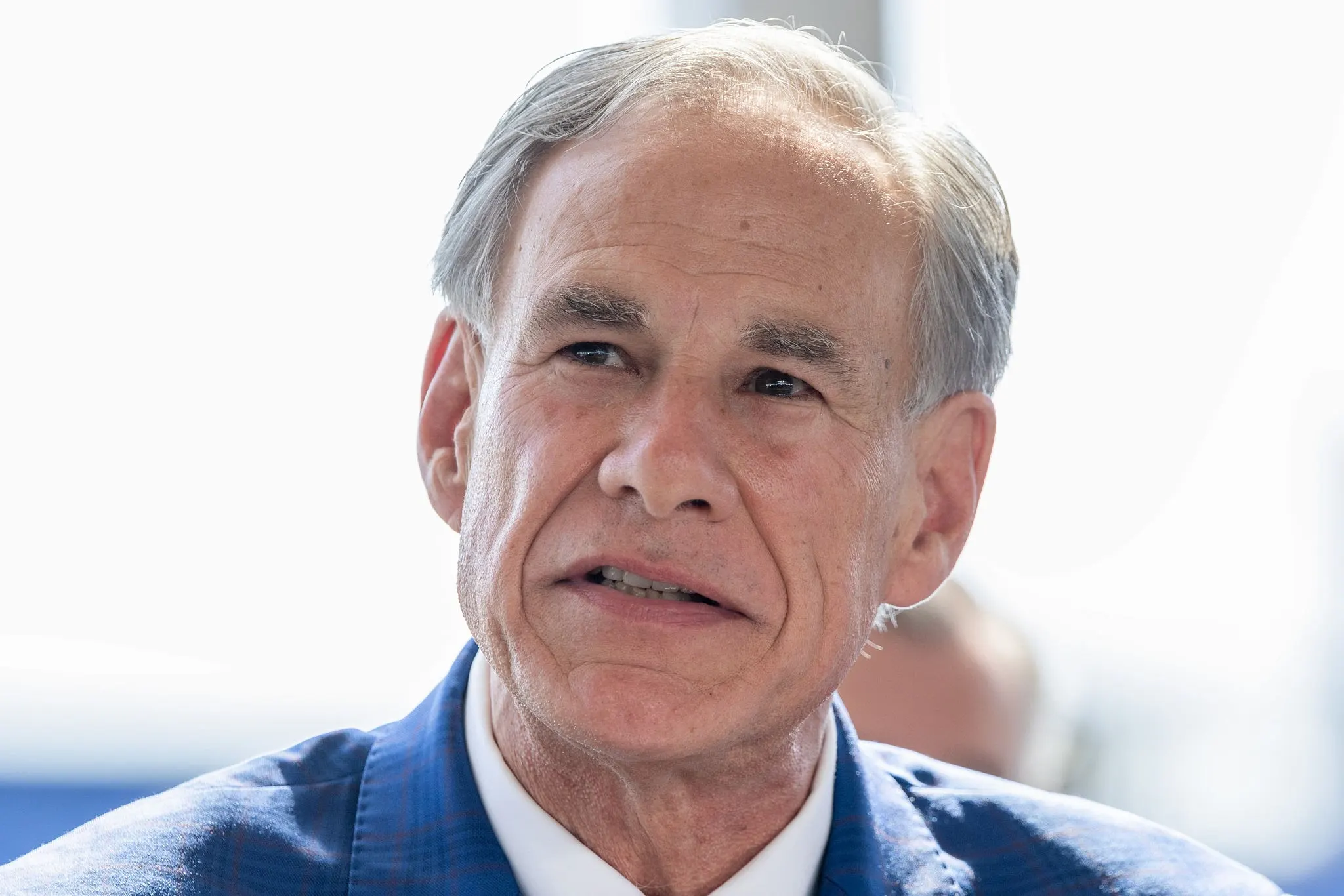
Abbott Calls for Federal Intervention
Abbott escalated the confrontation on 21 August 2026, corresponding to 8 Rabi al-Awwal 1448 AH, when he asked the US Department of Justice to review the ablution facilities at Dallas Fort Worth International Airport and George Bush Intercontinental Airport.
The Texas governor holds that airports that receive federal funding are bound to comply with laws prohibiting discrimination, and therefore he called for an investigation into whether these facilities comply with those rules.
However, this account faces a fundamental objection from the other side: ablution facilities are not closed places of worship or installations restricted to Muslims, but fixtures that allow travellers to complete the ablution required for prayer, and anyone may use them.
What Are Ablution Facilities, Exactly?
Ablution is an essential part of preparation for prayer in Islam, and involves washing specific parts of the body, including the face, the arms and the feet.
In airports, where travellers spend long hours and face constraints related to hygiene and the use of toilets, some airports provide sinks and fixtures designed to facilitate this process.
Their defenders cite examples such as the provision of halal food for Muslims or food compliant with Jewish dietary law, nursing rooms for mothers, multi-faith prayer rooms, and other accommodations that respond to the needs of a segment of users without making the public facility the exclusive preserve of any group.
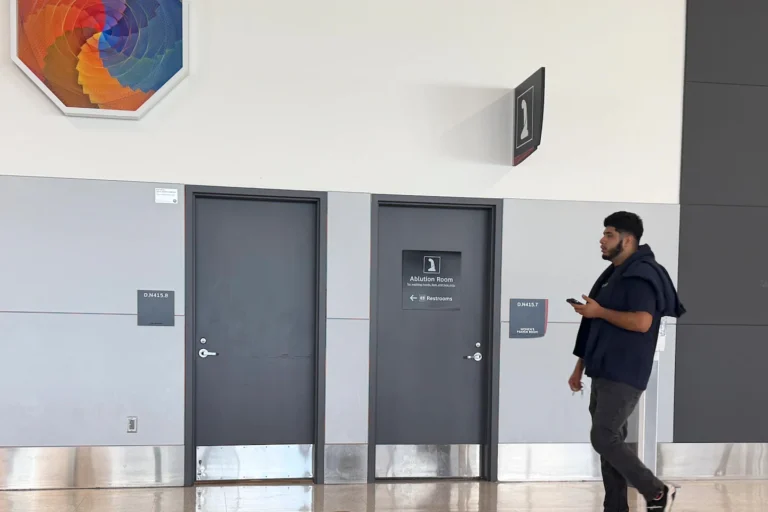
Dallas Airport Backs Down Under Pressure
The dispute did not wait for the outcome of the federal investigation. After Abbott threatened to reconsider government funding for the two airports, Dallas Fort Worth International Airport decided not to proceed with its plan to add new ablution facilities.
The airport said that a review of the project had shown that its expected benefit might not be achieved in the form originally envisaged, in a decision that came after political and media attention to the case had grown.
The dispute thus moved from political wrangling to a direct practical outcome: the freezing of an expansion of facilities intended to meet the needs of Muslim travellers.
Muslims: The Facilities Are Not "Muslim"
The Council on American-Islamic Relations (CAIR) in Texas rejected Abbott's characterisation of the facilities as places reserved for Muslims alone.
The organisation said that ablution facilities are open to all travellers, but are used to a greater extent by Muslims because they serve a religious need related to prayer.
CAIR also described Abbott's move as "anti-Muslim political posturing," while experts on religious freedom saw the case as raising questions about the consistency of the governor's position with the principle of religious neutrality, which should protect the free exercise of worship rather than restrict it.
Experts: Neutrality Does Not Mean Identical Treatment
One of the most important axes of the debate concerns the interpretation of religious neutrality in public institutions. Abbott's argument rests on the premise that the government should not provide accommodations that appear to serve one religion and not others.
However, legal experts rely on a different principle: religious neutrality does not mean that the state must provide the same services in the same way to all religions, but that it must not discriminate against any faith, compel individuals to adopt a particular belief, or exclude them on the basis of their religious identity.
The neutrality standard also does not literally require that all religions be treated identically; rather, it prevents the government from coercion, preference or exclusion on religious grounds.
Why Has the Issue Become Political?
It is difficult to separate the ablution facilities crisis from the broader political context in Texas.
Abbott, who is seeking a fourth term, is fighting the battle in an electoral environment in which issues related to identity, religion and immigration are gaining increasing importance.
In this context, his critics argue that the ablution facilities question concerns not the facilities themselves so much as re-presenting Islam as a political and security matter that calls for government intervention.
Imam Omar Suleiman, president of the Yaqeen Institute for Islamic Research in Dallas, believes that the rise of anti-Muslim rhetoric serves political polarisation, considering the ablution question one manifestation of this trend.
An Incongruity Between Ablution and the Ten Commandments
Abbott's position drew a notable incongruity when compared with his stance on the presence of Christian religious symbols in public institutions.
He justified his position by saying that the Ten Commandments are part of Texas's history and basic identity, while he does not believe that other religions enjoy the same historical presence in the state's history.
However, his critics see a fundamental problem in this explanation: if religious neutrality is a general principle, is it permissible for the state to favour the symbols of one particular religion as part of its historical identity, while considering practical provisions for another religion to be discrimination?
This question goes beyond the airport case itself, and touches on the nature of the relationship between religion and the state in one of the most conservative US states.
Not the First Confrontation with Muslims
The ablution facilities crisis comes within a long series of measures taken by Abbott against institutions or projects linked to the Muslim community in Texas.
Last year, Abbott designated the Council on American-Islamic Relations (CAIR) a foreign terrorist organisation, and he led political moves against a residential and community project in Muslim-linked development near Dallas.
At the same time, the state has witnessed measures targeting Islamic institutions and educational and charitable projects, prompting human rights organisations to warn that Islam is becoming a fixed political card in the state's internal conflict.
Reuters confirms that CAIR and human rights organisations rejected these accusations, while the federal government in Washington has not adopted CAIR's designation as a terrorist organisation at the federal level.
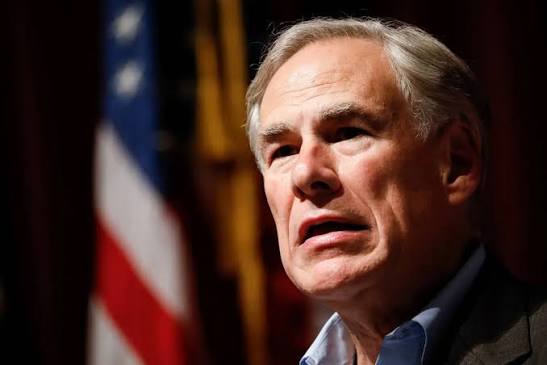
Texas: A Growing Muslim Community
The sensitivity of this confrontation is increasing with the demographic expansion of the Muslim community in the state.
The demographic makeup of Houston Airport itself is also being used by local authorities to defend the presence of ablution facilities.
Houston Mayor John Whitmire said that around 22% of international travellers in the terminal where the ablution room is located use airlines belonging to countries with Muslim-majority populations, stressing that the facility was built in response to genuine traveller needs and is not a religious privilege.
From the Airports to a Bigger Question
On the surface, the battle appears small: water basins in two airports. Behind these technical details, however, stand far larger questions: Does recognising the needs of Muslims in public spaces amount to religious preference? Does providing accommodations linked to worship conflict with the principle of state neutrality? And where do a governor's powers to review public spending end, and the protection of the free exercise of religion begin?
For Abbott, the matter concerns the use of public funds and public facilities that must remain religiously neutral.
For his opponents, turning ablution facilities into a matter requiring a federal investigation and a funding threat reveals that the question has gone beyond the management of airports to become part of a political struggle over the very presence of Islam in the American public sphere.
A Battle Over Islam or Over Texas's Image?
The ablution facilities crisis ultimately reveals the transformation of a simple religious matter into a broad political test.
For a Muslim seeking a suitable place to perform ablution before prayer, it is a practical service; for the airport, it is a response to travellers' needs; for the state governor, it is a matter concerning religious neutrality and public funding.
Yet placing the case within the context of earlier moves against Islamic institutions, and the rise of anti-Muslim political rhetoric in some Republican circles, makes it difficult to treat it merely as an administrative dispute over the design of a facility inside an airport.
At its core, it is a battle over the limits of Islam's presence in the American public sphere, and another over the broader question: can the state accommodate the religious needs of its citizens without that accommodation itself becoming material for political polarisation?
In Texas, the answer no longer seems to be an abstract legal question; it has become part of an electoral and cultural battle that widens day by day.
Source: The Washington Post – Al Jazeera Net – Reuters


