

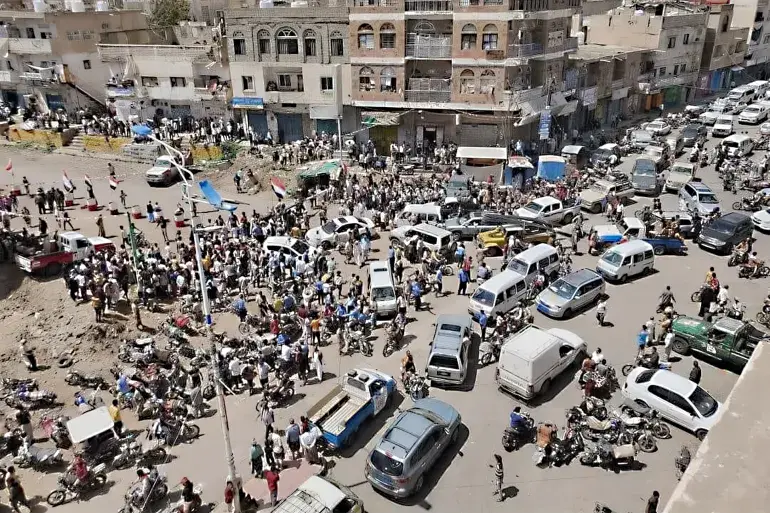
Taiz enters a new year under restrictions on its main exits, as a number of the roads linking it to the rest of the governorates remain closed. This situation has become part of the daily life of residents, who face repeated difficulties in travel and in transporting goods.
The problem of road closures dates back to previous years within the developments of the ongoing conflict in the country. During this period, multiple attempts were made to open the exits through mediation and partial agreements, but implementation was not always complete or comprehensive, which has kept the situation largely unchanged.
Because the closures continue, citizens resort to longer and more rugged alternative routes, which increases travel time and transport costs. Some drivers and traders confirm that these conditions have affected commodity prices and market activity within the city.
Politically, observers believe the file of the roads has become part of the negotiations between the various parties, where it is used as a pressure card within broader calculations.
On the other hand, local authorities in Taiz affirm that opening the roads should be a humanitarian priority, far from political wrangling.
Internationally, several statements have been issued calling for facilitating movement and lifting restrictions, but these calls have not yet translated into clear practical steps, leaving the file unresolved.
Given this reality, an important question arises: Could opening the roads be a step toward building trust and easing the daily suffering of residents, or will the file remain tied to long and complex negotiation tracks?


